
Family Wolf Spiders (Lycosidae)
Lycosidae is a family in the order Araneae. Browse 151 named species recorded in this family, or open an individual profile for its available identification and natural-history information.
Guides
Species in Lycosidae (151)
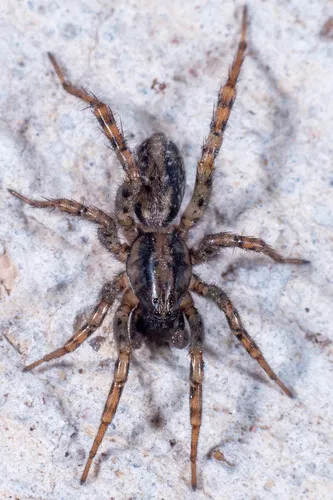
Allocosa absoluta
Allocosa absoluta
Identification: "Carapace dark red brown to black, usually mottled with dull yellow or orange yellow, sometimes with pale median band and submarginal rows of pale spots; pale median band sometimes enclosing paired, dark, longitudinal streaks anterior
Allocosa chamberlini
Allocosa chamberlini
Identification: "Carapace dark red brown, veined with black, with several dark lines radiating from vicinity of dorsal groove, with indistinct pale median band and submarginal bands (or series of spots), with few setae. Sternum pale orange, often suf
Allocosa funerea
Allocosa funerea
Identification: Male: "Carapace dark red to black, often paler posteriorly, minutely and evenly punctate, with few setae. Sternum dark brown. Chelicerae dark red brown to black, paler distally. Legs with femora black, with femora tips and remaining s
Allocosa mulaiki
Allocosa mulaiki
Identification: "Carapace dark red brown to nearly black, sometimes iridescent, darker at margins, with few setae. Sternum orange brown. Chelicerae dark red or red brown. Legs dark orange or red brown, sparsely covered with setae; femora and tibiae e
Allocosa noctuabunda
Allocosa noctuabunda
Identification: "Carapace dark red brown, with pale median band (which often encloses paired, dark streaks anterior to dorsal groove) and pale, sinuous submarginal bands (or series of spots), and with few setae. Sternum yellow or orange. Chelicerae d
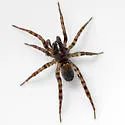
Allocosa sublata
Allocosa sublata
Identification: "Carapace dark red brown to black, sometimes iridescent, darker at margins, with few setae. Sternum orange brown. Chelicerae dark red or red brown. Legs dark orange or red brown, sparsely covered with setae; femora and tibiae each wit
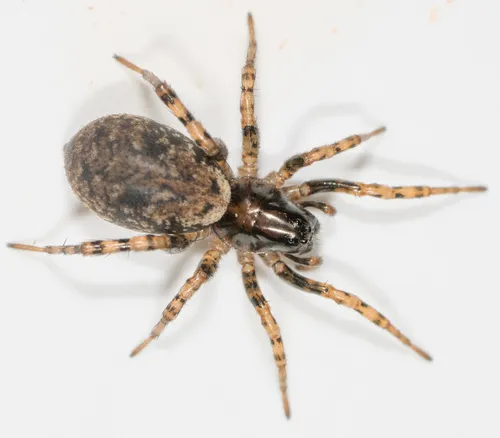
Allocosa subparva
Allocosa subparva
Identification: "Carapace dark red brown to black, with indistinct pale median band (but lacking pale submarginal bands), with dark lateral margins, and with few setae. Sternum orange to black. Chelicerae dark orange to black. Legs orange to black; f
Alopecosa aculeata
Alopecosa aculeata
Identification: Female: Voucher specimens: South Dakota: Alberta: epigyne epigyne with some setae removed to reveal more structure Male: Voucher specimens: Alberta: Newfoundland: left palp, retrolateral view left palp, distal view - showing the "mesa
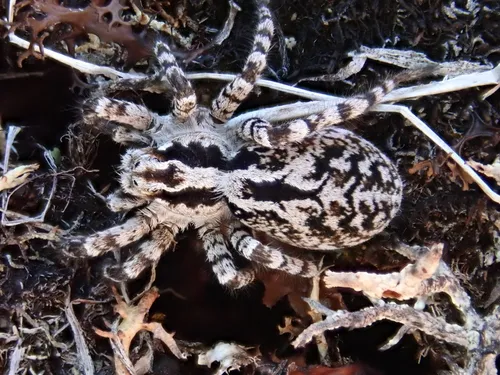
Alopecosa exasperans
Alopecosa exasperans
Alopecosa exasperans is a species of wolf spider in the family Lycosidae. It is found in Canada and Greenland.
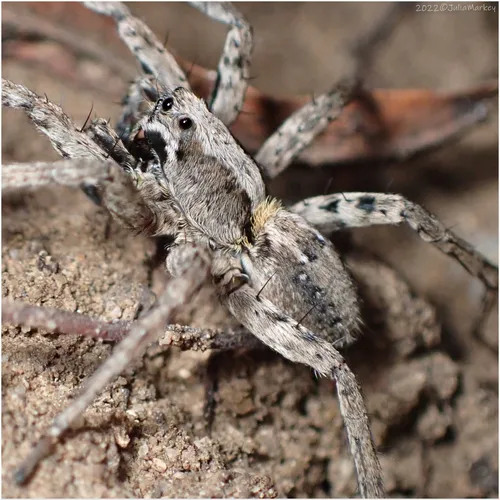
Koch's Wolf Spider
Alopecosa kochi
Identification: The female of this species has short banded legs, a broad tan stripe down the center of the carapace and faint paired white/tan spots along opposite sides of the abdomen. The male
Alopecosa pictilis
Alopecosa pictilis
Identification: Emerton called it a distinct and bright-colored species: See Emerton 1919: plate 1, figures 11 & 12 HERE . Written description under Lycosa pictilis on page 4H. Also Emerton 1885: plate XLVI, figure 5 HERE . Written description under
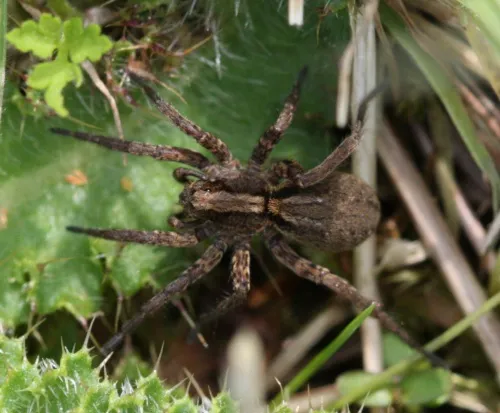
Common Fox-spider
Alopecosa pulverulenta
Length 5 to 10 mm. The markings of this wolf spider are variable in colouration and patterning. Other Alopecosa species have broadly similar markings so care is needed. Confirmation of this species: "Requires examination at high magnification in good
Arctosa lama
Arctosa lama
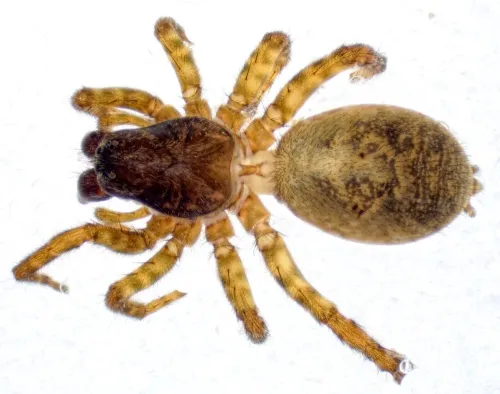
Identification: Carapace reddish brown, with few short dark setae. Anterior row of eyes straight or procurved, shorter than middle row; eyes uniform in size. Chelicerae reddish brown. Legs reddish brown, darker distally, lacking dark rings; scopulae
Arctosa leopardus
Arctosa leopardus
Length 5 to 10 mm. Prosoma red-brown, dark. Legs reddish yellow, annulated. Opisthosoma dark, median with slender, arrow-shaped, yellowish longitudinal stripe, posteriorly 2 rows of yellow-greenish spots. Identification of this species "Requires exam
Arctosa littoralis
Arctosa littoralis
Identification: Male Palps: Female Epigynum: Eye Arrangement:
Sand Bear Spider
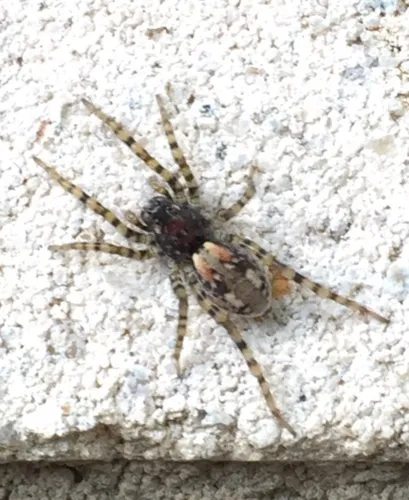
Arctosa perita
Arctosa perita is a species of wolf spider in the family Lycosidae. It is found in Europe, North Africa, Turkey, Caucasus, Russia, and has been introduced into Canada.
Santa Rosa Wolf Spider
Arctosa sanctaerosae
Identification: The white to light orange color and single (as opposed to no) dorsal tibial macroseta.
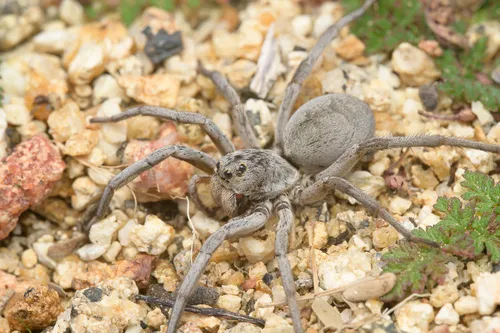
Geolycosa gosoga
Geolycosa gosoga
Geolycosa gosoga is a species of wolf spider in the family Lycosidae. It is found in the United States.
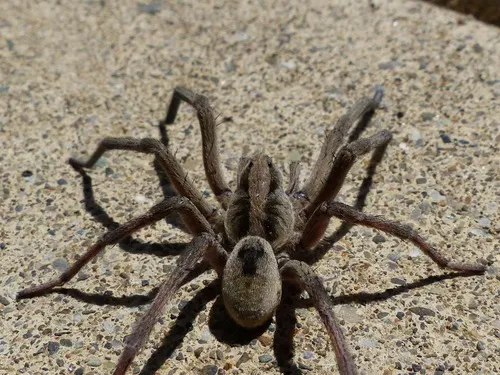
Geolycosa turricola
Geolycosa turricola
Geolycosa turricola is a species of wolf spider in the family Lycosidae. It is found in the United States.
Geolycosa wrighti
Geolycosa wrighti
Geolycosa wrighti lines its burrows thickly with silk. The burrow entrance is not decorated with a turret, as is the case with many Geolycosa burrows.
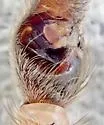
Hogna angusta
Hogna angusta
Identification: At one point described as an inland form (FL) of H. timuqua due to the male palp being identical, and species being similar in appearance. However, there is obvious difference in the female epigynum, currently separating the two. H. t
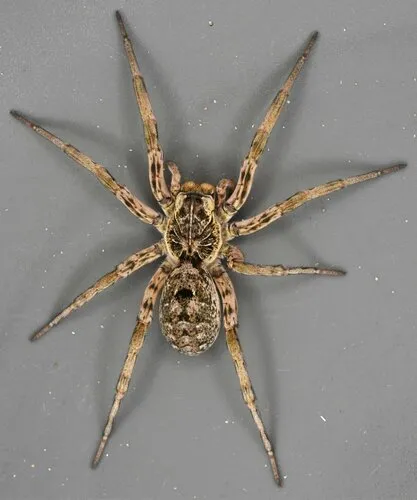
Hogna baltimoriana
Hogna baltimoriana
Identification: Very similar to lenta, but with markings more pronounced. However, the coxae are not black beneath, the sternum may be. Sternum black, chelicerae dark reddish to black. Abdomen yellowish with 5 or 6 chevrons posteriorly. Heart mark br
Hogna coloradensis
Hogna coloradensis
Identification: Drawing on Slowik & Cushing , this is clearly Hogna coloradensis. They write that the species "can be separated from all other Hogna and Lycosidae by a dark area immediately anterior to the epigastric furrow as well as a small dark ar
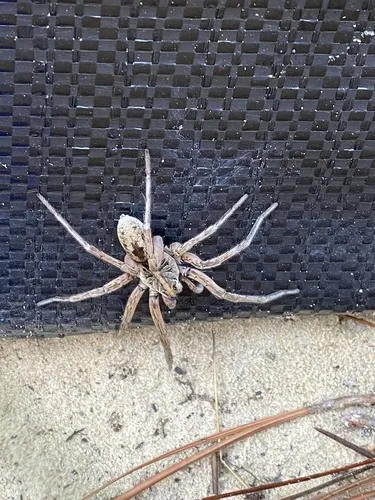
Rosemary Wolf Spider
Hogna ericeticola
Hogna ericeticola, known as the rosemary wolf spider, is a species of spider in the Lycosidae family. It is endemic to Florida, in the United States.
Hogna frondicola
Hogna frondicola
Identification: Dark brown with light grey markings. The venter is black. Carapace generally has a wide grey stripe down the center and white on the edges. There are also two to four black dots in the center of the abdomen.
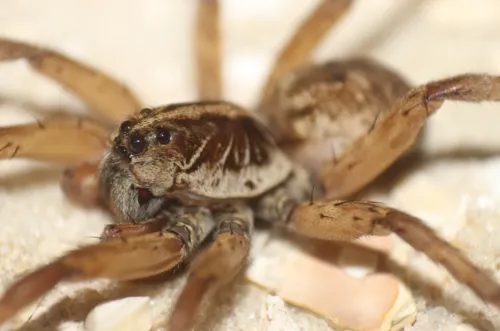
Miami Wolf Spider
Hogna miami
Hogna miami, commonly known as the Florida wolf spider or Miami wolf spider, is a species of wolf spider in the family Lycosidae found in the southern portion of the state of Florida.
Hogna timuqua
Hogna timuqua
Identification: Wallace, 1942 Fig. 5, 6 male Fig. 20 female Fig. 19 = angusta
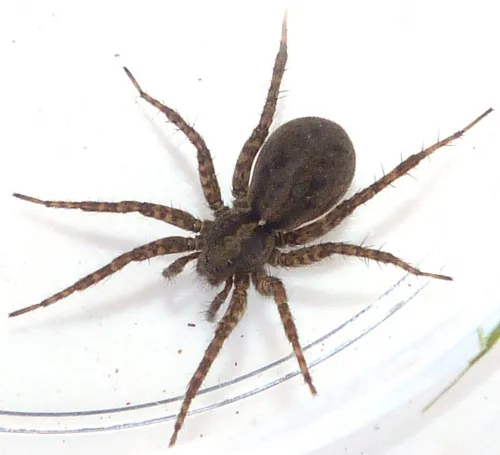
Pardosa amentata
Pardosa amentata
Pardosa amentata is a wolf spider between 5 mm and 8 mm in length and has a brownish coloured body with darker brown markings or spots. Confirmation of this species requires examination of the genitals of mature specimens. Confirmation of this specie
Pardosa atromedia
Pardosa atromedia
Pardosa atromedia is a species of wolf spider in the family Lycosidae. It is found in the United States.
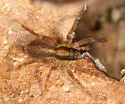
Pardosa distincta
Pardosa distincta
Identification: Male Coloration in adult males can vary from pale to dark (these examples are from Alberta): Left palp, ventral view: Female Epigynum
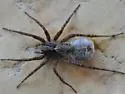
Pardosa dorsuncata
Pardosa dorsuncata
Identification: Info from Rod Crawford regarding Pardosa of Washington: Pardosa mackenziana [& P. dorsalis which is likely a synonym] females can't be distinguished from the equally common P. dorsuncata without a little bit of dissection. The posteri
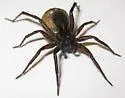
Pardosa fuscula
Pardosa fuscula
Identification: Female : epigyne Male : left palp, ventral view ........
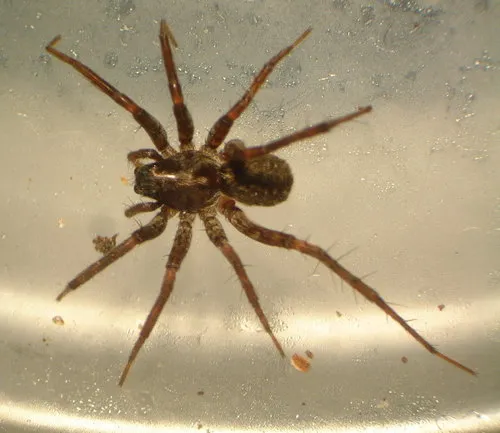
Groenland Wolf Spider
Pardosa groenlandica
Pardosa groenlandica is a species of wolf spider in the family Lycosidae. It is found in Russia, Canada, the United States, and Greenland.
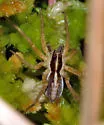
Pardosa luteola
Pardosa luteola
Ivanova et al. 2023 concluded that all P. hyperborea in the New World were genetically distinct from the P. hyperborea of the Old World. They resurrected P. luteola which was associated with Emerton's original description from the New World.-ChH
Mackenzie's Thin-legged Wolf Spider
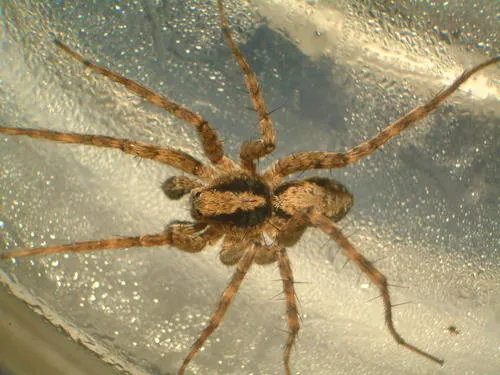
Pardosa mackenziana
Identification: Female epigyne: Male left palp, ventral view left palp, retrolateral view left palp, distoventral view Info from Rod Crawford regarding Pardosa of Washington: Pardosa mackenziana [& P. dorsalis which is likely a synonym] females can't
Shore spider
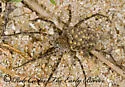
Pardosa milvina
Identification: Epigynum: Ventral View/Dorsal View Palp: Ventral View/Lateral View
Pardosa modica
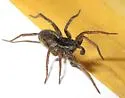
Pardosa modica
Identification: Male: Voucher Specimen: left palp, ventral view
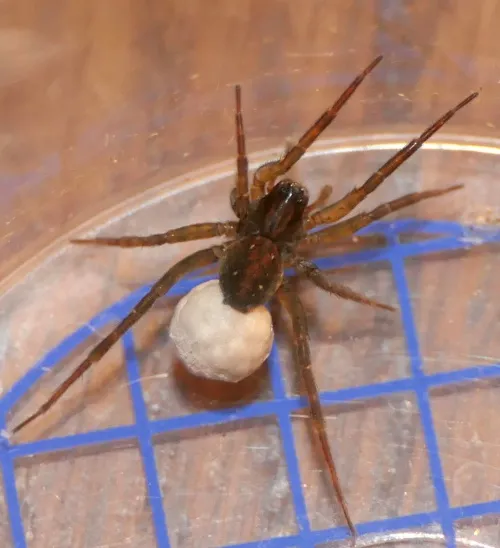
Pardosa nigriceps
Pardosa nigriceps
Female 5 to 7 mm. Abdomen brown with a clear light brown cardiac mark, a double row of white spots behind and light brown sides. Carapace dark brown with a light brown median band and light brown bands along the sides. Legs and palps brown with dark
Pardosa ontariensis
Pardosa ontariensis
Identification: Female: epigyne Male: palp, ventral view The male also has dark spinnerets:
Pardosa orophila
Pardosa orophila
Pardosa orophila is a species of wolf spider in the family Lycosidae. It is found in the United States and Mexico.
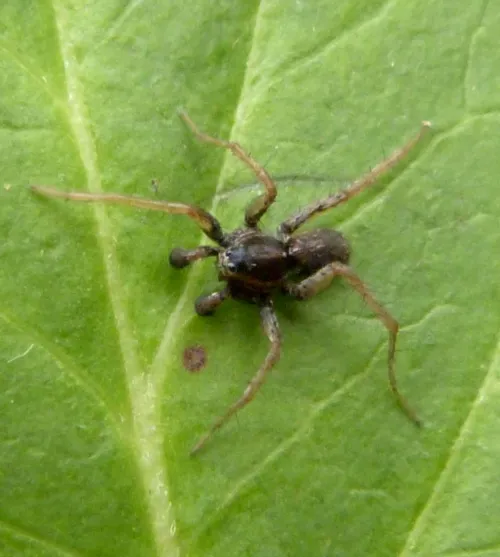
Pardosa palustris
Pardosa palustris
Confirmation of this species requires examination of the genitals of mature specimens. Confirmation of this species: "Requires examination at high magnification in good lighting, typically examination of the genitalia." Bee, L., Oxford, G., & Smith,
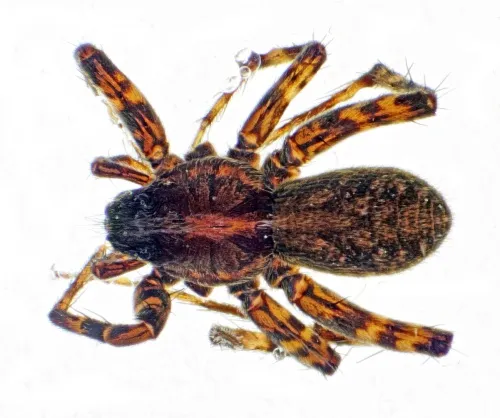
Pardosa prativaga
Pardosa prativaga
Its mottled patterning of brown and black is similar to that of other Pardosa species and detailed examination is required to be sure of the correct identification. Confirmation of this species: "Requires examination at high magnification in good lig
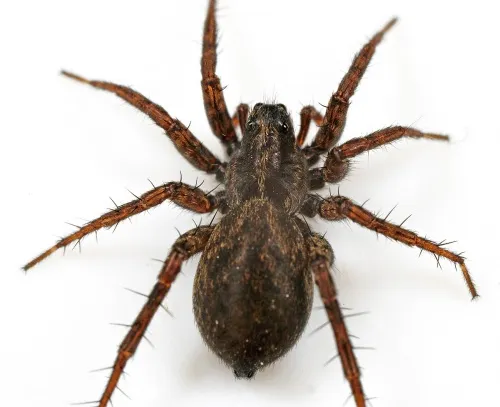
Common Wolf Spider
Pardosa pullata
This is a very dark coloured wolf spider. Confirmation of this species: "Requires examination at high magnification in good lighting, typically examination of the genitalia." Bee, L., Oxford, G., & Smith, H. (2020). Britain's Spiders: A Field Guide.
Pardosa saltans
Pardosa saltans
One of the smaller wolf spiders (5 to 7 mm). The cephalothorax (head and thorax) of the female is dark brown has a lighter brown median strip. In the male the cephalothorax is almost black with a paler grey median strip. A difficult species to identi
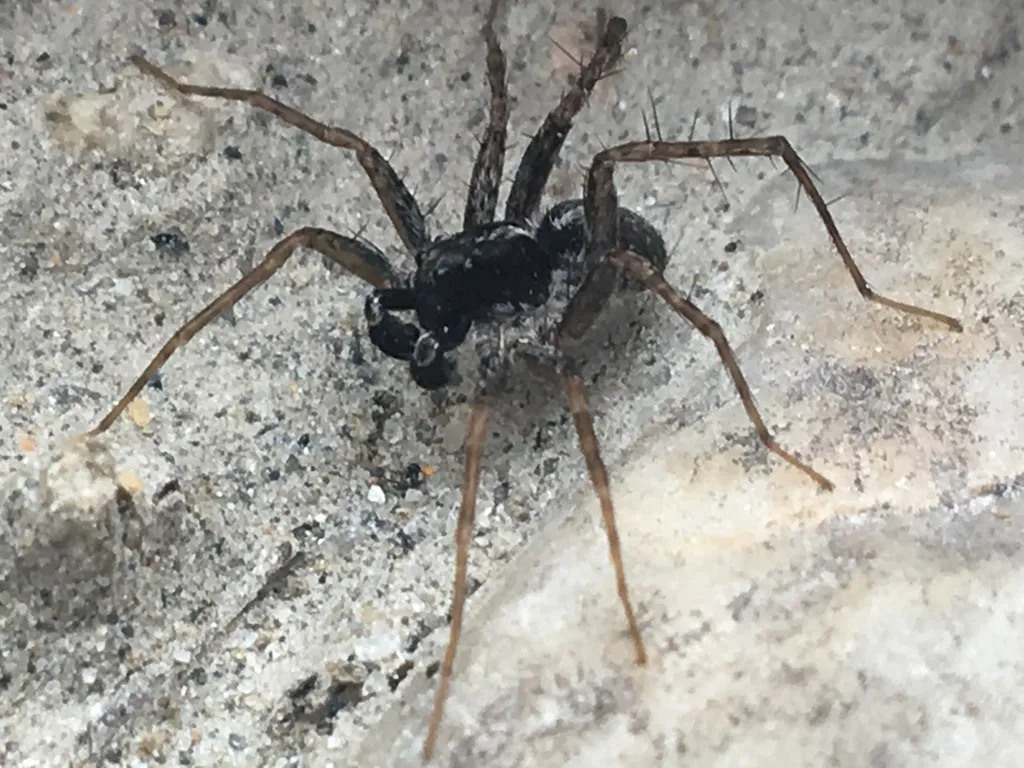
Pardosa tesquorum
Pardosa tesquorum
Pardosa tesquorum is a spider in the genus Pardosa ("thinlegged wolf spiders"), in the family Lycosidae ("wolf spiders"). The distribution range of Pardosa tesquorum includes Russia, Mongolia, China, the USA, and Canada.
Pardosa vancouveri
Pardosa vancouveri
Identification: The epigynum does not separate females from other species, but the males of P. vancouveri can be distinguished by the thickened "club foot" of tarsus I. ( Vogel 2004 )
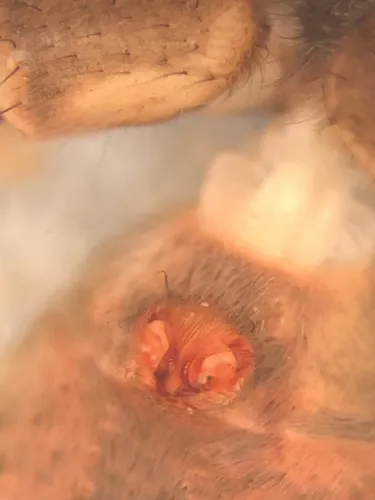
Ubiquitous Thin-legged Wolf Spider
Pardosa xerampelina
Identification: Female: epigyne Male: In Alberta there are two color morphs that appear quite different from each other (the palp for each specimen is directly below its picture): left palp, ventral view ( P. xerampelina ) ....... Some Pardosa xeramp
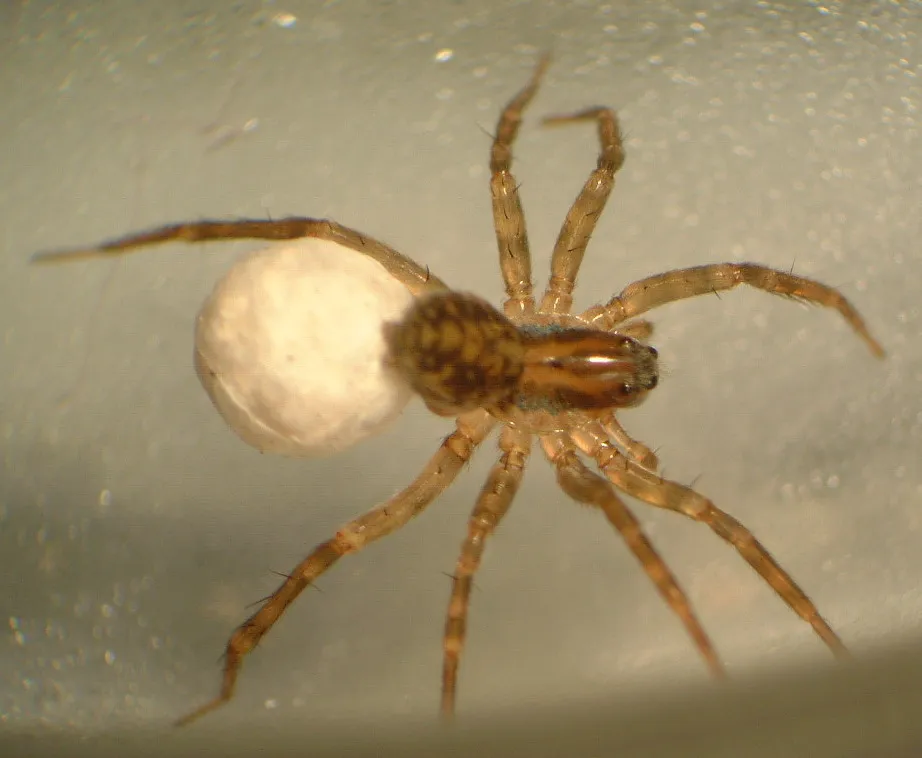
Pirata montanoides
Pirata montanoides
Pirata montanoides is a species of wolf spider in the family Lycosidae. It is found in the United States.
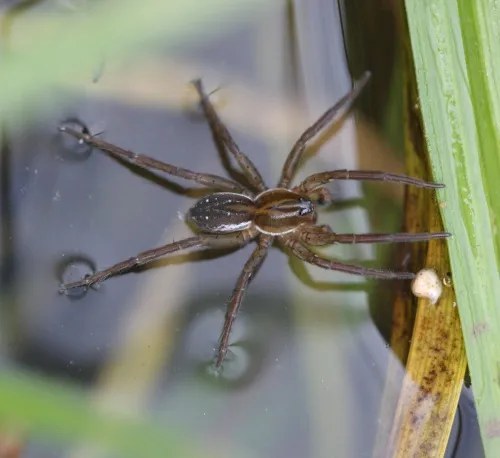
Pirate Wolf Spider
Pirata piraticus
Females can be up to 9 mm long, whilst males are about 6 mm. The colour pattern of this spider is quite distinctive with a red-chestnut abdomen with a central mustard coloured cardiac mark and white sides to both the abdomen and carapace. Pirata hygr
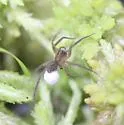
Piratula cantralli
Piratula cantralli
Identification: Females are (so far) indistinguishable from Piratula insularis , even when comparing the epigynes. Males are easily separated by the swollen tibiae and metatarsi of legs I and II, and by the long, curly setae on the underside of the f
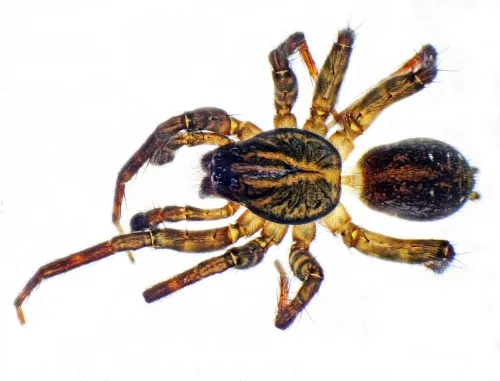
Piratula hygrophila
Piratula hygrophila
Males 4.5 to 5.5 mm, females 5 to 5.7 mm. Prosoma dark brown to black, with distinct bands of prosoma. Legs distinctly annulated (mainly femur). Opisthosoma with bright spots on both sides of median line. Confirmation of this species: "Requires exami
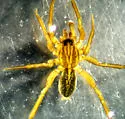
Piratula insularis
Piratula insularis
Identification: Females are (so far) indistinguishable from Piratula cantralli , even when comparing the epigynes. Males are easily distinguished from P. cantralli by lacking swollen tibiae and metatarsi on legs I and II, and also by lacking long cur
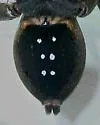
Rabidosa carrana
Rabidosa carrana
Identification: Easily identifiable by black venter with two rows of white spots, generally six or eight.
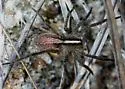
Rabidosa hentzi
Rabidosa hentzi
Identification: Abdomen without median dorsal longitudinal dark stripe.
Dotted Wolf Spider
Rabidosa punctulata
Identification: Note that the spots on the ventral abdomen may not be present in younger spiders. Female Male Female with egg sac:
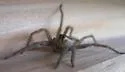
Rabid Wolf Spider
Rabidosa rabida
Identification: The ground color is yellow, with brownish to black longitudinal stripes. In this species, the median dark band of the abdomen is broken and encloses lighter areas. The male has leg I dark brown or black. The venter does not have the s
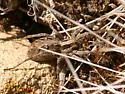
Schizocosa avida
Schizocosa avida
Identification: Female abdomen-ventral side: Palp: Epigynum:
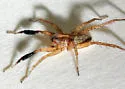
Schizocosa bilineata
Schizocosa bilineata
Identification: Adult males have black tibial brushes on the front pair of legs. The females do not have them. This species is one of the smaller and more lightly-colored Schizocosa . Male: Male palp:
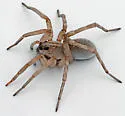
'Hogna' ceratiola
Schizocosa ceratiola
Identification: Variation in the epigynum seems to be an unreliable means of ID as stated by Wallace. Epigyne of females pictured here resemble the drawing in Wallace, 1942 of H. psuedoceratiola , but the male palpal organs are distinctly ceratiola a
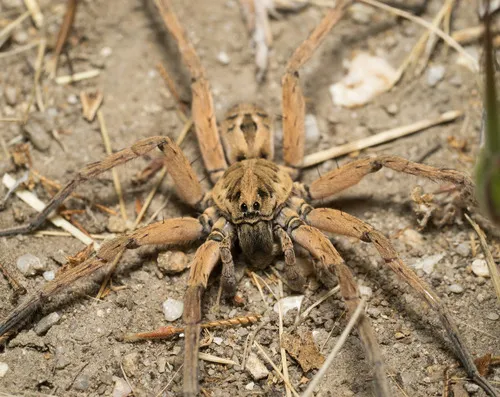
Schizocosa maxima
Schizocosa maxima
Identification: "The large size, long and gradually tapered intromittent part of the male embolus, relatively long copulatory tubes and spermathecae of females, and the dense, pile-like leg scopula will separate most specimens of S. maxima from those
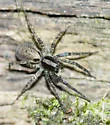
Schizocosa ocreata
Schizocosa ocreata
Identification: In males, the femur and tibia on leg I are dark with a prominent tibial brush. Palp: Epigynum:
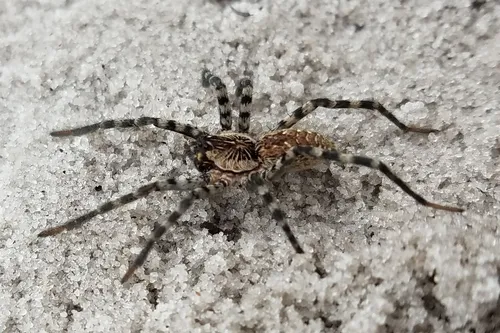
Lake Placid Funnel-web Spider
Sosippus placidus
Sosippus species are not wholly dependent on their webs for prey capture. They will abandon their webs and forage like typical lycosids if no prey for extended periods. Should potential prey escape web before the spider can reach it, placidus will re
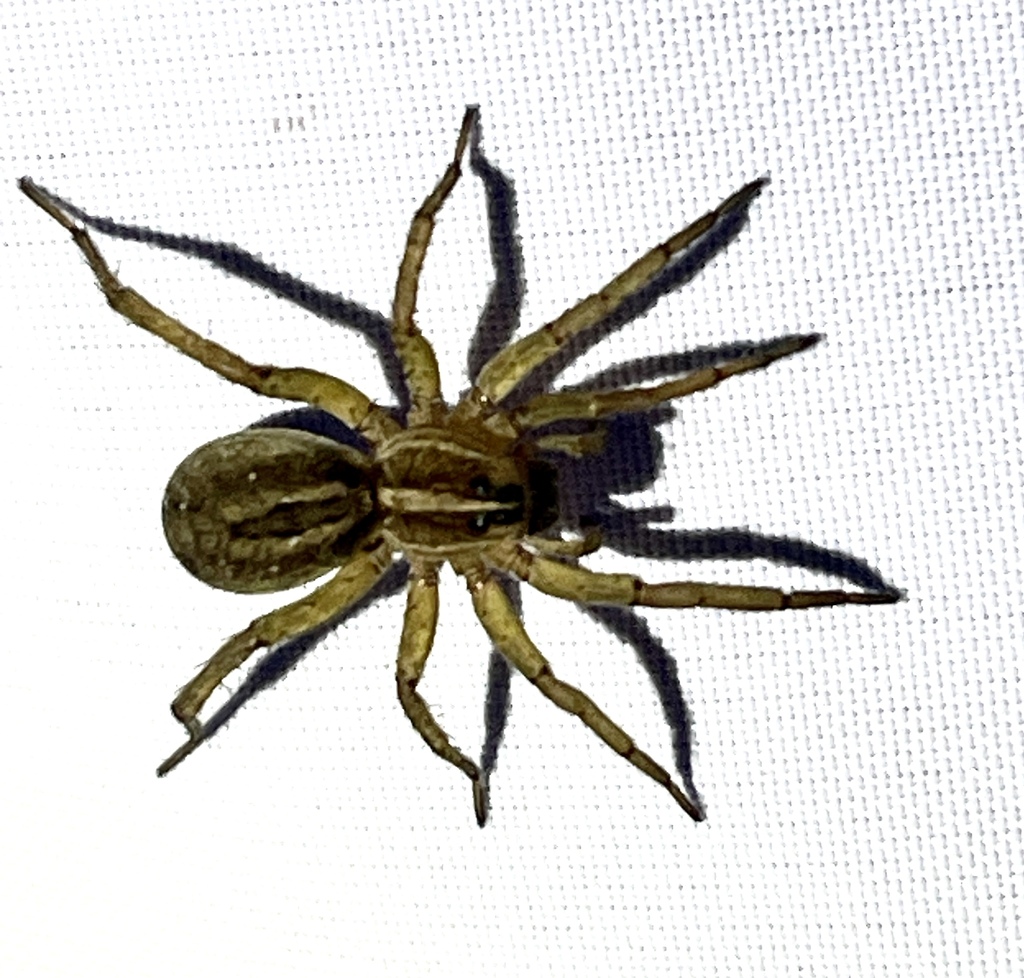
Tigrosa annexa
Tigrosa annexa
no rights reservedIdentification: This is the smallest species in the genus; the venter of the female is all pale yellow, except for a dark 'V'-shaped marking in center of the sternum and a black spot around the epigynum; venter of adult male is all pale. Carapace has
Tigrosa aspersa
Tigrosa aspersa
Identification: According to How to Know the Spiders , this species has a thin line of yellow hairs in the eye area and a more spotted venter than carolinensis. It also has banded legs. According to Penn State Entomology, here's a description: " Hog
Tigrosa helluo
Tigrosa helluo
Identification: Female: Palp: How to Know the Spiders says the general color is dull yellow to greenish brown. In that guide the abdomen is shown as dark with little pattern except a slightly dark longitudinal stripe toward the front of the abdomen l
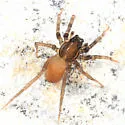
Trabeops aurantiacus
Trabeops aurantiacus
Identification: The large posterior median eyes protrude from the face very noticeably. The posterior lateral eyes are spread far apart and also protrude noticeably. The legs are yellow to dark orange. In males, the front femurs are black. In females
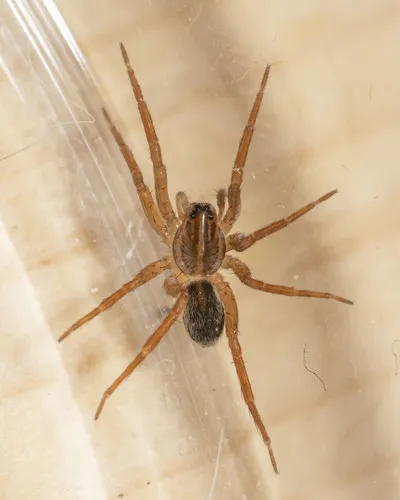
Marx pirate spider
Trebacosa marxi
Trebacosa marxi is a species of wolf spider in the family Lycosidae. It is found in the United States and Canada.
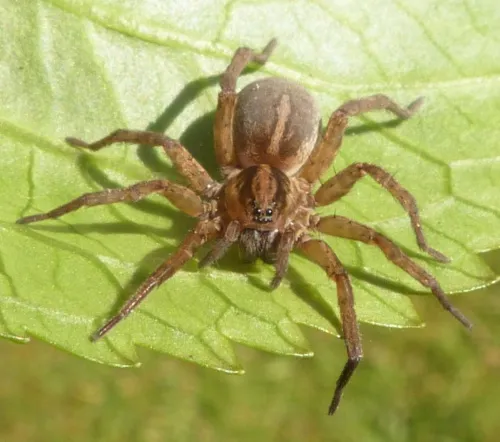
Rustic Wolf Spider
Trochosa ruricola
The females are 15 mm (sometimes even bigger) and the males are 10 mm. Both sexes are dark brown with a pale band running the length of the carapace and continuing to the first half of the abdomen. The two short lines on the carapace are diagnostic o
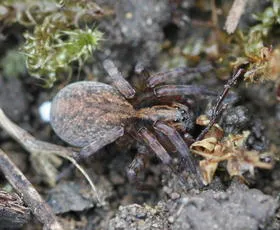
Trochosa terricola
Trochosa terricola
A wolf spider - the female has a reddish abdomen and the male has darkened front legs. The two short lines on the carapace are diagnostic of Trochosa species. T. ruricola is similar but has a light cardiac mark wheras in T. terricola it is darker, bu
Varacosa avara
Varacosa avara
Identification: Both sexes are described as lacking a heart mark and not having chevrons on the abdomen (this may help to tell them apart from Trochosa on occasion).
Varacosa parthenus
Varacosa parthenus
Varacosa parthenus is a species of wolf spider (Lycosidae) endemic to the Southeastern United States.
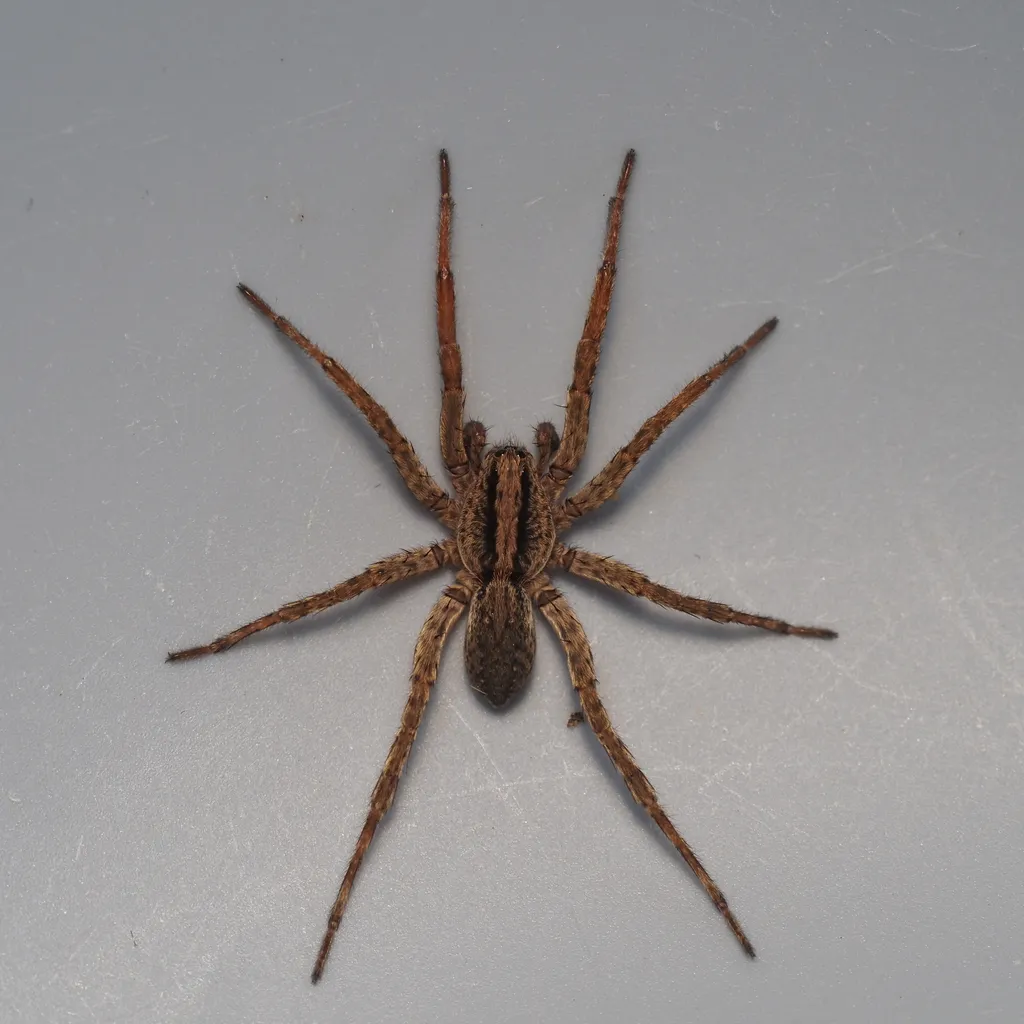
Varacosa shenandoa
Varacosa shenandoa
Varacosa shenandoa is a species of wolf spider in the family Lycosidae. It is found in the United States and Canada.
Allocosa mokiensis
Allocosa mokiensis
Allocosa morelosiana
Allocosa morelosiana
Alopecosa hirtipes
Alopecosa hirtipes
Arctosa alpigena
Arctosa alpigena
Arctosa emertoni
Arctosa emertoni
Arctosa raptor
Arctosa raptor
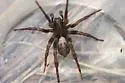
Arctosa rubicunda
Arctosa rubicunda
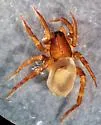
Arctosa virgo
Arctosa virgo
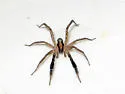
Camptocosa parallela
Camptocosa parallela
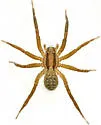
Camptocosa texana
Camptocosa texana
Geolycosa escambiensis
Geolycosa escambiensis
Geolycosa fatifera
Geolycosa fatifera
Geolycosa hubbelli
Geolycosa hubbelli
Geolycosa micanopy
Geolycosa micanopy
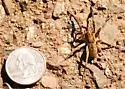
Geolycosa missouriensis
Geolycosa missouriensis
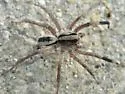
Geolycosa ornatipes
Geolycosa ornatipes
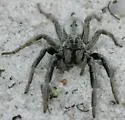
Geolycosa patellonigra
Geolycosa patellonigra
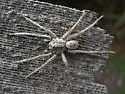
Geolycosa pikei
Geolycosa pikei
Geolycosa rafaelana
Geolycosa rafaelana
Geolycosa riograndae
Geolycosa riograndae
Geolycosa xera
Geolycosa xera
Gladicosa gulosa
Gladicosa gulosa
Gladicosa pulchra
Gladicosa pulchra
Hesperocosa unica
Hesperocosa unica
Hogna ammophila
Hogna ammophila
Hogna antelucana
Hogna antelucana
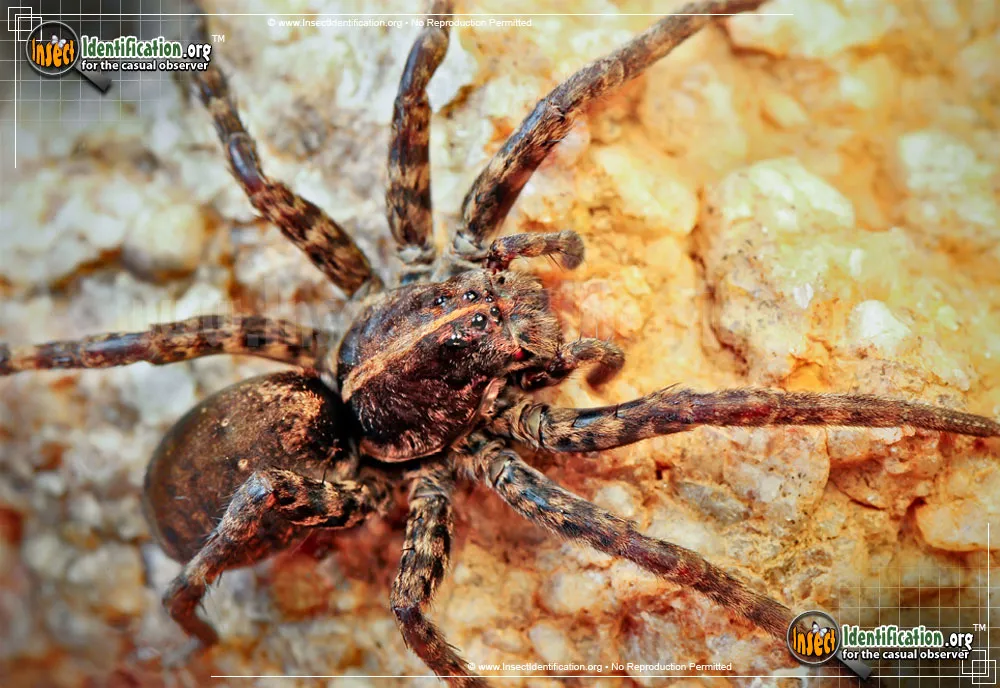
Wolf Spider
Hogna aspersa
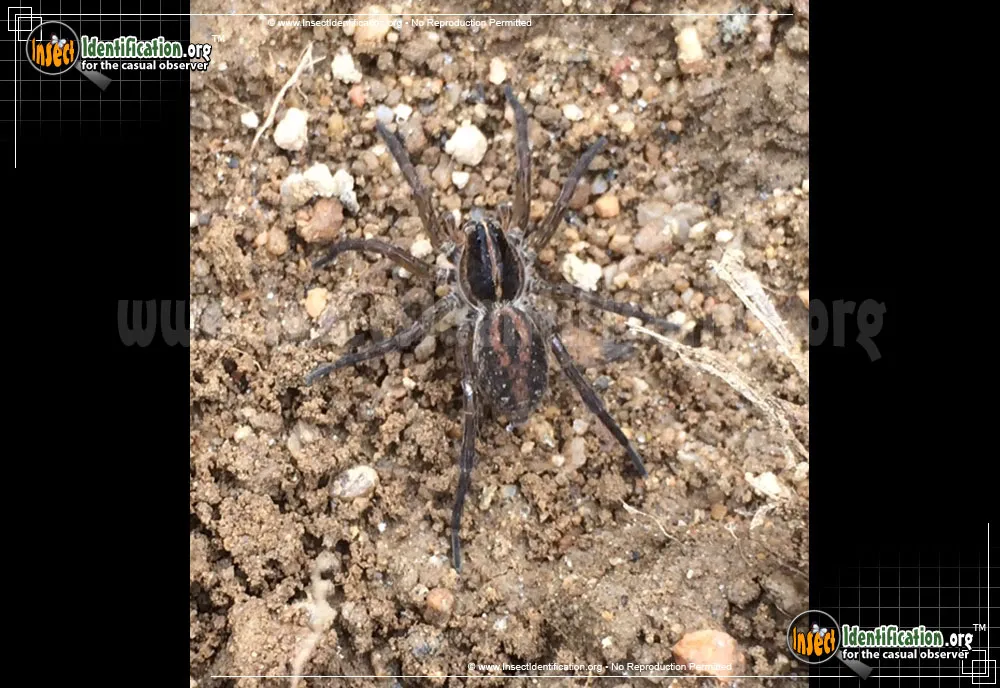
Carolina Wolf Spider
Hogna carolinensis