
Family Cobweb Spiders (Theridiidae)
Theridiidae is a family in the order Araneae. Browse 154 named species recorded in this family, or open an individual profile for its available identification and natural-history information.
Guides
Species in Theridiidae (154)
Anelosimus analyticus
Anelosimus analyticus
Anelosimus analyticus is a species of cobweb spider in the family Theridiidae. It is found in the United States and Mexico.
Anelosimus studiosus
Anelosimus studiosus
Identification: Female Only about 23 among more than 38,000 known spider species can be considered social! Unlike social insects, where the workers are sterile and only the queen lays eggs, all social spiders in a colony are able to reproduce. Debora
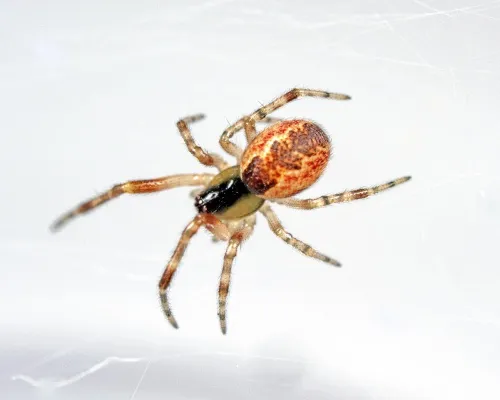
Anelosimus vittatus
Anelosimus vittatus
A small spider with a wide, rich brown band running the length of the abdomen. Carapace is light brown with a thin dark border and a broad brown median band tapering towards the rear. This species constructs its scaffold webs on bushes, trees and tal
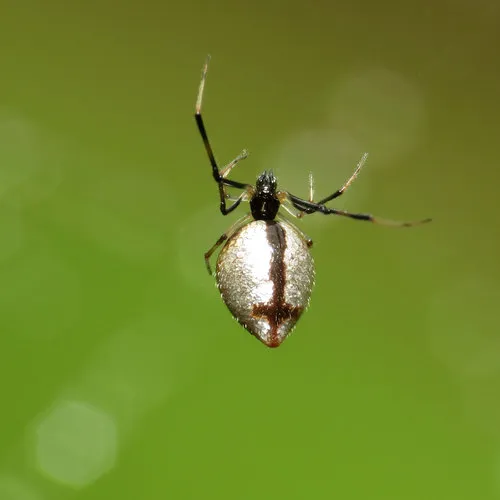
Argyrodes elevatus
Argyrodes elevatus
Identification: Voucher specimens (Det. Lenny Vincent): - Female - Male This is a kleptoparasite that steals small insects from the orb webs of other spiders, as well as pillages large prey items that have already been caught and often predigested by
Argyrodes nephilae
Argyrodes nephilae
Identification: Abdomen silver with a dark narrow median line on dorsum and usually a small black spot at tip. Abdomen higher and proportionally heavier than in males of A. elevatus .
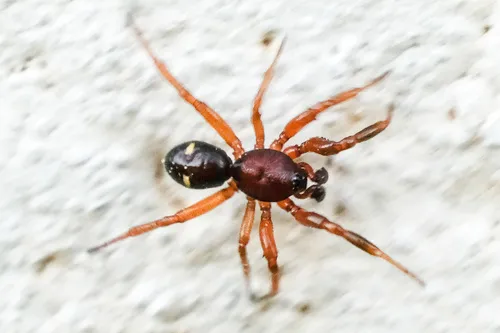
Two-spotted Cobweb Spider
Asagena americana
Asagena americana, the twospotted cobweb spider, is a species of cobweb spider in the family Theridiidae. It is found in the United States, Canada, and China.
Asagena pulcher
Asagena pulcher
Identification: Abdomen varies from reddish to black and can have a variable pattern of white spots. See diagrams in Gertsch, 1960 , page 34, for examples. Sometimes the white spots can be extensive enough to cover most of the abdomen in white. Legs
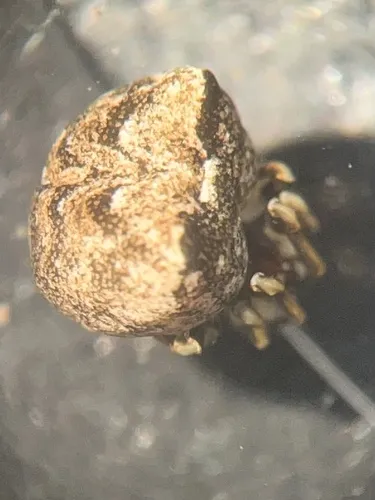
Chrosiothes jocosus
Chrosiothes jocosus
Chrosiothes jocosus is a species of cobweb spider in the family Theridiidae. It is found in the United States and Mexico.
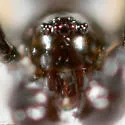
Coleosoma acutiventer
Coleosoma acutiventer
Identification: C. acutiventer: carapace and abdomen all dark brownish-black; legs entirely pale yellowish, except for a black streak on the anterior side of the coxa, trochanter, and base of femur I. Males are ant-mimics (constricted abdomen); femal
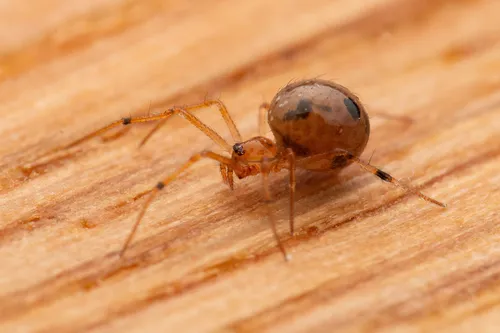
Coleosoma floridanum
Coleosoma floridanum
Coleosoma floridanum is a species of cobweb spider in the family Theridiidae. It is found in North, Central and South America, has been introduced into Europe, Macaronesia, West Africa, the Seychelles, and the Pacific Islands.
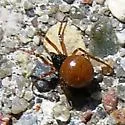
Crustulina sticta
Crustulina sticta
Identification: The color is variable, even in other photos on the Jorgen Lissner site. Also, Washington specimens (for example) average considerably darker than the eastern-states material in these 3 BugGuide photos. Levi in his taxonomic revision s
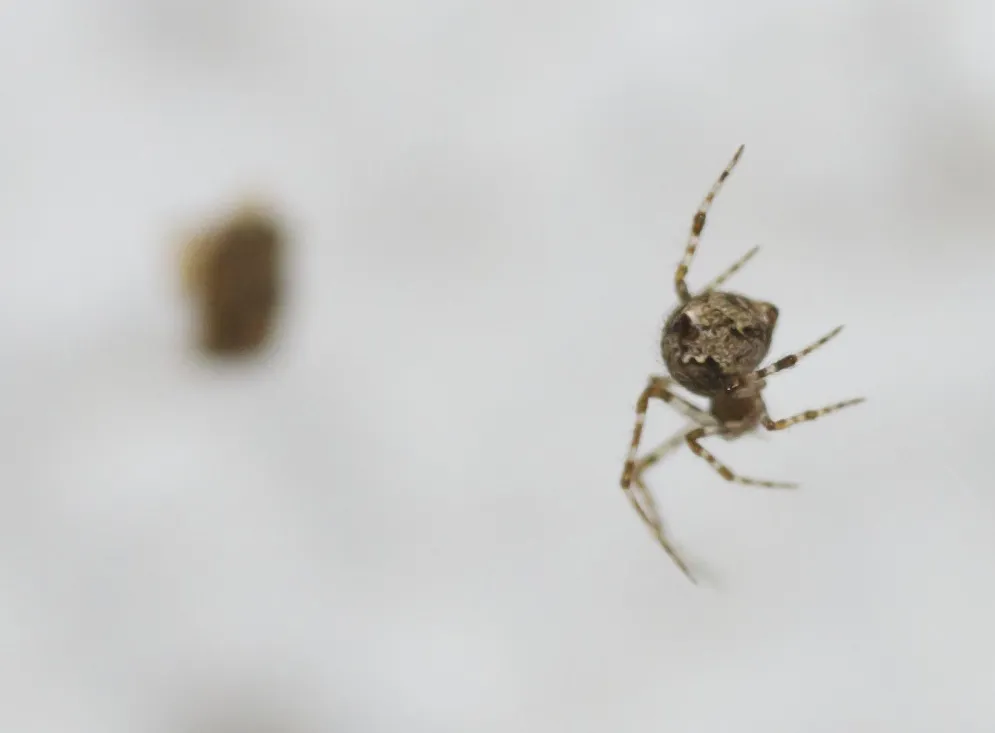
Cryptachaea porteri
Cryptachaea porteri
Identification: Abdomen with or without a tubercle in both genders. Levi says the variation in this species, particularly in the female, is unusually great. Voucher adult male: Voucher adult female: Females of this species typically use debris to cam
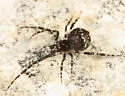
Cryptachaea rupicola
Cryptachaea rupicola
Identification: The body is dirty gray with darker grayish to black spots and stripes. The legs have alternating dark and light bands. The middle apex of the abdomen has a small bump which is dark on top and light on the rear.
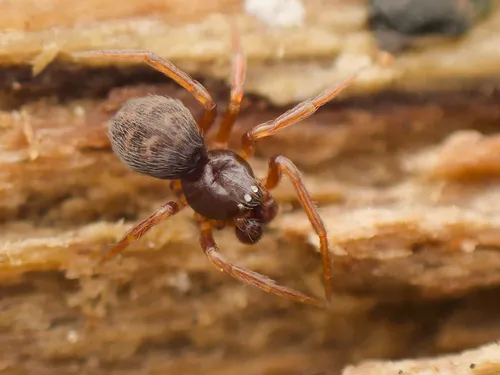
Dipoena washougalia
Dipoena washougalia
Dipoena washougalia is a species of cobweb spider in the family Theridiidae. It is found in the United States.
Dipoenoides formosa
Dipoenoides formosa
Confirmation of pattern match can be found here . ID by Rod Crawford.
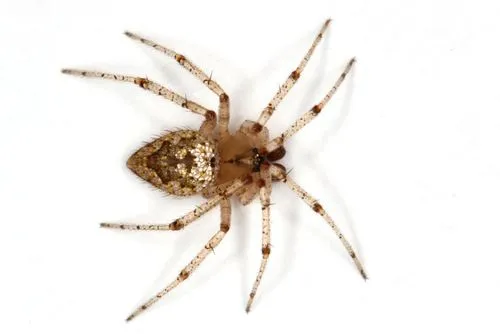
Eastern Triangular Cobweaver
Dipoenoides funebris
Identification: The images here are tentative ID's based on coloration, pattern, and localities.
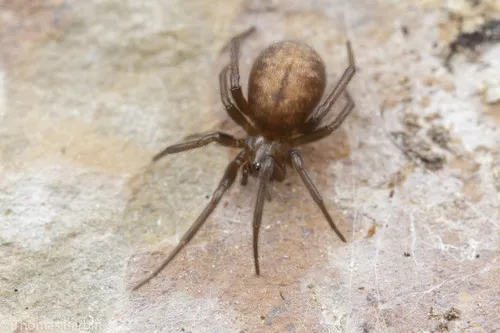
Enoplognatha intrepida
Enoplognatha intrepida
Enoplognatha intrepida is a spider in the family Theridiidae ("cobweb spiders"), in the infraorder Araneomorphae ("true spiders"). The distribution range of Enoplognatha intrepida includes the USA, Canada, Greenland, and Korea.
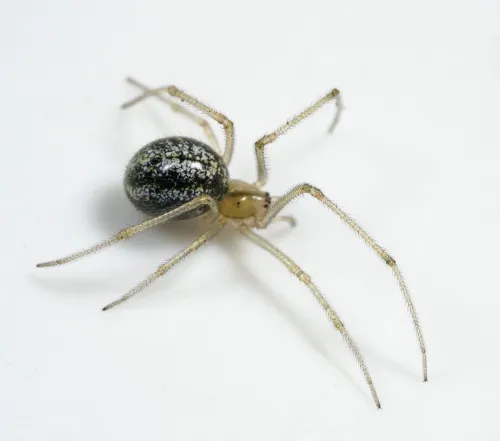
Enoplognatha latimana
Enoplognatha latimana
Male: 3 to 5 mm, female 4 to 6 mm. Prosoma light yellow, with narrow, black margin and dark median stripe. Sternum light yellow, with black margin and median stripe. Legs bright, almost white. Tibia usually (?) without black terminal ring. Opisthosom
Marbled Cobweb Spider
Enoplognatha marmorata
Identification: Epigynum: Ventral/Dorsal Palp:Ventral/Lateral
Enoplognatha ovata
Enoplognatha ovata
Identification: Enoplognatha ovata has several color morphs. This one is form lineata , with several pairs of dorsolateral spots, but no red stripes. Form redimita has two dorsolateral red stripes running the length of the abdominal dorsum. Form ovat
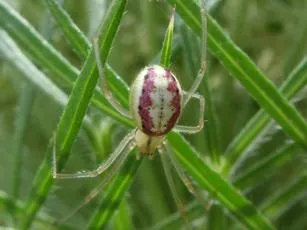
Common Candy-striped Spider sensu lato
Enoplognatha ovata sensu lato
Approximately 6mm from front of head to back of abdomen. There is a pale creamy-green coloured variety (form lineata), a form with two red stripes along the abdomen (redimita form) and another variation where the two red stripes are replaced by a sin
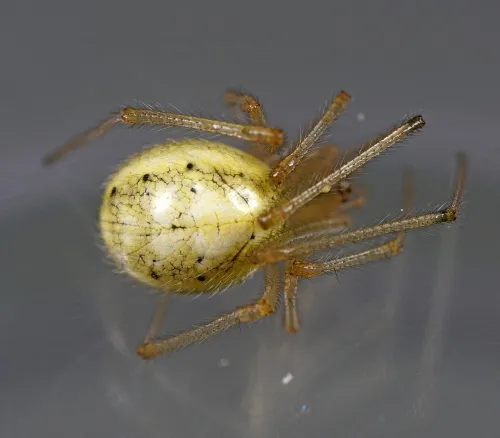
Common Candy-striped Spider sensu stricto
Enoplognatha ovata sensu stricto
Approximately 6mm from front of head to back of abdomen. There is a pale creamy-green coloured variety (form lineata), a form with two red stripes along the abdomen (redimita form) and another variation where the two red stripes are replaced by a sin

Enoplognatha thoracica
Enoplognatha thoracica
Length 3-4mm. A brown, easily over-looked spider which can be mistaken for a large Linyphiid. Unless identified by a recognised expert, a photo is required and the specimen should be examined with a microscope. Confirmation of this species requires e
Episinus amoenus
Episinus amoenus
Identification: Abdomen can be variable in shape. The tubercles can be long and pointed in immature specimens or short and round in mature specimens. (Levi, 1954)
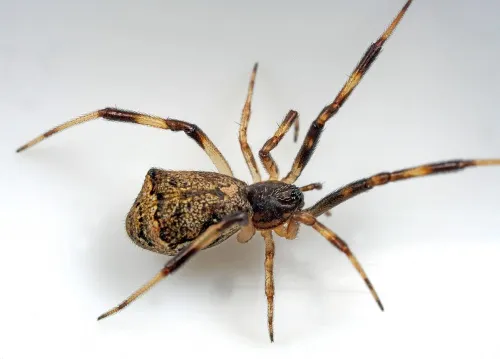
Episinus angulatus
Episinus angulatus
A small, mottled brownish tangle-web spider. The body is rather thin, the flat abdomen broadens a little bit near the end. Females grow up to 5.5 mm, males slightly smaller. Episinus truncatus – microscopic examination of genitalia is required to con
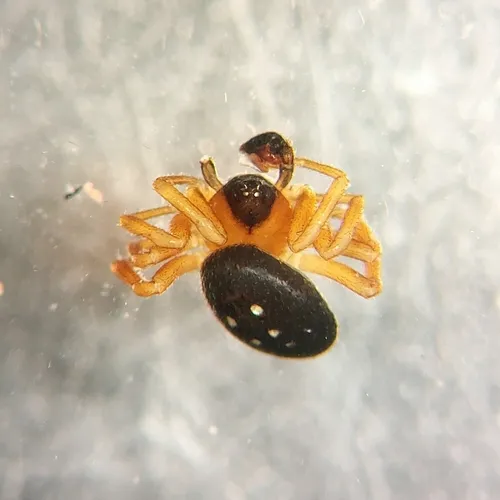
Silver Cobweb Weaver
Euryopis argentea
Euryopis argentea is a species of cobweb spider in the family Theridiidae. It is found in the United States, Canada, and Russia.
Faiditus cancellatus
Faiditus cancellatus
Faiditus cancellatus (Faiditus cancellatus) is a species in the family Theridiidae, commonly known as cobweb spiders, belonging to the order Araneae (Spiders). This species belongs to the genus Faiditus. Size: Female: 2.3-3.5mm Male: 2.5-4.5mm. Found
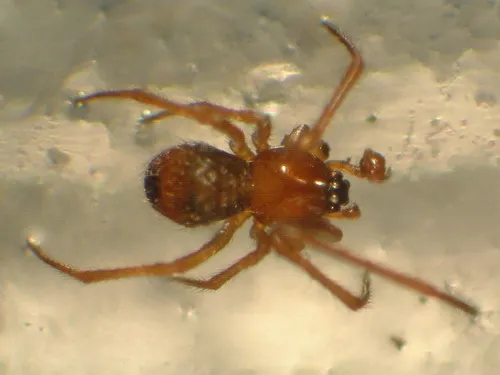
Fingered Cobweaver
Hentziectypus globosus
Identification: All specimens examined ... had the characteristic black spot on the abdomen, and the species can thereby readily be distinguished from A. conjuncta . Epigynum: Palp:
Red Widow
Latrodectus bishopi
Identification: The red widow spider has a reddish-orange head, thorax and legs with a black abdomen. The top of the abdomen usually has a row of red spots with yellow borders. This spider lacks a complete hourglass on the underside of the abdomen an
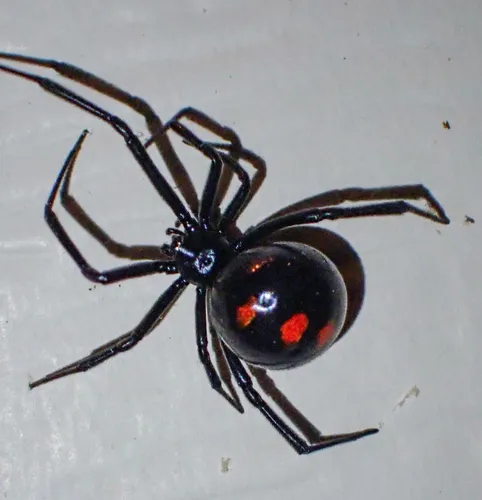
Northern Black Widow
Latrodectus variolus
Identification: Although the Northern Black Widow is slightly smaller and not "quite as venomous/dangerous" (definitely still not to be messed with), it is similar to the Southern Black Widow ( L. mactans ) in general behaviors. Please refer to L. ma
Neopisinus cognatus
Neopisinus cognatus
Identification: Prominent, spindle like setae on the dorsal tubercles. Type: Mexico, Tabasco, Teapa
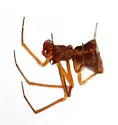
Neospintharus furcatus
Neospintharus furcatus
Identification: "Head of male has two short median processes; one on clypeus extending upward, and one above medial eyes, both bearing stiff hairs at tips." (Banks, 1908)
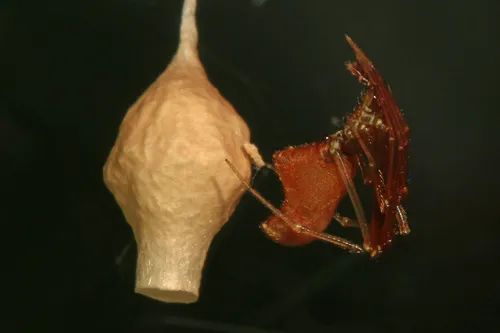
Horned Parasitic Cobweaver
Neospintharus trigonum
Identification: The male has two horns tipped with hair on the tip of the cephalothorax (head).
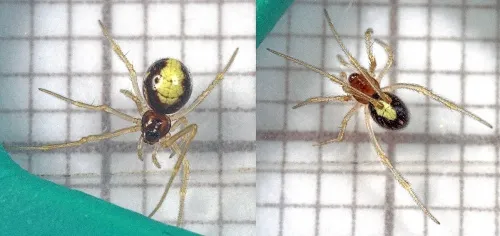
Neottiura bimaculata
Neottiura bimaculata
A small dark coloured spider with a broad whitish or yellowish dorsal stripe. The webs of this species are found on low vegetation, bushes and sometimes the lower branches of trees in a wide variety of habitats. Both sexes are mature mainly in early
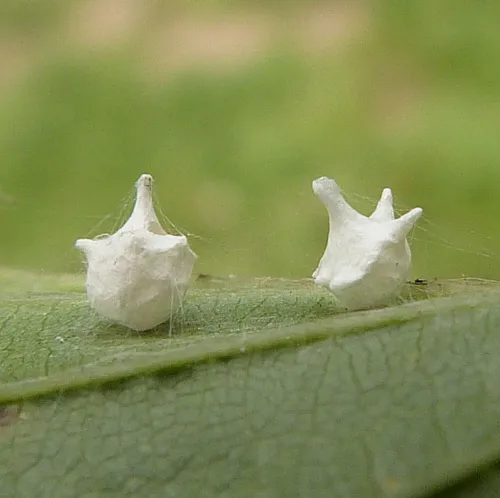
Paidiscura pallens
Paidiscura pallens
A tiny spider (around 1.5mm), which could be mistaken for a very young spider, rather than an adult. Usually pale ( pallens means "pale"), but variable in colour with green and dark forms occurring. Often overlooked due to its small size, but it's st
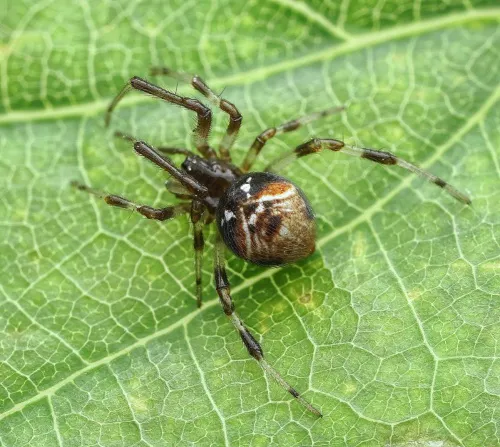
Parasteatoda lunata
Parasteatoda lunata
2.5 to 6 mm. Parasteatoda lunata has a distinctive large yellowish patch posteriorly on its unusually proportioned abdomen, and red patches laterally, contrasting with black overall colour. There is also another form which is browner in colour. P. si
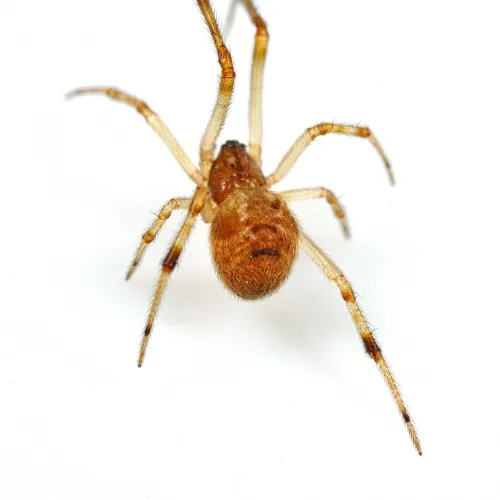
Parasteatoda simulans
Parasteatoda simulans
Males 2.5 to 3 mm, females 4 to 4.5 mm. Prosoma ochre-yellow. Sternum ochre yellow or brown, mostly irregularly spotted and with dark margin. Legs brown with narrow, darker rings. Opisthosoma spotted light and dark brown. Markings very variable. Exam
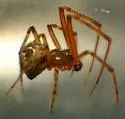
Parasteatoda tabulata
Parasteatoda tabulata
Identification: See drawing of male and female on page 38 of Yoshida 1983 . (Be careful, it's somewhat similar in appearance to P. tepidariorum . The best, if only, way to accurately separate them is by the genitalia.) Unlike Parasteatoda tepidarioru
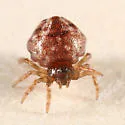
Phoroncidia americana
Phoroncidia americana
Identification: Abdomen with a series of humps, eye region projecting out above the clypeus.
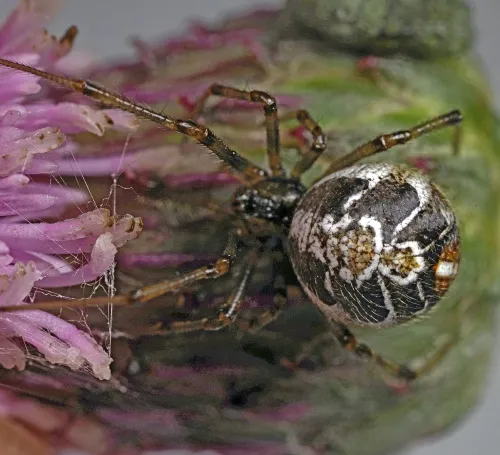
Phylloneta impressa
Phylloneta impressa
A small, well marked spider, but quite similar to related species so care needs to be taken with identification and detailed examination of the specimen may be necessary. This species is typically found on gorse bushes and heather on open ground, but
Phylloneta pictipes
Phylloneta pictipes
Identification: Carapace yellow-white with a median black band & narrow black border. Legs with dark bands usually at middle and both ends of segments ( T. albidum/frondeum will not have dark bands in the middle of leg segments). Description by Lev
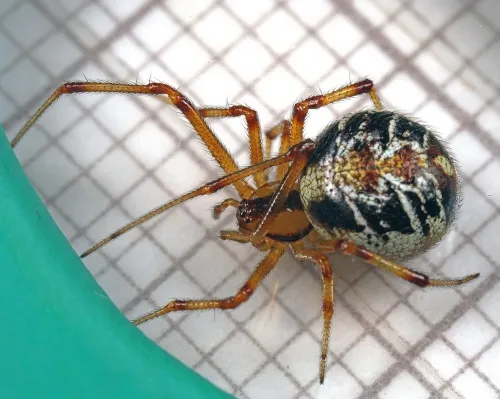
Mothercare Spider
Phylloneta sisyphia
Size 3 mm to 4 mm. The Mothercare Spider has a very rounded abdomen which has distinctive black and white markings on the back and some orange-brown streaks on the underside. Hedgerows and on various other vegetation. Often in gorse or thistles. The
Platnickina mneon
Platnickina mneon
A wandering theridiid that preys on other spiders, primarily Pholcids, Brown widows, common house spiders, various Theridion species, and conspecifics. Orb weavers as well. As opposed to pirate spiders which lure their prey to them, P. mneon will hea
Platnickina tincta
Platnickina tincta
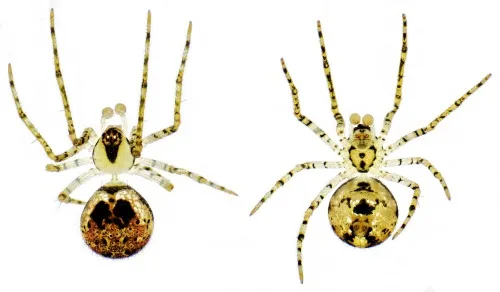
Small (2.5 to 3.5 mm). Even though this small spider is quite distinctively marked, accurate identification is difficult without detailed examination. If we cannot be certain that an image is Platnickina tincta but it is likely to be this species, it
Rhomphaea projiciens
Rhomphaea projiciens
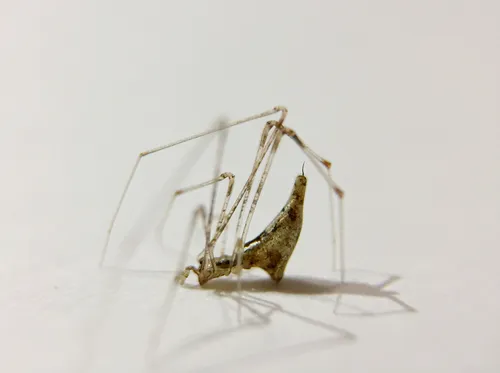
Identification: Voucher Specimens: det. by Hank Guarisco (Adjunct Curator of Arachnids, Sternberg Museum of Natural History, Fort Hays State University) Male: Female: According to Hank Guarisco, the spine at the apex of the abdomen is unique to this
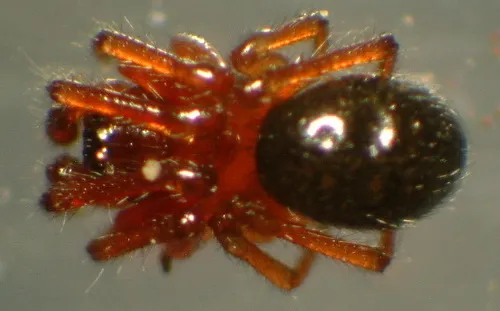
Robertus eremophilus
Robertus eremophilus
Robertus eremophilus is a species of cobweb spider in the family Theridiidae. It is found in the United States.
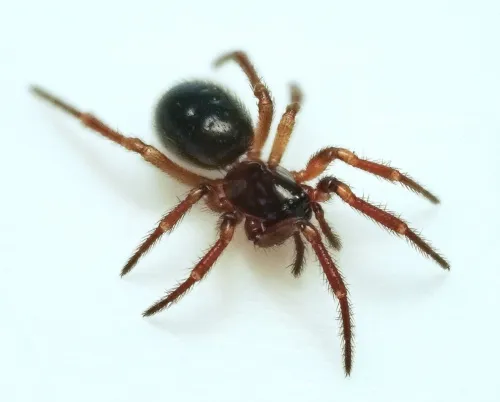
Robertus lividus
Robertus lividus
Length 2.5 to 4.5 mm. Prosoma yellowish red-brown. Opisthosoma yellowish grey to almost black. Examination of the genitalia of mature specimens is required to confirm this species. A ground living species found under stones, in leaf litter and moss.
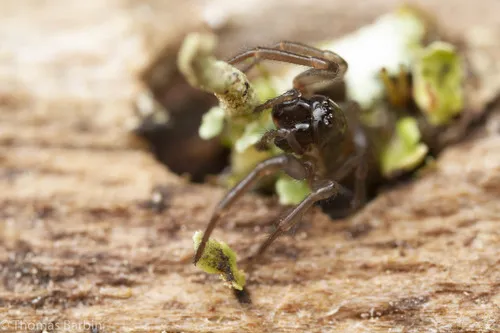
Robertus vigerens
Robertus vigerens
Robertus vigerens is a species of cobweb spider in the family Theridiidae. It is found in the United States and Canada.
Rugathodes sexpunctatus
Rugathodes sexpunctatus
Identification: "The color and pattern of specimens from the Pacific coast are variable and usually different from those of eastern specimens illustrated by figure 349. Western species have the dorsum of the abdomen frequently as one large black patc
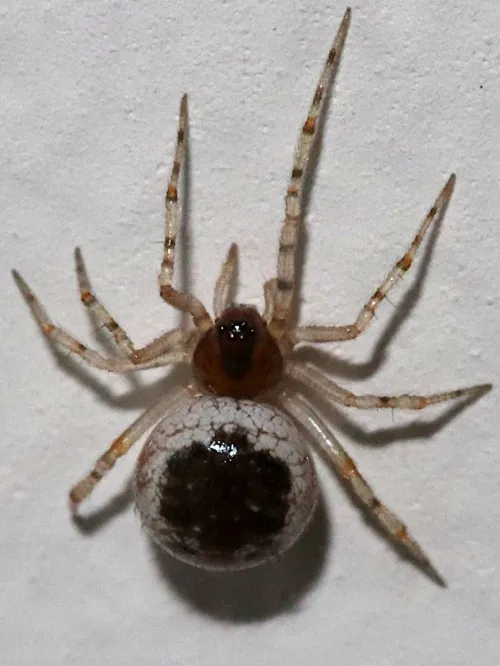
Sardinidion blackwalli
Sardinidion blackwalli
Length 2.5 to 5 mm. The pattern on the abdomen can be quite variable. This species builds its webs mainly in and around buildings, but also in grass tussocks and on other low plants and tree trunks in a variety of habitats. Infrequent and local in Br
Simitidion simile
Simitidion simile
Identification: To differentiate from Theridion : Trichobothrium absent on metatarsus III in Simitidion (Wunderlich, 2008)
Spintharus flavidus
Spintharus flavidus
Most easily found by sweeping understory vegetation in shaded woodlands.
Steatoda albomaculata
Steatoda albomaculata
Identification: Northeastern Variation - abdomen white or white with black marks, sometimes in the form of a series of anterior pointing triangles making a median dorsal black line. Abdomen pattern very variable. Western Variation - abdomen black oft
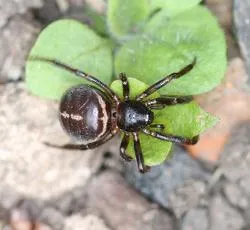
Rabbit Hutch Spider
Steatoda bipunctata
It has a glossy chestnut brown abdomen, usually with a thin pale band stretching across the front that incorporates a central white 'V' just behind the head. The abdomen has four tiny indentations on its back which in the absence of an internal skele
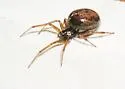
Steatoda borealis
Steatoda borealis
Identification: The abdomen is reddish brown with a lighter "T" shaped mark at the front end. The underside of the abdomen is also considerably lighter than the upper side. Note that several other species in the genus (including bipunctata, grandis,
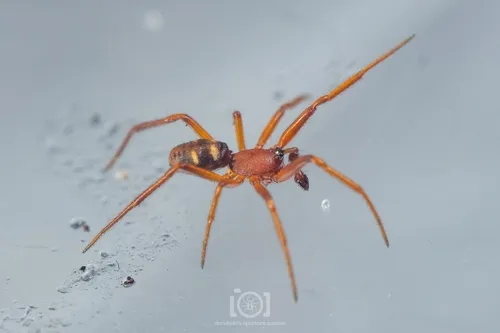
Steatoda erigoniformis
Steatoda erigoniformis
Steatoda erigoniformis is a species of cobweb spider in the family Theridiidae. It is found in a range from East Mediterranean to the Near East, Caucasus, China, Korea, Japan, and has been introduced into the Caribbeen.
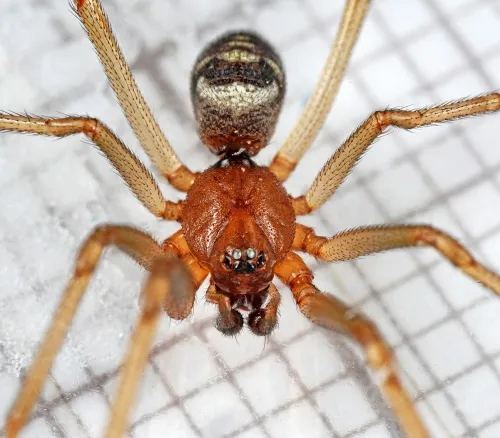
Steatoda grossa
Steatoda grossa
Length 7 to 10.5 mm (larger than the similar Steatoda bipunctata 4.5 to 7 mm). The abdomen of this false widow is a red-brown colour with a crescent shaped stripe at the front and three pale triangular spots along the top. These markings vary from sp
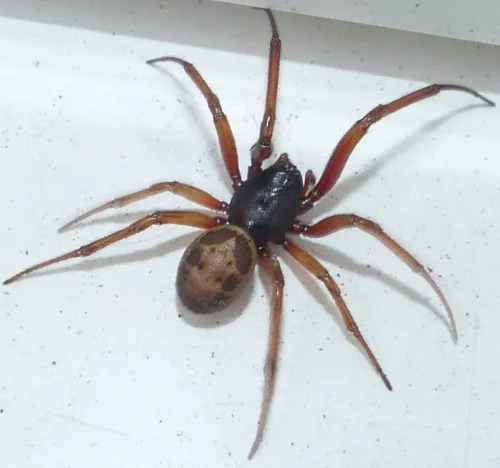
False Widow Spider
Steatoda nobilis
Sometimes known as the Noble False Widow spider - adults are usually larger than both Steatoda bipunctata and Steatoda grossa - the body length of an adult female false widow spider is around 15 millimetres, males are a little smaller. Maximum leg le
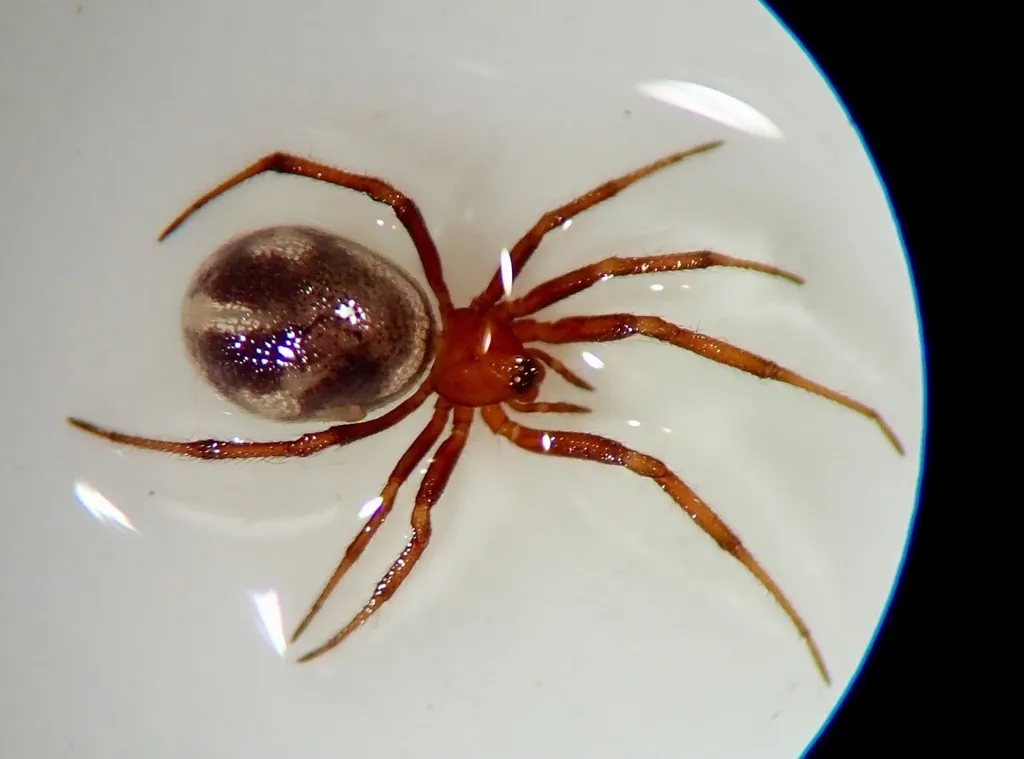
Steatoda variata
Steatoda variata
Steatoda variata is a species of cobweb spider in the family Theridiidae. It is found in the United States and Mexico.
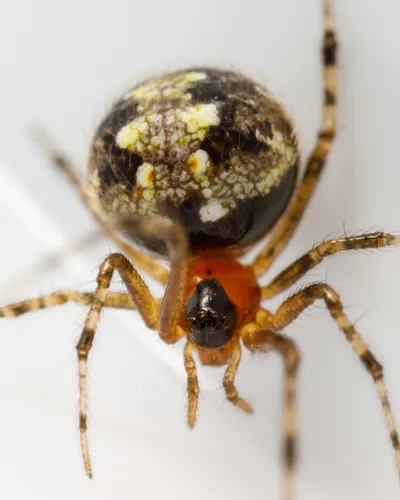
Theridion australe
Theridion australe
Identification: Color variation: Dark on carapace around eyes: Dark spots on abdomen above spinnerets: male:
Theridion californicum
Theridion californicum
Identification: This species appears to be highly polymorphic with regards to dorsal abdominal pattern, with pure yellow and white morphs and a series of morphs with black or red lines, rings or "blobs" on the abdomen .
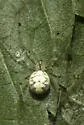
Theridion frondeum
Theridion frondeum
Identification: Palp: Epigynum (ventral/dorsal) Kaston provides no less than 8 dorsal views of T. frondeum , each showing a different pattern on the abdomen. Examples: Its background color is white but often with a tinge of yellow or green. Along the
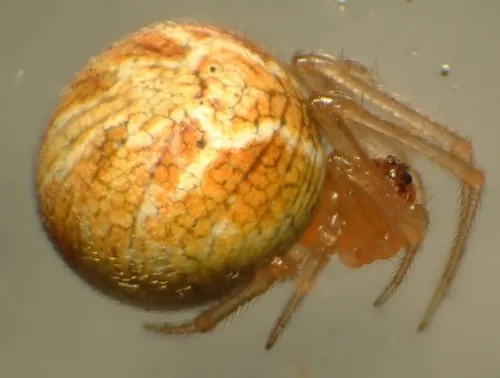
Theridion glaucescens
Theridion glaucescens
Identification: Orange-brown carapace with dark median V-shaped mark, broadening from the thoracic groove into the ocular region. The abdomen is dirty white, dusted with grays and reds. Along the abdominal midline is a series of white overlapping dia
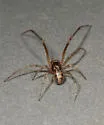
Theridion goodnightorum
Theridion goodnightorum
Identification: Male: "Some specimens from Texas and California have the dorsum of the abdomen much darker, the venter lighter."
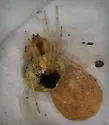
Theridion kawea
Theridion kawea
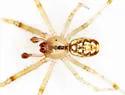
Identification: Epigynum is an oval depression with a posterior border; a median raised area divides the depression into two equal halves. Carapace yellow with reddish triangular mark enclosing eye area. Abdomen with a scalloped, reddish, median band
Theridion leechi
Theridion leechi
Identification: Levi (1957a) writes: "The small eyes of this species differentiate the females from those of the related Theridion punctipes and from juvenile specimens of T. agrifoliae and T. californicum." TYPE LOCALITY.-Male holotype and female al
Theridion llano
Theridion llano
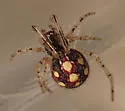
Identification: "The genitalia of Theridion llano clearly separate the species from related ones."
Theridion melanurum
Theridion melanurum
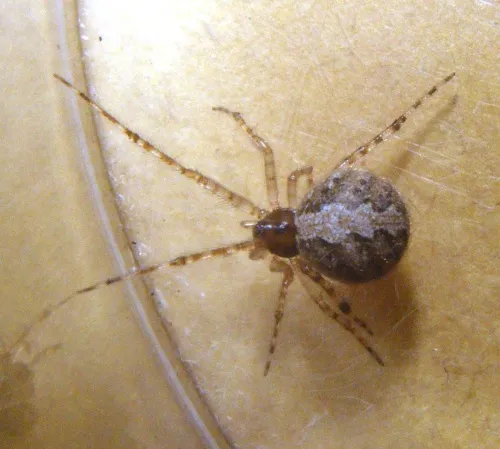
A small spider at around 3 mm. The species is quite variable and the zig-zag band of the abdomen can be white or barely visible. The head is dark and quite shiny. T. melanurum is usually found on buildings and around habitation. Widespread and fairly
Theridion michelbacheri
Theridion michelbacheri
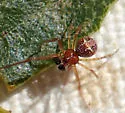
Identification: Male palpus "curiously modified, with cymbium wrapped around bulb; cymbium black ". "This species can be readily distinguished from all other members of the genus by the peculiar palpus and the epigynum ".
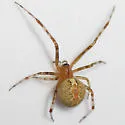
Theridion murarium
Theridion murarium
Identification: Epigynum two circular shapes separated by two and one-half diameters. (Levi, 1957a)
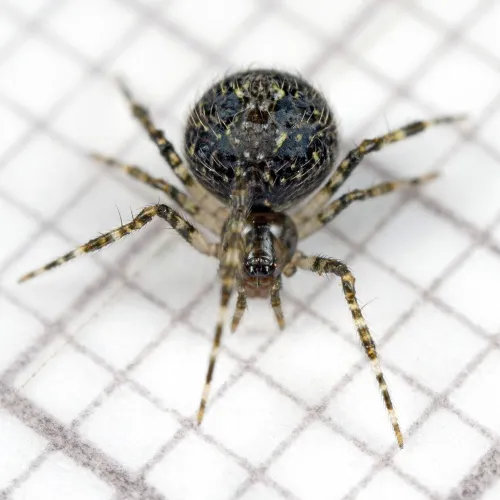
Theridion mystaceum
Theridion mystaceum
A small spider at around 3 mm. The species is quite variable and the zig-zag band of the abdomen can be white or barely visible. The head is dark and quite shiny. It is very similar to Theridion melanurum and detailed examination is needed for a reli
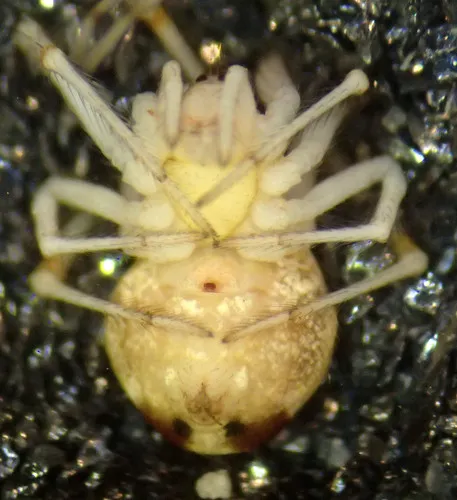
Theridion neomexicanum
Theridion neomexicanum
Theridion neomexicanum is a species of cobweb spider in the family Theridiidae. It is found in the United States and Canada.
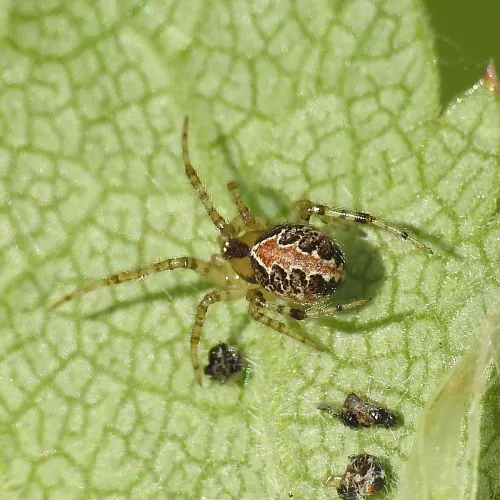
Theridion pictum
Theridion pictum
Size 4 to 5 mm. This is an attractively patterned mothercare spider. Frequent in relatively damp terrain, in herbaceous and bush layer. Builds an untidy web, often in thistles. Widespread and fairly frequent in much of Britain.
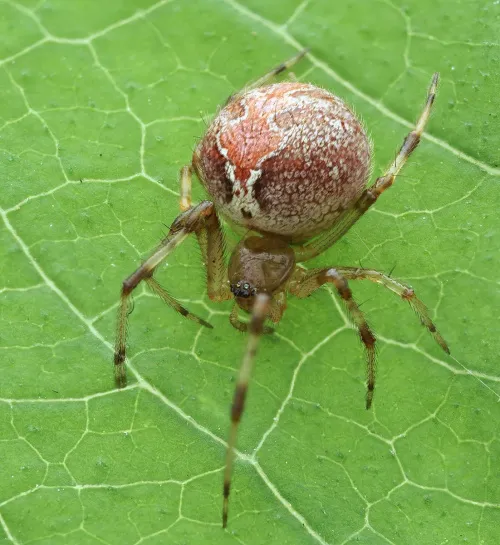
Theridion pinastri
Theridion pinastri
Length 2.5-3mm. Prosoma yellowish-brown, legs yellowish-brown, annulated with black. Opisthosoma dorsally with median band brick-red with white margin, laterally brown, spotted with white, ventrally white, tinged with brown or green. Examination of g
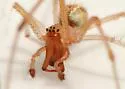
Theridion punctipes
Theridion punctipes
Identification: Adult males could perhaps be identified in the species range with good photos by the very long chelicerae, dark markings on the anterior chelicerae and the dark spot on the epigastric plate (KRS).
Theridion submissum
Theridion submissum
Identification: Male carapace orange-brown with reddish triangular area enclosing the eyes and coming to a point in center of carapace. Dorsal side of abdomen with slightly scalloped white longitudinal median band extending its full length. Sides of
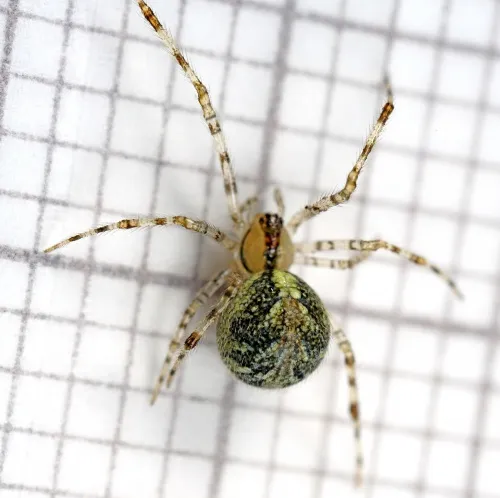
Theridion varians
Theridion varians
A small variable species. The abdomen is usually a pale green, and often brightly patterned with red, but some individuals show very little red in the pattern. Makes a small tangled web amongst foliage. Common and widespread throughout Britain, fewer
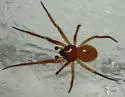
Thymoites unimaculatus
Thymoites unimaculatus
Identification: There are two pattern types for this spider. The northern has abdomen light orange with black spot on dorsum - carapace is orange with eye region black. The southern specimens the abdomen is whitish usually with three dusky stripes,
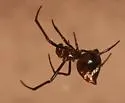
Argyrodes pluto
Argyrodes pluto
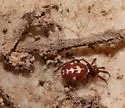
Asagena fulva
Asagena fulva
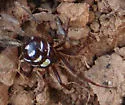
Asagena medialis
Asagena medialis
Canalidion montanum
Canalidion montanum
Chrosiothes chirica
Chrosiothes chirica
Chrosiothes jenningsi
Chrosiothes jenningsi
Chrysso albomaculata
Chrysso albomaculata
Coleosoma normale
Coleosoma normale
Crustulina altera
Crustulina altera
Cryptachaea blattea
Cryptachaea blattea
Dipoena dorsata
Dipoena dorsata
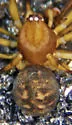
Dipoena malkini
Dipoena malkini
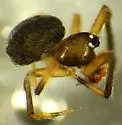
Dipoena nigra
Dipoena nigra
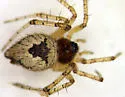
Dipoenoides californica
Dipoenoides californica
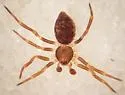
Dipoenoides mulaiki
Dipoenoides mulaiki
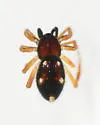
Dipoenoides quinquemaculata
Dipoenoides quinquemaculata
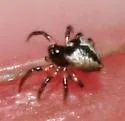
Dipoenoides taczanowskii
Dipoenoides taczanowskii
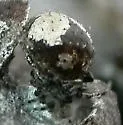
Dipoenoides tavara
Dipoenoides tavara
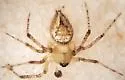
Dipoenoides texana
Dipoenoides texana
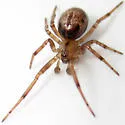
Enoplognatha caricis
Enoplognatha caricis
Enoplognatha joshua
Enoplognatha joshua
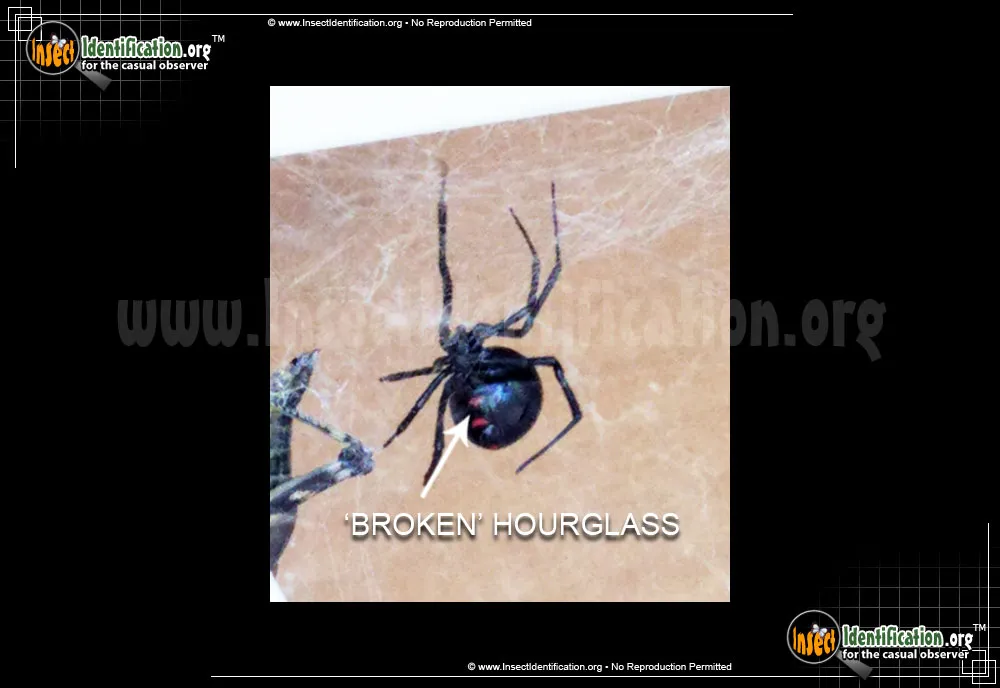
Northern Black Widow
Lactrodectus variolus