
Family Sheetweb and Dwarf Spiders (Linyphiidae)
Linyphiidae is a family in the order Araneae. Browse 287 named species recorded in this family, or open an individual profile for its available identification and natural-history information.
Species in Linyphiidae (287)
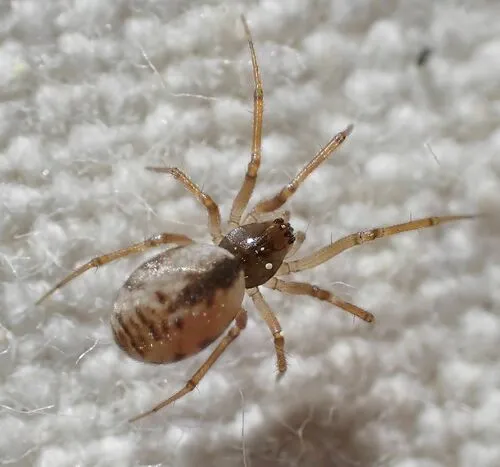
Agnyphantes arboreus
Agnyphantes arboreus
Identification: "Cephalothorax dull yellow, strongly suffused with dusky, darker at the margin and in a shield-shaped spot in front of dorsal groove. Abdomen light with scattered silvery spots, marked by a dark median longitudinal stripe with several
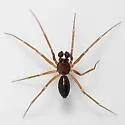
Agyneta angulata
Agyneta angulata
Identification: "Carapace light orange, shiny, finely reticulate; margin, radiating lines suffused with dark gray. Abdomen uniformly light gray. Legs yellow." Palp
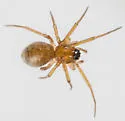
Agyneta barrowsi
Agyneta barrowsi
Identification: "Carapace light orange-brown, shiny, finely reticulate; lightly suffused with gray along margin, radiating lines; sometimes with trident mark. Abdomen uniformly light to dark gray. Legs light yellow; basal part of femur darker." Epigy
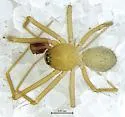
Agyneta bronx
Agyneta bronx
Identification: "Carapace light yellow, shiny, finely reticulate. Abdomen uniformly off-white. Legs light yellow." Palp:

Agyneta conigera
Agyneta conigera
This is one of the 'money spiders' in the Linyphidae family - which has more UK species than any other. Most are small and need microscopic examination to identify. No additional images available for this species.
Agyneta evadens
Agyneta evadens
Identification: "Carapace dark brown, shiny, finely reticulate; lightly suffused with light gray along radiating lines, pars cephalica and margin. Abdomen uniformly dark gray, sometimes with faint, off-white broken chevrons (males) sometimes off-whit
Agyneta fabra
Agyneta fabra
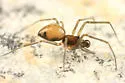
Identification: Male: Carapace dark orange-brown, shiny, finely reticulate; lightly suffused with gray along margin and radiating lines; sometimes with the dark gray trident mark. Abdomen uniformly gray, or pale off-white with four dark spots mediall
Agyneta fillmorana
Agyneta fillmorana
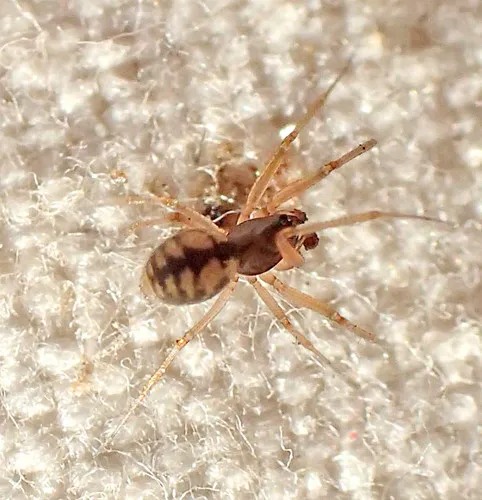
Identification: Carapace orange, shiny, finely reticulate; can be suffused with dark gray along radiating lines and pars cephalica. Abdomen pattern variable: large morph male's is off-white with pattern consisting of a dark median band extending late
Thrifty Short-legged Sheetweaver
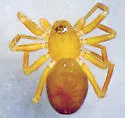
Agyneta micaria
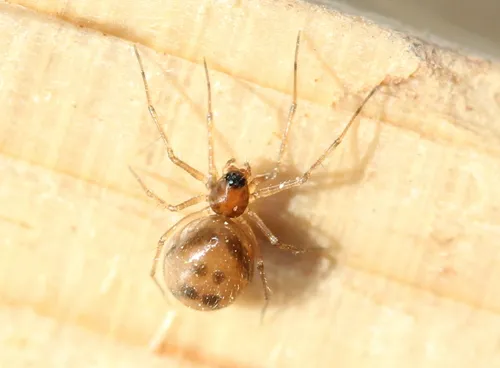
Identification: "Carapace brown, shiny, finely reticulate; suffused with gray along radiating lines and margin; trident mark present. Legs light yellow, coxae with dark mark apically, tip of femurs and metatarsus I-IV with dark gray marks" Male abdom
Agyneta olivacea
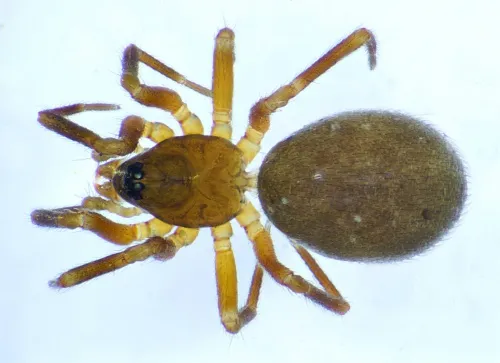
Agyneta olivacea
Identification: "Carapace light brown-yellow, shiny, finely reticulate; suffused with dark gray along margin and radiating lines; trident mark present. Abdomen uniformly dark gray. Legs yellow, tip of femur, tibia and metatarsus brown" Epigynum
Agyneta ramosa
Agyneta ramosa
This is one of the 'money spiders' in the Linyphidae family - which has more UK species than any other. Most are small and need microscopic examination to identify. Microscopic examination of the of the genitalia is required to confirm this species.
Agyneta rurestris
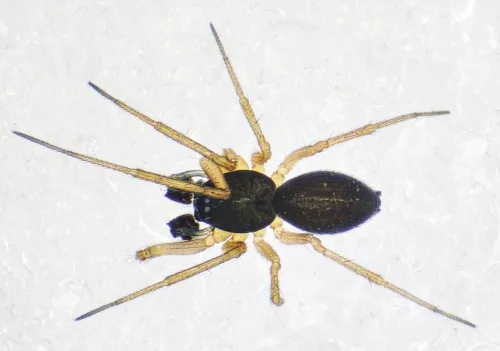
Agyneta rurestris
Length 1.4 to 3 mm. Prosoma dark brown, with black margin. Sternum dark brown. Chelicerae bright yellowish brown, sometimes tinged with black. Legs bright yellowish brown, sometimes tinged with black. Opisthosoma grey to almost black. This species ca
Agyneta saxatilis sensu stricto
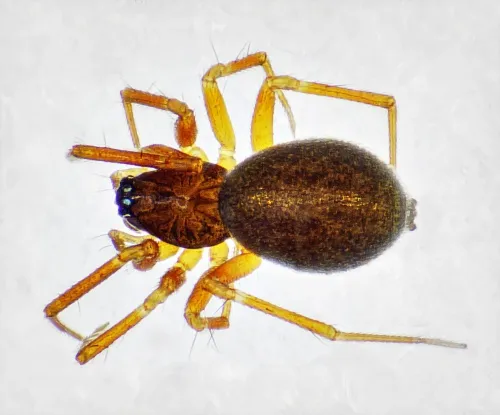
Agyneta saxatilis sensu stricto
2.0 to 2.3 mm. Prosoma brown, sometimes darkened with black. Sternum black-brown. Chelicerae yellowish-brown. Legs yellowish-brown. Opisthosoma grey-black. This species can only be confirmed by examination of the genitalia of mature specimens. Widesp
Agyneta semipallida
Agyneta semipallida
Identification: "Carapace light yellow, shiny, finely reticulate; suffused with dark gray along margin, radiating lines. Abdomen off-white with an apical black mark. Legs yellow." Epigynum
Agyneta serrata
Agyneta serrata
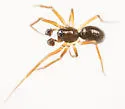
Identification: "Carapace light orange, shiny, finely reticulate; radiating lines, margin suffused with dark gray; trident mark present. Abdomen uniformly light to dark gray, sometimes with apical white hourglass mark. Legs light yellow, femurs light
Agyneta sheffordiana
Agyneta sheffordiana
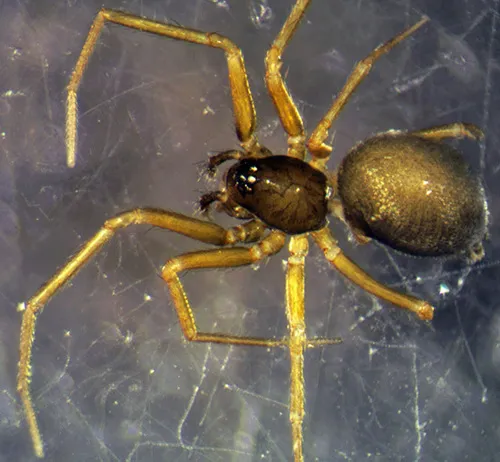
Identification: "Carapace light khaki-brown, shiny, finely reticulate; suffused with dark gray along margin, radiating lines; trident mark present. Abdomen uniformly light gray. Legs light yellow, prolateral and retrolateral surface of palpal femora
Agyneta subtilis
Agyneta subtilis
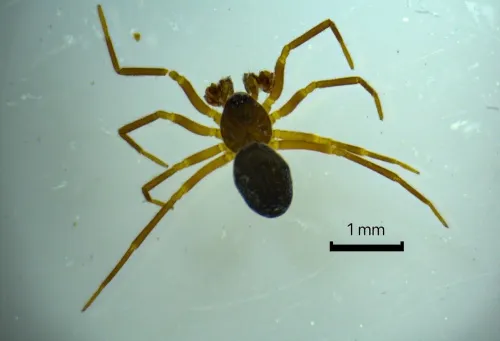
Body length: 2.5 to 3 mm. Prosoma red-brown, margin darkened. Sternum red-brown. Chelicerae without denticles. Legs yellow-brown, tibia and metatarsus darker. Opisthosoma dark brown to black. Confirmation of this species requires examination of the g
Agyneta unimaculata
Agyneta unimaculata
Identification: "Carapace yellow-brown, shiny, finely reticulate; lightly suffused with gray along radiating lines and pars cephalica. Abdomen uniformly light to dark gray. Legs light yellow, base of femur slightly suffused with dark gray" Palp Epigy
Allomengea dentisetis
Allomengea dentisetis
Identification: "Cephalothorax, chelicerae and legs light brown. Abdomen cream-colored with gray suffusion, a faint pattern of grayish chevrons dorsally." Epigynum
Aphileta misera
Aphileta misera
Identification: Palp: Epigynum: Additional palp/epigynum images can be found here .
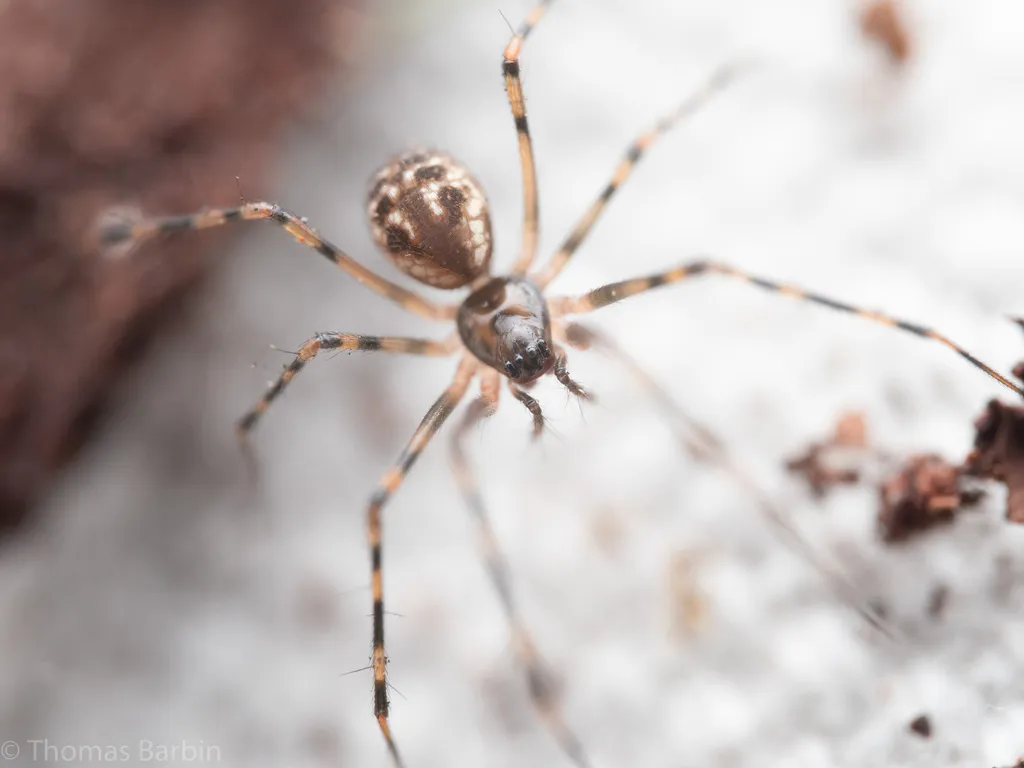
Arcuphantes arcuatulus
Arcuphantes arcuatulus
Arcuphantes arcuatulus is a species of sheetweb spider in the family Linyphiidae. It is found in the United States and Canada.
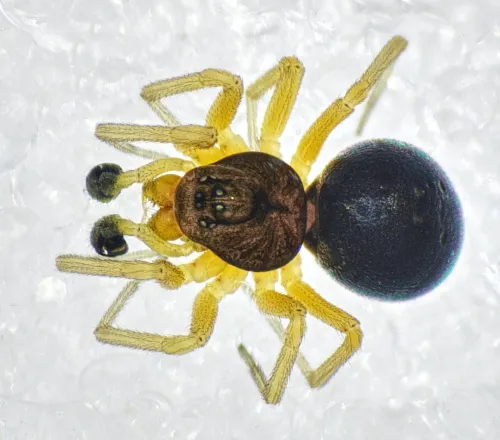
Baryphyma pratense
Baryphyma pratense
Length 2 to 2.5 mm. Prosoma brown, with black margin, black median spot and radial stripes. Opisthosoma dark grey to black. Male with elevated head region. Microscopic examination of the genitalia is required to confirm this species. Flood plains of
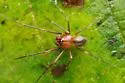
Bathyphantes alascensis
Bathyphantes alascensis
Identification: "Color of carapace and appendages light yellowish to light brown, without markings, legs in some cases broadly darkened between joints. Abdomen dark gray above, without cross bands" Palp Epigynum
Bathyphantes alboventris
Bathyphantes alboventris
Identification: "Color of carapace varying from dusky brown with distinct blackish radial streaks in darker specimens to yellowish brown with little shading and almost no radial streaks in lighter specimens; central area of carapace faded and more ye
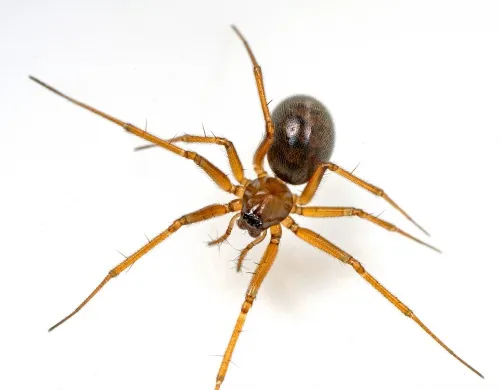
Bathyphantes approximatus
Bathyphantes approximatus
Males 2 to 3 mm, females 2-3 to 5 mm. Prosoma brown, with darkened margin. Sternum blackish. Opisthosoma black with bright pattern dorsally consisting of transverse bands or chevrons. Tibial spines: 2222 / TmIV: no / TmI: 0.15-0.25 Confirmation of th
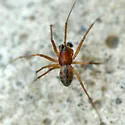
Bathyphantes brevipes
Bathyphantes brevipes
Identification: "Color of carapace yellowish to light brown, with sides of thorax narrowly edged in black; dorsum of abdomen pale gray, with an irregular or broken median band of blackish and a row of blackish spots along each side" Epigynum "..there
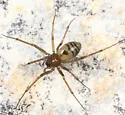
Bathyphantes brevis
Bathyphantes brevis
Identification: Close to B. alboventris in appearance. "Color of carapace light brown, lightly shaded on margins, sides of thorax narrowly edged with black;Abdomen pale gray on dorsum, marked with blackish spots on anterior part and a series of black
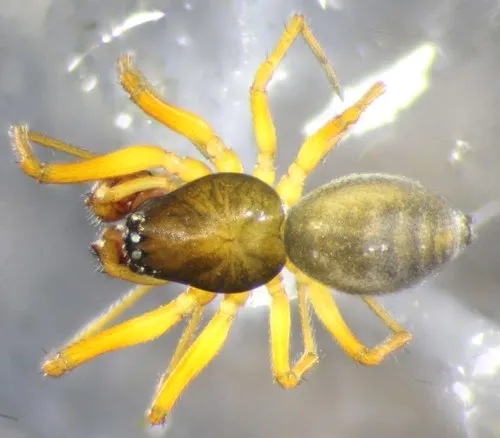
Canada Sheetweb Weaver
Bathyphantes canadensis
Identification: "Color of carapace light to dark brown, with dusky radial marks. Abdomen varying from pale gray to blackish above, usually with characteristic pattern of dark and light gray" Palp
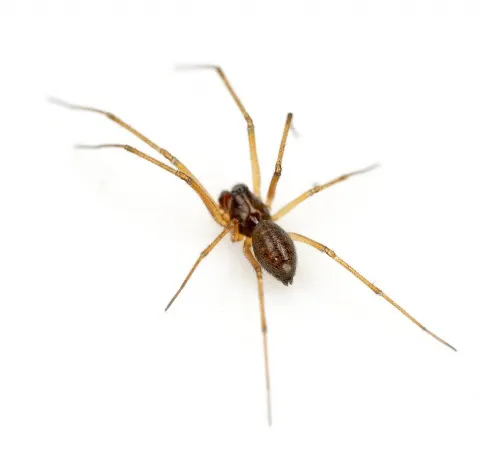
Bathyphantes gracilis
Bathyphantes gracilis
The carapace is brown and the abdomen features black bars on a grey-brown background although this colouration is variable and some specimens are wholly grey-brown or black. Examination of the genitalia is required to confirm this species. Common in
Bathyphantes keeni
Bathyphantes keeni
Identification: "Color of carapace light brownish with sides of thorax and all of head darkened with dusky shadings and streaks. Carapace humped behind eye area, prominently in male, slightly in female. Dorsum of abdomen covered with pattern of dark
Bathyphantes nigrinus
Bathyphantes nigrinus
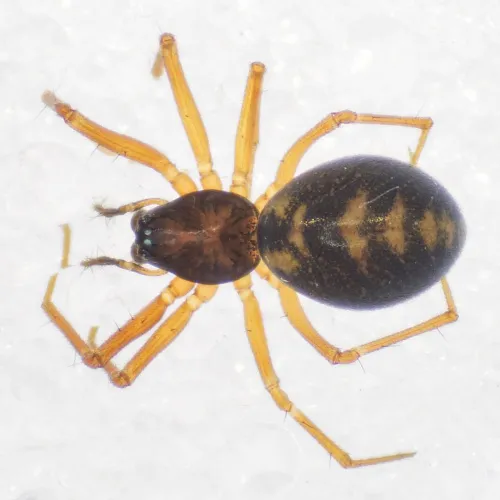
Length 2.5-3mm. Prosoma reddish brown, with darkened margins. Sternum almost black. Legs yellow-brown. Opisthosoma dark grey, dorsally and laterally mostly with bright pattern, sometimes dorsally bright without pattern. This is one of the 'money spid
Bathyphantes orica
Bathyphantes orica
Identification: "Color of carapace and appendages yellowish amber; abdomen dark gray, with pale gray patches on front half of dorsum." Epigynum
Bathyphantes pallidus
Bathyphantes pallidus
Identification: "Color of carapace yellowish brown to light brown, more or less shaded with dusky brown, especially on sides of thorax. Abdomen dark gray, with a long series of whitish cross bands above, usually divided medially by a narrow, longitud
Bathyphantes parvulus
Bathyphantes parvulus
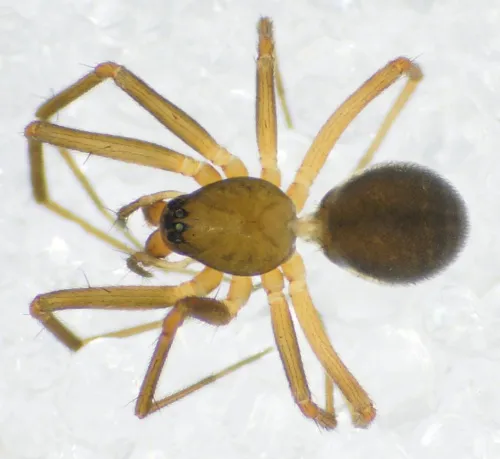
Length 2-2.3mm. Prosoma brown with darkened margin. Sternum black. Legs light yellow, darkened on joints. Opisthosoma dark grey to black with vague, dark pattern. This is one of the 'money spiders' in the Linyphidae family - which has more UK species
Bolyphantes luteolus
Bolyphantes luteolus
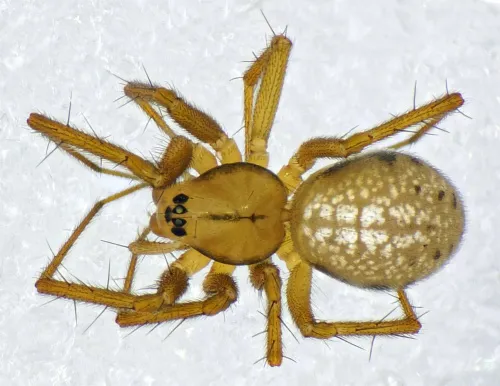
Length 3 to 5 mm. Prosoma brown. Opisthosoma yellowish brown, dorsally with irregularly arranged spots. This species can only be confirmed by examination of the genitalia of mature specimens. Grassland, heathland, moorland and wet flushes, beneath st
Centromerita bicolor
Centromerita bicolor
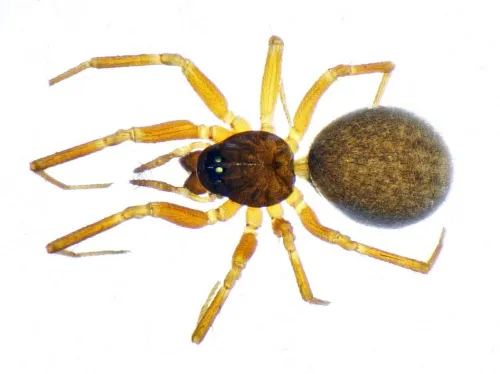
Size 3.0 to 3.5 mm. Carapace and legs unicolourous brown to dark brown. Male head with a number of forward directed spines, fewer in females. Abdomen brown to dark brown. If brown then the abdomen has the same colour as the carapace and legs. If dark
Centromerita concinna
Centromerita concinna
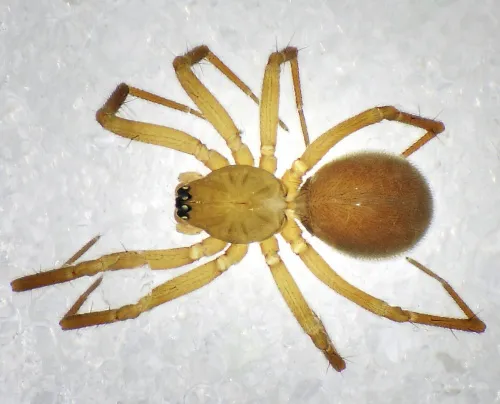
Length 2 to 3 mm. Prosoma pale yellow, with black margin. Sternum almost black. Chelicerae red-brown. Legs red-brown. Opisthosoma dark grey to black. Spinnerets red-brown. Unless identified by a recognised expert, a photo is required and the specimen
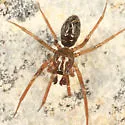
Centromerus cornupalpis
Centromerus cornupalpis
Identification: "Cephalothorax, chelicerae, and legs light brown, lightly suffused with gray locally; dorsal and lateral surfaces of abdomen gray with faint indications of light transverse bars posteriorly and with transverse rows of light spots" Pal

Centromerus dilutus
Centromerus dilutus
This is one of the 'money spiders' in the Linyphidae family - which has more UK species than any other. Most are small and need microscopic examination to identify. No additional images available for this species.
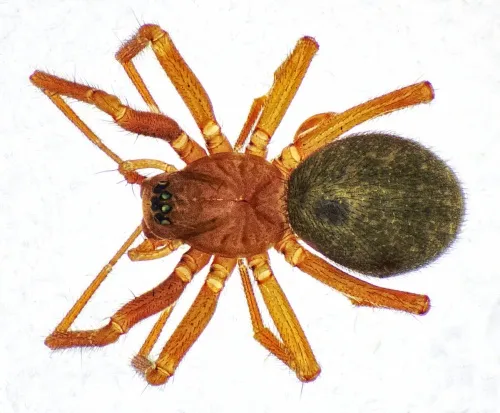
Centromerus sylvaticus
Centromerus sylvaticus
Length 2.2-4mm. Prosoma yellow-brown, with dark margin in head region. Sternum brown, suffused with black.. Chelicerae relatively long. Legs yellow-brown, robust. Opisthosoma grey to black, sometimes with bright transverse stripes posteriorly, ventra
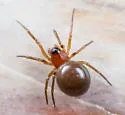
Ceraticelus atriceps
Ceraticelus atriceps
Identification: This species is very similar to C. fissiceps , but female C. atriceps lack the dorsal scutum of C. fissiceps . Palp: Epigynum:
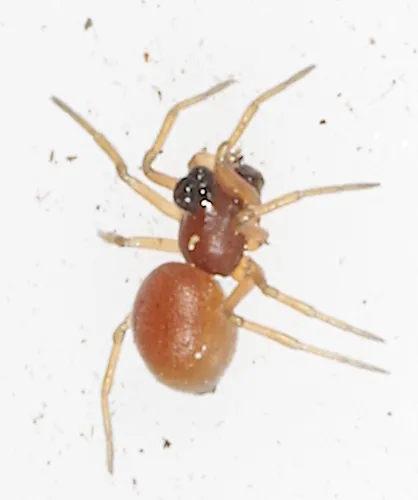
Ceraticelus bulbosus
Ceraticelus bulbosus
Ceraticelus bulbosus is a species of dwarf spider in the family Linyphiidae. It is found in North America, the Netherlands, Germany, Poland, Finland, and a range from Russia (Europe to Far East).
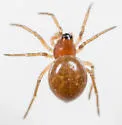
Ceraticelus emertoni
Ceraticelus emertoni
Identification: Palp: Epigynum: This species is commonly found sweeping grasslands, prairies or similar habitats. (ChH-28 Mar 2024)
Ceraticelus fissiceps
Ceraticelus fissiceps
Identification: Females have a dorsal scutum that the similar C. atriceps lacks. Palp: Epigynum:
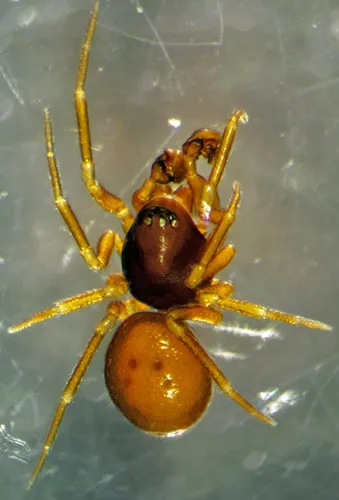
Ceraticelus laetabilis
Ceraticelus laetabilis
Ceraticelus laetabilis is a species of dwarf spider in the family Linyphiidae. It is found in the United States and Canada.
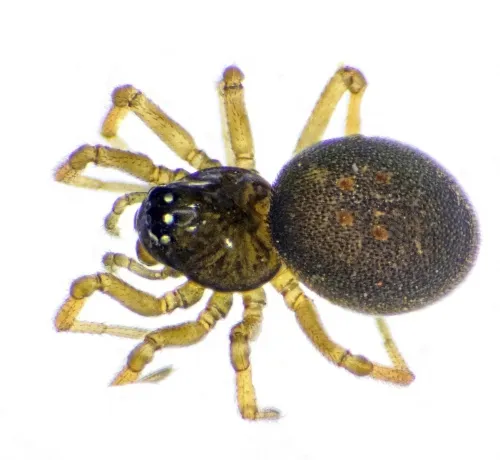
Ceratinella brevipes
Ceratinella brevipes
Size 1 to 1.8 mm. Prosoma brown, with dark radial stripes and margin, opisthosoma dark grey. Confirmation of this species require examination of the genitals of mature specimens. In moss and litter layer in various habitats. http://srs.britishspiders
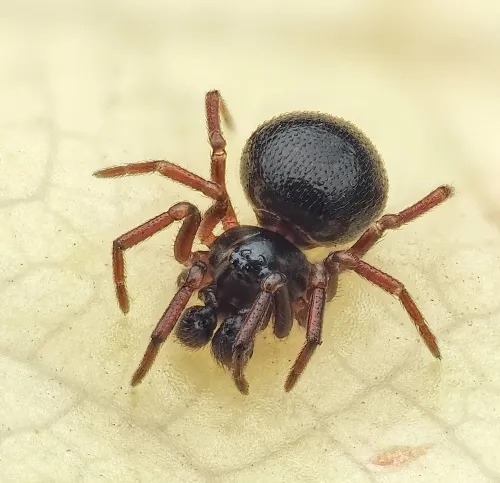
Ceratinella brevis
Ceratinella brevis
This is one of the 'money spiders' in the Linyphidae family - which has more UK species than any other. Most are small and need microscopic examination to identify.
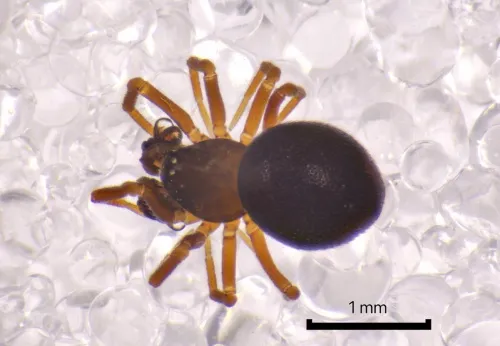
Ceratinella scabrosa
Ceratinella scabrosa
Body length 1.7 to 2 mm. Opisthosoma grey to grey-brown, dorsally almost completely covered by black-brown scutum. Microscopic examination of the genitalia is required to confirm this species. Dry grassland, ancient woodland, leaf litter. http://srs.
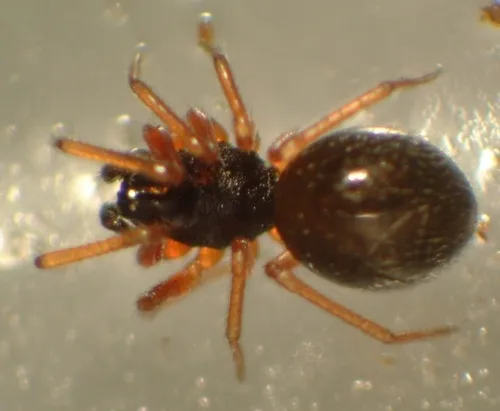
Ceratinops crenatus
Ceratinops crenatus
Ceratinops crenatus is a species of dwarf spider in the family Linyphiidae. It is found in the USA.
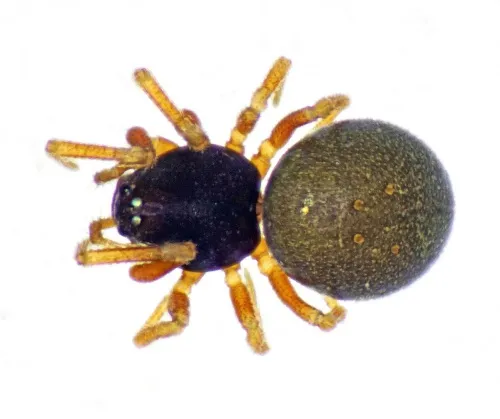
Cnephalocotes obscurus
Cnephalocotes obscurus
Males 1.5 to 1.9mm, females 1.5 to 2 mm. Prosoma black-brown. Legs yellow-orange to brown. Opisthosoma dark grey to black with distinct impressed dots. Confirmation of this species requires examination of the genitalia of mature specimens. Found in a
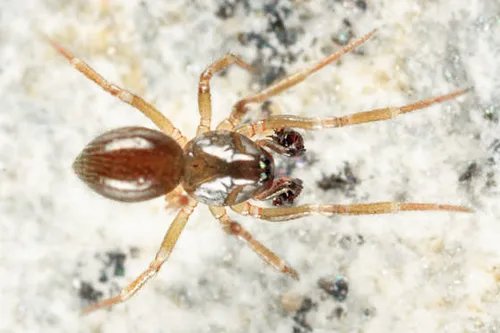
Collinsia oxypaederotipus
Collinsia oxypaederotipus
Collinsia oxypaederotipus is a species of dwarf spider in the family Linyphiidae. It is found in the United States.
Coreorgonal bicornis
Coreorgonal bicornis
Identification: "The male of S. bicornis can be diagnosed readily by the form of the carapace (Fig . 145), coupled with the form of the palp (Fig . 156). The female of S. bicornis cannot be distinguished from S. monoceros by the epigynum, but may be
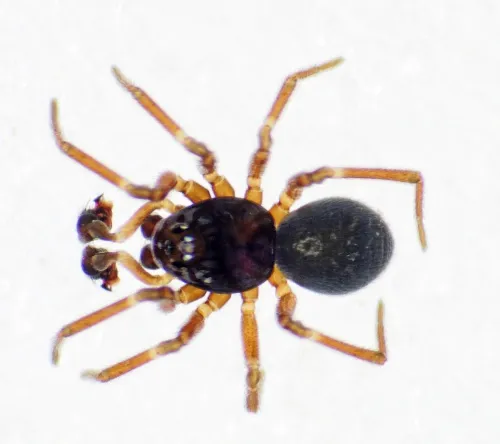
Dicymbium nigrum
Dicymbium nigrum
Females 1.9 to 2.5 mm, males 1.8 to 2.4 mm. Dicymbium brevisetosum and Dicymbium nigrum are very difficult to separate. Separation of these species can only be based on males, with females being indistinguishable from each other. The genitalia of the
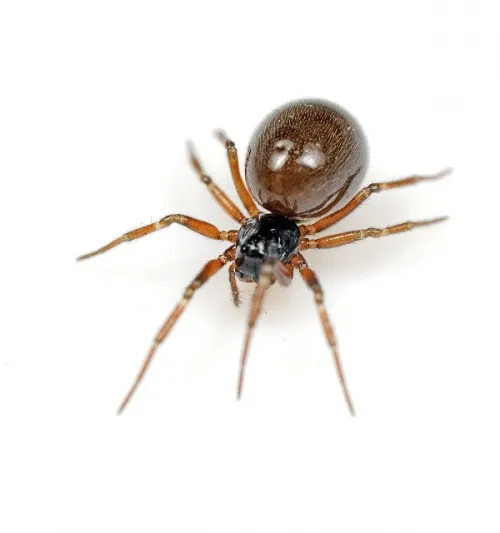
Dicymbium nigrum/brevisetosum agg.
Dicymbium nigrum/brevisetosum agg.
Separation of these species can only be based on males, with females being indistinguishable from each other. The genitalia of the two species are identical. The British Arachnological Society record these two as separate species with females being g
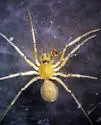
Diplocentria bidentata
Diplocentria bidentata
Identification: Palp: There are also excellent images that can be found on the Spiders of Belgium and France website .
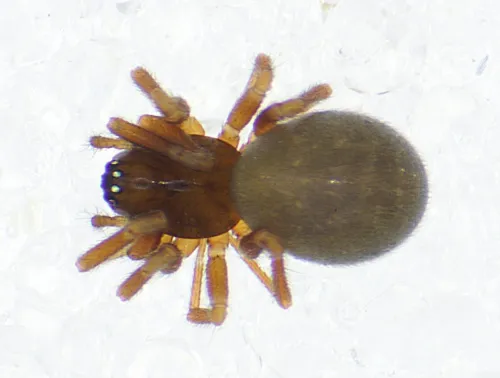
Diplocephalus latifrons
Diplocephalus latifrons
This is one of the 'money spiders' in the Linyphidae family - which has more UK species than any other. Most are small and need microscopic examination to identify. Microscopic examination of the of the genitalia is required to confirm this species.
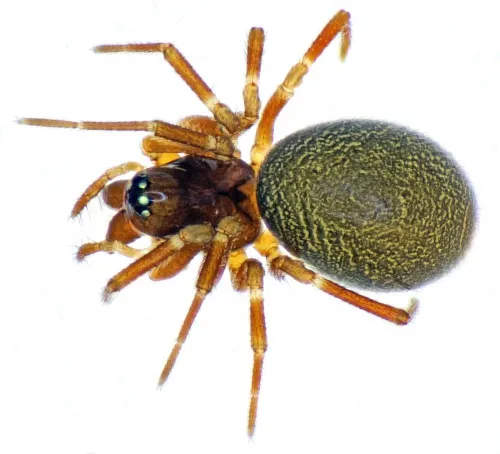
Diplocephalus permixtus
Diplocephalus permixtus
1.5 to1.9 mm. Prosoma brown, with darker margin, radial stripes and median spot. Legs yellow-brown. Opisthosoma grey to black-grey. Confirmation of this species requires examination of the genitalia of mature specimens. Beneath low vegetation in mars
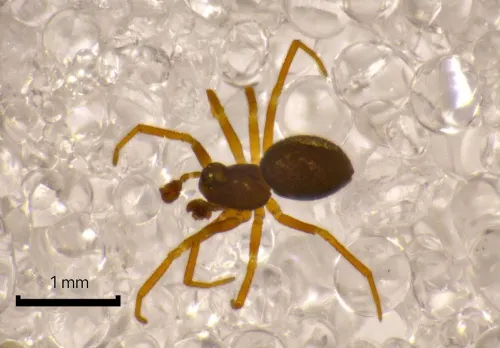
Diplocephalus picinus
Diplocephalus picinus
A small dark spider very similar in appearance to other members of the group. Detailed examination is necessary for identification. Microscopic examination of the genitalia is required to confirm this species. A spider associated with woodlands and s
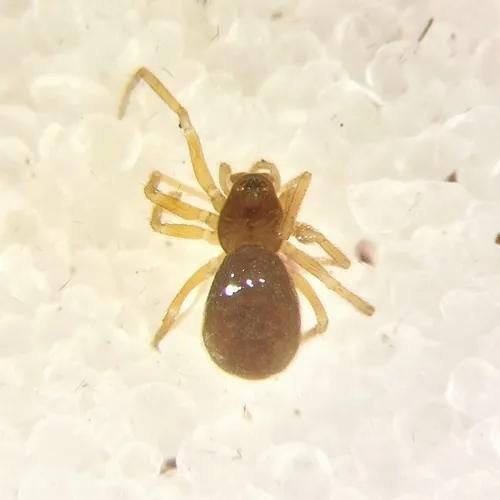
Diplocephalus subrostratus
Diplocephalus subrostratus
Diplocephalus subrostratus is a species of dwarf spider in the family Linyphiidae. It is found in North America, Greenland, a range from Russia (European to Far East), and Mongolia.
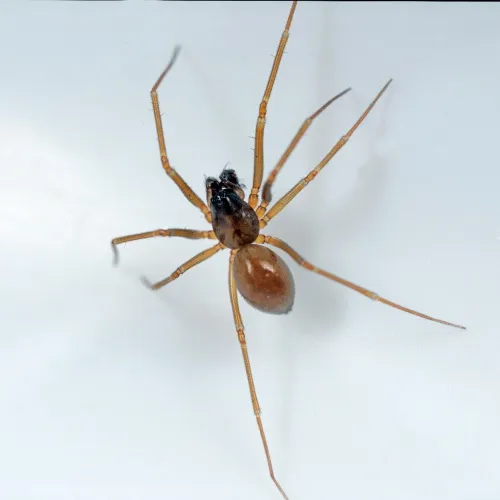
Diplostyla concolor
Diplostyla concolor
A small, dark brown or blackish species. Length about 3 mm. The female epigyne is highly characteristic with a very long scapus, unvarying in width. D. concolor is found in a wide variety of situations, usually at ground level. It can be found in gra
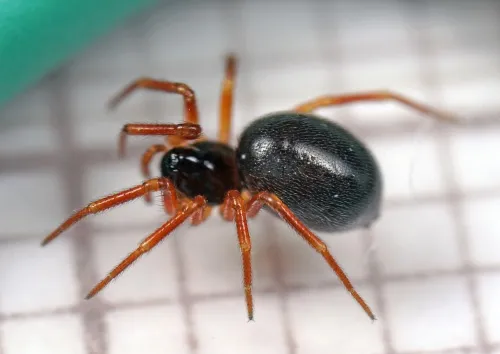
Dismodicus bifrons
Dismodicus bifrons
Males: 1.7 to 2.1 mm, Females: 2 to 2.5 mm. Unless identified by a recognised expert, a photo is required. If the photo doesn't show the key ID features then in the comments box describe the size and identifying characters you have observed. An activ
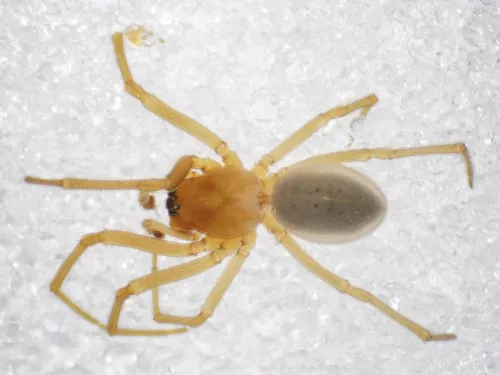
Donacochara speciosa
Donacochara speciosa
Length 4 to 5 mm. Prosoma yellow-brown. Sternum yellow-brown. Chelicerae yellow-brown. Legs yellow-brown. Opisthosoma yellowish, pink or white with black pattern. Longitudinal band interrupted several times, merging with spots and transverse stripes
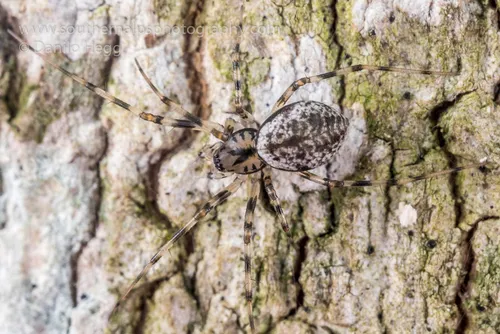
Northern Long-toothed Sheetweaver
Drapetisca alteranda
Identification: "The carapace is light with black edges and a black spot on each of the radial furrows. There is also a Y-shaped black spot at the anterior end of the dorsal furrow. The abdomen is highest in front, broadly oval seen from above, and p
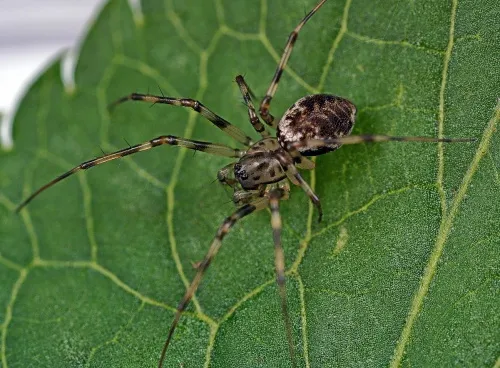
Invisible Spider
Drapetisca socialis
The white on the abdomen varies but the pattern on the carapace is recognisable. They are smallish spiders, up to 4 mm. This spider is usually found on the lower trunks of trees, particularly Beech. It spins a very fine web which is almost invisible
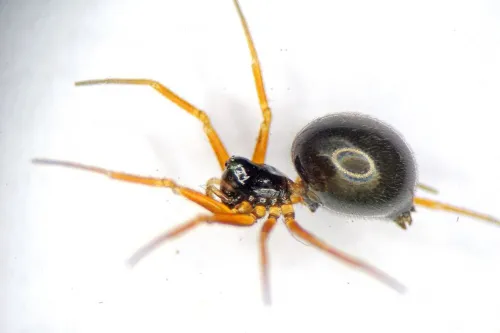
Entelecara acuminata
Entelecara acuminata
Males: 1.82 mm, females: 2.1 to 2.3 mm. Inconspicuous but generally dark. Males have elevated eyes. Microscopic examination of genitalia is required to confirm identity. Widespread in much of Britain, becoming scattered in the north. No additional im

Entelecara erythropus
Entelecara erythropus
This is one of the 'money spiders' in the Linyphidae family - which has more UK species than any other. Most are small and need microscopic examination to identify. No additional images available for this species.
Epiceraticelus mandyae
Epiceraticelus mandyae
Identification: Male/Female Palp Epigynum Mandy Howe for whom this species was named was also a BugGuide contributing editor.
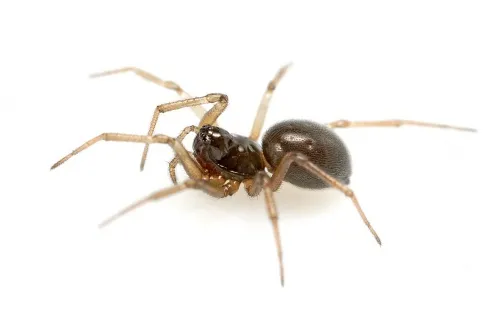
Erigone atra
Erigone atra
Erigone atra is only about 2 to 2.5 millimeters. The abdomen is covered with short hair whilst the forebody is hairless and has a smooth glossy surface. In the male, the eye region is greatly increased. The legs in both sexes are coloured uniformly b
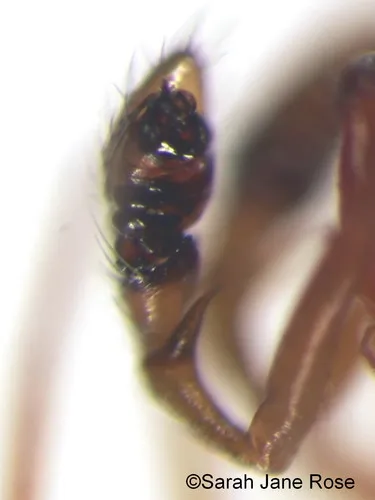
Autumn Money Spider
Erigone autumnalis
Erigone autumnalis is a species of dwarf spiders in the family Linyphiidae. It is found in North and Central America, and it has been introduced to Azores, Europe, United Arab Emirates, and New Caledonia.
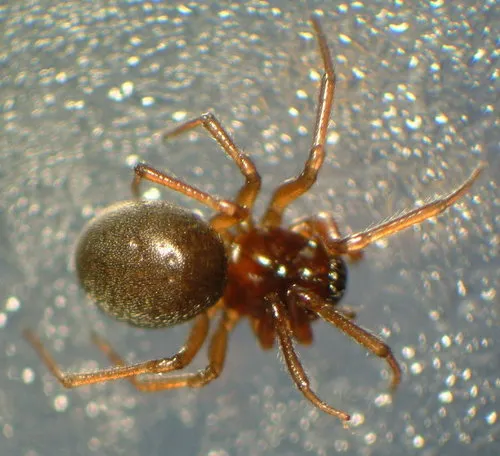
Blazed Dwarf Weaver
Erigone blaesa
Identification: Palp Epigynum Holotype male. Shinnecock Hills, N. Y., June 15, 1919. Allotype female, same locality.
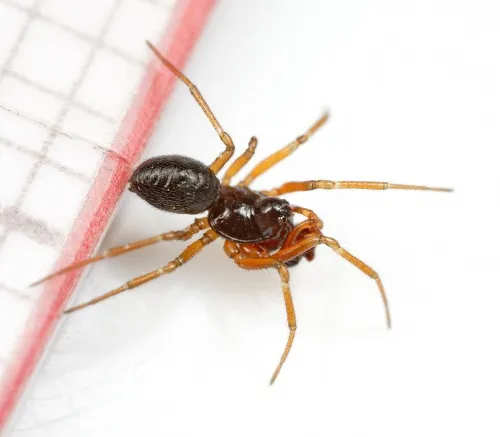
Erigone dentipalpis
Erigone dentipalpis
A small spider, male: 1.9-2.5 mm, female: 1.8-2.6 mm. It has a brown/blackish abdomen and blackish head. Tibial spines: 2-2-2-1 TmIV: No TmI: 0.40-0.50 Confirmation requires examination of genitals of mature specimens. Adults can be found all through
Erigone dentosa
Erigone dentosa
Identification: Comment taken from Devin Carroll's 2008 image/notes: "The male palp has a hook underneath in the middle, in addition to the long process at the tip, characteristic in all Erigone species. The hook separates it from all other Erigone
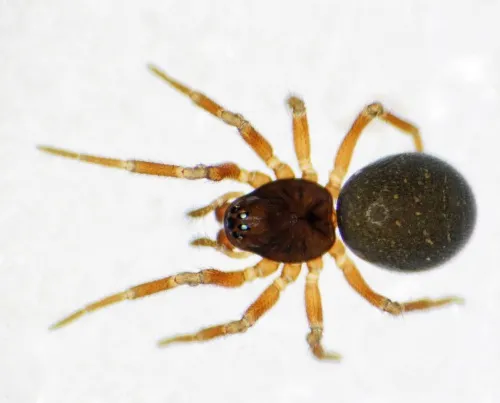
Erigonella hiemalis
Erigonella hiemalis
Body length male: 1.45 to 1.6 mm. Body length female: 1.5 to 2 mm. Tibial apophysis with a distinctly spined and a slightly bent process. Paracymbium distally bipartite. Prosoma brown to dark brown. Legs yellow-brown to brown, with basally brighter t
Estrandia grandaeva
Estrandia grandaeva
Identification: "Cephalothorax yellow-brown, lightly suffused with gray, darkest along margin and furrows. A dark line on median furrow forks at head sending a branch toward each posterior lateral eye; space between these branches usually darkened. O
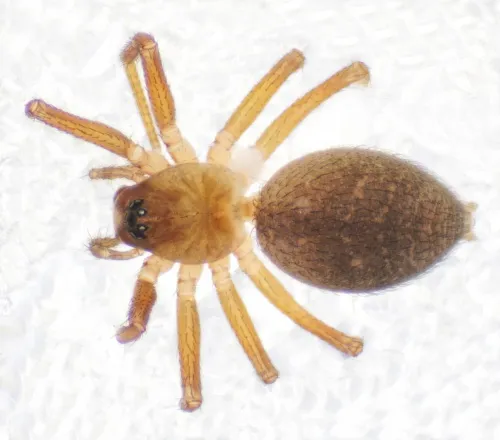
Evansia merens
Evansia merens
Length 2-3mm. Prosoma light brown. Opisthosoma grey. "Requires examination at high magnification in good lighting, typically examination of the genitalia." Bee, L., Oxford, G., & Smith, H. (2020). Britain's Spiders: A Field Guide. Second Edition. Pri
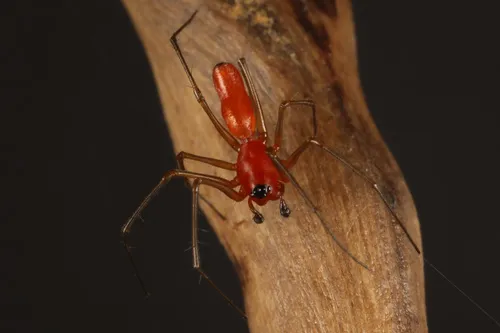
Black-tailed Red Sheetweaver
Florinda coccinea
The black-tailed red sheetweaver, scientific name Florinda coccinea, is a species of web-building spider belonging to the family Linyphiidae. It is the only species in the genus Florinda. It is sometimes known as the red grass spider. Found in the Un
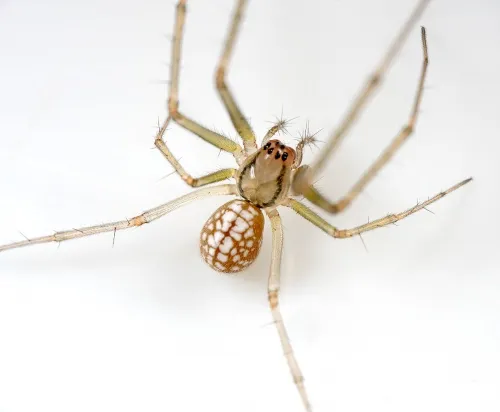
Floronia bucculenta
Floronia bucculenta
Length. 4 to 5 mm. Prosoma yellowish with wide black margins extending to the eye area. A median strip or another type of prosoma drawing is not pronounced. Opisthosoma dorsally brown to grey base colour and a clear white spot or plate-like marbling,
Frontinella huachuca
Frontinella huachuca
Identification: "Carapace pale yellowish brown, the pars thoracica faintly marked with dusky radiating lines, the clothing a very sparse covering of inconspicuous short hairs. Dorsum of abdomen creamy white, medially marked with a narrow longitudinal
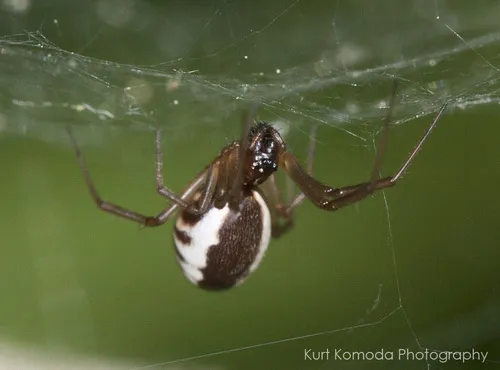
Bowl and Doily Weaver
Frontinella pyramitela
Identification: Images that best match the photographs in Spiders of the Eastern United States : This spider builds a distinct web made of a bowl-shaped sheet web over another sheet web, leading to the common name "Bowl and doily spider" Palp Epigynu
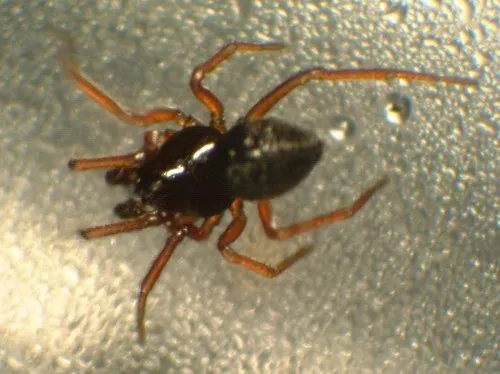
Glyphesis scopulifer
Glyphesis scopulifer
Glyphesis scopulifer is a species of dwarf spider in the family Linyphiidae. It is found in the United States and Canada.
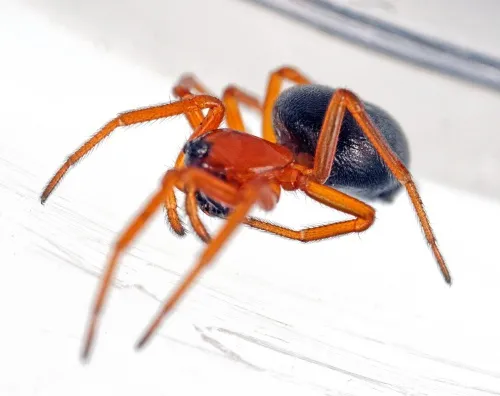
Gonatium rubellum
Gonatium rubellum
This is one of the 'money spiders' in the Linyphidae family - which has more UK species than any other. Most are small and need microscopic examination to identify.
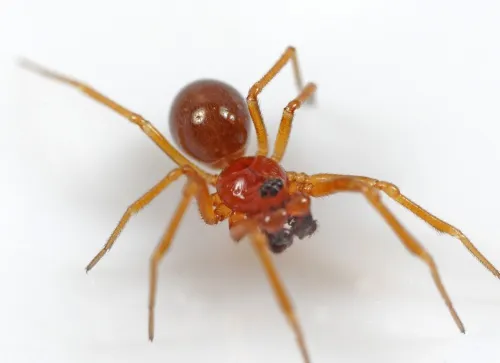
Gonatium rubens
Gonatium rubens
Found in a variety of open habitats, in grass tussocks, mosses and gorse. All year round peaking August to October, with female numbers spiking again in April and May. Widespread and quite frequent in Britain. 5874 British records for this species to
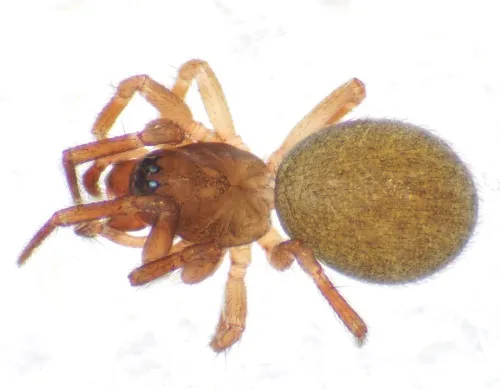
Gongylidiellum vivum
Gongylidiellum vivum
Length 1.2-2mm. Prosoma yellow-brown. Legs yellow-brown. Opisthosoma light grey to black-grey. Microscopic examination of the of the genitalia is required to confirm this species. In moss, grass and leaf litter, often in damp situations. Adults of bo
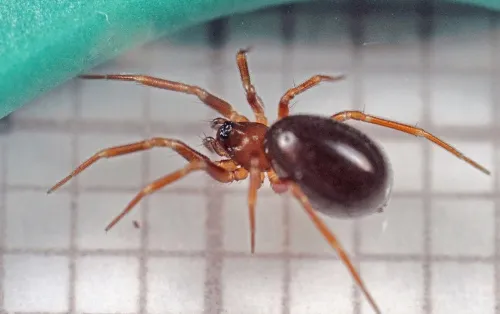
Gongylidium rufipes
Gongylidium rufipes
A small dark bodied spider. Detailed examination is needed for correct identification. Gongylidium rufipes occurs mainly in undergrowth and on bushes and trees in woodland but also in damp and wet situations and in a wide variety of other habitats in
Grammonota angusta
Grammonota angusta
Identification: Palp: Epigynum-ventral "Tibia of palpus armed dorsolaterally with a large apophysis, at the base of which is a sharp tooth on the dorsal surface; a second, smaller tooth at middle of distal margin."
Grammonota capitata
Grammonota capitata
Grammonota capitata is a species of dwarf spider in the family Linyphiidae. It is found in the United States.
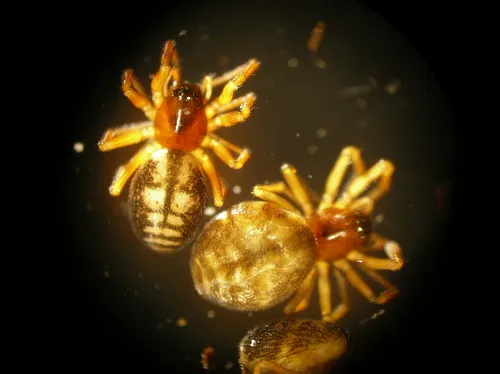
Grammonota kincaidi
Grammonota kincaidi
Grammonota kincaidi is a species of dwarf spider in the family Linyphiidae. It is found in the United States.
Helophora insignis
Helophora insignis
Identification: Male/Female Palp, retrolateral view Epigynum
Helophora reducta
Helophora reducta
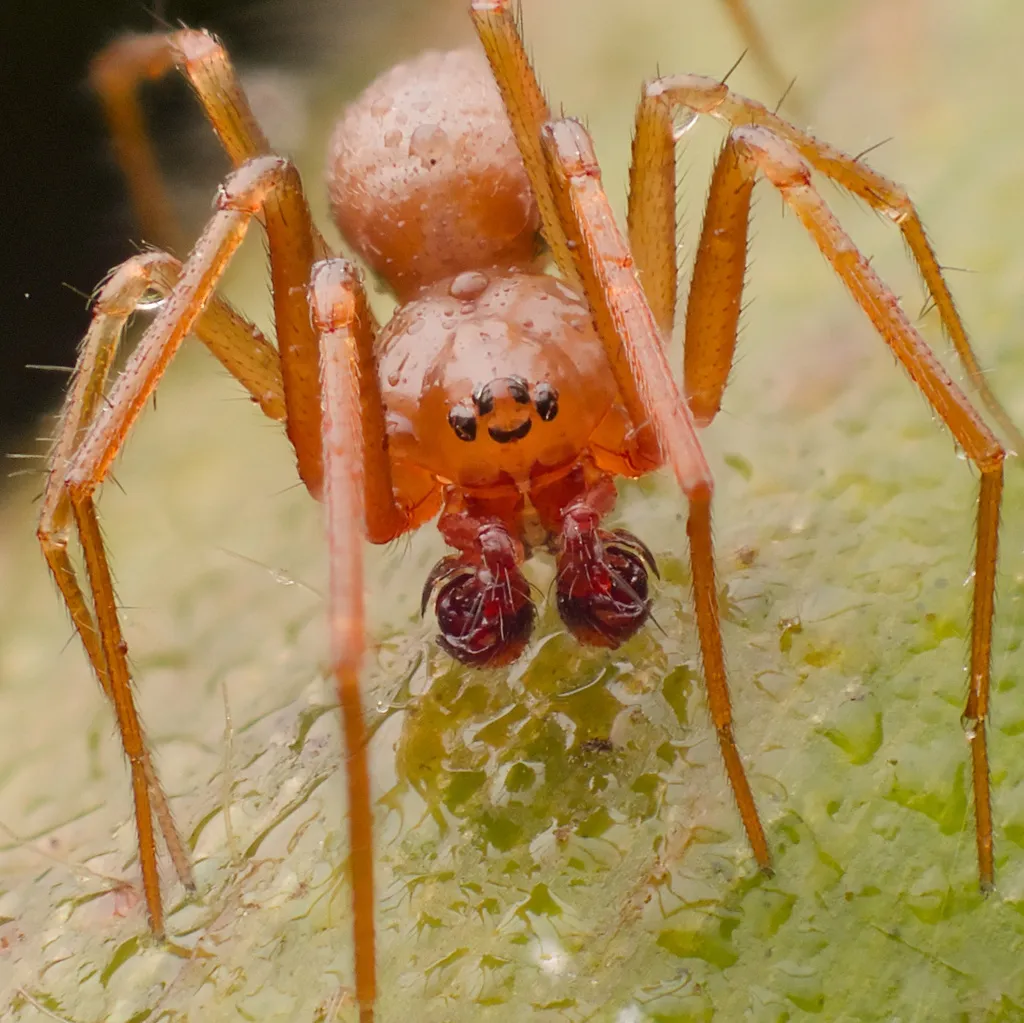
Helophora reducta is a species of sheetweb spider in the family Linyphiidae. It is found in the United States.
Hybauchenidium gibbosum
Hybauchenidium gibbosum
Identification: Palp: Epigynum: The cephalic region of the male
Hylyphantes graminicola
Hylyphantes graminicola
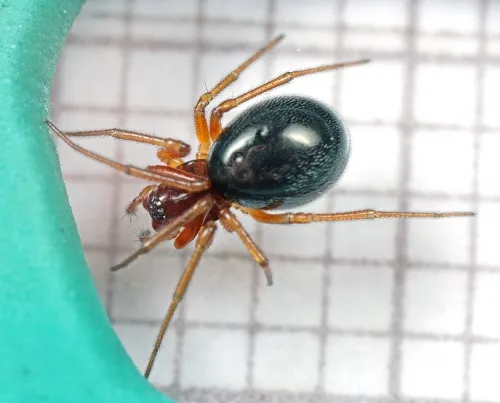
Males: 2.25 to 2.6 mm, females: 2.5 to 3.0 mm. Confirmation requires microscopic examination of the genitalia of adult specimens. Favours Gorse but can also be found on Hawthorn and Blackthorn. http://srs.britishspiders.org.uk/portal.php/p/Summary/s/
Hypomma bituberculatum
Hypomma bituberculatum
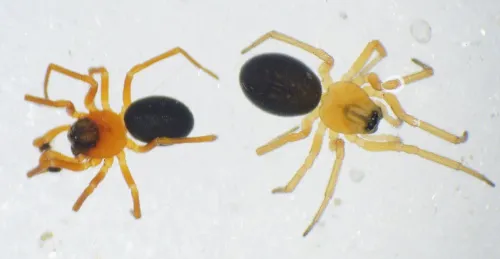
Male: 2.2 to 2.5 mm, female 2.5 to 3 mm. Prosoma red-orange to red-brown. Legs yellow to red-orange. Opisthosoma black. Examination of the genitalia is required to confirm this species. http://srs.britishspiders.org.uk/portal.php/p/Summary/s/Hypomma+
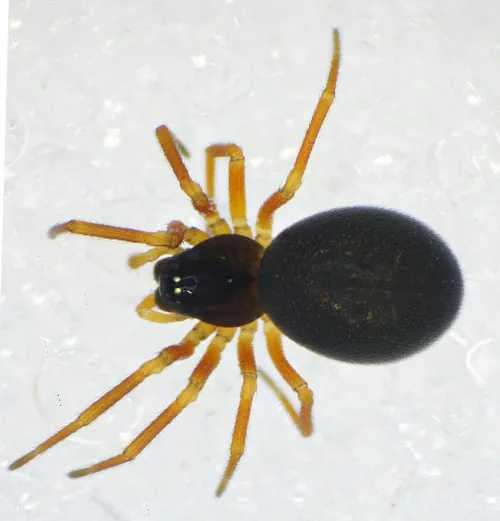
Hypomma cornutum
Hypomma cornutum
Size 2.1 to 2.8 mm. Prosoma brown to red-brown. Legs yellow-orange. Opisthosoma black. This species can only be confirmed by examination of the genitalia of mature specimens. Mainly found in woodland, on bushes, trees and herbaceous vegetation. Wides
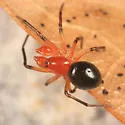
Hypselistes florens
Hypselistes florens
Identification: The cephalothorax is bright orange. The coxae, trochanters and femora are similar in coloring, but the remaining leg segments are grey or pigmented with black. See pictures below of the male's cephalic lobe and distinctive pedipalp. T
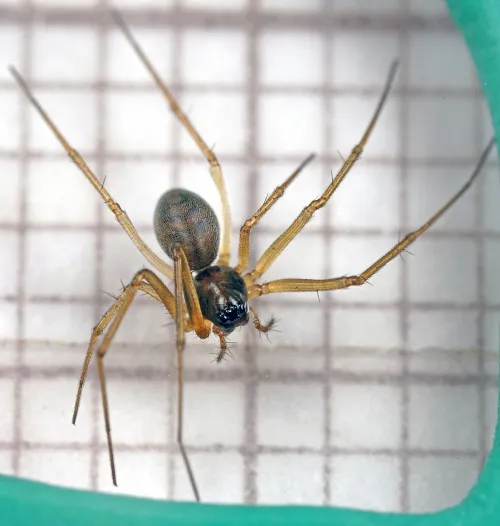
Kaestneria pullata
Kaestneria pullata
Males: 2 to 3 mm, females: 2 to 3.2 mm. Variable in appearance but generally dark, abdomen often with paler chevrons. Microscopic examination of genitalia is required to confirm identity. Widespread in much of Britain, becoming scattered in the north
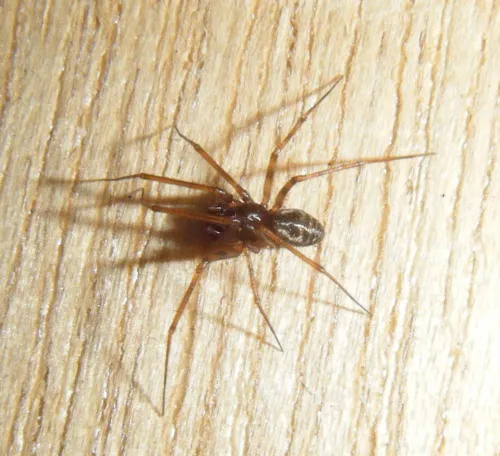
Lepthyphantes leprosus
Lepthyphantes leprosus
Confirmation of this species requires examination of the genitals of mature specimens. L. leprosus is found in all types of buildings, from newly built houses (noticed within nine months of completion) to derelict barns. It forms small webs across co
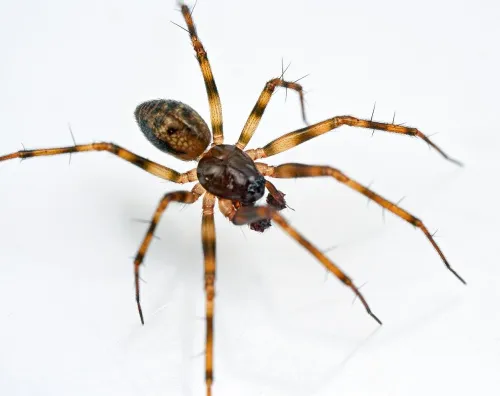
Lepthyphantes minutus
Lepthyphantes minutus
Confirmation of this species requires examination of the genitals of mature specimens. Tree trunks, old bird nests and sometimes in houses. Builds a small sheet web
Lepthyphantes turbatrix
Lepthyphantes turbatrix
Identification: "Carapace orange-yellow suffused with dusky, darker at the margin. Legs orange-yellow. Abdomen dark with scattered silvery spots and marked with interrupted transverse light bands and a pair of light spots, one at each side at base."
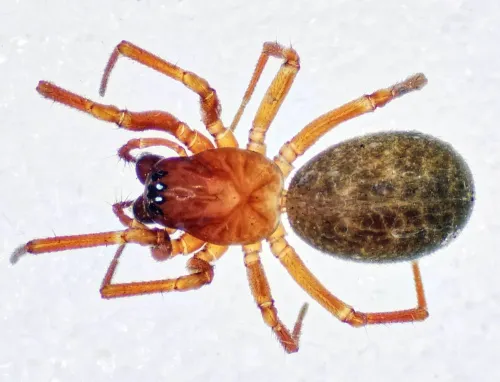
Leptorhoptrum robustum
Leptorhoptrum robustum
Length 3 to 4.8 mm. Prosoma brown, with dark margin and radial stripes. Sternum brown, tinged with black. Legs yellow-brown. Opisthosoma grey to almost black. Confirmation to species level requires examination of the genitalia of mature specimens. Fo
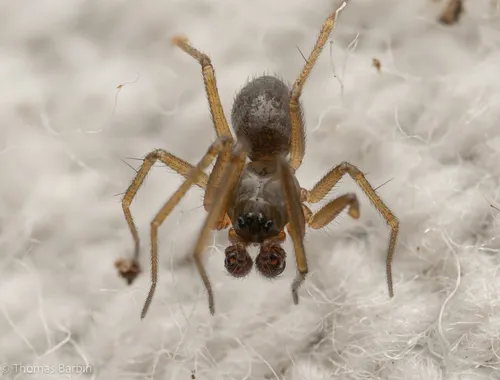
Linyphantes pualla
Linyphantes pualla
Linyphantes pualla is a species of sheetweb spider in the family Linyphiidae. It is found in the United States and Canada.