
Kaira altiventer
This record describes Kaira altiventer (species). Recorded family: Araneidae. Recorded order: Araneae.
Identification and Appearance
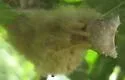
The epigynum of the female, unlike that of K. alba, has a flat, triangular, curved scape, the tip projecting anteriorly and, like K . alba but unlike others, no humps or tubercles on the posterior of the abdomen. The tiny male can be separated fro m others by having a palpus with only three or four long, black teeth on the distal end of the median apophysis and by the shape of the conductor, pointed and longest on the side of the dark terminal apophysis One of the specimens examined by Levi, a female from Costa Rica, had been captured by a wasp of the species Trypargilum nitidum . At least two individuals from Hidalgo County TX - one examined by Levi, the other photographed and posted here - have posterior tubercles on the abdomen that are apparently absent in specimens from further south
Classification
Habitat and Range
Habitat
Both Texas specimens were found in low woody vegetation (shrubs or small trees). South American specimens have been collected from the forest canopy.
Geographic Range
southernmost TX (Hidalgo & Cameron Co.) to southern Brazil and northern Argentina.
Additional species information
Species notes from the sources
Etymology: Kaira altiventer O. Pickard-Cambridge, 1889
About Spiders: the wider group
Order-level background for Araneae, the group containing Kaira altiventer. Species-specific details appear above.
Group overview
As of 2023, 51,673 spider species in 136 families have been recorded, though an estimated 150,000 species exist. Spiders rank 7th in total species diversity among all organism orders. Only 0.5% of spider species pose any risk to human health.
Ecological role of the group
Spider venom contains complex peptides with diverse pharmacological activities, making them valuable for drug development research. Spiders produce up to 7 types of silk from specialized glands. Spider silk genes have been inserted into mammals and plants for biotech applications.
Economic and practical significance of the group
The global spider community kills an estimated 400-800 million tons of prey annually (2017 study). Spiders provide billions of dollars in natural pest control for agriculture. Spider silk is 5× stronger than steel of the same diameter, driving a biomaterials research industry.
Recorded sources for this group: World Spider Catalog, PNAS, Nature, ScienceDirect. Imported estimates may describe particular regions or reporting periods.
Photos of Kaira altiventer (5)
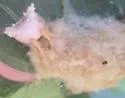
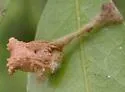
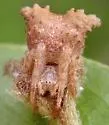
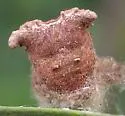
Photo credits: Contributed by Joshua Stuart Rose; Additional contributions by cheins , Mike Quinn
Frequently Asked Questions About Kaira altiventer
What is Kaira altiventer?
Kaira altiventer is a species in the family Araneidae, within the order Araneae.
How do you identify Kaira altiventer?
The epigynum of the female, unlike that of K. alba, has a flat, triangular, curved scape, the tip projecting anteriorly and, like K . alba but unlike others, no humps or tubercles on the posterior of the abdomen. The tiny male can be separated fro m others by having a palpus with only three or four long, black teeth on the distal end of the median apophysis and by the shape of the conductor, pointed and longest on the side of the dark terminal apophysis
Where is Kaira altiventer found?
| Feature | Details |
|---|---|
| Habitat | Both Texas specimens were found in low woody vegetation (shrubs or small trees). South American specimens have been collected from the forest canopy. |
| Range | southernmost TX (Hidalgo & Cameron Co.) to southern Brazil and northern Argentina. |