
Spiders
Order Araneae
The Spiders (Order Araneae) includes 1,848 species across 82 families and 552 genera in our directory.
About Spiders
As of 2023, 51,673 spider species in 136 families have been recorded, though an estimated 150,000 species exist. Spiders rank 7th in total species diversity among all organism orders. Only 0.5% of spider species pose any risk to human health.
Economic Impact
The global spider community kills an estimated 400-800 million tons of prey annually (2017 study). Spiders provide billions of dollars in natural pest control for agriculture. Spider silk is 5× stronger than steel of the same diameter, driving a biomaterials research industry.
Ecological Role
Spider venom contains complex peptides with diverse pharmacological activities, making them valuable for drug development research. Spiders produce up to 7 types of silk from specialized glands. Spider silk genes have been inserted into mammals and plants for biotech applications.
Families in Araneae (82)
Species in Araneae (1,848)
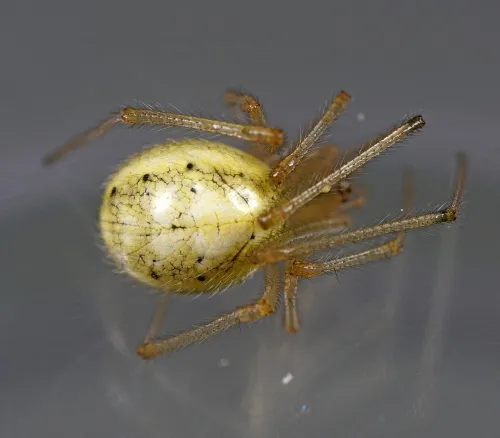
Common Candy-striped Spider sensu stricto
Enoplognatha ovata sensu stricto
Approximately 6mm from front of head to back of abdomen. There is a pale creamy-green coloured variety (form lineata), a form with two red stripes along the abdomen (redimita form) and another variation where the two red stripes are replaced by a sin
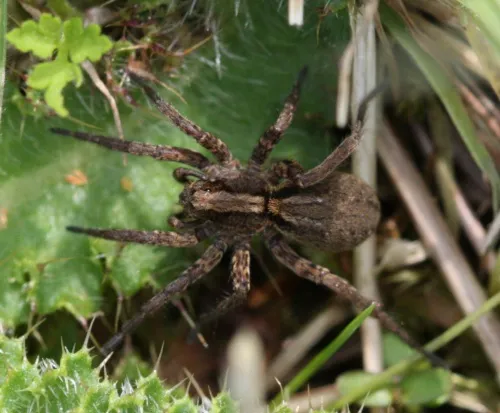
Common Fox-spider
Alopecosa pulverulenta
Length 5 to 10 mm. The markings of this wolf spider are variable in colouration and patterning. Other Alopecosa species have broadly similar markings so care is needed. Confirmation of this species: "Requires examination at high magnification in good
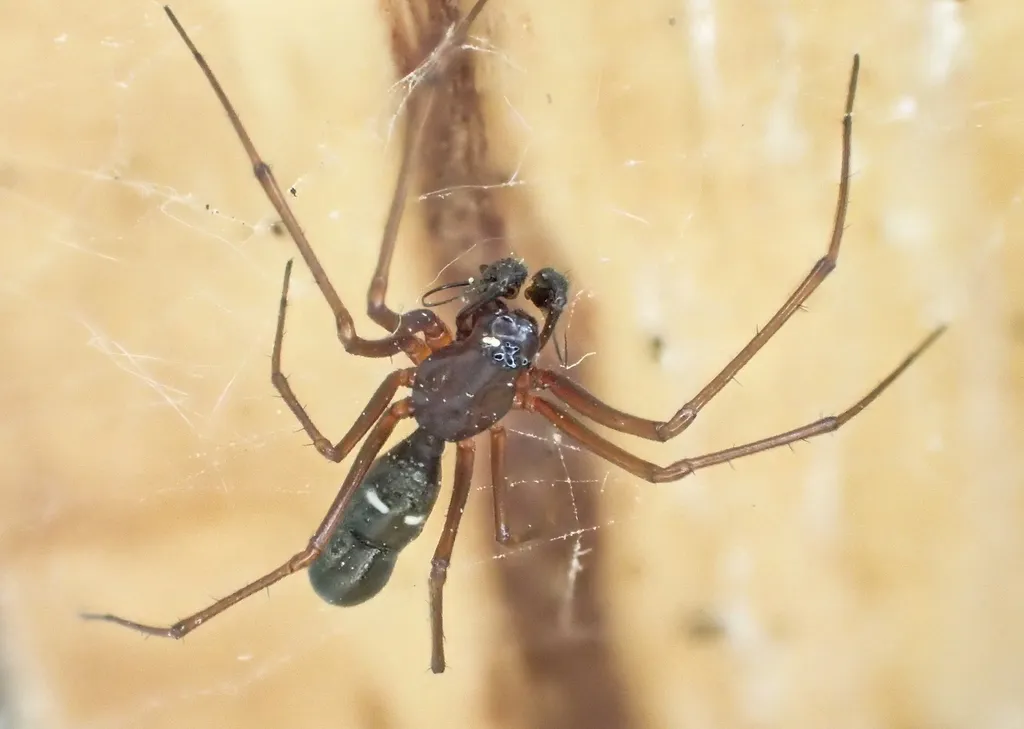
Common Threaded Sheetweaver
Microlinyphia mandibulata
Microlinyphia mandibulata is a species of sheetweb spider in the family Linyphiidae. It is found in the United States.
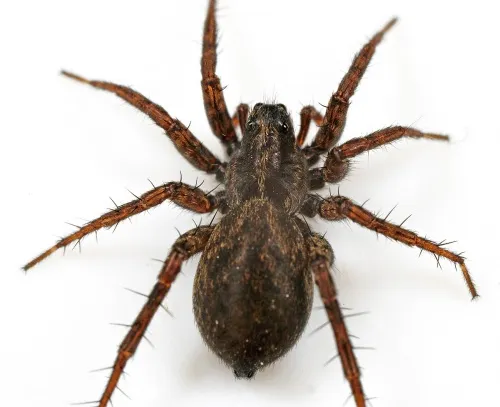
Common Wolf Spider
Pardosa pullata
This is a very dark coloured wolf spider. Confirmation of this species: "Requires examination at high magnification in good lighting, typically examination of the genitalia." Bee, L., Oxford, G., & Smith, H. (2020). Britain's Spiders: A Field Guide.
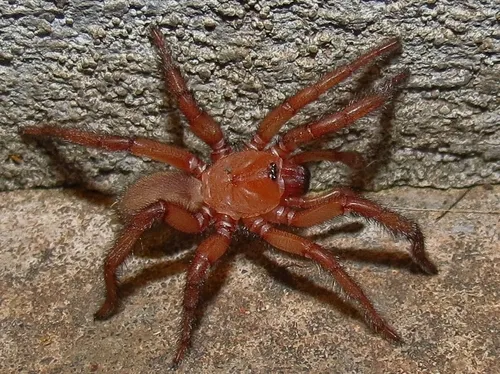
Comstock's Wafer Trapdoor Spider
Myrmekiaphila comstocki
Myrmekiaphila comstocki is a spider in the family Euctenizidae ("wafer-lid trapdoor spiders"), in the infraorder Mygalomorphae ("mygalomorphs"). The distribution range of Myrmekiaphila comstocki includes the USA and Mexico....
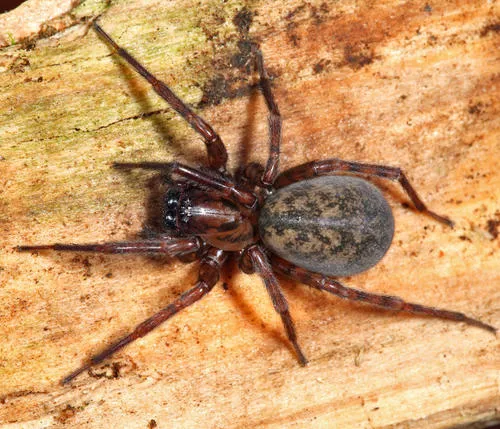
Coras aerialis
Coras aerialis
Coras aerialis is a species of funnel weaver in the spider family Agelenidae. It is found in the United States.
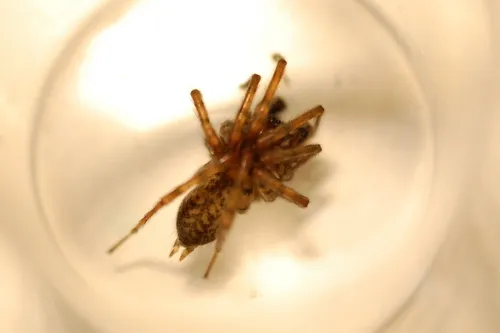
Coras juvenilis
Coras juvenilis
Coras juvenilis is a species of funnel weaver in the spider family Agelenidae. It is found in the United States.
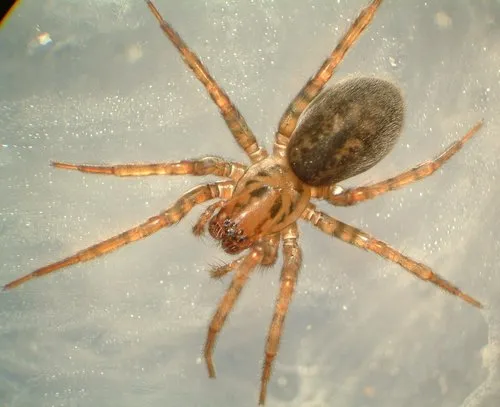
Coras lamellosus
Coras lamellosus
Coras lamellosus is a species of funnel weaver in the family of spiders known as Agelenidae. It is found in the United States.
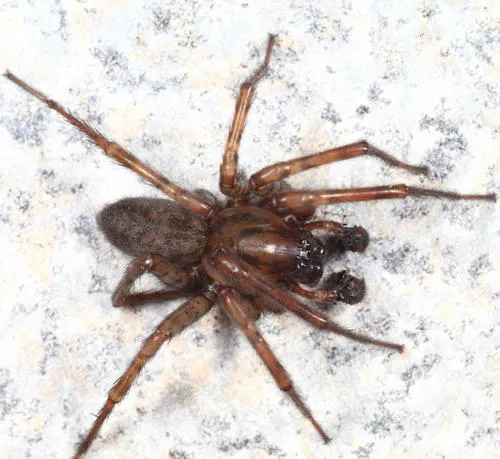
Coras medicinalis
Coras medicinalis
Coras medicinalis is a species of funnel weaver in the spider family Agelenidae. It is found in the United States and Canada.
Coreorgonal bicornis
Coreorgonal bicornis
Identification: "The male of S. bicornis can be diagnosed readily by the form of the carapace (Fig . 145), coupled with the form of the palp (Fig . 156). The female of S. bicornis cannot be distinguished from S. monoceros by the epigynum, but may be
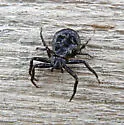
Coriarachne brunneipes
Coriarachne brunneipes
Identification: Easily distinguished from the other species by its relatively uniform color and flat carapace. Where Coriarachne and Bassaniana are both found they can be identified by the hairs on the carapace. See Rod Crawfords comment; "This is ei
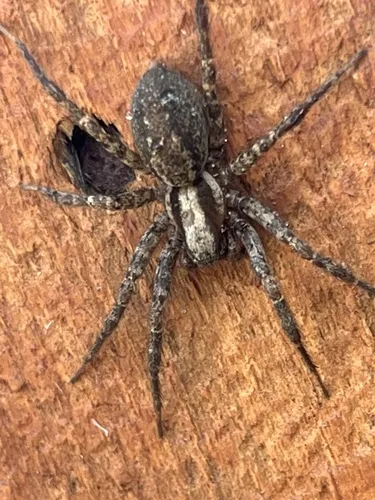
Corner Funnel Weaver
Hololena curta
Hololena curta, commonly known as corner funnel weaver or funnel web spider is a species of venomous spiders belonging to a family of Agelenidae.
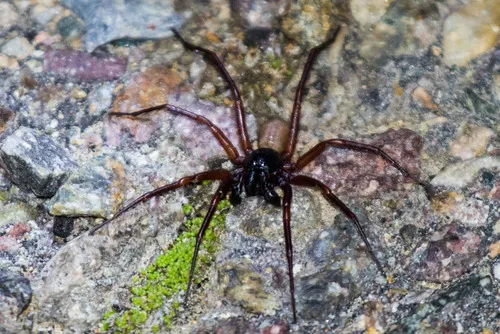
Creugas bajulus
Creugas bajulus
Identification: "Carapace dark reddish brown... Chelicerae concolorous with the head... Abdomen uniform light gray... Abdomen elongate, oval, moderately high... [Male:] Abdomen with a yellow scutum above at base."
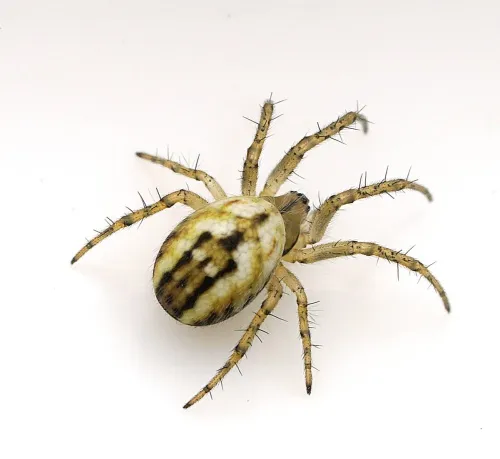
Cricket Bat Spider
Mangora acalypha
Male 3 mm, female up to 6 mm. Prosoma light greenish, with black margin and median stripe. Sternum almost black. Legs yellowish. Tibia III with 2 rows of plumose trichobothria. Opisthosoma whitish yellow, rarely greenish, posteriorly with "Cricket Ba
Crustulina sticta
Crustulina sticta
Identification: The color is variable, even in other photos on the Jorgen Lissner site. Also, Washington specimens (for example) average considerably darker than the eastern-states material in these 3 BugGuide photos. Levi in his taxonomic revision s
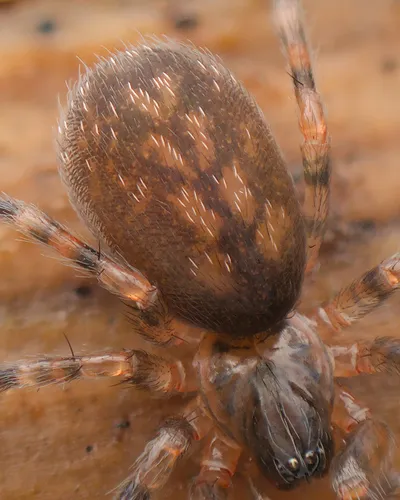
Cryphoeca exlineae
Cryphoeca exlineae
Cryphoeca exlineae is a species of true spider in the family Cybaeidae. It is found in the United States.
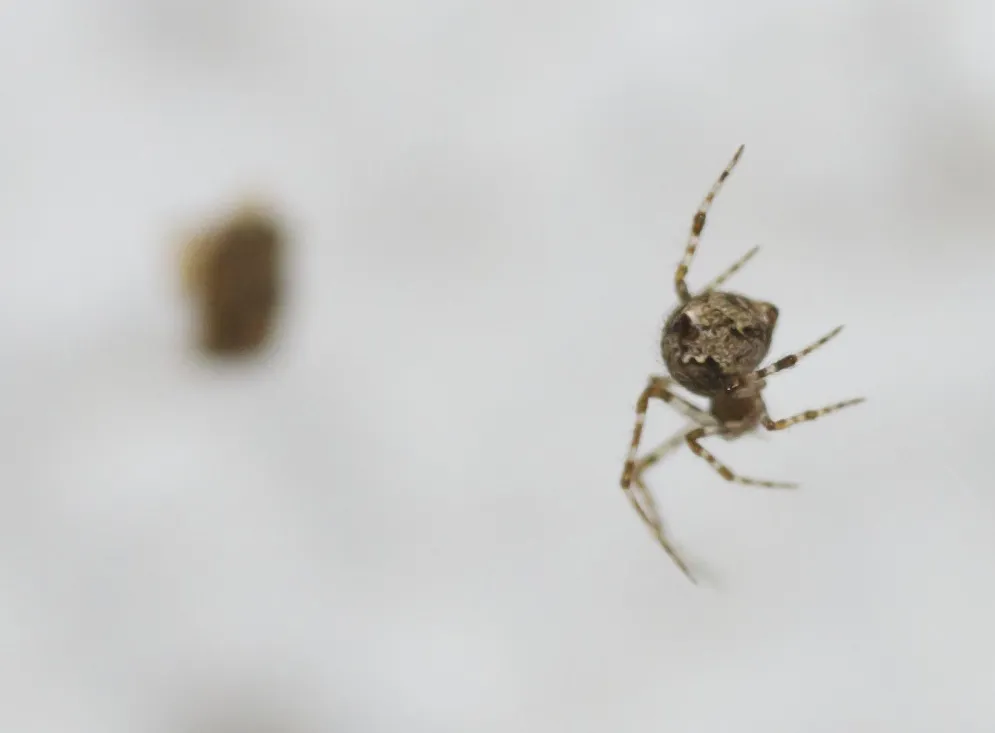
Cryptachaea porteri
Cryptachaea porteri
Identification: Abdomen with or without a tubercle in both genders. Levi says the variation in this species, particularly in the female, is unusually great. Voucher adult male: Voucher adult female: Females of this species typically use debris to cam
Cryptachaea rupicola
Cryptachaea rupicola
Identification: The body is dirty gray with darker grayish to black spots and stripes. The legs have alternating dark and light bands. The middle apex of the abdomen has a small bump which is dark on top and light on the rear.
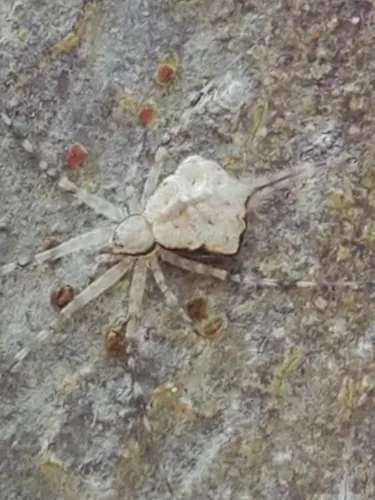
Cuban Long-spinneret Spider
Yabisi habanensis
Identification: Separation from the other member of this genus (which has been documented to date only from the Dominican Republic) requires examination of the epigynal plates. There is extensive confusion whether Hersiliids in Florida are more likel
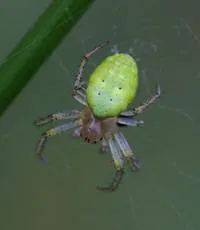
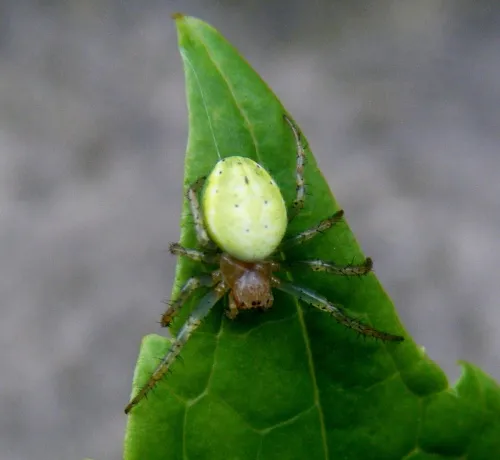
Cucumber Green Orb Spider
Araniella cucurbitina sensu lato
Mainly along woodland edges, hedgerows and other well wooded areas. They spin a small web between leaves and don't hide away but rely on colour for camouflage. Predatory mainly on flying insects caught in its orb web.
Cucumber Green Orb Spider
Araniella cucurbitina sensu stricto
Araniella cucurbitina - Conspicuous red spot above spinnerets, visible only from below. Male femur I with ventral median part lacking bristles (regularly 3 bristles basally, 1 bristle distally). Females difficult to identify as this species with cert
Curicaberis abnormis
Curicaberis abnormis
Identification: prominent stripes on carapace, but seemingly not always present
Cybaeopsis euopla
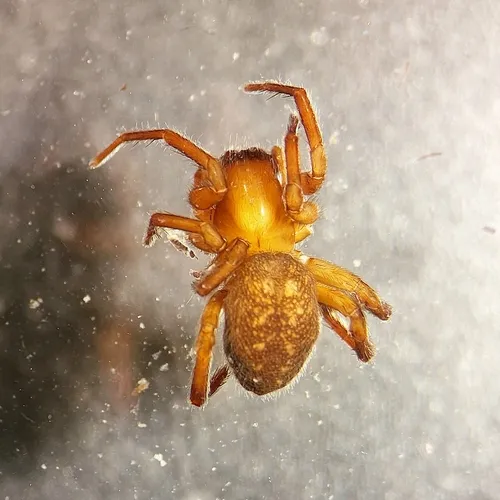
Cybaeopsis euopla
Cybaeopsis euopla is a species of hacklemesh weaver in the spider family Amaurobiidae. It is found in the United States and Canada.
Cybaeopsis wabritaska
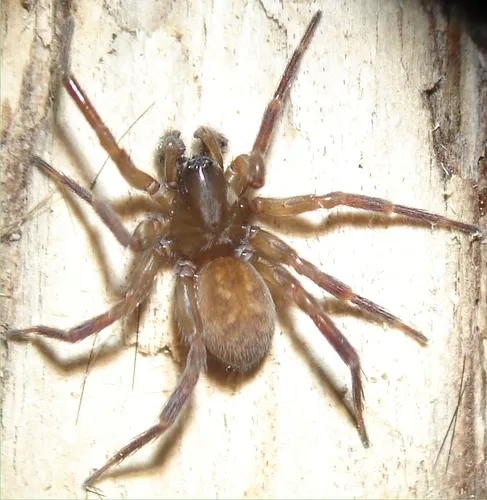
Cybaeopsis wabritaska
Cybaeopsis wabritaska is a species of hacklemesh weaver in the spider family Amaurobiidae. It is found in the United States and Canada.
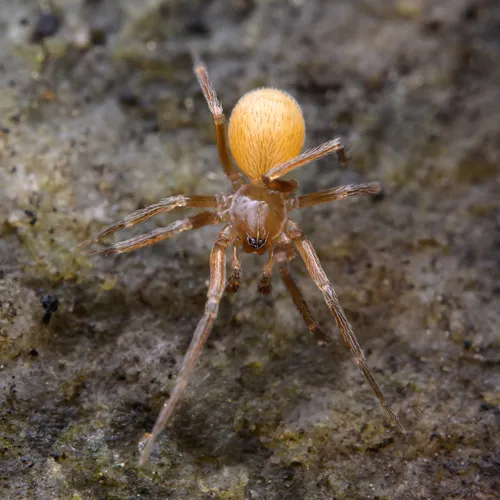
Cybaeota shastae
Cybaeota shastae
Cybaeota shastae is a species of true spider in the family Cybaeidae. It is found in the United States.
Cybaeus cribelloides
Cybaeus cribelloides
Identification: "The male of C. cribelloides is distinguished from other species of Californian clade Cybaeus by a combination of palpal tegular apophysis characters. The distal arm of the tegular apophysis (Fig. 53) is large, broad, angular, and tru
Cybaeus morosus
Cybaeus morosus
Identification: "The large lunate cavity at the tip of the proximal arm of the tegular apophysis (Figs. 15, 34) diagnoses the male of C. morosus. The female is diagnosed by the circular atrial depressions (Figs. 37–38). This species is unlikely to be
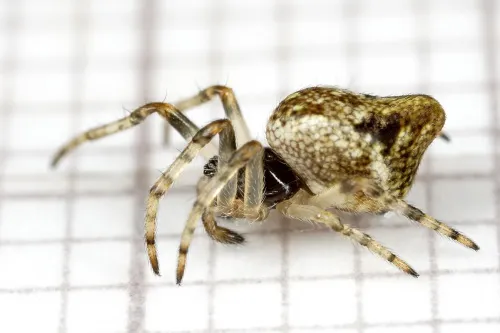
Cyclosa conica
Cyclosa conica
This is an odd looking spider. It has a single tubercle (hump) on the rear of its abdomen This spider can be quite variable in colour and pattern, however its shape is so distinctive that it is hard to mistake. Usually found in well wooded areas, oft
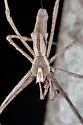
Deinopis aurita
Deinopis aurita
Identification: Horns above the central posterior eyes. Abdomen with pair of tubercles near the middle.
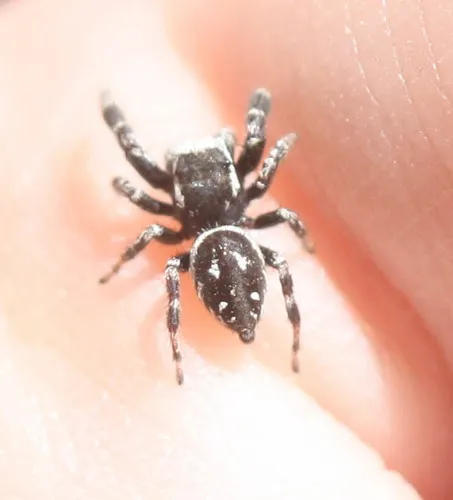
Dendryphantes nigromaculatus
Dendryphantes nigromaculatus
Dendryphantes nigromaculatus is a jumping spider species, known by the common name black-marked jumping spider, in the genus Dendryphantes that lives in the United States and Canada.
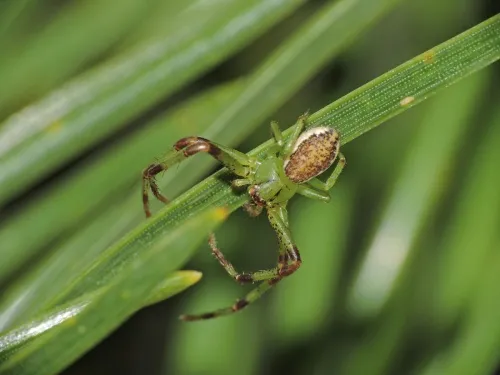
Diaea dorsata
Diaea dorsata
Diaea dorsata is one of the smaller crab spiders. Females can grow up to 6 mm, males up to 4 mm. Prosoma (head and thorax area) and legs are green, and the abdomen is yellowish with a red-brown mark. This spider can change its colour to fit its surro
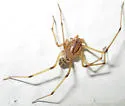
Dictis striatipes
Dictis striatipes
Identification: This species has legs with long-thin stripes on the top and bottom of the legs, with dark joints. ♀ ♂
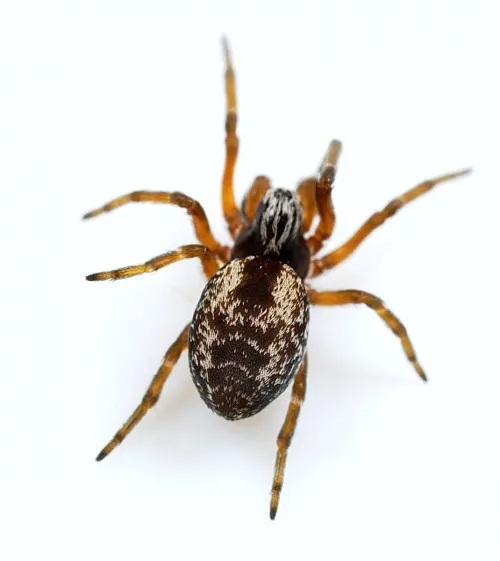
Dictyna arundinacea
Dictyna arundinacea
A small (3 mm) spider which may be variable in appearance, but often with a pale body and a darker central pattern. Apical ends of tarsi I, II and III darker than remaining segments. Confirmation requires microscopic examination of the genitalia of a
Dictyna saepei
Dictyna saepei
Identification: "This is a very dark species which resembles idahoana and peon in coloration. The abdomen usually has the typical markings confluent to form a quite uniform black stripe from base to apex, has the sides blackish, and the median black
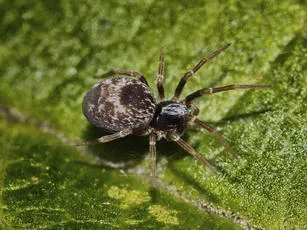
Dictyna uncinata
Dictyna uncinata
A very small (3 mm) spider. This is a sexually dimorphic species - the female has a dark and light brown patterned hairy body, the male is more uniformly dark grey or blackish. No darkening of apical ends of tarsi. Confirmation requires microscopic e
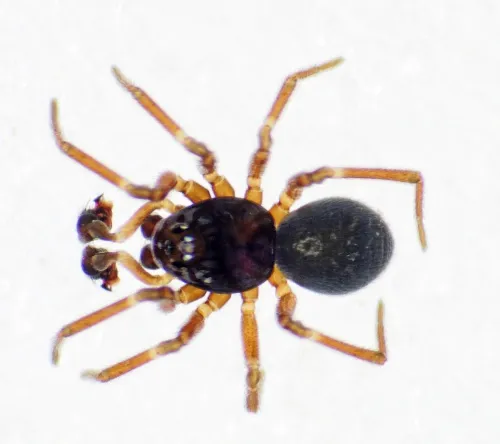
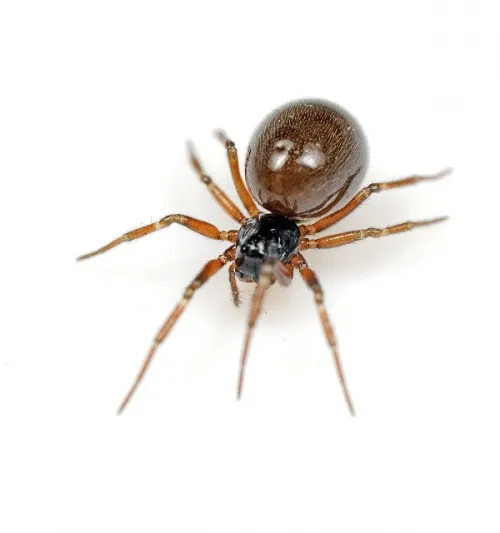
Dicymbium nigrum
Dicymbium nigrum
Females 1.9 to 2.5 mm, males 1.8 to 2.4 mm. Dicymbium brevisetosum and Dicymbium nigrum are very difficult to separate. Separation of these species can only be based on males, with females being indistinguishable from each other. The genitalia of the
Dicymbium nigrum/brevisetosum agg.
Dicymbium nigrum/brevisetosum agg.
Separation of these species can only be based on males, with females being indistinguishable from each other. The genitalia of the two species are identical. The British Arachnological Society record these two as separate species with females being g
Diguetia albolineata
Diguetia albolineata
The family is totally New World and consists of six-eyed haplogyne spiders that build haphazard webs in between cactus pads and in other vegetation. The web usually contains a silken and debris covered cone containing the egg sacs and into which the
Diguetia canities
Diguetia canities
Identification: Rounded abdomen; sinuous abdominal bands
Diplocentria bidentata
Diplocentria bidentata
Identification: Palp: There are also excellent images that can be found on the Spiders of Belgium and France website .
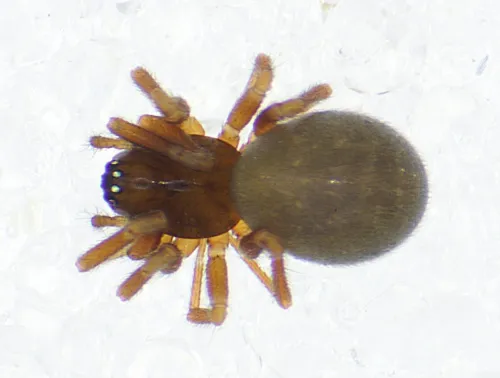
Diplocephalus latifrons
Diplocephalus latifrons
This is one of the 'money spiders' in the Linyphidae family - which has more UK species than any other. Most are small and need microscopic examination to identify. Microscopic examination of the of the genitalia is required to confirm this species.
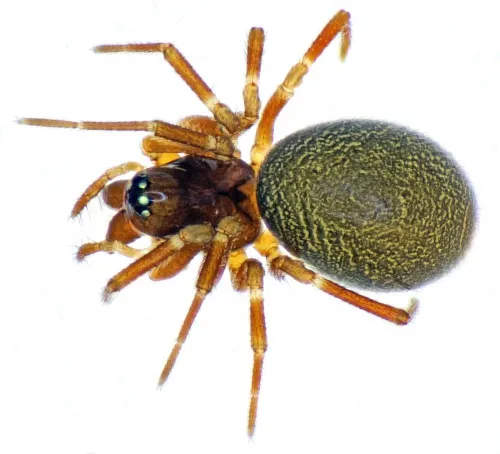
Diplocephalus permixtus
Diplocephalus permixtus
1.5 to1.9 mm. Prosoma brown, with darker margin, radial stripes and median spot. Legs yellow-brown. Opisthosoma grey to black-grey. Confirmation of this species requires examination of the genitalia of mature specimens. Beneath low vegetation in mars
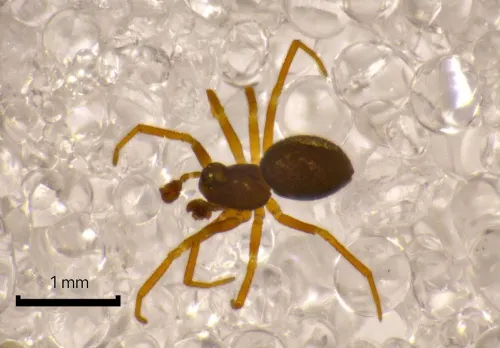
Diplocephalus picinus
Diplocephalus picinus
A small dark spider very similar in appearance to other members of the group. Detailed examination is necessary for identification. Microscopic examination of the genitalia is required to confirm this species. A spider associated with woodlands and s
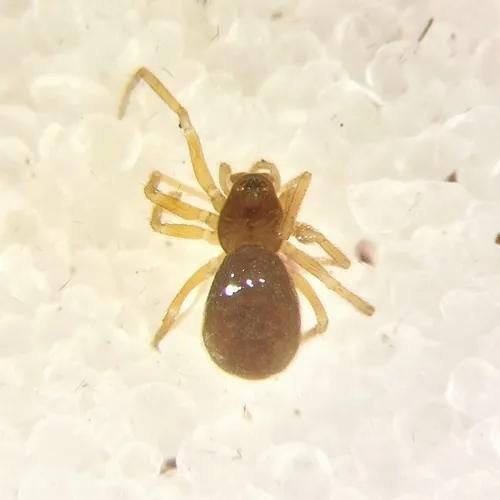
Diplocephalus subrostratus
Diplocephalus subrostratus
Diplocephalus subrostratus is a species of dwarf spider in the family Linyphiidae. It is found in North America, Greenland, a range from Russia (European to Far East), and Mongolia.
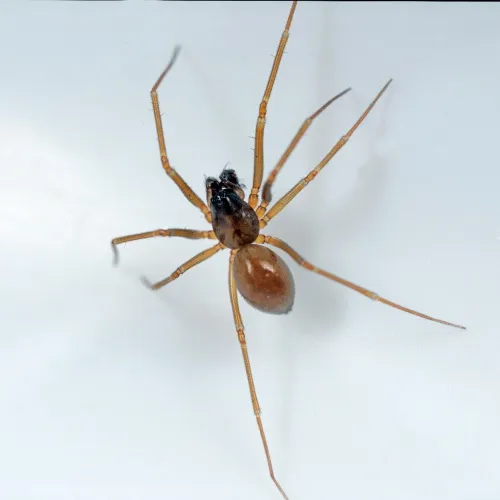
Diplostyla concolor
Diplostyla concolor
A small, dark brown or blackish species. Length about 3 mm. The female epigyne is highly characteristic with a very long scapus, unvarying in width. D. concolor is found in a wide variety of situations, usually at ground level. It can be found in gra
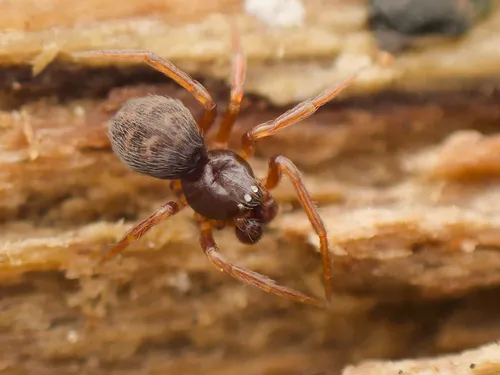
Dipoena washougalia
Dipoena washougalia
Dipoena washougalia is a species of cobweb spider in the family Theridiidae. It is found in the United States.
Dipoenoides formosa
Dipoenoides formosa
Confirmation of pattern match can be found here . ID by Rod Crawford.
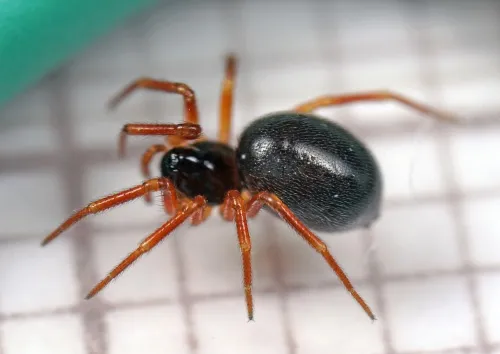
Dismodicus bifrons
Dismodicus bifrons
Males: 1.7 to 2.1 mm, Females: 2 to 2.5 mm. Unless identified by a recognised expert, a photo is required. If the photo doesn't show the key ID features then in the comments box describe the size and identifying characters you have observed. An activ
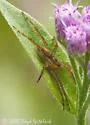
Dolomedes striatus
Dolomedes striatus
Identification: Compared to D. triton , the abdominal white bands of D. striatus are more dorsal, more distinct, and are solid colored, and the abdominal dark median band is darker at the edge adjacent to the white bands. This species and D. triton a
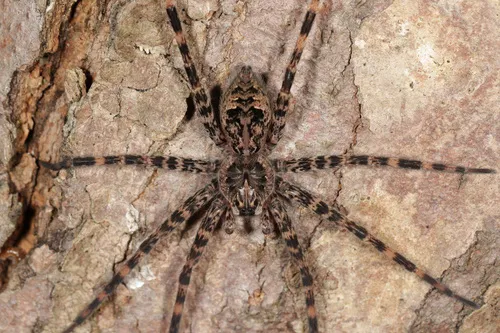
Dolomedes tenebrosus
Dolomedes tenebrosus
Identification: Brownish to gray with few white marks, dark W-shaped marks on dorsal surface of abdomen. Note that mature females are much larger than mature males--see Life Cycle . The main difference between scriptus and tenebrosus is that the 'W'
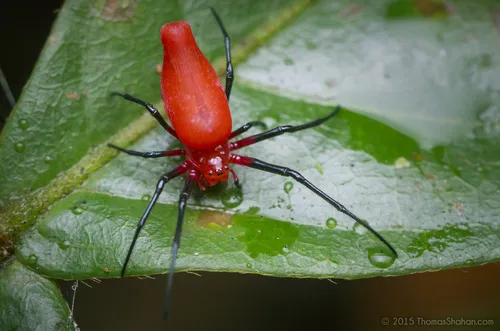
Dominican Spider
Leucauge licina
Identification: Female characterized by bright red abdomen and cephalothorax with black markings and two parallel rows of trichobothria on the fourth femurs (they look like a eyelashes). The elongated "tail" is sometimes forked and sometimes pointed,
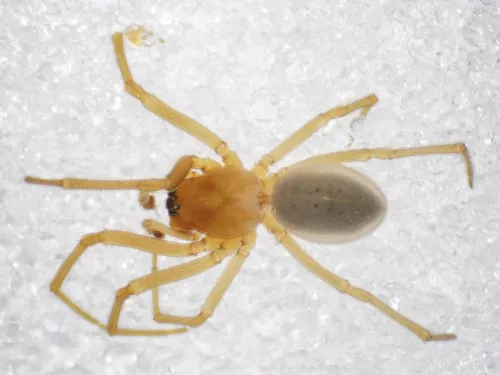
Donacochara speciosa
Donacochara speciosa
Length 4 to 5 mm. Prosoma yellow-brown. Sternum yellow-brown. Chelicerae yellow-brown. Legs yellow-brown. Opisthosoma yellowish, pink or white with black pattern. Longitudinal band interrupted several times, merging with spots and transverse stripes
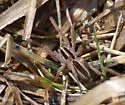
Dotted Wolf Spider
Rabidosa punctulata
Identification: Note that the spots on the ventral abdomen may not be present in younger spiders. Female Male Female with egg sac:
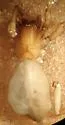
Drassodes angulus
Drassodes angulus
Identification: Epigynum (undissected, dissected ventral, dissected dorsal)
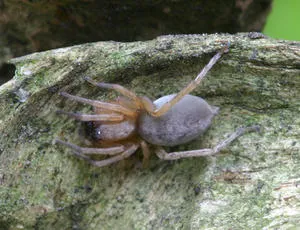
Drassodes cupreus
Drassodes cupreus
D. cupreus is the most common of the UK spiders in this genus but cannot easily be distinguished from D. lapidotus . The female is 9-18 mm with a mousy grey abdomen and long tubular spinners. If we cannot be certain that an image is D. cupreus but it
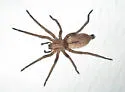
Drassodes neglectus
Drassodes neglectus
Identification: Male voucher Left palp (ventral/lateral) Males of this species have three dorsodistal macrosetae on the palpal femur: Female voucher Epigyne (ventral)
Drassodes saccatus
Drassodes saccatus
Identification: Epigynum (ventral, ventral dissected, dorsal dissected)
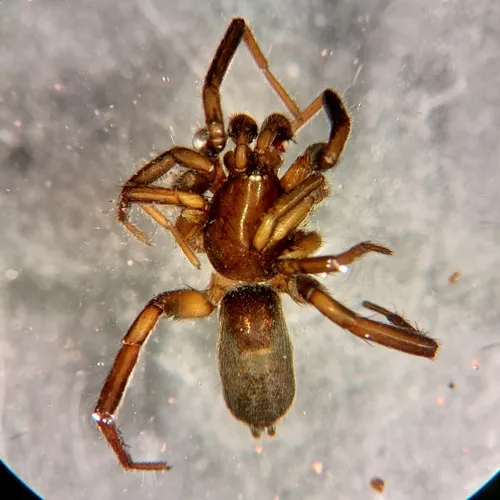
Drassyllus niger
Drassyllus niger
Drassyllus niger is a species of ground spider in the family Gnaphosidae. It is found in the United States and Canada.
Drassyllus novus
Drassyllus novus
Identification: Palp Epigynum (undissected/ventral dissected/dorsal dissected)
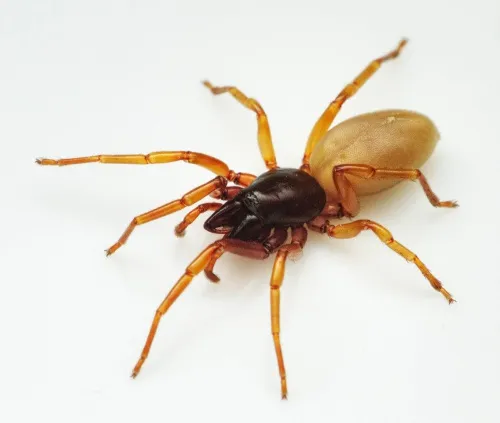
Dysdera erythrina
Dysdera erythrina
Length 6 to 14 mm. Prosoma dark with parallel margins, opisthosoma greyish or whitish, legs yellow-orange. Large chelicerae, six eyes. Femur IV spineless. Dysdera crocata : femur IV with 1-3 dorsal spines, c.f. D. erythrina : femur IV without dorsal
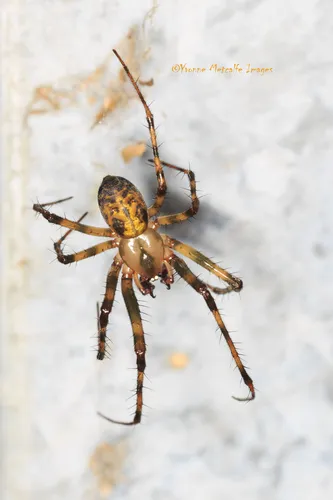
Eastern Cave Long-jawed Spider
Meta ovalis
Meta ovalis is a species of long-jawed orb weaver in the family of spiders known as Tetragnathidae. It is found in the United States and Canada.
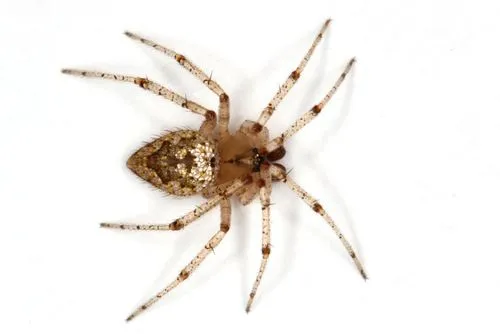
Eastern Triangular Cobweaver
Dipoenoides funebris
Identification: The images here are tentative ID's based on coloration, pattern, and localities.
Ebo latithorax
Ebo latithorax
Identification: Female epigynum: Ventral: Dorsal: Male palp: Ventral: Lateral:
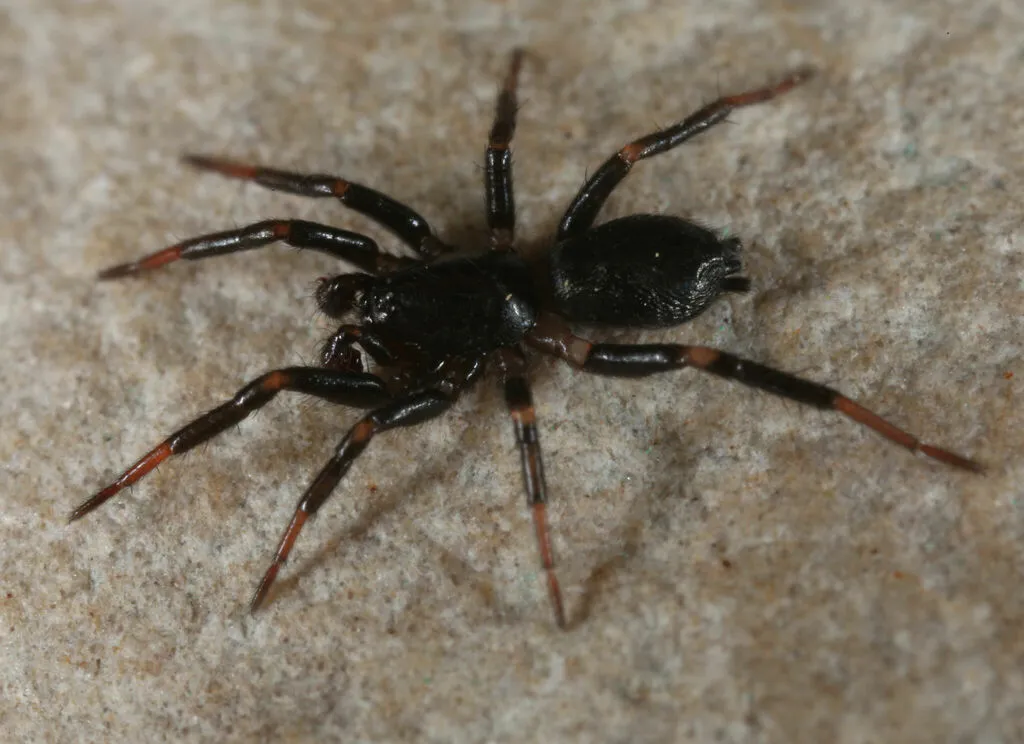
Eilica bicolor
Eilica bicolor
Eilica bicolor is a species of ground spider in the family Gnaphosidae. It is found from the United States to Honduras, Cuba, and Jamaica.
Emblyna borealis
Emblyna borealis
Chamberlin & Gertsch indicate that E. b. cavernosa is paler than E. b. borealis and reluctantly places it as a subspecies to E. borealis . They also indicate that E. b. canvernosa is very similar to E. completa .
Emblyna hentzi
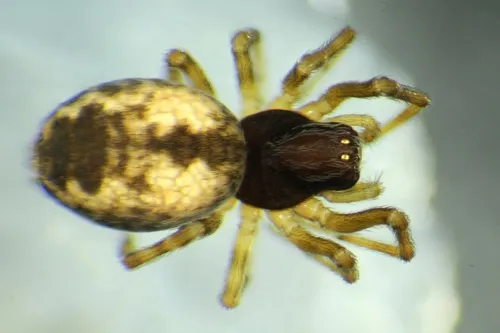
Emblyna hentzi
Emblyna hentzi is a species of mesh web weaver in the spider family Dictynidae. It is found in the United States and Canada.
Enlarged Ground Crab Spider
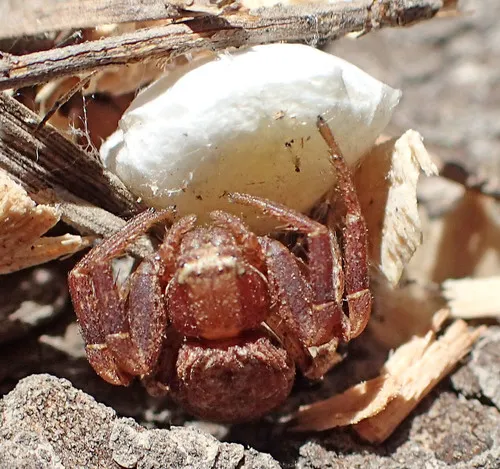
Xysticus locuples
Xysticus locuples is a species of crab spider in the family Thomisidae. It is found in North America.
Enoplognatha intrepida
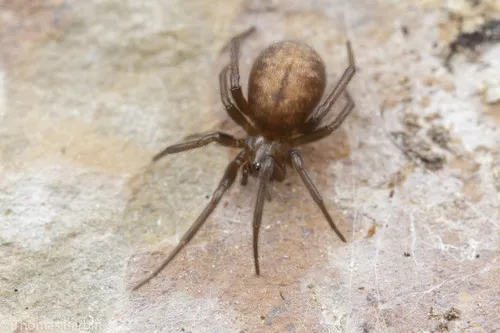
Enoplognatha intrepida
Enoplognatha intrepida is a spider in the family Theridiidae ("cobweb spiders"), in the infraorder Araneomorphae ("true spiders"). The distribution range of Enoplognatha intrepida includes the USA, Canada, Greenland, and Korea.
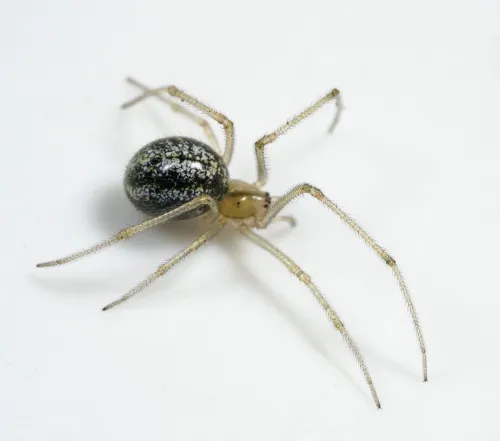
Enoplognatha latimana
Enoplognatha latimana
Male: 3 to 5 mm, female 4 to 6 mm. Prosoma light yellow, with narrow, black margin and dark median stripe. Sternum light yellow, with black margin and median stripe. Legs bright, almost white. Tibia usually (?) without black terminal ring. Opisthosom
Enoplognatha ovata
Enoplognatha ovata
Identification: Enoplognatha ovata has several color morphs. This one is form lineata , with several pairs of dorsolateral spots, but no red stripes. Form redimita has two dorsolateral red stripes running the length of the abdominal dorsum. Form ovat

Enoplognatha thoracica
Enoplognatha thoracica
Length 3-4mm. A brown, easily over-looked spider which can be mistaken for a large Linyphiid. Unless identified by a recognised expert, a photo is required and the specimen should be examined with a microscope. Confirmation of this species requires e
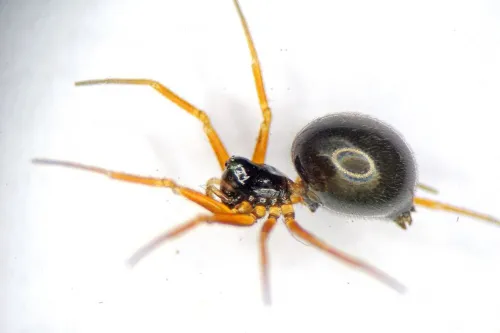
Entelecara acuminata
Entelecara acuminata
Males: 1.82 mm, females: 2.1 to 2.3 mm. Inconspicuous but generally dark. Males have elevated eyes. Microscopic examination of genitalia is required to confirm identity. Widespread in much of Britain, becoming scattered in the north. No additional im

Entelecara erythropus
Entelecara erythropus
This is one of the 'money spiders' in the Linyphidae family - which has more UK species than any other. Most are small and need microscopic examination to identify. No additional images available for this species.
Epiceraticelus mandyae
Epiceraticelus mandyae
Identification: Male/Female Palp Epigynum Mandy Howe for whom this species was named was also a BugGuide contributing editor.
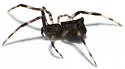
Episinus amoenus
Episinus amoenus
Identification: Abdomen can be variable in shape. The tubercles can be long and pointed in immature specimens or short and round in mature specimens. (Levi, 1954)
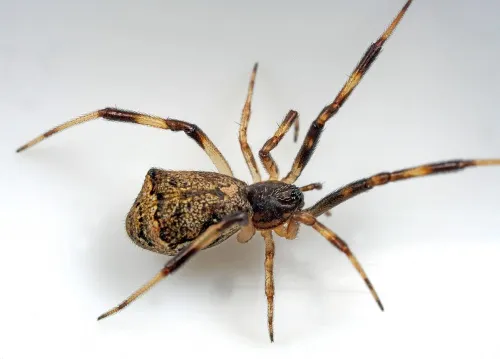
Episinus angulatus
Episinus angulatus
A small, mottled brownish tangle-web spider. The body is rather thin, the flat abdomen broadens a little bit near the end. Females grow up to 5.5 mm, males slightly smaller. Episinus truncatus – microscopic examination of genitalia is required to con
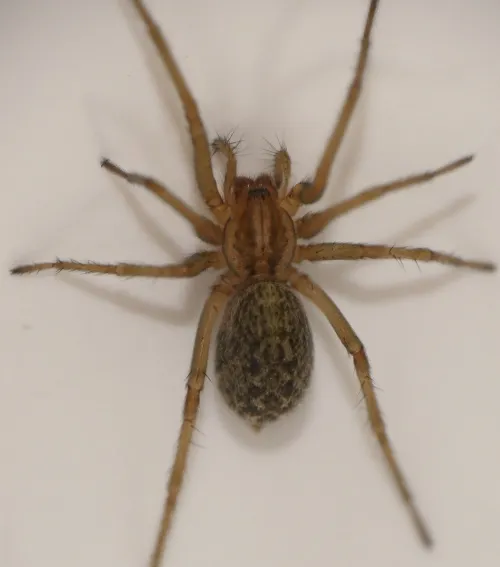
Eratigena agrestis
Eratigena agrestis
They usually have a brown cephalothorax with diffuse, indistinct darker brown markings on the legs and abdomen. The underside of the abdomen has a characteristic yellow marking with no spots. The genus Tegenaria has recently been split: Tegenaria spp
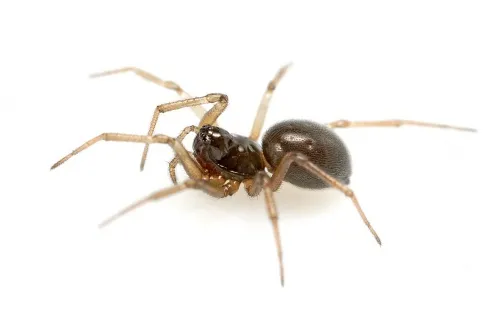
Erigone atra
Erigone atra
Erigone atra is only about 2 to 2.5 millimeters. The abdomen is covered with short hair whilst the forebody is hairless and has a smooth glossy surface. In the male, the eye region is greatly increased. The legs in both sexes are coloured uniformly b
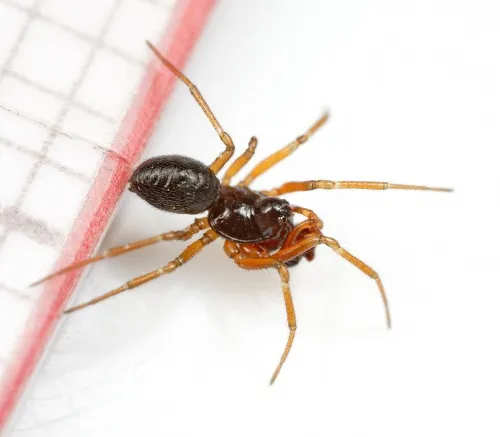
Erigone dentipalpis
Erigone dentipalpis
A small spider, male: 1.9-2.5 mm, female: 1.8-2.6 mm. It has a brown/blackish abdomen and blackish head. Tibial spines: 2-2-2-1 TmIV: No TmI: 0.40-0.50 Confirmation requires examination of genitals of mature specimens. Adults can be found all through
Erigone dentosa
Erigone dentosa
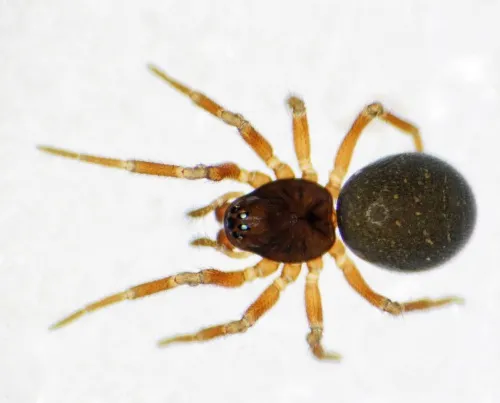
Identification: Comment taken from Devin Carroll's 2008 image/notes: "The male palp has a hook underneath in the middle, in addition to the long process at the tip, characteristic in all Erigone species. The hook separates it from all other Erigone
Erigonella hiemalis
Erigonella hiemalis
Body length male: 1.45 to 1.6 mm. Body length female: 1.5 to 2 mm. Tibial apophysis with a distinctly spined and a slightly bent process. Paracymbium distally bipartite. Prosoma brown to dark brown. Legs yellow-brown to brown, with basally brighter t
Eriophora ravilla
Eriophora ravilla
Identification: Generally dull brown, sometimes with white or yellow "shoulders" on the abdomen. An alternate color form, seen sometimes in males and sub-adult females, has a large yellow-green patch on top of the abdomen. Also, according to Levi: "S
Eris flava
Eris flava
Identification: Note the male face pattern with a white line under the eyes that extends across the entire clypeus. This fieldmark is typically absent on the more common E. militaris . Palp The female is typically light brown, yellow, or golden with
Ero aphana
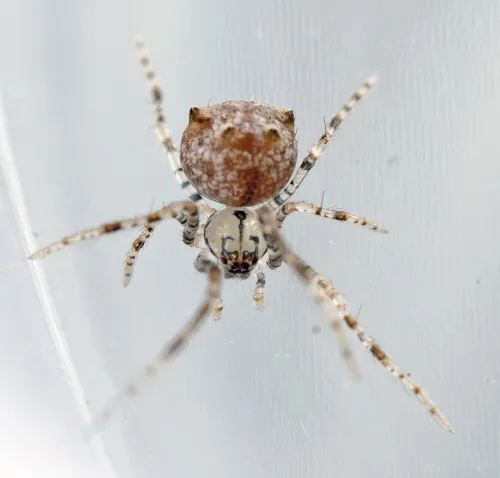
Ero aphana
Ero aphana grows to about three millimetres long, the females being slightly larger than the males. The sternum is dark coloured with radiating pale markings in the posterior half and a larger, irregular pale blotch in the anterior half. The abdomen
Ero cambridgei
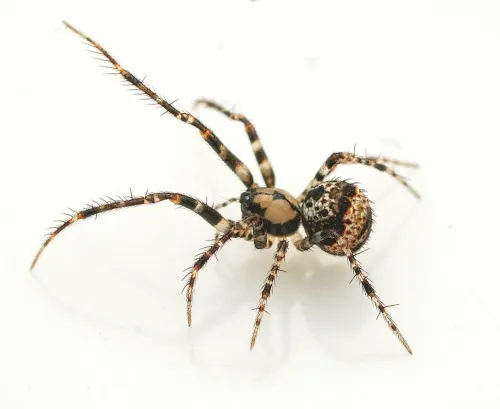
Ero cambridgei
Males 1.8 to 2.9 mm; Females: 2.5 to 3.2 mm. Two tubercles on abdomen. Ero furcata also has two tubercles on the abdomen. Examination of genitalia is required to confirm this species. Found on trees, bushes, low vegetation and in leaf litter in a var
Ero canionis
Ero canionis
Rod Crawford's "An Annotated Checklist of the Spiders of Washington" shows Ero canionis as the only Ero species occurring in Washington.
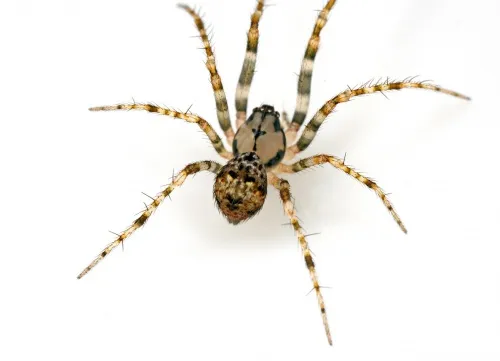
Ero furcata
Ero furcata
Males 2.5 to 3 mm, females 3.5 to 4.5 mm. Prosoma yellowish-brown, eye region and a broad stripe on margin darker, almost black. A black line between dorsal groove and eye region. Sternum yellowish-white, with dark spots. Legs yellowish, annulated wi
Ero pensacolae
Ero pensacolae
Identification: Ivie & Barrows, 1935 - Some new spiders from Florida Archer, 1941 - Alabama spiders of the family Mimetidae
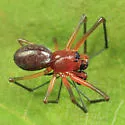
Estrandia grandaeva
Estrandia grandaeva
Identification: "Cephalothorax yellow-brown, lightly suffused with gray, darkest along margin and furrows. A dark line on median furrow forks at head sending a branch toward each posterior lateral eye; space between these branches usually darkened. O
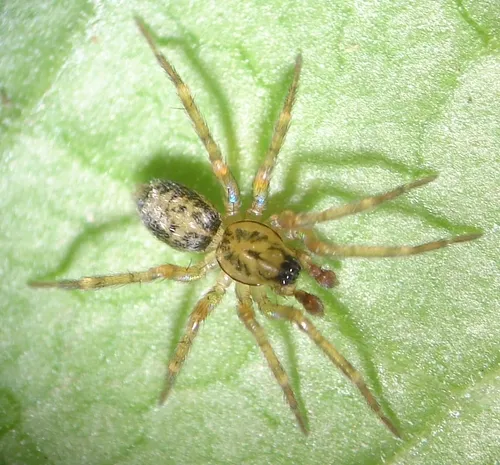
Ethobuella tuonops
Ethobuella tuonops
Ethobuella tuonops is a species of true spider in the family Cybaeidae. It is found in the United States and Canada.
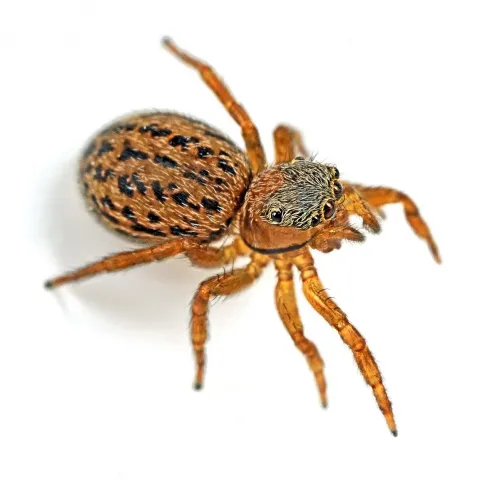
Euophrys frontalis
Euophrys frontalis
The species is sexually dimorphic. The females are brown with darker rather zig-zag lines running along the length of the abdomen. These stripes are not as pronounced in the male which has red rimmed eyes and enlarged front legs used in courtship whi
Euophrys monadnock
Euophrys monadnock
The white femora of preserved specimens are orange on live specimens.
Eustala californiensis
Eustala californiensis
Identification: Carapace light brown with paired dark brown patches and dark longitudinal mark in thoracic cleft. Sides with gray lines. One dorsal hump.
Eustala rosae
Eustala rosae
Identification: Look for the three posterior humps or tubercles in a row to separate from other Eustala in the area.
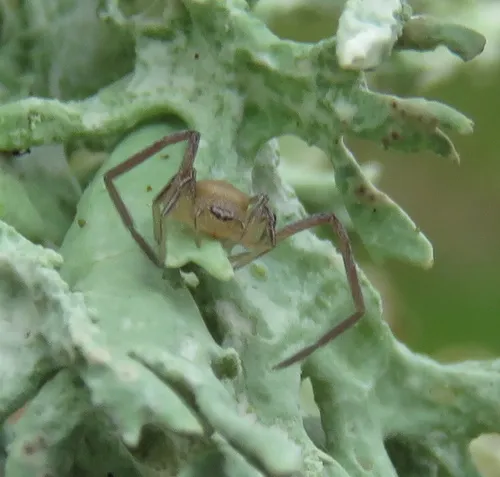
Evans's Running Crab Spider
Ebo evansae
Ebo evansae is a species of running crab spider in the family Philodromidae. It is found in the United States and Mexico.
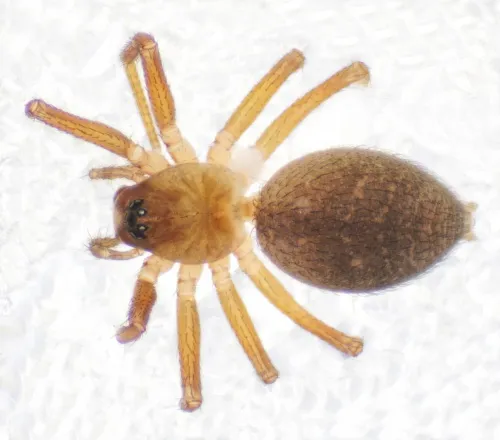
Evansia merens
Evansia merens
Length 2-3mm. Prosoma light brown. Opisthosoma grey. "Requires examination at high magnification in good lighting, typically examination of the genitalia." Bee, L., Oxford, G., & Smith, H. (2020). Britain's Spiders: A Field Guide. Second Edition. Pri
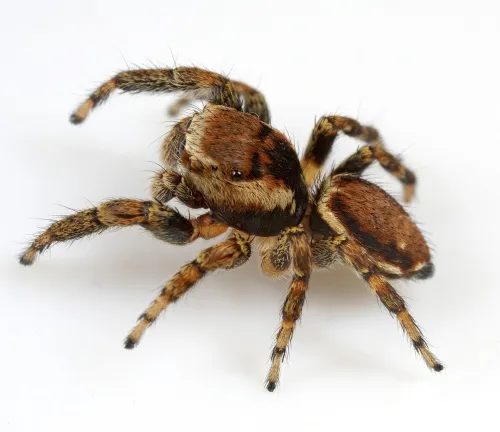
Evarcha falcata
Evarcha falcata
The abdomen is chestnut brown patterned with black and with a conspicuous pale crescent at the anterior end. Mainly a woodland spider which occurs in the foliage of trees and on lower vegetation such as heather and gorse in woodland clearings. March
Evarcha hoyi
Evarcha hoyi
Identification: Tentative placement of Evarcha hoyi images in BugGuide is based on the ranges given by Marusik and Logunov . It is possible they can not be identified from habitus images alone.[jb] Epigynum: Palp: Please see Jay Barnes' comment here
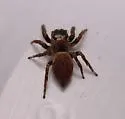
Evarcha proszynskii
Evarcha proszynskii
Identification: Tentative placement of Evarcha proszynskii images in BugGuide is based on the ranges given by Marusik and Logunov . It is possible they can not be identified from habitus images alone.[jb] Epigynum: Palp:
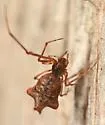
Faiditus cancellatus
Faiditus cancellatus
Faiditus cancellatus (Faiditus cancellatus) is a species in the family Theridiidae, commonly known as cobweb spiders, belonging to the order Araneae (Spiders). This species belongs to the genus Faiditus. Size: Female: 2.3-3.5mm Male: 2.5-4.5mm. Found