
Spiders
Order Araneae
The Spiders (Order Araneae) includes 1,848 species across 82 families and 552 genera in our directory.
About Spiders
As of 2023, 51,673 spider species in 136 families have been recorded, though an estimated 150,000 species exist. Spiders rank 7th in total species diversity among all organism orders. Only 0.5% of spider species pose any risk to human health.
Economic Impact
The global spider community kills an estimated 400-800 million tons of prey annually (2017 study). Spiders provide billions of dollars in natural pest control for agriculture. Spider silk is 5× stronger than steel of the same diameter, driving a biomaterials research industry.
Ecological Role
Spider venom contains complex peptides with diverse pharmacological activities, making them valuable for drug development research. Spiders produce up to 7 types of silk from specialized glands. Spider silk genes have been inserted into mammals and plants for biotech applications.
Families in Araneae (82)
Species in Araneae (1,848)
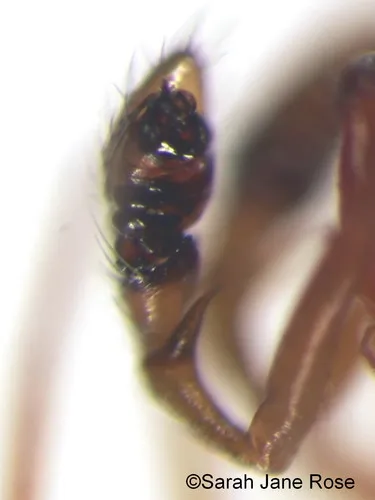
Autumn Money Spider
Erigone autumnalis
Erigone autumnalis is a species of dwarf spiders in the family Linyphiidae. It is found in North and Central America, and it has been introduced to Azores, Europe, United Arab Emirates, and New Caledonia.
Azilia affinis
Azilia affinis
Identification: The web is vertical to horizontal and loose with a closed hub. The posterior hump is more distinct in some specimens, almost absent in specimens from Florida.
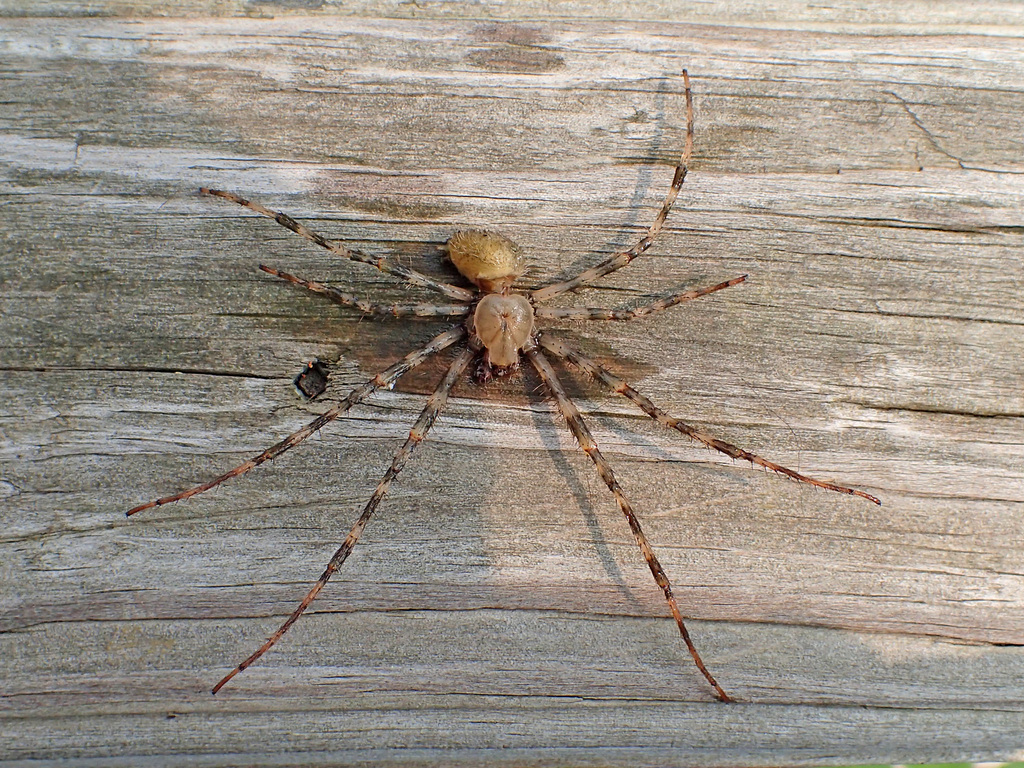
Barn Spider
Araneus cavaticus
no rights reservedIdentification: Araneus cavaticus is often confused with Neoscona crucifera . These two species can be differentiated using two main features: 1) Araneus cavaticus has 'shoulders' near the front on the dorsal side of the abdomen. A. cavaticus N. cru
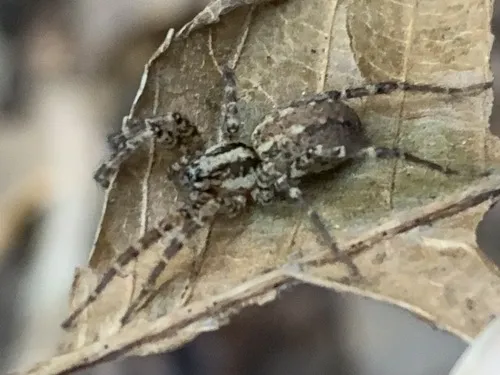
Barronopsis texana
Barronopsis texana
Identification: Coloration variable, generally dusky gray or tan background with light black mottling, occasionally with reddish or burgundy coloration on abdomen. Carapace coloration also variable, from prominent longitudinal black stripe on carapac
Baryphyma pratense
Baryphyma pratense
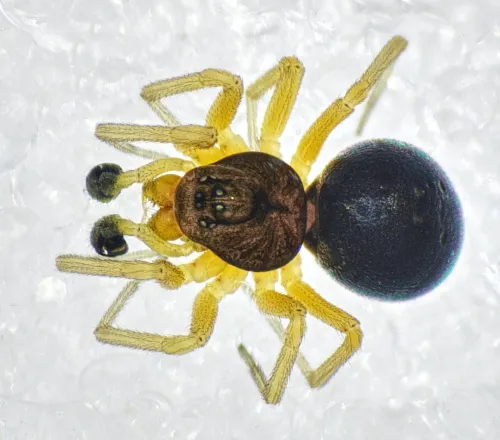
Length 2 to 2.5 mm. Prosoma brown, with black margin, black median spot and radial stripes. Opisthosoma dark grey to black. Male with elevated head region. Microscopic examination of the genitalia is required to confirm this species. Flood plains of
Bassaniana floridana
Bassaniana floridana
Identification: The anterior eye row is weakly recurved; the anterior legs of male are only slightly mottled.
Bassaniana utahensis
Bassaniana utahensis
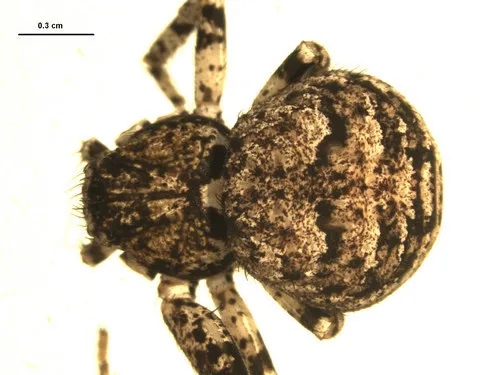
Identification: Epigynum: Palp (better images needed): Distinguishing B. utahensis from C. brunneipes : So I looked at these carefully today, comparing only the males of spiders I think the ID is 100% correct. vs. Here is what I see... for difference
Bathyphantes alascensis
Bathyphantes alascensis
Identification: "Color of carapace and appendages light yellowish to light brown, without markings, legs in some cases broadly darkened between joints. Abdomen dark gray above, without cross bands" Palp Epigynum
Bathyphantes alboventris
Bathyphantes alboventris
Identification: "Color of carapace varying from dusky brown with distinct blackish radial streaks in darker specimens to yellowish brown with little shading and almost no radial streaks in lighter specimens; central area of carapace faded and more ye
Bathyphantes approximatus
Bathyphantes approximatus
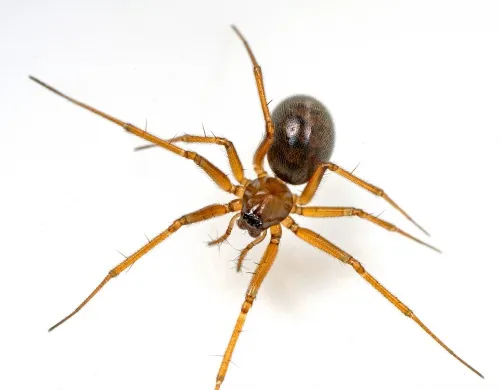
Males 2 to 3 mm, females 2-3 to 5 mm. Prosoma brown, with darkened margin. Sternum blackish. Opisthosoma black with bright pattern dorsally consisting of transverse bands or chevrons. Tibial spines: 2222 / TmIV: no / TmI: 0.15-0.25 Confirmation of th
Bathyphantes brevipes
Bathyphantes brevipes
Identification: "Color of carapace yellowish to light brown, with sides of thorax narrowly edged in black; dorsum of abdomen pale gray, with an irregular or broken median band of blackish and a row of blackish spots along each side" Epigynum "..there
Bathyphantes brevis
Bathyphantes brevis
Identification: Close to B. alboventris in appearance. "Color of carapace light brown, lightly shaded on margins, sides of thorax narrowly edged with black;Abdomen pale gray on dorsum, marked with blackish spots on anterior part and a series of black
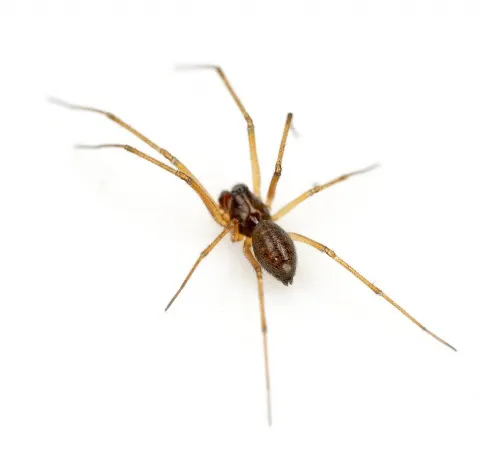
Bathyphantes gracilis
Bathyphantes gracilis
The carapace is brown and the abdomen features black bars on a grey-brown background although this colouration is variable and some specimens are wholly grey-brown or black. Examination of the genitalia is required to confirm this species. Common in
Bathyphantes keeni
Bathyphantes keeni
Identification: "Color of carapace light brownish with sides of thorax and all of head darkened with dusky shadings and streaks. Carapace humped behind eye area, prominently in male, slightly in female. Dorsum of abdomen covered with pattern of dark
Bathyphantes nigrinus
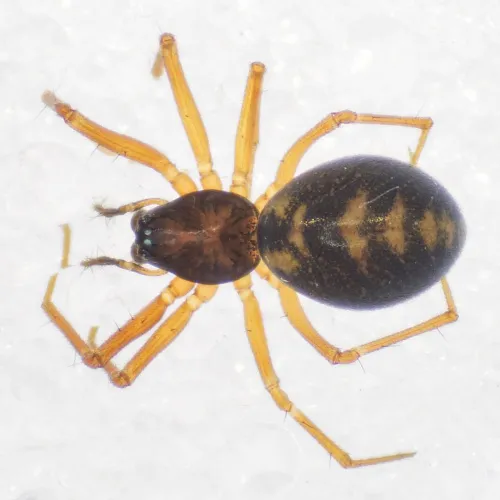
Bathyphantes nigrinus
Length 2.5-3mm. Prosoma reddish brown, with darkened margins. Sternum almost black. Legs yellow-brown. Opisthosoma dark grey, dorsally and laterally mostly with bright pattern, sometimes dorsally bright without pattern. This is one of the 'money spid
Bathyphantes orica
Bathyphantes orica
Identification: "Color of carapace and appendages yellowish amber; abdomen dark gray, with pale gray patches on front half of dorsum." Epigynum
Bathyphantes pallidus
Bathyphantes pallidus
Identification: "Color of carapace yellowish brown to light brown, more or less shaded with dusky brown, especially on sides of thorax. Abdomen dark gray, with a long series of whitish cross bands above, usually divided medially by a narrow, longitud
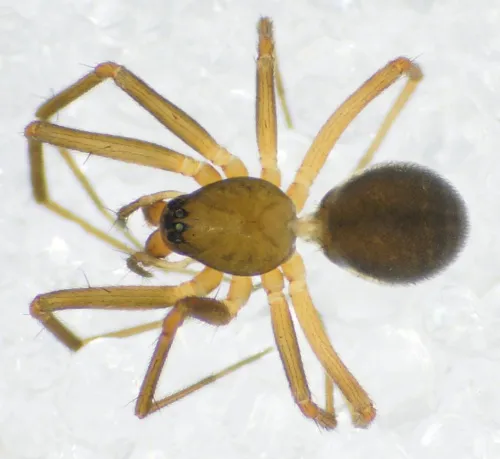
Bathyphantes parvulus
Bathyphantes parvulus
Length 2-2.3mm. Prosoma brown with darkened margin. Sternum black. Legs light yellow, darkened on joints. Opisthosoma dark grey to black with vague, dark pattern. This is one of the 'money spiders' in the Linyphidae family - which has more UK species
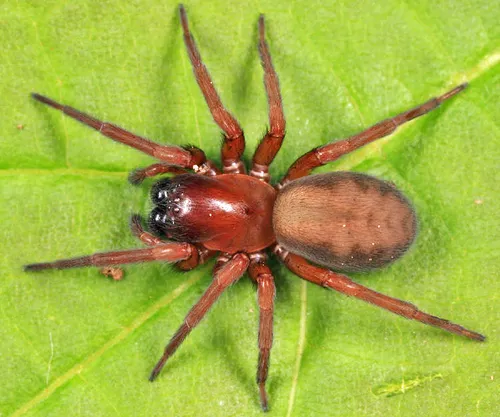
Bennett's Laceweaver
Callobius bennetti
Callobius bennetti is a species of spider in the Amaurobiidae family. It has multiple common names: Hackled Mesh Weaver, hacklemesh weaver, night spider, and tangled nest spider. They sometimes could be mistaken for hobo spiders. The species can be f
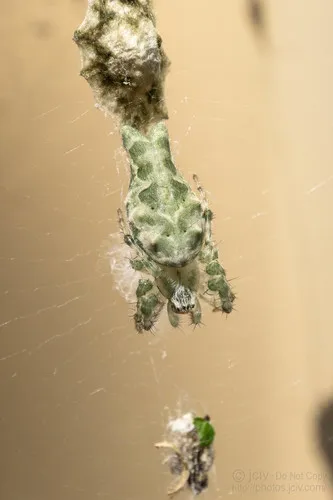
Bifurcate Trashline Orbweaver
Allocyclosa bifurca
Allocyclosa is a genus of orb weaver spiders that contains only one species, Allocyclosa bifurca. It was first described in 1887 by McCook under the name Cyrtophora bifurca, and was transferred to its own genus in 1999. It is the only Cyclosa species
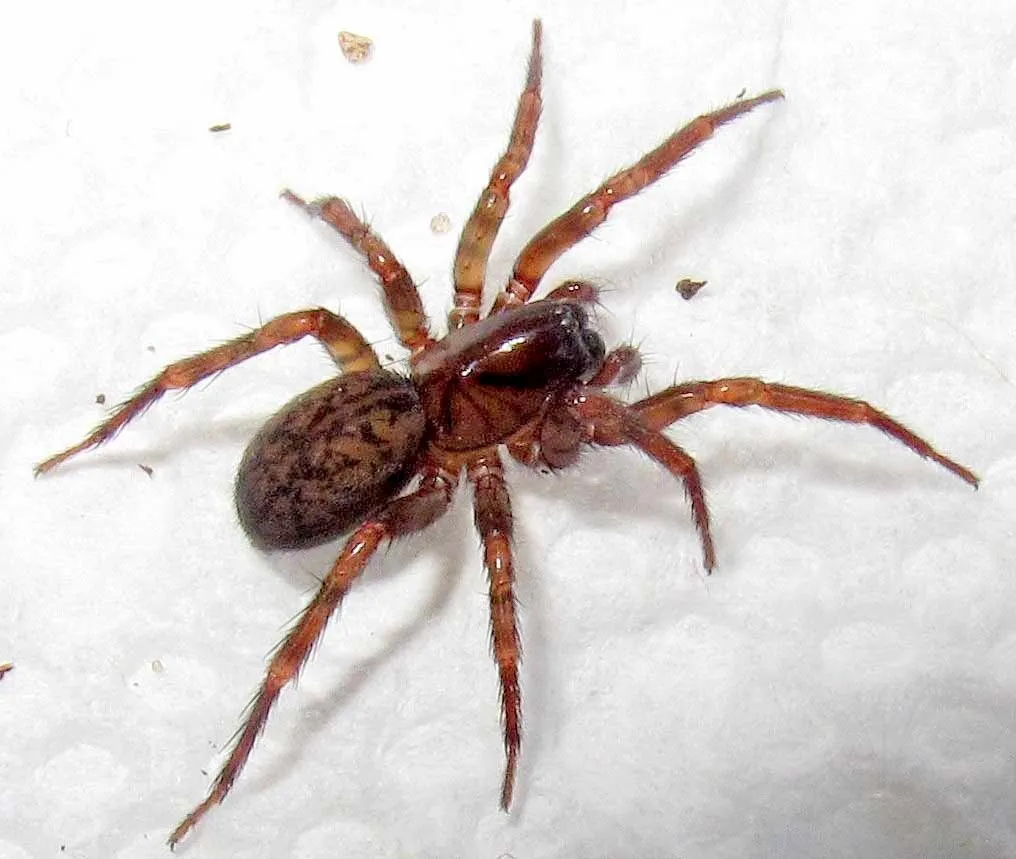
Blabomma californicum
Blabomma californicum
Blabomma californicum is a species of true spider in the family Dictynidae. It is found in the United States.
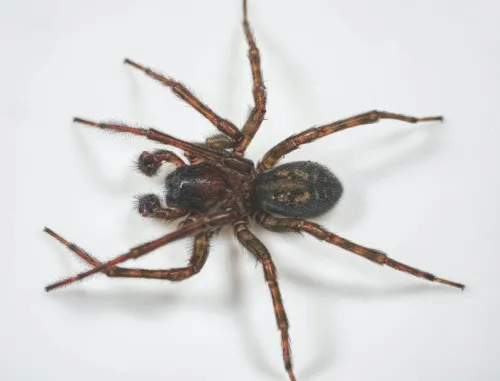
Black Lace-weaver Spider
Amaurobius ferox
Female to 16 mm; male to 12 mm. This spider usually has a dark abdomen with a wide and paler 'cardiac' mark but this is often reduced to a series of pale spots. The intensity of dorsal marking varies and it can easily be mistaken for the other member
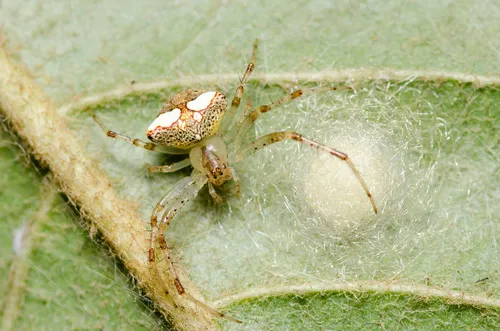
Black-spotted Orbweaver
Araneus miniatus
Araneus miniatus is a species of orb weaver in the family of spiders known as Araneidae. It is found in the United States.
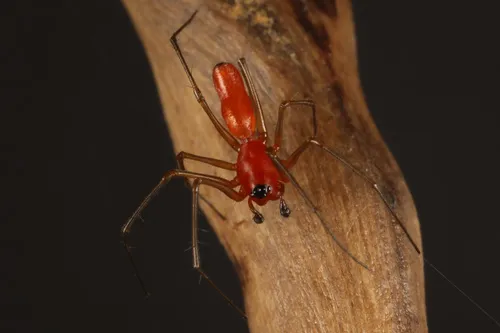
Black-tailed Red Sheetweaver
Florinda coccinea
The black-tailed red sheetweaver, scientific name Florinda coccinea, is a species of web-building spider belonging to the family Linyphiidae. It is the only species in the genus Florinda. It is sometimes known as the red grass spider. Found in the Un
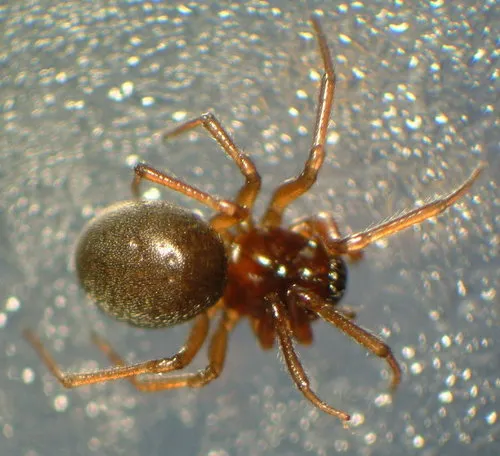
Blazed Dwarf Weaver
Erigone blaesa
Identification: Palp Epigynum Holotype male. Shinnecock Hills, N. Y., June 15, 1919. Allotype female, same locality.
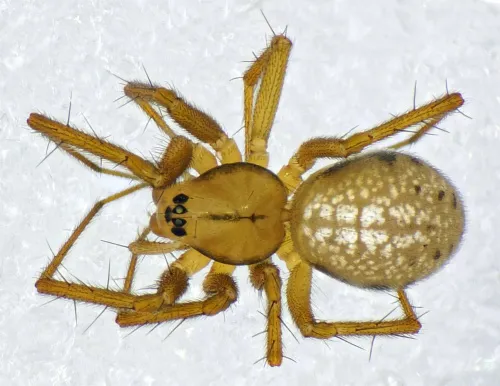
Bolyphantes luteolus
Bolyphantes luteolus
Length 3 to 5 mm. Prosoma brown. Opisthosoma yellowish brown, dorsally with irregularly arranged spots. This species can only be confirmed by examination of the genitalia of mature specimens. Grassland, heathland, moorland and wet flushes, beneath st
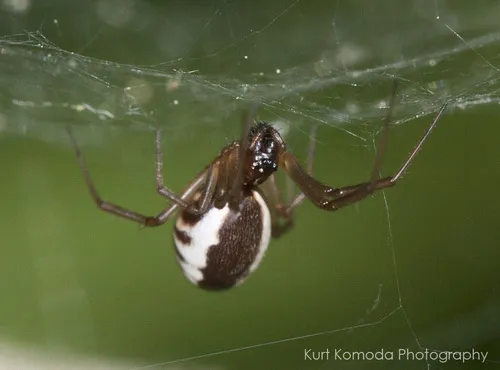
Bowl and Doily Weaver
Frontinella pyramitela
Identification: Images that best match the photographs in Spiders of the Eastern United States : This spider builds a distinct web made of a bowl-shaped sheet web over another sheet web, leading to the common name "Bowl and doily spider" Palp Epigynu
Bronze Jumper
Eris militaris
Identification: Epigynum Palp More information about distinguishing E. militaris from E. flava in Maddison's paper.
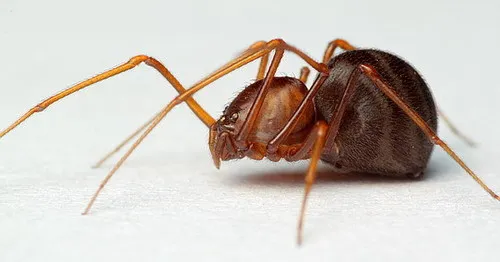
Brown Spitting Spider
Scytodes fusca
Identification: This species is commonly associated with human dwellings, where they seem to compete with Theridion rufipes ( Theridiidae ), but they are also frequent in the field, in hollow tree trunks, under loose bark and in nests of small mammal
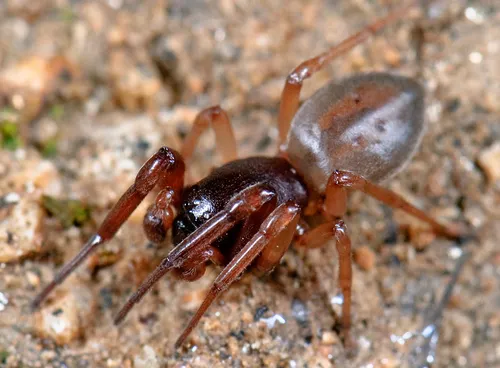
Bull-headed sac spider
Trachelas pacificus
Trachelas pacificus is a species of true spider in the family Trachelidae. It is found in the United States and Mexico.
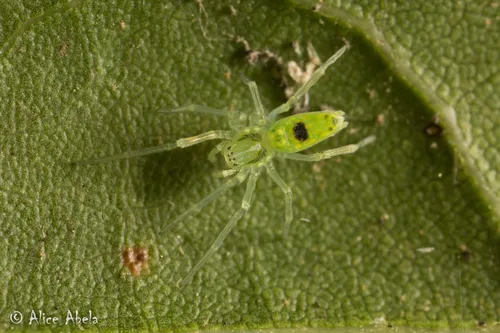
Califorenigma linsdalei
Califorenigma linsdalei
Califorenigma is a monotypic genus of spiders in the family Dictynidae containing the single species, Califorenigma linsdalei.
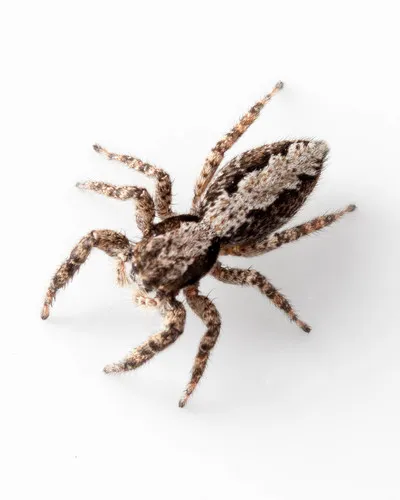
California Flattened Jumping Spider
Platycryptus californicus
Platycryptus californicus is a species of jumping spider in the family Salticidae. It is found in North and Central America.
Calilena restricta
Calilena restricta
Calilena restricta is a species of funnel weaver in the family of spiders known as Agelenidae. It is found in the USA.
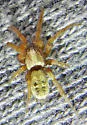
Callilepis gosoga
Callilepis gosoga
Callilepis gosoga is a species of ground spider in the family Gnaphosidae. It is found in the United States.
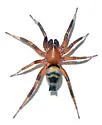
Callilepis imbecilla
Callilepis imbecilla
Identification: Palp Epigynum "This species apparently replaces C. pluto in the Mississippi River Valley and the extreme southern United State."
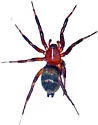
Callilepis pluto
Callilepis pluto
Identification: Voucher specimen with epigynum: Palp
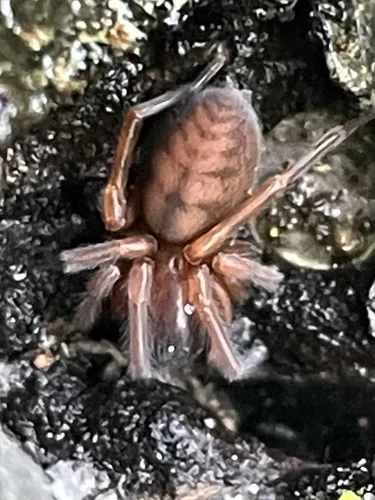
Callobius gertschi
Callobius gertschi
Identification: Palp (ventral/dorsal/lateral) Epigynum
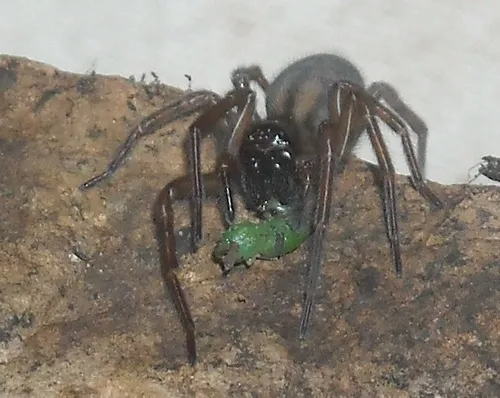
Callobius nomeus
Callobius nomeus
Callobius nomeus is a species of hacklemesh weaver in the spider family Amaurobiidae. It is found in the United States and Canada. Specifically this species is associated with tree bark.
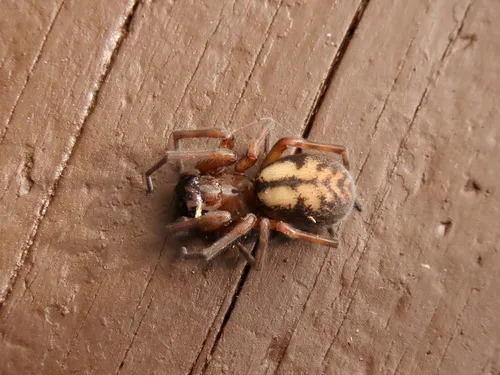
Callobius pictus
Callobius pictus
Callobius pictus is a species of hacklemesh weaver in the family of spiders known as Amaurobiidae. It is found in the United States and Canada.
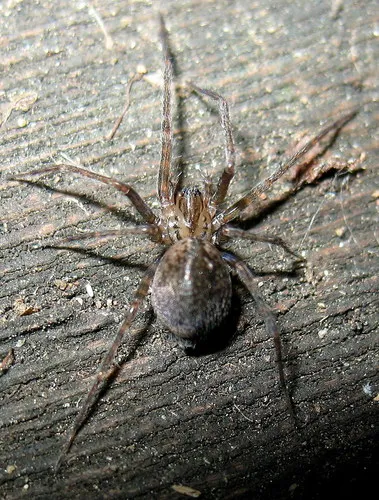
Calymmaria californica
Calymmaria californica
Calymmaria californica is a species of true spider in the family Cybaeidae. It is found in the United States.
Calymmaria monicae
Calymmaria monicae
This species looks very similar to other Calymmaria especially C. aspenola, C. californica, and C. lora.
Calymmaria monterey
Calymmaria monterey
Identification: Likely requires detailed microscopic examination of the epigynum of an adult female. Males have not yet been described. Epigynum: Males of this species have not yet been described.
Calymmaria persica
Calymmaria persica
Identification: According to Heiss & Draney 2004 , Calymmaria persica females have annulated (banded) legs, whereas C. virginica females have unmarked legs. This may be helpful for separating those two Appalachian species. (The rest of the Calymmaria
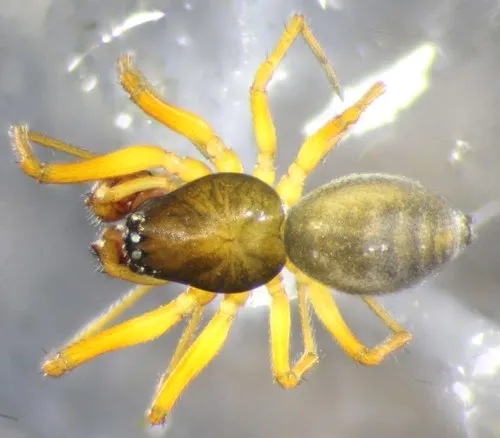
Canada Sheetweb Weaver
Bathyphantes canadensis
Identification: "Color of carapace light to dark brown, with dusky radial marks. Abdomen varying from pale gray to blackish above, usually with characteristic pattern of dark and light gray" Palp
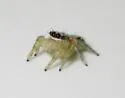
Cardinal Jumper
Phidippus cardinalis
Identification: Male/Female Palp Epigynum Male P. cardinalis can be distinguished from male P. apacheanus by the lack of the shiny, green chelicerae found in the latter. See images of faces below ( P. cardinalis/P. apacheanus ):
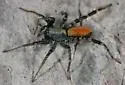
Castianeira dorsata
Castianeira dorsata
Identification: Palp Epigynum Also, see the content associated with this specimen:
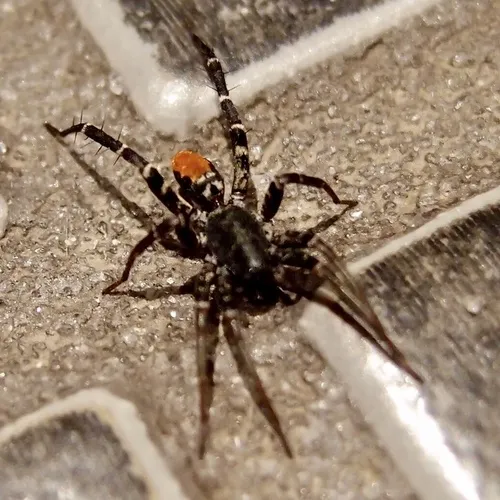
Castianeira floridana
Castianeira floridana
Castianeira floridana is a species of true spider in the family Corinnidae. It is found in the United States and Cuba.
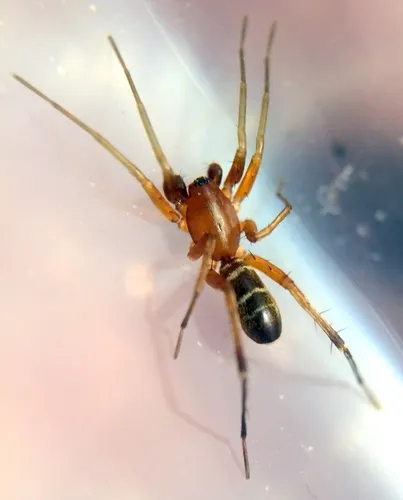
Castianeira gertschi
Castianeira gertschi
Identification: This species has an abdomen that darkens to dark brown at the posterior end. We believe this is a reliable field marking for this species.
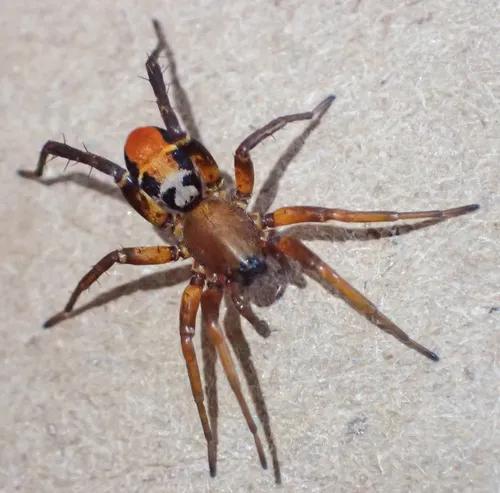
Castianeira thalia
Castianeira thalia
Identification: There are two main patterns in this species 1. The basic black & white 2. The black & white with overlying red/orange marking These patterns are alluded to in Reiskind 1969, who comments under Remarks: "A single specimen of C. thalia
Castianeira variata
Castianeira variata
Identification: This species is similar in general appearance to Castianeira longipalpus . It differs at sight in having the posterior tibiae marked with distinct basal and distal yellow annulae(rings)**. Carapace dark reddish brown to nearly black w
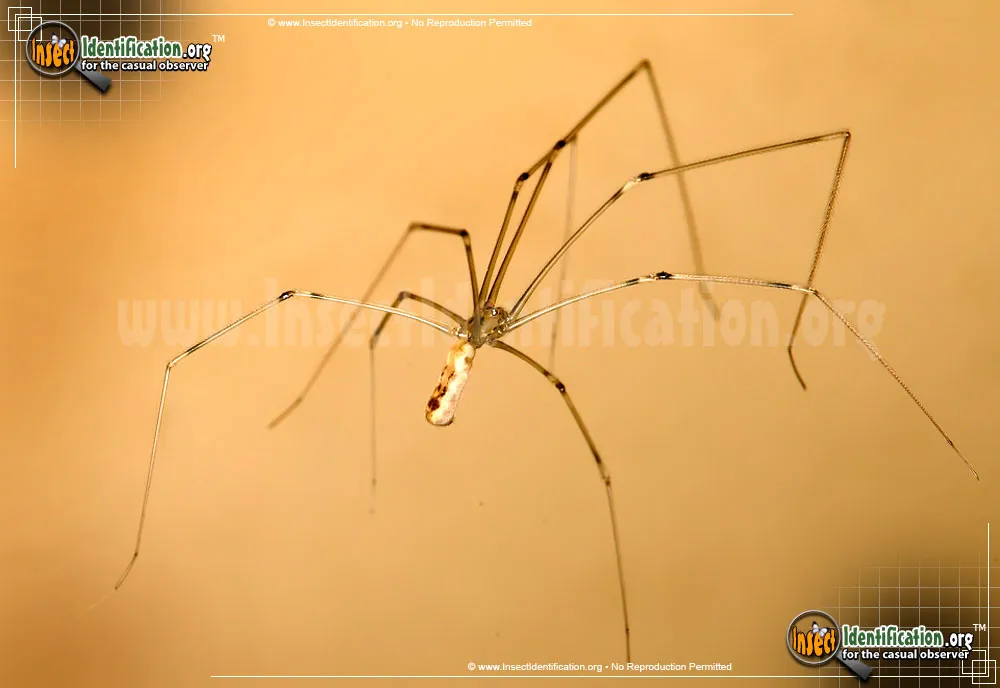
Cellar Spider
Pholcus phalangioides
Sometimes called the 'Daddy Long-legs Spider' it is relatively easy to identify due to the very long legs and cylindrical body. Pholcus phalangioides is an eight-eyed spider, which is a pale yellow-brown except for a gray patch in the center of the c
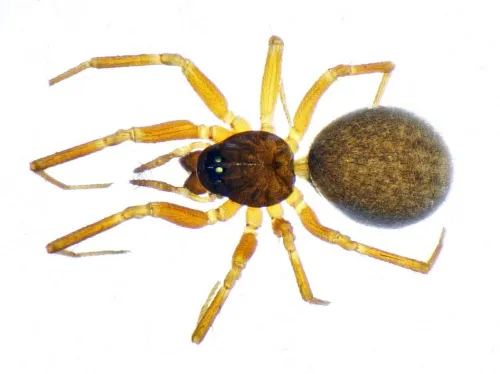
Centromerita bicolor
Centromerita bicolor
Size 3.0 to 3.5 mm. Carapace and legs unicolourous brown to dark brown. Male head with a number of forward directed spines, fewer in females. Abdomen brown to dark brown. If brown then the abdomen has the same colour as the carapace and legs. If dark
Centromerita concinna
Centromerita concinna
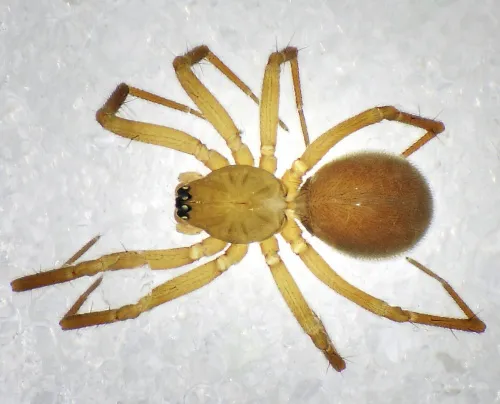
Length 2 to 3 mm. Prosoma pale yellow, with black margin. Sternum almost black. Chelicerae red-brown. Legs red-brown. Opisthosoma dark grey to black. Spinnerets red-brown. Unless identified by a recognised expert, a photo is required and the specimen
Centromerus cornupalpis
Centromerus cornupalpis
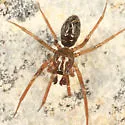
Identification: "Cephalothorax, chelicerae, and legs light brown, lightly suffused with gray locally; dorsal and lateral surfaces of abdomen gray with faint indications of light transverse bars posteriorly and with transverse rows of light spots" Pal

Centromerus dilutus
Centromerus dilutus
This is one of the 'money spiders' in the Linyphidae family - which has more UK species than any other. Most are small and need microscopic examination to identify. No additional images available for this species.
Centromerus sylvaticus
Centromerus sylvaticus
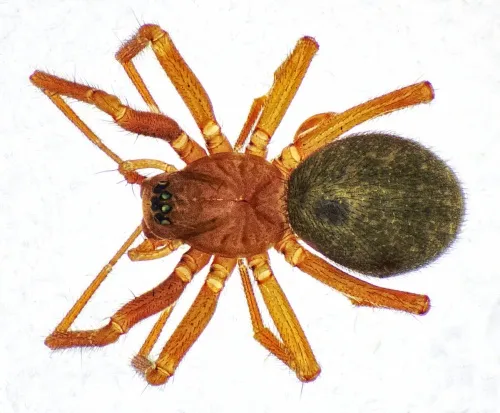
Length 2.2-4mm. Prosoma yellow-brown, with dark margin in head region. Sternum brown, suffused with black.. Chelicerae relatively long. Legs yellow-brown, robust. Opisthosoma grey to black, sometimes with bright transverse stripes posteriorly, ventra
Ceraticelus atriceps
Ceraticelus atriceps
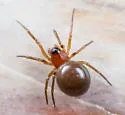
Identification: This species is very similar to C. fissiceps , but female C. atriceps lack the dorsal scutum of C. fissiceps . Palp: Epigynum:
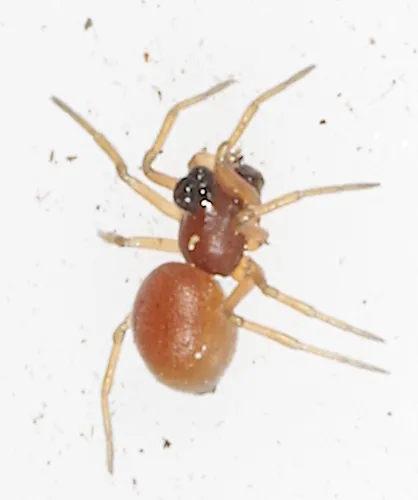
Ceraticelus bulbosus
Ceraticelus bulbosus
Ceraticelus bulbosus is a species of dwarf spider in the family Linyphiidae. It is found in North America, the Netherlands, Germany, Poland, Finland, and a range from Russia (Europe to Far East).
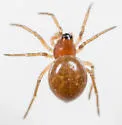
Ceraticelus emertoni
Ceraticelus emertoni
Identification: Palp: Epigynum: This species is commonly found sweeping grasslands, prairies or similar habitats. (ChH-28 Mar 2024)
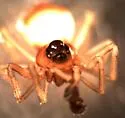
Ceraticelus fissiceps
Ceraticelus fissiceps
Identification: Females have a dorsal scutum that the similar C. atriceps lacks. Palp: Epigynum:
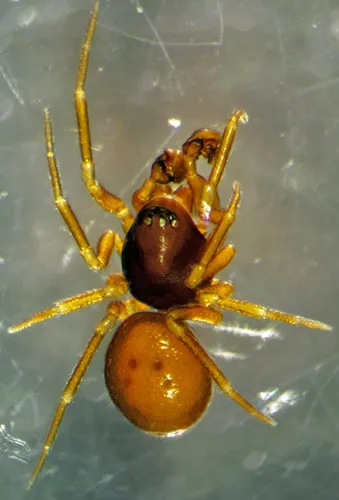
Ceraticelus laetabilis
Ceraticelus laetabilis
Ceraticelus laetabilis is a species of dwarf spider in the family Linyphiidae. It is found in the United States and Canada.
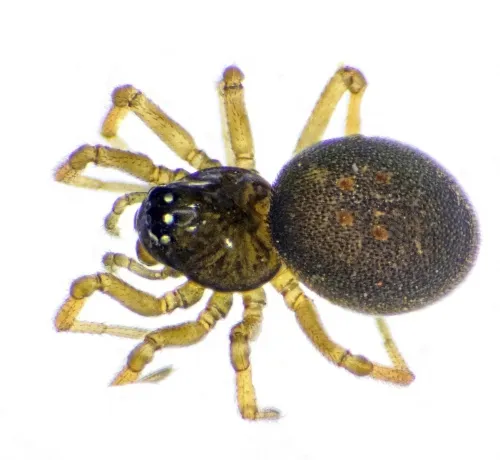
Ceratinella brevipes
Ceratinella brevipes
Size 1 to 1.8 mm. Prosoma brown, with dark radial stripes and margin, opisthosoma dark grey. Confirmation of this species require examination of the genitals of mature specimens. In moss and litter layer in various habitats. http://srs.britishspiders
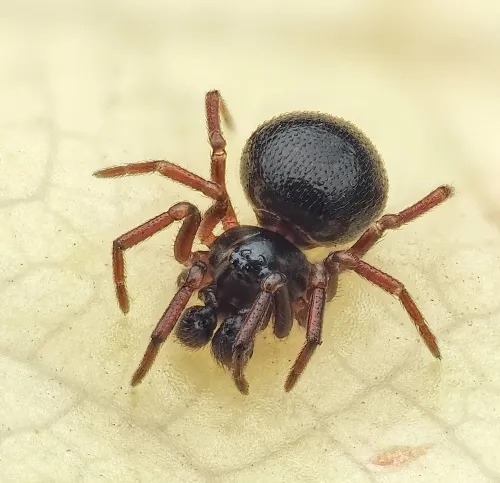
Ceratinella brevis
Ceratinella brevis
This is one of the 'money spiders' in the Linyphidae family - which has more UK species than any other. Most are small and need microscopic examination to identify.
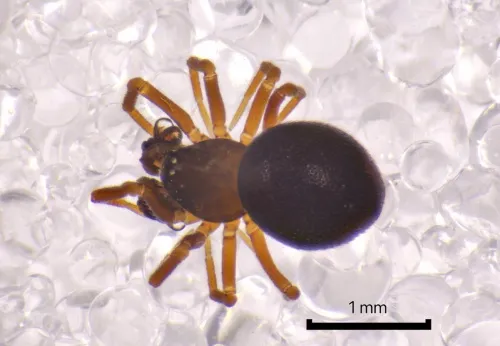
Ceratinella scabrosa
Ceratinella scabrosa
Body length 1.7 to 2 mm. Opisthosoma grey to grey-brown, dorsally almost completely covered by black-brown scutum. Microscopic examination of the genitalia is required to confirm this species. Dry grassland, ancient woodland, leaf litter. http://srs.
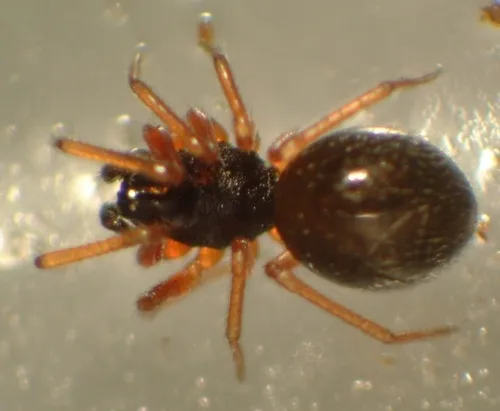
Ceratinops crenatus
Ceratinops crenatus
Ceratinops crenatus is a species of dwarf spider in the family Linyphiidae. It is found in the USA.
Cercidia prominens
Cercidia prominens
Levi was unsure if this species was introduced to North America due to its spotty distribution. It is well known from the Old World.
Cesonia gertschi
Cesonia gertschi
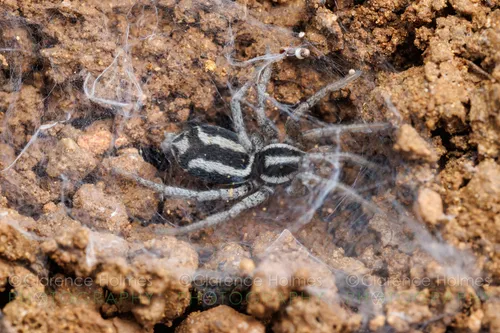
Cesonia gertschi is a species of ground spider in the family Gnaphosidae. It is found in the United States and Mexico.
Cesonia trivittata
Cesonia trivittata
Identification: Voucher Specimen Page creation based on the identification of these images by Dr. Lenny Vincent .
Cheiracanthium erraticum
Cheiracanthium erraticum
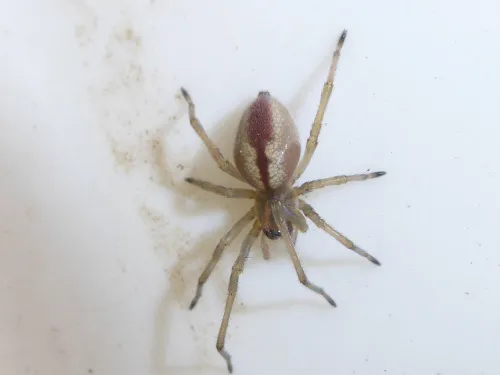
A foliage spider. The markings of this spider are distinctive. It has a wide dark red stripe running down the centre of the abdomen, which is in turn surrounded by an area of creamy-yellow. The head is a reddish brown. Usually found among grass and l
Cheiracanthium mildei
Cheiracanthium mildei
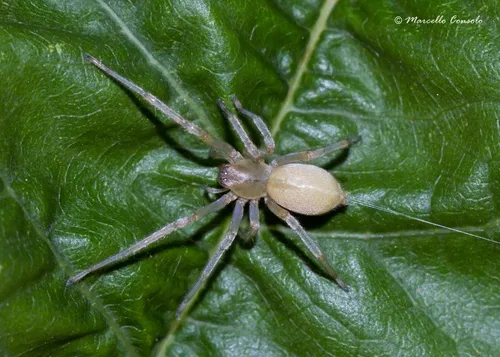
Identification: C. mildei is a relatively small, pale greenish, tan or straw-colored spider. Its front pair of legs is longer than the others, and all four pairs end in double claws. Male: The male can be recognized by having a pedipalp with 2 equall
Cheliferoides longimanus
Cheliferoides longimanus
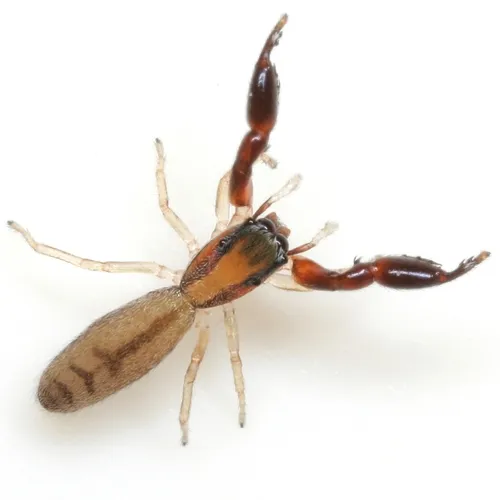
Identification: - - - - male - - - - - - - - - - female - - - - Type: Llano Grande, below Weslaco, Hidalgo Co., Texas (male, April 28, 1934, S. Mulaik, holotype, AMNH)
Chilean Tiger Spider
Scytodes globula
Identification: WSC Often found with Metaltella simoni and Kukulcania hibernalis . Excerpt from Nicolet description: “A primera vista puede creerse que esta especie es un Segador, à causa de lo desmesurado de sus patas.” - At first glance, it can be
Chrosiothes jocosus
Chrosiothes jocosus
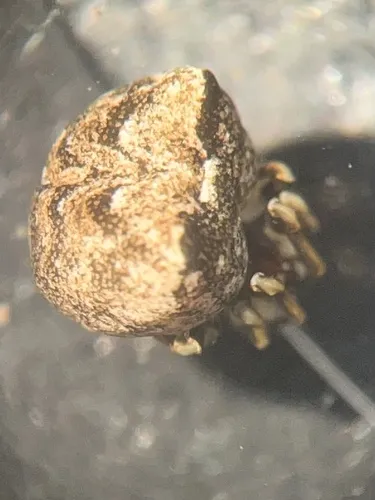
Chrosiothes jocosus is a species of cobweb spider in the family Theridiidae. It is found in the United States and Mexico.
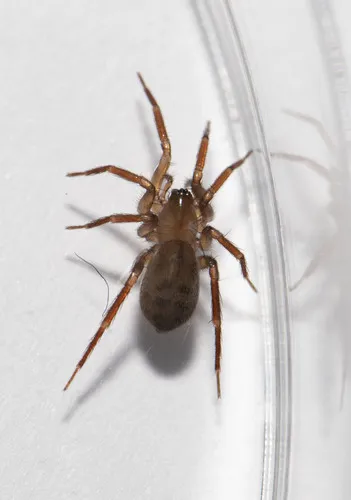
Cicurina brevis
Cicurina brevis
Cicurina brevis is a species of araneomorph spider in the family Dictynidae. It is found in the USA and Canada.
Cicurina bryantae
Cicurina bryantae
Makes a distinctive tubular retreat under rotten logs.
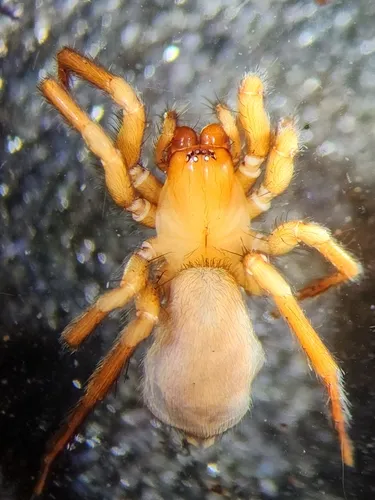
Cicurina intermedia
Cicurina intermedia
Cicurina intermedia is a species of true spider in the family Cicurinidae. It is found in the United States.
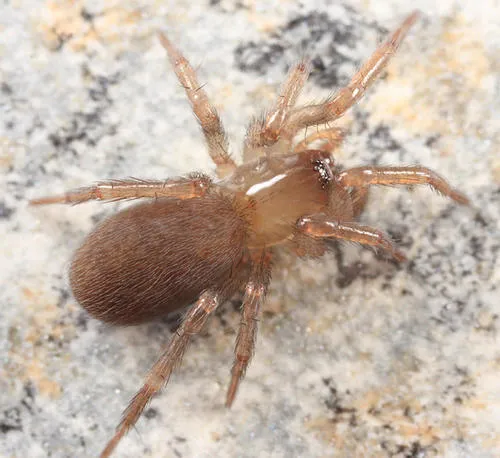
Cicurina itasca
Cicurina itasca
Cicurina itasca is a species of true spider in the family Hahniidae. It can be found in the United States.
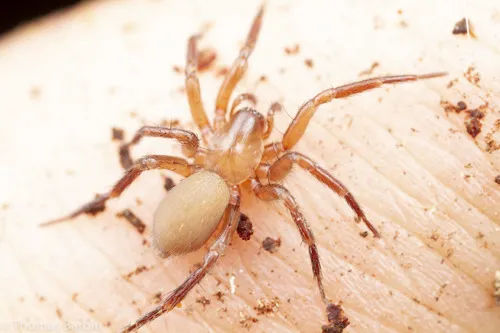
Cicurina simplex
Cicurina simplex
Cicurina simplex is a species of true spider in the family Hahniidae. It is found in the United States and Canada.
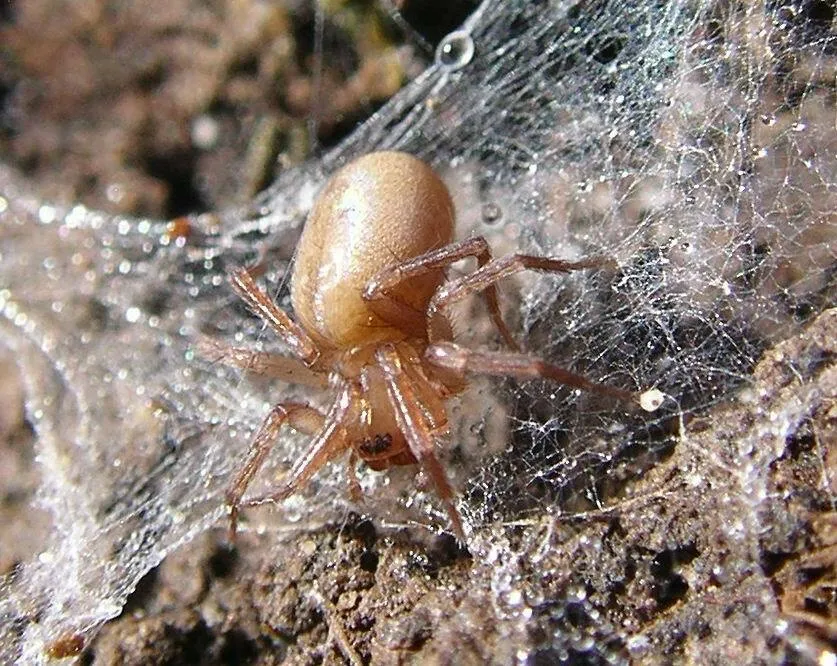
Cicurina tersa
Cicurina tersa
Cicurina tersa is a species of true spider in the family Hahniidae. It is found in the United States.
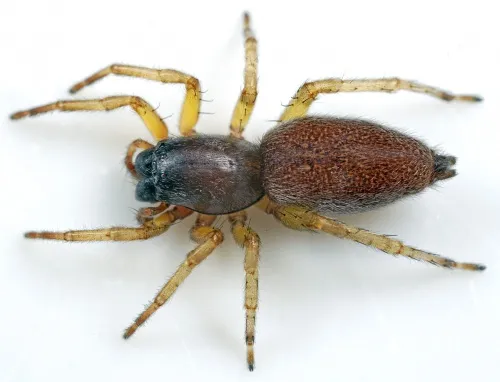
Clubiona brevipes
Clubiona brevipes
Prosoma red-brown with dark brown-black margin. Chelicerae dark brown to black. Legs yellow. Opisthosoma light brown to dark red-brown. Body length male: 4 to 6 mm, female: 5 to 7 mm. Examination of the genitalia of mature specimens is required to di
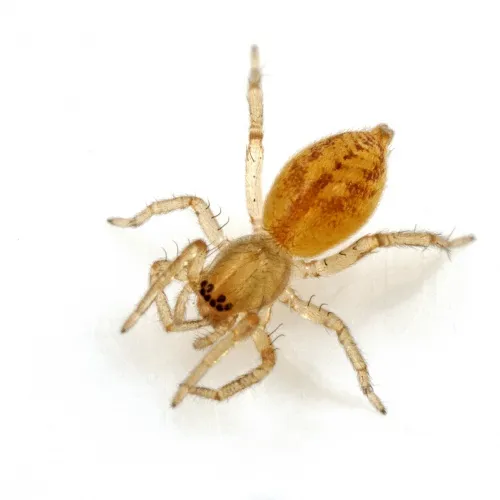
Clubiona comta
Clubiona comta
Males 3 to 5 mm, females 3.5 to 6 mm - smaller than the other members of this family. Female carapace pale brown, male darker. Pale abdomen with a brown median band broken into 4 to 6 chevrons. Unless identified by a recognised expert, a photo is req
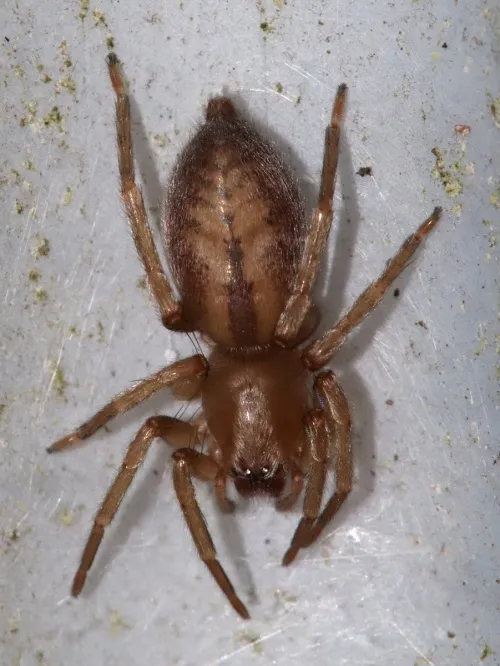
Clubiona corticalis
Clubiona corticalis
One of several very similar Clubiona species – detailed examination is needed for a safe species identification. This species is most commonly found beneath the loose bark of dead and dying trees though it may be found in a range of other habitats. H
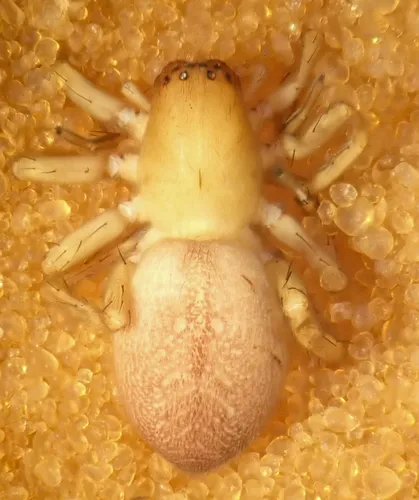
Clubiona janae
Clubiona janae
Identification: Epigynum Known only from the female.
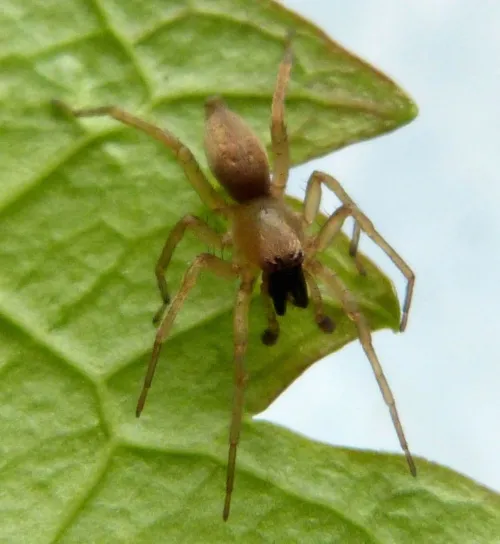
Clubiona lutescens
Clubiona lutescens
One of several very similar looking Clubiona species. Microscopic examination of the genitalia is necessary to confirm identification. Microscopic examination of the genitalia is necessary to confirm identification. Found in a wide variety of habitat
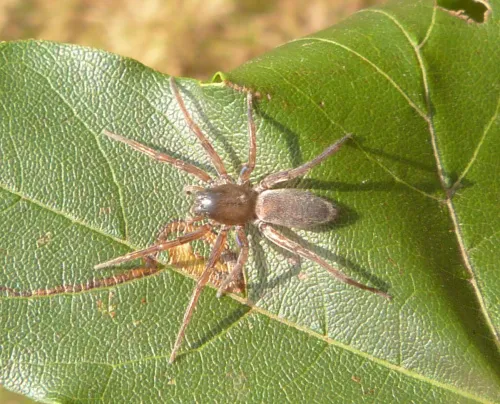
Clubiona neglecta sensu stricto
Clubiona neglecta sensu stricto
One of several very similar Clubiona species, detailed examination is needed for a safe species identification. Unless identified by a recognised expert, a photo is required and the specimen should be examined with a microscope. In the comments box,
Clubiona pallidula
Clubiona pallidula
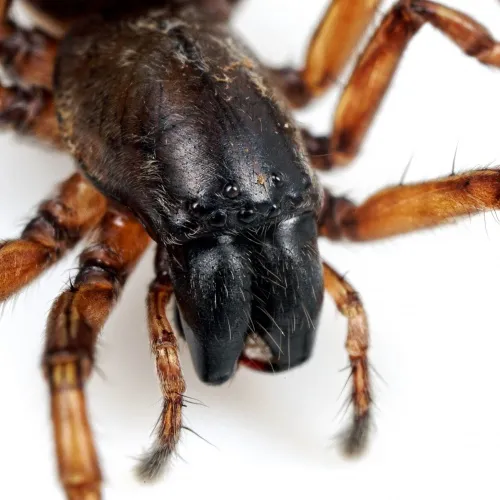
Male: 6 to 9 mm; female: 7 to 13 mm. Prosoma yellow-brown to black, black margined. Chelicerae shiny dark blue to black. Legs yellow-brown. Opisthosoma brown-black, white haired. Confirmation of this species requires examination of the genitals of ma
Clubiona phragmitis
Clubiona phragmitis
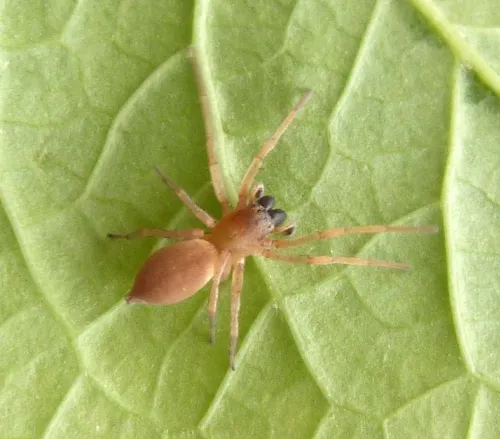
One of several similar looking Clubiona, although this species has much more robust chelicerae than the rest of the genus. Microscopic examination of the genitalia is necessary to confirm identification. Microscopic examination of the genitalia is ne
Clubiona pygmaea
Clubiona pygmaea
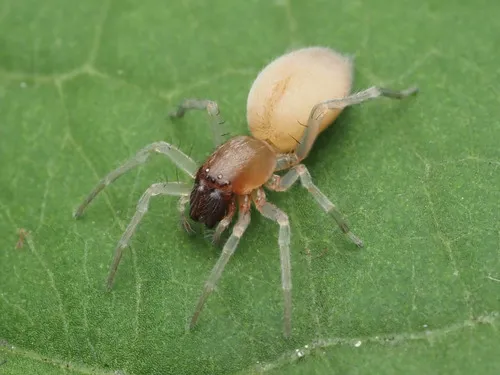
Clubiona pygmaea is a species of sac spider in the family Clubionidae. It is found in the United States and Canada.
Clubiona reclusa
Clubiona reclusa
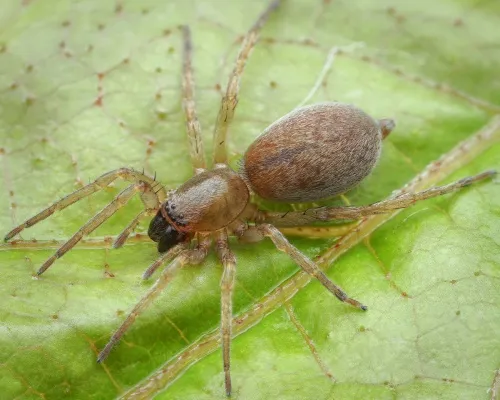
This is a medium sized, slightly elongated sac-spider. It is brownish in colour and has a rather velvety appearance. Several other Clubiona species look very similar and identification requires high power magnification to examine the male palpal orga
Clubiona subtilis
Clubiona subtilis
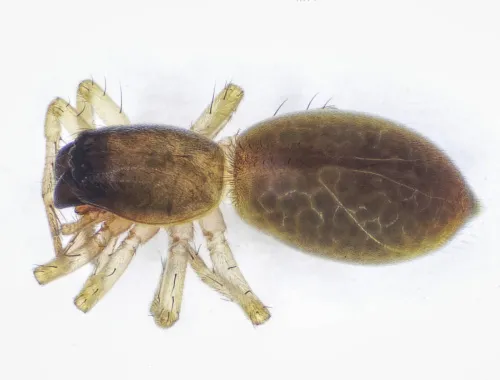
Length 2-4mm. Prosoma light brown to brown. Chelicerae red-brown. Legs light yellow. Opisthosoma light brown to brown. Microscopic examination of the genitalia is necessary to confirm identification. A wetland species of bogs, wet meadows and reedbed
Clubiona terrestris
Clubiona terrestris
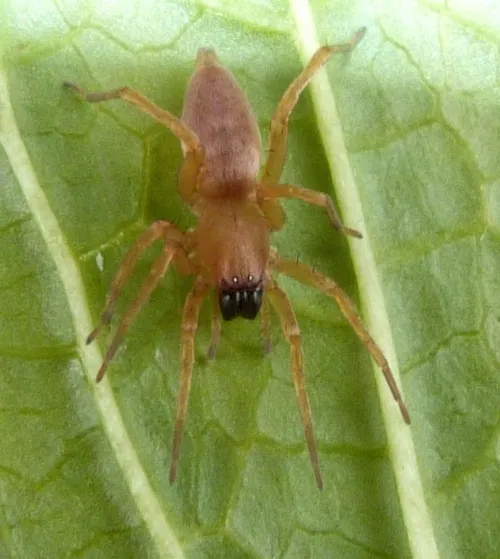
A pinkish brown spider with a rather velvety appearance. Microscopic examination of the genitalia is necessary to confirm identification. Microscopic examination of the genitalia is necessary to confirm identification. It is found in a large number o
Cnephalocotes obscurus
Cnephalocotes obscurus
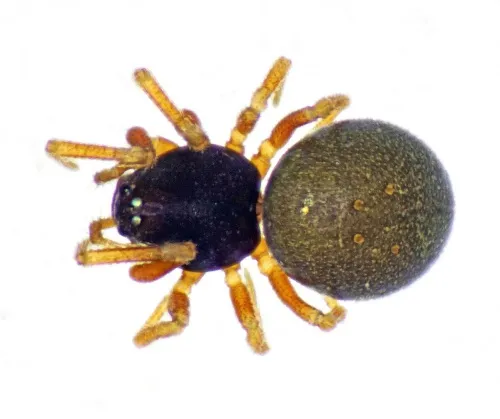
Males 1.5 to 1.9mm, females 1.5 to 2 mm. Prosoma black-brown. Legs yellow-orange to brown. Opisthosoma dark grey to black with distinct impressed dots. Confirmation of this species requires examination of the genitalia of mature specimens. Found in a
Coelotes atropos
Coelotes atropos
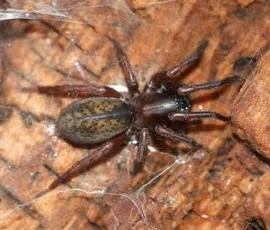
Size: Female 9-12 mm; male 7-9 mm. Red head, thorax and legs with a light brown abdomen with a central cardiac mark. This species lives under stones and logs where it builds a tube-shaped web. The female lays eggs in the tube shaped web and the spide
Coleosoma acutiventer
Coleosoma acutiventer
Identification: C. acutiventer: carapace and abdomen all dark brownish-black; legs entirely pale yellowish, except for a black streak on the anterior side of the coxa, trochanter, and base of femur I. Males are ant-mimics (constricted abdomen); femal
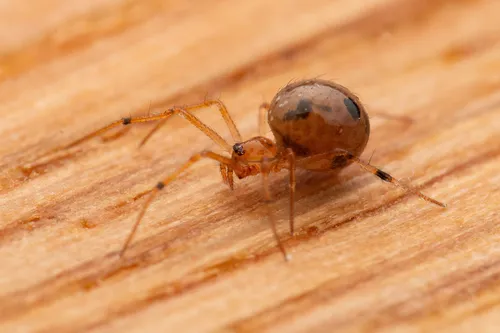
Coleosoma floridanum
Coleosoma floridanum
Coleosoma floridanum is a species of cobweb spider in the family Theridiidae. It is found in North, Central and South America, has been introduced into Europe, Macaronesia, West Africa, the Seychelles, and the Pacific Islands.
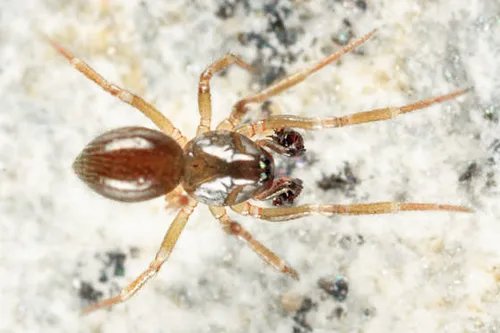
Collinsia oxypaederotipus
Collinsia oxypaederotipus
Collinsia oxypaederotipus is a species of dwarf spider in the family Linyphiidae. It is found in the United States.
Colonus hesperus
Colonus hesperus
Identification: Unlike the other two species, Colonus hesperus does not have the two longitudinal white stripes on the abdomen. Instead, the abdomen is yellowish with scattered black setae and numerous black dots. Epigynum: Palp:
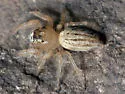
Colonus puerperus
Colonus puerperus
Identification: Epigynum: Palp: See "Notes on the jumping spiders Colonus puerperus (Hentz 1846) and Colonus sylvanus (Hentz 1846) in the southeastern United States" for info on distinguishing Colonus puerperus from Colonus sylvanus .
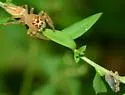
Colonus sylvanus
Colonus sylvanus
Identification: Epigynum: Palp: See "Notes on the jumping spiders Colonus puerperus (Hentz 1846) and Colonus sylvanus (Hentz 1846) in the southeastern United States" for info on distinguishing Colonus sylvanus from Colonus puerperus .
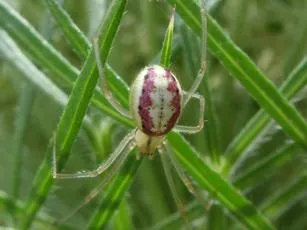
Common Candy-striped Spider sensu lato
Enoplognatha ovata sensu lato
Approximately 6mm from front of head to back of abdomen. There is a pale creamy-green coloured variety (form lineata), a form with two red stripes along the abdomen (redimita form) and another variation where the two red stripes are replaced by a sin