
Euophrys frontalis
This record describes Euophrys frontalis (species). Recorded family: Salticidae. Recorded order: Araneae.
Identification and Appearance
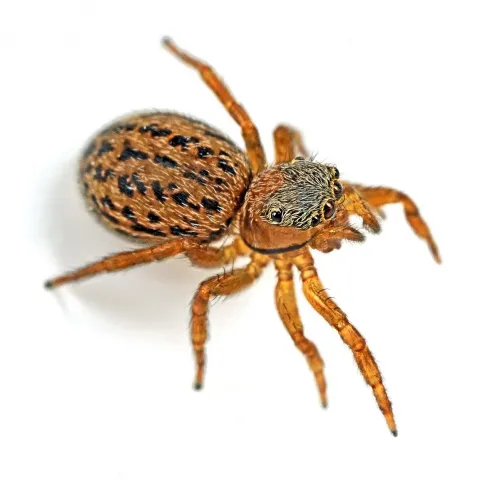
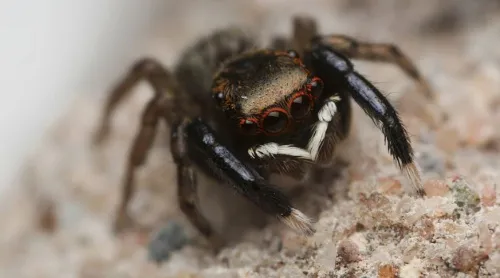
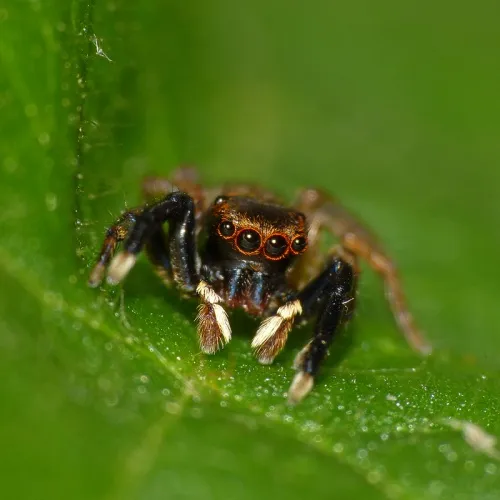
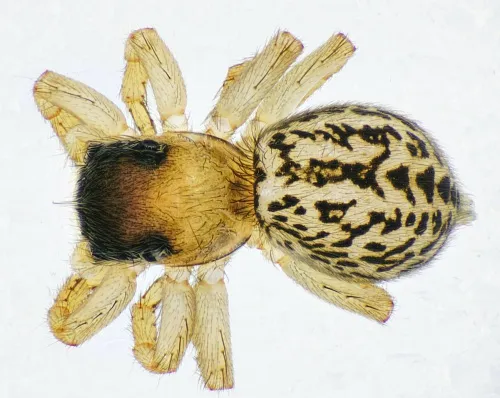
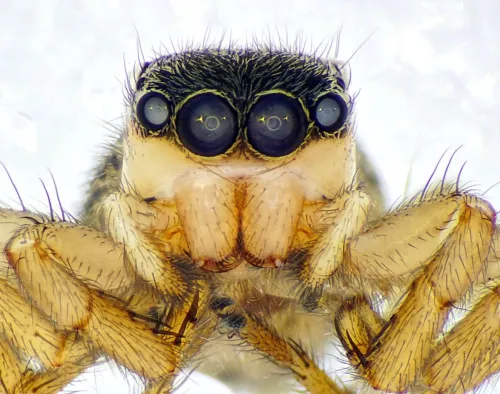
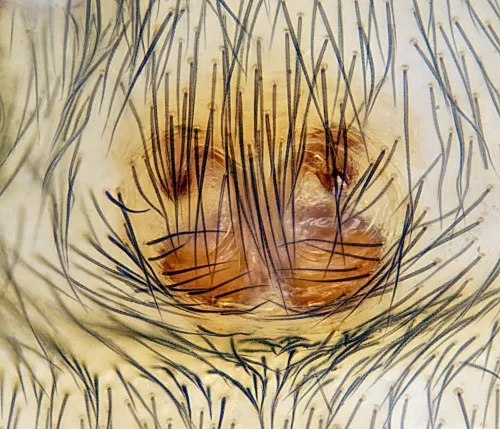
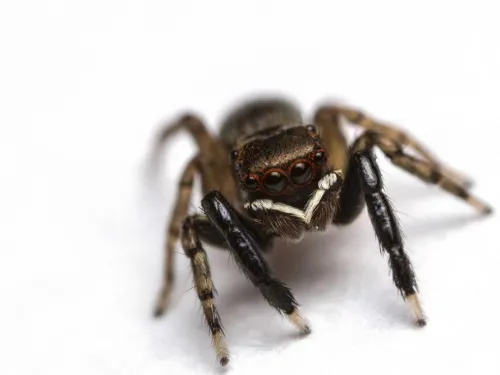
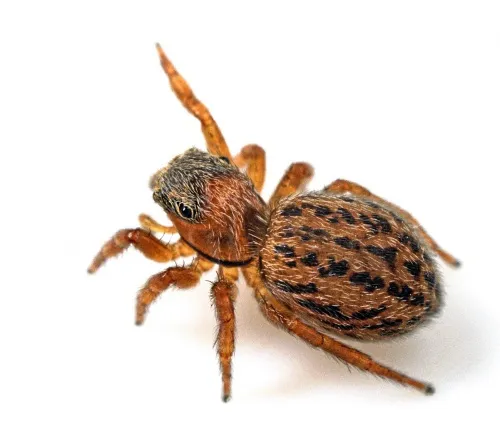
The species is sexually dimorphic. The females are brown with darker rather zig-zag lines running along the length of the abdomen. These stripes are not as pronounced in the male which has red rimmed eyes and enlarged front legs used in courtship which have a blaze of white on them. Identification of this species Requires examination at high magnification in good lighting, typically examination of the genitalia. Bee, L., Oxford, G., & Smith, H. (2020). Britain's Spiders: A Field Guide. Second Edition. Princeton University Press. This spider does not seem to have a well defined habitat niche in Britain, although it seems particularly abundant in grasslands and heaths. E. frontalis has a rather catholic diet, which may include insect eggs. It is only caught during the day. Adults of both sexes have been recorded between April and October, but mainly in May, June and July with females occasionally persisting into the autumn and winter. The species is widespread in the southern half of Britain, with a few mainly coastal records further north. 4586 British records for this species to 2013
Classification
- Kingdom
- Animalia
- Phylum
- Arthropoda
- Class
- Arachnida
- Order
- Araneae
- Family
- Salticidae
- Genus
- Euophrys
Imported taxonomy record. Source availability varies; see the source references and editorial policy below.
Habitat and Range
Habitat
This spider does not seem to have a well defined habitat niche in Britain, although it seems particularly abundant in grasslands and heaths. E. frontalis has a rather catholic diet, which may include insect eggs. It is only caught during the day.
Seasonal Activity
Adults of both sexes have been recorded between April and October, but mainly in May, June and July with females occasionally persisting into the autumn and winter.
Additional species information
Recorded status
The species is widespread in the southern half of Britain, with a few mainly coastal records further north.
About Spiders: the wider group
Order-level background for Araneae, the group containing Euophrys frontalis. Species-specific details appear above.
Group overview
As of 2023, 51,673 spider species in 136 families have been recorded, though an estimated 150,000 species exist. Spiders rank 7th in total species diversity among all organism orders. Only 0.5% of spider species pose any risk to human health.
Ecological role of the group
Spider venom contains complex peptides with diverse pharmacological activities, making them valuable for drug development research. Spiders produce up to 7 types of silk from specialized glands. Spider silk genes have been inserted into mammals and plants for biotech applications.
Economic and practical significance of the group
The global spider community kills an estimated 400-800 million tons of prey annually (2017 study). Spiders provide billions of dollars in natural pest control for agriculture. Spider silk is 5× stronger than steel of the same diameter, driving a biomaterials research industry.
Recorded sources for this group: World Spider Catalog, PNAS, Nature, ScienceDirect. Imported estimates may describe particular regions or reporting periods.
Photos of Euophrys frontalis (10)
Frequently Asked Questions About Euophrys frontalis
What is Euophrys frontalis?
Euophrys frontalis is a species in the family Salticidae, within the order Araneae.
Where is Euophrys frontalis found?
Habitat: This spider does not seem to have a well defined habitat niche in Britain, although it seems particularly abundant in grasslands and heaths. E. frontalis has a rather catholic diet, which may include insect eggs. It is only caught during the day.
When is Euophrys frontalis active?
Euophrys frontalis: seasonal activity - Adults of both sexes have been recorded between April and October, but mainly in May, June and July with females occasionally persisting into the autumn and winter..