
Eriophora ravilla
This record describes Eriophora ravilla (species). Recorded family: Araneidae. Recorded order: Araneae.
Identification and Appearance
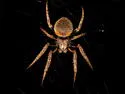
Generally dull brown, sometimes with white or yellow shoulders on the abdomen. An alternate color form, seen sometimes in males and sub-adult females, has a large yellow-green patch on top of the abdomen. Also, according to Levi: Some females are almost white, others nearly black. Some have an irregular asymmetrical longitudinal white pigment patch which may be a narrow line or widest anteriorly just over the heart area. ( Levi, 1970 ) Another interesting color/pattern variation includes a series of black circles with a white or colored patch in the middle, as in this example (be careful not to mistake this variation for Araniella displicata ): And yet another one of the many variations includes a series of pigment spots that create a pattern similar to a cross, as in this example: young juvenile Males - 9-13 mm, legs banded, second tibia curved with distal hump. (see drawing 8 ) These spiders spin their webs, which can be many feet wide, in the evening. At night they sit in the web. By day, they will usually hide in a rolled-up leaf somewhere near the edge of the web.
Classification
Habitat and Range
Geographic Range
Seems to be mostly a southern species, found mainly in Florida, Louisiana, and Texas along the Gulf Coast of the United States.
Additional species information
Species notes from the sources
Etymology: Eriophora ravilla (C. L. Koch, 1844)
About Spiders: the wider group
Order-level background for Araneae, the group containing Eriophora ravilla. Species-specific details appear above.
Group overview
As of 2023, 51,673 spider species in 136 families have been recorded, though an estimated 150,000 species exist. Spiders rank 7th in total species diversity among all organism orders. Only 0.5% of spider species pose any risk to human health.
Ecological role of the group
Spider venom contains complex peptides with diverse pharmacological activities, making them valuable for drug development research. Spiders produce up to 7 types of silk from specialized glands. Spider silk genes have been inserted into mammals and plants for biotech applications.
Economic and practical significance of the group
The global spider community kills an estimated 400-800 million tons of prey annually (2017 study). Spiders provide billions of dollars in natural pest control for agriculture. Spider silk is 5× stronger than steel of the same diameter, driving a biomaterials research industry.
Recorded sources for this group: World Spider Catalog, PNAS, Nature, ScienceDirect. Imported estimates may describe particular regions or reporting periods.
Photos of Eriophora ravilla (5)
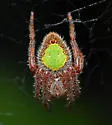
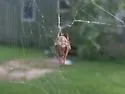
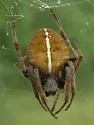
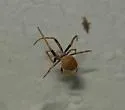
Photo credits: Contributed by Lynette Elliott; Additional contributions by Hannah Nendick-Mason , Jeff Hollenbeck , cheins , Mike Quinn , Mandy Howe
Frequently Asked Questions About Eriophora ravilla
What is Eriophora ravilla?
Eriophora ravilla is a species in the family Araneidae, within the order Araneae.
How big is Eriophora ravilla?
12-24 mm for females 9-13 mm for males
How do you identify Eriophora ravilla?
Generally dull brown, sometimes with white or yellow shoulders on the abdomen. An alternate color form, seen sometimes in males and sub-adult females, has a large yellow-green patch on top of the abdomen. Also, according to Levi: Some females are almost white, others nearly black. Some have an irregular asymmetrical longitudinal white pigment patch which may be a narrow line or widest anteriorly just over the heart area. ( Levi, 1970 ) Another interesting color/pattern variation includes a series of black circles with a white or colored patch in the middle, as in this example (be careful not to mistake this variation for Araniella displicata ): And yet another one of the many variations includes a series of pigment spots that create a pattern similar to a cross, as in this example: young juvenile Males - 9-13 mm, legs banded, second tibia curved with distal hump. (see drawing 8 )
Where is Eriophora ravilla found?
Range: Seems to be mostly a southern species, found mainly in Florida, Louisiana, and Texas along the Gulf Coast of the United States.