
The Florida Keys' Scrub Cicada
Diceroprocta biconica
This record describes Diceroprocta biconica (species). Recorded family: Cicadidae. Recorded order: Hemiptera.
Identification and Appearance
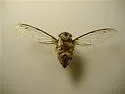
Diceroprocta biconica , The Florida Keys' Scrub Cicada Members of this species complex can be found in Cuba and s. Florida. There are two population groupings on the island of Cuba and a third population group native to the Florida Keys (and extreme tip of the peninsula). There is thought, that these populations may indeed represent sister species, however, there is insufficient information available. More detailed studies are needed to further understand this species complex. Please refer to the following paper: Journal of the N.Y. Entomol. Soc. XLIII June, 1935 (c700ld35a) New Cicadas With Notes On North American & West Indian Species Although the pic's are black & white, they are a very close match (Plates XIII & XIV).
Classification
- Kingdom
- Animalia
- Phylum
- Arthropoda
- Class
- Insecta
- Order
- Hemiptera (True Bugs, Cicadas, Hoppers, Aphids and Allies)
- Suborder
- Auchenorrhyncha
- Superfamily
- Cicadoidea
- Family
- Cicadidae (Cicadas)
- Subfamily
- Cicadinae
- Tribe
- Fidicinini
- Genus
- Diceroprocta (Scrub Cicadas)
Imported taxonomy record. Source availability varies; see the source references and editorial policy below.
Habitat and Range
Geographic Range
s. Florida / Cuba, W. Indies - Map
Seasonal Activity
Late Summer (July-Sept)
Diet and Behavior
Diet: UNKNOWN Likely polyphagous on several plant groups, but often associated with "Fan Palms" (Coryphoid/Thrynacoid palms, Arecaceae)
Life History
UNKNOWN (Likely 2-3+ seasons with overlapping generations)
About True Bugs, Cicadas, Hoppers, Aphids and Allies: the wider group
Order-level background for Hemiptera, the group containing Diceroprocta biconica. Species-specific details appear above.
Group overview
Hemiptera (true bugs) includes over 80,000 described species across cicadas, aphids, leafhoppers, shield bugs, and bed bugs. Aphids alone cost global agriculture an estimated $2.5 billion annually in crop losses.
Ecological role of the group
Many Hemiptera are essential food sources for birds and predatory insects. Cicadas provide massive nutrient pulses during emergence events - a single Brood X emergence can involve trillions of individuals across 15 states.
Economic and practical significance of the group
The brown marmorated stink bug (Halyomorpha halys) caused $37 million in apple crop losses in a single year in the U.S. Mid-Atlantic region. Bed bug infestations in the U.S. increased by 500% between 2001-2010, costing the hotel industry hundreds of millions annually.
Recorded sources for this group: USDA, EPA, University research. Imported estimates may describe particular regions or reporting periods.
Photos of The Florida Keys' Scrub Cicada (5)
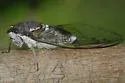
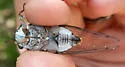
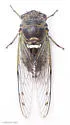
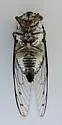
Photo credits: Contributed by John R. Maxwell; Additional contributions by Mike Quinn , Bill Reynolds , Jessee J Smith
Frequently Asked Questions About The Florida Keys' Scrub Cicada
What is The Florida Keys' Scrub Cicada?
The Florida Keys' Scrub Cicada (Diceroprocta biconica) is a species in the family Cicadidae, within the order Hemiptera.
Where is The Florida Keys' Scrub Cicada found?
Range: s. Florida / Cuba, W. Indies - Map
What does The Florida Keys' Scrub Cicada eat?
The diet of the The Florida Keys' Scrub Cicada includes UNKNOWN Likely polyphagous on several plant groups, but often associated with Fan Palms (Coryphoid/Thrynacoid palms, Arecaceae).
When is The Florida Keys' Scrub Cicada active?
The Florida Keys' Scrub Cicada: seasonal activity - Late Summer (July-Sept).
What is the life cycle of a The Florida Keys' Scrub Cicada?
UNKNOWN (Likely 2-3+ seasons with overlapping generations)