
Spiders
Order Araneae
The Spiders (Order Araneae) includes 1,848 species across 82 families and 552 genera in our directory.
About Spiders
As of 2023, 51,673 spider species in 136 families have been recorded, though an estimated 150,000 species exist. Spiders rank 7th in total species diversity among all organism orders. Only 0.5% of spider species pose any risk to human health.
Economic Impact
The global spider community kills an estimated 400-800 million tons of prey annually (2017 study). Spiders provide billions of dollars in natural pest control for agriculture. Spider silk is 5× stronger than steel of the same diameter, driving a biomaterials research industry.
Ecological Role
Spider venom contains complex peptides with diverse pharmacological activities, making them valuable for drug development research. Spiders produce up to 7 types of silk from specialized glands. Spider silk genes have been inserted into mammals and plants for biotech applications.
Families in Araneae (82)
Species in Araneae (1,848)
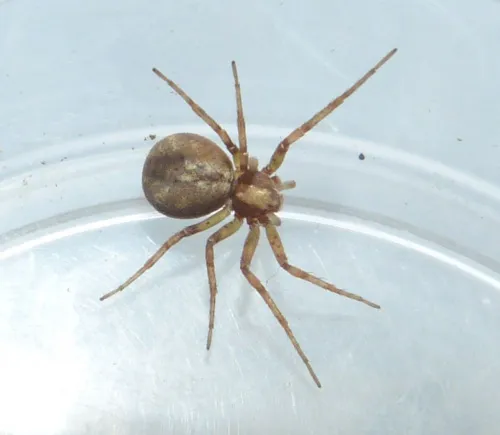
Philodromus praedatus
Philodromus praedatus
Body length male: 3.5 to 5 mm female: 4 to 7 mm. Very variable in colour, usually brown or yellowish brown, marked with spots or blotches. Males often patterned more intensely, sometimes uncoloured dark brown. Prosoma often with broad light median ba
Philodromus quercicola
Philodromus quercicola
Identification: Epigynum:undissected/dissected ventral/dissected dorsal
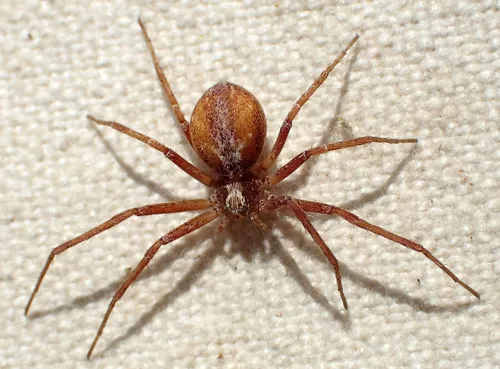
Philodromus rodecki
Philodromus rodecki
Philodromus rodecki is a species of running crab spider in the family Philodromidae. It is found in the United States and Canada.
Philodromus spectabilis
Philodromus spectabilis
Identification: P. spectabilis has 8 white triangles around the rim of the carapace (at each leg base) pointing inward, and the intersegmental membranes at each leg joint are conspicuously bright shiny white; the abdomen is purplish with a series of
Philodromus verityi
Philodromus verityi
Identification: "Body mahogany red in life (fading to dull red in alcohol), lacking contrasting markings".
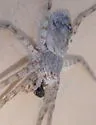
Philodromus vulgaris
Philodromus vulgaris
Identification: ** These spider have been placed here based in images and information found in Spiders of the Eastern US, A Photographic Guide . However, we haven't been able to find a reference that states this is the only Philodromus species that h
Pholcus manueli
Pholcus manueli
Identification: Epigynum Palp Dr. Bernhard Huber's 2011 revision of the genus Pholcus includes some habitus images of the male on page 343 (see: ). Looks very similar to our other two introduced (non-native) species of Pholcus . We do not often come
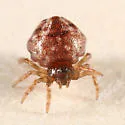
Phoroncidia americana
Phoroncidia americana
Identification: Abdomen with a series of humps, eye region projecting out above the clypeus.
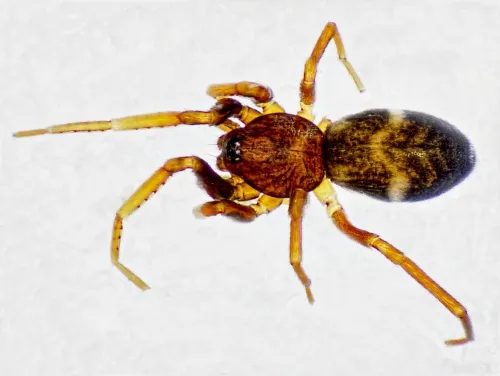
Phrurolithus festivus
Phrurolithus festivus
An ant mimic and a distinctive and well marked small spider. Often found on the ground or under stones etc. It is surface active during the daytime and is often found in the company of ants. Phrurolithus festivus is fairly frequent in southern Britai
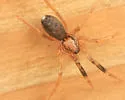
Phrurotimpus borealis
Phrurotimpus borealis
Identification: Voucher image (male) Palp: Epigynum (undissected, ventral, dorsal):
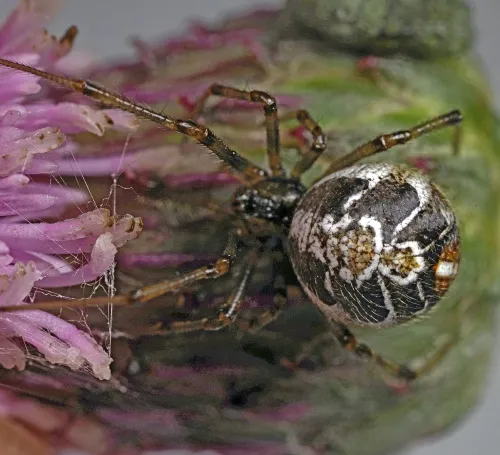
Phylloneta impressa
Phylloneta impressa
A small, well marked spider, but quite similar to related species so care needs to be taken with identification and detailed examination of the specimen may be necessary. This species is typically found on gorse bushes and heather on open ground, but
Phylloneta pictipes
Phylloneta pictipes
Identification: Carapace yellow-white with a median black band & narrow black border. Legs with dark bands usually at middle and both ends of segments ( T. albidum/frondeum will not have dark bands in the middle of leg segments). Description by Lev
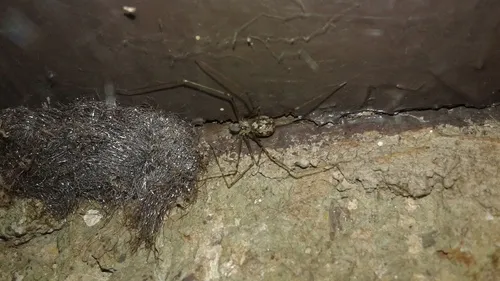
Physocyclus californicus
Physocyclus californicus
Physocyclus californicus is a spider in the family Pholcidae ("cellar spiders"), in the infraorder Araneomorphae ("true spiders"). The distribution range of Physocyclus californicus includes the USA and Mexico.
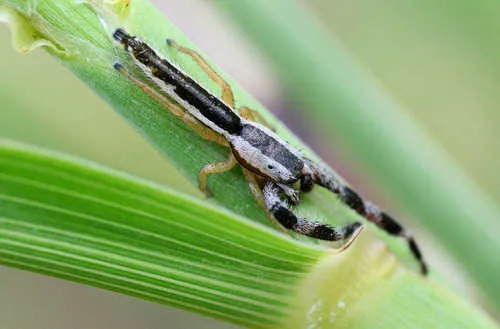
Pike Slender Jumper
Marpissa pikei
Marpissa pikei is a species of jumping spider that is found in the eastern United States, Texas, New Mexico, Arizona and Cuba.
Pimoa haden
Pimoa haden
Identification: Can be identified from P. jellisoni from the thicker pedipalpal femur which bears a group of spines on its ectal side.
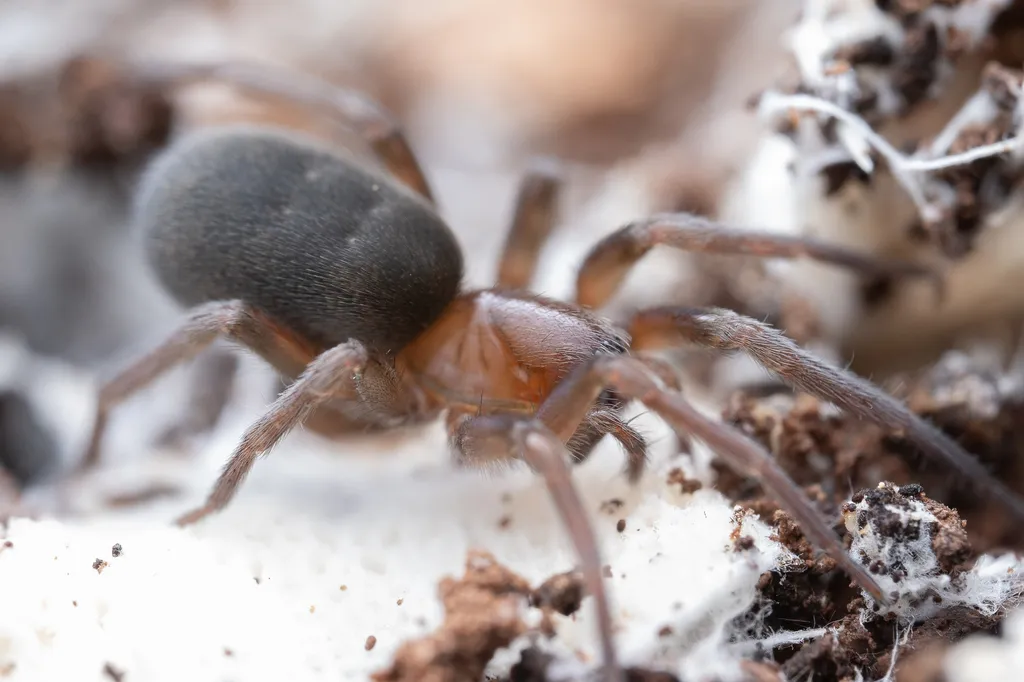
Pimus fractus
Pimus fractus
Pimus fractus is a species of hacklemesh weaver in the spider family Amaurobiidae. It is found in the United States.
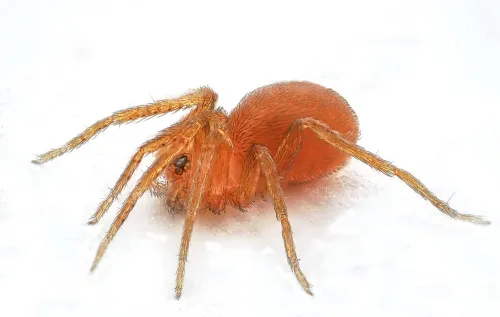
Pink Prowler
Oonops domesticus
1.5 to 2 mm, pinkish-orange spider. Characteristic way of slowly walking with its front legs out-stretched, interspersed with short bursts of running. Its small size and pinkish colour make it difficult to spot, particularly because it often nocturna
Pirata montanoides
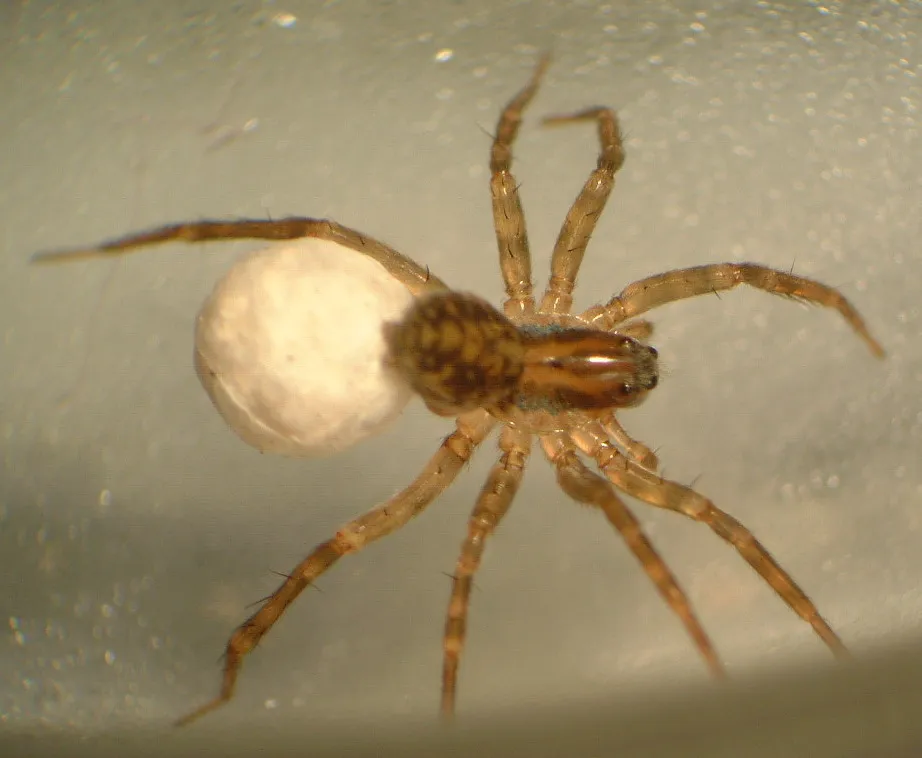
Pirata montanoides
Pirata montanoides is a species of wolf spider in the family Lycosidae. It is found in the United States.
Pirate Wolf Spider
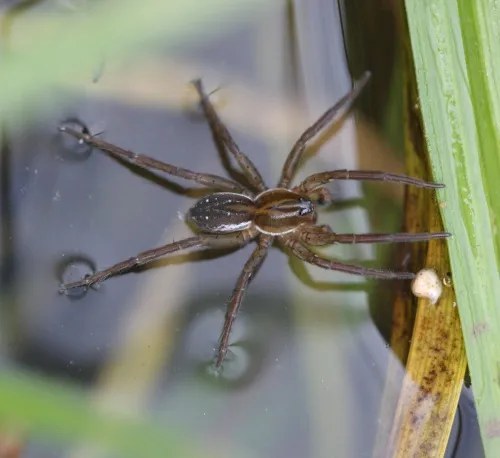
Pirata piraticus
Females can be up to 9 mm long, whilst males are about 6 mm. The colour pattern of this spider is quite distinctive with a red-chestnut abdomen with a central mustard coloured cardiac mark and white sides to both the abdomen and carapace. Pirata hygr
Piratula cantralli
Piratula cantralli
Identification: Females are (so far) indistinguishable from Piratula insularis , even when comparing the epigynes. Males are easily separated by the swollen tibiae and metatarsi of legs I and II, and by the long, curly setae on the underside of the f
Piratula hygrophila
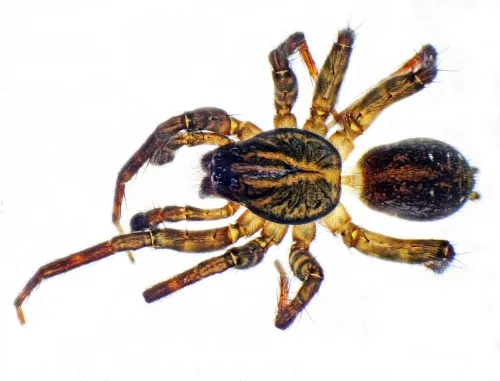
Piratula hygrophila
Males 4.5 to 5.5 mm, females 5 to 5.7 mm. Prosoma dark brown to black, with distinct bands of prosoma. Legs distinctly annulated (mainly femur). Opisthosoma with bright spots on both sides of median line. Confirmation of this species: "Requires exami
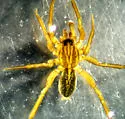
Piratula insularis
Piratula insularis
Identification: Females are (so far) indistinguishable from Piratula cantralli , even when comparing the epigynes. Males are easily distinguished from P. cantralli by lacking swollen tibiae and metatarsi on legs I and II, and also by lacking long cur
Pisaurina brevipes
Pisaurina brevipes
Identification: Photo best matching the drawing in the resource below is:
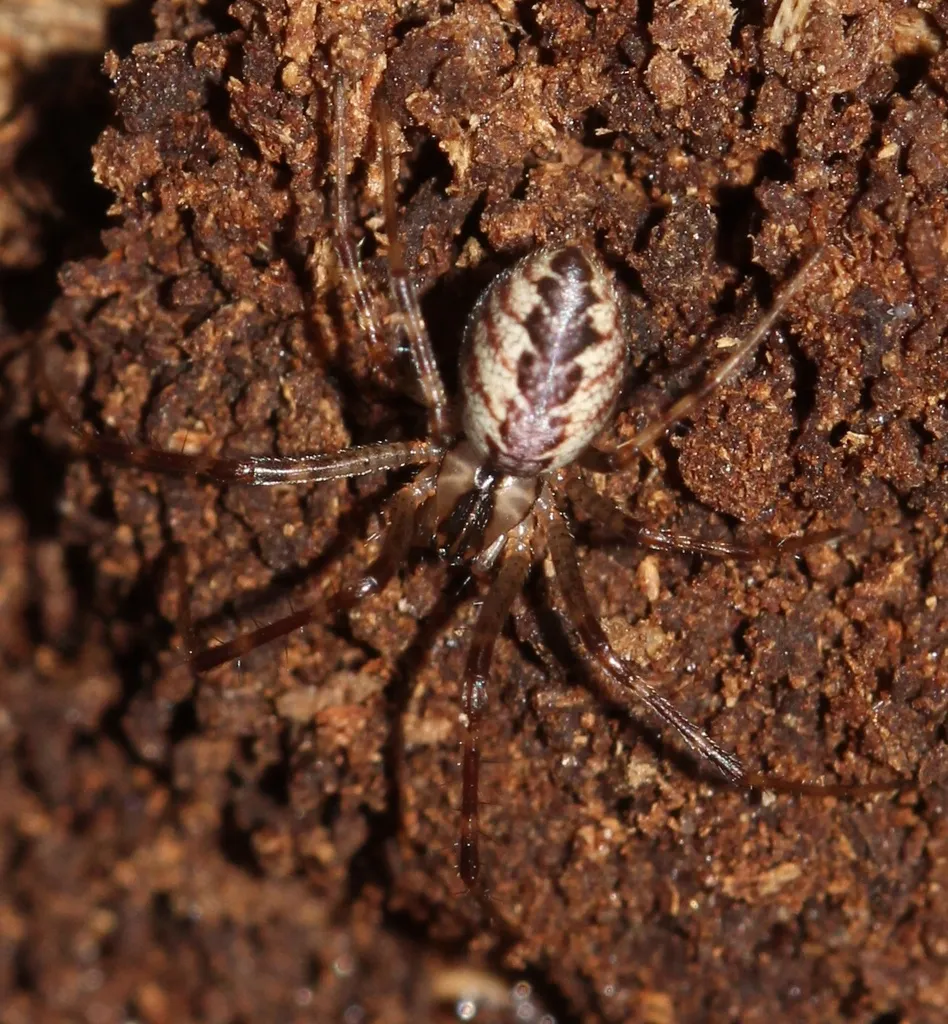
Pityohyphantes subarcticus
Pityohyphantes subarcticus
Identification: Very similar in appearance to P. costatus . Palp Epigynum
Platnickina mneon
Platnickina mneon
A wandering theridiid that preys on other spiders, primarily Pholcids, Brown widows, common house spiders, various Theridion species, and conspecifics. Orb weavers as well. As opposed to pirate spiders which lure their prey to them, P. mneon will hea
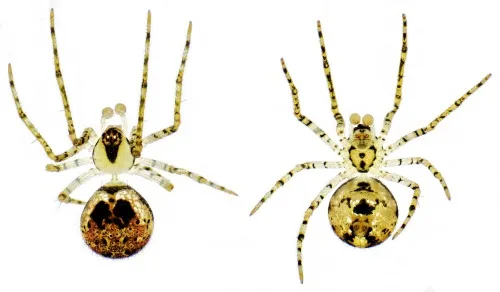
Platnickina tincta
Platnickina tincta
Small (2.5 to 3.5 mm). Even though this small spider is quite distinctively marked, accurate identification is difficult without detailed examination. If we cannot be certain that an image is Platnickina tincta but it is likely to be this species, it
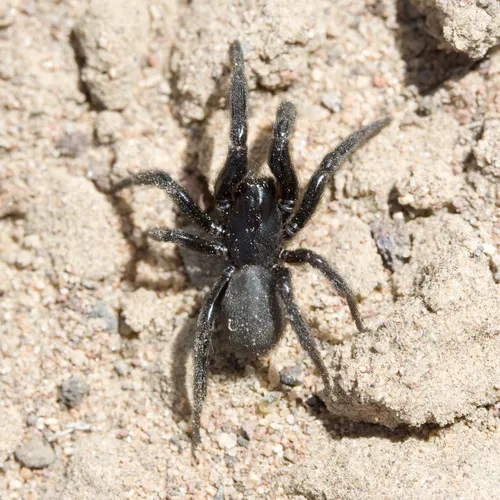
Plectreurys tristis
Plectreurys tristis
Plectreurys tristis (synonym Plectreurys bispinosus Chamberlin) is a species of venomous spiders commonly known as primitive hunting spiders belonging to a family of plectreurid spiders. They produce a venom that contains a group of insecticidal pept
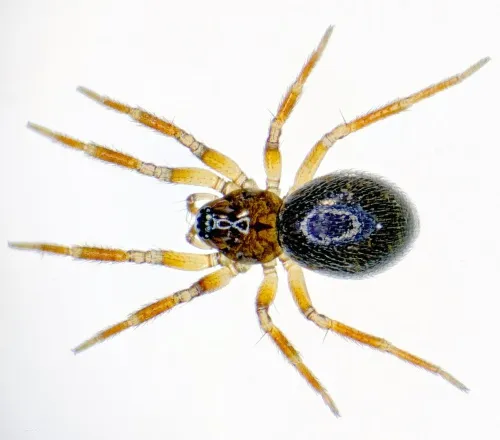
Pocadicnemis juncea
Pocadicnemis juncea
Males: 1.7 to 1.8 mm, females: 1.9 to 2 mm. Prosoma yellow-brown, often blackish. Legs yellowish-brown. Opisthosoma dark grey-black. Confirmation requires microscopic examination of the genitalia of adult specimens. Vegetation, gardens, grassland, ar
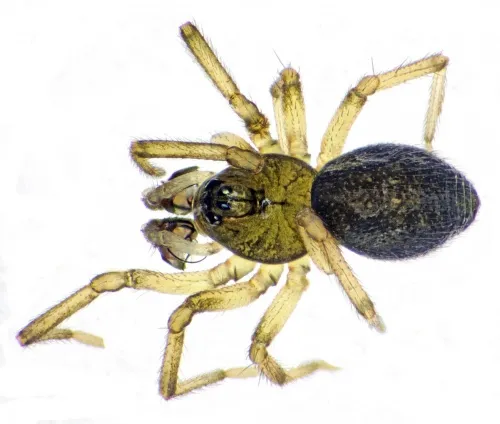
Pocadicnemis pumila
Pocadicnemis pumila sensu stricta
Length 1.8 to 2.3mm. Prosoma yellow-brown to brown, often also blackish. Legs yellowish-brown. Opisthosoma dark grey to black. Examination of the genitalia is required to confirm this species. Occurs in a range of habitats including grasslands, moorl
Pocobletus coroniger
Pocobletus coroniger
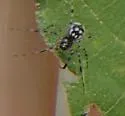
Identification: Very uniquely marked; a very small, dark spider with white spots and banded legs. See figure 14 in Gertsch & Archer 1942 ( 6 ) . Page created based on this specimen:
Poeciloneta lyrica
Poeciloneta lyrica
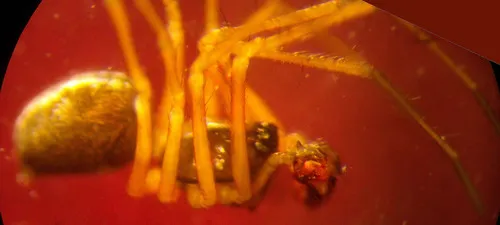
Poeciloneta lyrica is a species of sheetweb spider in the family Linyphiidae. It is found in North America.

Porrhomma convexum
Porrhomma convexum
This is one of the 'money spiders' in the Linyphidae family - which has more UK species than any other. Most are small and need microscopic examination to identify. No additional images available for this species.
Porrhomma microphthalmum
Porrhomma microphthalmum
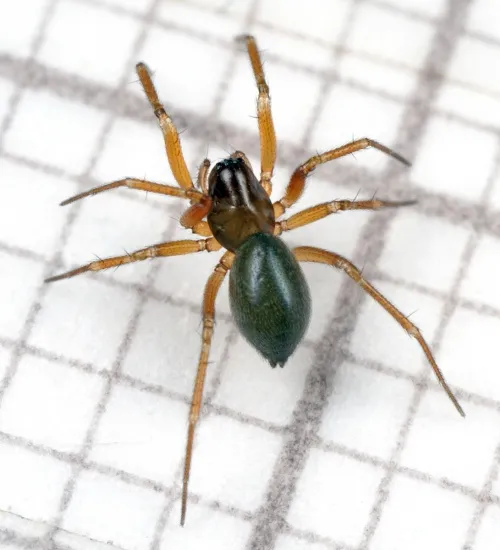
Unless identified by a recognised expert, the specimen should be examined with a microscope and photos showing details of genitals should be provided. In the comments box, state the key or ID method used and describe the size and identifying characte
Porrhomma pygmaeum
Porrhomma pygmaeum
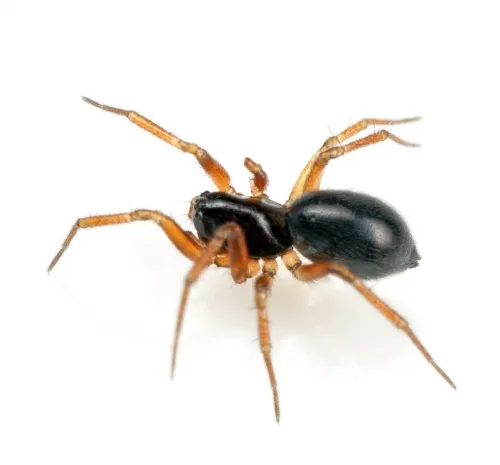
Length 2 or 3 mm. This is a small dark blackish spider with paler legs. The main habitat for this species is in damp marshy places. However it is a common aeronaut and can be found in many habitats at all levels, from woodland leaf litter, through gr
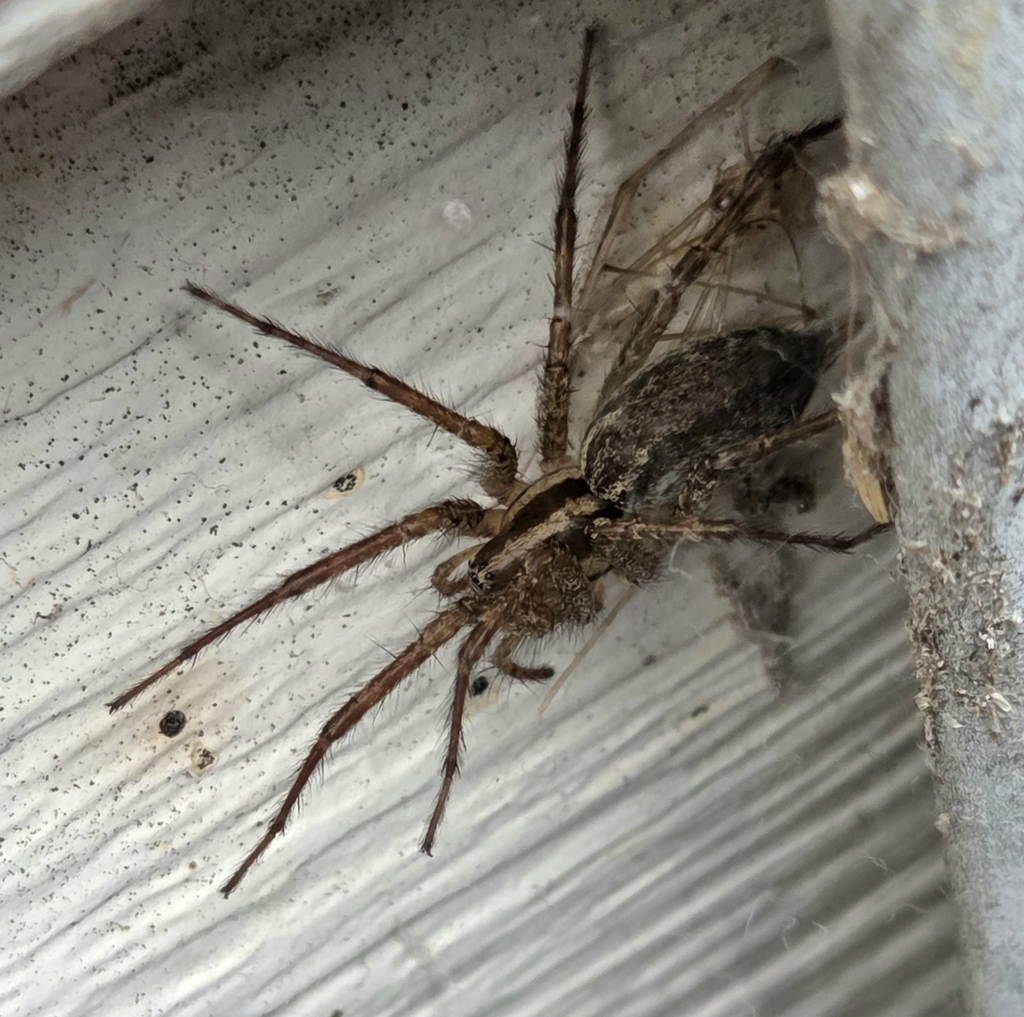
Potter’s Grass Spider
Agelenopsis potteri
(c) S Boisvert, some rights reserved (CC BY)Identification: Hooked tip of embolus on the pedipalp Palp (ventral view) Again, note the hook at the tip of the embolus. Epigynum (ventral/ventral dissected/dorsal dissected) A side (lateral) view of the spider's head provides the best look at the d
Poultonella alboimmaculata
Poultonella alboimmaculata
According to Bothrops07, seems to be densely populated in very small locations, and absent everywhere else. In Oklahoma, most often found in tall grassland in broomsedge bluestem, but can also be found on ragweed, milkweed, saplings, and fences. Seem
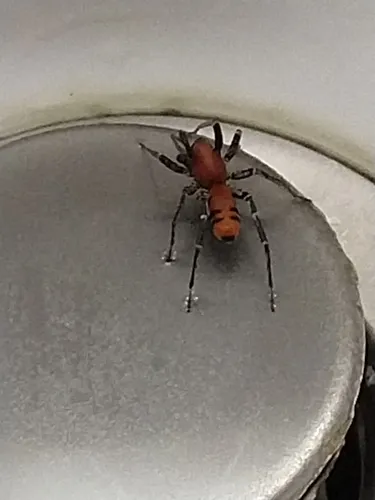
Prairie Ant-mimic Sac Spider
Castianeira alteranda
Castianeira alteranda is a species of true spider in the family Corinnidae. It is found in the USA and Canada.
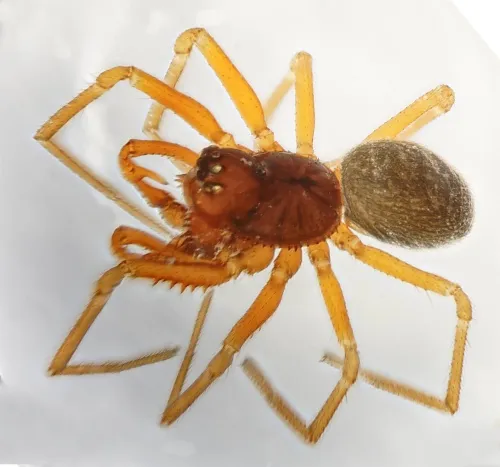
Prinerigone vagans
Prinerigone vagans
Identification of this species "Requires examination at high magnification in good lighting, typically examination of the genitalia." Bee, L., Oxford, G., & Smith, H. (2020). Britain's Spiders: A Field Guide. Second Edition. Princeton University Pres
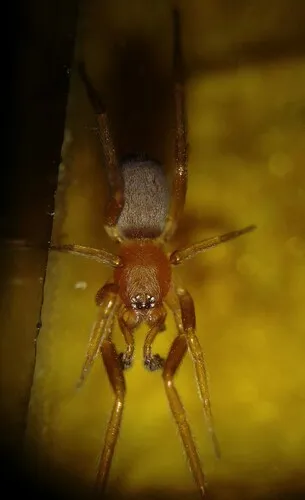
Prodidomus rufus
Prodidomus rufus
Prodidomus rufus is a species of true spider in the family Prodidominae. It is found in Israel, China, Japan, New Caledonia, the United States, Cuba, Argentina, Chile, and St. Helena.
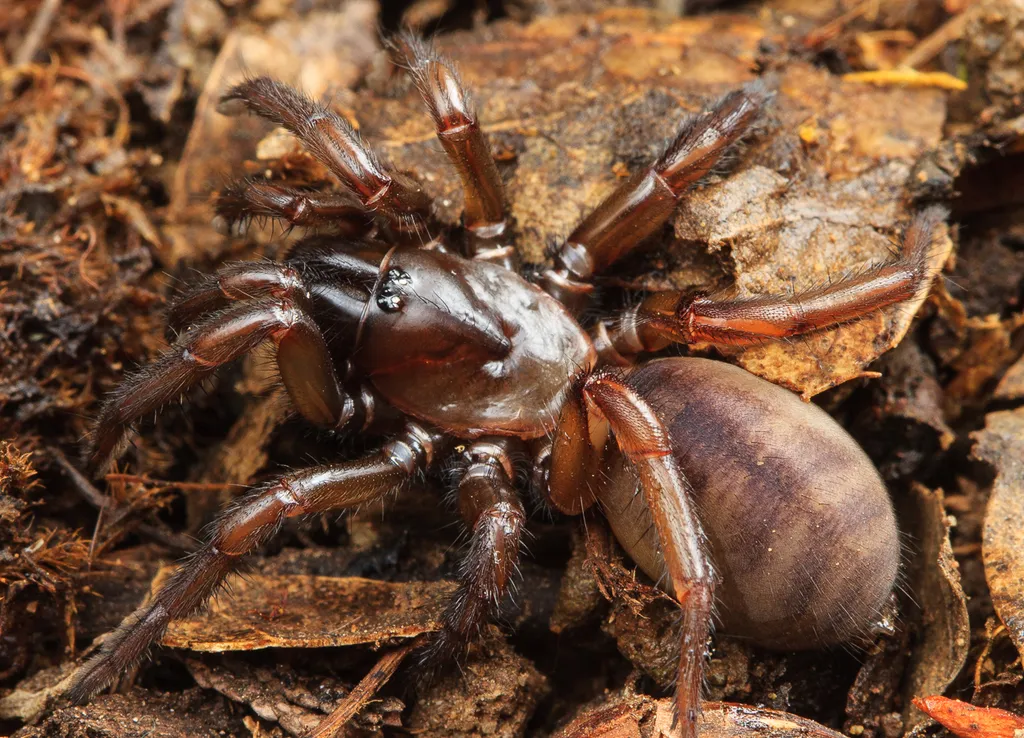
Promyrmekiaphila clathrata
Promyrmekiaphila clathrata
Promyrmekiaphila clathrata is a species of wafer-lid trapdoor spider in the family Euctenizidae. It is found in the United States.
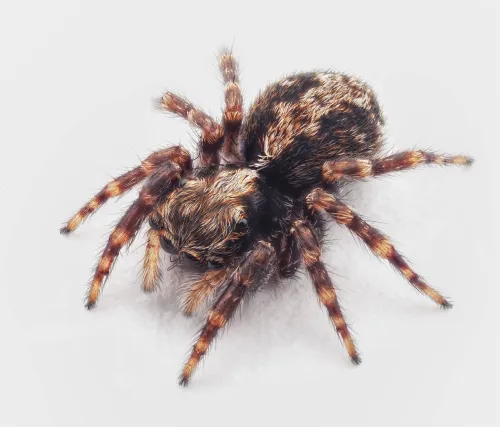
Pseudeuophrys lanigera
Pseudeuophrys lanigera
A jumping spider with a body length of 3 to 4 mm. Identification of this species "Requires examination at high magnification in good lighting, typically examination of the genitalia." Bee, L., Oxford, G., & Smith, H. (2020). Britain's Spiders: A Fiel
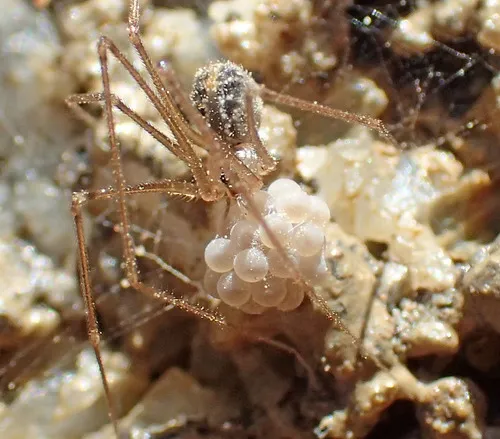
Psilochorus apicalis
Psilochorus apicalis
Identification: Per Slowik 2009: "This species can be separated from all other species by the cheliceral spur shape in the males and the overhanging MEP in the females. The sternal pattern is also distinctive".
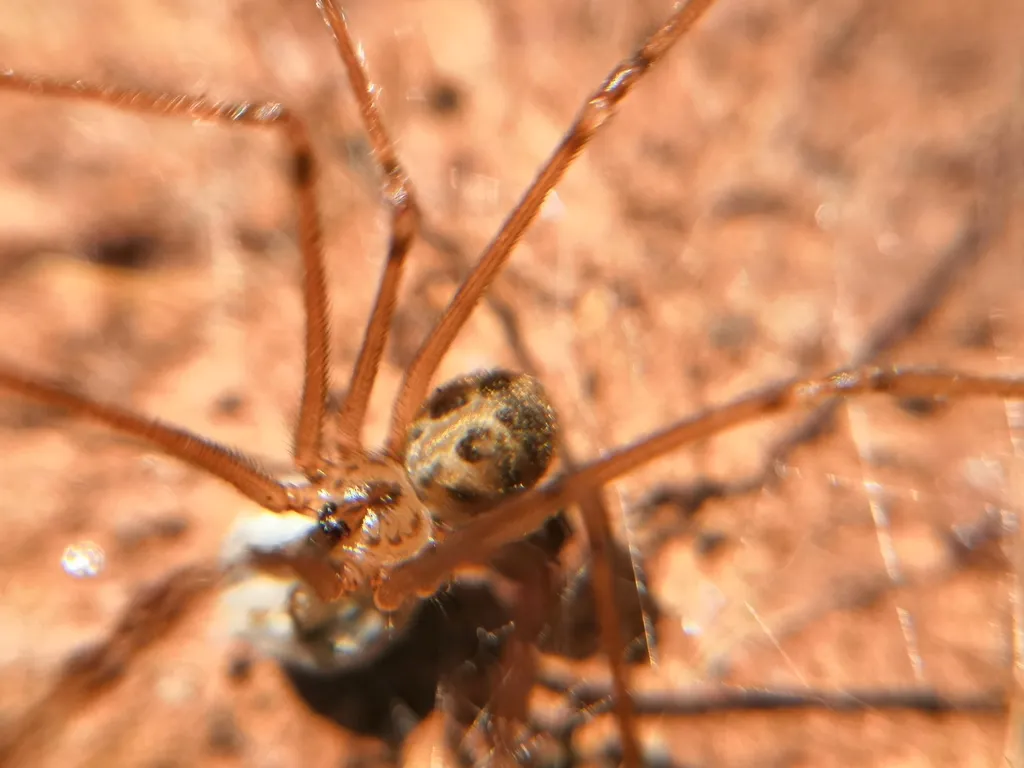
Psilochorus papago
Psilochorus papago
Identification: "The barb appearance on the spur and the slit procursus with the longer dorsal side separates this species from all other male species with truncated spurs. The low MEP ridges and wide PEP projection on the epigynum will separate it f
Psilochorus rockefelleri
Psilochorus rockefelleri
Identification: "Specimens may be distinguished by: males spur short and wide, curving inward and pointed in dorsal view (Fig. 138), spur is located on the proximal half of the chelicerae and is equal to or less than half of the cheliceral length (Fi
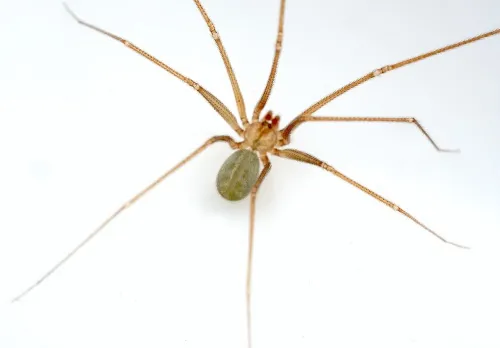
Psilochorus simoni
Psilochorus simoni
2 to 3 mm long. Prosoma yellowish to light brown, slightly darkened in the middle. Legs yellowish to light brown. Opisthosoma bluish grey, egg-shaped or globular. Unless identified by a recognised expert, a photo is required. If the photo doesn't sho
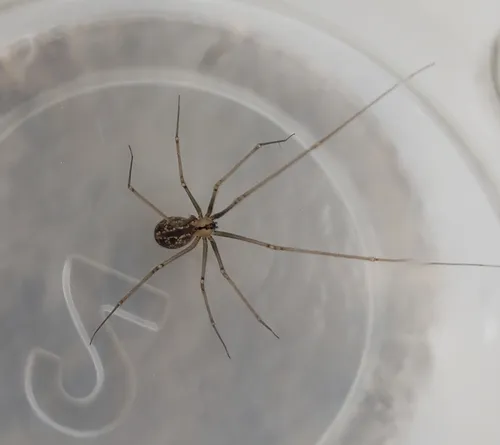
Psilochorus utahensis
Psilochorus utahensis
Psilochorus utahensis is a species of cellar spider in the family Pholcidae. It is found in the United States.
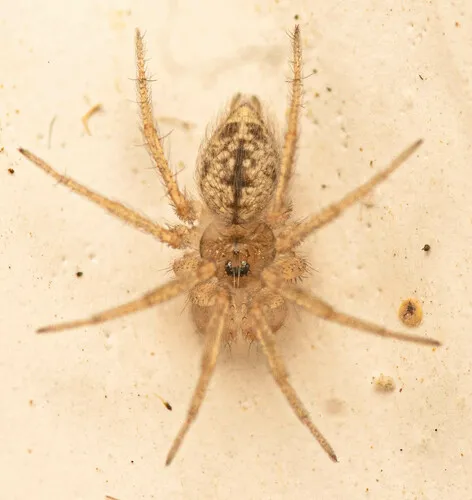
Putus dwarf round-headed spider
Oecobius putus
Oecobius putus is a species of spider in the family Oecobiidae. It is commonly known as the Putus round-headed spider.
Rabbit Hutch Spider
Steatoda bipunctata
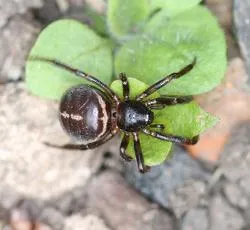
It has a glossy chestnut brown abdomen, usually with a thin pale band stretching across the front that incorporates a central white 'V' just behind the head. The abdomen has four tiny indentations on its back which in the absence of an internal skele
Rabid Wolf Spider
Rabidosa rabida
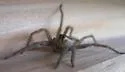
Identification: The ground color is yellow, with brownish to black longitudinal stripes. In this species, the median dark band of the abdomen is broken and encloses lighter areas. The male has leg I dark brown or black. The venter does not have the s
Rabidosa carrana
Rabidosa carrana
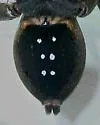
Identification: Easily identifiable by black venter with two rows of white spots, generally six or eight.
Rabidosa hentzi
Rabidosa hentzi
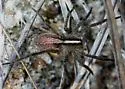
Identification: Abdomen without median dorsal longitudinal dark stripe.
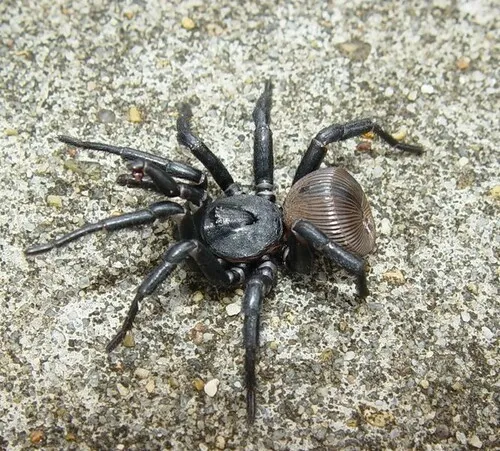
Ravine Trapdoor Spider
Cyclocosmia truncata
According to a phylogenetic analysis ("Deep genetic divergence in the Deep South: An integrative approach to species delimitation reveals the paraphyletic nature of speciation in the trapdoor spider genus Cyclocosmia "), the northern and southern pop

Red Widow
Latrodectus bishopi
Identification: The red widow spider has a reddish-orange head, thorax and legs with a black abdomen. The top of the abdomen usually has a row of red spots with yellow borders. This spider lacks a complete hourglass on the underside of the abdomen an
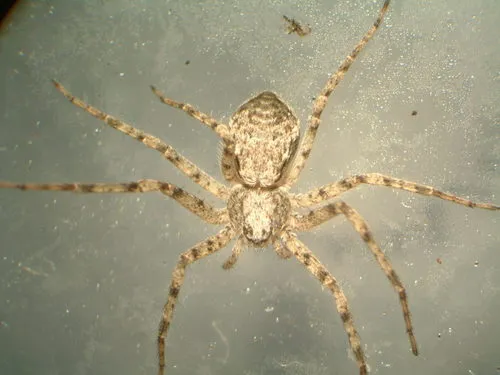
Resplendent Running Crab Spider
Philodromus praelustris
Philodromus praelustris is a species of running crab spider in the family Philodromidae. It is found in the United States and Canada.
Rhetenor texanus
Rhetenor texanus
Identification: Palp Epigynum Type: Texas (male, Cameron Co., Brownsville, May 25, 1934, J. N. Knull, holotype, AMNH)
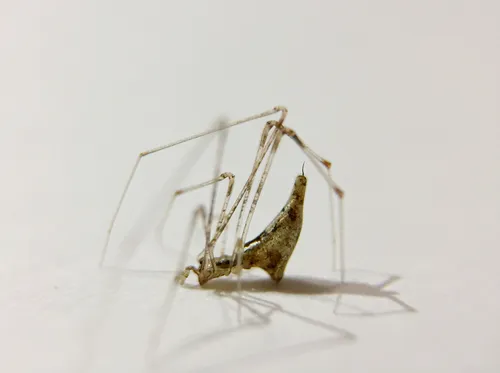
Rhomphaea projiciens
Rhomphaea projiciens
Identification: Voucher Specimens: det. by Hank Guarisco (Adjunct Curator of Arachnids, Sternberg Museum of Natural History, Fort Hays State University) Male: Female: According to Hank Guarisco, the spine at the apex of the abdomen is unique to this
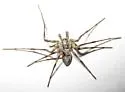
Rhysodromus mysticus
Rhysodromus mysticus
Identification: Male : Left palp: ventral view/retrolateral view
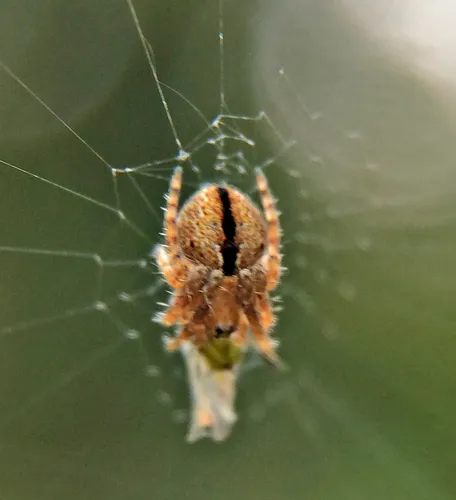
Riparian Duncecap Orbweaver
Eustala cepina
Eustala cepina is a species of orb weaver in the family of spiders known as Araneidae. It is found in North America.
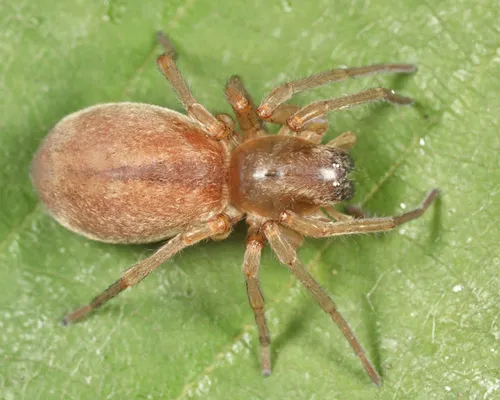
Riparian Sac Spider
Clubiona riparia
Clubiona riparia, the riparian sac spider, is a species of sac spider in the family Clubionidae. It is found in Russia, Mongolia, China, Japan, and North America.
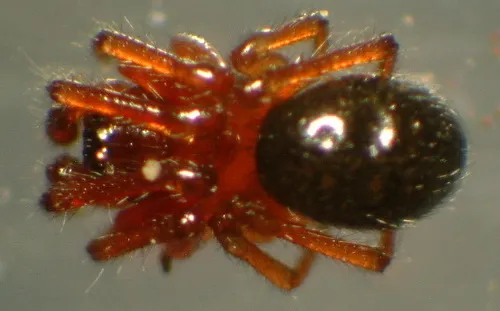
Robertus eremophilus
Robertus eremophilus
Robertus eremophilus is a species of cobweb spider in the family Theridiidae. It is found in the United States.
Robertus lividus
Robertus lividus
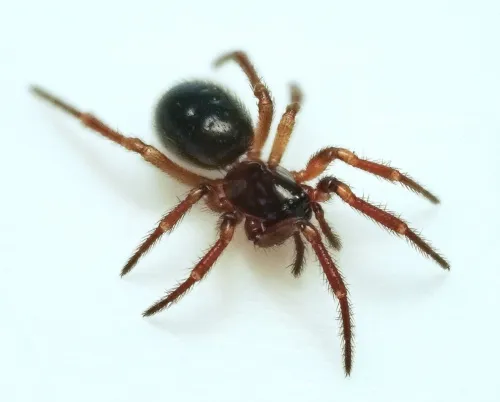
Length 2.5 to 4.5 mm. Prosoma yellowish red-brown. Opisthosoma yellowish grey to almost black. Examination of the genitalia of mature specimens is required to confirm this species. A ground living species found under stones, in leaf litter and moss.
Robertus vigerens
Robertus vigerens
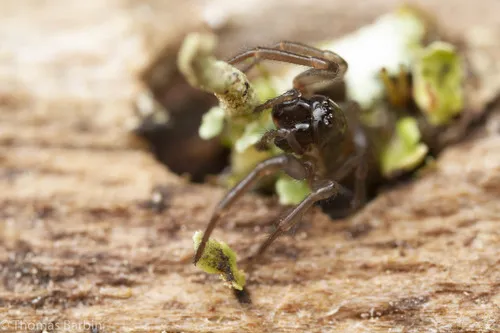
Robertus vigerens is a species of cobweb spider in the family Theridiidae. It is found in the United States and Canada.
Rosemary Wolf Spider
Hogna ericeticola
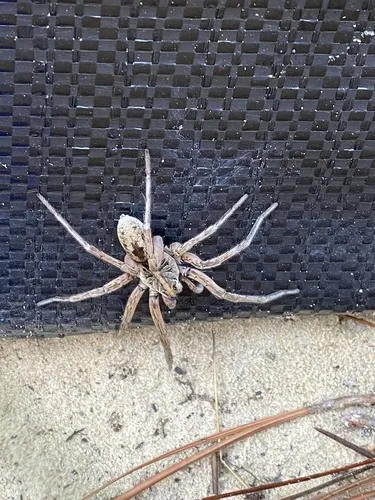
Hogna ericeticola, known as the rosemary wolf spider, is a species of spider in the Lycosidae family. It is endemic to Florida, in the United States.
Rubens Orbweaver
Hypsosinga rubens
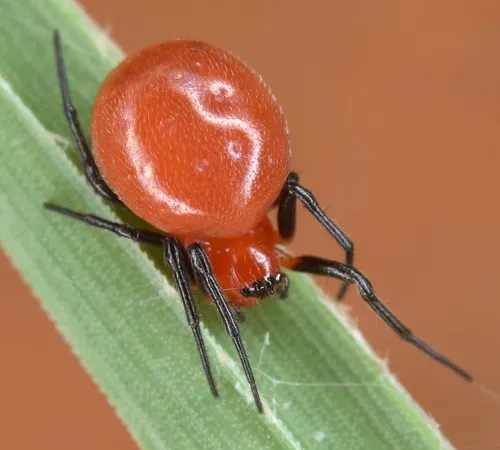
Identification: Poster median eyes (PME) largest distinguishes Hypsosinga from Singa (Levi, 1972a). Color and size morphology can vary considerably. Male voucher specimen: Palp Epigynum Typical FL variation for females
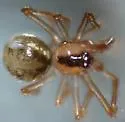
Rugathodes sexpunctatus
Rugathodes sexpunctatus
Identification: "The color and pattern of specimens from the Pacific coast are variable and usually different from those of eastern specimens illustrated by figure 349. Western species have the dorsum of the abdomen frequently as one large black patc
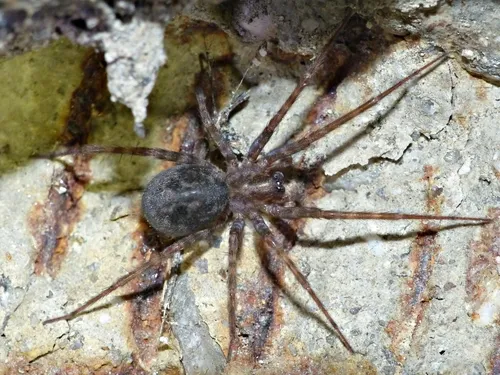
Rural Funnel-web Spider
Tegenaria pagana
Tegenaria pagana is a species of funnel-web spider in the family Agelenidae. It is known as the house funnel-web spider and has a cosmopolitan distribution, being native to Europe and North Africa to Central Asia and introduced to numerous countries
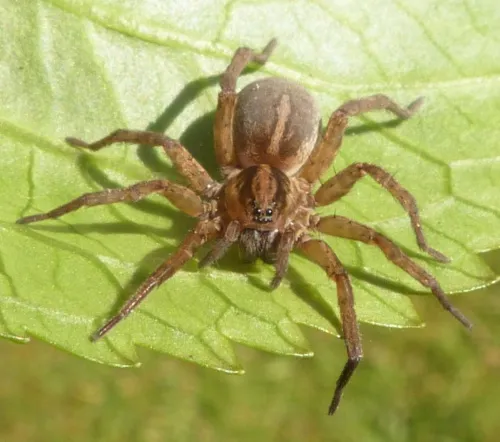
Rustic Wolf Spider
Trochosa ruricola
The females are 15 mm (sometimes even bigger) and the males are 10 mm. Both sexes are dark brown with a pale band running the length of the carapace and continuing to the first half of the abdomen. The two short lines on the carapace are diagnostic o
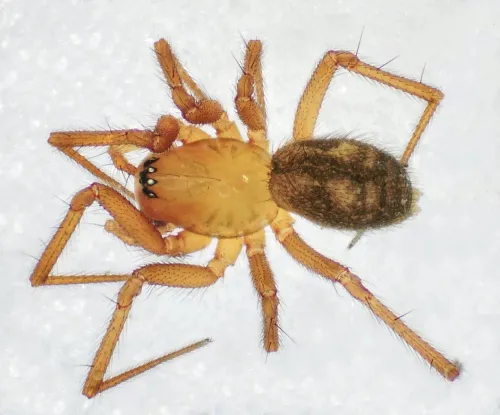
Saaristoa abnormis
Saaristoa abnormis
Length 3-4mm. Prosoma red-brown with dark margin. Sternum red-brown, with black margin. Chelicerae dark brown, robust. Legs yellowish-brown, robust. Opisthosoma dark grey, almost black. Microscopic examination of the genitalia is required to confirm
Saaristoa sammamish
Saaristoa sammamish
Saaristoa sammamish is a species of sheetweb spider in the family Linyphiidae. It is found in the United States.
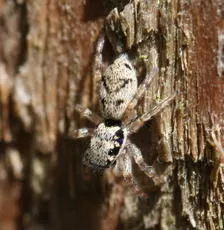
Salticus cingulatus
Salticus cingulatus
It has more white on the abdomen with dark triangular markings. Legs pale with distinct annulations. Usually away from habitation on tree trunks, gate posts etc. Very similar to S. scenicus but usually much paler due to more white hairs on the abdome
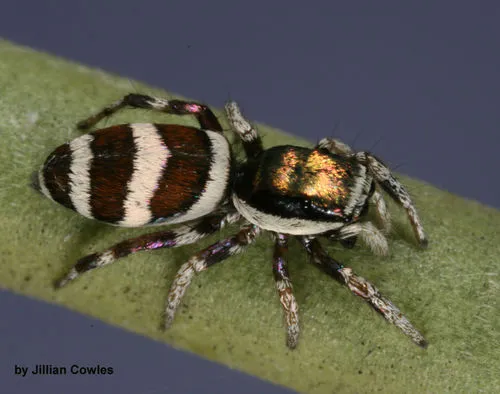
Salticus palpalis
Salticus palpalis
Identification: The cephalothorax is covered in iridescent scales; the abdomen is brick-red with four transverse pure white bands, the last of them at the spinnerets.
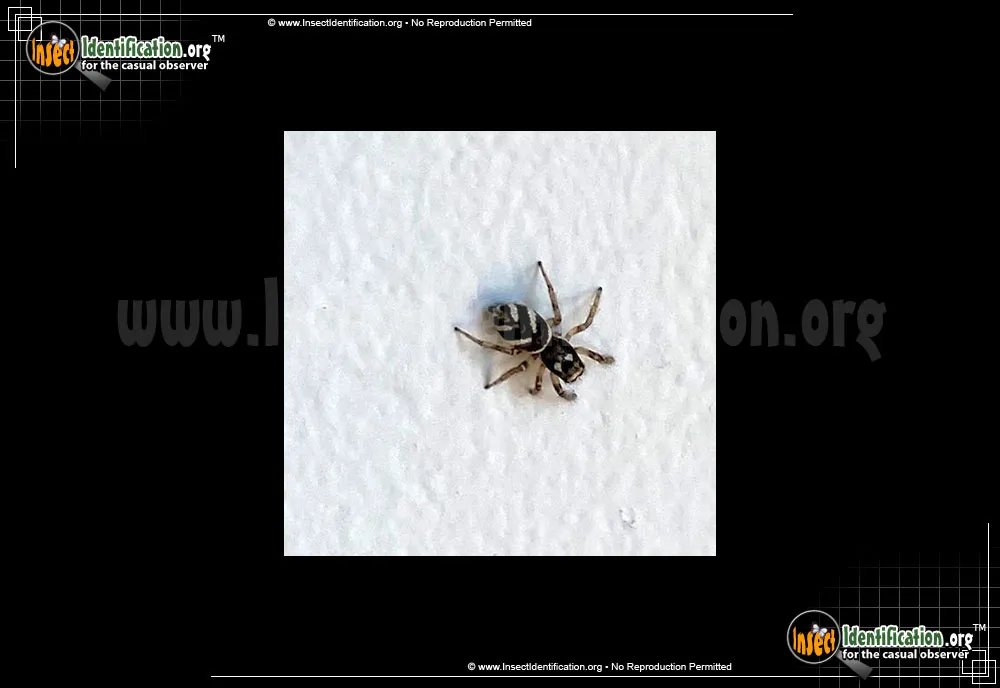
Salticus scenicus
Salticus scenicus
The female has a black abdomen with white stripes whereas the male has a brown abdomen with white stripes. However the patterning is variable and records are best confirmed by examination of genital structures. Legs mottled yellow brown with indistin
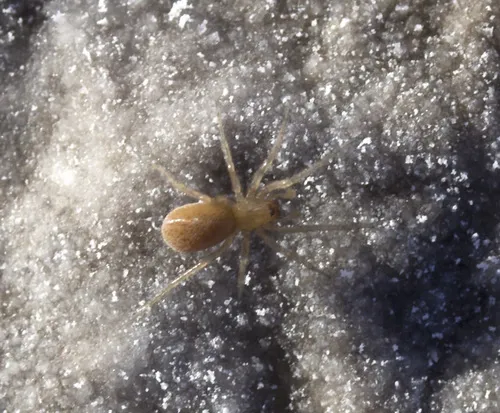
Saltonia incerta
Saltonia incerta
Saltonia is a genus of spiders with the sole species Saltonia incerta, a rare spider only known from California, United States, where it occurs on the shores of the Salton Sea, among salt-crusts in several dry or intermittent lake-beds, and from a sm
San Miguel Island Orbweaver
Metepeira pimungan
Identification: White eye region. White median ventral mark on abdomen flanked by shorter parallel thin lines on either side. Black sternum with white teardrop shaped mark on the posterior half. Legs mostly white with with bands on legs 3 & 4. Spinne
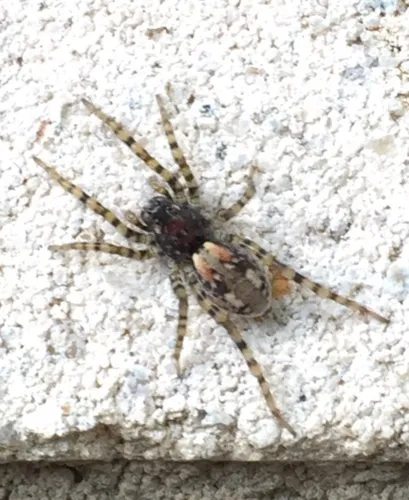
Sand Bear Spider
Arctosa perita
Arctosa perita is a species of wolf spider in the family Lycosidae. It is found in Europe, North Africa, Turkey, Caucasus, Russia, and has been introduced into Canada.
Santa Rosa Wolf Spider
Arctosa sanctaerosae
Identification: The white to light orange color and single (as opposed to no) dorsal tibial macroseta.
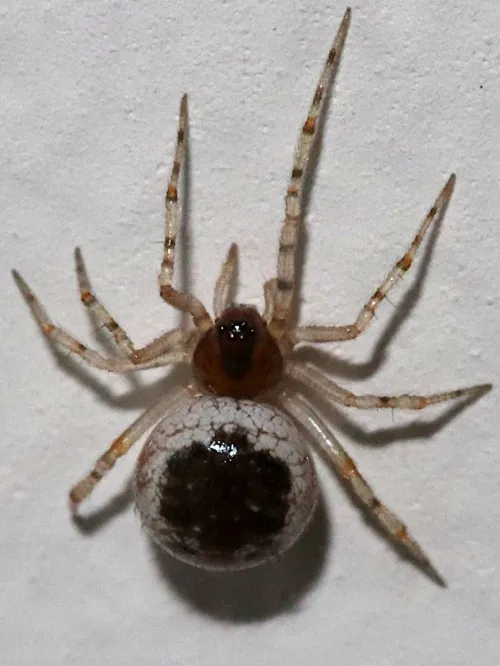
Sardinidion blackwalli
Sardinidion blackwalli
Length 2.5 to 5 mm. The pattern on the abdomen can be quite variable. This species builds its webs mainly in and around buildings, but also in grass tussocks and on other low plants and tree trunks in a variety of habitats. Infrequent and local in Br
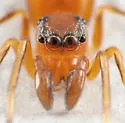
Sarinda hentzi
Sarinda hentzi
Identification: An orange-brown ant mimic . Characters : Epigynum
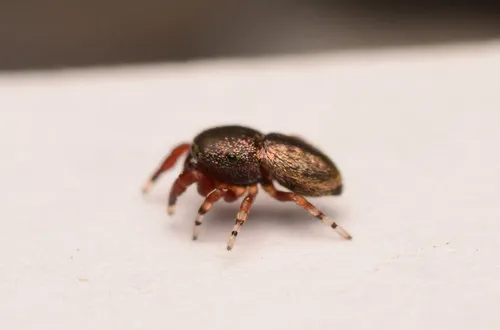
Sassacus cyaneus
Sassacus cyaneus
Sassacus cyaneus is a species of jumping spider. It used to be the only described species of the genus Agassa, but was transferred to the genus Sassacus in 2008. It seems to be closely related to S. papenhoei, but differs in the form of the carapace.
Sassacus paiutus
Sassacus paiutus
Identification: Gertsch, 1934 indicates the mouthparts and chelicerae are brown. Femur I is brown, but the remaining joints are lighter. The posterior legs are yellow. The abdomen is overlaid with white scales.
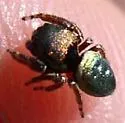
Sassacus papenhoei
Sassacus papenhoei
Identification: Palp Generally covered in "metallic green and pink or coppery scales ... abdomen usually green or blue".(Richman, 2008)
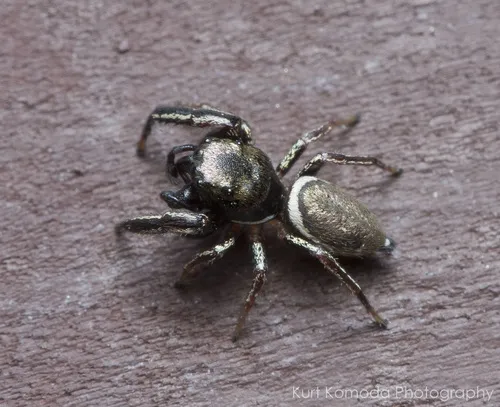
Sassacus vitis
Sassacus vitis
Identification: Palp Epigynum (ventral/dorsal) The body is covered in iridescent scales which flash either green or gold in strong light (often doesn't show up well in photographs). This iridescence has been explained as mimicking of certain beetles,
Savignia frontata
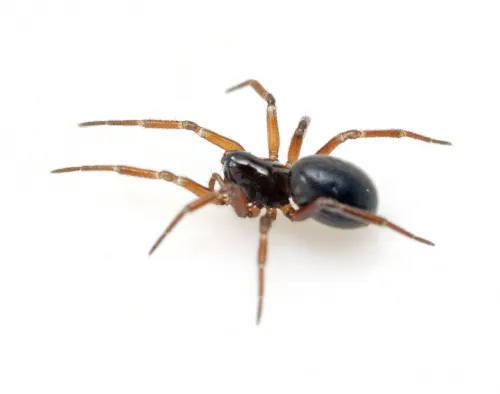
Savignia frontata
Length 1.5 to 2 mm. Brownish-black with yellow-brown legs. Male carapace raised in a highly characteristic projection bearing a tuft of hairs. Tibial spines 2-2-1-1; TmIV no; TmI 0.47-0.53. Structure of adult genitalia characteristic. Confirmation of
Schizocosa avida
Schizocosa avida
Identification: Female abdomen-ventral side: Palp: Epigynum:
Schizocosa bilineata
Schizocosa bilineata
Identification: Adult males have black tibial brushes on the front pair of legs. The females do not have them. This species is one of the smaller and more lightly-colored Schizocosa . Male: Male palp:
Schizocosa maxima
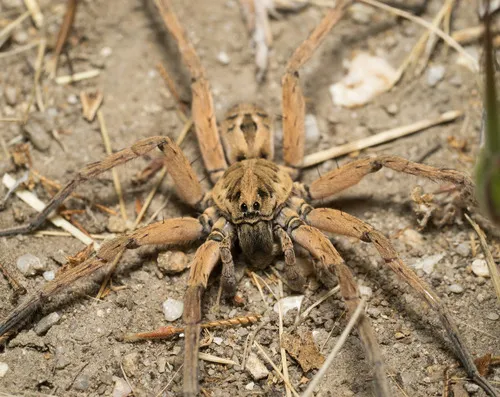
Schizocosa maxima
Identification: "The large size, long and gradually tapered intromittent part of the male embolus, relatively long copulatory tubes and spermathecae of females, and the dense, pile-like leg scopula will separate most specimens of S. maxima from those
Schizocosa ocreata
Schizocosa ocreata
Identification: In males, the femur and tibia on leg I are dark with a prominent tibial brush. Palp: Epigynum:
Scotinella fratrella
Scotinella fratrella
Identification: Scotinella specimens are very similar in appearance to those of Phrurolithus , the Old World genus from which they were split off. Two ways in which they differ from Phrurolithus is the lack of dorsal macrosetae on femur I and the pre
Scotinella redempta
Scotinella redempta
Scotinella redempta (Scotinella redempta) is a species in the family Phrurolithidae, commonly known as guardstone spiders, belonging to the order Araneae (Spiders). This species belongs to the genus Scotinella. As a member of class Arachnida, phylum
Scotinotylus formicarius
Scotinotylus formicarius
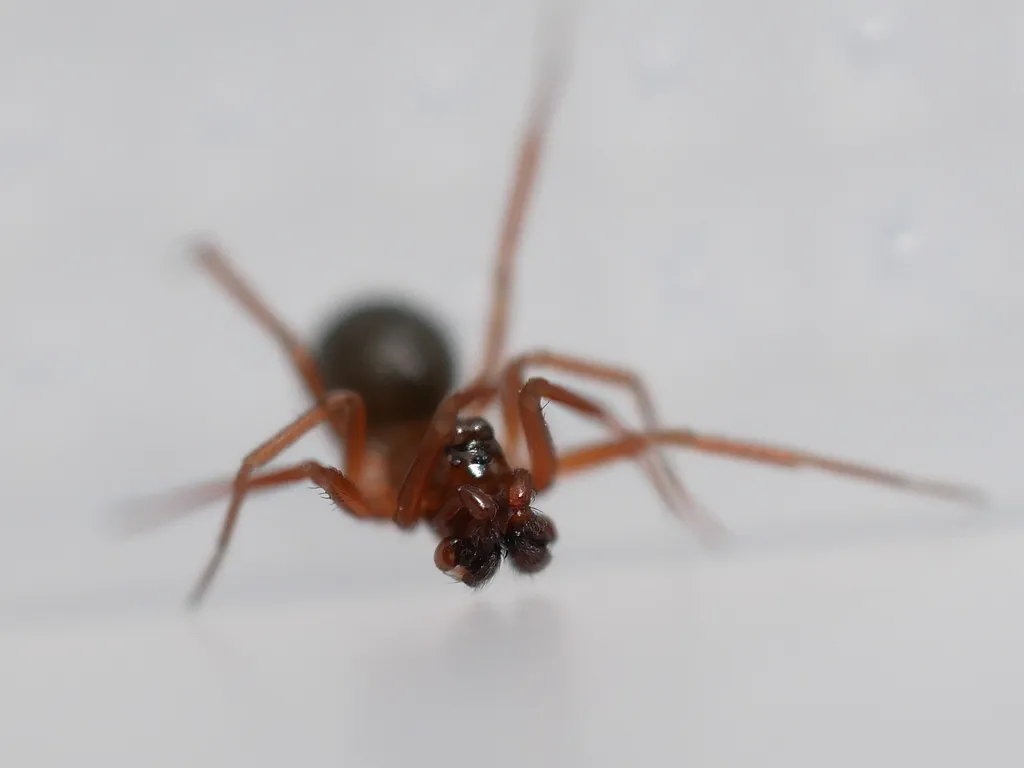
Scotinotylus formicarius is a species of sheet weaver found in the United States. It was described by Dondale & Redner in 1972.
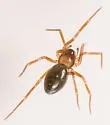
Scotinotylus vernalis
Scotinotylus vernalis
Identification: Epigynum (undissected, ventral, dorsal)
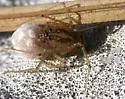
Scytodes alayoi
Scytodes alayoi
Identification: Small size, unique markings, and strong spines on tibia I unique to mature males of the species.
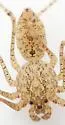
Scytodes atlacoya
Scytodes atlacoya
Identification: Palpal organ - Zepp comment Color ranges from light orange or tan to dark grey or brown, with contrasting markings. Typical light to dark marking and color variations: Other variations: Builds webs similar to Latrodectus . Wraps prey
Scytodes zapatana
Scytodes zapatana
Identification: Vague description, no illustrations. Possibly a pattern variation of lugubris .
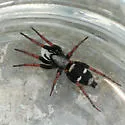
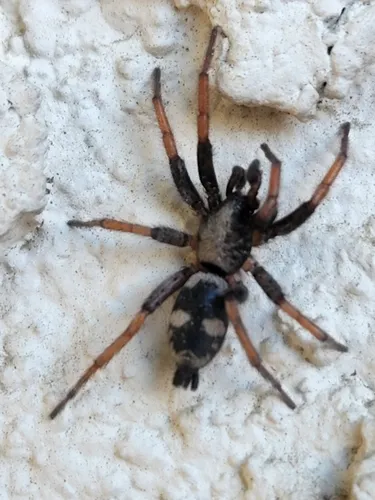
Sergiolus columbianus
Sergiolus columbianus
Identification: Male (ID confirmed by Rod Crawford):
Sergiolus montanus
Sergiolus montanus
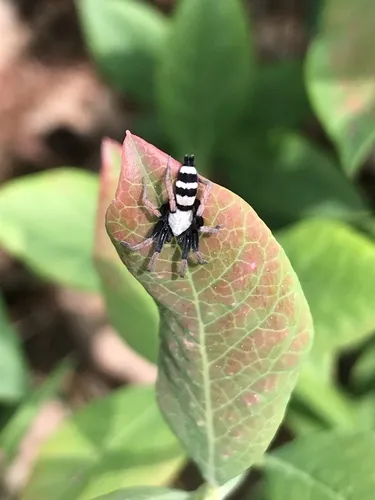
Identification: There appears to be quite a bit of variation in the abdominal patterning of this species. A microscopic exam of the spider's genitalia is typically necessary for accurate identification. "...specimens of the widespread species S. mon
Sergiolus tennesseensis
Sergiolus tennesseensis
Identification: From original description: Female. - Carapace dusky, more fulvous at middle. Sternum chestnut. Femora of legs black, the more distal joints yellow or reddish yellow. Abdomen black above with three light cross bands; venter with a pale
Shore spider
Pardosa milvina
Identification: Epigynum: Ventral View/Dorsal View Palp: Ventral View/Lateral View

Silometopus elegans
Silometopus elegans
This is one of the 'money spiders' in the Linyphidae family - which has more UK species than any other. Most are small and need microscopic examination to identify. No additional images available for this species.
Silver Cobweb Weaver
Euryopis argentea
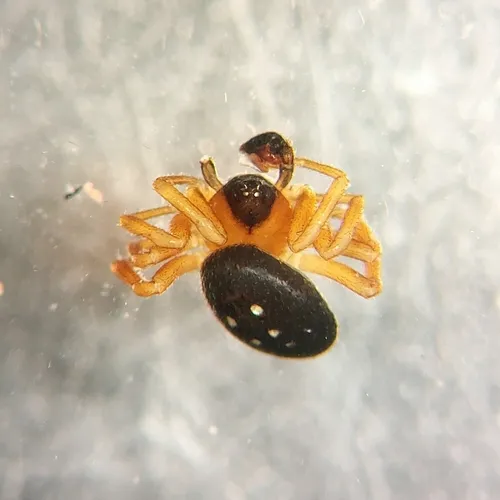
Euryopis argentea is a species of cobweb spider in the family Theridiidae. It is found in the United States, Canada, and Russia.