
Platnickina mneon
This record describes Platnickina mneon (species). Recorded family: Theridiidae. Recorded order: Araneae.
Identification and Appearance
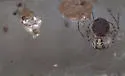
A wandering theridiid that preys on other spiders, primarily Pholcids, Brown widows, common house spiders, various Theridion species, and conspecifics. Orb weavers as well. As opposed to pirate spiders which lure their prey to them, P. mneon will head straight for the retreat of the spider web it is invading, and aggressively attack the owner. Immatures and adult females move from web to web of other spiders searching for prey. They consume their prey in the web it was captured in, often in the victims retreat, where they build their own little web while feeding. They appear to only stay in one spot for an extended period when preparing to molt or guarding eggs. Adult females guarding eggs build webs, and molting specimens may build webs as well. Captive juveniles and mature females build webs with retreats, but lacking viscid snares. They generally ignore insect prey when offered, except for extended periods without feeding, but readily chase and attack other spiders introduced to their webs.
Classification
- Kingdom
- Animalia
- Phylum
- Arthropoda
- Class
- Arachnida
- Order
- Araneae (Spiders)
- Family
- Theridiidae (Cobweb Spiders)
- Genus
- Platnickina
Imported taxonomy record. Source availability varies; see the source references and editorial policy below.
Habitat and Range
Habitat
Homes and buildings that provide habitats for other ecribellate web building spiders.
Geographic Range
Pantropical, synanthropic.
Diet and Behavior
Diet: Spiders, primarily other Theridiids, of various sizes.
About Spiders: the wider group
Order-level background for Araneae, the group containing Platnickina mneon. Species-specific details appear above.
Group overview
As of 2023, 51,673 spider species in 136 families have been recorded, though an estimated 150,000 species exist. Spiders rank 7th in total species diversity among all organism orders. Only 0.5% of spider species pose any risk to human health.
Ecological role of the group
Spider venom contains complex peptides with diverse pharmacological activities, making them valuable for drug development research. Spiders produce up to 7 types of silk from specialized glands. Spider silk genes have been inserted into mammals and plants for biotech applications.
Economic and practical significance of the group
The global spider community kills an estimated 400-800 million tons of prey annually (2017 study). Spiders provide billions of dollars in natural pest control for agriculture. Spider silk is 5× stronger than steel of the same diameter, driving a biomaterials research industry.
Recorded sources for this group: World Spider Catalog, PNAS, Nature, ScienceDirect. Imported estimates may describe particular regions or reporting periods.
Photos of Platnickina mneon (5)
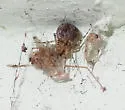
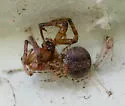
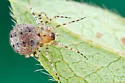
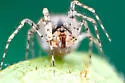
Photo credits: Contributed by Jeff Hollenbeck
Frequently Asked Questions About Platnickina mneon
What is Platnickina mneon?
Platnickina mneon is a species in the family Theridiidae, within the order Araneae.
Where is Platnickina mneon found?
| Feature | Details |
|---|---|
| Habitat | Homes and buildings that provide habitats for other ecribellate web building spiders. |
| Range | Pantropical, synanthropic. |
What does Platnickina mneon eat?
The diet of the Platnickina mneon includes Spiders, primarily other Theridiids, of various sizes..