
Psilochorus simoni
This record describes Psilochorus simoni (species). Recorded family: Pholcidae. Recorded order: Araneae.
Identification and Appearance
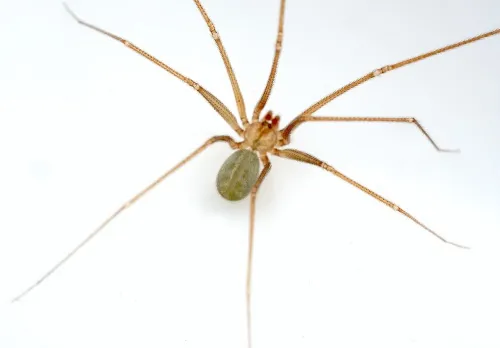
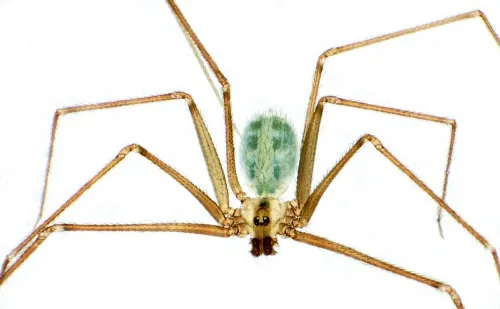
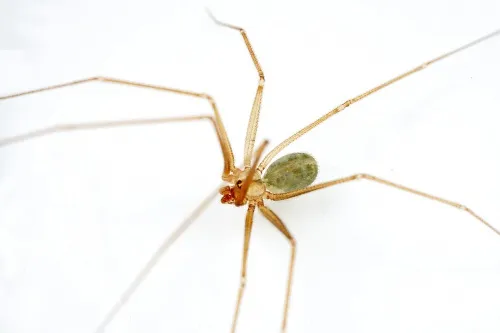
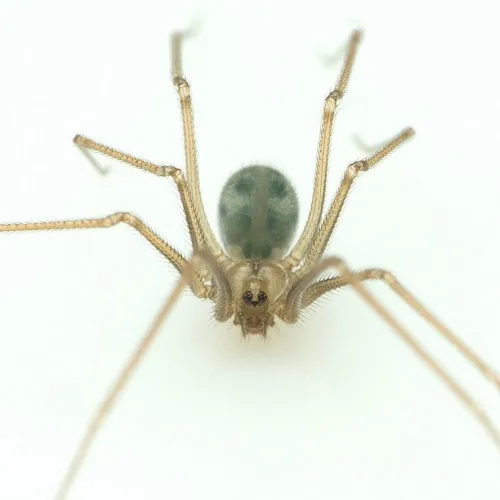
2 to 3 mm long. Prosoma yellowish to light brown, slightly darkened in the middle. Legs yellowish to light brown. Opisthosoma bluish grey, egg-shaped or globular. Unless identified by a recognised expert, a photo is required. If the photo doesn't show the key ID features then in the comments box describe the size and identifying characters you have observed. Most early records were from dry wine cellars, but it is now recorded in other indoor situations. The female hangs upside down in a tangled sheet web and gyrates very rapidly if disturbed. She carries the bundle of eggs in her chelicerae, loosely surrounded by silk threads, until they hatch. It is thought to be of American origin, imported first into France and then into Britain on wine bottles. http://srs.britishspiders.org.uk/portal.php/p/Summary/s/Psilochorus+simoni No additional images available for this species.
Classification
Habitat and Range
Habitat
Most early records were from dry wine cellars, but it is now recorded in other indoor situations.
Seasonal Activity
Adults may be found at all seasons.
Diet and Behavior
Life History
The female hangs upside down in a tangled sheet web and gyrates very rapidly if disturbed. She carries the bundle of eggs in her chelicerae, loosely surrounded by silk threads, until they hatch. It is thought to be of American origin, imported first into France and then into Britain on wine bottles.
Additional species information
Recorded status
Widespread but scattered in Britain.
About Spiders: the wider group
Order-level background for Araneae, the group containing Psilochorus simoni. Species-specific details appear above.
Group overview
As of 2023, 51,673 spider species in 136 families have been recorded, though an estimated 150,000 species exist. Spiders rank 7th in total species diversity among all organism orders. Only 0.5% of spider species pose any risk to human health.
Ecological role of the group
Spider venom contains complex peptides with diverse pharmacological activities, making them valuable for drug development research. Spiders produce up to 7 types of silk from specialized glands. Spider silk genes have been inserted into mammals and plants for biotech applications.
Economic and practical significance of the group
The global spider community kills an estimated 400-800 million tons of prey annually (2017 study). Spiders provide billions of dollars in natural pest control for agriculture. Spider silk is 5× stronger than steel of the same diameter, driving a biomaterials research industry.
Recorded sources for this group: World Spider Catalog, PNAS, Nature, ScienceDirect. Imported estimates may describe particular regions or reporting periods.
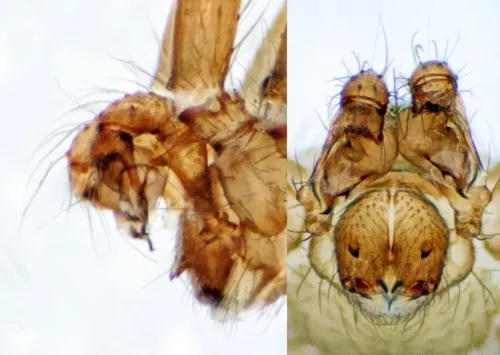
Photos of Psilochorus simoni (5)
Frequently Asked Questions About Psilochorus simoni
What is Psilochorus simoni?
Psilochorus simoni is a species in the family Pholcidae, within the order Araneae.
Where is Psilochorus simoni found?
Habitat: Most early records were from dry wine cellars, but it is now recorded in other indoor situations.
When is Psilochorus simoni active?
Psilochorus simoni: seasonal activity - Adults may be found at all seasons..
What is the life cycle of a Psilochorus simoni?
The female hangs upside down in a tangled sheet web and gyrates very rapidly if disturbed. She carries the bundle of eggs in her chelicerae, loosely surrounded by silk threads, until they hatch. It is thought to be of American origin, imported first into France and then into Britain on wine bottles.