
Sergiolus montanus
This record describes Sergiolus montanus (species). Recorded family: Gnaphosidae. Recorded order: Araneae.
Identification and Appearance
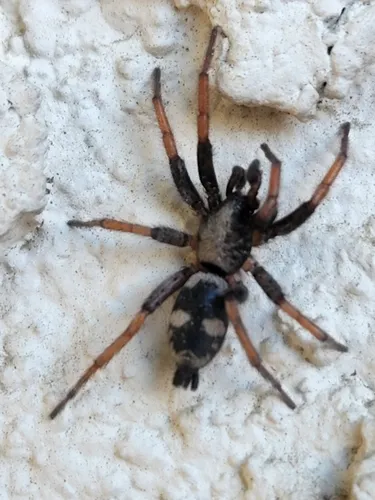
There appears to be quite a bit of variation in the abdominal patterning of this species. A microscopic exam of the spider's genitalia is typically necessary for accurate identification. ...specimens of the widespread species S. montanus are usually colored much like those of northern S. bicolor , but individuals with a light cephalothorax and appendages and more extensive light markings on the abdominal dorsum are known from Oregon, Idaho, Utah, Colorado, and California (where they become proportionately more common toward the southern end of the state). (Platnick & Shadab 1981) Examples from California (female)/Washington (male/female)/Alaska (female): Palp Epigynum
Wikipedia reference for Sergiolus montanus: https://en.wikipedia.org/wiki/Sergiolus montanus.
Classification
- Kingdom
- Animalia
- Phylum
- Arthropoda
- Class
- Arachnida
- Order
- Araneae (Spiders)
- Family
- Gnaphosidae (Ground Spiders)
- Genus
- Sergiolus
Imported taxonomy record. Source availability varies; see the source references and editorial policy below.
Habitat and Range
Habitat
"Specimens have been collected under rocks, reeds, bark, driftwood on beaches, dry cow patties, in bogs, climax chaparral...and associated with jack pine, ponderosa pine, scrub oak, aspen, and sage, in and around buildings and in stabilized talus at elevations up to 10,200 feet."
Geographic Range
Southernmost Alaska to New Brunswick, south to South Carolina and to Baja California (Norte), Mexico.
Seasonal Activity
Mature males: February to October Mature females: year-round
About Spiders: the wider group
Order-level background for Araneae, the group containing Sergiolus montanus. Species-specific details appear above.
Group overview
As of 2023, 51,673 spider species in 136 families have been recorded, though an estimated 150,000 species exist. Spiders rank 7th in total species diversity among all organism orders. Only 0.5% of spider species pose any risk to human health.
Ecological role of the group
Spider venom contains complex peptides with diverse pharmacological activities, making them valuable for drug development research. Spiders produce up to 7 types of silk from specialized glands. Spider silk genes have been inserted into mammals and plants for biotech applications.
Economic and practical significance of the group
The global spider community kills an estimated 400-800 million tons of prey annually (2017 study). Spiders provide billions of dollars in natural pest control for agriculture. Spider silk is 5× stronger than steel of the same diameter, driving a biomaterials research industry.
Recorded sources for this group: World Spider Catalog, PNAS, Nature, ScienceDirect. Imported estimates may describe particular regions or reporting periods.
Photos of Sergiolus montanus (4)
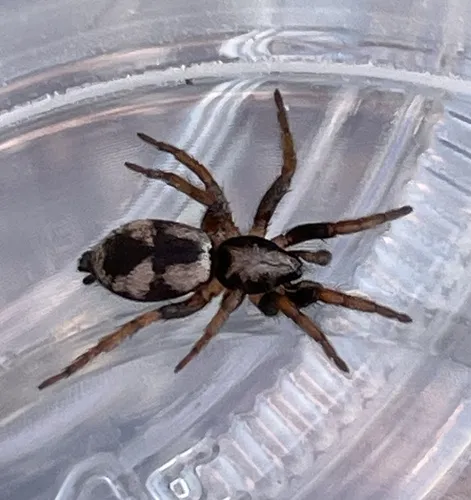
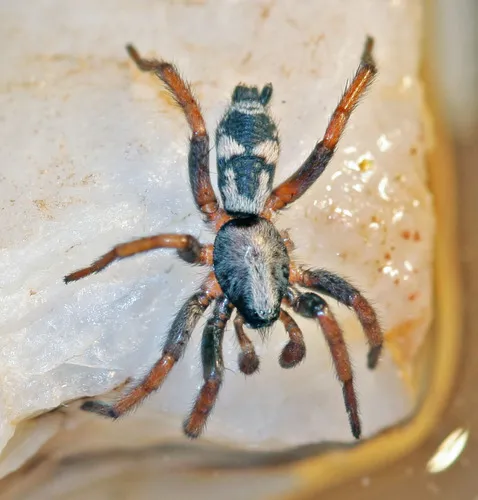
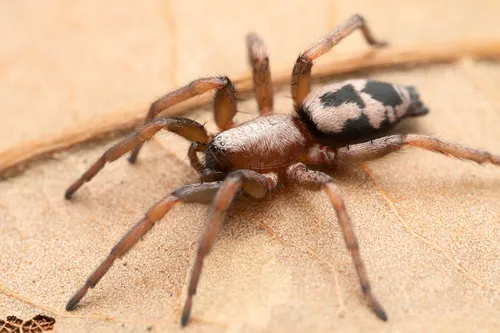
Photo credits: (c) Marshal Hedin, some rights reserved (CC BY-NC-SA), uploaded by Marshal Hedin | (c) evano__, some rights reserved (CC BY-NC), uploaded by evano__ | (c) Andrey Zharkikh, some rights reserved (CC BY) | (c) Kuoni W, some rights reserved (CC BY-NC), uploaded by Kuoni W | Contributed by Jeff Hollenbeck; Additional contributions by Lynette Elliott , cheins , Mandy Howe
Frequently Asked Questions About Sergiolus montanus
What is Sergiolus montanus?
Sergiolus montanus is a species in the family Gnaphosidae, within the order Araneae.
How big is Sergiolus montanus?
| Feature | Details |
|---|---|
| Males | ~4.9 mm |
| Females | ~6.9 mm |
How do you identify Sergiolus montanus?
There appears to be quite a bit of variation in the abdominal patterning of this species. A microscopic exam of the spider's genitalia is typically necessary for accurate identification. ...specimens of the widespread species S. montanus are usually colored much like those of northern S. bicolor , but individuals with a light cephalothorax and appendages and more extensive light markings on the abdominal dorsum are known from Oregon, Idaho, Utah, Colorado, and California (where they become proportionately more common toward the southern end of the state). (Platnick & Shadab 1981) Examples from California (female)/Washington (male/female)/Alaska (female): Palp Epigynum
Where is Sergiolus montanus found?
| Feature | Details |
|---|---|
| Habitat | Specimens have been collected under rocks, reeds, bark, driftwood on beaches, dry cow patties, in bogs, climax chaparral...and associated with jack pine, ponderosa pine, scrub oak, aspen, and sage, in and around buildings and in stabilized talus at elevations up to 10,200 feet. |
| Range | Southernmost Alaska to New Brunswick, south to South Carolina and to Baja California (Norte), Mexico. |
When is Sergiolus montanus active?
Sergiolus montanus: seasonal activity - Mature males: February to October Mature females: year-round.