
Spiders
Order Araneae
The Spiders (Order Araneae) includes 1,848 species across 82 families and 552 genera in our directory.
About Spiders
As of 2023, 51,673 spider species in 136 families have been recorded, though an estimated 150,000 species exist. Spiders rank 7th in total species diversity among all organism orders. Only 0.5% of spider species pose any risk to human health.
Economic Impact
The global spider community kills an estimated 400-800 million tons of prey annually (2017 study). Spiders provide billions of dollars in natural pest control for agriculture. Spider silk is 5× stronger than steel of the same diameter, driving a biomaterials research industry.
Ecological Role
Spider venom contains complex peptides with diverse pharmacological activities, making them valuable for drug development research. Spiders produce up to 7 types of silk from specialized glands. Spider silk genes have been inserted into mammals and plants for biotech applications.
Families in Araneae (82)
Species in Araneae (1,848)
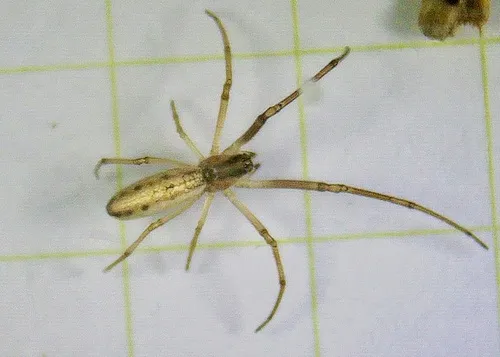
Silver Longjawed Orbweaver
Tetragnatha laboriosa
Identification: Not diagnostic, but can separate some species: Female Male Laboriosa has silvery patches on abdomen and the lateral eyes are distinctly separated from each other. The carapace marks are straight, diverging lines. Actually, the carapac
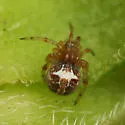
Simitidion simile
Simitidion simile
Identification: To differentiate from Theridion : Trichobothrium absent on metatarsus III in Simitidion (Wunderlich, 2008)
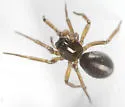
Sisicottus quoylei
Sisicottus quoylei
Sisicottus quoylei is a species of dwarf spider in the family Linyphiidae. It is found in the United States and Canada.
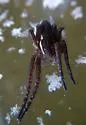
Six-spotted Fishing Spider
Dolomedes triton
Identification: The abdomen has a series of small paired white and/or light blue spots. The sternum is marked with six large black spots. However, those black spots sometimes blend together, as seen in the image below. This species and D. striatus ap
Sixspotted Orbweaver
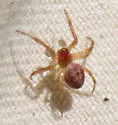
Araniella displicata
Identification: The possession of three (rarely four) pairs of small black spots on the abdominal dorsum is somewhat diagnostic for this species (Sacher, 1990). Females Males Juveniles Egg Sacs Palp
Smeringopus pallidus
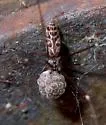
Smeringopus pallidus
Identification: Abdomen mostly cylindrical and elongate. The color pattern of paired purplish spots the entire length of the top and sides of the abdomen can usually distinguish this species from other similar synanthropic pholcids. Carapace has a br
Smooth Frilled Orbweaver
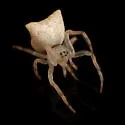
Kaira hiteae
Identification: Similar overall shape to others of this genus, but the surface of the abdomen is almost entirely smooth, lacking the bristly texture of the other two species known from the USA.
Snake-back Spider
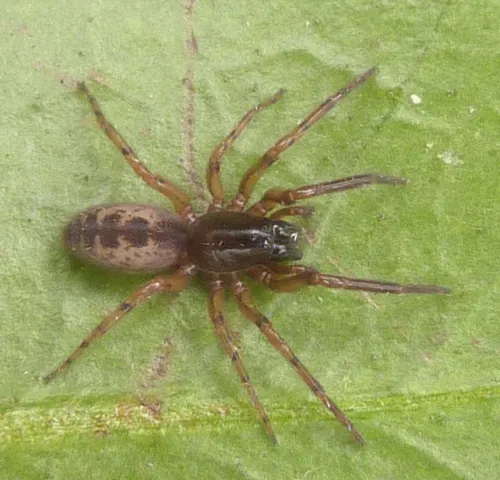
Segestria senoculata
This is an attractively marked spider which gets the English name from the row of dark coloured patches on the elongated abdomen said to resemble the markings on some poisonous snakes, such as the adder. Males 6.5-7.5mm, females 7-10mm. Prosoma black
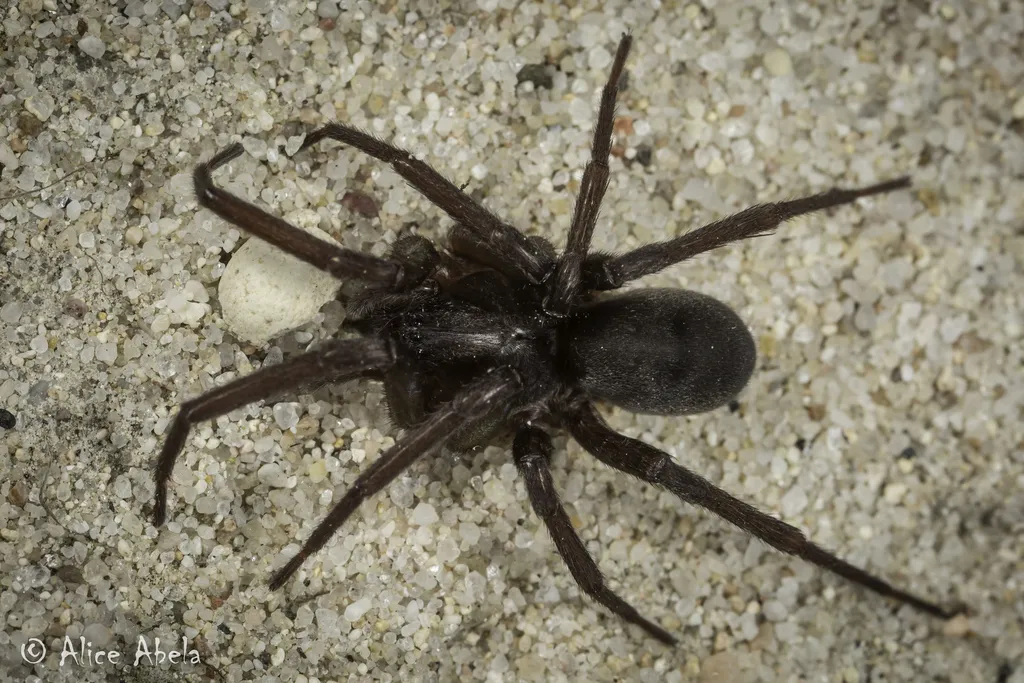
Socalchemmis shantzi
Socalchemmis shantzi
Socalchemmis shantzi is a species of false wolf spiders & wandering spiders in the family Zoropsidae. It is found in the United States.
Sosticus insularis
Sosticus insularis
Identification: This is a small, dark-colored ground spider. The cephalothorax is dark brown as are the femora of the legs. The tips of the legs are lighter in color. The abdomen is dark gray, nearly black. The male has a scutum over more than half o
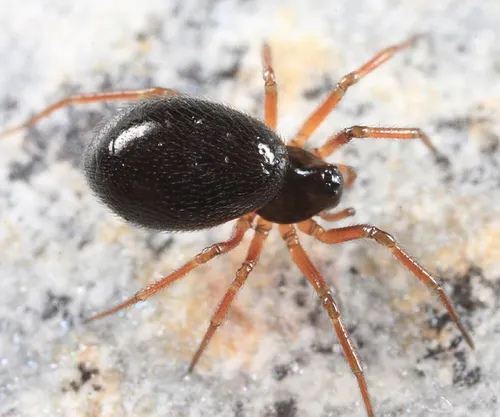
Souessa spinifera
Souessa spinifera
Souessa is a monotypic genus of North American sheet weavers containing the single species, Souessa spinifera. It was first described by C. R. Crosby & S. C. Bishop in 1936, and has only been found in the United States.
Spagnius foliaceus
Spagnius foliaceus
Identification: S. foliaceus typically has a pale median area on the abdomen with an distinct undulating border. On the carapace there appears to be one prominent row of white hairs. There are few species to confuse it with in the east. Some Nopali
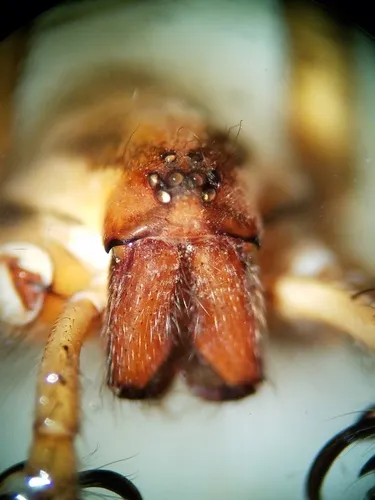
Spatulate Funnelweb Spider
Agelenopsis spatula
Agelenopsis spatula is a species of funnel weaver in the spider family Agelenidae. It is found in the United States.
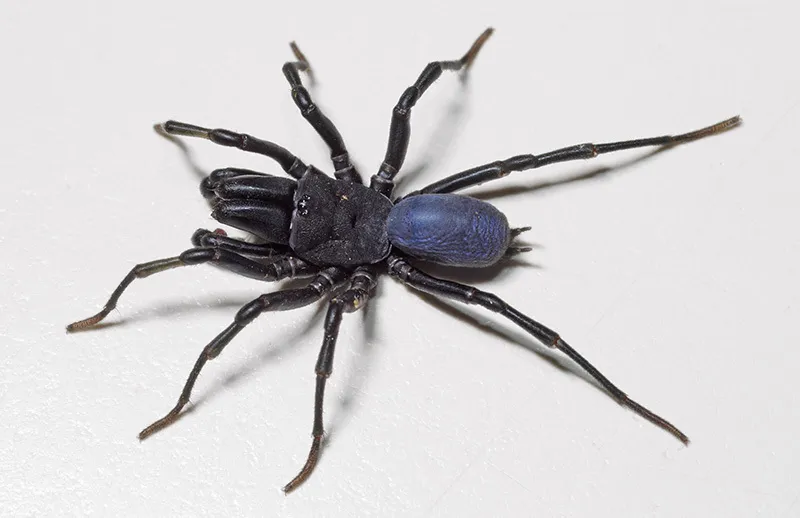
Sphodros paisano
Sphodros paisano
Sphodros paisano is a species of purseweb spider in the family Atypidae. It is found in the United States and Mexico.
Spintharus flavidus
Spintharus flavidus
Most easily found by sweeping understory vegetation in shaded woodlands.
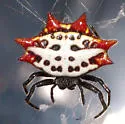
Spinybacked Orbweaver
Gasteracantha cancriformis
Identification: This species can be easily distinguished from all other spiders. Females may be 5 to nearly 9 mm in length, but 10 to 13 mm wide. They have six pointed abdominal projections frequently referred to as "spines." The carapace, legs, and
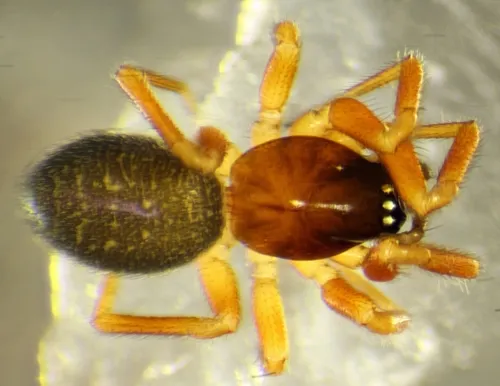
Spiraling Sheet-web Weaver
Walckenaeria spiralis
Identification: "Carapace: orange-brown to brown, often darkened anteriorly; male carapace not raised behind the eyes. Abdomen: black. Legs: orange to orange-brown." Epigynum
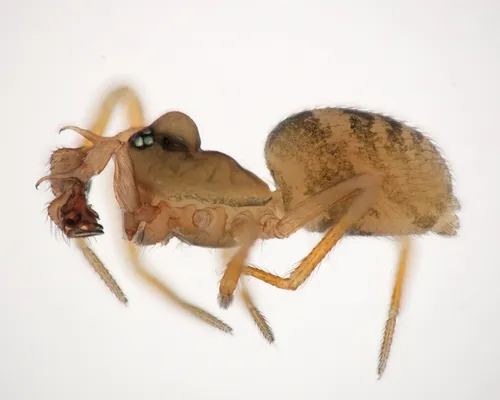
Spirembolus novellus
Spirembolus novellus
Spirembolus novellus is a species of sheet weaver found in the United States. It was described by Millidge in 1980.

Spitting Spider
Scytodes thoracica
This fascinating species is the sole member of its family in Britain. It ranges from 3-6mm in size and the cephalothorax is massively domed when viewed from the side - a distinctive feature. The cephalothorax and abdomen are similar in size, colour a
Spotted Orbweaver
Neoscona domiciliorum
Identification: More brightly colored than Neoscona crucifera , and with the part of the legs closest to the body bright red. Females "have a bright white or grayish yellow abdominal dorsum, with lateral wide, black stripes on each side." (University
Spruce Fir Moss Spider
Microhexura montivaga
Listed as endangered by the US Fish & Wildlife Service since 1995. Main threat is the invasive exotic Balsam Wooly Adelgid, which is killing off Fraser Fir trees over large areas of the souther Appalachians (to which the spider is endemic). The spide
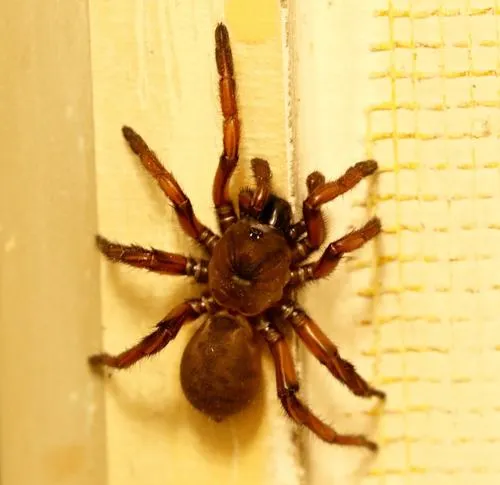
Stanford Hills Trapdoor Spider
Aptostichus stanfordianus
Aptostichus stanfordianus, the Stanford Hills trapdoor spider, is a species of wafer-lid trapdoor spider (Euctenizidae) endemic to California in the United States.
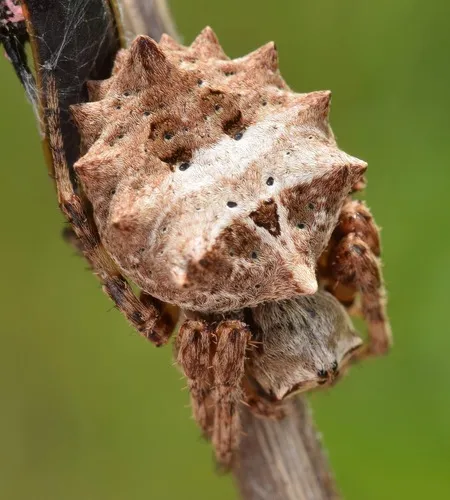
Starbellied Orbweaver
Acanthepeira stellata
Acanthepeira stellata, known generally as the starbellied orbweaver or starbellied spider, is a species of orb weaver in the spider family Araneidae. It is found in a range from Canada to Mexico.
Steatoda albomaculata
Steatoda albomaculata
Identification: Northeastern Variation - abdomen white or white with black marks, sometimes in the form of a series of anterior pointing triangles making a median dorsal black line. Abdomen pattern very variable. Western Variation - abdomen black oft
Steatoda borealis
Steatoda borealis
Identification: The abdomen is reddish brown with a lighter "T" shaped mark at the front end. The underside of the abdomen is also considerably lighter than the upper side. Note that several other species in the genus (including bipunctata, grandis,
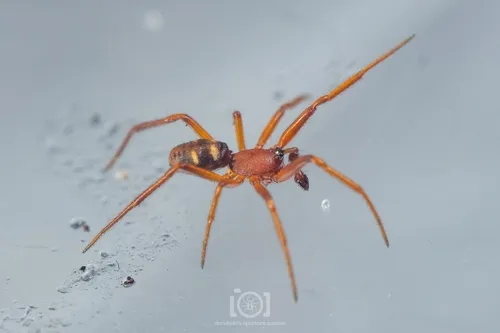
Steatoda erigoniformis
Steatoda erigoniformis
Steatoda erigoniformis is a species of cobweb spider in the family Theridiidae. It is found in a range from East Mediterranean to the Near East, Caucasus, China, Korea, Japan, and has been introduced into the Caribbeen.
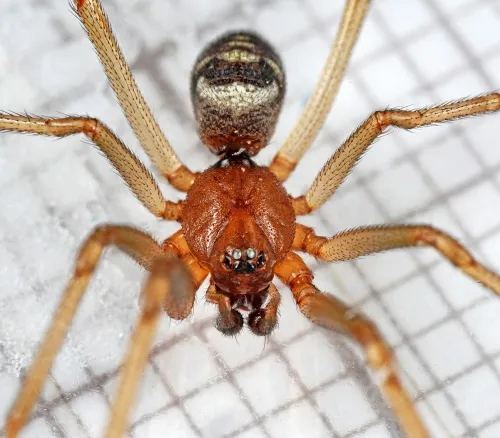
Steatoda grossa
Steatoda grossa
Length 7 to 10.5 mm (larger than the similar Steatoda bipunctata 4.5 to 7 mm). The abdomen of this false widow is a red-brown colour with a crescent shaped stripe at the front and three pale triangular spots along the top. These markings vary from sp
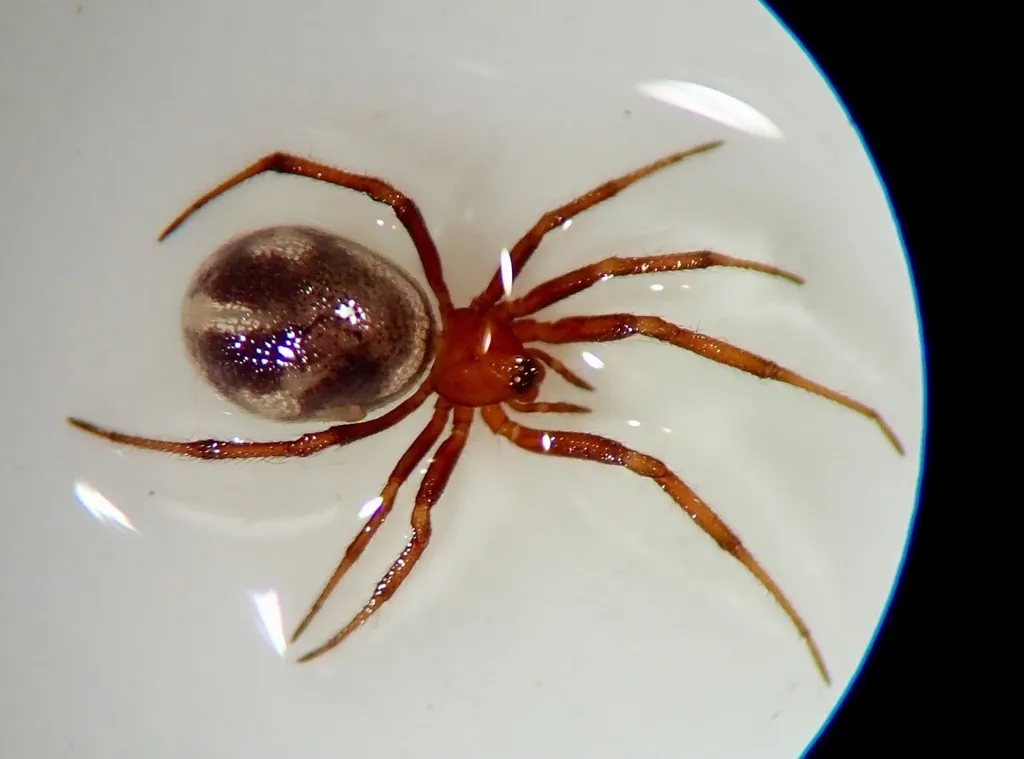
Steatoda variata
Steatoda variata
Steatoda variata is a species of cobweb spider in the family Theridiidae. It is found in the United States and Mexico.
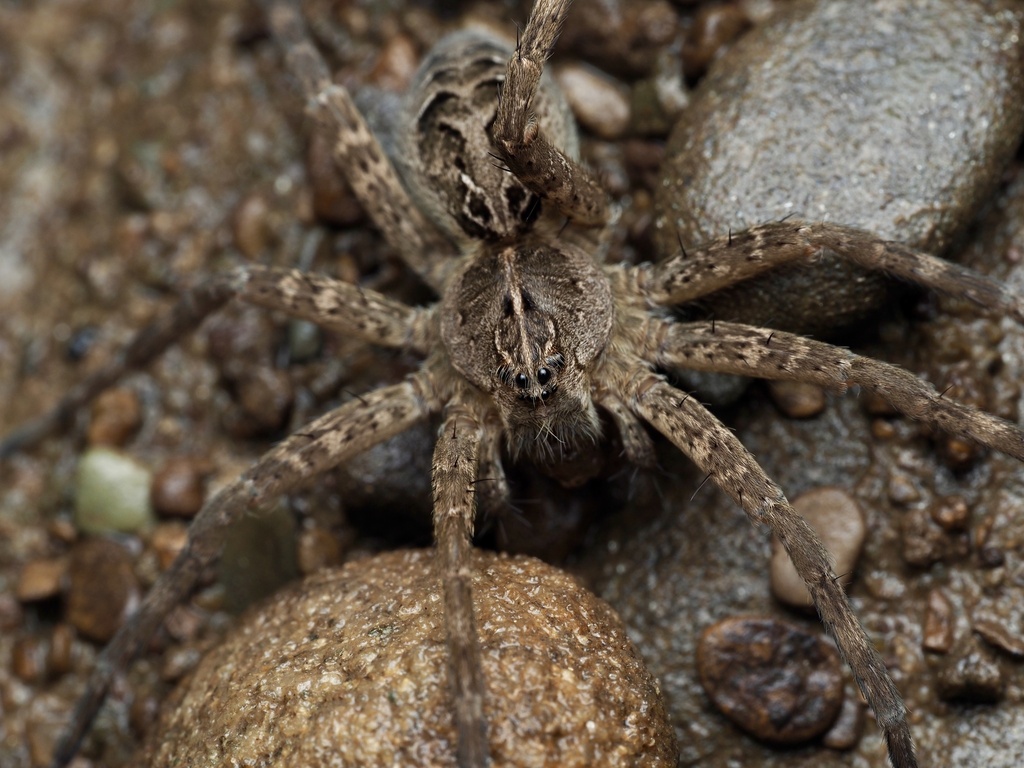
Striped Fishing Spider
Dolomedes scriptus
(c) Joshua Ebright, some rights reserved (CC BY)Identification: Distinguishing Dolomedes vittatus from Dolomedes scriptus males can be rather tricky at times, so here's a couple physical characteristics that I use to tell the two apart: 1.) Generally, the abdominal markings of adult male D. script
Swift Crab Spider
Mecaphesa celer
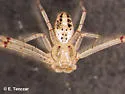
Identification: Voucher Specimens: Mature/immature males: Female variations Immature female Palp Epigynum The four spots at the anterior dorsum are a give-away - celer when they form a trapezoid that's wider anteriorly.… Joe Lapp, 8 May, 2012 - 2:28a
Synageles bishopi
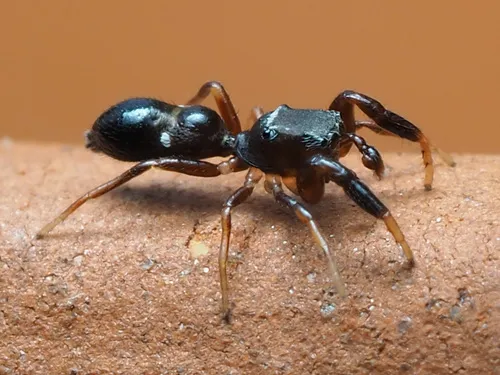
Synageles bishopi
Synageles bishopi is a species of jumping spider. It is native to the continental United States.
Synageles occidentalis
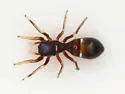
Synageles occidentalis
Identification: Palp Epigynum Cutler writes that species often confused with S. noxiosus , but genitalia is very different: Cutler, 1988a
Synema viridans
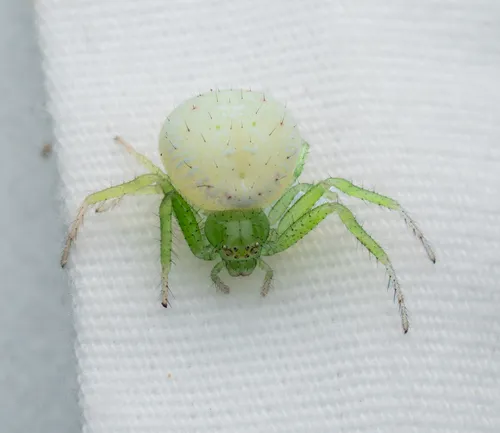
Synema viridans
Identification: Females are pale to bright green. Eye tubercles are white in both sexes. Male dorsum with six transverse red bands, the anterior one broken.
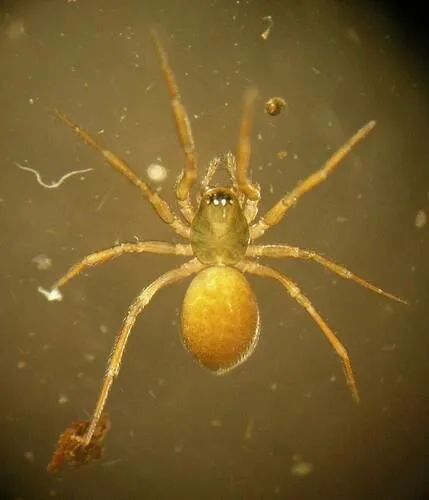
Tachygyna vancouverana
Tachygyna vancouverana
Tachygyna vancouverana is a species of dwarf spider in the family Linyphiidae. It is found in the United States and Canada.
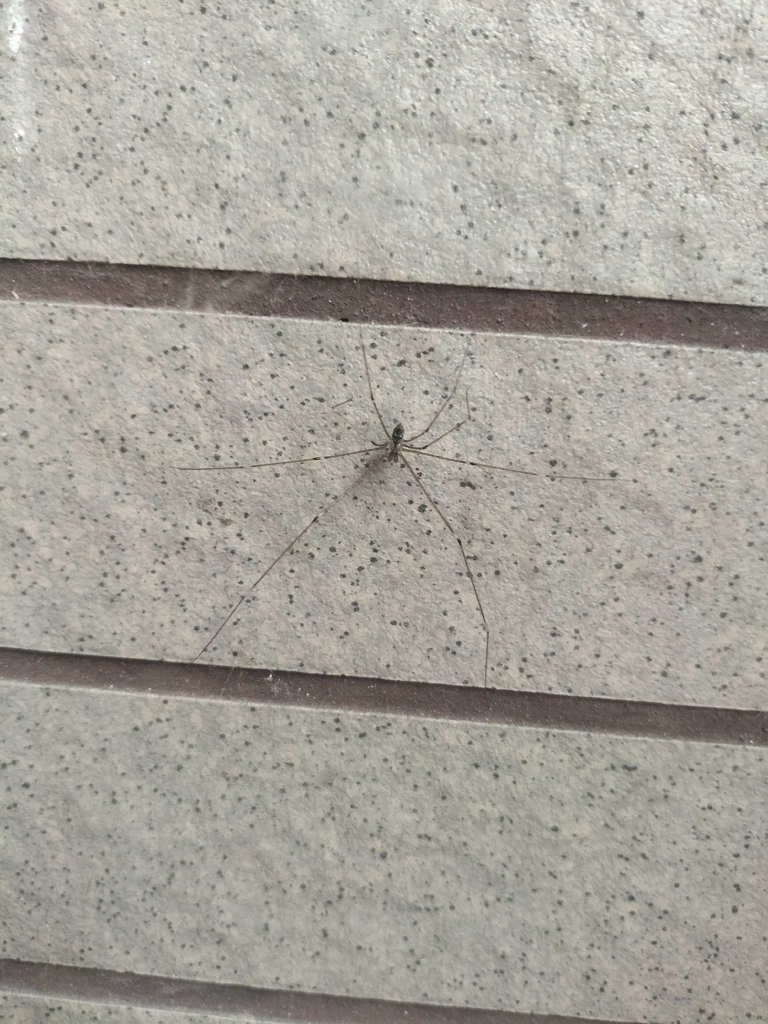
Tailed Cellar Spider
Crossopriza lyoni
(c) 祐, some rights reserved (CC BY)Crossopriza lyoni is a widespread species of cellar spiders that prefer to live in or around human structures. They are commonly known as tailed cellar spiders, tailed daddy longlegs spiders, and sometimes box spiders. They all possess extremely long
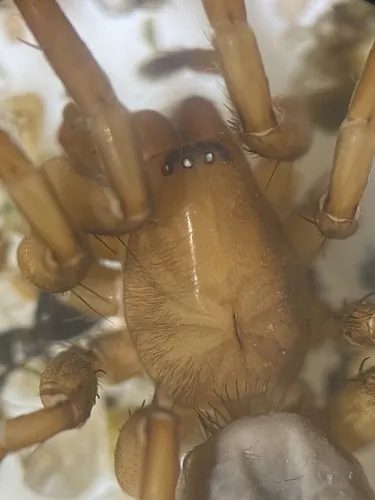
Talanites echinus
Talanites echinus
Talanites echinus is a species of ground spider in the family Gnaphosidae. It is found in the United States.
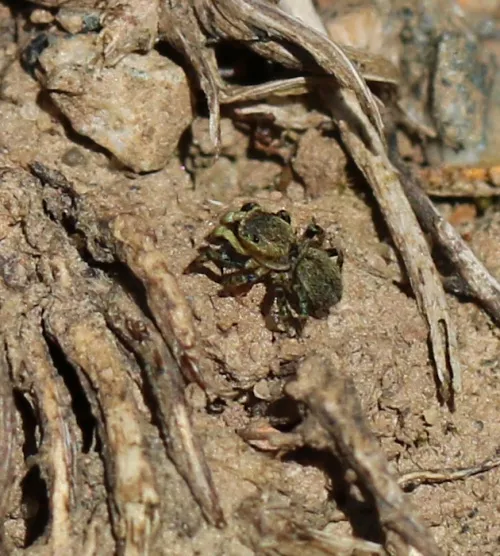
Talavera aequipes
Talavera aequipes
Talavera aequipes is a small jumping spider. There are very similar species, but this species is the most frequent of these spiders in our area. Identification of this species "Requires examination at high magnification in good lighting, typically ex
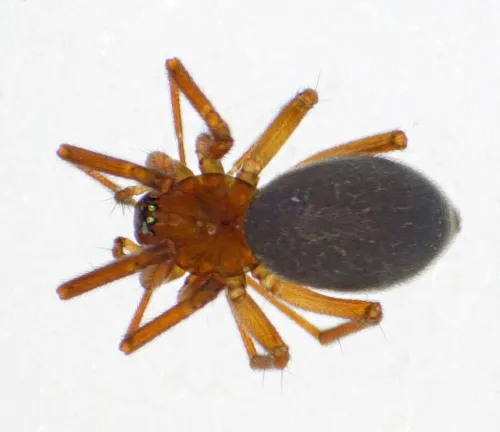
Tallusia experta
Tallusia experta
2.5 to 3.5 mm, prosoma reddish brown, legs red-brown, opisthosoma grey-black. Tibial spines: 2-2-2-2 / TmIV: no / TmI: 0.34-0.44 Confirmation of this species requires examination of the genitalia of mature specimens. Widespread, particularly in damp
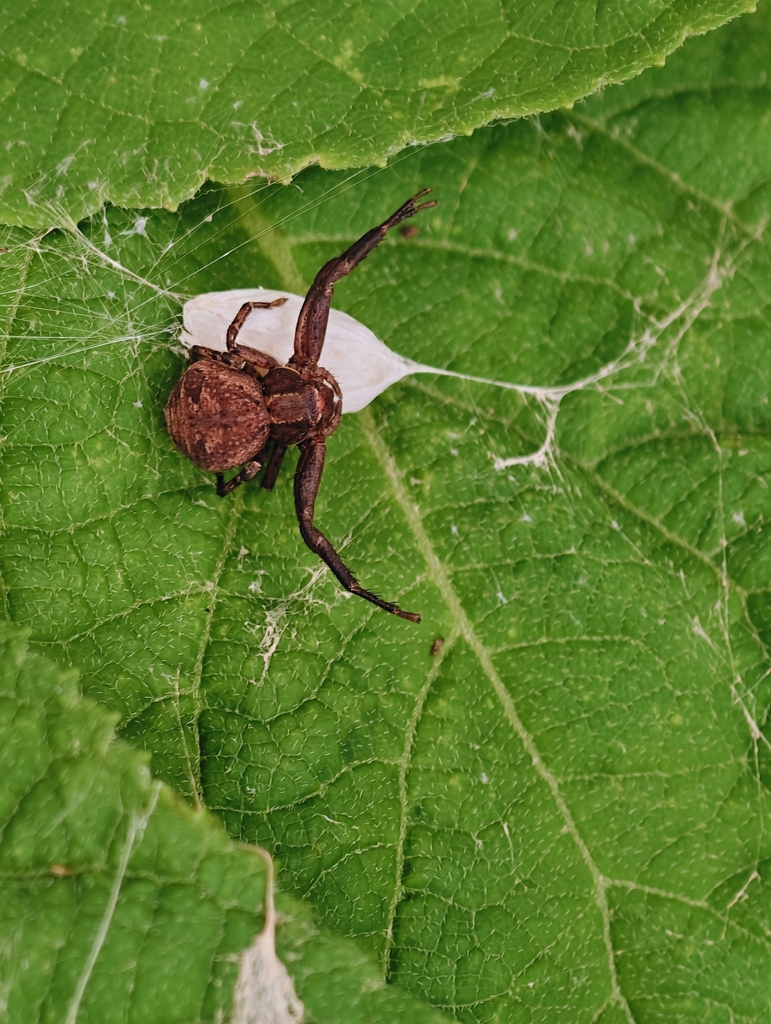
Tan crab spider
Xysticus ferox
(c) Sheila S, some rights reserved (CC BY)Xysticus ferox, the brown crab spider, is a species of crab spider in the family Thomisidae. It is found in the USA and Canada.

Tapinocyba praecox
Tapinocyba praecox
This is one of the 'money spiders' in the Linyphidae family - which has more UK species than any other. Most are small and need microscopic examination to identify. No additional images available for this species.
Teminius affinis
Teminius affinis
Identification: Page created based on this female voucher specimen submitted by Joe Lapp: Full body habitus, eye arrangement: Epigynum (ventral, dorsal):
Tennesseellum formica
Tennesseellum formica
Identification: "Carapace elongated-oval, light yellow-orange, shiny, strongly granulate (Fig. 16); suffused with dark gray along margin and radiating lines; fovea present. Legs light yellow-orange, femur a shade darker Abdomen in males cylindrical,
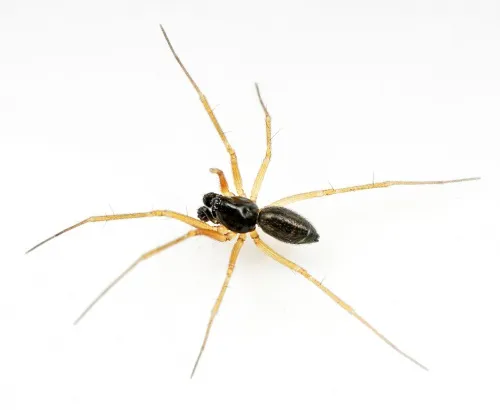
Tenuiphantes flavipes
Tenuiphantes flavipes
A small, black bodied spider with pale yellowy-brown legs. Predominantly a woodland species occurring in leaf litter and undergrowth. It may also be found in a variety of other situations including grasslands, heaths and marshes, generally at ground
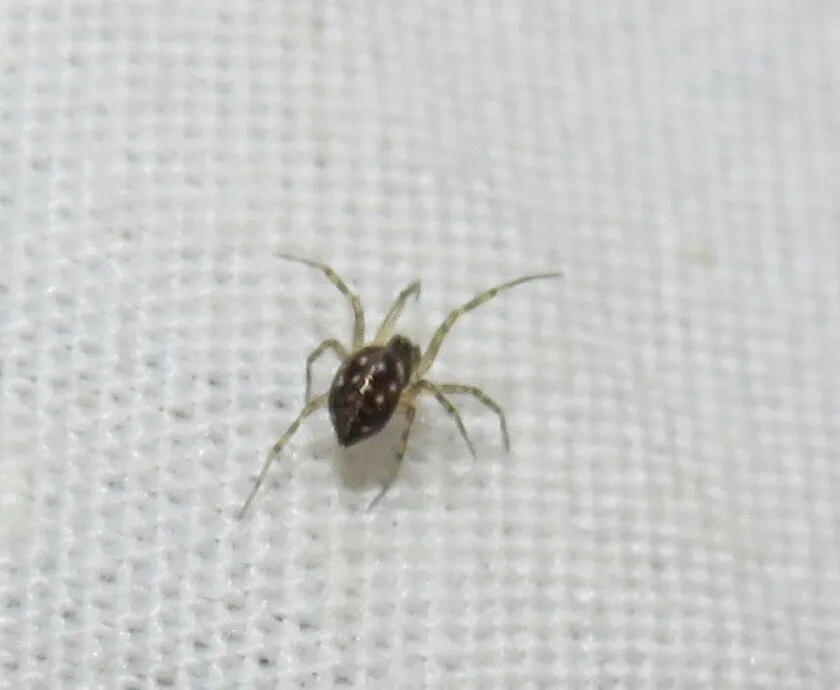
Tenuiphantes sabulosus
Tenuiphantes sabulosus
Tenuiphantes sabulosus is a species of sheetweb spider in the family Linyphiidae. It is found in North America.
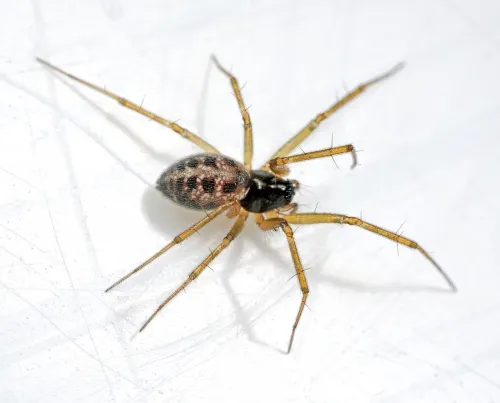
Tenuiphantes tenuis
Tenuiphantes tenuis
Males: 2 to 3.2 mm, females: 2 to 4.3 mm. Prosoma yellow-brown, not annulated. Legs yellow-brown. Opisthosoma whitish with paired chevrons. Confirmation requires microscopic examination of the genitalia of adult specimens. Vegetation, gardens, grassl
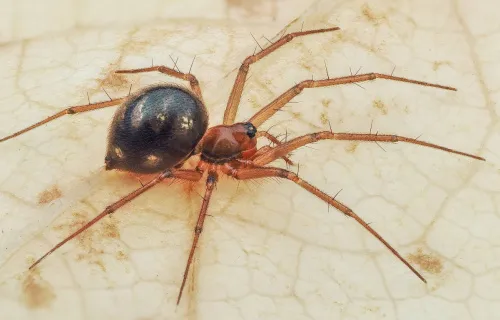
Tenuiphantes zimmermanni
Tenuiphantes zimmermanni
A small and quite distinctive spider, but there are similar species and identification really requires examination under a microscope. A woodland species found in leaf litter and under logs. https://srs.britishspiders.org.uk/portal.php/p/Summary/s/Te
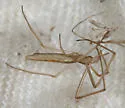
Tetragnatha caudata
Tetragnatha caudata
Identification: Not diagnostic, but can separate some species:
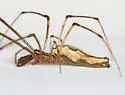
Tetragnatha elongata
Tetragnatha elongata
Identification: Not diagnostic, but can separate some species: Voucher Specimens: Female: Male: Male Palp - The conductor tappers evenly to its tip and ends in a small hook:
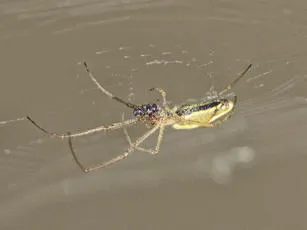
Tetragnatha extensa
Tetragnatha extensa
This is a very difficult species to identify as there are other similar species and certain identification requires detailed examination. If we cannot be certain that an image is T. extensa but it is likely to be this species, it is highlighted in a
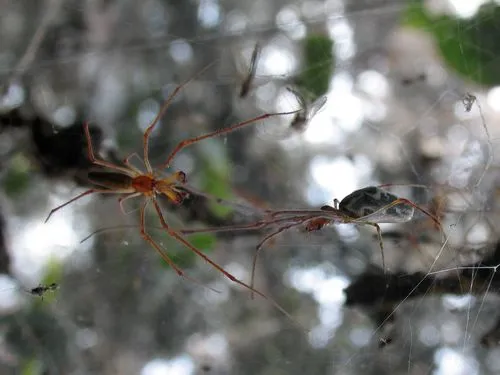
Tetragnatha guatemalensis
Tetragnatha guatemalensis
Identification: Not diagnostic, but can separate some species: Male: Male Palp with flattened and extended Paracymbium: This species has been recorded building massive, possibly social, webs. See Texas Entomology and Jackman et al.
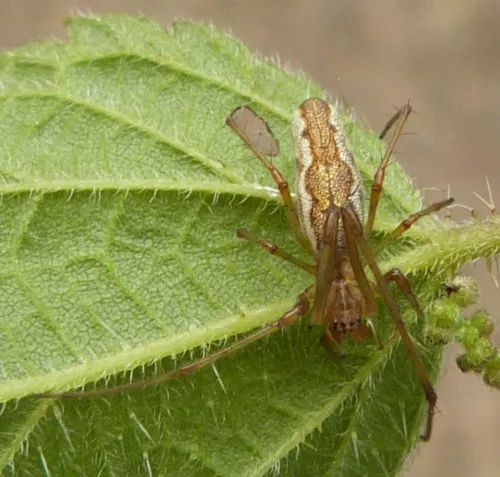
Tetragnatha montana
Tetragnatha montana
This is a very difficult species to identify as there are other similar species and certain identification requires detailed examination. If we cannot be certain that an image is T. montana but it is likely to be this species, it is highlighted in a
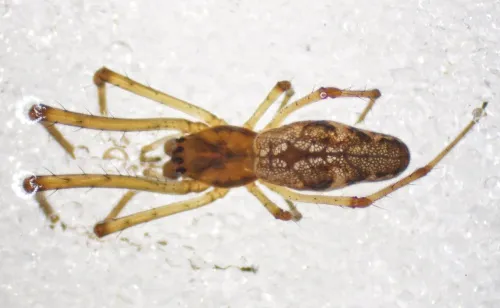
Tetragnatha nigrita
Tetragnatha nigrita
Body length male: 6 to 8 mm, female: 7 to 11 mm. Prosoma dark brown to almost black. Chelicerae dark brown, basally with distinct tubercle. Legs dark brown. Opisthosoma dark brown to almost black, vague folium laterally flanked with silver-white, med
Tetragnatha nitens
Tetragnatha nitens
Identification: Not diagnostic, but can separate some species:
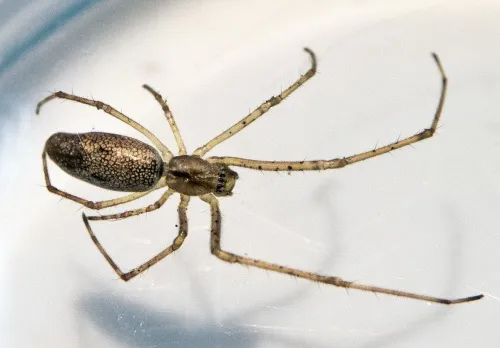
Tetragnatha obtusa
Tetragnatha obtusa
A well marked spider with a rather distinctive triangular shape to the body. Cephalic region of prosoma USUALLY darker than thoracic region. However there are other similar species, and Tetragnatha obtusa and T. nigrita can only reliably be separated
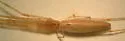
Tetragnatha pallescens
Tetragnatha pallescens
Identification: Not diagnostic, but can separate some species: Female: Male:
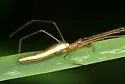
Tetragnatha straminea
Tetragnatha straminea
Identification: Not diagnostic, but can separate some species: Palp: Epigynum:
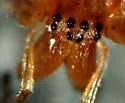
Tetragnatha versicolor
Tetragnatha versicolor
Identification: Not diagnostic, but can separate some species: Male Palp: Epigyinum: A widespread Tetragnatha species that is found throughout North America. Levi writes that the species is quite variable, "the abdominal patterns vary from completely
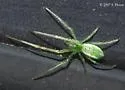
Tetragnatha viridis
Tetragnatha viridis
Identification: Living specimens can be distinguished from other species in this genus by their green color. (specimens lose their color when dead and closely resemble T. versicolor ). Not diagnostic, but can separate some species:
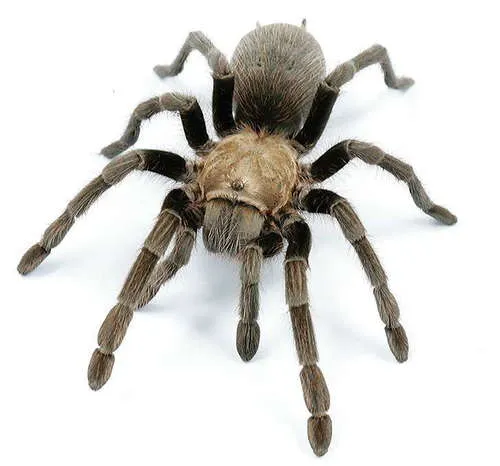
Texas Black Spot Tarantula
Aphonopelma armada
Aphonopelma armada is a species of spider in the family Theraphosidae, found in United States (Texas).
Texas Recluse
Loxosceles devia
Identification: Coloration more variable than that of L. reclusa , with same dark pattern on carapace but this often reduced to dusky Y-shaped marking.
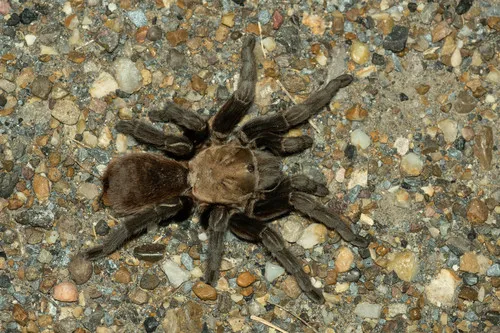
Texas Tan Tarantula
Aphonopelma anax
Aphonopelma anax, commonly known as the Texas tan tarantula, is a species of spider belonging to the family Theraphosidae. The spider is very desirable as a pet, due to its docile nature. Like most Aphonopelma species, it has a very slow growth rate.
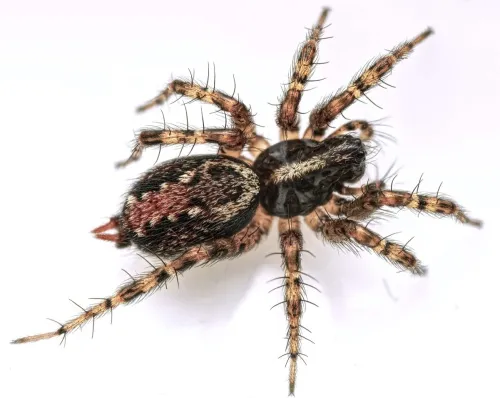
Textrix denticulata
Textrix denticulata
Size: 7 or 8 mm. There is some variation in the depth of the colour of the markings, but they are fairly distinctive. The light areas on the carapace and abdomen have white hairs and are quite conspicuous in the field. Usually in stony places and wal
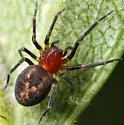
Thallumetus pineus
Thallumetus pineus
Identification: "The male palpus is remarkable in its size and development of the femur, patella, and tibia."
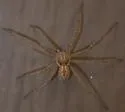
Thanatus vulgaris
Thanatus vulgaris
Identification: Look for three prolateral spines on femur I. Voucher specimen: male Often found in cricket shipments.
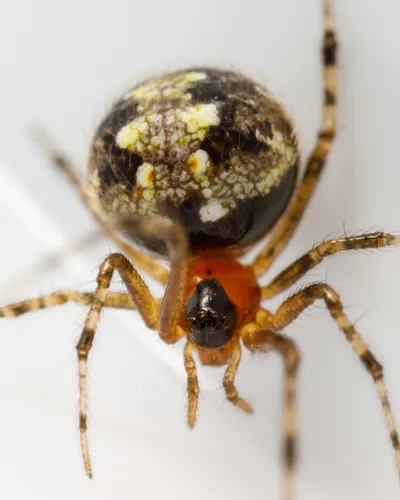
Theridion australe
Theridion australe
Identification: Color variation: Dark on carapace around eyes: Dark spots on abdomen above spinnerets: male:
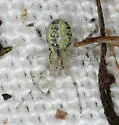
Theridion californicum
Theridion californicum
Identification: This species appears to be highly polymorphic with regards to dorsal abdominal pattern, with pure yellow and white morphs and a series of morphs with black or red lines, rings or "blobs" on the abdomen .
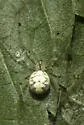
Theridion frondeum
Theridion frondeum
Identification: Palp: Epigynum (ventral/dorsal) Kaston provides no less than 8 dorsal views of T. frondeum , each showing a different pattern on the abdomen. Examples: Its background color is white but often with a tinge of yellow or green. Along the
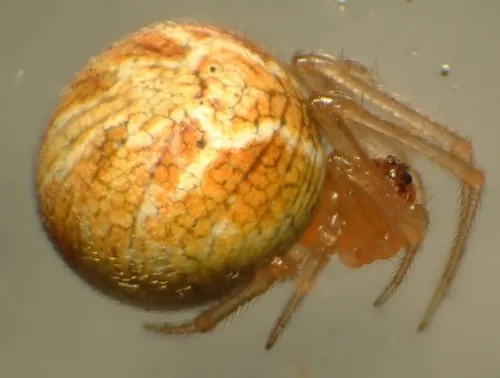
Theridion glaucescens
Theridion glaucescens
Identification: Orange-brown carapace with dark median V-shaped mark, broadening from the thoracic groove into the ocular region. The abdomen is dirty white, dusted with grays and reds. Along the abdominal midline is a series of white overlapping dia
Theridion goodnightorum
Theridion goodnightorum
Identification: Male: "Some specimens from Texas and California have the dorsum of the abdomen much darker, the venter lighter."
Theridion kawea
Theridion kawea
Identification: Epigynum is an oval depression with a posterior border; a median raised area divides the depression into two equal halves. Carapace yellow with reddish triangular mark enclosing eye area. Abdomen with a scalloped, reddish, median band
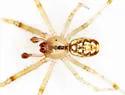
Theridion leechi
Theridion leechi
Identification: Levi (1957a) writes: "The small eyes of this species differentiate the females from those of the related Theridion punctipes and from juvenile specimens of T. agrifoliae and T. californicum." TYPE LOCALITY.-Male holotype and female al
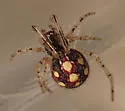
Theridion llano
Theridion llano
Identification: "The genitalia of Theridion llano clearly separate the species from related ones."
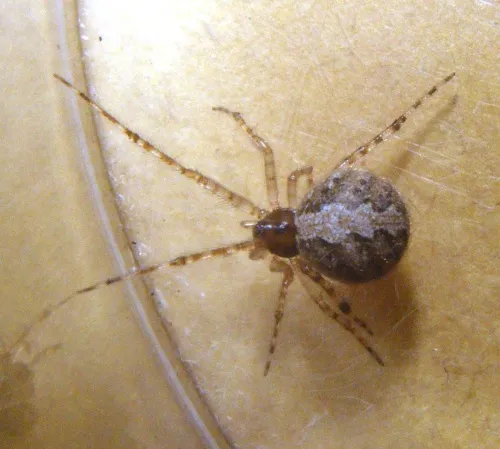
Theridion melanurum
Theridion melanurum
A small spider at around 3 mm. The species is quite variable and the zig-zag band of the abdomen can be white or barely visible. The head is dark and quite shiny. T. melanurum is usually found on buildings and around habitation. Widespread and fairly
Theridion michelbacheri
Theridion michelbacheri
Identification: Male palpus "curiously modified, with cymbium wrapped around bulb; cymbium black ". "This species can be readily distinguished from all other members of the genus by the peculiar palpus and the epigynum ".
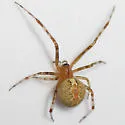
Theridion murarium
Theridion murarium
Identification: Epigynum two circular shapes separated by two and one-half diameters. (Levi, 1957a)
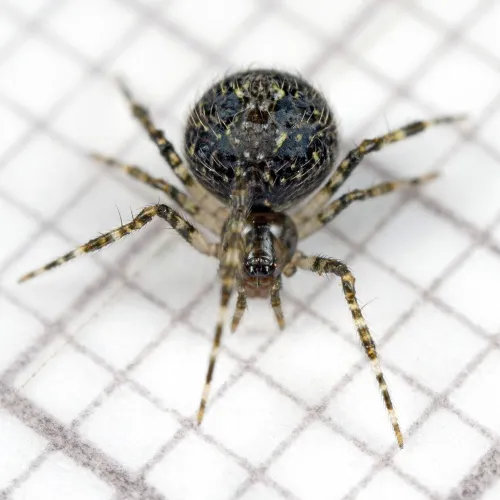
Theridion mystaceum
Theridion mystaceum
A small spider at around 3 mm. The species is quite variable and the zig-zag band of the abdomen can be white or barely visible. The head is dark and quite shiny. It is very similar to Theridion melanurum and detailed examination is needed for a reli
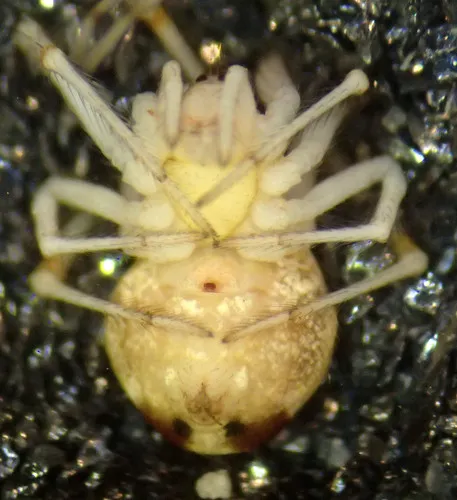
Theridion neomexicanum
Theridion neomexicanum
Theridion neomexicanum is a species of cobweb spider in the family Theridiidae. It is found in the United States and Canada.
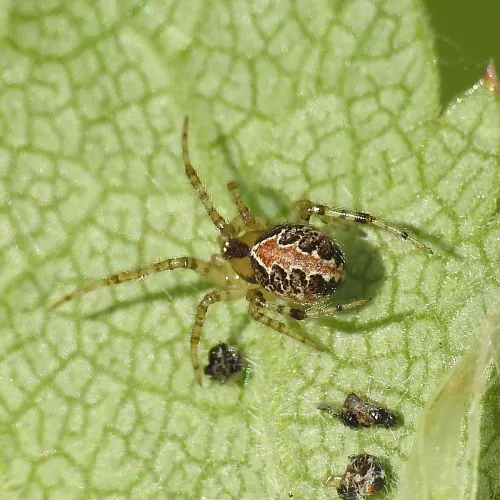
Theridion pictum
Theridion pictum
Size 4 to 5 mm. This is an attractively patterned mothercare spider. Frequent in relatively damp terrain, in herbaceous and bush layer. Builds an untidy web, often in thistles. Widespread and fairly frequent in much of Britain.
Theridion pinastri
Theridion pinastri
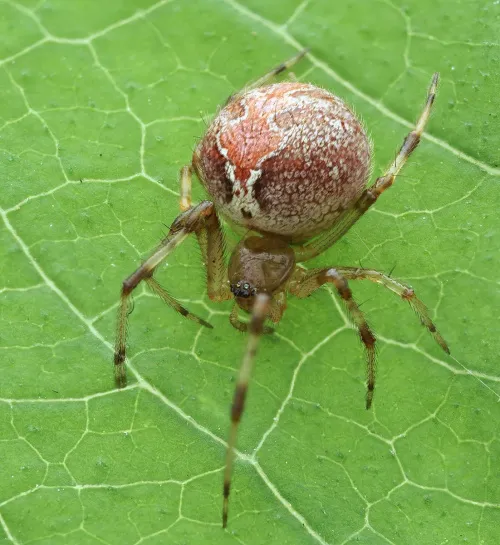
Length 2.5-3mm. Prosoma yellowish-brown, legs yellowish-brown, annulated with black. Opisthosoma dorsally with median band brick-red with white margin, laterally brown, spotted with white, ventrally white, tinged with brown or green. Examination of g
Theridion punctipes
Theridion punctipes
Identification: Adult males could perhaps be identified in the species range with good photos by the very long chelicerae, dark markings on the anterior chelicerae and the dark spot on the epigastric plate (KRS).
Theridion submissum
Theridion submissum
Identification: Male carapace orange-brown with reddish triangular area enclosing the eyes and coming to a point in center of carapace. Dorsal side of abdomen with slightly scalloped white longitudinal median band extending its full length. Sides of
Theridion varians
Theridion varians
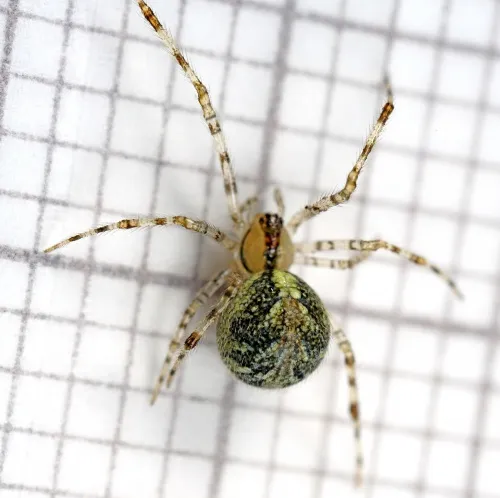
A small variable species. The abdomen is usually a pale green, and often brightly patterned with red, but some individuals show very little red in the pattern. Makes a small tangled web amongst foliage. Common and widespread throughout Britain, fewer
Theridiosoma gemmosum
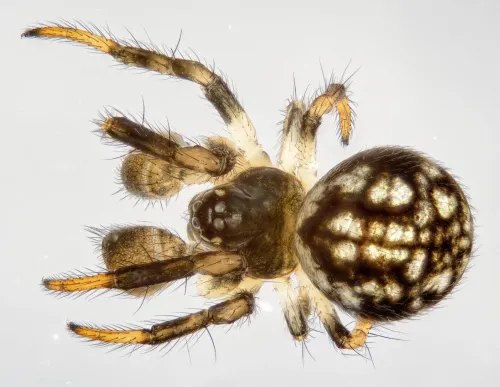
Theridiosoma gemmosum
A small but distinctive spider. Males 1.5-1.6mm, females 2-2.3mm. Prosoma light brown, with fine net-like pattern, eye region darker. Opisthosoma irregularly patterned with black, bright areas strikingly shining pearly. Legs brown, sometimes spotted
Three-lined Maevia
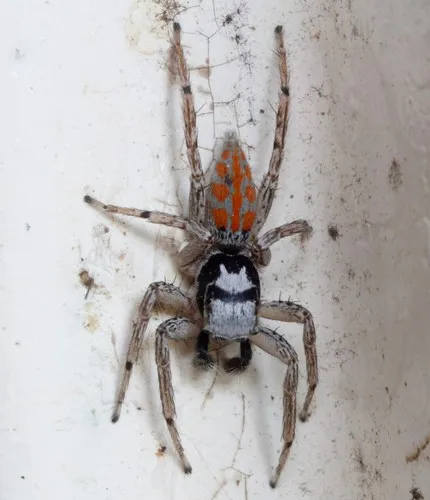
Paramaevia poultoni
Paramaevia poultoni is a species of jumping spider in the family Salticidae. It is found in the United States.
Thrifty Short-legged Sheetweaver
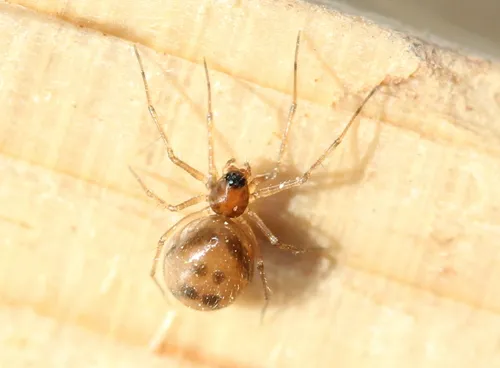
Agyneta micaria
Identification: "Carapace brown, shiny, finely reticulate; suffused with gray along radiating lines and margin; trident mark present. Legs light yellow, coxae with dark mark apically, tip of femurs and metatarsus I-IV with dark gray marks" Male abdom
Thymoites unimaculatus
Thymoites unimaculatus
Identification: There are two pattern types for this spider. The northern has abdomen light orange with black spot on dorsum - carapace is orange with eye region black. The southern specimens the abdomen is whitish usually with three dusky stripes,
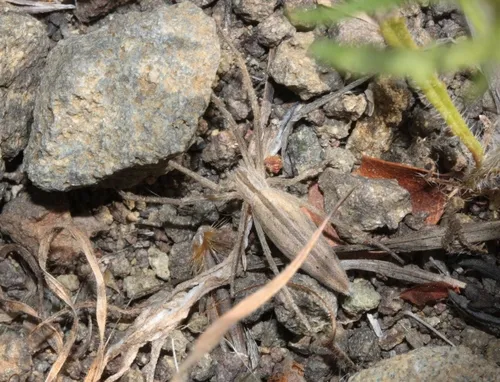
Tibellus chamberlini
Tibellus chamberlini
Tibellus chamberlini is a species of running crab spider in the family Philodromidae. It is found in the United States and Canada.
Tibellus duttoni
Tibellus duttoni
Identification: This species has four pairs of ventral macrosetae on tibia I whereas T. asiaticus , T. oblongus and T. maritimus have only three pairs. T. chamberlini also has four pairs of ventral macrosetae but also has paired lateral stripes. See
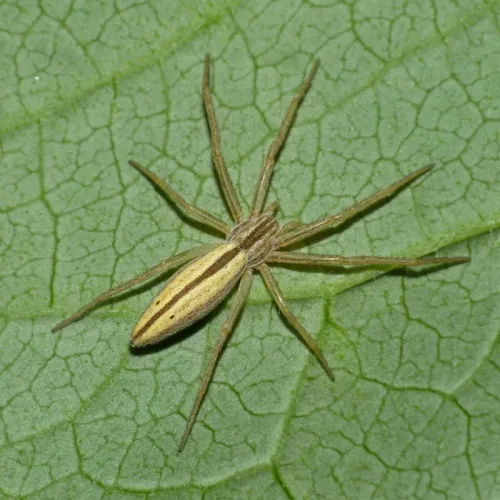
Tibellus oblongus
Tibellus oblongus
Quite a large (about 10 mm) and elongate pale creamy brown spider with various markings, and usually a darker stripe down the centre of the abdomen. The males look similar to the females although their bodies are slimmer. Similar to T. maritimus , wh
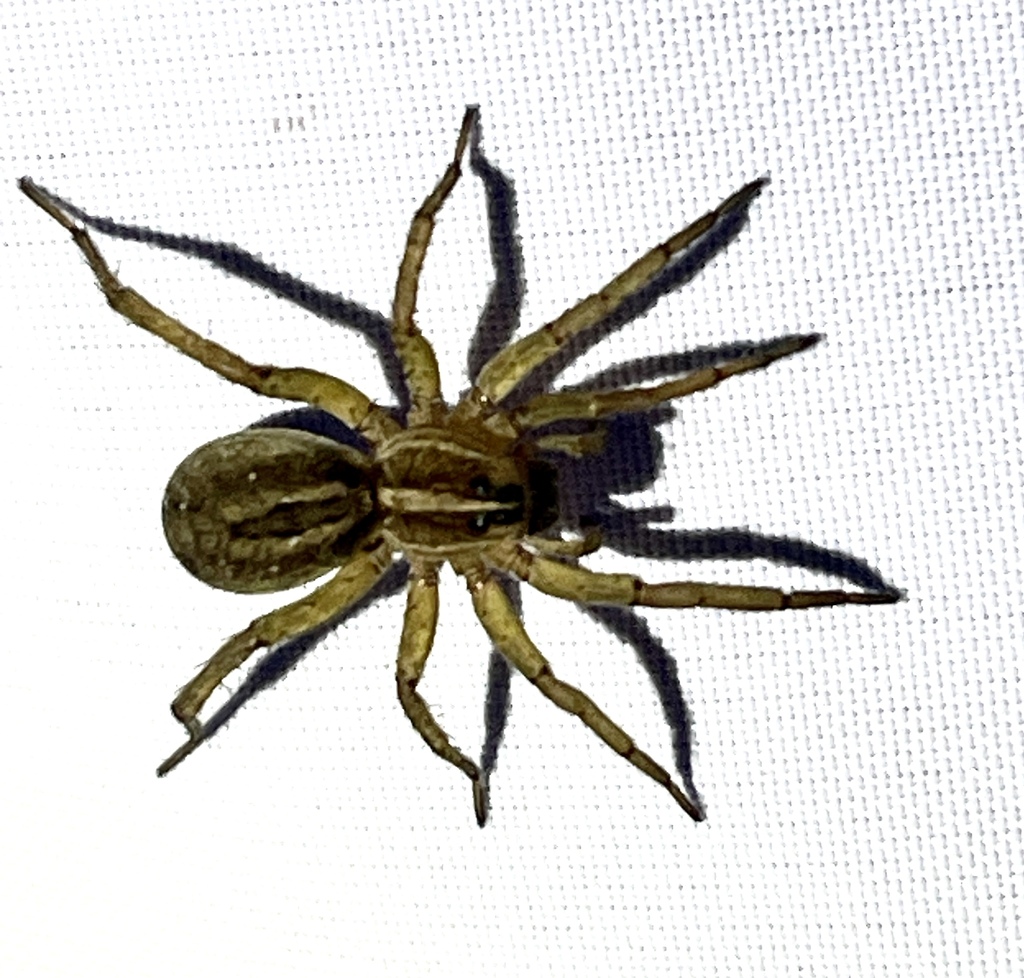
Tigrosa annexa
Tigrosa annexa
no rights reservedIdentification: This is the smallest species in the genus; the venter of the female is all pale yellow, except for a dark 'V'-shaped marking in center of the sternum and a black spot around the epigynum; venter of adult male is all pale. Carapace has
Tigrosa aspersa
Tigrosa aspersa
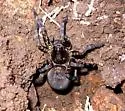
Identification: According to How to Know the Spiders , this species has a thin line of yellow hairs in the eye area and a more spotted venter than carolinensis. It also has banded legs. According to Penn State Entomology, here's a description: " Hog
Tigrosa helluo
Tigrosa helluo
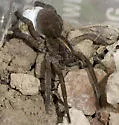
Identification: Female: Palp: How to Know the Spiders says the general color is dull yellow to greenish brown. In that guide the abdomen is shown as dark with little pattern except a slightly dark longitudinal stripe toward the front of the abdomen l
Tiso vagans
Tiso vagans
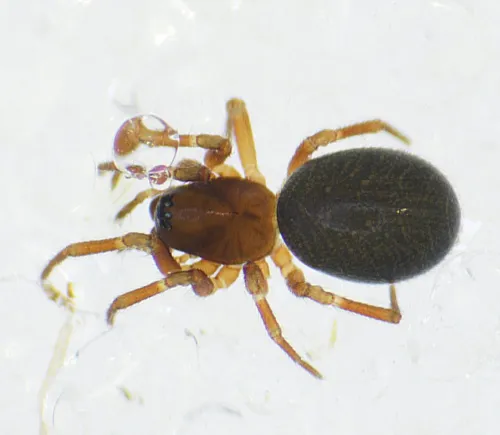
Body length 1.9-2.3mm. Prosoma brown to dark brown, radial stripes and narrow margin darker. Legs yellow-brown. Opisthosoma grey-black. Microscopic examination of the genitalia is required to confirm this species. In open, damp localities. Generally
Titanoeca brunnea
Titanoeca brunnea
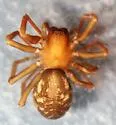
Identification: Venter (underside) of abdomen with 2 pale spots in both sexes. Identity should be verified by genitalia. Distribution similar to Titanoeca americana .
Trabeops aurantiacus
Trabeops aurantiacus
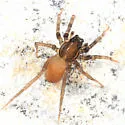
Identification: The large posterior median eyes protrude from the face very noticeably. The posterior lateral eyes are spread far apart and also protrude noticeably. The legs are yellow to dark orange. In males, the front femurs are black. In females
Trachelas tranquillus
Trachelas tranquillus
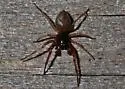
Identification: Female: epigyne Male: Palp Will not bite unless handled or provoked. There are records of secondary infection associated with the bite, which may result from the spider's propensity for feeding on dead arthropods. Typically, the bite
Trechalea gertschi
Trechalea gertschi
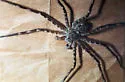
This species behaves similar to Dolomedes in that it can walk on the surface of water and will even occasionally submerge itself.
Trematocephalus cristatus
Trematocephalus cristatus
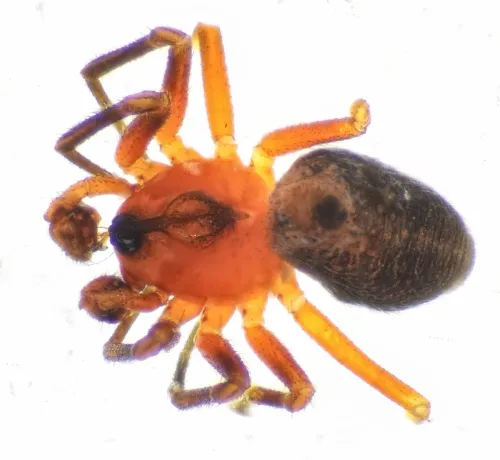
Length: 2.0 to 2.6 mm. Legs red-orange. Opisthosoma black-grey. Prosoma red-orange, with black eye region and median spot. Males seem to have a hole in their heads. This is actually a projection forward from the prosoma (carapace) which rests in a gr
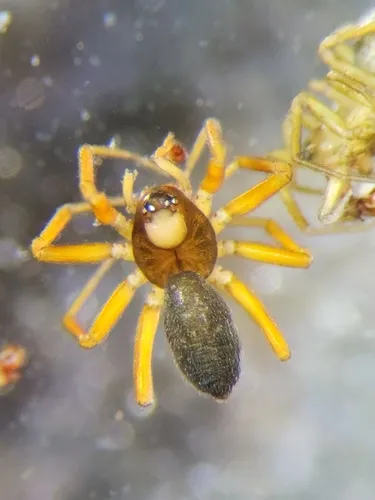
Tricorn Dwarf Weaver
Oedothorax trilobatus
Oedothorax trilobatus is a species of dwarf spider in the family Linyphiidae. It is found in the United States, Canada, and Russia.
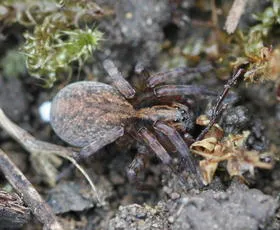
Trochosa terricola
Trochosa terricola
A wolf spider - the female has a reddish abdomen and the male has darkened front legs. The two short lines on the carapace are diagnostic of Trochosa species. T. ruricola is similar but has a light cardiac mark wheras in T. terricola it is darker, bu