
Perplexing Bumble Bee
Bombus perplexus
This record describes Bombus perplexus (species). Recorded family: Apidae. Recorded order: Hymenoptera.
Identification and Appearance
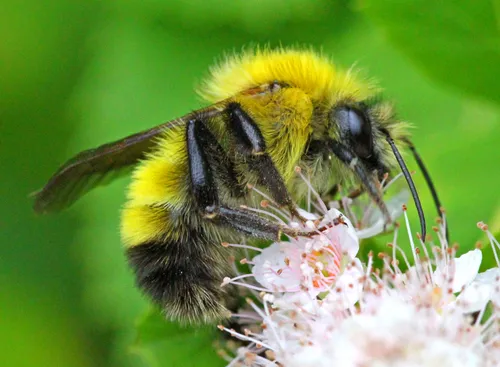
see detailed description of queen, male, worker at discoverlife.org Tongue length: medium The hue of the coat averages more golden than in other species. Darker females are recognized by contrast between golden-yellow hairs on the thoracic dorsum and extensively black hairs on the thoracic venter (other similar species can have similar black hairs ventrally but not the entire ventral half or third of the thorax). In perplexus the hairs of the scutum are usually entirely yellow medially whereas in sandersoni and vagans there are usually conspicuous black hairs present medially (requires a close look). The malar space is not very long, as in sandersoni but clearly shorter than in vagans and bimaculatus. Most males are readily recognized by golden-yellow hairs on T2-T3 but some have T3 extensively black and are closer to vagans (in perplexus the hind tibia is notably shiny). In the Appalachians many perplexus are more extensively yellow. In these the thoacic hairs may be generally yellow, even ventrally, and in this respect they resemble vagans and in sandersoni, but these also tend to have extensive yellow hairs on T3 (as in males) and are therefore distinctive. Males of this yellow color form are so yellow that they have been confused with fervidus, but they lack an interalar band,and are smaller and more compact with a shorter face and shorter legs.
Classification
- Kingdom
- Animalia
- Phylum
- Arthropoda
- Class
- Insecta
- Order
- Hymenoptera (Ants, Bees, Wasps and Sawflies)
- Superfamily
- Trigonaloidea
- Family
- Apidae (Cuckoo, Carpenter, Digger, Bumble, and Honey Bees)
- Subfamily
- Apinae
- Tribe
- Bombini
- Genus
- Bombus (Bumble Bees)
Imported taxonomy record. Source availability varies; see the source references and editorial policy below.
Habitat and Range
Habitat
Includes woodlands, orchards, and ericaceous bogs
Geographic Range
Alaska to Maine, south in mountains to Georgia Discover Life Global Map
Seasonal Activity
April to September
Diet and Behavior
Diet: Queens often visit blueberries and apples. The Hosts section of its Discover Life species page lists known associations based on specimen records and images.
Additional species information
Species notes from the sources
Etymology: Bombus perplexus Cresson 1863 the color variants of this bee are easily confused with other species
About Flies: the wider group
Order-level background for Hymenoptera, the group containing Bombus perplexus. Species-specific details appear above.
Group overview
Hymenoptera includes over 150,000 described species of ants, bees, wasps, and sawflies. Earth harbors approximately 20 quadrillion (20×10^15) ants, with a combined biomass of ~12 megatons of dry carbon - exceeding the combined biomass of all wild birds and mammals (PNAS, 2022).
Ecological role of the group
About 35% of the world's food crops depend on animal pollinators. The chocolate industry, valued at over $100 billion, depends on pollinating flies and midges. Ants are the dominant soil engineers in most terrestrial ecosystems, turning more soil than earthworms in many habitats.
Economic and practical significance of the group
Pollinators contribute $235-577 billion worth of annual global food production (FAO). In the U.S., bee pollination alone benefits crops valued at $18 billion annually, and honey bees are responsible for $5.4 billion in agricultural productivity. Between April 2023-2024, 55.1% of managed honey bee colonies were lost. The U.S. bee population dropped from 5 million to 2.5 million.
Recorded sources for this group: FAO, USDA, EPA, PNAS (2022), US Fish & Wildlife Service. Imported estimates may describe particular regions or reporting periods.
Photos of Perplexing Bumble Bee (2)
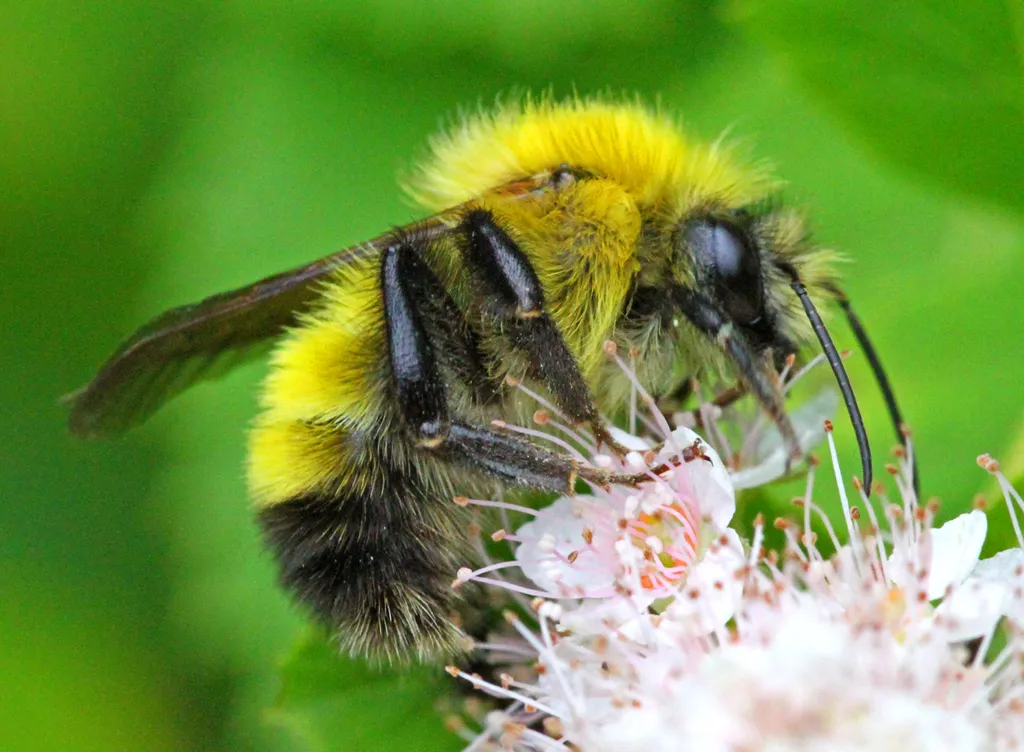
Photo credits: Contributed by Matthew Roth; Additional contributions by Beatriz Moisset , Robin McLeod , Mike Quinn , John S. Ascher , Nathaniel Green
Frequently Asked Questions About Perplexing Bumble Bee
What is Perplexing Bumble Bee?
Perplexing Bumble Bee (Bombus perplexus) is a species in the family Apidae, within the order Hymenoptera.
How big is Perplexing Bumble Bee?
queen: body length 17-21 mm male: 13-14 mm worker: 12-14 mm
How do you identify Perplexing Bumble Bee?
see detailed description of queen, male, worker at discoverlife.org Tongue length: medium The hue of the coat averages more golden than in other species. Darker females are recognized by contrast between golden-yellow hairs on the thoracic dorsum and extensively black hairs on the thoracic venter (other similar species can have similar black hairs ventrally but not the entire ventral half or third of the thorax). In perplexus the hairs of the scutum are usually entirely yellow medially whereas in sandersoni and vagans there are usually conspicuous black hairs present medially (requires a close look). The malar space is not very long, as in sandersoni but clearly shorter than in vagans and bimaculatus. Most males are readily recognized by golden-yellow hairs on T2-T3 but some have T3 extensively black and are closer to vagans (in perplexus the hind tibia is notably shiny). In the Appalachians many perplexus are more extensively yellow. In these the thoacic hairs may be generally yellow, even ventrally, and in this respect they resemble vagans and in sandersoni, but these also tend to have extensive yellow hairs on T3 (as in males) and are therefore distinctive. Males of this yellow color form are so yellow that they have been confused with fervidus, but they lack an interalar band,and are smaller and more compact with a shorter face and shorter legs.
Where is Perplexing Bumble Bee found?
| Feature | Details |
|---|---|
| Habitat | Includes woodlands, orchards, and ericaceous bogs |
| Range | Alaska to Maine, south in mountains to Georgia Discover Life Global Map |
What does Perplexing Bumble Bee eat?
The diet of the Perplexing Bumble Bee includes Queens often visit blueberries and apples. The Hosts section of its Discover Life species page lists known associations based on specimen records and images..
When is Perplexing Bumble Bee active?
Perplexing Bumble Bee: seasonal activity - April to September.