
THE INSECTLIBRARY FIELD GUIDES
Carpenter BeeIdentification, facts & practical guidance
This guide covers large carpenter bees in Xylocopa, which excavate nesting tunnels in wood. Small carpenter bees in Ceratina are a separate group.
Compiled by the InsectLibrary Team · Updated · Editorial policy
Identification and lookalikes
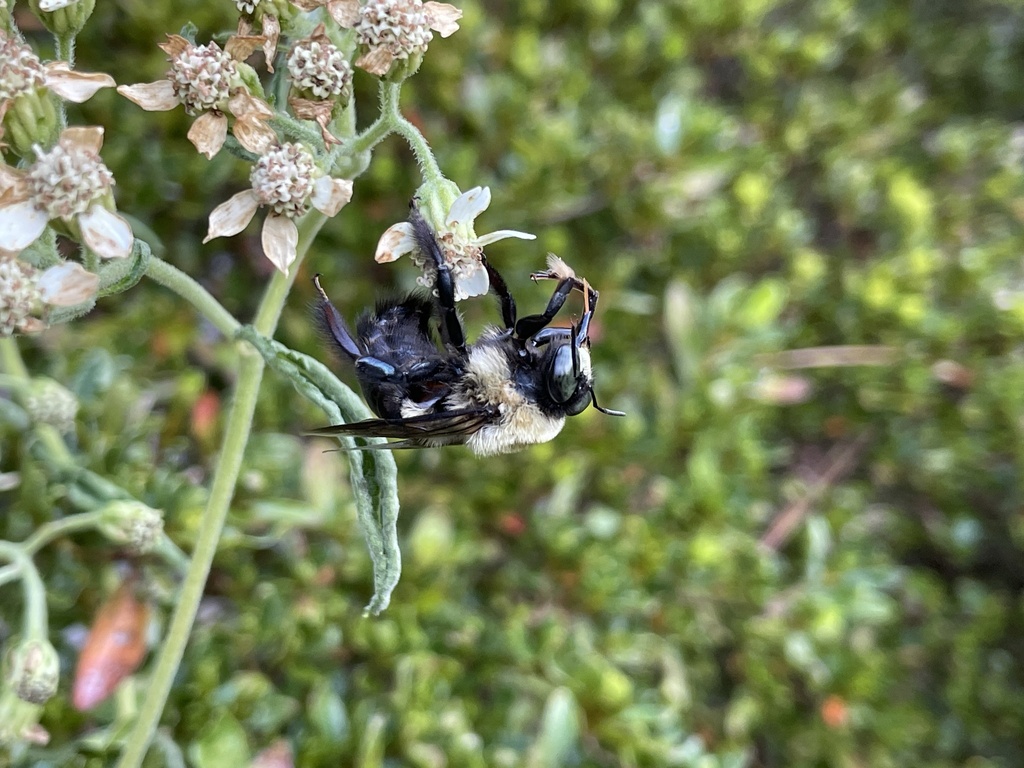
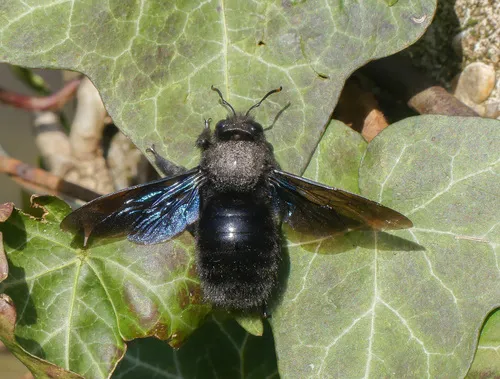
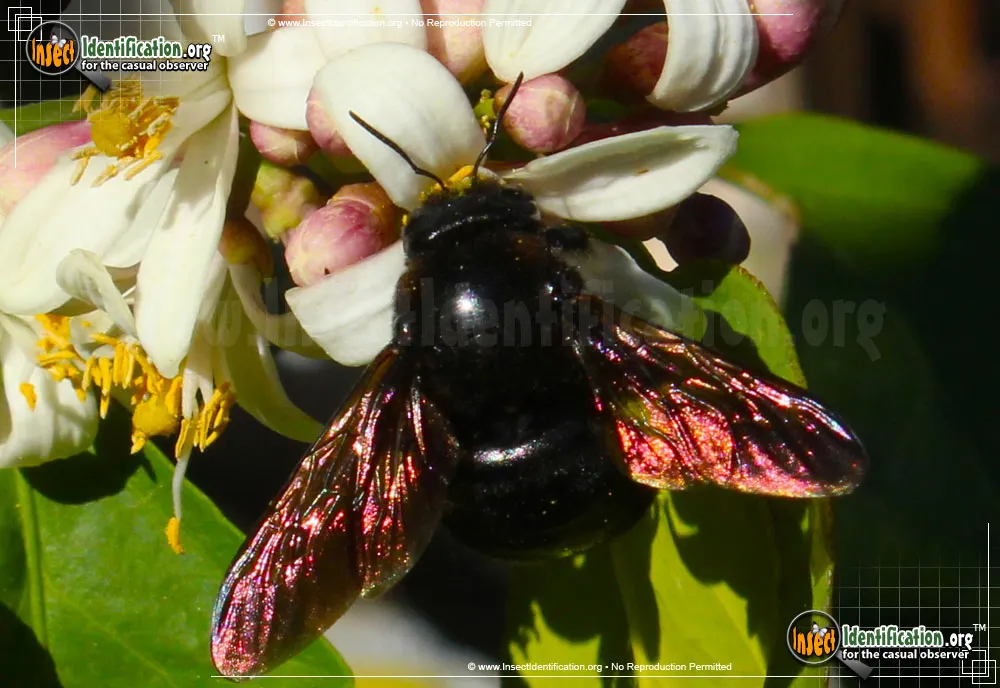
Large carpenter bees can resemble bumblebees. Many have a relatively shiny abdomen, although color and hair coverage vary by species. Round wood entry holes and associated activity provide additional clues.
Do carpenter bees sting?
Females can sting; males cannot. Males may hover near nest areas, which can look threatening. Nesting behavior does not make every large bee near wood a carpenter bee.
What to do next
Inspect wood for active entry holes and recurring damage. Use prevention and species-appropriate management rather than sealing an occupied opening without a plan. Preserve pollinators where nesting does not create a problem.
Carpenter Bee: species profiles
Explore 9 species profiles covered by this guide, with recorded names and available photos.
Eastern Carpenter Bee
Xylocopa virginica
(c) Engers, some rights reserved (CC BY)Violet Carpenter Bee
Xylocopa violacea
Western Carpenter Bee
Xylocopa californica
Xylocopa appendiculata
Xylocopa appendiculata
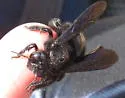
Xylocopa griswoldi
Xylocopa griswoldi
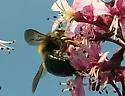
Southern Carpenter Bee
Xylocopa micans
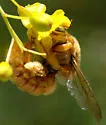
Valley Carpenter Bee
Xylocopa sonorina
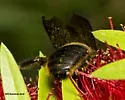
Xylocopa strandi
Xylocopa strandi
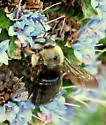
Horse-fly Carpenter Bee
Xylocopa tabaniformis
Sources and further reading
- ipm.ucanr.edu - carpenter beeshttps://ipm.ucanr.edu/home-and-landscape/carpenter-bees/
References support the subject discussed here; they do not certify every imported directory record. Regional sources describe their own locations. Read our source and correction policy.