
Crabs, Crayfishes, Lobsters, Prawns, and Shrimp
Order Decapoda
The Crabs, Crayfishes, Lobsters, Prawns, and Shrimp (Order Decapoda) includes 103 species across 32 families and 61 genera in our directory.
About Crabs, Crayfishes, Lobsters, Prawns, and Shrimp
Decapoda includes ~15,000 described species of crabs, lobsters, shrimp, and crayfish. Although primarily marine and freshwater, some species like hermit crabs and coconut crabs are fully terrestrial.
Economic Impact
The global shrimp industry alone is worth over $45 billion annually. Crayfish are important aquaculture species and invasive crayfish cause ecological damage estimated in the hundreds of millions annually in Europe and North America.
Ecological Role
Crayfish are keystone species in freshwater ecosystems, influencing water clarity, sediment dynamics, and plant communities. Hermit crabs play vital roles in nutrient cycling on tropical islands.
Families in Decapoda (32)
Species in Decapoda (103)
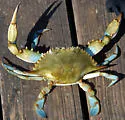
Atlantic Blue Crab
Callinectes sapidus
Identification: Blue Crabs of the South Atlantic Bight
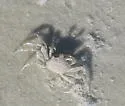
Atlantic Ghost Crab
Ocypode quadrata
Identification: The only species of ghost crab along Atlantic beaches. Individuals are occasionally found north of Rhode Island, though they cannot survive the winters there. Update: articles in 2013 indicate that a breeding population is present on
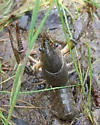
Calico Crayfish
Faxonius immunis
Identification: Rostrum acuminate, acarinate and with converging margins lacking marginal spines or shoulders; cervical spines present; areola narrow with 2-3 punctations in narrowest part; male with hooks on ischia of 3rd pereiopods; male first pleo
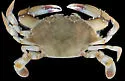
Callinectes ornatus
Callinectes ornatus
Identification: Blue Crabs of the South Atlantic Bight
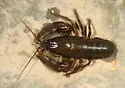
Cambarus bartonii
Cambarus bartonii
Identification: Body shape: slightly dorsoventrally flattened Coloration: variable but many dark in color (shades of brown), mostly solid coloration but some with saddle pattern and mottling Spines: cervical spines absent but may be cervical tubercle
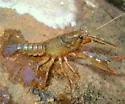
Devil Crayfish
Cambarus diogenes
Identification: Body shape: carapace vaulted Coloration: reddish-brown or grayish with bright or pastel shades of red and blue along margins and crevices Spines: lacking marginal, cephalic; cervical spines present in juveniles, but not adults Rostru
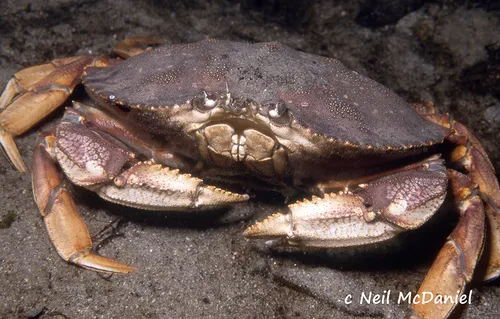
Dungeness Crab
Metacarcinus magister
commonly sold in restaurants and markets in w. US. the most commercially important crab in the Pacific Northwest, as well as the western states generally. In 2014, 53 million pounds worth $170 million was harvested. the annual Dungeness Crab and Seaf
Green Crab
Carcinus maenas
Identification: Five short notches along the rim of the carapace. Often found with another invasive species, Hemigrapsus sanguineus .
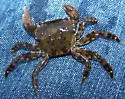
Japanese Shore Crab
Hemigrapsus sanguineus
Often found with another invasive species, Carcinus maenas .
Kisatchie Painted Crayfish
Faxonius maletae
Texas and Louisiana both consider this to be a "Species of Greatest Conservation Need" (SGCN)
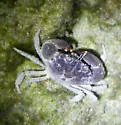
Knot-fingered mud crab
Panopeus lacustris
Identification: It is distinguished from other member in the family by a very broad major claw forming joint (chela) with cusps of teeth in "molar area" of an immovable finger. This claw is often coalesced and worn (Abele and Kim 1986).
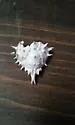
Libinia dubia
Libinia dubia
Identification: 6 spines in median dorsal row (9 in L. emarginata ), fewer dorsal tubercles than L. emarginata
Oklahoma cave crayfish
Cambarus tartarus
Type Locality: Stansberry-January Cave System, 4 miles (6.4 km) north of Colcord, Delaware County, Oklahoma State-listed in Oklahoma as Endangered
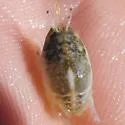
Pacific Mole Crab
Emerita analoga
Identification: Carapace greenish to grey with fine stripes or speckles of light color anteriorly; pinkish laterally. First pereopod pink and white, other appendages mostly pinkish. Abdomen gray, telson white, with two pink stripes. First pair of leg
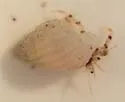
Pagurus annulipes
Pagurus annulipes
Identification: Legs banded; uniquely among northeast species
Palaemon elegans
Palaemon elegans
Identification: Rostrum is distinctive: See also comments on this image:
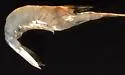
Palaemon intermedius
Palaemon intermedius
Identification: Dorsal rostral teeth continue to tip of rostrum; one dorsal rostral tooth posterior to orbit, versus two in P. vulgaris .
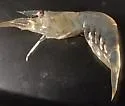
Palaemon pugio
Palaemon pugio
Identification: Dorsal rostral teeth stop well short of the tip of the rostrum; one dorsal rostral tooth posterior to orbit.
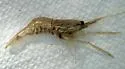
Palaemon vulgaris
Palaemon vulgaris
Identification: Two of the dorsal rostral teeth are behind the posterior margin of the orbit, and the teeth continue to the tip of the rostrum dorsally.
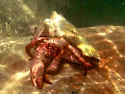
Petrochirus diogenes
Petrochirus diogenes
Identification: The largest hermit crab on the Gulf Coast
Polyonyx gibbesi
Polyonyx gibbesi
Identification: According to OBIS , the only other porcellanid recorded in New England is Euceramus praelongus , which apparently looks very different.
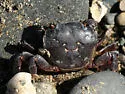
Purple Shore Crab
Hemigrapsus nudus
Identification: dorsal shell (carapace) is generally a dark purple in color, although it may be olive green or red, with white or cream markings. The color of the legs matches the color of the carapace but the white-tipped claws (chelipeds) are a lig
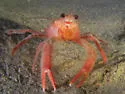
Red Crab
Pleuroncodes planipes
as the most abundant species of micronekton in the California Current, large numbers occasionally wash up on beaches An onshore wind and a receding tide hasten and intensify the stranding. The number of crabs involved in the strandings may be very la
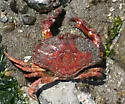
Red Rock Crab
Cancer productus
Identification: Can be distinguished from the Dungeness Crab by the presence of black tipped claws.
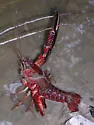
Red Swamp Crayfish
Procambarus clarkii
Identification: Dark red in color, elongate chelae with tubercles. Ischia of 3rd and 4th pereiopods of males bearing hooks. Commonly cultured for food
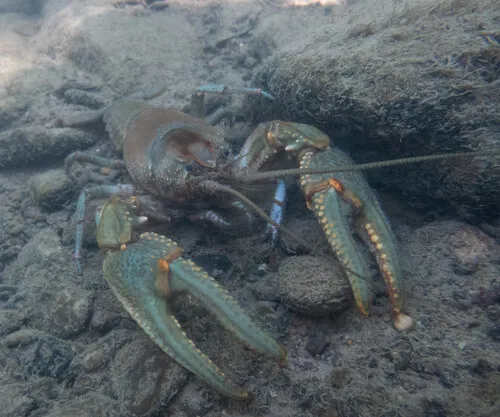
Robust Crayfish
Cambarus robustus
Identification: Body shape: very large animal; dorsoventrally flattened; wide carapace Coloration: shades of brown and red with black, orange, and yellow highlights; cream underside; mottled or bearing saddle pattern Spines: cervical spines or tuberc
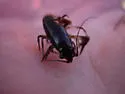
Rusty Crayfish
Faxonius rusticus
Identification: Can be distinguished based on the rust-colored spots on the sides of the carapace. Claws lack tubercles. Known to adversely impact macrophyte cover and abundance of certain macroinvertebrate groups (especially snails) in invaded areas
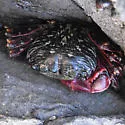
Striped Shore Crab
Pachygrapsus crassipes
Identification: According to this website , this species is unique among grapsids in having transverse lines on its carapace and two teeth rather than three on the anterolateral margin of its carapace.
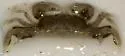
Tube Pea Crab
Pinnixa chaetopterana
Identification: Differs from P. sayana and P. cylindrica in the shape of the third leg. Commensal in Chaetopterus burrows.
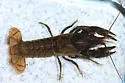
Virile Crayfish
Faxonius virilis
Identification: Chelae and legs mostly bluish with yellow tubercles. Body generally olive-brown to blue.
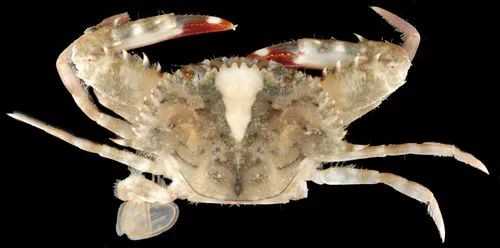
Achelous spinimanus
Achelous spinimanus
Allegheny Crayfish
Faxonius obscurus
American Lobster
Homarus americanus
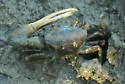
Atlantic Mangrove Fiddler Crab
Uca thayeri
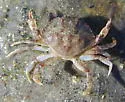
Atlantic Marsh Fiddler Crab
Uca pugnax
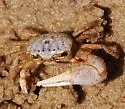
Atlantic Rock Crab
Cancer irroratus
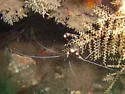
Atlantic Sand Fiddler Crab
Uca pugilator
Banded Coral Shrimp
Stenopus hispidus
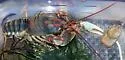
Beautiful Crayfish
Cambarus speciosus
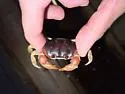
Blackback Land Crab
Gecarcinus lateralis
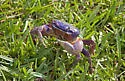
Blue Land Crab
Cardisoma guanhumi
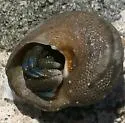
Blueband Hermit Crab
Pagurus samuelis
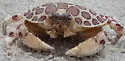
Calico Crab
Hepatus epheliticus
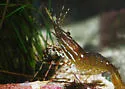
California Spot Prawn
Pandalus platyceros
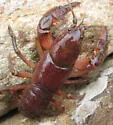
Cambarus asperimanus
Cambarus asperimanus
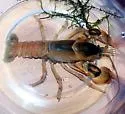
Cambarus dubius
Cambarus dubius
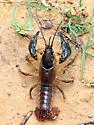
Cambarus polychromatus
Cambarus polychromatus
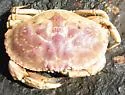
Cancer borealis
Cancer borealis
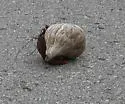
Caribbean hermit crab
Coenobita clypeatus
Crangon septemspinosa
Crangon septemspinosa
Cryptolithodes sitchensis
Cryptolithodes sitchensis
Euceramus praelongus
Euceramus praelongus
Faxonius luteus
Faxonius luteus
Faxonius palmeri
Faxonius palmeri
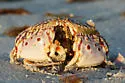
Flame-streaked Box Crab
Calappa flammea
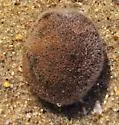
Flat-clawed Hermit Crab
Pagurus pollicaris
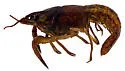
Florida Crayfish
Procambarus alleni
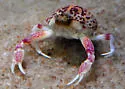
Globose Sand Crab
Randallia ornata
Grainyhand Hermit Crab
Pagurus grainosinanus
Green Shore Crab
Hemigrapsus oregonensis
Hairy Hermit Crab
Pagurus hirsutiusculus
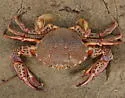
Lady Crab
Ovalipes ocellatus
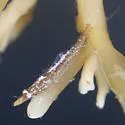
Latreutes fucorum
Latreutes fucorum
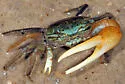
Longwave Gulf Fiddler
Uca longisignalis
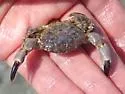
Lophopanopeus bellus
Lophopanopeus bellus
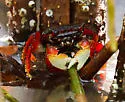
Mangrove Root Crab
Goniopsis cruentata
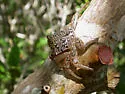
Mangrove Tree Crab
Aratus pisonii
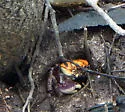
Mangrove crab
Ucides cordatus
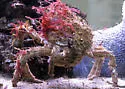
Masking Crab
Loxorhynchus crispatus
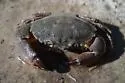
Menippe mercenaria
Menippe mercenaria
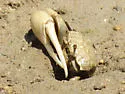
Mexican Fiddler Crab
Uca crenulata
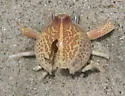
Mottled Purse Crab
Persephona mediterranea
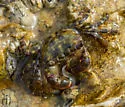
Mottled Shore Crab
Pachygrapsus transversus
Northern Clearwater Crayfish
Faxonius propinquus
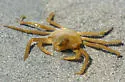
Northern Kelp Crab
Pugettia producta
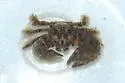
Pachycheles rudis
Pachycheles rudis
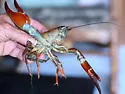
Pacifastacus gambelii
Pacifastacus gambelii
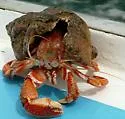
Pagurus acadianus
Pagurus acadianus
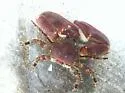
Petrolisthes eriomerus
Petrolisthes eriomerus
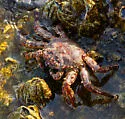
Plagusia depressa
Plagusia depressa
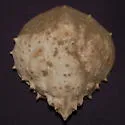
Portly Spider Crab
Libinia emarginata
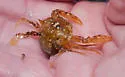
Portunus sayi
Portunus sayi
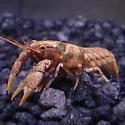
Powerful Crayfish
Faxonius validus
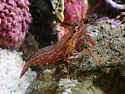
Red Rock Shrimp
Lysmata californica
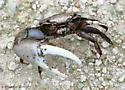
Red-jointed Fiddler Crab
Uca minax
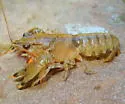
Reticulate Crayfish
Faxonius erichsonianus
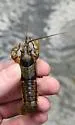
Ringed Crayfish
Faxonius neglectus
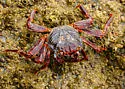
Sally Lightfoot Crab
Grapsus grapsus
Sand-dollar Pea Crab
Dissodactylus mellitae
Say's Mud Crab
Dyspanopeus sayi
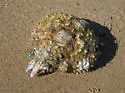
Sheep crab
Loxorhynchus grandis
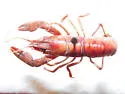
Signal Crayfish
Pacifastacus leniusculus
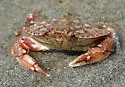
Slender Crab
Cancer gracilis
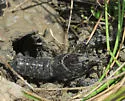
Slough Crayfish
Procambarus fallax
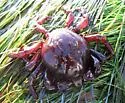
Southern Kelp Crab
Taliepus nuttallii
Speckled Swimming Crab
Arenaeus cribrarius
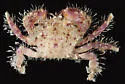
Spineback Hairy Crab
Pilumnus sayi
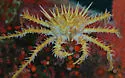
Spiny King Crab
Paralithodes rathbuni
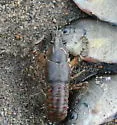
Spiny-Cheek Crayfish
Faxonius limosus
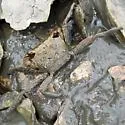
Squareback Marsh Crab
Armases cinereum