
Red Crab
Pleuroncodes planipes
This record describes Pleuroncodes planipes (species). Recorded family: Munididae. Recorded order: Decapoda.
Identification and Appearance
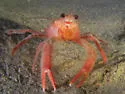
as the most abundant species of micronekton in the California Current, large numbers occasionally wash up on beaches An onshore wind and a receding tide hasten and intensify the stranding. The number of crabs involved in the strandings may be very large; one report (by George E. Lindsay, Museum of Natural History at San Diego) from the Gulf of California notes the crabs occurring in windrows up to 3 ft deep and 10 ft wide over a stretch of beach 3-4 miles long.
Classification
Habitat and Range
Habitat
adults live in shallow water, unusual among members of its family
Geographic Range
occasional in s. CA, s. to Chile. most common along the southern Baja California peninsula
Diet and Behavior
Diet: a voracious omnivore
Life History
during warming events, especially stronger El Nińo’s, they can be abundant off s. to c. CA an important food item for many species of birds, marine mammals, sea turtles and fish
Additional species information
Species notes from the sources
Etymology: Pleuroncodes planipes Stimpson, 1860
About Crabs, Crayfishes, Lobsters, Prawns, and Shrimp: the wider group
Order-level background for Decapoda, the group containing Pleuroncodes planipes. Species-specific details appear above.
Group overview
Decapoda includes ~15,000 described species of crabs, lobsters, shrimp, and crayfish. Although primarily marine and freshwater, some species like hermit crabs and coconut crabs are fully terrestrial.
Ecological role of the group
Crayfish are keystone species in freshwater ecosystems, influencing water clarity, sediment dynamics, and plant communities. Hermit crabs play vital roles in nutrient cycling on tropical islands.
Economic and practical significance of the group
The global shrimp industry alone is worth over $45 billion annually. Crayfish are important aquaculture species and invasive crayfish cause ecological damage estimated in the hundreds of millions annually in Europe and North America.
Recorded sources for this group: FAO fisheries statistics, freshwater ecology. Imported estimates may describe particular regions or reporting periods.
Photos of Red Crab (4)
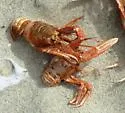
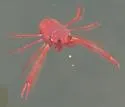
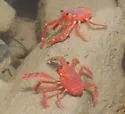
Photo credits: Contributed by Mike Quinn
Frequently Asked Questions About Red Crab
What is Red Crab?
Red Crab (Pleuroncodes planipes) is a species in the family Munididae, within the order Decapoda.
How big is Red Crab?
Larvae 2.6-7.2 mm; adults to 32 mm carapace length
Where is Red Crab found?
| Feature | Details |
|---|---|
| Habitat | adults live in shallow water, unusual among members of its family |
| Range | occasional in s. CA, s. to Chile. most common along the southern Baja California peninsula |
What does Red Crab eat?
The diet of the Red Crab includes a voracious omnivore.
What is the life cycle of a Red Crab?
during warming events, especially stronger El Nińo’s, they can be abundant off s. to c. CA an important food item for many species of birds, marine mammals, sea turtles and fish