
Florida Crayfish
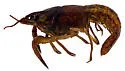
Procambarus alleni
This record describes Procambarus alleni (species). Recorded family: Cambaridae. Recorded order: Decapoda.
Identification and Appearance
Classification
- Kingdom
- Animalia
- Phylum
- Arthropoda
- Class
- Malacostraca
- Order
- Decapoda (Crabs, Crayfishes, Lobsters, Prawns, and Shrimp)
- Superfamily
- Astacoidea
- Family
- Cambaridae
- Genus
- Procambarus
Imported taxonomy record. Source availability varies; see the source references and editorial policy below.
Habitat and Range
Habitat
Lentic (ponds, ditches, swamps) and lotic (streams) situations and burrows.
Geographic Range
"East of St. Johns River and all of peninsular Florida in and south of Levy and Marion counties; also present on some of the Keys." (Hobbs)
About Crabs, Crayfishes, Lobsters, Prawns, and Shrimp: the wider group
Order-level background for Decapoda, the group containing Procambarus alleni. Species-specific details appear above.
Group overview
Decapoda includes ~15,000 described species of crabs, lobsters, shrimp, and crayfish. Although primarily marine and freshwater, some species like hermit crabs and coconut crabs are fully terrestrial.
Ecological role of the group
Crayfish are keystone species in freshwater ecosystems, influencing water clarity, sediment dynamics, and plant communities. Hermit crabs play vital roles in nutrient cycling on tropical islands.
Economic and practical significance of the group
The global shrimp industry alone is worth over $45 billion annually. Crayfish are important aquaculture species and invasive crayfish cause ecological damage estimated in the hundreds of millions annually in Europe and North America.
Recorded sources for this group: FAO fisheries statistics, freshwater ecology. Imported estimates may describe particular regions or reporting periods.