
Rusty Crayfish
Faxonius rusticus
This record describes Faxonius rusticus (species). Recorded family: Cambaridae. Recorded order: Decapoda.
Identification and Appearance
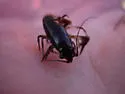
Can be distinguished based on the rust-colored spots on the sides of the carapace. Claws lack tubercles. Known to adversely impact macrophyte cover and abundance of certain macroinvertebrate groups (especially snails) in invaded areas.
Classification
- Kingdom
- Animalia
- Phylum
- Arthropoda
- Class
- Malacostraca
- Order
- Decapoda (Crabs, Crayfishes, Lobsters, Prawns, and Shrimp)
- Superfamily
- Astacoidea
- Family
- Cambaridae
- Genus
- Faxonius
Imported taxonomy record. Source availability varies; see the source references and editorial policy below.
Habitat and Range
Habitat
Lakes, rivers, streams, and ponds. Commonly prefers rocky cobble substrate.
Geographic Range
Native to Ohio River basin, but with a widespread invasive range. Now known from Ontario, Illinois, Tennessee, Missouri, West Virginia, Iowa, Minnesota, New York, New Jersey, Pennsylvania, Wisconsin, Vermont, Massachusetts, Connecticut, Maine, New Hampshire and New Mexico.
Diet and Behavior
Diet: Omnivorous
About Crabs, Crayfishes, Lobsters, Prawns, and Shrimp: the wider group
Order-level background for Decapoda, the group containing Faxonius rusticus. Species-specific details appear above.
Group overview
Decapoda includes ~15,000 described species of crabs, lobsters, shrimp, and crayfish. Although primarily marine and freshwater, some species like hermit crabs and coconut crabs are fully terrestrial.
Ecological role of the group
Crayfish are keystone species in freshwater ecosystems, influencing water clarity, sediment dynamics, and plant communities. Hermit crabs play vital roles in nutrient cycling on tropical islands.
Economic and practical significance of the group
The global shrimp industry alone is worth over $45 billion annually. Crayfish are important aquaculture species and invasive crayfish cause ecological damage estimated in the hundreds of millions annually in Europe and North America.
Recorded sources for this group: FAO fisheries statistics, freshwater ecology. Imported estimates may describe particular regions or reporting periods.
Photos of Rusty Crayfish (5)
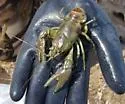
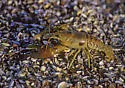
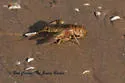
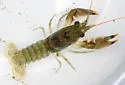
Photo credits: Contributed by Eric Moody; Additional contributions by Hannah Nendick-Mason
Frequently Asked Questions About Rusty Crayfish
What is Rusty Crayfish?
Rusty Crayfish (Faxonius rusticus) is a species in the family Cambaridae, within the order Decapoda.
How do you identify Rusty Crayfish?
Can be distinguished based on the rust-colored spots on the sides of the carapace. Claws lack tubercles.
Where is Rusty Crayfish found?
| Feature | Details |
|---|---|
| Habitat | Lakes, rivers, streams, and ponds. Commonly prefers rocky cobble substrate. |
| Range | Native to Ohio River basin, but with a widespread invasive range. Now known from Ontario, Illinois, Tennessee, Missouri, West Virginia, Iowa, Minnesota, New York, New Jersey, Pennsylvania, Wisconsin, Vermont, Massachusetts, Connecticut, Maine, New Hampshire and New Mexico. |
What does Rusty Crayfish eat?
The diet of the Rusty Crayfish includes Omnivorous.