
Tailed Cellar Spider
Crossopriza lyoni
This record describes Crossopriza lyoni (species). Recorded family: Pholcidae. Recorded order: Araneae.
Identification and Appearance
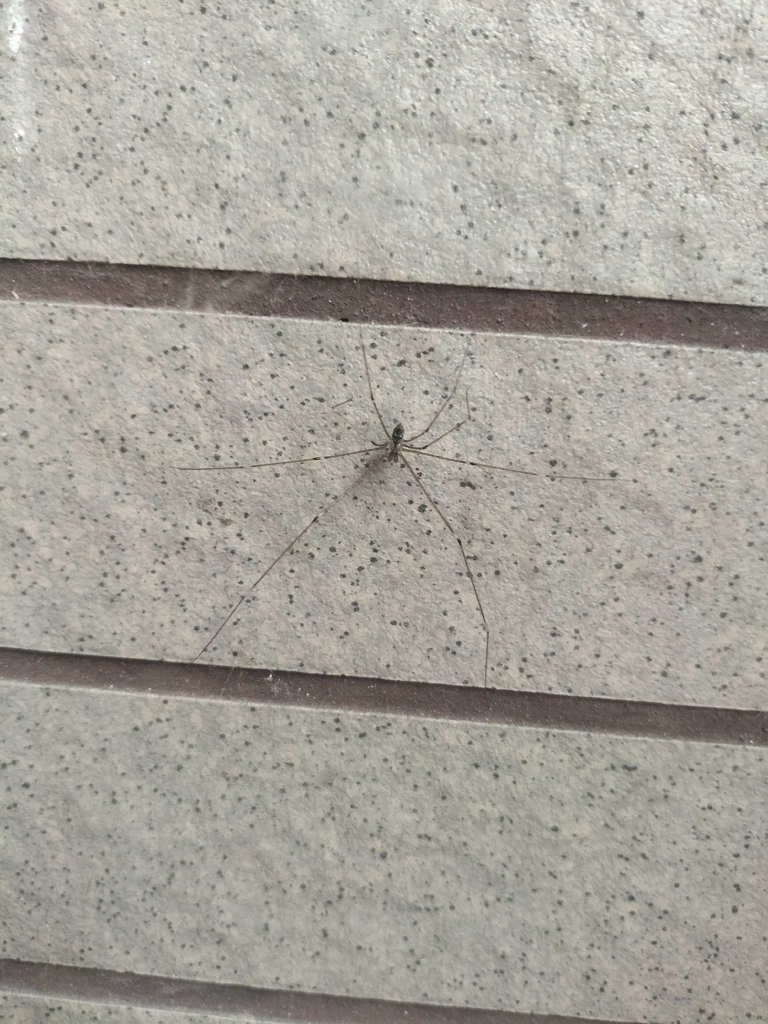
Crossopriza lyoni is a widespread species of cellar spiders that prefer to live in or around human structures. They are commonly known as tailed cellar spiders, tailed daddy longlegs spiders, and sometimes box spiders. They all possess extremely long fragile legs that can reach up to 6 cm (2.4 in) long and a body length of that ranges from 2.5 to 7 mm (0.098 to 0.276 in). Their abdomens are distinctly squarish when viewed from the side and their carapace...
Identification notes
Abdomen is pointed on the top of the back end: ...and from the side, looks flattened and triangular, like this: Adult female: Adult male:
Wikipedia reference for Crossopriza lyoni: https://en.wikipedia.org/wiki/Crossopriza lyoni.
Classification
Habitat and Range
Habitat
Mostly synanthropic (lives on, or near, human habitations).
Geographic Range
Introduced to AZ, FL, KS, LA, TX, VA. (this species may spread, so specimens from other states might be possible)
Diet and Behavior
Diet: Nandi & Raut ( 5 ) reported that adults of this species can feed on 12-20 mosquitoes ( Aedes sp.) per day... but, like all spiders, it is opportunistic and will eat any insect or spider it can catch.
Life History
Female carries bundle of eggs in her jaws until they hatch (egg bundle typically contains 50-60 eggs).
About Spiders: the wider group
Order-level background for Araneae, the group containing Crossopriza lyoni. Species-specific details appear above.
Group overview
As of 2023, 51,673 spider species in 136 families have been recorded, though an estimated 150,000 species exist. Spiders rank 7th in total species diversity among all organism orders. Only 0.5% of spider species pose any risk to human health.
Ecological role of the group
Spider venom contains complex peptides with diverse pharmacological activities, making them valuable for drug development research. Spiders produce up to 7 types of silk from specialized glands. Spider silk genes have been inserted into mammals and plants for biotech applications.
Economic and practical significance of the group
The global spider community kills an estimated 400-800 million tons of prey annually (2017 study). Spiders provide billions of dollars in natural pest control for agriculture. Spider silk is 5× stronger than steel of the same diameter, driving a biomaterials research industry.
Recorded sources for this group: World Spider Catalog, PNAS, Nature, ScienceDirect. Imported estimates may describe particular regions or reporting periods.
Photos of Tailed Cellar Spider (11)
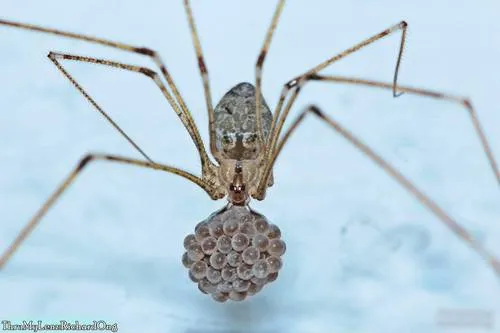
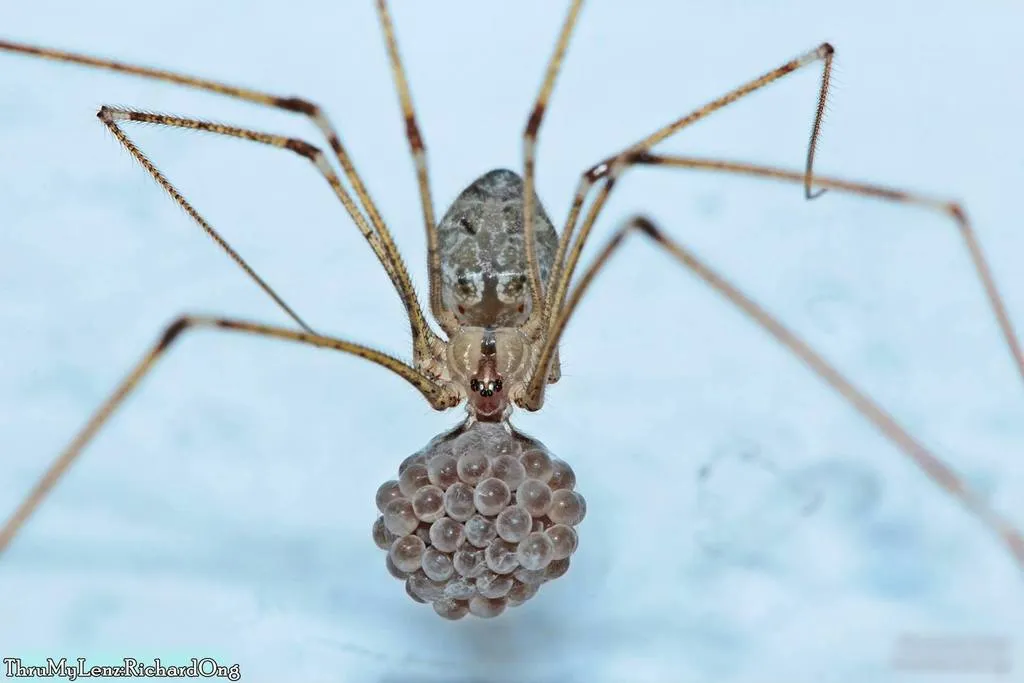
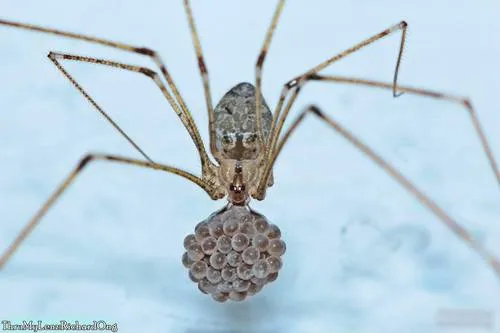
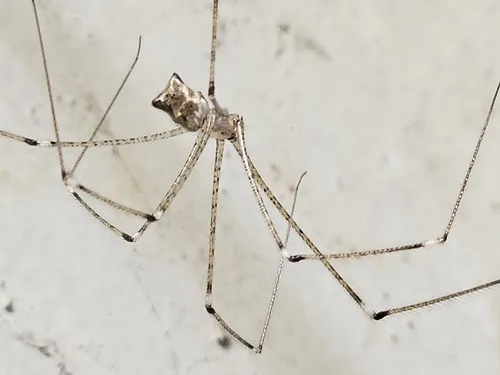
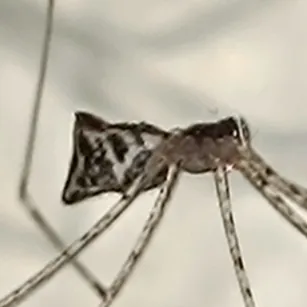
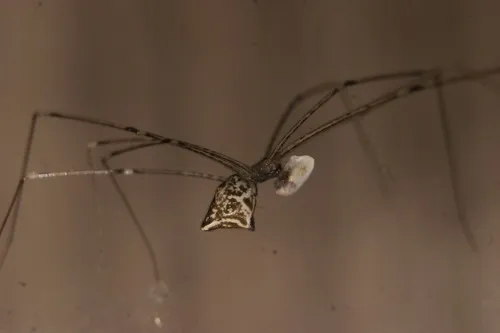
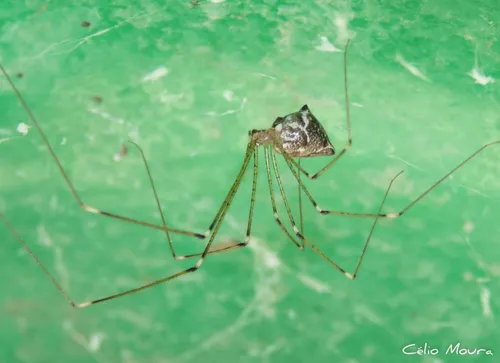
Photo credits: Contributed by Jeff Hollenbeck; Additional contributions by Beatriz Moisset , cheins , Mandy Howe
Frequently Asked Questions About Tailed Cellar Spider
What is Tailed Cellar Spider?
Tailed Cellar Spider (Crossopriza lyoni) is a species in the family Pholcidae, within the order Araneae.
How big is Tailed Cellar Spider?
Body length is 7mm or less (females' body is larger than males') .
How do you identify Tailed Cellar Spider?
Abdomen is pointed on the top of the back end: ...and from the side, looks flattened and triangular, like this: Adult female: Adult male:
Where is Tailed Cellar Spider found?
| Feature | Details |
|---|---|
| Habitat | Mostly synanthropic (lives on, or near, human habitations). |
| Range | Introduced to AZ, FL, KS, LA, TX, VA. (this species may spread, so specimens from other states might be possible) |
What does Tailed Cellar Spider eat?
The diet of the Tailed Cellar Spider includes Nandi & Raut ( 5 ) reported that adults of this species can feed on 12-20 mosquitoes ( Aedes sp.) per day... but, like all spiders, it is opportunistic and will eat any insect or spider it can catch..
What is the life cycle of a Tailed Cellar Spider?
Female carries bundle of eggs in her jaws until they hatch (egg bundle typically contains 50-60 eggs).