
Spiders
Order Araneae
The Spiders (Order Araneae) includes 1,848 species across 82 families and 552 genera in our directory.
About Spiders
As of 2023, 51,673 spider species in 136 families have been recorded, though an estimated 150,000 species exist. Spiders rank 7th in total species diversity among all organism orders. Only 0.5% of spider species pose any risk to human health.
Economic Impact
The global spider community kills an estimated 400-800 million tons of prey annually (2017 study). Spiders provide billions of dollars in natural pest control for agriculture. Spider silk is 5× stronger than steel of the same diameter, driving a biomaterials research industry.
Ecological Role
Spider venom contains complex peptides with diverse pharmacological activities, making them valuable for drug development research. Spiders produce up to 7 types of silk from specialized glands. Spider silk genes have been inserted into mammals and plants for biotech applications.
Families in Araneae (82)
Species in Araneae (1,848)
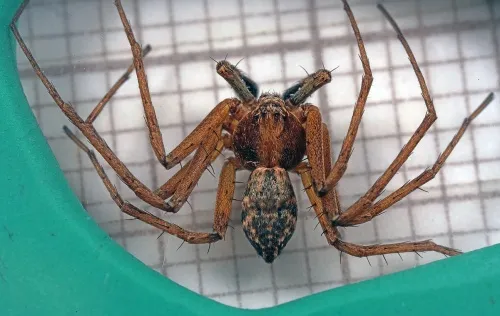
Turf Running-spider
Philodromus cespitum
The appearance of this species is less crab-like than the Xysticus , with a narrower head and body and the legs are of a more even thickness. Markings are variable so care has to be taken with identification. Confirmation of this species: "Requires e
Tutelina elegans
Tutelina elegans
Identification: Male/Female Palp (ventral/lateral) Epigynum (ventral/dorsal)
Tutelina harti
Tutelina harti
Identification: Palp Epigynum In my experience, the female dorsal abdomen pattern is variable in the field because the scales may be rubbed off. See examples below. -ChH
Two-banded Ant-mimic
Castianeira cingulata
Identification: There are two forms of this spider Palp
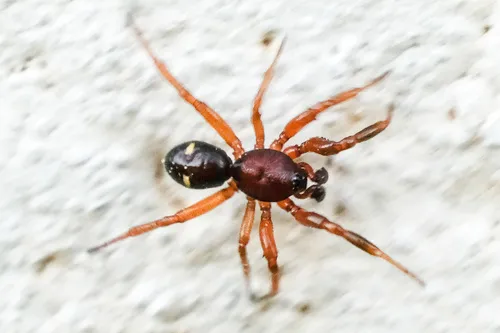
Two-spotted Cobweb Spider
Asagena americana
Asagena americana, the twospotted cobweb spider, is a species of cobweb spider in the family Theridiidae. It is found in the United States, Canada, and China.
Ubiquitous Thin-legged Wolf Spider
Pardosa xerampelina
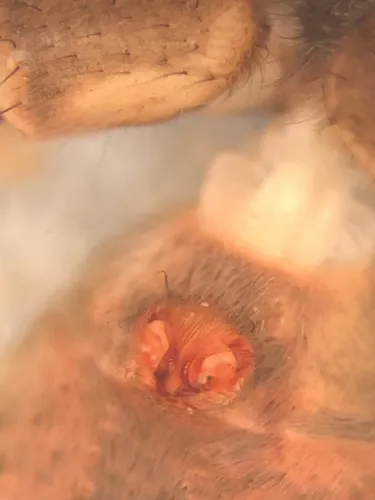
Identification: Female: epigyne Male: In Alberta there are two color morphs that appear quite different from each other (the palp for each specimen is directly below its picture): left palp, ventral view ( P. xerampelina ) ....... Some Pardosa xeramp
Uloborus campestratus
Uloborus campestratus
Identification: Some specimens chalk white with distinct dark spots. Legs variable, dark bands usually confined to first and fourth legs, ends of sometimes dark. Tibial brushes variable, usually small.
Uloborus diversus
Uloborus diversus
Identification: Voucher Specimens: Female common & dark forms Male Egg Sac First metatarsus with dark ring at apex; western United States and adjacent Mexico. (Muma & Gertsch, 1964)
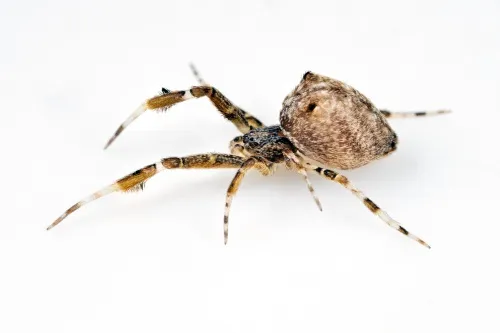
Uloborus plumipes
Uloborus plumipes
Males 3 to 4 mm, females 4 to 6 mm. Densely hairy, legs brown, annulated with white-bluish. Tibia I female: with strikingly long, black plumose hairs. Opisthosoma light brown with darker median line, densely haired, dorsally with 2 humps in anterior
Usofila pacifica
Usofila pacifica
Identification: "U.oregona has a distinctly smaller (but still inflated) patella, slightly different profile and usually some shading on the clypeus, often elsewhere as well. There are epigynal-area differences but they are subtle." - Rod Crawford, 1
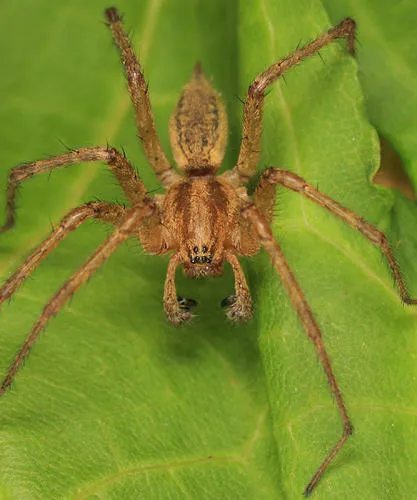
Utah Funnelweb Spider
Agelenopsis utahana
Identification: Palp (ventral) Epigynum (ventral, ventral dissected, dorsal dissected)
Varacosa avara
Varacosa avara
Identification: Both sexes are described as lacking a heart mark and not having chevrons on the abdomen (this may help to tell them apart from Trochosa on occasion).
Varacosa parthenus
Varacosa parthenus
Varacosa parthenus is a species of wolf spider (Lycosidae) endemic to the Southeastern United States.
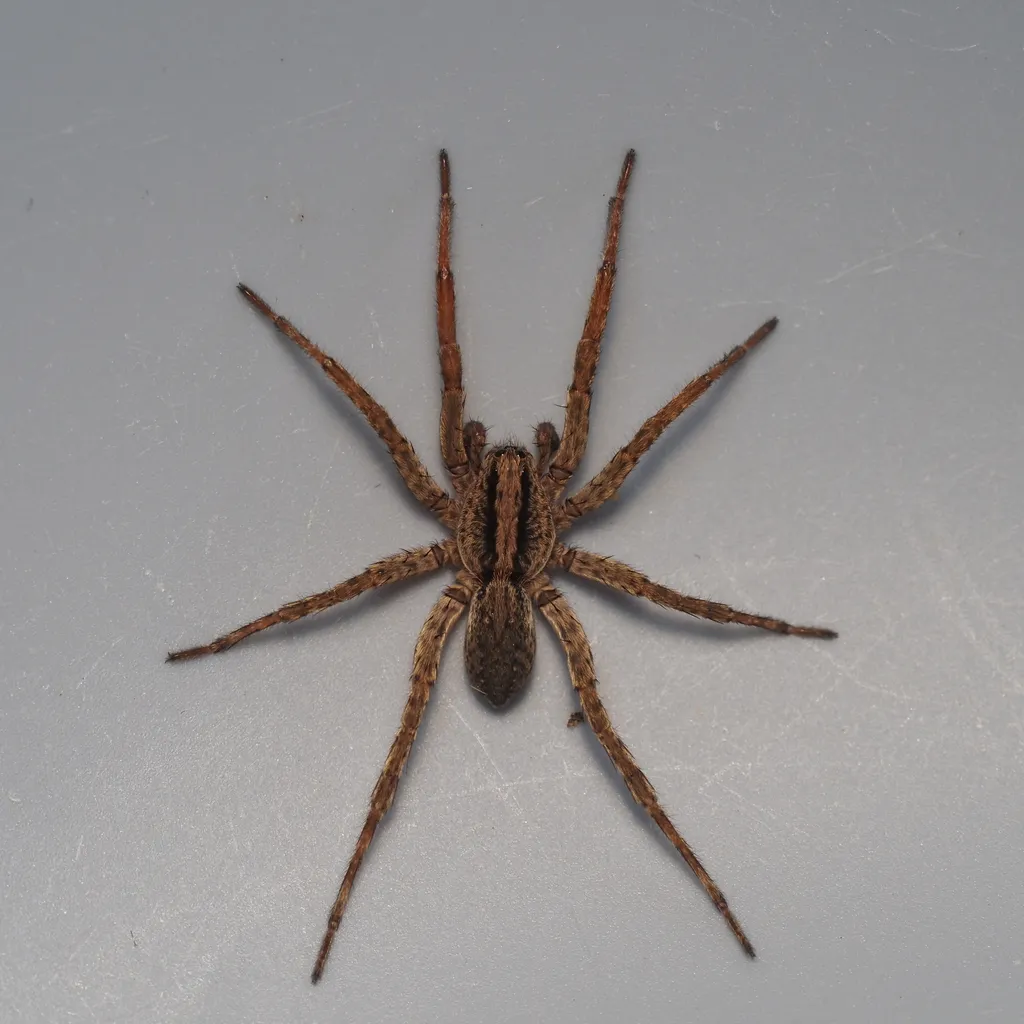
Varacosa shenandoa
Varacosa shenandoa
Varacosa shenandoa is a species of wolf spider in the family Lycosidae. It is found in the United States and Canada.
Vermontia thoracica
Vermontia thoracica
Identification: "Orange-brown to deep brown, with dusky markings and margins. Abdomen: grey to black. Sternum: yellow to orange, suffused with black. Legs: yellow to orange-brown." Epigynum: ventral/dorsal
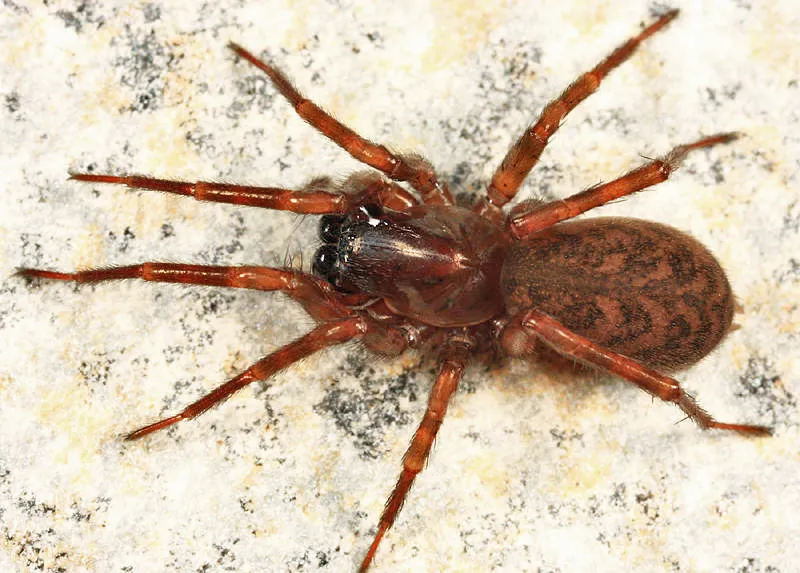
Wadotes calcaratus
Wadotes calcaratus
Wadotes calcaratus is a species of funnel weaver in the family of spiders known as Agelenidae. It is found in the United States and Canada.
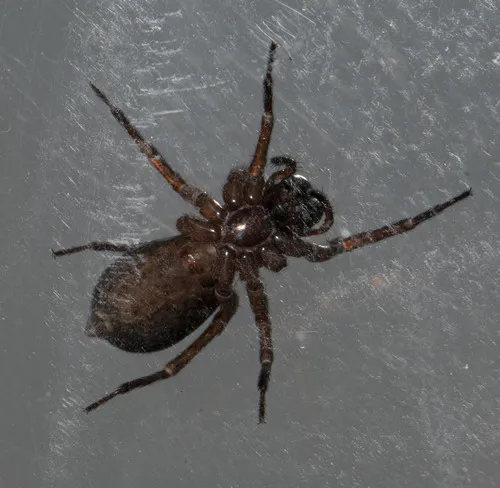
Wadotes hybridus
Wadotes hybridus
Wadotes hybridus is a species of funnel weaver in the family of spiders known as Agelenidae. It is found in the United States and Canada.
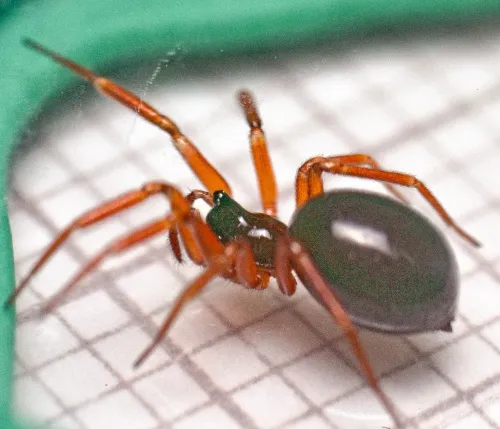
Walckenaeria acuminata
Walckenaeria acuminata
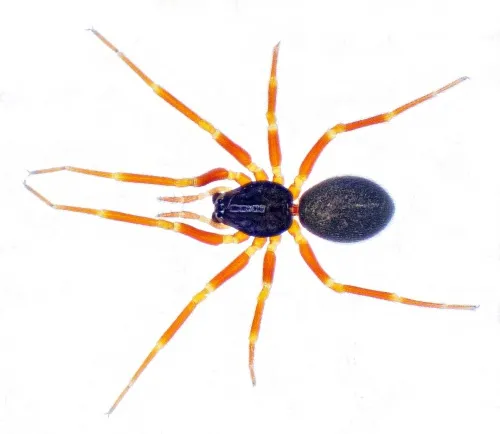
This spider is about 4 mm long and has a dark, almost black head and abdomen, and orangey red legs. The male is quite striking as his eyes sit in two groups at the top and middle of a slender tower more than twice the height of the head itself. Occur
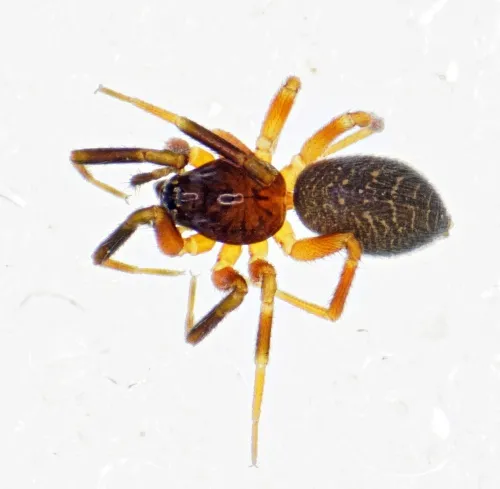
Walckenaeria antica
Walckenaeria antica
Males 1.75 to 2.3 mm, females 2.0 to 2.6 mm. Prosoma red-brown to dark brown, radial stripes and margin darker. Legs red-orange with dark tibia. Opisthosoma grey-black. Identification of this species requires microscopic examination of the genitalia
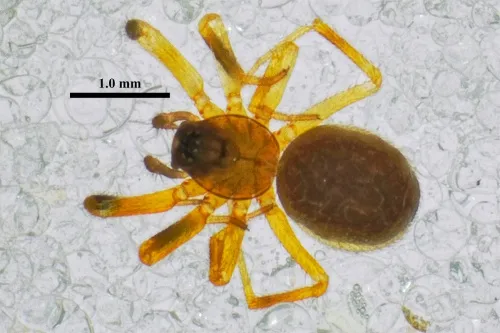
Walckenaeria atrotibialis
Walckenaeria atrotibialis
Length 2-3mm. Prosoma light to red-brown with dark radial stripes. Male prosome elevated step-like anteriorly, with distinct depression in the middle of dorsal line. Identification requires microscopic examination of genitals. A ground-dwelling spide
Walckenaeria auranticeps
Walckenaeria auranticeps
Identification: "Bright orange . The male has a broad, upright horn in the ocular area." Femora orange but the remaining segments are dark blackish brown. Epigynum: W. lepida is sometimes found in the same habitats. "The epigynum of W. fusciceps is s
Walckenaeria carolina
Walckenaeria carolina
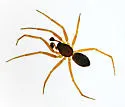
Identification: "Glossy orange-red to chestnut brown with blackish margins; not significantly darkened anteriorly." Anterior of carapace is raised (more pronounced in males). Abdomen gray Palp: Carapace pattern similar to W. pallida
Walckenaeria castanea
Walckenaeria castanea
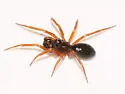
Identification: "Pale brown to chestnut brown, sometimes rather darker anteriorly . The male has anteriorly a small lobe with large holes and sulci on its sides; the lobe carries the posterior median eyes. Palp: Epigynum: ventral/dorsal
Walckenaeria columbia
Walckenaeria columbia
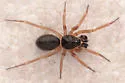
Identification: "Orange-brown to dark brown, with dusky markings. Abdomen:grey to black." Palp
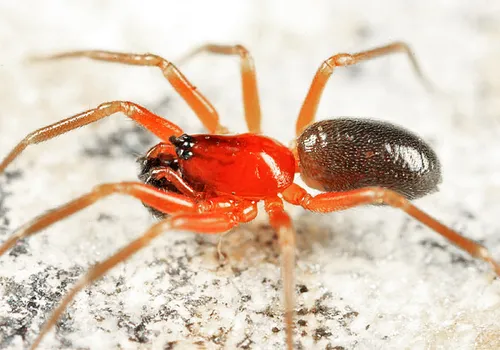
Walckenaeria communis
Walckenaeria communis
Identification: "Orange to deep reddish orange in female, darkened anteriorly, often to almost black. The male carapace is similarly colored, but the anterior darkening is much less pronounced or even absent . Recently molted specimens are paler in c
Walckenaeria cornuella
Walckenaeria cornuella
Identification: "Orange to deep orange, with faint dusky markings. The male has a small projection or "horn" in the ocular area. Abdomen: grey-black." Epigynum

Walckenaeria cucullata
Walckenaeria cucullata
This is one of the 'money spiders' in the Linyphidae family - which has more UK species than any other. Most are small and need microscopic examination to identify. No additional images available for this species.

Walckenaeria cuspidata
Walckenaeria cuspidata
This is one of the 'money spiders' in the Linyphidae family - which has more UK species than any other. Most are small and need microscopic examination to identify. No additional images available for this species.
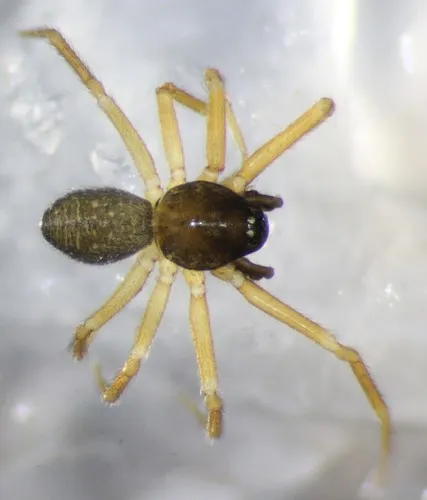
Walckenaeria digitata
Walckenaeria digitata
Identification: Carapace: brown, with dusky markings and margins. Abdomen: uniformly black in the male, grey suffused with black posteriorly around the spinnerets in the female." Voucher male habitus, pedipalp:
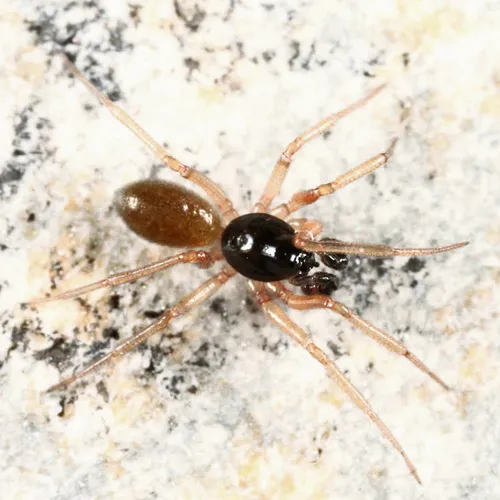
Walckenaeria directa
Walckenaeria directa
Identification: "Deep chestnut brown, with dusky margins and markings. The male bears anteriorly a horn which comprises a large upper section and a small lower section separated by a cleft . The anterior hairs on the horn appear under the binocular m
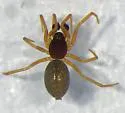
Walckenaeria dondalei
Walckenaeria dondalei
Identification: "Brown to deep chestnut brown, with dusky markings; lightly darkened anteriorly in female . The male carapace has a fairly large lobe which bears numerous spatulate hairs. Abdomen: gray-black with faint paler markings."
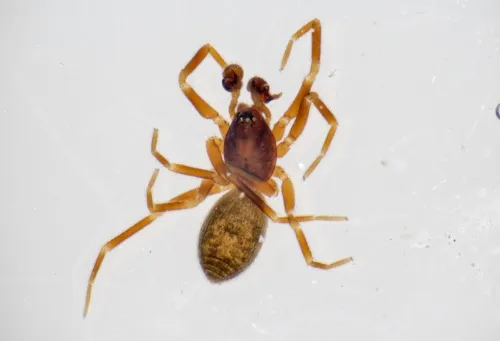
Walckenaeria dysderoides
Walckenaeria dysderoides
1.7 to 2.3 mm. Prosoma brown to dark brown. Opisthosoma light grey. Microscopic examination of the of the genitalia is required to confirm this species. Typically found on heathlands, especially in open, stony areas, but has also been recorded in pin
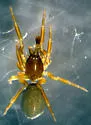
Walckenaeria exigua
Walckenaeria exigua
Identification: "Carapace: orange-brown to chestnut brown, often slightly darkened anteriorly. The male has a small horn. Abdomen: gray to black" Palp Males of Walckenaeria minuta are easily mistaken for males of this species; Millidge even said Emer

Walckenaeria nudipalpis
Walckenaeria nudipalpis
This is one of the 'money spiders' in the Linyphidae family - which has more UK species than any other. Most are small and need microscopic examination to identify. No additional images available for this species.
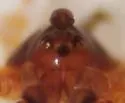
Walckenaeria occidentalis
Walckenaeria occidentalis
Identification: "Carapace: orange brown, with dusky markings . The lobe in males is constricted in front of the eyes. Abdomen: black" Palp Epigynum
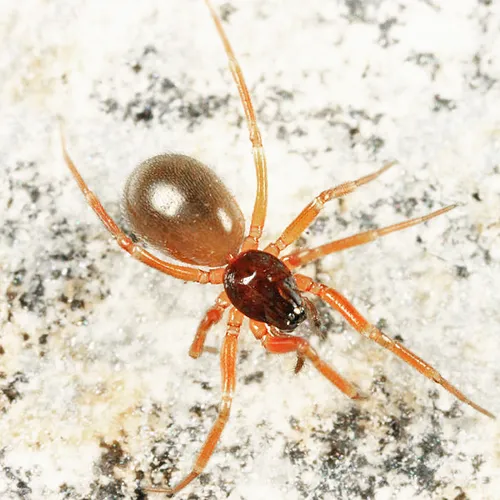
Walckenaeria pallida
Walckenaeria pallida
Identification: "Carapace: orange-red, suffused anteriorly with chestnut brown or black to give a striking contrast . In the male the carapace is elevated anteriorly, the form of the elevation being somewhat variable; the elevation has a dense coveri
Walckenaeria palustris
Walckenaeria palustris
Identification: "Carapace: brown, with dusky markings and margins . The male lobe is constricted behind the fork. Abdomen: gray-black. Legs: brown to orange-brown. Epigynum
Walckenaeria subdirecta
Walckenaeria subdirecta
Identification: This species can be separated by other similar species by the closely spaced striae on the cheliceral file. In the past W. directa has not been differentiated from its sibling species W. subdirecta .
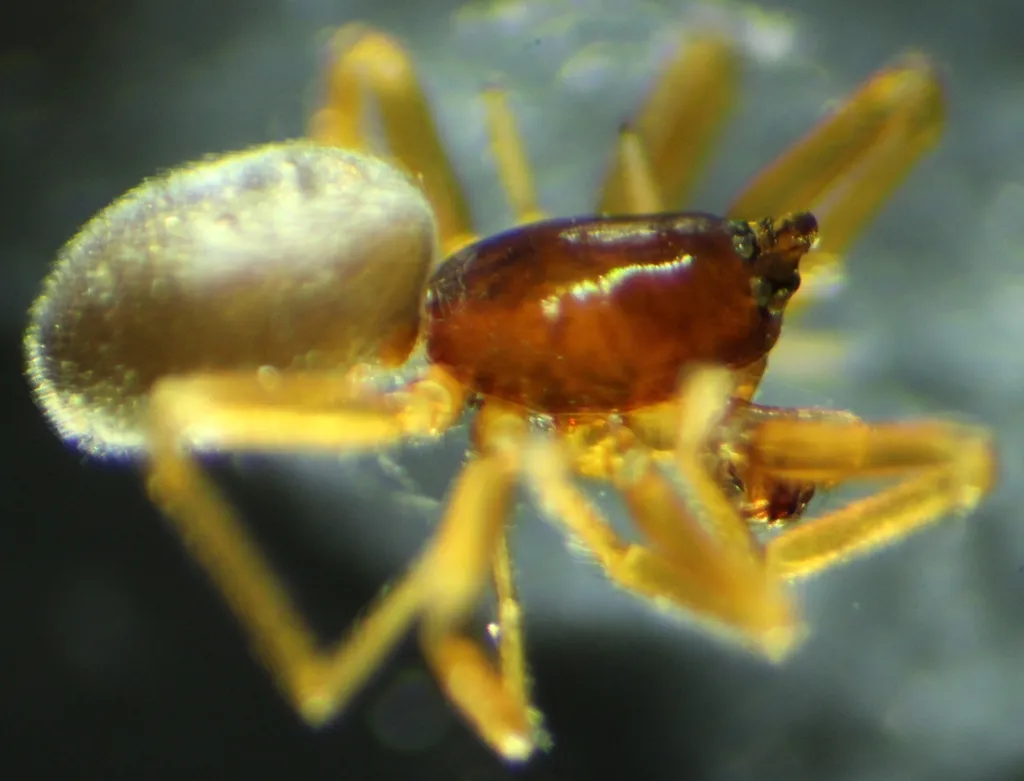
Walckenaeria tibialis
Walckenaeria tibialis
Identification: "Carapace: deep chestnut brown. The male has a stout horn anteriorly; the length of the horn is somewhat variable. There is a clump of stout spatulate hairs between the base of the horn and the posterior eyes . Lines of minute pits ra
Walckenaeria unicornis
Walckenaeria unicornis
Males 1.8 to 2.2 mm, females 2.0 to 3.1 mm, dark (almost black) body, red-orange legs with pale annulations. Microscopic examination of genitalia is required to confirm identity. Widespread throughout England and Wales. http://srs.britishspiders.org.
Wall spider
Oecobius navus
Identification: The pattern on the carapace (dark central stripe, three dashes or dots on either side) should be characteristic of this species in this region. For additional information, you can check Shear 1970 . However, do note that some of the r
Walnut Orb Weaver
Nuctenea umbratica
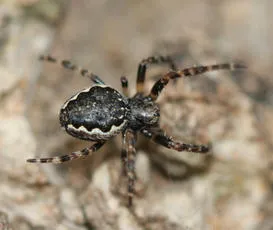
Size: females can grow to 15 mm, males grow to 11 mm. They have a distinctive flattened body, which enable the species to hide in crevices. The walnut colouration of the abdomen gives the species its common name. The darker central portion with zig-z
Wasp Spider
Argiope bruennichi
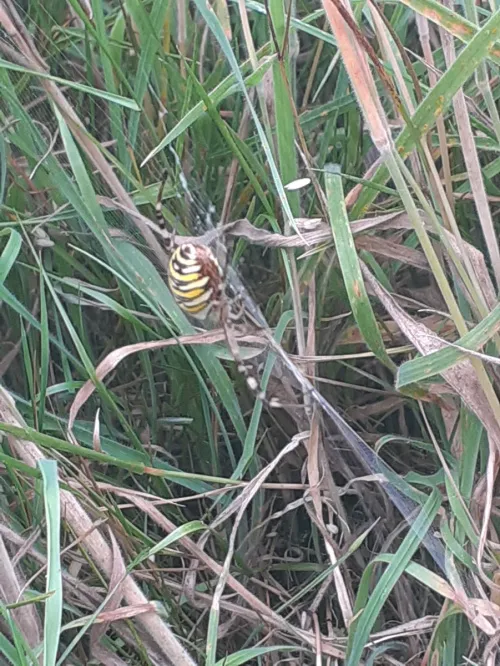
Males 7-8mm, females 10-22mm. Large, brightly coloured and distinctively patterned spider. Juveniles and males may be less obvious than mature females. The large orb web is also distinctive with a vertical zig-zag stabilimentum. Grassland and scrub,
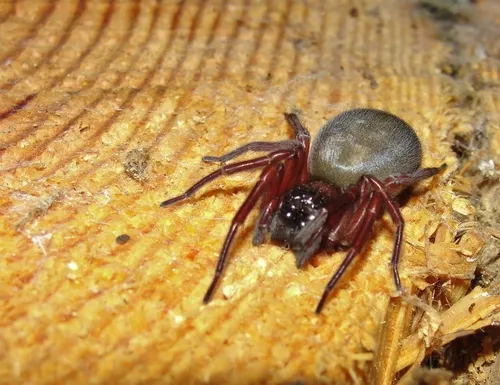
West Coast Laceweaver
Callobius severus
Callobius severus is a species of spider found in parts of the United States and Canada. Individuals reach roughly 19 mm (3/4") in size, with males typically appearing smaller than females. Cephalothorax and legs are reddish to dark brown and the abd
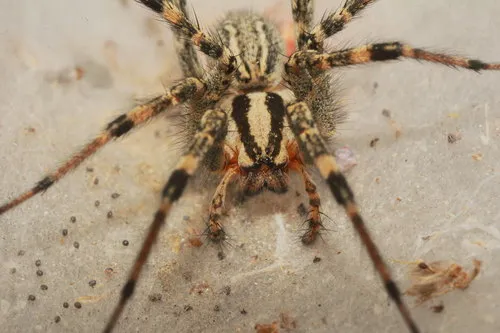
Western Funnelweb Spider
Agelenopsis aperta
The desert grass spider (Agelenopsis aperta) is a species of spider belonging to the family Agelenidae. It is found in dry regions across the Southern United States and into Mexico.
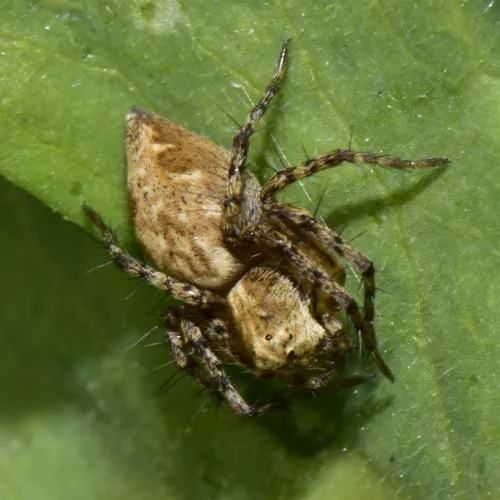
Western Lynx Spider
Oxyopes scalaris
Identification: Female Male These may have a thick brown line on the ventral surface of the femurs, but this is not to be confused with the 'distinct black line'.
Western Parson Spider
Herpyllus propinquus
Identification: H. propinquus is basically identical in appearance to H. ecclesiasticus , and examination of reproductive organs is needed for positive identification.
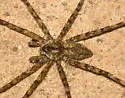
Whitebanded Fishing Spider
Dolomedes albineus
Identification: Generally an ID can be made by the white band along the 'face' (clypeus), though this is not always present in all patterning variations: D. albineus is also the only member of the North American fishing spiders to sometimes sport a m
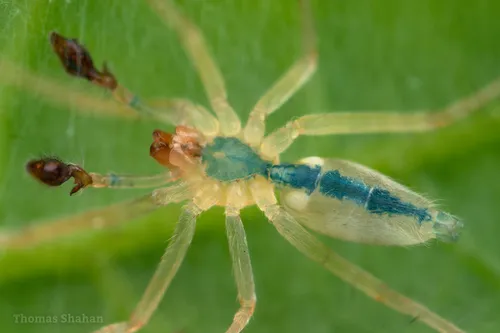
Wulfila albens
Wulfila albens
Wulfila albens is a species of ghost spider in the family Anyphaenidae. It is found in the United States.
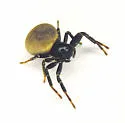
Xysticus alboniger
Xysticus alboniger
Identification: Palp: ventral/lateral Epigynum: ventral/dorsal dissected
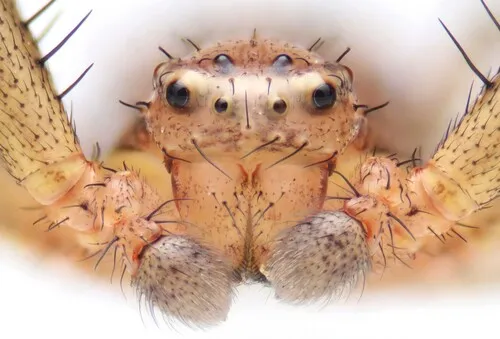
Xysticus auctificus
Xysticus auctificus
Xysticus auctificus is a species of crab spider in the family Thomisidae. It is found in the United States and Canada.
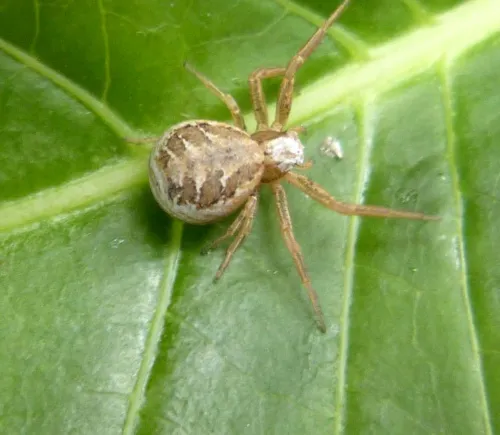
Xysticus audax
Xysticus audax
It has been considered by some authors to be a form of Xysticus cristatus, but there is now agreement that it is a separate species. Identification of this species "Requires examination at high magnification in good lighting, typically examination of
Xysticus britcheri
Xysticus britcheri
Identification: Male: left palp, ventral view left palp, retrolateral view
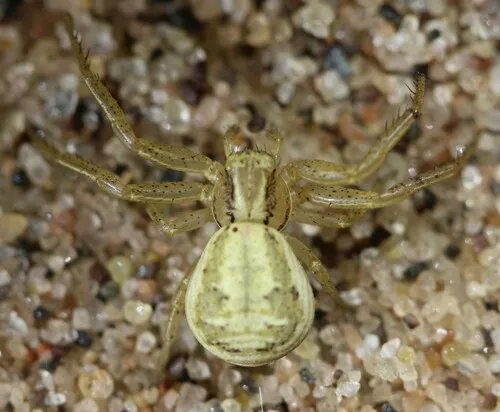
Xysticus chippewa
Xysticus chippewa
Identification: Epigynum (undissected, dissected ventral, dissected dorsal)
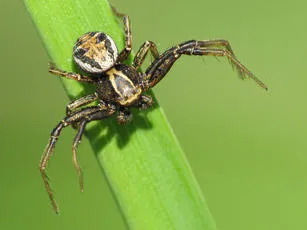
Xysticus cristatus
Xysticus cristatus
The female grows to a length of around 8 mm whilst the male is a little smaller, growing to around 5 mm and much darker. In both sexes, the dark triangle on the carapace ends in sharp, defined point. The abdomen has a broad middle band bordered by tw
Xysticus emertoni
Xysticus emertoni
Identification: Female: Epigyne, ventral view Male: Left palp, ventral view
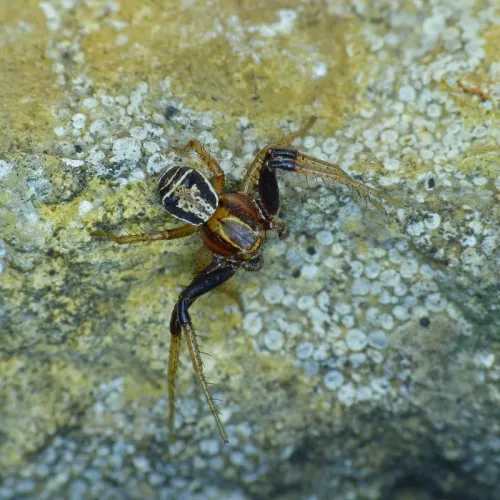
Xysticus erraticus
Xysticus erraticus
A very distinctively marked member of the family, but it can be quite variable. Microscopic examination of the genitalia is necessary to confirm identification. Confirmation requires microscopic examination of the genitalia of adult specimens. Identi
Xysticus gosiutus
Xysticus gosiutus
Identification: Very similar to X. locuples Keyserling, 1880.
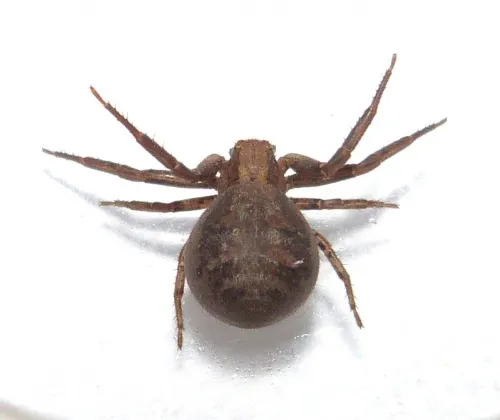
Xysticus kochi
Xysticus kochi
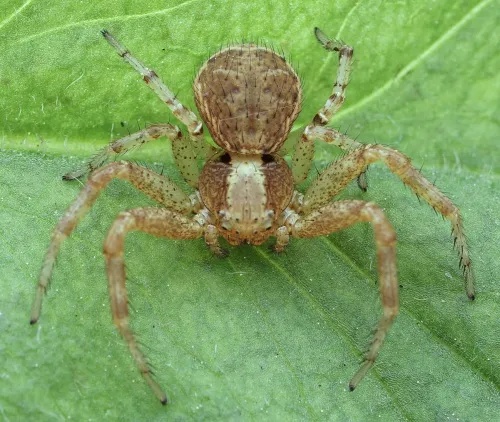
Males 4 to 6mm, females 6 to11mm. Prosoma with black stripes and triangle large. Sternum light brown, margin brown-yellow. Legs dorsally dark brown with bright longitudinal lines and strong spines. Opisthosoma distinctly patterned with light brown-oc
Xysticus lanio
Xysticus lanio
Male 4.2 to 6.2 mm. Prosoma black, with Y-shaped light brown markings, eye region light brown. Opisthosoma with black folium with white transverse and lateral lines. Female 6 to 8 mm. Prosoma and legs light brown with dark brown markings. Opisthosoma
Xysticus luctuosus
Xysticus luctuosus
Identification: Male left palp, ventral view left palp, retrolateral view
Xysticus obscurus
Xysticus obscurus
Identification: Female: epigyne Male: left palp, ventral view left palp, retrolateral view
Xysticus punctatus
Xysticus punctatus
Identification: Male : left palp, ventral view left palp, retrolateral view
Xysticus texanus
Xysticus texanus
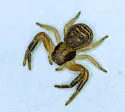
Identification: Distinctive color pattern, especially on the carapace and legs, as is described in Gertsch 1939 , page 375. Adult males:
Xysticus ulmi
Xysticus ulmi
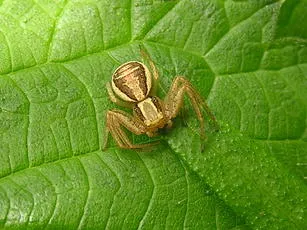
The broad cross line across its abdomen is characteristic. A sexually dimorphic species, with the male being much darker than the female. It is very similar to X. cristatus though usually has a more elongated abdomen. The epigyne and male palpal orga
Yorima angelica
Yorima angelica
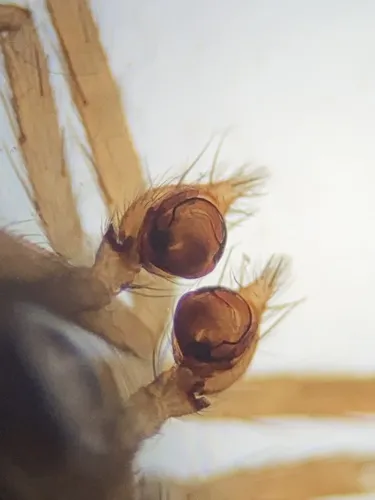
Yorima angelica is a species of true spider in the family Cybaeidae. It is found in the United States.
Zelotes funestus
Zelotes funestus
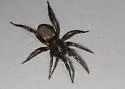
Page creation based on the identification of these images by Dr. Lenny Vincent . The male of this species is undescribed.
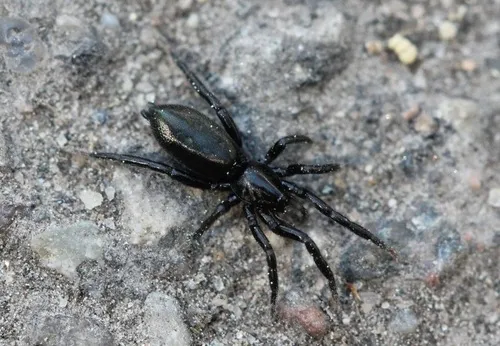
Zelotes subterraneus
Zelotes subterraneus
Zelotes subterraneus is a species of ground spider from the family Gnaphosidae which has a Palearctic distribution. it is the type species of the genus Zelotes. Its distribution may be somewhat masked by the difficulty of distinguishing this species
Zelotes tenuis
Zelotes tenuis
Identification: Palp Epigynum There are some great images for reproductive structures here .
Zora pumila
Zora pumila
Identification: ID based on description in Common Spiders of North America and comments on this image
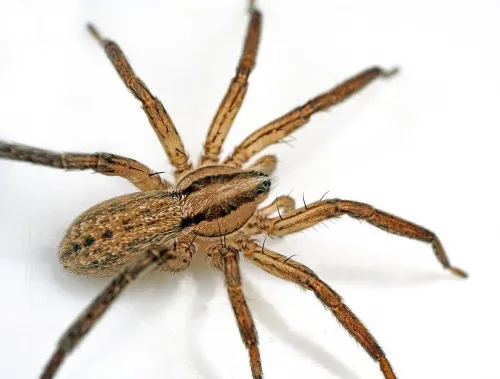
Zora spinimana
Zora spinimana
Males 5 mm, females 6 to 8 mm. Eyes relatively small, head pointed. Characteristically, 3 spines on TmI. Photographs showing general appearance and head required. Typically a grassland spider, usually found on or near the ground in grass roots or lea
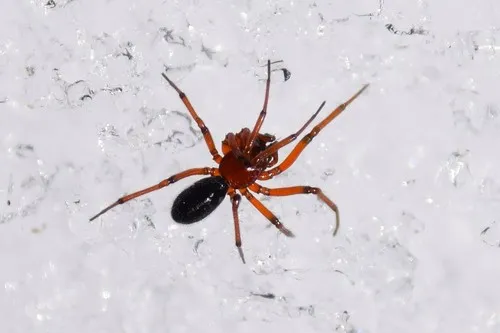
Zornella armata
Zornella armata
Identification: Palp (ventral, retrolateral, mesal, dorsal) Epigynum "Specimens reported as Zornella cultrigera (L. Koch 1879c:11) in North America are misidentifications of Zornella armata ." P. Paquin et al (2010) Checklist of the spiders (Araneae)
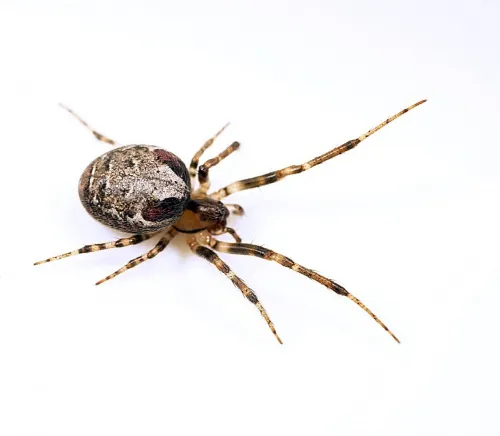
Zygiella atrica
Zygiella atrica
Size female about 6.5 mm, male smaller about 4 mm. Most (but not all) specimens have more red-brown colouration than Zygiella x-notata , but the species need to be separated by an expert for identification purposes. Very difficult to distinguish from
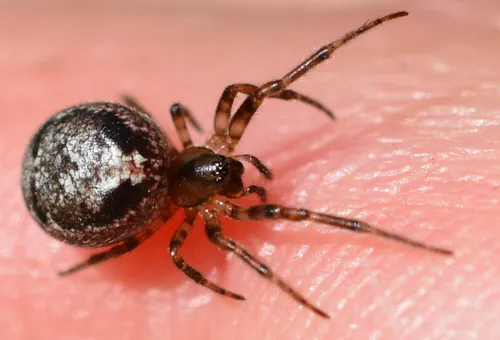
Zygiella dispar
Zygiella dispar
For the northwest: "Which species can't be told from color alone. Z. x-notata and Z. atrica occur in urbanized habitats, the former on buildings and the latter on trees. Z. dispar is found in natural forest." …Rod Crawford, 15 June, 2008
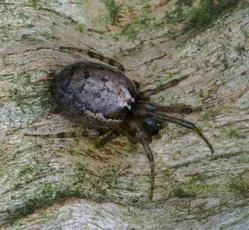
Zygiella x-notata
Zygiella x-notata
Zygiella x-notata females are up to 11mm in size, males up to 7mm. Variable in colour; the cephalothorax (first body section) is a translucent yellow brown; the opisthosoma (second body section or abdomen) has a leaf like pattern. Very difficult to d
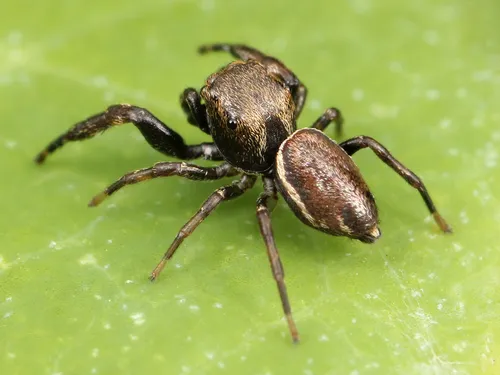
Zygoballus nervosus
Zygoballus nervosus
Zygoballus nervosus is a species of jumping spider which occurs in the eastern United States and Canada.
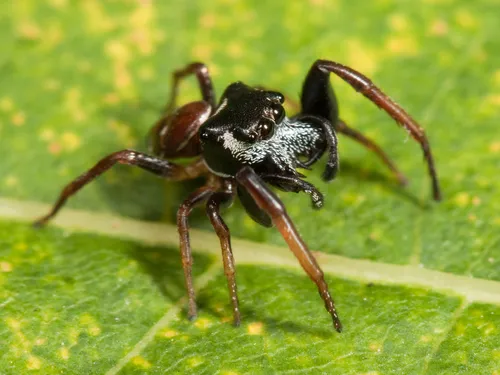
Zygoballus sexpunctatus
Zygoballus sexpunctatus
Identification: Palp Epigynum Both males and females typically have a thin band of white scales along the lower edge of the carapace on the sides, unlike Z. rufipes . Males have a black carapace and a spot of white scales at beginning of thoracic slo

garden ghost spider
Hibana gracilis
Identification: Spider is yellow to white with longitudinal stripes on the carapace, and dark spots arranged in two longitudinal rows cover the abdomen. This species can be identified by its brown chelicerae. Male Palp (ventral/lateral/medial) Epigyn
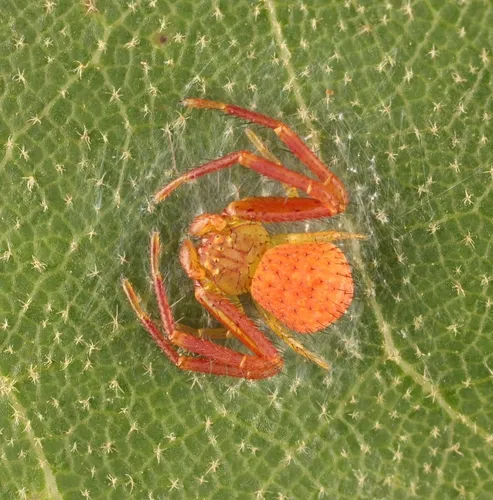
northeastern flower crab spider
Mecaphesa carletonica
Mecaphesa carletonica is a species of crab spider in the family Thomisidae. It is found in the United States and Canada.
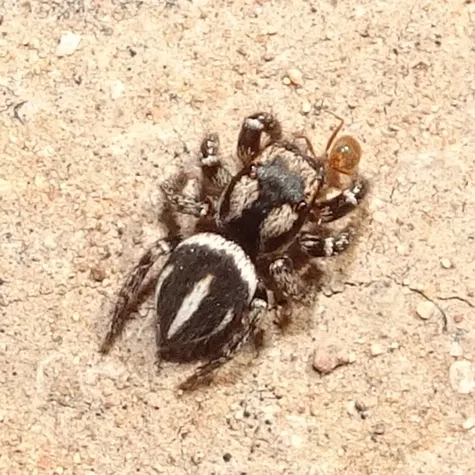
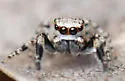
Habronattus delectus
Habronattus delectus
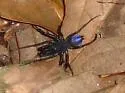
Habronattus dorotheae
Habronattus dorotheae
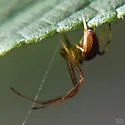
Abbot purseweb spider
Sphodros abboti
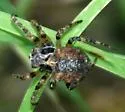
Acacesia hamata
Acacesia hamata
Acanthepeira cherokee
Acanthepeira cherokee
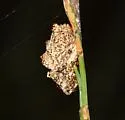
Acanthepeira marion
Acanthepeira marion
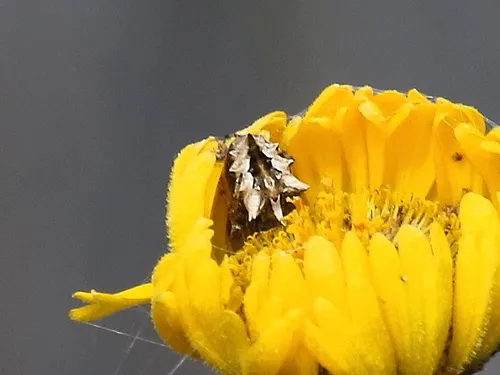
Acanthepeira venusta
Acanthepeira venusta
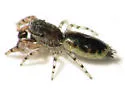
Admestina tibialis
Admestina tibialis
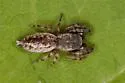
Admestina wheeleri
Admestina wheeleri
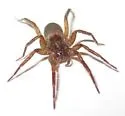
Agroeca limnicunae
Agroeca limnicunae
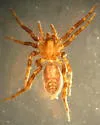
Agroeca minuta
Agroeca minuta
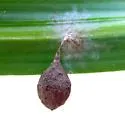
Agroeca pratensis
Agroeca pratensis
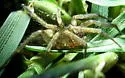
Agroeca trivittata
Agroeca trivittata
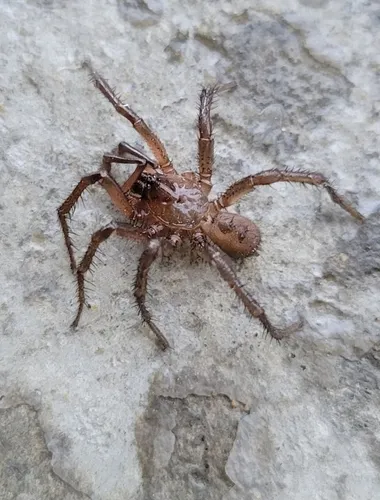
Aliatypus gulosus
Aliatypus gulosus
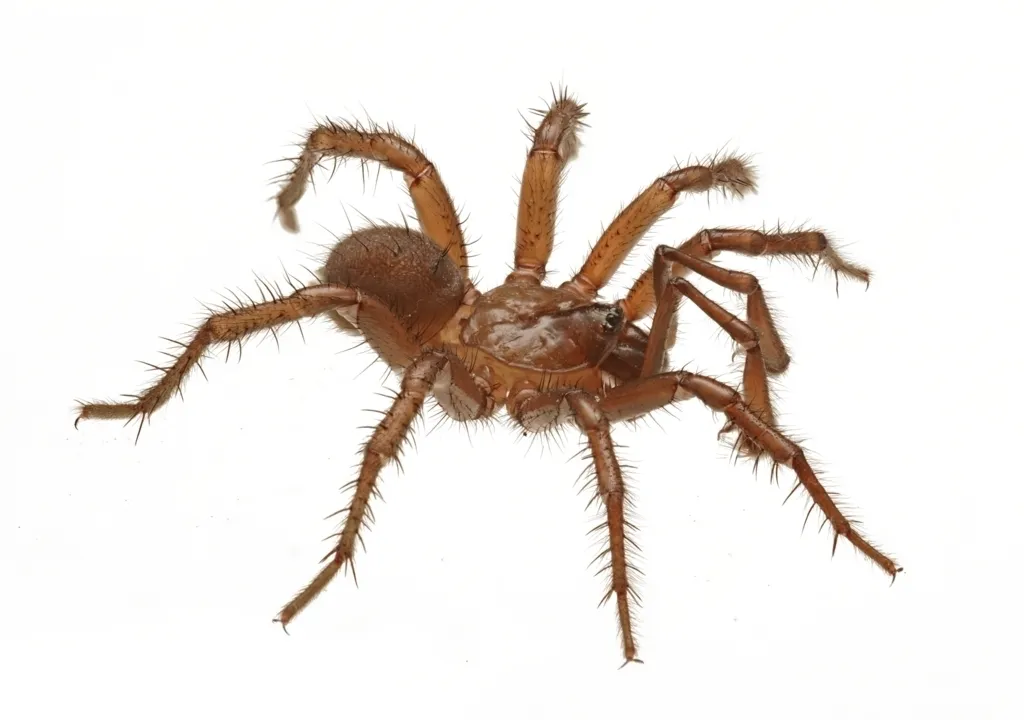
Aliatypus plutonis
Aliatypus plutonis
Allocosa mokiensis
Allocosa mokiensis
Allocosa morelosiana
Allocosa morelosiana
Alopecosa hirtipes
Alopecosa hirtipes
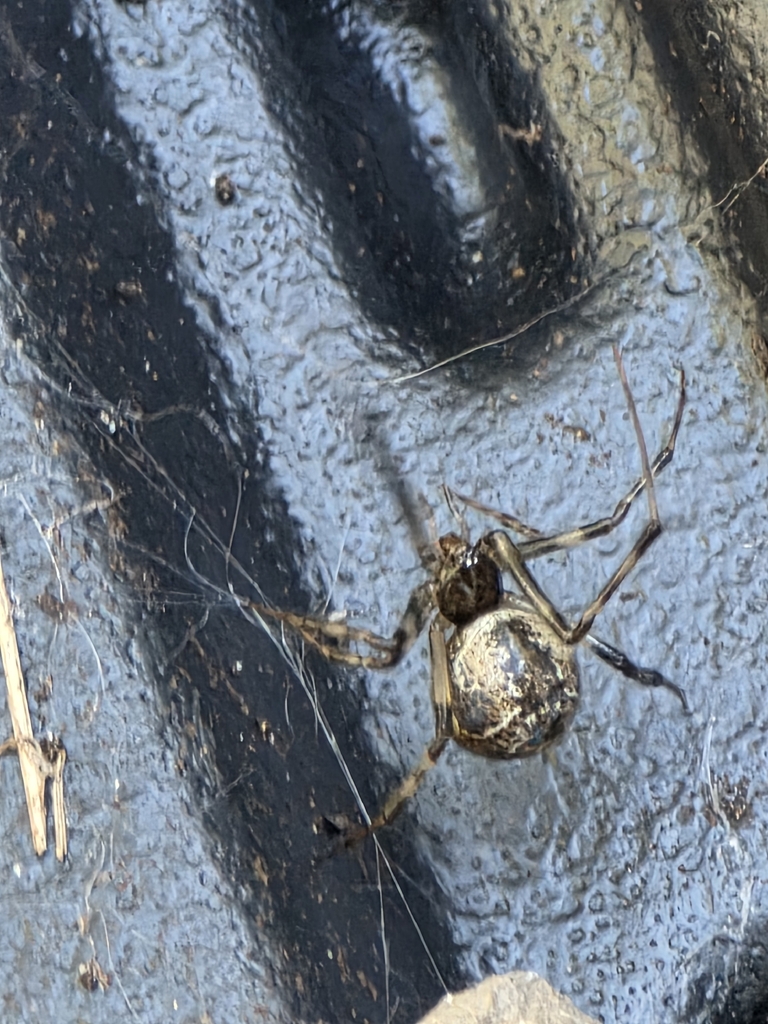
American House Spider
Parasteatoda tepidariorum
(c) Merlla McLaughlin, some rights reserved (CC BY)
Anachemmis linsdalei
Anachemmis linsdalei
Anapistula secreta
Anapistula secreta