
Northern Black Widow
Latrodectus variolus
This record describes Latrodectus variolus (species). Recorded family: Theridiidae. Recorded order: Araneae.
Identification and Appearance
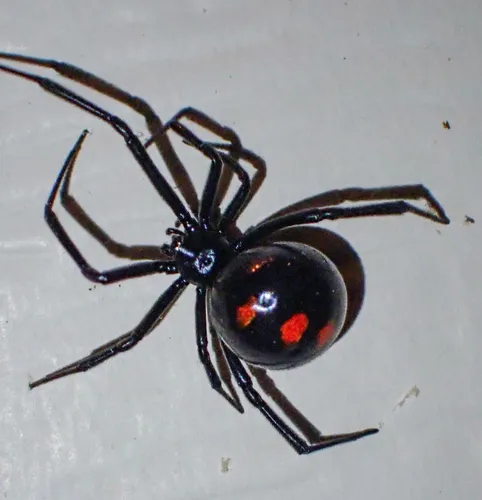
Although the Northern Black Widow is slightly smaller and not quite as venomous/dangerous (definitely still not to be messed with), it is similar to the Southern Black Widow ( L. mactans ) in general behaviors. Please refer to L. mactans info page and the Latrodectus genus info page for more information. Web: The web is typically a 3-dimensional, unorganized mass of silk spun in a dark crevice or corner. The web is sticky, and very strong. If the web is active (in use), the female will be in or very near the web. Caution: This spider is venomous and can harm people. However, the female injects such a small dose of venom that it rarely causes death. Reports indicate human mortality at well less than 1% from black widow spider bites. (Net Ref ) While Latrodectus variolus is not aggressive and does not have the instinct to bite, her venom is neurotoxic, which means that it blocks the transmission of nervous impulses. If the spider bites, most likely it has been pressed against human bare skin, and this causes a natural reaction, a bite in self-defense. For the most part, the black widow's bite may be felt only as a pin prick, during which the spider's fangs inject a minute amount of highly toxic venom under the skin. The severity of the victim's reaction depends on his or her age and health, and on the area of the body that is bitten. Local swelling and redness at the site may be followed in one to three hours by intense spasmodic pain, which can travel throughout the affected limbs and body, settling in the abdomen and back (intense abdominal cramping, described as similar to appendicitis), and can last 48 hours or longer. Elderly patients or young children run a higher risk of severe reactions, but it is rare for bites to result in death; only sixty-three having been reported in the United States between 1950 and 1959 (Miller, 1992). Other symptoms can include nausea and profuse perspiration. If left untreated, tremors, convulsions and unconsciousness may result. When death does occur, it is due to suffocation. For more general information about the Widow spider, please refer to the Latrodectus genus info page . If you are bitten by a widow spp. spider: Precautions: Be very careful when working around areas where widow spiders may be established. Take proper precautions-wear gloves and pay attention to where you are working. The reaction to a widow bite can be painful, and the victim should go to the doctor immediately for treatment.
Classification
- Kingdom
- Animalia
- Phylum
- Arthropoda
- Class
- Arachnida
- Order
- Araneae (Spiders)
- Family
- Theridiidae (Cobweb Spiders)
- Genus
- Latrodectus (Widow Spiders)
Imported taxonomy record. Source availability varies; see the source references and editorial policy below.
Habitat and Range
Habitat
Undisturbed woods, in stumps, or in stone walls.
Geographic Range
The Northern Black Widow is typically considered an "East Coast" spider, it occurs from northern Florida to south-eastern Canada. This species is most common in the northern part of its range.
About Spiders: the wider group
Order-level background for Araneae, the group containing Latrodectus variolus. Species-specific details appear above.
Group overview
As of 2023, 51,673 spider species in 136 families have been recorded, though an estimated 150,000 species exist. Spiders rank 7th in total species diversity among all organism orders. Only 0.5% of spider species pose any risk to human health.
Ecological role of the group
Spider venom contains complex peptides with diverse pharmacological activities, making them valuable for drug development research. Spiders produce up to 7 types of silk from specialized glands. Spider silk genes have been inserted into mammals and plants for biotech applications.
Economic and practical significance of the group
The global spider community kills an estimated 400-800 million tons of prey annually (2017 study). Spiders provide billions of dollars in natural pest control for agriculture. Spider silk is 5× stronger than steel of the same diameter, driving a biomaterials research industry.
Recorded sources for this group: World Spider Catalog, PNAS, Nature, ScienceDirect. Imported estimates may describe particular regions or reporting periods.
Photos of Northern Black Widow (2)
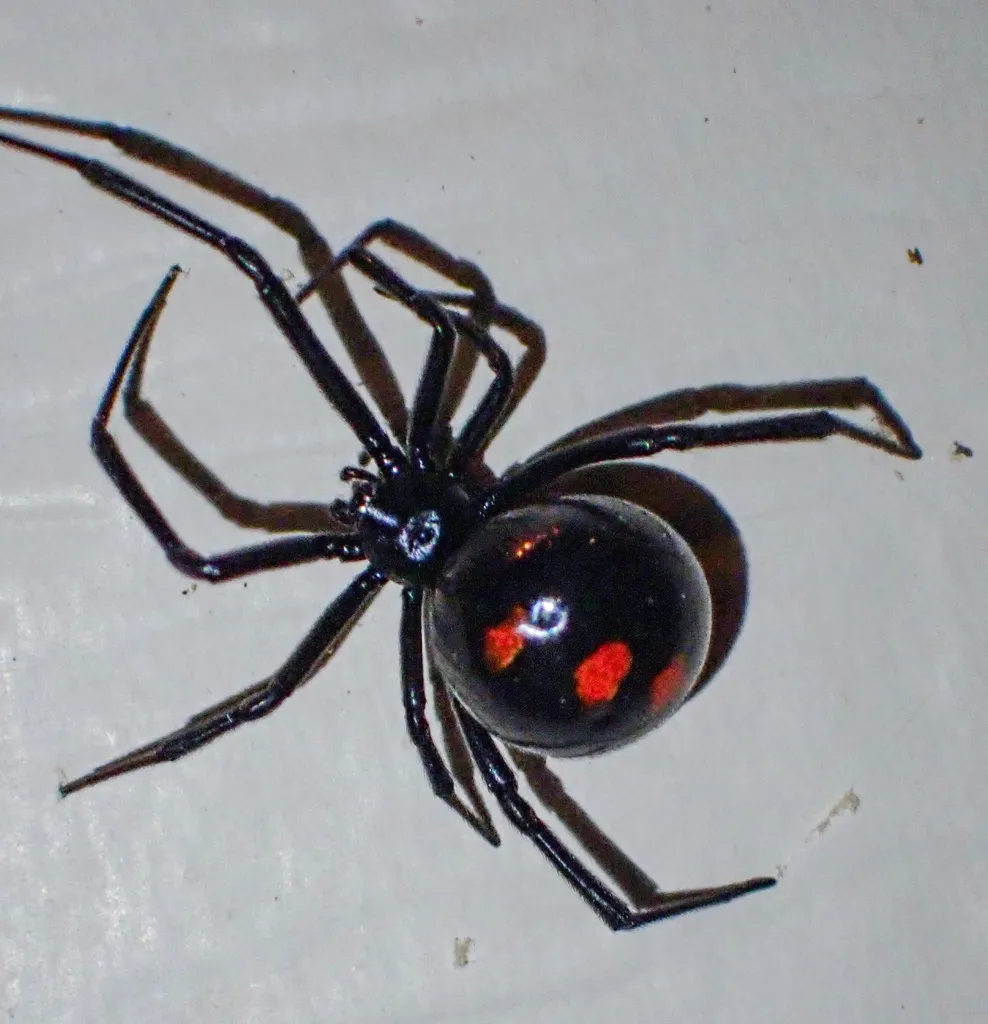
Photo credits: Contributed by john and jane balaban; Additional contributions by Lynette Elliott , Jay Barnes , Christopher Hunt , cheins
Frequently Asked Questions About Northern Black Widow
What is Northern Black Widow?
Northern Black Widow (Latrodectus variolus) is a species in the family Theridiidae, within the order Araneae.
How big is Northern Black Widow?
Adult Female: approximately 9-11 mm (just under 1/2 inch) in body length (not including legs) Adult Male: approximately half the size of the female, around 4-5 mm (just under 1/4 inch) in body length (not including legs)
How do you identify Northern Black Widow?
Although the Northern Black Widow is slightly smaller and not quite as venomous/dangerous (definitely still not to be messed with), it is similar to the Southern Black Widow ( L. mactans ) in general behaviors. Please refer to L. mactans info page and the Latrodectus genus info page for more information. Web: The web is typically a 3-dimensional, unorganized mass of silk spun in a dark crevice or corner. The web is sticky, and very strong. If the web is active (in use), the female will be in or very near the web.
Where is Northern Black Widow found?
| Feature | Details |
|---|---|
| Habitat | Undisturbed woods, in stumps, or in stone walls. |
| Range | The Northern Black Widow is typically considered an East Coast spider, it occurs from northern Florida to south-eastern Canada. This species is most common in the northern part of its range. |