
Oxyopes apollo
This record describes Oxyopes apollo (species). Recorded family: Oxyopidae. Recorded order: Araneae.
Identification and Appearance
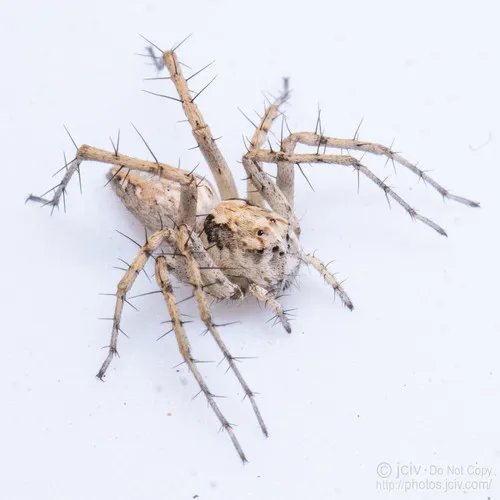
Identified as O. apollo This species is capable of changing from a light coloration to a slighty darker coloration to blend in with their background. Legs 4 (the hind legs) are the longest, then legs 2, legs 1, and 3 being the shortest. Small, fast spiders and good jumpers. The robust development of leg IV in species of the apollo group is undoubtedly related to their jumping ability and may be associated with their ecology, for example, their occurence in rather barren areas in some cases.
Wikipedia reference for Oxyopes apollo: https://en.wikipedia.org/wiki/Oxyopes apollo.
Classification
Habitat and Range
Habitat
Ground: among branches, leaves, grasses, and other low lying vegetation. "In 1964 (Brady) reported Oxyopes apollo collected from pitfall traps in Arkansas. Specimens collected near Durham, North Carolina were also taken in pitfall traps. Although sweeping vegetation in both these regions had yielded other species of Oxyopes , 0. apollo was not captured by this method."
Geographic Range
Specimens in images from St. Lucie County, FL. New records in Brady, 1969 include: - Durham Co., NC - Escambia Co., FL - San Patricio, TX Florida, TN, Missouri, Arkansas south through Oklahoma & Texas, west to Arizona and south into Mexico.
Diet and Behavior
Diet: Small spiders and insects, including red imported fire ants . The fire ants may be a significant part of this species diet.
About Spiders: the wider group
Order-level background for Araneae, the group containing Oxyopes apollo. Species-specific details appear above.
Group overview
As of 2023, 51,673 spider species in 136 families have been recorded, though an estimated 150,000 species exist. Spiders rank 7th in total species diversity among all organism orders. Only 0.5% of spider species pose any risk to human health.
Ecological role of the group
Spider venom contains complex peptides with diverse pharmacological activities, making them valuable for drug development research. Spiders produce up to 7 types of silk from specialized glands. Spider silk genes have been inserted into mammals and plants for biotech applications.
Economic and practical significance of the group
The global spider community kills an estimated 400-800 million tons of prey annually (2017 study). Spiders provide billions of dollars in natural pest control for agriculture. Spider silk is 5× stronger than steel of the same diameter, driving a biomaterials research industry.
Recorded sources for this group: World Spider Catalog, PNAS, Nature, ScienceDirect. Imported estimates may describe particular regions or reporting periods.
Photos of Oxyopes apollo (9)
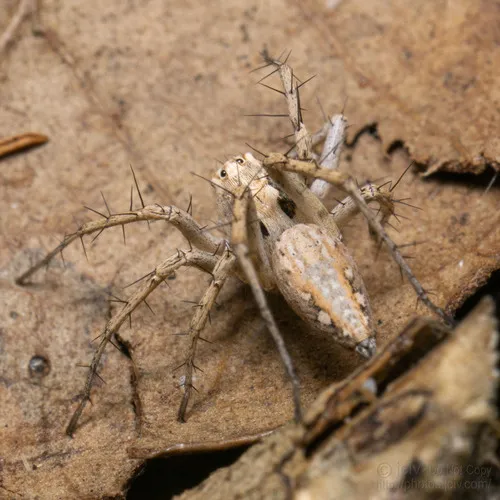
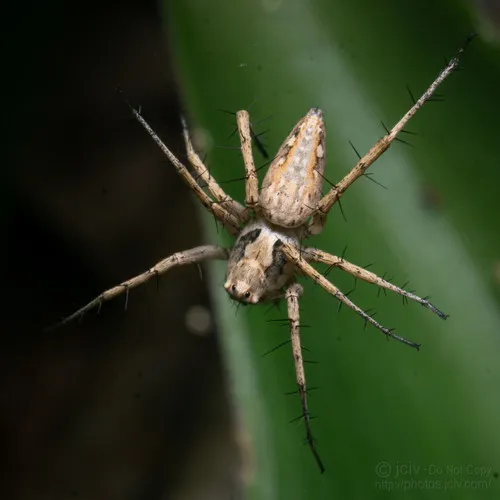
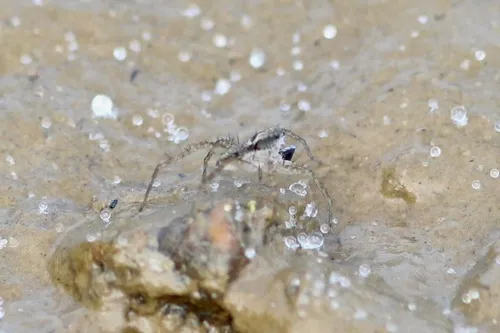
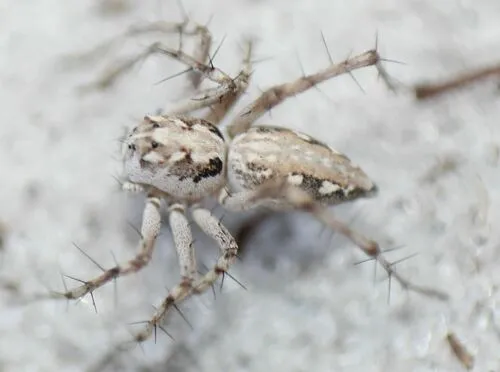
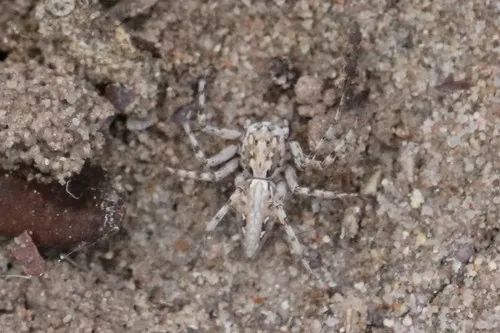
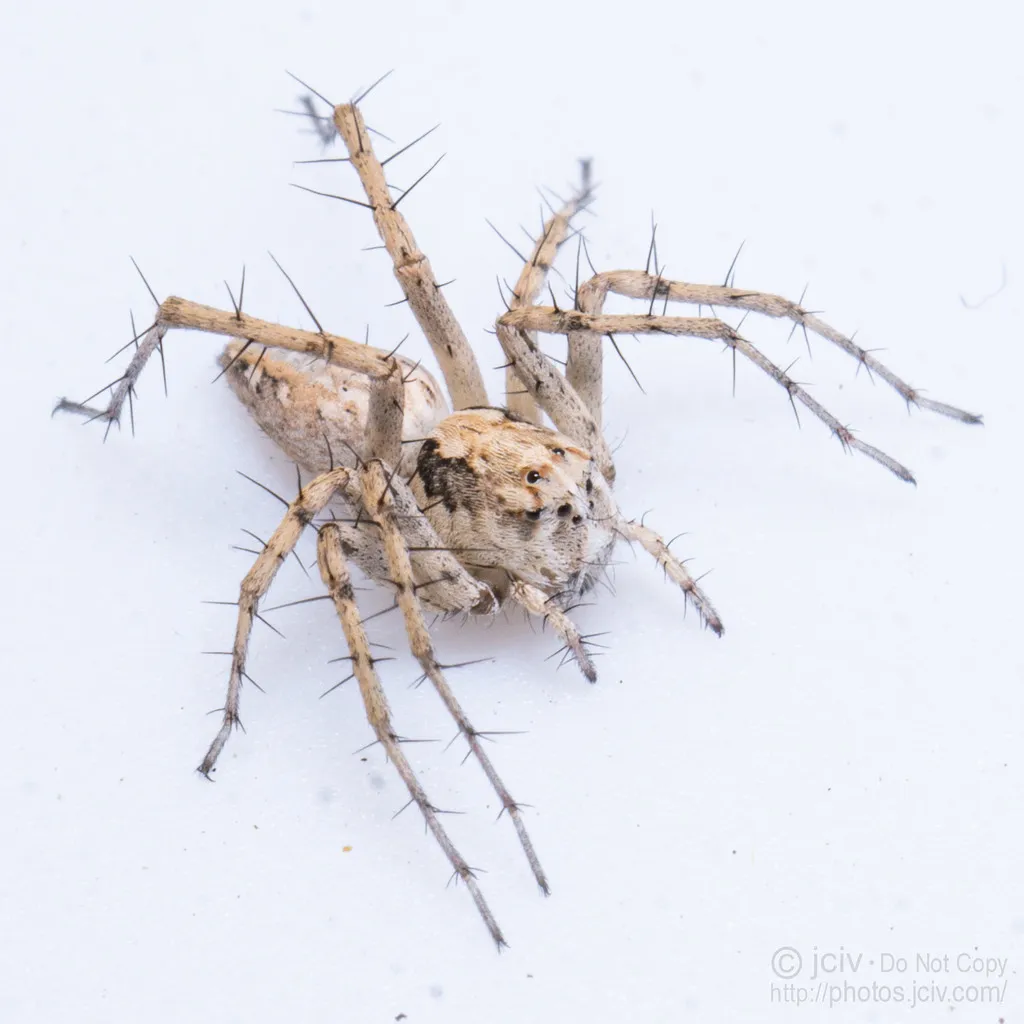
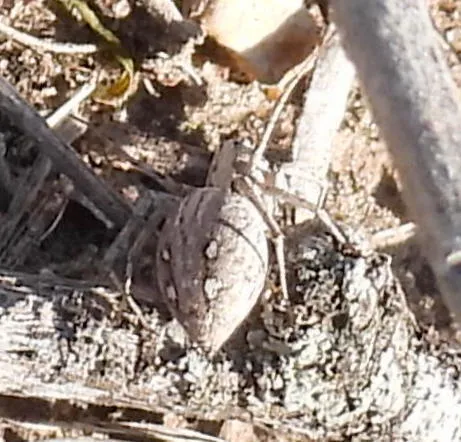
Photo credits: (c) Joseph Connors, all rights reserved, uploaded by Joseph Connors | (c) Bianca Banda, some rights reserved (CC BY-NC), uploaded by Bianca Banda | (c) David Hernandez, all rights reserved, uploaded by David Hernandez | (c) Mikie Green, some rights reserved (CC BY-NC), uploaded by Mikie Green | (c) Missy McAllister-Kerr, some rights reserved (CC BY-NC), uploaded by Missy McAllister-Kerr | (c) Oscar Johnson, some rights reserved (CC BY-NC-ND), uploaded by Oscar Johnson | Contributed by Jeff Hollenbeck; Additional contributions by Lynette Elliott
Frequently Asked Questions About Oxyopes apollo
What is Oxyopes apollo?
Oxyopes apollo is a species in the family Oxyopidae, within the order Araneae.
How big is Oxyopes apollo?
Adult female BL 5 - 6 mm Adult male BL 4 - 5 mm
How do you identify Oxyopes apollo?
Identified as O. apollo This species is capable of changing from a light coloration to a slighty darker coloration to blend in with their background. Legs 4 (the hind legs) are the longest, then legs 2, legs 1, and 3 being the shortest. Small, fast spiders and good jumpers. The robust development of leg IV in species of the apollo group is undoubtedly related to their jumping ability and may be associated with their ecology, for example, their occurence in rather barren areas in some cases.
Where is Oxyopes apollo found?
| Feature | Details |
|---|---|
| Habitat | Ground: among branches, leaves, grasses, and other low lying vegetation. In 1964 (Brady) reported Oxyopes apollo collected from pitfall traps in Arkansas. Specimens collected near Durham, North Carolina were also taken in pitfall traps. Although sweeping vegetation in both these regions had yielded other species of Oxyopes , 0. apollo was not captured by this method. |
| Range | Specimens in images from St. Lucie County, FL. New records in Brady, 1969 include: - Durham Co., NC - Escambia Co., FL - San Patricio, TX Florida, TN, Missouri, Arkansas south through Oklahoma & Texas, west to Arizona and south into Mexico. |
What does Oxyopes apollo eat?
The diet of the Oxyopes apollo includes Small spiders and insects, including red imported fire ants . The fire ants may be a significant part of this species diet..