
Family Underwing, Tiger, Tussock, and Allied Moths (Erebidae)
Erebidae is a family in the order Lepidoptera. Browse 932 named species recorded in this family, or open an individual profile for its available identification and natural-history information.
Species in Erebidae (932)
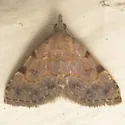
Nychioptera accola - Hodges#8486
Nychioptera accola
Nychioptera accola - Hodges#8486 (Nychioptera accola) is a species in the family Erebidae, belonging to the order Lepidoptera (Butterflies and Moths). It is classified within the subfamily Boletobiinae, tribe Phytometrini, superfamily Noctuoidea. Thi
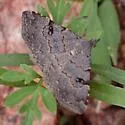
Nychioptera noctuidalis - Hodges#8485
Nychioptera noctuidalis
Identification: The only of the Nychioptera with the reniform filled with black.
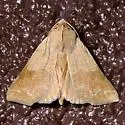
Obrima rinconada - Hodges#8565
Obrima rinconada
Identification: Photo by Charles Melton of a specimen identified by DNA
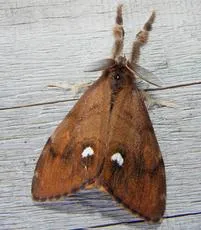
The Vapourer
Orgyia antiqua
Wingspan 25-30 mm. Males are chestnut brown with a white spot on each wing. The females are virtually wingless, an attribute normally associated with winter-emerging species. Urban gardens and parks, open woodland, fens, hedgerows, heathland and moor
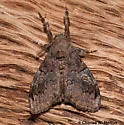
Orgyia falcata - Hodges#8317
Orgyia falcata
Identification: Specimen identified by DNA analysis: dimorphic species with females having reduced or no wings
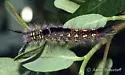
Western Tussock Moth - Hodges#8309
Orgyia vetusta
Identification: Specimen identified by DNA analysis:
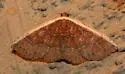
The White Edge - Hodges#9025
Oruza albocostaliata
Identification: Small body and broad forewing--resembles a geometer in form. Forewing has prominent white band on leading edge.
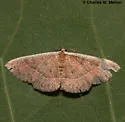
Oruza albocostata - Hodges#9026
Oruza albocostata
Identification: Specimen identified by DNA analysis:
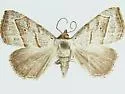
Oxycilla mitographa - Hodges#8408
Oxycilla mitographa
Identification: The two transverse lines are distinctive.
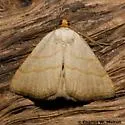
Oxycilla tripla - Hodges#8405
Oxycilla tripla
Identification: The original description is available online in the print references below. (Grote) Some caterpillar notes in PDF. ( 5 )
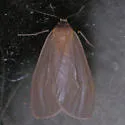
Mouse-colored Lichen Moth - Hodges#8099
Pagara simplex
Identification: Det. J & J Balaban, 2016 apparently uncommon , never common (in FL)
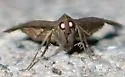
Dark-spotted Palthis - Hodges#8397
Palthis angulalis
Identification: The lack of the dark patch on the outer margin of FW near apex, and the strongly curved dark median band that doesn't touch the AM line excludes asopialis (dark median band often borders AM line in asopialis ). ♂
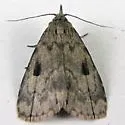
Masked Parahypenodes - Hodges#8430
Parahypenodes quadralis
Identification: Barnes & McDunnough (1918) original description is displayed and online in the print references. "Primaries dull ochreous gray, shaded with deep smoky; t.a. line single, dark, irregular, arising from small dark costal blotch, bent inw
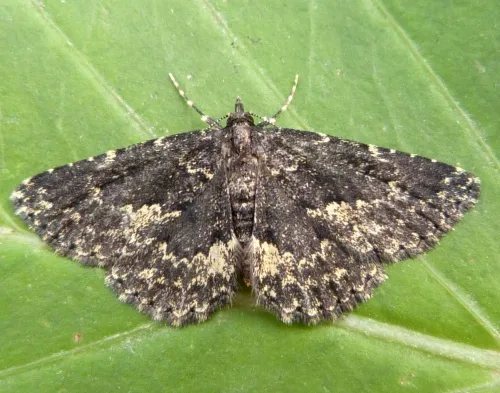
Waved Black
Parascotia fuliginaria
Wingspan 18 to 28 mm. This rather pretty species has a resting posture and appearance more typical of the family Geometridae than Noctuidae. It occupies woodland, damp areas and suburban habitats. The larvae feed mainly on a variety of fungi and rott
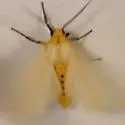
Yellow-winged Pareuchaetes - Hodges#8227
Pareuchaetes insulata
Identification: Forewing color is clay yellow with no other markings. Although it is native to Mexico and the U.S. Gulf Coast and a popular nectar plant in the southern U.S., Chromolaena odorata has become a noxious weed on Pacific Islands, Australia
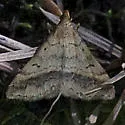
Phalaenophana extremalis - Hodges#8339
Phalaenophana extremalis
Identification: Adult - Original description by Barnes & McDunnough here Larvae - Description and info by George L. Godfrey here .
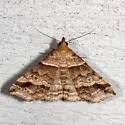
Dark-banded Owlet - Hodges#8338
Phalaenophana pyramusalis
Identification: forewing ground color light gray, yellowish, or brownish; antemedial and postmedial areas each crossed by a broad band of darker color (sometimes with a greenish tint); reniform spot has a dark dot on each side, and orbicular spot has
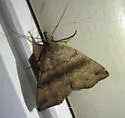
Dark Phalaenostola - Hodges#8363
Phalaenostola eumelusalis
Identification: Adult: forewing brown, crossed by dark brown antemedian (AM), postmedian (PM), and subterminal (ST) lines; AM line composed of three scallops; PM and ST lines thin, irregular, zigzagged; distance between AM and PM lines at least 2x gr
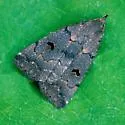
Hanham's Owlet - Hodges#8365
Phalaenostola hanhami
Identification: A small dark chocolate brown or puple-grey moth. The forewings are dark, with the antemedian and postmedian lines indistinct but visible, and with the subterminal line better marked in blackish scales, outlined on the distal side in c
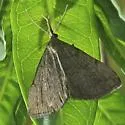
Pale Phalaenostola - Hodges#8362
Phalaenostola metonalis
Identification: labial palps very long (as long as head and thorax combined) and flattened laterally; male antennae broadly bipectinate, with each lateral branch 1 mm long; forewing light grayish-brown or yellowish-brown, often darker in median area
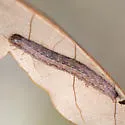
Uncommon Oak Moth - Hodges#8591.1
Phoberia ingenua
Identification: Looks virtually identical to Phoberia atomaris. The male antenna has long setae which are longer than the width of the antennal shaft. The setae on the antenna of male Phoberia atomaris are shorter than the width of the of the antenna
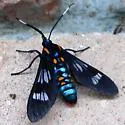
Phoenicoprocta lydia - Hodges#8285.1
Phoenicoprocta lydia
1st US record. Local newspapers will run an article today; and the state parks dept. will run an article throughout Texas on Friday. Maybe it will go national and you can read the article. Fran Bartle, 8 October, 2008
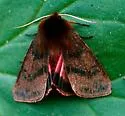
Large Ruby Tiger Moth - Hodges#8158
Phragmatobia assimilans
Identification: Adult: forewing opaque dark reddish-brown with dark speckling and faint black AM, PM, and ST lines; female larger and darker with more prominent forewing pattern; hindwing reddish or pinkish with broad black terminal band but no black
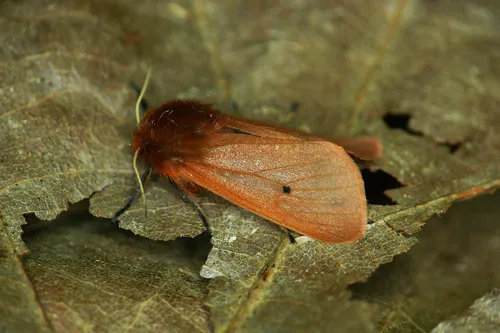
Ruby Tiger
Phragmatobia fuliginosa
Wingspan 30-35 mm. Showing a gradual variation in colour, with the brightest individuals in the south, and much duller specimens in Scotland, attributable to the subspecies borealis . Downland, heathland and sand-dunes and in woodland clearings, farm
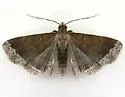
Physula albipunctilla - Hodges#8390.2
Physula albipunctilla
Rolfe, A.K. (2011) included Physula albipunctilla in the diet of Mormoops blainvillei , a bat species in Puerto Rico. PDF
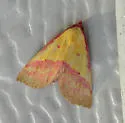
Pink-Bordered Yellow - Hodges#8481
Phytometra rhodarialis
Identification: The forewing is yellow and has a pink band along the basal half of the leading edge. About the rear 2/5ths of the forewing is pink too (viewed at rest).
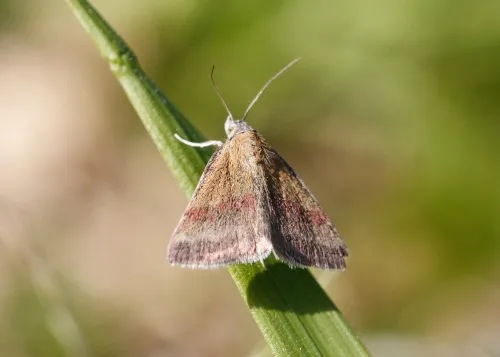
Small Purple-barred
Phytometra viridaria
Wingspan 19 to 20 mm. An attractive species with broad pinky-purple bars on the wings It frequents acid heathland, chalky downland and open woodland. A mainly diurnal species, flying in May to July, it also flies after dark, when it is attracted to l
Plusiodonta amado - Hodges#8535
Plusiodonta amado
Identification: On each AM line of the fore-wing, there should be only 2 'teeth' total, projecting forward (towards the head) and they are relatively widely spaced from each other. (Bob Biagi)
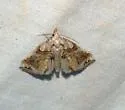
Plusiodonta nr-compressipalpis from Arizona - Hodges#8534.89
Plusiodonta nr-compressipalpis
Specimens from Arizona identified as compressipalpis in BIN BOLD:AAB7158 appear to represent a cryptic species well separated by DNA barcode.
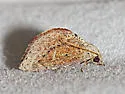
Proroblemma testa - Hodges#9080
Proroblemma testa
Identification: The original description is available online in the print references below. Photos determined by Bob Patterson.

Prosoparia anormalis - Hodges#8419.1
Prosoparia anormalis
Identification: LaFontaine & Dickel revised description is available online in print references. (PDF)
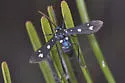
Lesser Wasp Moth - Hodges#8286
Pseudocharis minima
Lesser Wasp Moth - Hodges#8286 (Pseudocharis minima) is a species in the family Erebidae, belonging to the order Lepidoptera (Butterflies and Moths). It is classified within the subfamily Arctiinae, tribe Arctiini, superfamily Noctuoidea. This specie
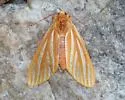
Pseudohemihyalea ambigua - Hodges#8218
Pseudohemihyalea ambigua
Pseudohemihyalea ambigua - Hodges#8218 (Pseudohemihyalea ambigua) is a species in the family Erebidae, belonging to the order Lepidoptera (Butterflies and Moths). It is classified within the subfamily Arctiinae, tribe Arctiini, superfamily Noctuoidea
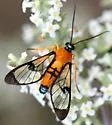
Pseudosphex leovazquezae - Hodges#8276.2
Pseudosphex leovazquezae
Previous U.S. Records: TEXAS: Hidalgo Co., Santa Ana Refuge, November 13, 1971 (1 female) TEXAS: Hidalgo Co., Santa Ana Refuge, September 23, 1973 (1 male) - both specimens collected by A. & M. E. Blanchard and deposited in the USNM. Subsequent recor
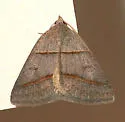
Common Ptichodis - Hodges#8750
Ptichodis herbarum
Identification: "This is a sexually dimorphic species. Females are plainly marked with relatively straight am. and pm. lines. Males have a black spot near the wing base and the am. and pm. lines have a strong curve or abrupt bend and there is a lot o
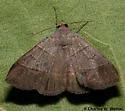
Ptichodis ovalis - Hodges#8753
Ptichodis ovalis
Identification: Grote (1883) and Hampson (1913) descriptions available in print references. Specimen identified by DNA analysis (BOLD). ( 4 )
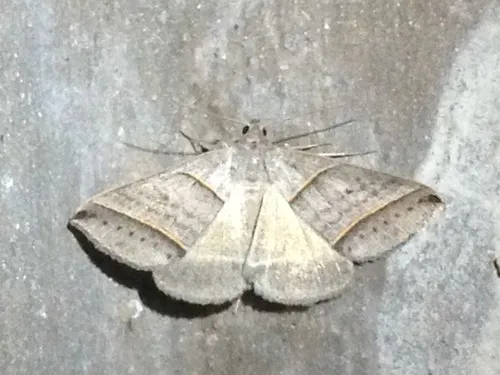
Black-tipped Ptichodis Moth - Hodges#8749
Ptichodis vinculum
Black-tipped Ptichodis Moth - Hodges#8749 (Ptichodis vinculum) is a species in the family Erebidae, belonging to the order Lepidoptera (Butterflies and Moths). It is classified within the subfamily Erebinae, tribe Euclidiini, superfamily Noctuoidea.
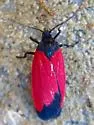
Ptychoglene phrada - Hodges#8080
Ptychoglene phrada
Identification: Adult - Forewing is red with black terminal/subterminal area. Along edge of black subterminal area, two small peaks point back basally. Also has very small amount of black in FW basal area. Hindwing is mostly black with red patch in b
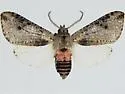
Purius superpulverea - Hodges#8256.1
Purius superpulverea
First United States record from Yturria NWR, Hidalgo County, TX, on 8-III-99, in a light trap , by Ed Knudson.
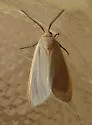
Yellow-edged Pygarctia - Hodges#8255
Pygarctia abdominalis
Identification: Forewing is slate grey with pale yellow along the costa to almost the apex and also along inner margin. The thorax has two orange-yellow strips. Abdomen is orange-yellow above with a row of black dots along the length.
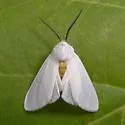
Pygarctia flavidorsalis - Hodges#8253.1
Pygarctia flavidorsalis
Identification: Adult - wings and thorax white; head, abdomen, and femora orange; tarsi black; antennae black, pectinate. I have found the head, abdomen and femora to be yellow. A. Hendrickson
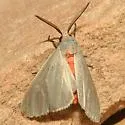
Mousey Tiger Moth - Hodges#8250
Pygarctia murina
Identification: Larva - typical "wooly bear" type of this group. Ground color purple-brown or blue-gray, a narrow lemon yellow subdorsal stripe, a wide yellow stripe below spiracles, black pencil tufts and longer white hairs, head dark orange with o
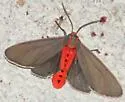
Pygarctia neomexicana - Hodges#8251
Pygarctia neomexicana
Identification: Det. Bob Patterson and Ed Knudson (Texas Lepidoptera Survey)
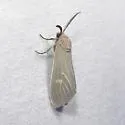
Pygarctia pterygostigma - Hodges#8250.1
Pygarctia pterygostigma
Identification: The gray head has narrow pink band in the nape. Forewing gray with a yellowish-white mark. Abdomen dorsal is crimson with a row of spots. Legs are gray; foreleg coxae has pink inner side. [adapted from the Dyar (1909) description]
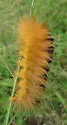
Pygarctia roseicapitis - Hodges#8253
Pygarctia roseicapitis
Avoid attack of Pentatomidae and Vespidae predators and Diptera parasitoids by dropping from the plants to the ground.
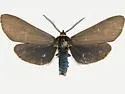
Pygoctenucha pyrrhoura - Hodges#8245
Pygoctenucha pyrrhoura
Identification: Adults description adapted from Hulst (1881). Forewing is smoky brown with slight metallic tinge, and lighter fringe. Thorax and abdomen are shiny metallic blue-black. Tip of abdomen is bright red. Forelegs have bright red along the
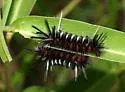
Pygoctenucha terminalis - Hodges#8244
Pygoctenucha terminalis
P. terminalis is likely congeneric with Euchaetes ( 4 ) and both genera need revision. ( 5 )
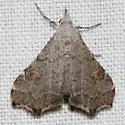
Pygmy Redectis - Hodges#8400
Redectis pygmaea
Identification: Adult: forewing grayish-brown with slightly lobed outer margin; AM line scalloped, and PM line toothed, but both lines may be faint or indistinct; darker shading just inside PM line at costa may partly obscure reniform spot, which con
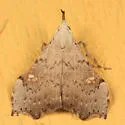
White-spotted Redectis - Hodges#8401
Redectis vitrea
Identification: Adult: forewing pale brownish-gray with deeply-lobed outer margin; reniform spot represented by cluster of three small white ovals - a diagnostic feature; hindwing pale gray with black-dashed terminal line and slightly irregular outer
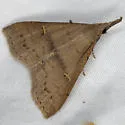
Speckled Renia Moth - Hodges#8386
Renia adspergillus
Identification: Refer to the guide on the info page for the genus.
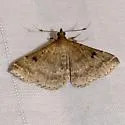
Sociable Renia - Hodges#8379
Renia factiosalis
Identification: Refer to the guide on the info page for the genus.
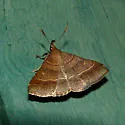
Yellow-spotted Renia - Hodges#8384.1
Renia flavipunctalis
Identification: Refer to the guide on the info page for the genus.
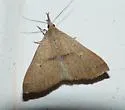
Fraternal Renia Moth - Hodges#8385
Renia fraternalis
Identification: Refer to the guide on the info page for the genus.
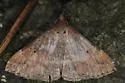
Chocolate Renia Moth - Hodges#8380
Renia nemoralis
Identification: Refer to the guide on the info page for the genus.
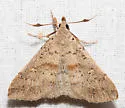
Short-snout Renia - Hodges#8378
Renia salusalis
Identification: Refer to the guide on the info page for the genus. In males, "Palpi short, third segment short and blunt, a plume on inner dorsal side of second segment" Renia salusalis (Walker, 1859) currently is known to range throughout the southe
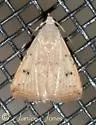
Rivula pusilla - Hodges#8404.1
Rivula pusilla
Rivula pusilla - Hodges#8404.1 (Rivula pusilla) is a species in the family Erebidae, belonging to the order Lepidoptera (Butterflies and Moths). It is classified within the subfamily Rivulinae, superfamily Noctuoidea. This species belongs to the genu
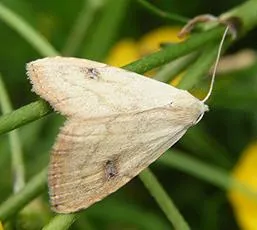
Straw Dot
Rivula sericealis
Wingspan 18-22 mm. A small buff coloured moth with a dark spot on each wing. Damp meadows and woodland are its favourite haunts. The two generations a year fly in June and July and again in August and September.It flies from dusk into the night when
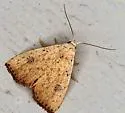
Rivula stepheni - Hodges#8404.2
Rivula stepheni
Identification: Forewing color is ivory with darker tan margins and the reniform spot is represented as two black dots.
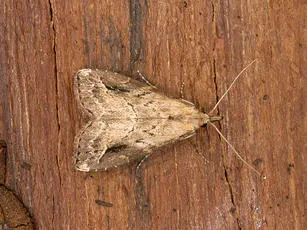
Pinion-streaked Snout
Schrankia costaestrigalis
Marshy places, damp meadows and fens are the preferred habitat. The adults can be noted on the wing from July to October, possibly as two generations. Not much is known about the earlier stages of this species in the wild, as the larva has only ever
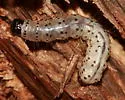
Dead-wood Borer Moth - Hodges#8514
Scolecocampa liburna
Identification: Adult : Straw-colored FW, with fragmented AM and PM lines reduced to rows of brown dots. Tiny black basal and orbicular spots are black. Hollow reniform spot is outlined brown. Dotted ST has dusky blotch beyond midpoint. Larva :
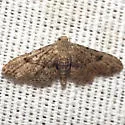
Sigela brauneata - Hodges#8432
Sigela brauneata
Identification: Description by Pogue, 2012. (PDF) The original description as Eois brauneata Swett, is available online in the print references below.
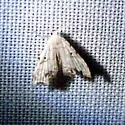
Sigela incisa - Hodges#9081
Sigela incisa
Previously misidentified as Araeopteron vilhelmina (Dyar, 1916), known from Central America. Troubridge transferred vilhelmina to Sigela and described the Florida taxon as a new species, Sigela incisa . Generic placement is provisional.
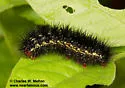
Sonorarctia fervida - Hodges#8158.1
Sonorarctia fervida
Identification: ID confirmed by Ray Nagle who has reared the larva.
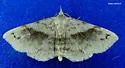
Six-spotted Gray - Hodges#8479
Spargaloma sexpunctata
Identification: forewing violet-gray with tiny black orbicular spot and three small black dots in a narrow triangle near apex; dark gray median band has sharp border proximally, diffuse border distally hindwing brownish-gray with two wavy bands media
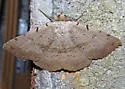
Moon-lined Moth - Hodges#8769
Spiloloma lunilinea
Identification: Adult - Gray with distinctive black marks on forewings, black collar Crumb describes the larva.
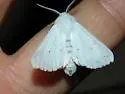
Agreeable Tiger Moth - Hodges#8134
Spilosoma congrua
Identification: Adult: forewing pure white or marked with transverse rows of black spots; antennal shaft white; inner face of pro-femora yellow-orange; hind tibiae with both pre-apical and apical pair of spurs; abdomen white [adapted from description
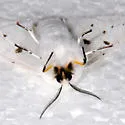
Dubious Tiger Moth - Hodges#8136
Spilosoma dubia
Identification: Wings white, with heavy black spotting on forewing and variable black subterminal patches on hindwing. Abdomen with yellow areas & black spots.
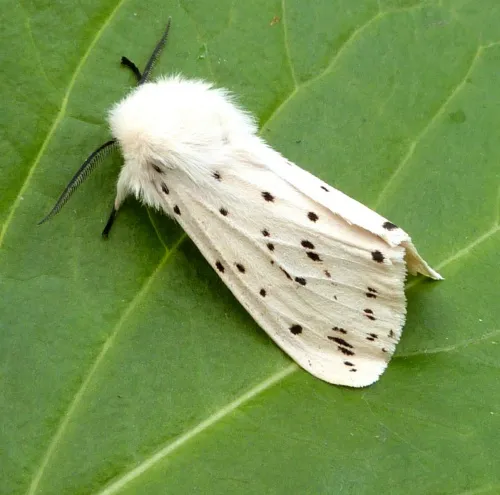
White Ermine
Spilosoma lubricipeda
Wingspan 34-48 mm. There is considerable variation in the degree of black speckling and, in certain parts of Scotland, there are forms with a buffish ground colour. Gardens, hedgerows, grassland, heathland, moorland and woodland. It generally flies f
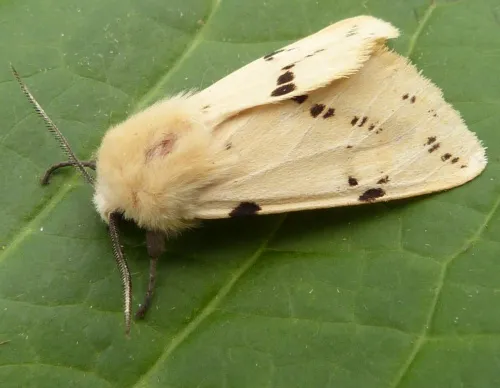
Buff Ermine
Spilosoma lutea
Wingspan 28-40 mm. The variation in the extent of black in the wings has been exaggerated by captive interbreeding, but does not occur as much in the wild. Wide range of habitats, including gardens, hedgerows, parkland and woodland. On the wing from
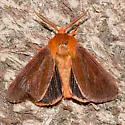
Brown Tiger Moth - Hodges#8139
Spilosoma pteridis
Identification: head and thorax rusty orange; forewing dark reddish-brown with blackish shading and faint lines; discal spot black, indistinct hindwing dark charcoal gray with black discal spot and brown fringe
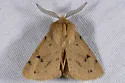
Wandering Tiger - Hodges#8138
Spilosoma vagans
Identification: forewing and hindwings are extremely variable males are often attracted to lights; females are dinural and seldom seen at lights
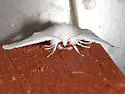
Vestal Tiger Moth - Hodges#8135
Spilosoma vestalis
Identification: Original description online: (125) Wings pure white, usually with several scattered tiny black dots; inner surface of front leg femur with pink or reddish hairs; head and thorax white, hairy.
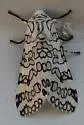
Stictocompe oslari - Hodges#8148
Stictocompe oslari
Identification: Smaller than the other Hypercompe with which it overlaps in range, with the forewing spots proportionately larger and packed more closely together.
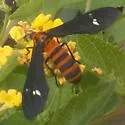
Yellow-banded Wasp Moth - Hodges#8282
Syntomeida ipomoeae
Identification: Adult: forewing elongate/spatula-shaped, black with 2-4 small white discal spots; hindwing much smaller, black with white basal patch; abdomen with alternating yellowish-orange and black bands Larva: body orangish with six short black
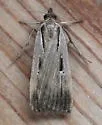
Alfalfa Looper - Hodges#8466
Tathorhynchus exsiccata
Identification: Adult: forewing light brownish-gray with diffuse dark shading beyond subterminal line; dark basal dash and dark strip between pale reniform and orbicular spots; reniform spot contains two dark dots; pale streaking along veins, and som
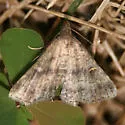
Smoky Tetanolita - Hodges#8366
Tetanolita mynesalis
Identification: Large yellow reniform spot contrasts with the dark forewing. Hindwing is grayish brown with dark lines. Genitalia: ♂
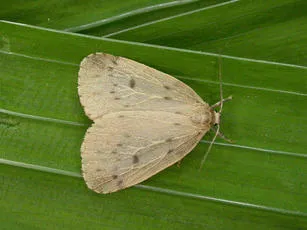
Round-winged Muslin
Thumatha senex
Wingspan 15 to 20 mm. The sparsely scaled wings of this moth give it a thin, papery appearance. The adults fly in July and August, and are attracted by light. The larvae feed on lichens, especially dog lichen, as well as various mosses. Distributed w
Owl Moth - Hodges#8647
Thysania zenobia
Identification: Males are more boldly marked. Dorsal Ventral
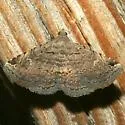
Cruel Toxonprucha - Hodges#8674
Toxonprucha crudelis
Identification: Larva - whitish gray, sometimed with a purple tinge, pale and broken middorsal stripe, purple stripe just above the legs; head white, brown in front and black posteriorly. Adult - forewing light brownish-gray, usually with discernible
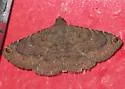
Spotted Toxonprucha - Hodges#8670
Toxonprucha pardalis
Identification: Adult - forewing dark brownish-gray with several darker wavy lines crossing wing; PM line heaviest, black, with small pale patch at costa; subterminal area with orangish shading; conspicuous dark oval spot at apex also contains some o
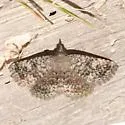
Toxonprucha psegmapteryx - Hodges#8676
Toxonprucha psegmapteryx
Identification: Soft bluish gray, dark in tone; lines blackish, wavy, not contrasted, forming about ten dark specks along the costa; inner and median lines slender, waved; a dot toward base of cell; reniform a large, kidney-shaped pale area; outer li
Toxonprucha scitior - Hodges#8673.2
Toxonprucha scitior
Identification: Specimen identified by DNA analysis: Genitalia: ♀ ♂ Toxonprucha scitior (Walker, 1865) is now recognized within the North American fauna, Hill Country of Texas, ZooKeys, 788: 246.
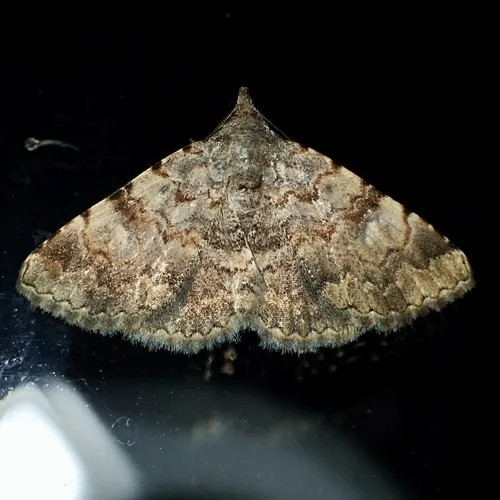
Bird Toxonprucha - Hodges#8672
Toxonprucha volucris
Identification: Larva - light to dark gray with distinctive black markings; head white and black. Adult - forewing light greenish-gray, sometimes with reddish tint; AM, median, PM, and subterminal lines usually discernible, black or dark reddish, hea
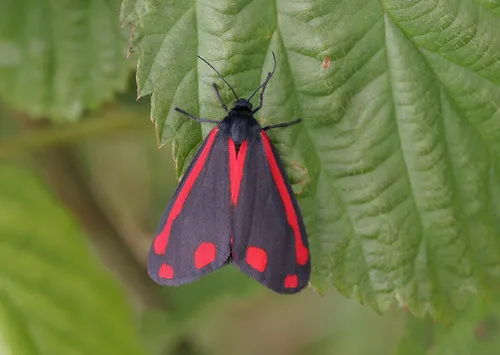
Cinnabar
Tyria jacobaeae
Wingspan 32-42 mm. Resembling no other British species, except perhaps the Burnets ( Zygaenidae ). The forewings are black with a red bar and the hind wings are all red. The caterpillars of the Cinnabar moth feed on the leaves and flowers of Common R
Tyrissa multilinea - Hodges#8650
Tyrissa multilinea
Identification: - Larva determined by J & J Balaban, 2013 Described by William Barnes and James Halliday McDunnough in 1913 from three female specimens collected in Everglade, Fla. and one male collected in San Benito, Cameron County, Texas.
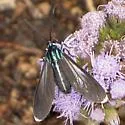
Uranophora leucotelus - Hodges#8271.7
Uranophora leucotelus
Identification: First United States (Texas) record! Determined by Ed Knudson (Texas Lepidoptera Survey) Charles Bordelon (Texas Lepidoptera Survey) Photographed by Rick Nirschl on January 6, 2013 in Mission, Hidalgo County, Texas, USA at the National
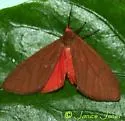
Ferguson's Virbia - Hodges#8118.1
Virbia fergusoni
Identification: Male FW umber with dark fuscous on the crossveins of the discal spot forming a small transverse band. HW peach red, the subterminal region raw umber. Female FW cinnamon, sometimes with a salmon costal margin. HW peach red, the termina
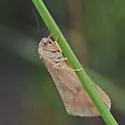
Rusty Virbia - Hodges#8123
Virbia ferruginosa
Identification: Easily confused with Virbia aurantiaca . The subterminal hindwing band of V. aurantiaca is solid, whereas the subterminal area of V. ferruginosa has a series of blotches and spots, not a solid band, according to this revision of the g
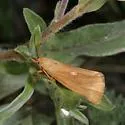
Virbia fragilis - Hodges#8125
Virbia fragilis
Identification: The identification of the western species in this complex, V. aurantiaca (Huebner), V. fragilis (Strecker), and V. ferruginosa (Walker) is not clearcut, and the taxonomy is in need of revision.
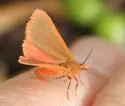
Immaculate Virbia - Hodges#8124
Virbia immaculata
Identification: The original description as Crocota immaculata Reakirt, is available online in the print references below. The Zaspel, Weller & Cardé revised description of Virbia immaculata is in PDF.
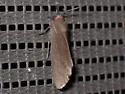
Joyful Virbia - Hodges#8114
Virbia laeta
Identification: Adult : FW fuscous to dark grayish brown with a light salmon band. The hindwings are geranium pink.
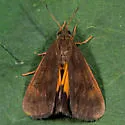
Virbia lamae - Hodges#8120
Virbia lamae
Identification: For a full description see Zaspel et al.
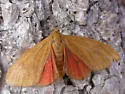
Tawny Virbia - Hodges#8118
Virbia opella
Identification: Adult : A highly phenotypically variable species ranging from a dark charcoal form to a pinkish form. Nearly all have a brown discal spot in the hindwing, although the spot is obscured in the dark form, and paler forms may lack the di
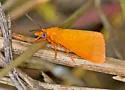
Ruddy Virbia - Hodges#8122
Virbia rubicundaria
Identification: Adult : Head and antennal scales clay with light orange hues. Third segment of labial palpus exceeding front of head by at least half of entire length, all segments a blend of clay and flesh ocher. Forewings are clay with light orange
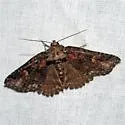
Bethune's Zale - Hodges#8705
Zale bethunei
Identification: Solid black median band; warm brown blotch beyond reniform spot.
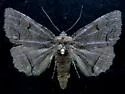
Zale buchholzi - Hodges#8706
Zale buchholzi
Identification: Similar to Zale helata but more uniformly brown.
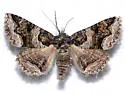
Double-banded Zale - Hodges#8714
Zale calycanthata
Identification: See Smith description linked under print references. Genitalia: ♀ ♂
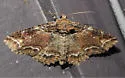
Zale clandestina - Hodges#8697.1
Zale clandestina
Identification: Description by Troubridge (2020) can be found at link in citations below. Genitalia: ♀ ♂
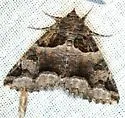
Zale colorado - Hodges#8715
Zale colorado
Identification: See original description linked under print references below. Key characteristics include: AM line even brown band, only a little irregular outwardly; beyond AM line is a whitish/pale area merging gradually into darker outer portion o
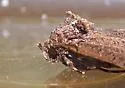
Dixie Zale - Hodges#8691
Zale declarans
Identification: See original description by Walker under Print References below. Larvae: Owlet Caterpillars of Eastern North America p.171