
Family Underwing, Tiger, Tussock, and Allied Moths (Erebidae)
Erebidae is a family in the order Lepidoptera. Browse 932 named species recorded in this family, or open an individual profile for its available identification and natural-history information.
Species in Erebidae (932)
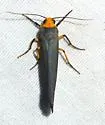
Gnamptonychia ventralis - Hodges#8057
Gnamptonychia ventralis
Identification: The original description of Gnamptonychia ventralis Barnes & Lindsey, is available online in the print references below. Diurnal .
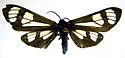
Gnophaela aequinoctialis - Hodges#8035
Gnophaela aequinoctialis
First US record per Kendall (1974), "While collecting in Panther Canyon above Landa Park, New Braunfels, Comal County, Texas, W. W. McGuire took one female on 9 April 1972. This specimen is now in the collection of Andre Blanchard of Houston, Texas."
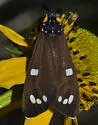
Gnophaela clappiana - Hodges#8033
Gnophaela clappiana
Identification: Forewing is much less marked than the other Gnophaela species in North America. Abdomen is iridescent blue. ( 3 ) Comstock (1937) description of the larva is in PDF. ( 4 )
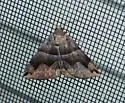
Smith's Darkwing Moth - Hodges#8726
Gondysia smithii
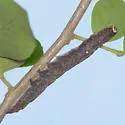
Identification: Genitalia: ♀ ♂ Unless you have evidence of rearing, dissection or a DNA test, the images of moths in these two species should be placed ----> here Larvae:
Gondysia telma - Hodges#8726.1
Gondysia telma
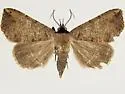
Identification: Adults: Unless you have evidence of rearing, dissection or a DNA test, the images of moths in these two species should be placed ----> here Genitalia: Larvae:
Goniocarsia electrica - Hodges#8580
Goniocarsia electrica
Identification: Blanchard & Knudson (1985) noted the adults are medium brown with a violet tinge, and highly variable. Postmedial line nearly white. ( 3 )
Citrus Fruit-piercer - Hodges#8540
Gonodonta nutrix
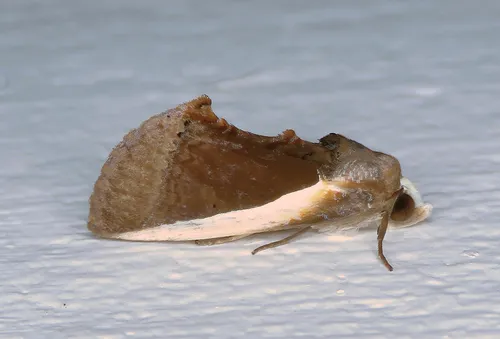
Identification: Adult: forewing basal two-thirds dark brown or dark gray to blackish except for broad white or pale yellow strip along costa to apex (the strip is displaced by a black triangular patch at base of costa); distal third of wing medium br
Gonodonta sinaldus - Hodges#8538
Gonodonta sinaldus
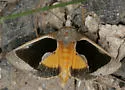
Identification: Adult: forewing has large dark brown to blackish patch with smoothly curved distal edge; lighter grayish-brown shading at base of wing, along costa, beyond PM line, and in small semicircular patch along inner margin; whitish line para
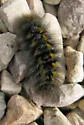
Ross' Tussock Moth - Hodges#8290
Gynaephora rossii
Identification: "Forewings grey with few markings, consisting of a darker antemedian and erratic postmedian line, usually poorly marked. The reniform is usually indicated by a dark dot or bar bordered by pale scales. Hindwings pale orange-buff with a
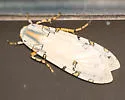
Davis' Tussock Moth - Hodges#8205
Halysidota davisii
Identification: Adult - forewing variably whitish to light brown with scattered dark markings along the costa - distinctly different than the complete bands extending across the wing in other species of Halysidota ; hindwing similarly colored but wit
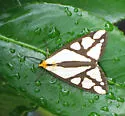
Colona Moth - Hodges#8108
Haploa colona
Identification: Fore wings white with variable number of brown markings. Hind wings and abdomen sulfur yellow. Thorax pure white or with dark brown stripes. Caterpillar is dark brown to black and has large bluish tubercles; it is marked by broken len
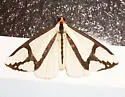
The Neighbor Moth - Hodges#8110
Haploa contigua
Identification: A brown line marks the leading edges of the cream to whitish-colored forewings and continues on to the anal angle. A third line extends from the bottom edge of the wing to intersect it. In addition, the inner borders of the forewings
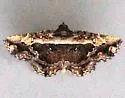
Helia agna - Hodges#8657
Helia agna
Identification: Druce (1890) original description as Selenis agna in print references. Often seen at bait.
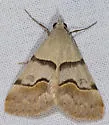
Hemeroplanis incusalis - Hodges#8474
Hemeroplanis incusalis
Identification: Adult - highly variable, with pale and darker forms. Summer specimens rarely as pale as spring specimens (Franclemont, 1966).
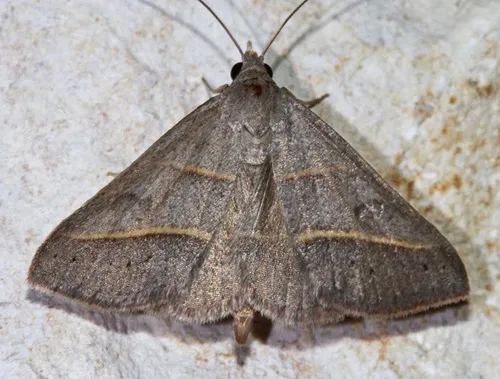
Hemeroplanis parallela - Hodges#8475
Hemeroplanis parallela
Ann Hendrickson 1/16/2023 I am now positive that none of my photographs posted here are Hemeroplanis trilineosa . Unfortunately, none of my specimens has full 658 coi, but all of them fail at the END of the string. All of them have been matched to t
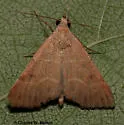
Hemeroplanis rectalis - Hodges#8475.1
Hemeroplanis rectalis
Identification: FWs rather sharply triangular with straight costal margin; ground color varies from pale cream, yellow, or orange, to pinkish red. AM and PM lines narrow, yellowish; AM line perpendicular to inner margin and fairly straight, highligh
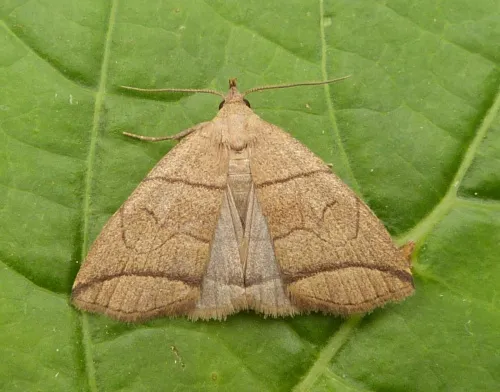
Small Fan-foot
Herminia grisealis
Wingspan 24-28 mm. This, the smallest of the Fan-foot group, is similar in pattern to the Fan-foot ( Herminia tarsipennalis ) but the dark subterminal line curves toward the wingtip, whereas in the latter species it is straighter. Flies from June to
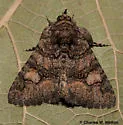
Heteranassa mima - Hodges#8659
Heteranassa mima
Identification: Specimens identified by DNA analysis: Larva - "extraordinarily variable." abundant in s. TX Heteranassa fraterna was synonymized with H. mima by Homziak et al.. Behavior:
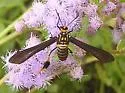
Texas Wasp Moth - Hodges#8287
Horama panthalon
Identification: Abdomen purplish/brown/black with many orange rings, hind legs black and orange with a large feathering on the tibiae (males *), antennae black with orange tips, thorax and head black with orange and white markings, wings brown. Some
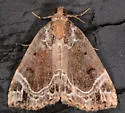
White-lined Hypena - Hodges#8445
Hypena abalienalis
Identification: Lacy pattern with doubled postmedian line on dark background is distinctive.
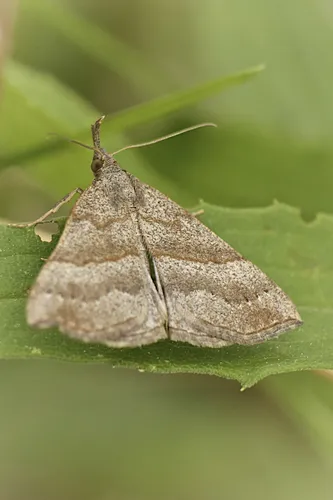
Hypena atomaria - Hodges#8450
Hypena atomaria
Identification: forewing light brownish-gray with brown speckling; AM line brown, angled like a skewed W, may be faint; PM line brown, almost straight, bordered proximally by band of dark shading; ST line a diffuse dark band, outer half straight and
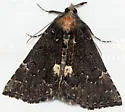
Dimorphic Hypena - Hodges#8443
Hypena bijugalis
Identification: Adult sexually dimorphic. Forewing of male blackish-brown with small white patch on inner margin near PM line. Forewing of female similar to Baltimore Bomolocha , but PM line straighter, farther from outer margin, and with one tooth.
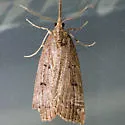
Hypena californica - Hodges#8462
Hypena californica
Identification: Adult: forewing slender, variably light to dark grayish-brown; light individuals have blackish streak extending through and beyond reniform and orbicular spots; dark individuals show less overall contrast but have more prominent AM an
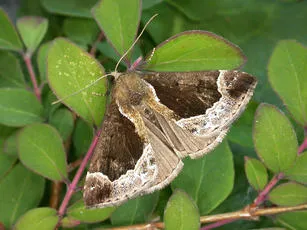
Beautiful Snout
Hypena crassalis
The adults fly from dusk onwards in June and July, and are attracted to light. The main foodplant of the larvae is bilberry. This species is locally distributed in the south and west of England, and in Wales and southern Ireland. In a recent survey t
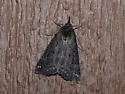
Decorated Hypena - Hodges#8463
Hypena decorata
Identification: Smith (1884) original description is available online in the print references. Sexually dimorphic species. The forewing of the males have two white dots near the apex. ( 4 ) Females have a small patch of raised dark scales in the med
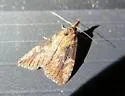
Hop Vine Moth - Hodges#8461
Hypena humuli
Identification: Adult: forewing appearance variable but usually with this pattern - dark brown to blackish in upper half except for pale brown patch along distal half of costa, and lighter brown in lower half (along inner margin); dark streak runs fr
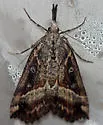
Hypena modestoides - Hodges#8464
Hypena modestoides
Identification: Hypena modestoides has a pale band beyond the postmedian line. The postmedian line is more oblique than in H. californica and has a large tooth projecting towards the wing base near the inner margin. The forewing has a slight falcate
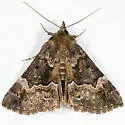
Mottled Hypena - Hodges#8444
Hypena palparia
Identification: Adult: forewing with large dark brown median patch that extends to inner margin (often lighter brown toward inner margin); basal and outer parts of forewing paler, mottled (pale areas darker in male than in female; female shows greate
The Snout
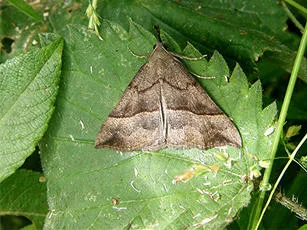
Hypena proboscidalis
Wingspan 25-38 mm. Unmistakeable because of its long 'snout'. A wide range of habitats, including woodland, scrub, hedgerows, gardens, rough meadows and marshes. This moth can often be found in numbers around dusk, flying over patches of the foodplan
Sordid Hypena - Hodges#8448
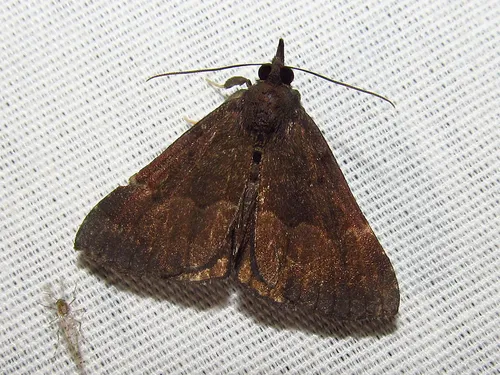
Hypena sordidula
Identification: Adult: male forewing dark grayish-brown; AM, PM, and ST lines wavy, indistinct, contrasting little against ground color; median area uniformly colored (not darker toward PM line, as in Gray-edged Bomolocha); small pale spot where PM l
Hypena tenebrosa - Hodges#8458
Hypena tenebrosa
Identification: Determined by Charles Bordelon & Ed Knudson (Texas Lepidoptera Survey).
Hypena umbralis - Hodges#8453
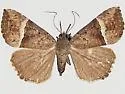
Hypena umbralis
Identification: Head, thorax and forewing are dark chocolate brown. Abdomen and hindwings are smoky black. Forewing has a blueish powdering between median area and postmedian line, but without any contrast. Antemedian line is somewhat richer browb, b
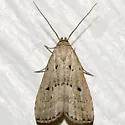
Broken-line Hypenodes - Hodges#8421
Hypenodes fractilinea
Identification: Adult: tiny (for a noctuid) long-winged light gray or dirty white moth with variable darker gray markings; forewing lines usually incomplete and marked by a series of dots; darker median shade often present; terminal area usually dark
Black-spotted Schrankia - Hodges#8431
Hypenopsis macula
Identification: Adult: forewing dark brown or gray except yellowish beyond straight oblique PM line; AM line black, broken; reniform dot and dotted terminal line black; subterminal line wavy, inconspicuous; small pale patch at apex; hindwing light gr
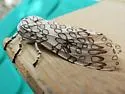
Hypercompe caudata - Hodges#8147
Hypercompe caudata
Identification: Hampson (1901) revised description as Ecpantheria caudata Walker, is available in the print references.
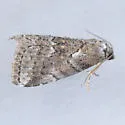
Hyperstrotia villificans - Hodges#9038
Hyperstrotia villificans
Identification: Genitalia: Based on range it appears that: 9035 Hyperstrotia nana is shown at BOLD in BIN BOLD:ACE6422 9038 Hyperstrotia villificans is shown at BOLD in BIN BOLD:ACE3004
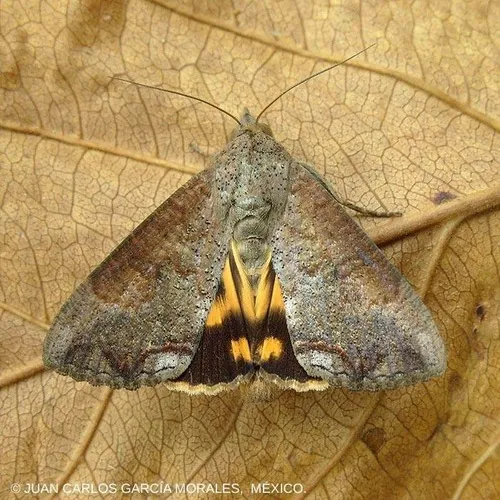
Hypocala Moth - Hodges#8642
Hypocala andremona
Identification: Adult: forewing brown to gray with diffuse speckling; reniform spot either dark gray or barely noticeable; ST line composed of two joined arcs, touching outer margin at the point where they join; small pale patch may be present in ter
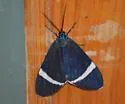
Hypocrita celina - Hodges#8038.1
Hypocrita celina
Synonymy of Hypocrita escuintla with H. celina proposed by Becker (2013) and Vincent & Laquerre (2013). Noted by Lafontaine & Schmidt (2015).
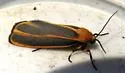
Hypoprepia cadaverosa - Hodges#8091
Hypoprepia cadaverosa
Identification: The original description is available online in the print references below.
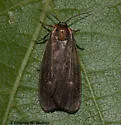
Hypoprepia inculta - Hodges#8092
Hypoprepia inculta
Identification: Adult - grey-black forewing with a pale longitudinal streak on the central vein ending before the spot, pale pink hindwing, abdomen tipped in dull orange (Edwards, 1882).
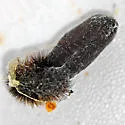
Many-spotted Tiger Moth - Hodges#8144
Hypsocompe permaculata
Identification: Adult: forewing white with many black solid rectangular spots arranged loosely in rows; hindwing white; thorax white with black spots (including a row down the middle); legs black with large white patches
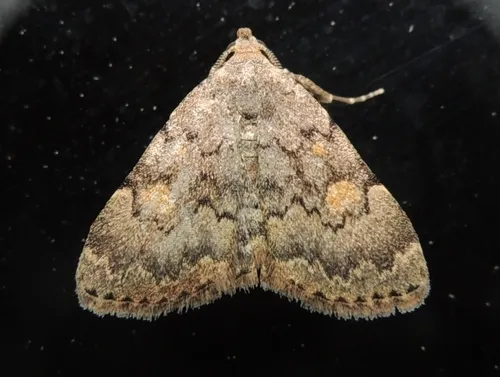
Common Idia Moth
Idia aemula
The Common Idia, Powdered Snout, or Waved Tabby (Idia aemula) is a litter moth of the Erebidae family. It is found from Canada south to Florida and Texas and in most of Eurasia.
Idia concisa of authors - Hodges#8323.1
Idia concisa-of-authors
This species is listed in The Owlet Moths of Ohio as Idia species near aemula and is pictured as figure 2 on Plate IX. The text notes that the species has in the past been misidentified as Idia concisa (presumably refering to Idia concisa (Walker, 18
Toothed Idia - Hodges#8333
Idia denticulalis
Identification: Adult: forewing shaded with light yellowish-gray or yellowish-brown; AM, PM, and ST lines with sharp irregular teeth; reniform spot represented by a small and indistinct dark arc with pale outline (sometimes faint or absent); diffuse
Idia forbesii - Hodges#8327
Idia forbesii
Identification: Photo from Mark Dreiling of a specimen determined by DNA.
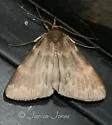
Gopher tortoise moth - Hodges#8336
Idia gopheri
Identification: Smith (1899) original description as Epizeuxis gopheri is online and linked in the print references. Uncommon to rare. ( 3 )
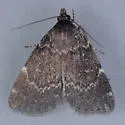
Idia julia - Hodges#8328
Idia julia
Identification: Averages larger than I. rotundalis and is paler. There are pale markings where the lines meet the costa. Along the subterminal line, these extend the full width of the forewing as a faint line. The postmedian line is bent more sharply
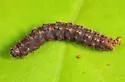
Glossy Black Idia - Hodges#8334
Idia lubricalis
Identification: Similar to, but larger than, the Smoky Idia, I. scobialis.
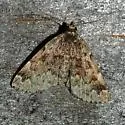
Greater Idia - Hodges#8324
Idia majoralis
Identification: Separation from Idia americalis : The subterminal line (nearer to the costa) of majoralis forms a more squared distad point - like a square protrusion, whereas in americalis it is more a of point, like a small bump. Also, in americali
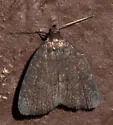
Rotund Idia Moth - Hodges#8326
Idia rotundalis
Identification: Adult : FW shiny sooty black with obscure dusky lines. Pale gray reniform and orbicular spots are small and inconspicuous.
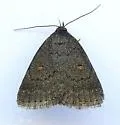
Idia terrebralis - Hodges#8332
Idia terrebralis
Identification: An all-dark species of the American Southwest.
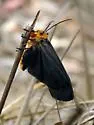
Inopsis modulata - Hodges#8055
Inopsis modulata
Identification: Forewing is black with a brass sheen and with orange head, collar, and lower side of the abdomen. The original description as Ctenucha modulata Edwards, is available online in the print references below.
Snow's Owlet - Hodges#8497
Isogona snowi
Identification: Adult: forewing light brown with sparse dark speckling and V-shaped AM, median, and PM lines; lower portion of PM line irregular or zigzagged; two pale spots in center of median area; slightly darker wedge-shaped area extends from med
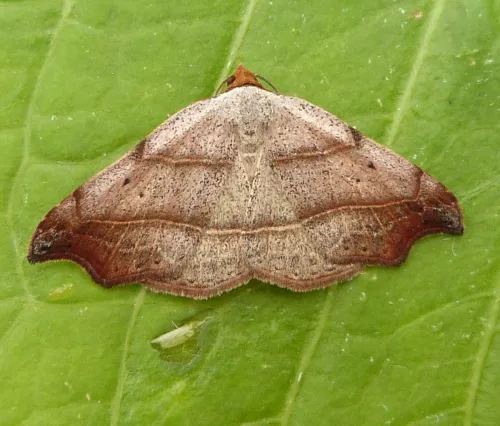
Beautiful Hook-tip
Laspeyria flexula
Occupies woodland, parks, gardens and orchards. The overwintering larvae feed on lichens which grow on the bark of a variety of deciduous and coniferous trees. It is locally distributed over the southern half of Britain. In a recent survey to determi
Latebraria amphipyroides - Hodges#8646
Latebraria amphipyroides
Identification: All four wings have cryptic brown uppersides but conspicuously banded undersides. Wing margins are wavy. Uncommon, but regular in southmost Texas
Lost Owlet - Hodges#8491
Ledaea perditalis
Identification: FW pale grayish brown to tan. PM line blackish, thick in lower half in male, but all the way to apex in female. Variable lines and shading on outer margin of HW.
Leptarctia californiae - Hodges#8126
Leptarctia californiae
Identification: Adult: forewing dark gray to black with or without white spots (usually along costa at AM, PM, and/or subterminal lines); hindwing varies from mostly black to mostly orange, sometimes black with bold yellow, white, or orange markings;
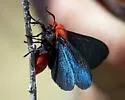
Crimson-bodied Lichen Moth - Hodges#8246
Lerina incarnata
Identification: Walker (1856) description. Head above, thorax, and abdomen towards the tip thickly clothed with crimson hairs. Palpi, proboscis, antennae, and legs black. Thorax with a black dorsal stripe, not extending to the front. Wings metallic b
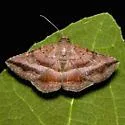
Detracted Owlet - Hodges#8651
Lesmone detrahens
Identification: Adult: forewing dark purplish-gray to brown with pointed apex; lines darker but often inconspicuous; PM line fine, sharply bent just below costa; ST line broad, dark gray, straight on basal side, irregular on outer side with broad too
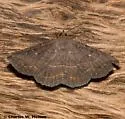
Gray-winged Owlet - Hodges#8654
Lesmone griseipennis
Identification: Adult: sexually dimorphic - male wings greenish-gray with black shading inside ST and PM lines; female forewing purplish-gray with no black shading, but inconspicuous apical dash; hindwing brownish-gray; PM line in male mostly straigh
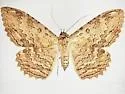
Letis xylia - Hodges#8646.1
Letis xylia
Identification: The forewings are variable from dark to pale, with both sexes similar. The first U.S. record was collected in Port Alto, Calhoun County, Texas, 16-X-1960, A. & M.E. Blanchard, determined by E. Todd.
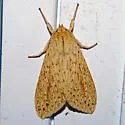
Long-streaked Tussock Moth - Hodges#8217
Leucanopsis longa
Identification: Adult: forewing light orangish-yellow speckled with brown; dark brown streak from base to outer margin near apex; hindwing whitish, translucent, unmarked [adapted from description by Charles Covell]
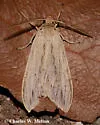
Leucanopsis lurida - Hodges#8217.2
Leucanopsis lurida
Identification: Barnes (1901) description as Euhalisidota otho available in print references.
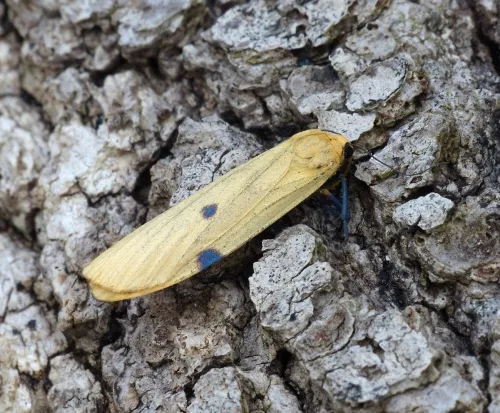
Four-spotted Footman
Lithosia quadra
Wingspan 35 to 55 mm. This is a sexually dimorphic species and only the females have the spots which give the species its name; often there appears to be only three spots, as the wings overlap when at rest. It flies from July to September or early Oc
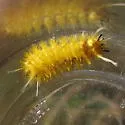
Santa Ana Tussock Moth - Hodges#8216
Lophocampa annulosa
Identification: Adult - tan tussock moth with chainlike light brown markings, a brown PM line with a small white dot, and near the trailing edge of the wings is a small dark brown dot. Many of the caterpillars posted here were originally posted as Lo
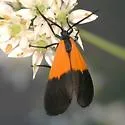
Lycomorpha desertus - Hodges#8088
Lycomorpha desertus
Identification: Resembles Lycomorpha pholus , but with the black area of the forewing less extensive. Thorax orange. ♀ abdomen is orange both above and below. ♂ abdomen, antennae, and tarsi are black
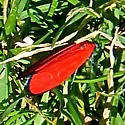
Lycomorpha fulgens - Hodges#8085
Lycomorpha fulgens
Identification: The original description as Anatolmis fulgens H. Edwards, is available online in the print references below. Hind wing almost entirely black. Forewing mostly red with a black margin.
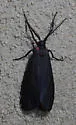
Lycomorpha splendens - Hodges#8086
Lycomorpha splendens
Lycomorpha splendens - Hodges#8086 (Lycomorpha splendens) is a species in the family Erebidae, belonging to the order Lepidoptera (Butterflies and Moths). It is classified within the subfamily Arctiinae, tribe Lithosiini, superfamily Noctuoidea. This
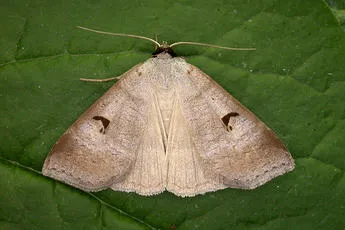
The Blackneck
Lygephila pastinum
Wingspan 37 to 42 mm. A very narrow looking species, the back of the head and shoulders are dark brown, looking almost black. The pale wing has very fine wavy lined pencilling and a dark brown kidney mark with one or two dots beside it. In Britain, t
Black Arches
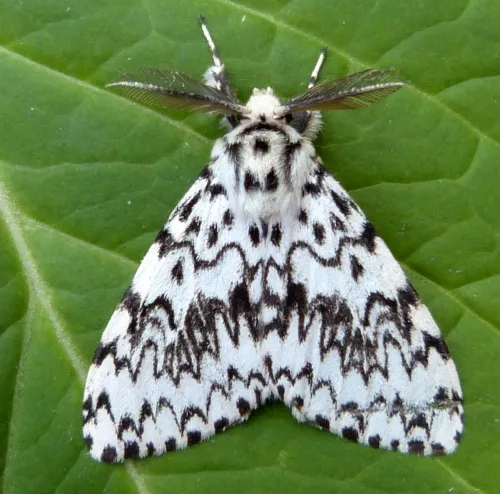
Lymantria monacha
Wingspan 30 to 50 mm. This attractive black and white species often shows traces of bright pink on the body, especially the abdomen, which however is normally concealed when at rest. The males, which can be attracted to light, are smaller than the fe
Edwards' Wasp Moth - Hodges#8270
Lymire edwardsii
Identification: Adult - wings and thorax are bluish gray. The abdomen is blue dorsally and white ventrally. The prothorax and head are orange-yellow ventrally. Dorsally and laterally the posterior portion of the head and anterior margin of the protho
Slant-lined Owlet - Hodges#8357
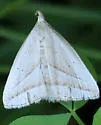
Macrochilo absorptalis
Identification: ♂ ♀ Common. In eastern US, may be confused with Macrochilo hypocritalis (which doesn't occur in Canada)
Two-striped Owlet Moth - Hodges#8359
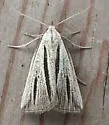
Macrochilo bivittata
Rare throughout its US range and a species of Special Concern in several states; its status in Ontario is unknown but presumably uncommon to rare.
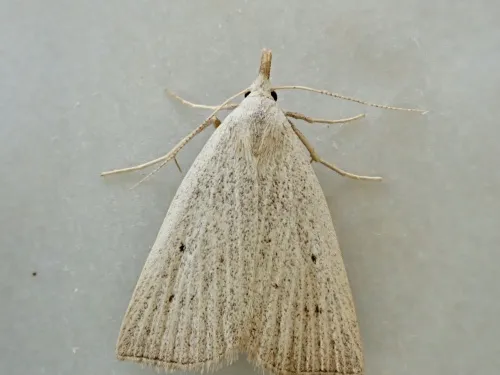
Dotted Fan-foot
Macrochilo cribrumalis
Please provide a photograph to support your record. Inhabits mostly fens, reed beds and other watery habitats. The flight period is from late June to August, when the adults can be found from dusk onwards, flying amongst the reeds. Larva feeds on Hai
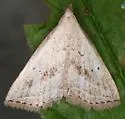
Twin-dotted Macrochilo - Hodges#8357.1
Macrochilo hypocritalis
Identification: In hypocritalis the ST line stops just shy of the apex (actually stopping against the distal edge just below the apex), whereas in absorptalis, it reaches the apex. ( J.D. Roberts ) Specimen identified by DNA analysis (BOLD) from Mark
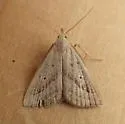
Louisiana Macrochilo - Hodges#8361
Macrochilo louisiana
Identification: Forbes (1922) original description as Xylormisa louisiana is online and linked in the print references. Forewing variably off-white, cream-colored, pale brown or grayish-yellow, with scattered dark scales; two widely-separated discal
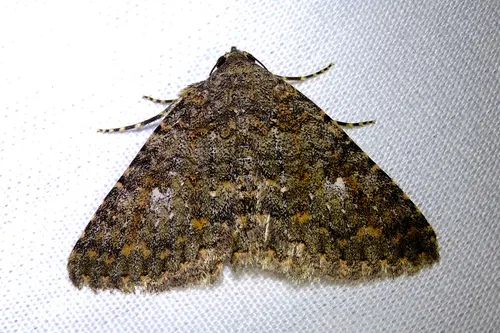
Matigramma emmilta - Hodges#8680.2
Matigramma emmilta
Identification: Genitalia: ♀ ♂ Franclemont mentions the larvae are similar to some species of Zale .
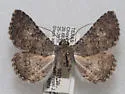
Matigramma necopina - Hodges#8681.2
Matigramma necopina
Identification: Distinguisable only by dissection. Very similar to [i]Matigramma obscurior[/] which is common in the same area. Discovered by Jan Metlevski. Specimens housed in the Kansas State University Entomology Collection.
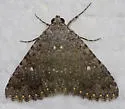
Matigramma obscurior - Hodges#8681
Matigramma obscurior
Identification: The darkest and most evenly colored of the Matigramma species. Genitalia: ♀ ♂
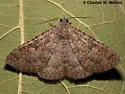
Matigramma rubrosuffusa - Hodges#8680
Matigramma rubrosuffusa
Identification: Adult - Grayish fuscous with pinkish shading, indistinct and irregular dark lines; subterminal line with evident pinkish shading tending to break into spots; fringe scalloped; reniform with dark annulus and pale spot near lower outer
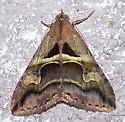
Cellar Melipotis - Hodges#8601
Melipotis cellaris
Identification: male female Variable forewing pattern Species was described by Achille Guenée (1809-1880), a French lawyer and entomologist.
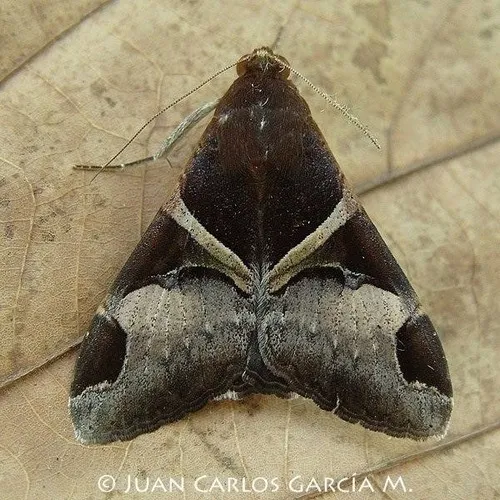
Fasciolated Melipotis - Hodges#8599
Melipotis fasciolaris
Identification: Adult: sexually dimorphic - male has pale whitish to yellowish diagonal band in AM area of forewing; female basal area of forewing entirely light yellowish-brown; remainder of forewing dark brown in both sexes except for slightly ligh
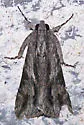
Merry Melipotis - Hodges#8607
Melipotis jucunda
Identification: see images at Moth Photographers Group
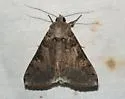
Melipotis novanda - Hodges#8609
Melipotis novanda
Identification: Adult: Sexually dimorphic. See Richards, 1939 in Print References below. ♂ ♀ Larva: See Crumb 1956
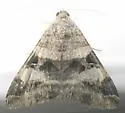
Melipotis perpendicularis - Hodges#8598
Melipotis perpendicularis
Identification: Melipotis perpendicularis in Louisiana - PDF by Vernon Antoine Brou Jr. with figures of four male and four female phenotypes
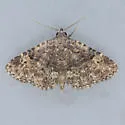
Diabolical Fungus Moth - Hodges#8503
Metalectra diabolica
Identification: Barnes & Benjamin original description can be viewed online or in PDF. Determined by Ed Knudson, Texas Lepidoptera Survey. Specimen identified by DNA analysis (BOLD).
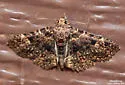
Common Fungus Moth - Hodges#8499
Metalectra discalis
Identification: Adult: forewing ground color pale yellowish but often obscured by extensive dark brown and black mottling; broad blackish band crosses wing in median area, obscuring black reniform spot; black orbicular dot usually more noticeable aga
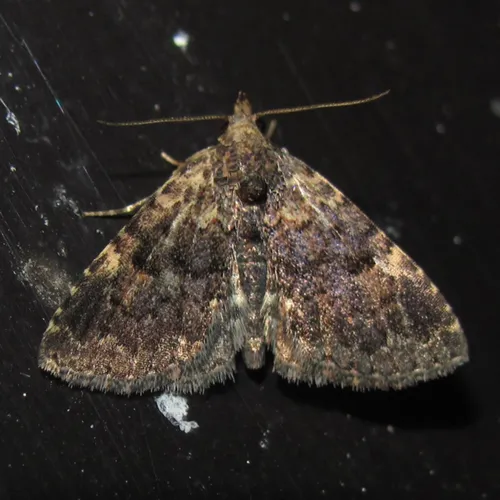
Metalectra miserulata - Hodges#8506
Metalectra miserulata
Identification: Specimen identified by DNA analysis (BOLD). ( 6 ) There are 4 narrowly separated BINs at BOLD for Metalectra miserulata indicating that this may be a complex with more than one species. - 2/8/2018
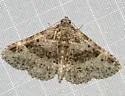
Four-spotted Fungus Moth - Hodges#8500
Metalectra quadrisignata
Identification: Adult : wings covered extensively by medium grayish-brown ground color; diffuse blackish line runs through black reniform spot on FW, but there is no broad blackish band crossing wing in median area
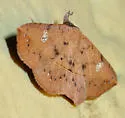
Variable Metallata Moth - Hodges#8573
Metallata absumens
Identification: Adult - highly variable, some specimens with black reniform spot; dark brown head and anterior border of thorax; both sexes have filiform antennae (Becker & Miller, 2002).
Ebony Metria - Hodges#8667
Metria bilineata
Identification: variable, see series of images at Moth Photographers Group Type coll'ed by Townsend, 10 June 1895, Brownsville, Cameron Co., Texas
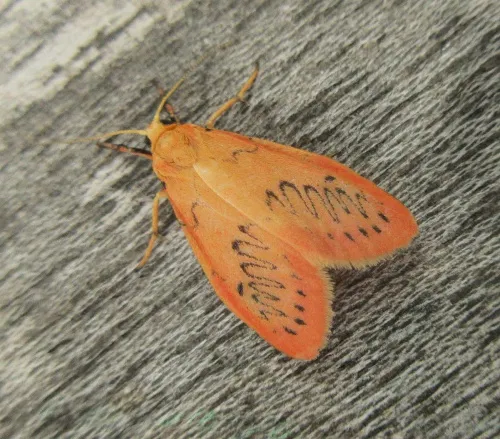
Rosy Footman
Miltochrista miniata
Wingspan 23 to 27 mm. A very attractive moth, with orange or pinkish forewings, crossed by a curious black wavy line. Flying in July and August, the adults are attracted to light. The caterpillars feed on lichens growing on trees, including Dog Liche
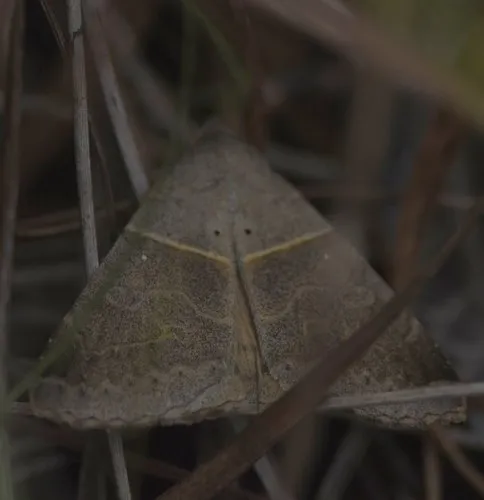
Mocis cubana - Hodges#8746.1
Mocis cubana
Identification: Original description online: (80) Determined Ed Knudson (Texas Lepidoptera Survey)
Small Mocis - Hodges#8743
Mocis latipes
Identification: Adult: forewing yellowish-brown variably shaded with darker brown; female usually more yellowish to reddish than male; AM and PM lines nearly straight; look for round subreniform spot, outlined in black, just below reniform spot; some
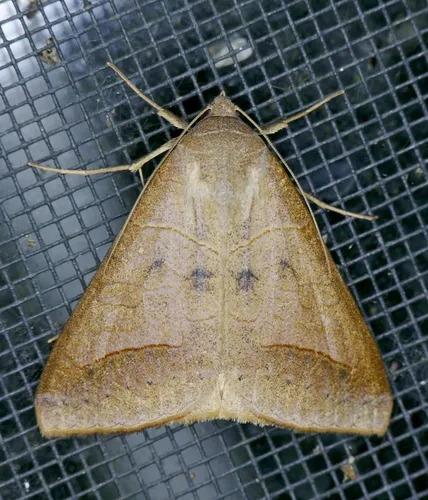
Withered Mocis - Hodges#8744
Mocis marcida
Identification: Adult: forewing usually purplish-brown (sometimes yellowish-brown or pale gray) with darker shading in subterminal area, and usually paler shading in terminal area; lines thin, distinct at close range but showing little contrast again
Mycterophora inexplicata - Hodges#8413
Mycterophora inexplicata
Identification: The forewing has a yellow costa and the veins interrupt the transverse lines. No discal spots. Sexes are similar with the males distinguished by the broadly pectinate antennae. The similar Mycterophora longipalpata does not have the
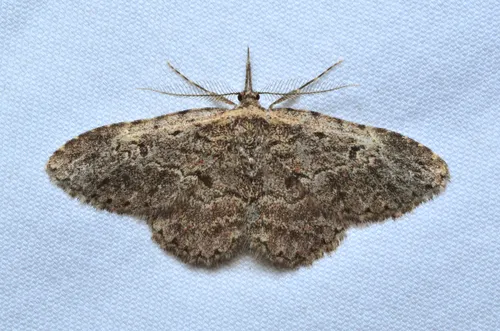
Long-palped Mycterophora - Hodges#8415
Mycterophora longipalpata
Identification: Adult: broad-winged grayish-brown moth resembling a geometrid (and originally placed in family Geometridae); forewing heavily speckled, somewhat blotchy, crossed by three slightly wavy indistinct lines; PM line with very small teeth,
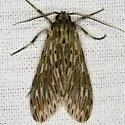
Little Carol's Wasp Moth - Hodges#8271
Nelphe carolina
Identification: Edwards (1886) original description is available online in the print references.
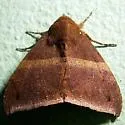
Neophisma tropicalis - Hodges#8722
Neophisma tropicalis
Identification: The species is extremely variable in color and pattern. The white dot at the base of the forewing is distinctive.
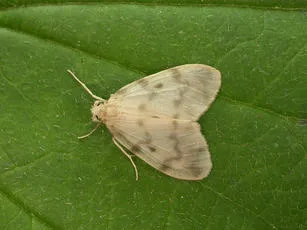
Muslin Footman
Nudaria mundana
Wingspan 19 to 23 mm. This is a delicate species with slightly rounded, strongly transparent wings that have two, roughly V shaped cross lines. The hindwing is entirely plain. It can be found on the wing from June to August. The overwintering larvae