
Habilis Underwing - Hodges#8778
Catocala habilis
This record describes Catocala habilis (species). Recorded family: Erebidae. Recorded order: Lepidoptera.
Identification and Appearance
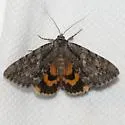
| Feature | Description |
|---|---|
| Additional details | Grote (1872) original description. Smaller and slighter than C. palaeogama , of the same general habit, with paler more evenly colored primaries. Fore wings pale grey with a greenish tint. All the lines black, narrow, often indistinct. Basal half-line and t. a. line as in C. palaeogama . T p. line with less prominent teeth, and differing by being connected with and encircling the inconspicuous sub-reniform, which is usually open, a, little paler than the ground color of the wing, moderate, sub-pyriform, excavated outwardly. The sub-median sinus is prominent and more broadly marked: the t. p. line followed by a faint whitish shade. The s. t. space is inconspicuously brownish; s. t. line faint, preceded by a whitish shade much as in C. palaeogama . Terminal interspaceal points evident. Secondaries dark yellow, a little paler than C. palaeogama ; bands similar, the median a little broader, the marginal proportionally a little narrower than in C. palaeogama . |
| Thorax | Thorax pale grey, concolorous with primaries; thoracic lines sub-obsolete. [description by Charles Covell] Forewing light gray; ST line whitish, scalloped; AM and PM lines black with white accents; lower PM line forms a dash near inner margin; black basal dash present in some specimens. |
| Hindwing | Hindwing banded orange and black. |
Classification
- Kingdom
- Animalia
- Phylum
- Arthropoda
- Class
- Insecta
- Order
- Lepidoptera (Butterflies and Moths)
- Superfamily
- Noctuoidea
- Family
- Erebidae
- Subfamily
- Erebinae
- Tribe
- Catocalini
- Genus
- Catocala (Underwings)
Imported taxonomy record. Source availability varies; see the source references and editorial policy below.
Habitat and Range
Geographic Range
Ontario, Quebec, New Brunswick and Maine, south to North Carolina, west to Arkansas. ( 5 ) Lectotype male: Pennsylvania. ( 7 )
Seasonal Activity
Adults fly from July to October.
Diet and Behavior
Diet: Larvae feed on leaves of: ( 8 ) shagbark hickory ( Carya ovata ) green ash ( Fraxinus pennsylvanica ) butternut ( Juglans cinerea ) black walnut ( Juglans nigra )
Life History
One generation per year.
Additional species information
Species notes from the sources
Etymology: HABILIS: a Latin word meaning suitable or fit [from habere : to have, hold] able; skillful; handy; clever. Has no particular significance in this case - the common names given to species of Catocala are often fanciful and arbitrary.
About Butterflies and Moths: the wider group
Order-level background for Lepidoptera, the group containing Catocala habilis. Species-specific details appear above.
Group overview
Lepidoptera includes approximately 180,000 described species of butterflies and moths. Moths outnumber butterflies roughly 10:1. The monarch butterfly's eastern population has declined by more than 80% since the mid-1990s, and the western population by over 95% since the 1980s. The IUCN lists the migratory monarch as Vulnerable.
Ecological role of the group
Butterflies and moths are essential indicators of ecosystem health. As caterpillars, they are a primary food source for birds - a single nest of blue tit chicks requires ~10,000 caterpillars. Adult moths pollinate many night-blooming plants.
Economic and practical significance of the group
Lepidoptera are critical pollinators. In Europe, grassland butterfly species have declined by almost 50% since the early 1990s. In the UK, three-quarters of butterflies are in decline. In the U.S., five butterfly species have gone extinct since 1950, with 29 listed as endangered.
Recorded sources for this group: IUCN Red List, Xerces Society, USFWS, PNAS, WWF. Imported estimates may describe particular regions or reporting periods.
Photos of Habilis Underwing - Hodges#8778 (5)
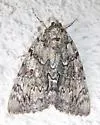
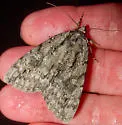
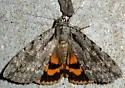
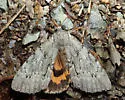
Photo credits: Contributed by Robin McLeod; Additional contributions by Maury Heiman , Ron M. , marcie oconnor , Randy Hardy
Frequently Asked Questions About Habilis Underwing - Hodges#8778
What is Habilis Underwing - Hodges#8778?
Habilis Underwing - Hodges#8778 (Catocala habilis) is a species in the family Erebidae, within the order Lepidoptera.
How big is Habilis Underwing - Hodges#8778?
Wingspan 55-65 mm. ( 5 ) Grote (1872) originally listed the wingspan 60-65 mm. ( 6 )
How do you identify Habilis Underwing - Hodges#8778?
| Feature | Description |
|---|---|
| Additional details | Grote (1872) original description. Smaller and slighter than C. palaeogama , of the same general habit, with paler more evenly colored primaries. Fore wings pale grey with a greenish tint. All the lines black, narrow, often indistinct. Basal half-line and t. a. line as in C. palaeogama . T p. line with less prominent teeth, and differing by being connected with and encircling the inconspicuous sub-reniform, which is usually open, a, little paler than the ground color of the wing, moderate, sub-pyriform, excavated outwardly. The sub-median sinus is prominent and more broadly marked: the t. p. line followed by a faint whitish shade. The s. t. space is inconspicuously brownish; s. t. line faint, preceded by a whitish shade much as in C. palaeogama . Terminal interspaceal points evident. Secondaries dark yellow, a little paler than C. palaeogama ; bands similar, the median a little broader, the marginal proportionally a little narrower than in C. palaeogama . |
| Thorax | Thorax pale grey, concolorous with primaries; thoracic lines sub-obsolete. [description by Charles Covell] Forewing light gray; ST line whitish, scalloped; AM and PM lines black with white accents; lower PM line forms a dash near inner margin; black basal dash present in some specimens. |
| Hindwing | Hindwing banded orange and black. |
Where is Habilis Underwing - Hodges#8778 found?
| Feature | Details |
|---|---|
| Range | Ontario, Quebec, New Brunswick and Maine, south to North Carolina, west to Arkansas. ( 5 ) Lectotype |
| Male | Pennsylvania. ( 7 ) |
What does Habilis Underwing - Hodges#8778 eat?
The diet of the Habilis Underwing - Hodges#8778 includes Larvae feed on leaves of: ( 8 ) shagbark hickory ( Carya ovata ) green ash ( Fraxinus pennsylvanica ) butternut ( Juglans cinerea ) black walnut ( Juglans nigra ).
When is Habilis Underwing - Hodges#8778 active?
Habilis Underwing - Hodges#8778: seasonal activity - Adults fly from July to October..
What is the life cycle of a Habilis Underwing - Hodges#8778?
One generation per year.