
Family Typical Leafhoppers (Cicadellidae)
Cicadellidae is a family in the order Hemiptera. Browse 1,971 named species recorded in this family, or open an individual profile for its available identification and natural-history information.
Species in Cicadellidae (1,971)
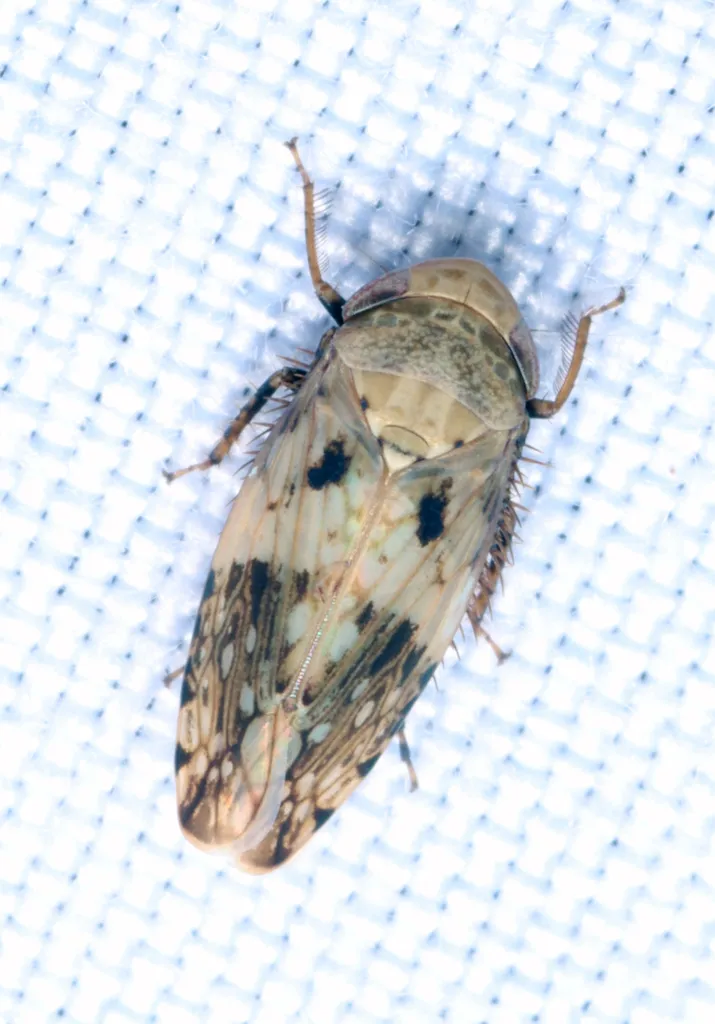
Menosoma cinctum
Menosoma cinctum
Identification: Det. Kyle Kittelberger, 2025 Described from numerous examples of both sexes collected at Ames, Iowa, two specimens from Texas (Aaron), and one from Washington, D. C. (Heideman).
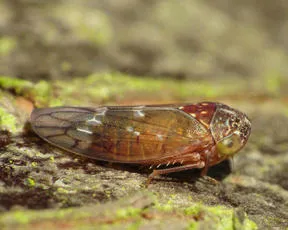
Metidiocerus rutilans
Metidiocerus rutilans
Length about 5 mm. The forewings are reddish-brown at the base, and hyaline in the apical third, with several white spots along the cubital vein. The scutellum is mainly brown with a pale apex; other small pale marks may be present and the dark trian
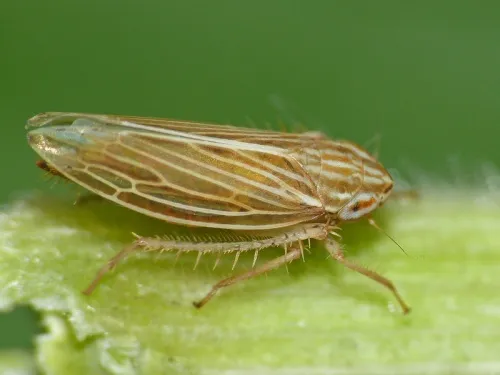
Mocydia crocea
Mocydia crocea
A small leafhopper with a striped appearance. Forewings noticeably pointed compared to other leafhoppers; light brown with paler veins, and often with a dark mark in the apical cell. Careful examination of the venation in the wing apex wll confirm id
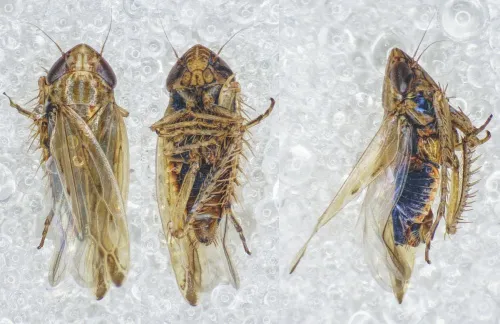
Mocydiopsis attenuata
Mocydiopsis attenuata
Difficult to identify, females can be indistinguishable. Male anal tube (final abdominal segment) is long in M. attenuata, nearly as long as the rest of the abdomen. It has a dark spot on the clavus and other dark marks on forewing. Dissection of mal
Beet Leafhopper
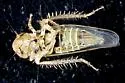
Neoaliturus tenellus
Identification: Females are easily recognized by the dark-margined notch at the base of the ovipositor that looks exactly like a burn mark left on the edge of a table from a lit cigarette. Males are equally distinctive from the underside, having trun
Neocoelidiana cf-filamenta
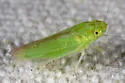
Neocoelidiana cf-filamenta
These specimens from Southern California are a good match for Neocoelidiana filamenta DeLong, 1953, a species from Central Mexico. Specimens are needed to confirm its identity.
Neohecalus lineatus
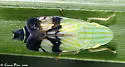
Neohecalus lineatus
Identification: Females are much larger than males and lack the black markings
Neohecalus magnificus
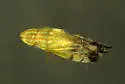
Neohecalus magnificus
Identification: Males and females significantly different.
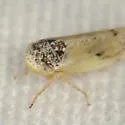
Norvellina apachana
Norvellina apachana
Identification: "Resembles pale N. bicolorata but with a pale face." - Joel Kits
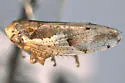
Norvellina columbiana
Norvellina columbiana
Identification: The palest species in the genus. --Andy Hamilton
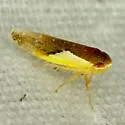
Norvellina flavida
Norvellina flavida
Identification: Similar to N. pulchella , but with a [bright] yellow wash on the costal edge of the wing. ―Joel Kits
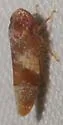
Norvellina helenae
Norvellina helenae
Identification: resembles N. chenopodii but much smaller; lighter areas bounding the saddle are coarsely reticulated (vs ivory in N. chenopodii )
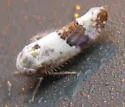
Norvellina novica
Norvellina novica
Identification: brown band of mostly even width (not tapering as much toward the wing edge) and more extensive dark colour at the wing tip than the similar N. seminuda. (modified comment per Joel Kits) Det. M. A. Quinn, 2020 rarely collected - (comme
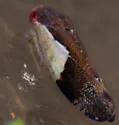
Norvellina scabra
Norvellina scabra
Described from three females and one male collected in Ames, Iowa; two of which were swept from white oak. This species is evidently very rare and apparently restricted to the Midwestern United States.
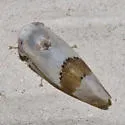
Norvellina seminuda
Norvellina seminuda
Identification: Similar to N. novica , but wings shorter. The brown band varies in exact shape, but is always at least as wide as the white space between it and the tip of the scutellum. In N. novica it is narrower than that space, in part due to the
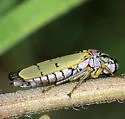
Oncometopia alpha
Oncometopia alpha
Identification: Green wings and purple body distinctive. -- Dr. Hamilton
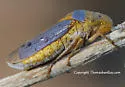
Oncometopia hamiltoni
Oncometopia hamiltoni
Identification: wings can be light blue, violet, or pink For basically half a century, what is now O. hamiltoni was misidentified as being O. clarior. Rakitov's 2016 paper fixed this issue and split out O. hamiltoni. So everything that was previously
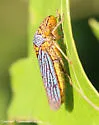
Black-winged Sharpshooter
Oncometopia nigricans
Individuals of this species from northern Florida and southeastern Georgia are externally identical to O. orbona (Rakitov, 2016). Therefore, individuals that look like O. orbona in northern Florida can likely be tentatively assigned to nigricans, sin
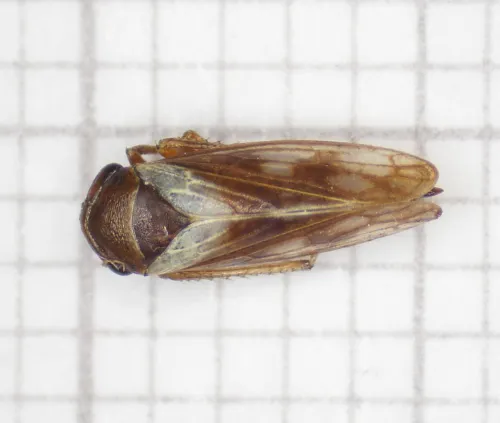
Oncopsis alni
Oncopsis alni
Length 5 - 6 mm; females larger than males. Sexually dimorphic and variable in colouration and intensity of markings. Nymphs cannot be verified. Predominantly yellowish-brown to reddish-brown. Detailed examination of the specimen is needed to identif
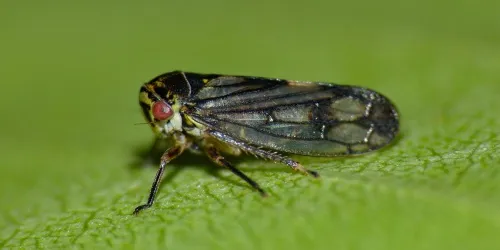
Oncopsis flavicollis
Oncopsis flavicollis
Length 4.5 - 5.5; females larger than males. Sexually dimorphic and variable in colouration and intensity of markings. Nymphs cannot be verified. Males have dark scutellum with yellow spots towards apex and dark veins on forewings, with hyaline cells
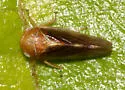
Oncopsis sobria
Oncopsis sobria
Identification: the male appears dark brown to black, while the female is a lighter shade of brown or orange in coloration (K.G.A. Hamilton)
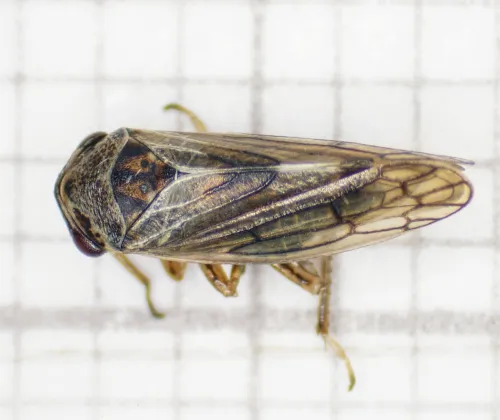
Oncopsis subangulata
Oncopsis subangulata
Length 4.5 - 5.5; females larger than males. Sexually dimorphic and variable in colouration and intensity of markings. Nymphs cannot be verified. Males have dark scutellum with yellow spots towards apex and dark veins on forewings, with hyaline cells
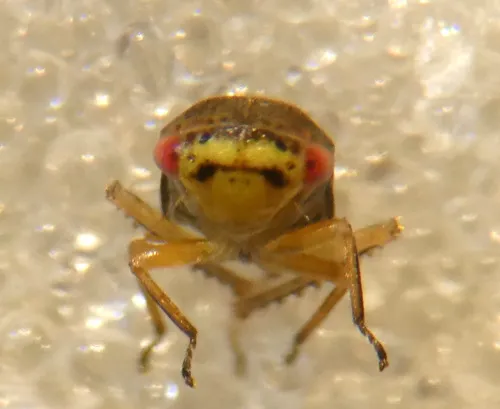
Oncopsis tristis
Oncopsis tristis
Length 3.7 - 4.6; smaller than other two species on Birch; females larger than males. Sexually dimorphic and variable in colouration and intensity of markings. There is usually a band across the face between the eyes, darker in males. Males have grey
Osbornellus auronitens
Osbornellus auronitens
Identification: Vertex yellow with the anterior traverse band black, and the posterior orange-red, black margined in middle, anteriorly. Pronotum yellowish, suffused with light brown posteriorly, and with orange-red areas near anterior margin and in
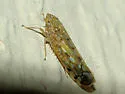
Osbornellus borealis
Osbornellus borealis
Identification: Markings and color similar to consors , but with the FW usually strongly tinged with brownish. Veins and markings relatively darker, giving the overall appearance of a darker insect.
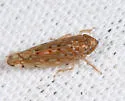
Osbornellus consors
Osbornellus consors
Identification: Vertex yellowish with brown & dark brown markings. Pronotum yellowish, heavily suffused with brown, and marked with dark brown. Scutellum yellow with dark brown margins. FW tinged with brown and dark brown veins.
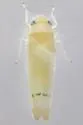
Ossiannilssonola possibly undescribed affinity rossi
Ossiannilssonola aff-rossi
This species is currently referred to by Hamilton & Chandler 2017 as Ossiannilssonola rossi , but it may be a different species as the genitalia, range, and morphology differ slightly from Ossiannilssonola rossi sensu stricto. This species is found i
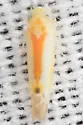
Ossiannilssonola flavomarginata
Ossiannilssonola flavomarginata
the one image we have is the first time this southern species has been found northwest of Utah (comments here )
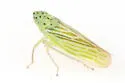
Pagaronia furcata
Pagaronia furcata
Identification: "resembling 13-punctata Ball but larger, more robust, and with much broader male plates. General ground color pale green to greenish white. Black spots on head and pronotum as in 13-punctata but frequently with an additional spot belo
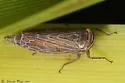
Paramesus major
Paramesus major
Identification: Wider and blunter in the head than the native [i]Pasaremus[i]. --A.K.G. Hamilton
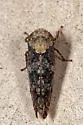
Paraphlepsius collitus
Paraphlepsius collitus
Identification: Vertex and thorax are largely ochreous, and contrast with the general grayish-brown hue of forewings. The dark markings on the forewings are intensified at the base and middle to form indefinite dark traverse bands.
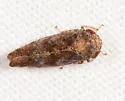
Paraphlepsius dentatus
Paraphlepsius dentatus
Identification: Wider across the head and thorax than most congeners. P. luxuria is similar but occurs farther north & west of this coastal species. -K.G.A. Hamilton
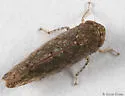
Bespeckled Leafhopper
Paraphlepsius irroratus
Identification: A rather slender species, rather uniform in color, but sometimes with the vertex and scutellum paler than the pronotum and forewings.
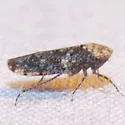
Paraphlepsius varispinus
Paraphlepsius varispinus
Identification: A bog-inhabiting species similar to P. collitus but rather darker. --K.G.A. Hamilton
Pasaremus concentricus
Pasaremus concentricus
A common leafhopper on Baltic rush (the brownish looking rush that grows in highway ditches all over the northern states).… Andy Hamilton, 11 August, 2009
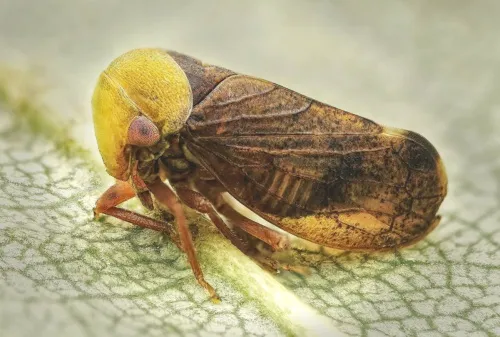
Pediopsis tiliae
Pediopsis tiliae
Length 5 to 6 mm. From above, the large yellow pronotum obscures most of the vertex. The face is plain yellow, without markings, and the wings are brown. Please provide photograph to support your record. Associated with Lime trees ( Tilia ), particul
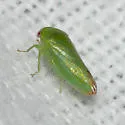
Penestragania apicalis
Penestragania apicalis
Identification: More wide-headed than P. alabamensis , which is found on the same host.
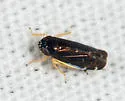
Planicephalus flavocostatus
Planicephalus flavocostatus
Identification: Adult: dark brown to blackish with yellow strip along anterior two-thirds of costa, terminating in a short white oblique dash; another short white dash nearer to wingtip, projecting at right-angles in from costa; several whitish dots
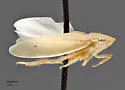
Planipona delta
Planipona delta
Identification: "A small species resembling [ Gyponana ] angulata , with strongly produced vertex. Vertex bluntly angularly produced, more than two-thirds as long at middle as basal width between eyes. Entire body slender. Pale creamy yellow, unmarke
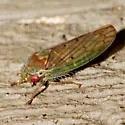
Polana quadrinotata
Polana quadrinotata
Identification: "Robust, brownish species with the vertex broadly rounded to front. Vertex short, broadly rounded, more than three times as wide between eyes at base as median length. Ocelli appearing very close to margin, closer to eyes than to medi
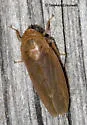
Ponana aenea
Ponana aenea
Identification: "Resembling scarlatina in general appearance but with more produced vertex and with distinct male genitalia. Vertex rather strongly produced, apex rounded, more than half as long on middle as basal width between the eyes. Yellow, ting
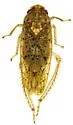
Ponana aquila
Ponana aquila
Identification: "Vertex short, narrow, broadly rounded, more than twice as wide between eyes as median length. Pale yellow; a round black spot behind each ocellus on base of vertex, one behind each on anterior margin of pronotum, and a spot behind ea
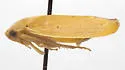
Ponana cacozela
Ponana cacozela
Identification: "Resembling citrina in general appearance, yellow, tinged with orange, and marked with brown spots. Vertex broad, about twice as wide between eyes at base as median length. Yellow tinged with orange, brown spots on elytra usually arra
Ponana candida
Ponana candida
Identification: "A pale species marked with brown spots and ramose pigment lines on elytra. Vertex bluntly produced, about twice as wide between eyes at middle as median length. Pale yellow; a black spot behind each ocellus on basal margin of vertex.
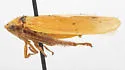
Ponana citrina
Ponana citrina
Identification: "A yellowish species tinged with orange and often with black spots on elytra. Vertex broadly rounded, more than twice as wide as median length. Green to yellow, often tinged with orange with small black spots usually arranged in three
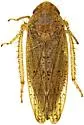
Ponana curiata
Ponana curiata
Identification: "Vertex bluntly produced, more than half as long on middle as basal width between eyes. Pale brown; a spot behind each ocellus on anterior portion of pronotum brown and fine punctures on disc and posterior portion of pronotum brown. E
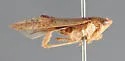
Ponana dohrni
Ponana dohrni
Identification: "The narrow head and broad pronotum cause this species to resemble superficially, Texananus majestus (Osb.). The color is similar to punctipennis Stal. [ Ponana curiata ] Vertex short, broadly rounded, about twice as wide between eyes
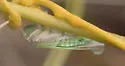
Ponana floridana
Ponana floridana
Identification: "Vertex broadly rounded, a little more than twice as wide between eyes at base as median length. Straw yellow; ocelli large, dark; pronotum with four black spots in a semicircle on submargin. Elytra with traces of the three rows of sp
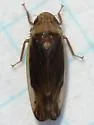
Ponana limbatipennis
Ponana limbatipennis
Identification: "Dark-winged species with pale costal margins. Vertex broadly rounded, more than half as long as basal width between eyes. Brownish yellow. Vertex and pronotum usually unmarked. Scutellum smoky. Elytra usually smoky to black, apical h
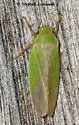
Ponana limonea
Ponana limonea
Identification: "Vertex strongly, bluntly produced, more than half as long on middle as basal width between eyes at base. Smoky green; vertex and pronotum often brighter green." - DeLong, 1942
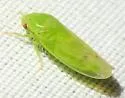
Ponana occlusa
Ponana occlusa
Identification: "Vertex short, broadly rounded, twice as wide between eyes at base as median length. Lemon-yellow to pale green with a small black spot behind each ocellus on anterior portion of pronotum." - DeLong, 1942
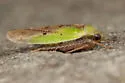
Ponana pectoralis
Ponana pectoralis
Identification: head, pronotum, and outer half of forewing green; scutellum brown anteriorly, pale brown or green posteriorly; inner half of forewing and wingtips brown, forming a distinctive dark streak down the back when the insect is at rest; scat
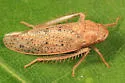
Ponana puncticollis
Ponana puncticollis
numerous similar species in the US, some likely undescribed
Ponana quadralaba
Ponana quadralaba
Identification: "A small yellowish species with four black spots on anterior portion of pronotum. Vertex broadly rounded, more than one-half as long at middle as basal width between the eyes. Yellow; pronotum with four black spots in a circle just ba
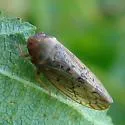
Ponana rubida
Ponana rubida
Identification: "Resembling scarlatina in general appearance but with brown ramose markings on elytra and with distinct male genitalia. Vertex broadly rounded, a little more than half as long on middle as basal width between the eyes. Yellowish washe
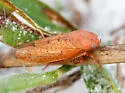
Ponana rubrapuncta
Ponana rubrapuncta
Identification: "Male genitalia distinct. Vertex broadly, roundedly produced, more than one-half longer on middle than basal width between eyes. Yellowish; vertex and pronotum rather densely covered with small red spots. Elytra tinged with brown with
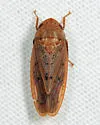
Ponana scarlatina
Ponana scarlatina
Identification: "A yellowish brown species completely dotted with bright red spots in well-marked specimens. Head narrow, vertex broadly rounded, almost twice as wide between eyes at base as median length. Varying from buff to brown, and usually mark
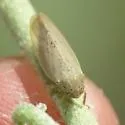
Ponana sonora
Ponana sonora
Identification: "Vertex almost angularly produced, apex rounded, more than one-half as long at middle as basal width between the eyes. Pronotum decidedly wider than vertex. Pale yellow, with a row of four round black spots on the anterior portion of
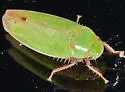
Ponana sparsa
Ponana sparsa
Identification: "Resembling citrina in color and general appearance but with each branch of aedeagus forked. Vertex broadly rounded, twice as wide between eyes at base as median length. Yellowish green, with indication of the transverse rows of black
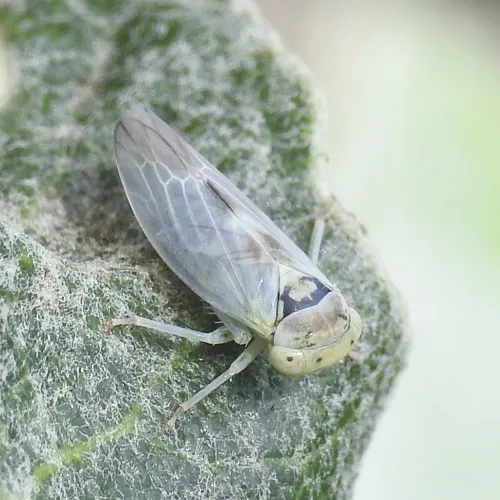
Populicerus albicans
Populicerus albicans
Length 5.4-5.9mm (male), 6.4-7.0mm (female). A pale, whitish leafhopper associated with Grey or White Poplars. Females are uniformly greyish; males may have darker marks on pronotum. Good photographs in the field or from a specimen; note the host pla
Populicerus aureus
Populicerus aureus
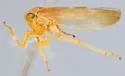
Identification: "Adults of aureus resemble those of midas , but have a more uniform orange colour. The host is probably Populus balsamifera ." - Hamilton, 1980 Structurally identical to Populicerus midas and may be a sr. syn.
Populicerus carolina
Populicerus carolina
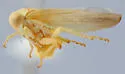
Identification: "Adults of carolina closely resemble those of gillettei n. sp., but have much rounder antennal discs (Figs. 35, 36) and shorter, broader sternal apodemes (Figs. 43, 45). The host is probably Eastern cottonwood ( Populus deltoides ) ,
Populicerus stellaris or near
Populicerus cf-stellaris
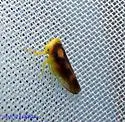
Identification: "Resembling suturalis but distinctly marked and with elongated male antennal discs. Male antennal discs elongate oval, pointed at both ends. Color yellow, face and vertex unmarked. Pronotum brown except for anterior margin and curved
Populicerus confusus
Populicerus confusus
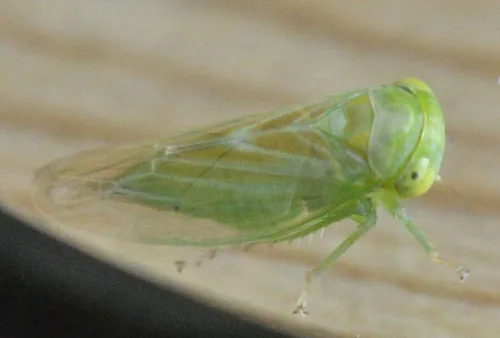
Length 5-7 mm. A yellow-green leafhopper associated with sallows. There may be some reddish-brown shading across the clavus and inner parts of forewings, some darker marks on pronotum. The face and vertex are also yellow-green, and nmarked. Close exa
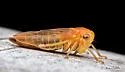
Populicerus duzeei
Populicerus duzeei
Identification: "Male: Size and structural characters as in I. pallidus Fitch and I. obsoletus (Walker). Yellow, lateral triangles of scutellum orange-yellow, abdominal terga black, tegmina infumate, darker beyond apex of clavi and on basal two-third
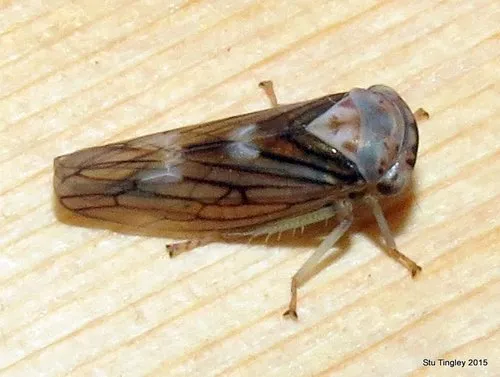
Populicerus formosus
Populicerus formosus
Identification: "Smaller and narrower than lachrymalis , resembling the European populi in size and form, but more heavily marked. Vertex long, but little curved; face almost flat, front broad below, but not expanded as much as usual at the antennas;
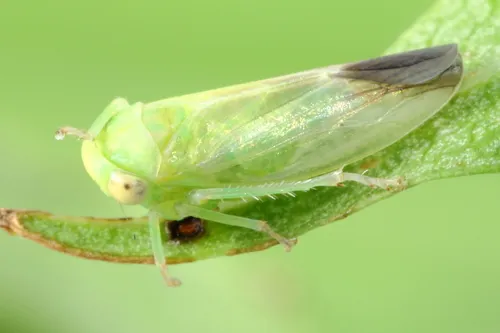
Populicerus gillettei
Populicerus gillettei
Identification: "Adults of gillettei closely resemble those of carolina , from which they may be distinguished by the characters cited under that species. Pale individuals may resemble specimens of unicolor n. sp., but the short preapical setae of th
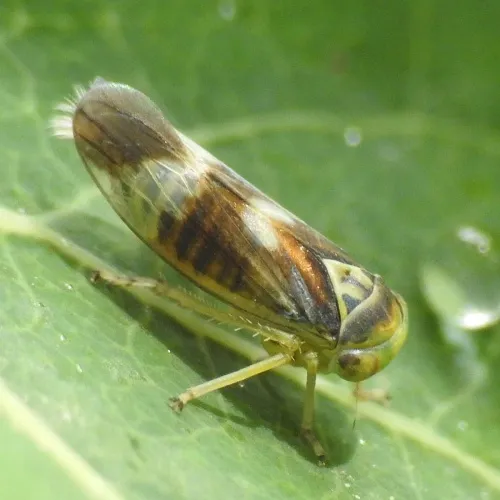
Populicerus laminatus
Populicerus laminatus
Length 6-7mm. Predominantly brown with white spot in clavus, a pale band in the apical half of the wings and dark veins. Thyridia dark, contrasting with a mostly unmarked face. Pronotum darker in posterior half. Close examination of a specimen is nee
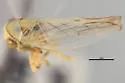
Populicerus levis
Populicerus levis
Identification: "Resembling pallidus in form and appearance but with slight discal enlargements on antennae. Male antennal discs only slightly larger than antennae and elongate. Color pale yellow, elytra appearing milky white. Female segment rather s
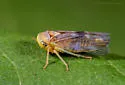
Populicerus midas
Populicerus midas
Identification: "Adults of midas resemble those of lachrymalis , but have paler veins and lack coronal markings. Their hosts also differ. I. telus DeL. & Hbr. is also pale, has a wide head and short apical setae of the style, but is smaller, and has
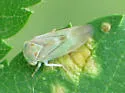
Populicerus obsoletus
Populicerus obsoletus
Identification: "This is apparently a very variable species, as numerous collections taken across Canada show. Teneral males and about two-thirds of females are pale unmarked green (similar to pallidus ); about one-quarter of females have fuscous lat
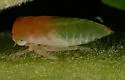
Populicerus pallidus
Populicerus pallidus
Identification: Clear wings; short, broad head. This is the most common leafhopper species on willows. Adults may show the same 2-color effect. Usually they are all green, but sometimes they are all pink to pale orange, and sometimes only the head en
Populicerus perplexus
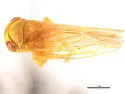
Populicerus perplexus
Identification: "Near pallidus , differing from that species as follows: Genae sharply incurved beneath the eyes, then rounded to clypeus, and the clypeus more broadened out towards the tip. Last ventral segment produced on posterior margin very much
Populicerus populi
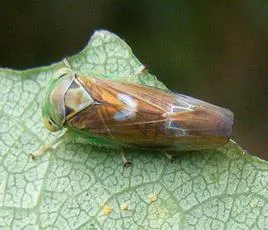
Populicerus populi
Males c.5.5mm; females 4.9-6.5mm. A brownish-yellow leaf hopper associated with Aspen ( Populus tremula ). There is a white spot on the clavus and the forewing veins are not dark. Dark triangles on the scutellum. Other Idiocerinae on Aspen, especiall
Populicerus rondulus
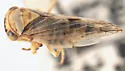
Populicerus rondulus
Identification: "A strikingly white species, the males with a sooty black saddle across the apex of the clavus, the faces of both sexes unicolorous. Resembling lachrymalis Fh., smaller, the head wider than deep, set slightly obliquely on the deep bod
Populicerus suturalis
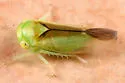
Populicerus suturalis
Identification: "the dark markings are distinctive" -- Andy Hamilton
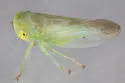
Populicerus telus
Populicerus telus
Identification: "Resembling pallidus in form and appearance but with different male genitalia. White tinged with green without dark markings, basal angles of scutellum yellowish. Elytra subhyaline, veins tinted with green. Face pale. Antennal discs l
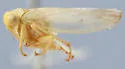
Populicerus unicolor
Populicerus unicolor
Identification: Hamilton (1980): "Adults of unicolor closely resemble those of pallidus in habitus and male genitalia, but differ in size ( pallidus males being less than 5.4 mm long, females rarely as much as 6.2 mm long), size of the male antennal
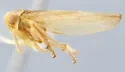
Populicerus vanduzeei
Populicerus vanduzeei
Identification: "Adults of vanduzeei closely resemble those of gillettei , but the males are more clouded with tawny or orange-brown, have narrower antennal discs (Figs. 36, 37), and smaller abdominal apodemes. The latter resemble the apodemes of ten
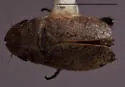
Prairiana cinerea
Prairiana cinerea
Identification: "A small brown species with a broadly rounded head. Vertex broadly rounded and produced, more than one-half wider between eyes than median length. Pale brown with dark brown punctures. Vertex with a black spot each side on base of ver
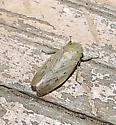
Prairiana dualis
Prairiana dualis
Identification: "A small dark brownish or black species resembling miliaris in general form and appearance. Vertex broadly rounded, more than half as long at middle as basal width between the eyes. Disc of pronotum with prominent transverse strlae. D
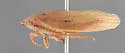
Prairiana fraterna
Prairiana fraterna
Identification: "A large brown species with a short head. Vertex roundedly produced, about half as long on middle as basal width between the eyes. Brownish with a few dark markings. A pair of small black spots on base of vertex. Four pale spots in a
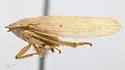
Prairiana globosa
Prairiana globosa
Identification: "Resembling negotiosa in general form and appearance but with distinct genitalia. Vertex broadly, roundedly produced, almost twice as wide between eyes at base as median length. Pale brownish with many punctate spots on vertex and pro
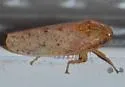
Ringspot Leafhopper
Prairiana insularis
Identification: "Crown more than twice as wide between eyes at base as median length, depressed just behind anterior margin. Generally pale brown with dark spots." - DeLong & Freytag, 1976 Males are more heavily marked with brown to black spots than
Prairiana kansana
Prairiana kansana
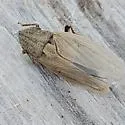
Identification: "A broad species with a broadly, almost angularly produced vertex. Vertex broadly angularly produced, apex rounded, about two-thirds as long on middle as basal width between the eyes. Pale brown; vertex and pronotum heavily marked wit
Prairiana ponderosa longiora
Prairiana longiora
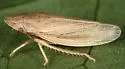
Identification: "Resembling ponderosa in general form and appearance but with a flat foliaceous vertex decidedly longer than in ponderosa. Vertex broad, produced, longitudinally furrowed, a little wider between eyes than median length, as long as pro
Prairiana miliaris
Prairiana miliaris
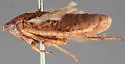
Identification: "A rather robust species with bluntly produced head. Vertex roundedly, angularly produced more than two-thirds as long at middle as basal width between the eyes. Brownish with four darker spots in a row on anterior portion of pronotum
Prairiana moneta
Prairiana moneta
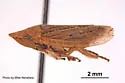
Identification: "A small species with produced vertex and white elytra with yellow-ish costa. Vertex fiat, produced, two-thirds as long as width at anterior angles of the eyes. Yellowish; vertex with a black spot behind each ocellus on posterior marg
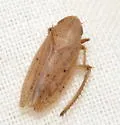
Prairiana negotiosa
Prairiana negotiosa
Identification: "A pale brownish species marked with dark brown punctate spots. Vertex roundedly produced, more than one-half longer on middle than basal width between the eyes, two-thirds as long as pronotum. Pale brown, rather sparsely marked with
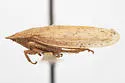
Prairiana orizaba
Prairiana orizaba
Identification: "Pale brownish species with angularly produced head and distinct genitalia. Vertex strongly, angularly produced, apex rounded, two-thirds as long at middle as basal width between the eyes. Pale brownish, vertex with a small black spot
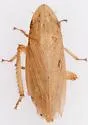
Prairiana orizaba rolenta
Prairiana rolenta
Identification: "Resembling orizaba in form and general appearance but with produced vertex more convexly rounded on lateral margins and more elevated on median line. Vertex strongly produced, sides convexly rounded, about one-fifth wider between eye
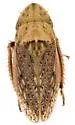
Prairiana sidana
Prairiana sidana
Identification: thorax paler than the wings (Dr Hamilton, 19.xii.2012)
Prairiana subta
Prairiana subta
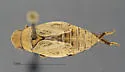
Identification: A short, broad species with short elytra. Vertex broad, well-produced, and more than half as long at middle as basal width between the eyes. Vertex almost as large as pronotum. Elytra short, half as broad as long. Tip of abdomen usual
Protalebra nexa
Protalebra nexa
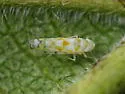
Identification: Ground color of crown ivory with a faint yellow tint on disc. Pronotum deep yellow, the lateral margins, humeral margins, posterior margin and two anterior extensions from it, ivory. Scutellum deep yellow with an ivory spot on each si
Brazilian Leafhopper
Protalebrella brasiliensis
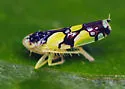
Identification: Det. Kyle Kittelberger, 2021 in our area, may be an introduced species
Protalebrella conica
Protalebrella conica
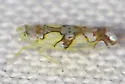
images held on this page prior to 29.vi.2017 were initially ID'd as P. tertia Dworakowska -- change explained here
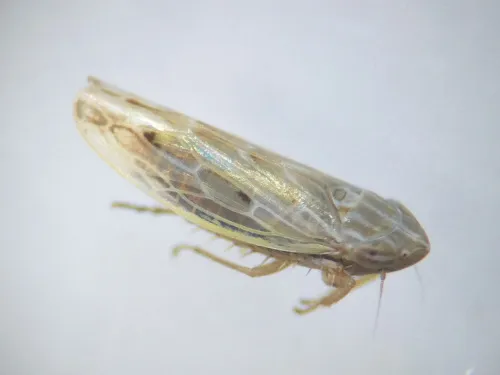
Psammotettix confinis
Psammotettix confinis
Length 3 to 4 mm. Psammotettix is a large and difficult genus of very similar species. P confinis is a small hopper with cream and pale brown forewings, sometimes with spots and darker markings in the forewing cells. There are two small wavy dark mar
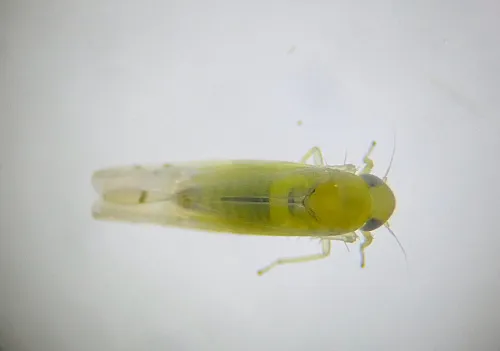
Ribautiana cruciata
Ribautiana cruciata
A small leafhopper associated with Elm. Pale yellowish-green foreparts, greyish tint and dark spots on veins in the apical part of the forewing. There are no dark spots at the tip of the vertex ('nose'). Dissection of males to examine internal genita
Ribautiana sciotoensis
Ribautiana sciotoensis
Identification: "Resembling T. luculla Medler externally and near T. piscator McA. in type of inner male genitalia which are very complex. Chalky white with yellowish tinge on head and pronotum, a darkened scutellum, darker in median basal area, and
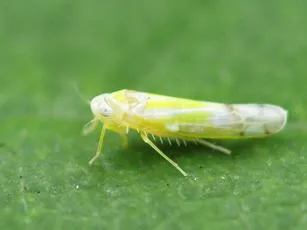
Ribautiana tenerrima sensu lato
Ribautiana tenerrima sensu lato
Length 3 to 3.5 mm. A yellow leafhopper with oblique white lines along the length of the forewing. The forewing apex has greyish marking and spots. Markings can be quite faint; to confirm identification, dssection of male genitalia may be needed. Oth