
Family Typical Leafhoppers (Cicadellidae)
Cicadellidae is a family in the order Hemiptera. Browse 1,971 named species recorded in this family, or open an individual profile for its available identification and natural-history information.
Species in Cicadellidae (1,971)
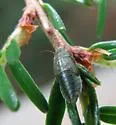
Gyponana striata
Gyponana striata
Identification: G. salsa and G. cacumina are similar but larger, slightly paler, and not found on hemlock
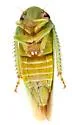
Hamana dictitoria
Hamana dictitoria
Identification: "A large yellow to greenish species often marked with black on scutellum and along claval suture. Crown short, broadly rounded, more than twice as wide between eyes at base as median length. Quite variable [in colour], yellow to green
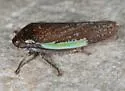
Hamana gelbata
Hamana gelbata
Identification: "In general appearance resembling incita , but with crown almost parallel margined and with a broad yellow marginal band on forewings. Crown less than one-half as long at middle as median width between the eyes, anterior margin foliac
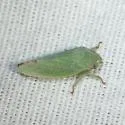
Hamana herbida
Hamana herbida
Identification: "Resembling dictitoria in general appearance but with a more produced vertex and distinct genitalia. Vertex strongly produced and rounded, more than half as long at middle as basal width between the eyes. Bright green. Disc and apical
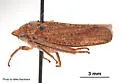
Hamana incita
Hamana incita
Identification: "In form and appearance resembling manifesta, but with a shorter, more rounded crown, and different coloration. Crown foliaceous, slightly upturned at margin, about one-half as long at middle as basal width between eyes, produced and
Hamana lekva
Hamana lekva
Identification: "A yellowish species resembling gelbata in general appearance, but with a more produced head and with different male genitalia. Crown roundedly produced, more than twice as wide between eyes at base as median length. Yellow, tinged wi
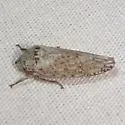
Hamana manifesta
Hamana manifesta
Identification: "Vertex strongly angularly produced, apex rounded and more than half as long as basal width between eyes. Yellow with distinct dark markings. Vertex with a broad median longitudinal stripe, a round black spot behind each ocellus on po
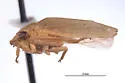
Hamana nelya
Hamana nelya
Identification: "Resembling virescens in general appearance but with foot-like apex of style longer and more curved. Crown broadly roundedly produced, more than twice as wide between eyes at base as median length. Pale dull green without specific col
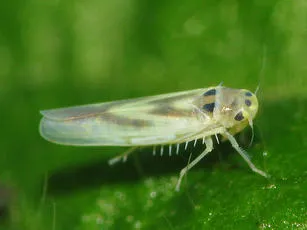
Hauptidia maroccana
Hauptidia maroccana
A small leafhopper, with two dark spots on the vertex and two triangles on the scutellum. The face lacks dark markings, unlike the similar Arboridia , The wings usually have darker streaks, but this is variable. Good photographs of a specimen, includ
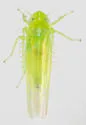
Hebata bifurcata
Hebata bifurcata
Identification: anal hook bifurcated pygofer lateral process distinctly shaped
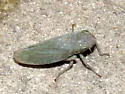
Bog Leafhopper
Helochara communis
Identification: "This dark green leafhopper has the back and wings covered with pits... The male also has the tip of the antenna expanded, forming a black diamond-shaped 'club.'" --Dr Hamilton
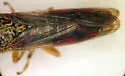
Smoketree Sharpshooter
Homalodisca liturata
Identification: The dull red patch on the wing distinguishes this sp. from H. vitripennis , as does the pattern of white stripes or lines on the head (vs speckles/spots in vitripennis )
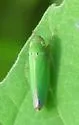
Hortensia similis
Hortensia similis
Identification: distinctive pattern of black dots and lines on top of head; several longitudinal lines run most of length of forewing, with a band of 4 clear or grayish cells at apex; anterior half of pronotum with black markings, posterior half unma
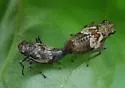
Hylaius oregonensis
Hylaius oregonensis
Rare and very primitive leafhoppers that are mostly found on grand fir in undisturbed habitats. --Andy Hamilton
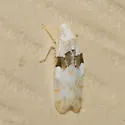
Hymetta balteata
Hymetta balteata
Identification: whitish overall with distinctive pattern of grayish-brown blotches and banding on wings
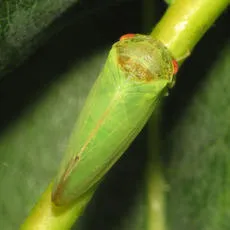
Iassus lanio
Iassus lanio
A large leafhopper, 6.5 to 8 mm, on oak, with a broad head. The forewings range from green to pale brown and the vertex, pronotum and scutellum are spotted and mottled with brown. Good photographs taken in the field, or from a specimen; you must note
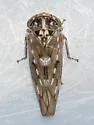
Idiocerus albolinea
Idiocerus albolinea
Identification: "This species resembles the eastern I. alternatus , the western I. freytagi Hamilton and the northern I. striolus Fieber, but differs from these in the length of the apical stylar setae (Figs. 17-20). Its head is also broader and only
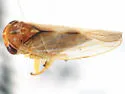
Idiocerus amabilis
Idiocerus amabilis
Identification: "Resembling amoenus [sic] in form and general appearance, but much stouter and more highly coloured. Pale fulvous brown, with light markings along the median line, and greenish margins to the elytra. Vertex and face broad and flat; ne
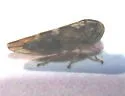
Idiocerus apache
Idiocerus apache
Identification: "Resembling alternatus Fh. but much more definitely marked and ornamented. Head, three large spots on pronotum, most of scutellum, and elytral saddle ivory. Form of alternatus nearly, more robust with a longer vertex. Size of morosus
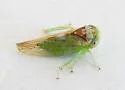
Idiocerus balli
Idiocerus balli
Identification: "Resembling amoenus [sic] in general appearance, but larger, not as highly marked, and with distinctly different genitalia. Vertex evenly rounded, nearly same length in middle as near eyes. Postclypeus longer than wide; anteclypeus lo
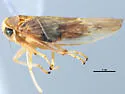
Idiocerus bovinus
Idiocerus bovinus
Identification: "Resembling ramentosus (Uhler), with form and white cross nervures of monoliferae O. and B., but narrower and more obscurely marked. Pale olive cinereous. Head narrower than in monoliferae , the lower portion of face paralleling the c
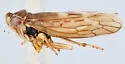
Idiocerus cabotti
Idiocerus cabotti
Identification: "This species keys to I. distinctus (Hamilton 1980: 827-828) but resembles I. alternatus in its more strongly arched head margins and darker, unbanded colour pattern. Idiocerus femoratus Ball, I. glacialis n. sp. and I. xanthiops have
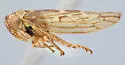
Idiocerus canae
Idiocerus canae
"This unique specimen resembles weakly patterned individuals of Idiocerus musteus Ball and I. utahnus Ball & Parker, to which species it runs in the key (idem: 830-831). However, the more strongly arched head of canae resembles those of the alternatu
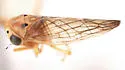
Idiocerus catalinus
Idiocerus catalinus
Identification: "Smaller than rotundens DeL. and C., the smallest American species in the genus. Vertex pale, usually without spots, elytra pale with a rusty brown band across the middle and similar marking in the claval area basally. Form of rotunde
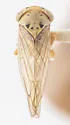
Idiocerus cephalicus
Idiocerus cephalicus
Identification: "Form of verrucosus Ball, nearly, but with a more sloping face. Resembling rotundens DeL. and C. in size and color but without male antennal disc. Soiled creamy white with spots on vertex and very large triangles on scutellum. Antenna
Idiocerus cinctus
Idiocerus cinctus
Identification: "Resembling formosus but smaller, paler in color with two conspicuous transverse bands and with simple antennae in the male. Vertex almost transverse, longer next the eyes than length at middle. Male antennae simple, without discs. Co
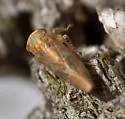
Idiocerus cingulatus
Idiocerus cingulatus
Identification: "Size and form of rufus nearly, the elytra slightly longer and narrower, giving the insect, especially the females, much more of a wedge-shaped appearance. Colour: female, face and vertex pale yellow, with rufous markings; pronotum ru
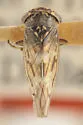
Idiocerus coconinus
Idiocerus coconinus
Identification: "Larger, darker than morosus Ball with the markings much less distinct. Male antennal discs longer and narrower and ultimate segment of male longer. Form of morosus , larger with a longer and more inflated vertex in the male, and a br
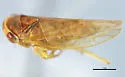
Idiocerus concinnus
Idiocerus concinnus
Identification: "Size and general appearance of brunneus , more highly coloured, resembling rufus , but larger, broader, and with antennal discs. Vertex and face moderately broad, much less inflated than in brunneus , margins of genae but slightly ro
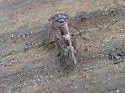
Idiocerus couleanus
Idiocerus couleanus
Identification: "Size and form of femoratus Ball, nearly. The male face broader and definitely transversely convex with dark markings on the median line. Color dull, smoky brown, not as dark as in femoratus , large spots on vertex, irregular markings
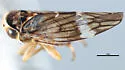
Idiocerus delongi
Idiocerus delongi
Identification: "Resembling productus in general appearance, but vertex of male not produced, antennal disc larger, and with distinctly different genitalia. Vertex evenly rounded, nearly same length in middle as near eyes. Postclypeus little longer t
Idiocerus depictus
Idiocerus depictus
Identification: "Size and form of [ Idiocerus amoemus ] nearly, female ovipositor longer and narrower. Male antennal plates slightly smaller. Colour: female rich creamy yellow; eyes rufous; pronotum, scutellum and narrow scutellar margin to elytra te
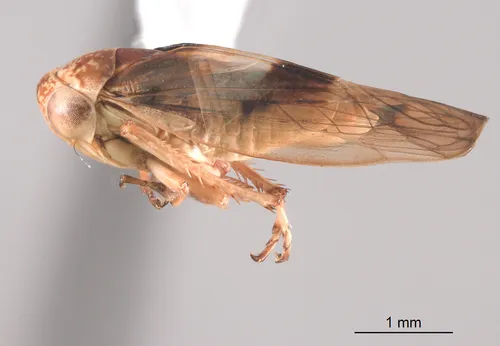
Idiocerus distinctus
Idiocerus distinctus
Identification: "Female: Form that of a small and slender alternatus . Face a little less than one-eighth wider than long; clypeus two-fifths longer than broad, broadest at base; lorae a little longer than clypeus, and two-thirds as broad; genae rath
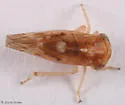
Idiocerus ensiger
Idiocerus ensiger
Identification: "Size and form of alternatus nearly, slightly longer, but with a remarkably long ovipositor in the female. Colour pale chestnut and white. Face moderately convex, retreating from the narrow vertex, front short, broad, sharply angulate
Idiocerus exilus
Idiocerus exilus
Identification: "Resembling catalinus in general appearance, but lighter in color, male antennal disc long, and with distinctly different genitalia. Vertex evenly rounded, nearly same length in middle as near eyes. Postclypeus longer than wide; antec
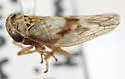
Idiocerus femoratus
Idiocerus femoratus
Identification: "Resembling alternatus , larger and darker; female with a shorter ovipositor and a longer segment, male with the middle femora greatly inflated, more than five times as large as the anterior ones. Head very broad; vertex distinctly cu
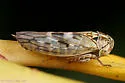
Idiocerus freytagi
Idiocerus freytagi
Identification: "Adults of freytagi closely resemble those of cedrus , but differ in the shape of the tergal apodemes and the narrowness of the sternal apodemes. Their hosts are also different: freytagi feeds on willows, cedrus on cedars. Adults of f
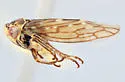
Idiocerus glacialis
Idiocerus glacialis
Identification: "This species is closely related to I. xanthiops , with which it was confused when the latter was described, and to which species it runs in the key (idem: 827-828). However, the darkly patterned male face and large antennal discs are
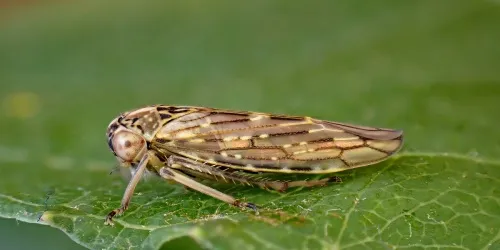
Idiocerus herrichi
Idiocerus herrichi
Length 6 to 7 mm. The forewings are whitish/greyish,veins that have alternate light/dark sections. The broad pale band down the pronotum, the scutellum markings of 3 triangles and a horseshoe shape, and the pattern of spots on the face can be diagnos
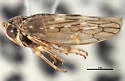
Idiocerus huachucae
Idiocerus huachucae
Identification: "Larger and darker than amoenus [sic] Van D., with spots on the vertex, a longer clypeus and smaller antennal discs. Tawny above and below with the pronotum and scutellum dark in the males. Head in profile more acutely angled with th
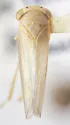
Idiocerus immaculatus
Idiocerus immaculatus
Identification: "Adults of this species resemble those of I. snowi , but are smaller and less strongly flattened, with smaller and paler coronal spots and quite different male genitalia resembling those of alternatus . Males of this species may be di
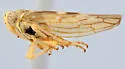
Idiocerus indistinctus
Idiocerus indistinctus
Identification: "The male genitalia and unmodified legs show that this species is closely related to I. distinctus and lo I. cabotti . It runs in the key lo distinctus (Hamilton 1980: 827-828). Its colour pattern is entirely different from those of b
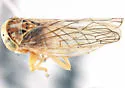
Idiocerus interruptus
Idiocerus interruptus
Identification: "This species is similar to I. ensiger Ball, but has a shorter ovipositor. It runs to iodes Hamilton in the key (Hamilton 1980: 830) but differs in the much paler colour and broader head." - Hamilton, 1985
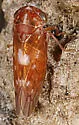
Idiocerus iodes
Idiocerus iodes
Identification: "The even, bright red-brown colour of iodes resembles that of rufus , from which this species may be distinguished by the prominent white tegminal spots and the dark-marked pleura. Adults of iodes also resemble those of cinctus and ci
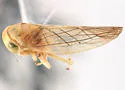
Idiocerus laribaeus
Idiocerus laribaeus
Identification: "Resembing nervatus V. D. but larger with large yellowish triangles on scutellum. Bright green in color rather than pallid. Male antennae banded with black, white and fuscous. Never occurs on willows although the latter grow abundantl
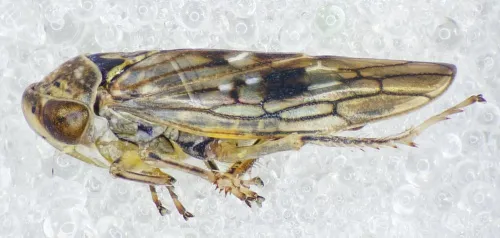
Idiocerus lituratus
Idiocerus lituratus
Length 5.5 to 6.5 mm. The forewing is brownish, mottled with white spots and a faint dark band. The face is mostly light; the distance between ocelli is greater than the distance from ocellus to antennal base. Oher Idiocerinae found on sallows and wi
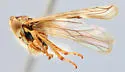
Idiocerus lucidae
Idiocerus lucidae
Identification: "Adults of lucidae closely resemble those of alternatus , but differ in the distinctly larger antennal disc and the shape of the apodemes. Their hosts also differ; lucidae is monophagous on Salix lucida , which is apparently not among
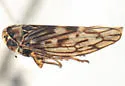
Idiocerus morosus
Idiocerus morosus
Identification: "Form and general appearance of alternatus nearly, but smaller, darker, and with a deeper head; structure of verrucosus nearly. Male antennae with large, nearly circular plates. Head much deeper than in alternatus , nearly perpendicul
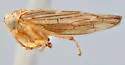
Idiocerus musteus
Idiocerus musteus
Identification: "Typical musteus , the Pacific coastal subspecies, is characterized by the heads of both sexes being marked only by the black coronal maculae. The Cordilleran subspecies verrucosus Ball usually has the heads extensivelv darkened; male
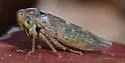
Undescribed Idiocerus Species
Idiocerus n-species
Identification: In many aspects resembles I. albolinea (found in Canada and adjacent states) but is southerly in distribution; has also been confused with I. alternatus : some specimens from North Carolina in NCSU collection labeled as alternatus act
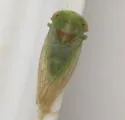
Idiocerus nervatus
Idiocerus nervatus
Identification: Quite uniformly greenish to yellowish in color. Elytra quite hyaline, showing clearly the dark nervures of the under wings.
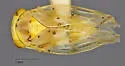
Idiocerus nogalinus
Idiocerus nogalinus
Identification: "Smaller and paler than monoliferae O. and B., with transverse bands on male elytra. Creamy white face and vertex unmarked. Smaller than monoliferae or bovinus , n. sp., with the head narrower and not as deep. Resembling in form cingu
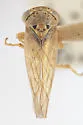
Idiocerus obispanus
Idiocerus obispanus
Identification: "Smaller than ensiger Ball, with the median lobe of the male segment as long as the lateral lobes. Rufous, the male face with a broad median black stripe. Face in profile retreating but rounded and somewhat inflated above in both sexe
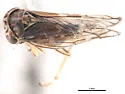
Idiocerus obstinatus
Idiocerus obstinatus
Identification: "Resembling dolosus in form and colour, but smaller. Size of verrucosus nearly, but with broader elytra. Vertex shortest in the middle; face sloping, but slightly convex; elytra inclined to be flaring, narrowing before apex; outer ant
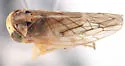
Idiocerus pacificus
Idiocerus pacificus
Identification: "Resembling ensiger Ball in structure but not as definitely marked; resembling musteus Ball in color and markings but the female tawny with a long ovipositor and the male with long lateral lobes on the ultimate segment and obovate ant
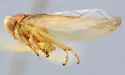
Idiocerus pericallis
Idiocerus pericallis
Identification: "Adults of pericallis resemble those of concinnus and amoenus , but differ from both of these species in the striking contrast between the orange colour of the thorax and the green colour of the abdomen showing through the hyaline teg
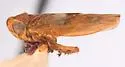
Idiocerus pictus
Idiocerus pictus
Identification: "Differs from [ Idiocerus amoemus ] in being darker in color; vertex and face above marked with brown and irrorate with pale; pronotum and scutelIutn chestnut brown; elytra smoky with a broad whitish transverse band across the middle
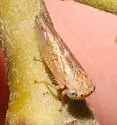
Idiocerus ramentosus
Idiocerus ramentosus
Apparently closely related to the European species Sahlbergotettix salicicola (Flor, 1861) and may belong to that genus.
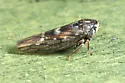
Idiocerus setaceus
Idiocerus setaceus
Identification: "This species is similar to the sympatric I. striolus , to which it runs in the key (idem, 827-828). The single long stylar seta is unique. The stylar setae of I. cedrus Hamilton (Fig. 23) are similar in size and shape, but are always
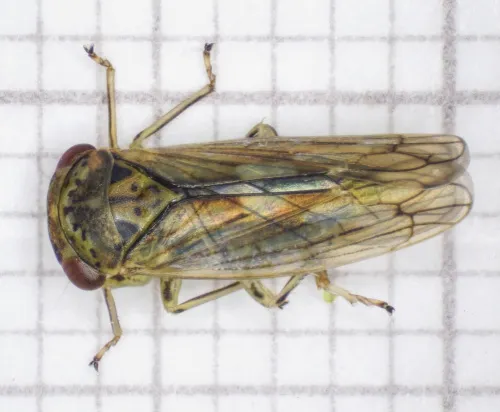
Idiocerus stigmaticalis
Idiocerus stigmaticalis
Length 6-7 mm. Very similar to other species found on Salix, and best identifed from wing venation at the apex of forewing; the apical cell is triangular and the bases of the 3 apical cells are more or less level. Males often show a yellow-orange pat
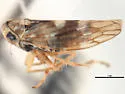
Idiocerus tahotus
Idiocerus tahotus
Identification: "Broad, short, and banded as in distinctus G. and B., but the female with two spots on the scutellum and male with distinct stripes on face. Form of distinctus nearly, but shorter and more robust. Female ultimate segment long, posteri
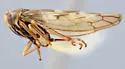
Idiocerus taiga
Idiocerus taiga
Identification: "The type-specimen of taiga most closely resembles cedrus and morosus in size and colour, but has darker facial markings and a distinctly larger antennal disc with a long apical filament. This species has the largest antennal discs re
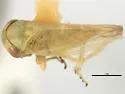
Idiocerus taxodium
Idiocerus taxodium
Identification: "Resembling nervatus in general appearance and coloration but smaller and more robust, dark green with a bright irridescent tinge. Male antennal discs black, elongated, constricted basally and apically, and bearing a flagellum at apex
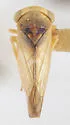
Idiocerus texanus
Idiocerus texanus
Identification: "Resembling amoenus [sic] in general appearance, but not highly marked, male antennal disc smaller, and the male genitalia distinctly different. Vertex: evenly rounded, nearly same length in middle as near eyes. Postclypeus same width
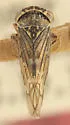
Idiocerus tontonus
Idiocerus tontonus
Identification: "Resembling femoratus Ball, inclined to be broader, paler, and the nervures with setigerous punctures. Male face all light below vertex. Form of couleanus , n. sp., nearly, broad with an exceedingly broad head. The nervures setigerous
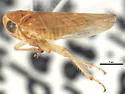
Idiocerus utahnus
Idiocerus utahnus
Identification: "Form of verrucosus Ball nearly, slightly longer and with a slightly less inflated face. Pale tawny with faint spots, the male darker with definite spots and a light face. Face inflated, but not as much as in verrucosus . Nervures in
Idiocerus verticis
Idiocerus verticis
Identification: "The neotype of verticis is mottled brown with an ochre-yellow face, 4.4 mm long (including folded tegmina) and 1.7 mm wide across the eyes. Its tergal apodemes resemble those of nervatus (Fig. 77), while the sternal apodemes resemble
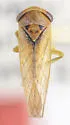
Idiocerus wiyotus
Idiocerus wiyotus
Identification: "Resembling amoenus V. D. but larger, with elongate antennal discs and extensive black markings in the male. Face long as in suturalis Fh. with the genae nearly straightmargined and exceeded by the apically expanded clypellus. Clypeus
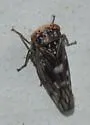
Idiocerus xanthiops
Idiocerus xanthiops
Identification: "Adults of xanthiops resemble femoratus in their enlarged male mesofemora and style bearing a single large apical seta (the latter is also found in the quite dissimilar species distinctus and rufus ). However, xanthiops is distinctly
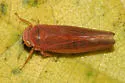
Idiodonus morsei
Idiodonus morsei
Identification: Resembles I. aurantiacus, but has black spots at the tip of the head.
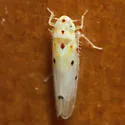
Illinigina illinoiensis
Illinigina illinoiensis
Identification: dark brown wing spots most consistently present comes to lights
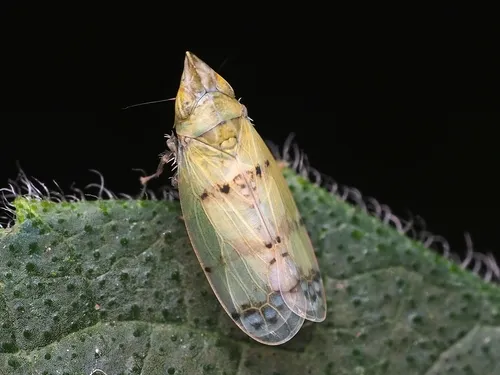
Japanese Maple Leafhopper
Japananus hyalinus
Identification: Det. Andy Hamilton, 2006 earliest record in our area: DC 1897 apparently brought over to the US on imported Japanese maples
Jikradia brikelos
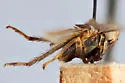
Jikradia brikelos
Identification: "Characters as in ' Jassus olitorius ' complex (Lawson 1927) but readily differentiated by the facial markings and the shape of the apodemes 2S that differs markedly from those of the other eastern species C. olitoria and C. melanota
Jikradia melanota
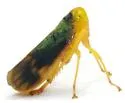
Jikradia melanota
"...southeastern species. It has a yellow costal margin and the sides of the body are also pale." --K.G.A. Hamilton, 30.x.2014
Joruma minuta
Joruma minuta
Identification: The type specimen is from Cameron Co., Texas. The following is the description from Lawson, 1930: "Old gold, tinged on vertex and pronotum with brownish; elytra golden yellow for over half their length, then smoky hyaline in apical ce
Kybos betulicola
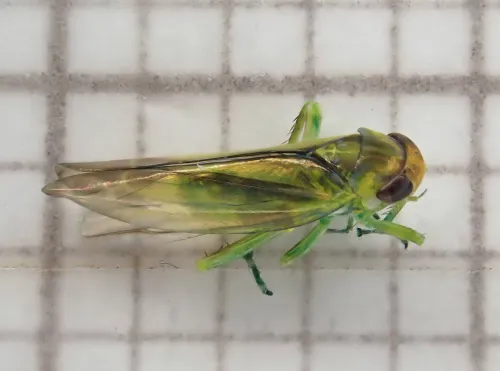
Kybos betulicola
Length 4-5 mm. A distinctively coloured genus with several very similar species. The vertex is distinctly rounded compared to other Typhlocybine hoppers. Identification requires dissection and microscopic examination of males, especially the sternal
Kybos luda
Kybos luda
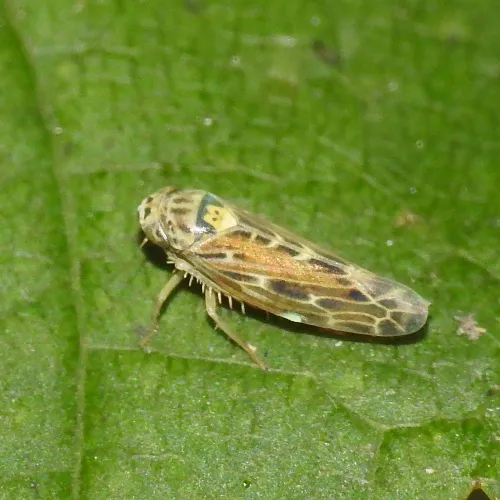
Identification: Usually has dark stripes along the diagonal wing folds (the "claval sutures"). --Dr Hamilton first described in the US but may be a Palaearctic species accidentally introduced to North America
Lamprotettix nitidulus
Lamprotettix nitidulus
Length 5 to 6 mm. A fairly large and strongly marked brown and yellowish leafhopper, with two dark triangles and two central dots on the scutellum - forming a distinctive "sad frog' pattern. Good quality photographs showing scutellum Local (ref.: UK
Latalus personatus
Latalus personatus
Some authors treat this species as a member of the genus (or subgenus) Turrutus . Give the lack of evidence and need for revision in this group, we are not recognising Turrutus as a valid genus here and are sticking with the more common treatment of
Limotettix elegans
Limotettix elegans
"pretty rare prairie-associated species" ‒Joel Kits' comment
Limotettix striola
Limotettix striola
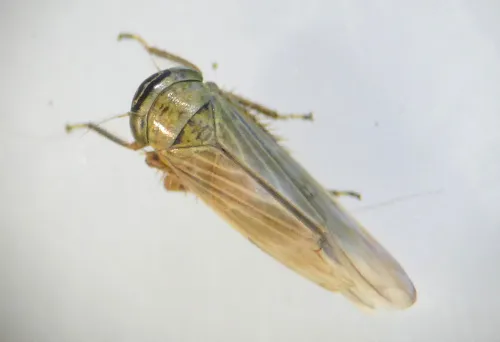
Length 3.5 to 5.0 mm. A greenish-yellow leafhopper associated with Spike-rush and other sedges. There is a dark band across the vertex between the eyes with a pale stripe in front, and dark markings on the face. Limotettix atricapillus also has a pal
Linnavuoriana decempunctata
Linnavuoriana decempunctata
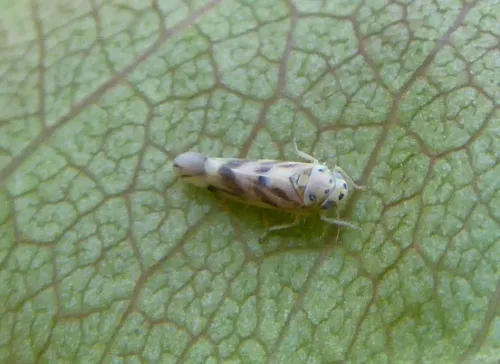
Length 3.5 mm. Very variable in colouration and intensity of dark markings - from whitish and pale yellow to pink and a deep salmony-orange. 6 spots on the pronotum (occasionaly fused) and 2 on the vertex. The forewing pattern of dark spots is someti
Linnavuoriana sexmaculata
Linnavuoriana sexmaculata
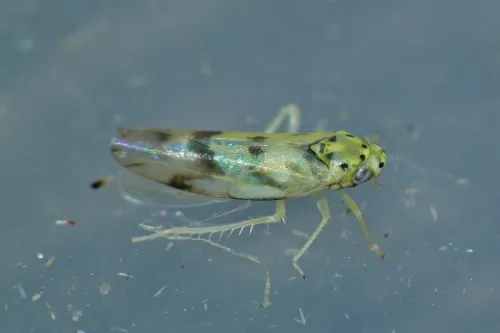
Length 3.5 mm. Greenish/yellow in colour, with four spots on the pronotum and two on the vertex. The dark markings on the forewings vary in intensity. Good quality photographs; note host plant Common (ref: UK Auchenorrhyncha checklist 2021 ) https://
Liocratus moniliferae
Liocratus moniliferae
Moved to Liocratus by Hamilton, who treated the taxon as a subgenus. However, like with Populicerus , the group is treated generically by most authors.
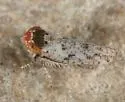
Lycioides lycioides
Lycioides lycioides
Identification: Resembling loculatus in form, but with a broader, shorter head. Head, creamy to orange red, almost unmarked. Pronotum dark. The red head and dark pronotum render this a striking little species. Holotype female, Tucson, Arizona, July 2
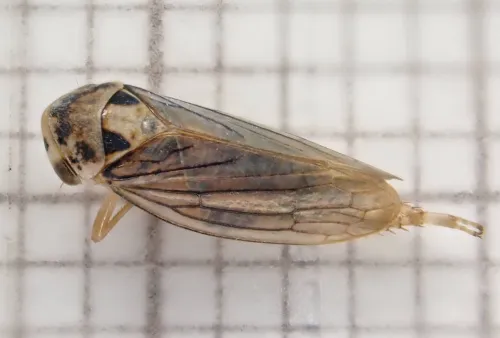
Macropsis fuscula
Macropsis fuscula
Greyish-yellow with a paler inner margin to the clavus. Males have dark veins on the forewings; females have veins that are dark at the base and pale at the apex. The extent of the dark markings on the face, scutellum and pronotum is very variable. D
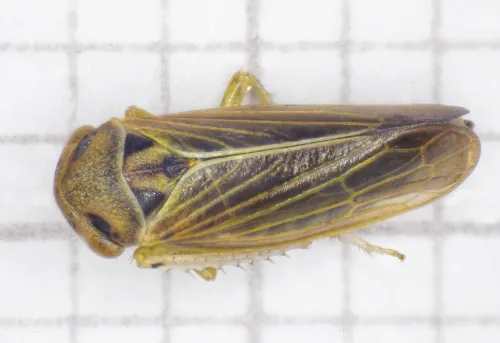
Macropsis infuscata
Macropsis infuscata
Length 5 mm. This species is quite variable, and males are much darker than females. Identification requires examination of internal male genitalia. Provide detailed photos taken from top, side and front of a specimen. Confirmation of identification
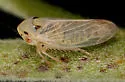
Macropsis notata
Macropsis notata
Identification: The pattern of dark spots is distinctive earliest NA record: NH 1922
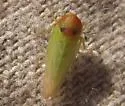
Macropsis rufocephalus
Macropsis rufocephalus
Identification: Yellowish green. Female with vertex, pronotum, anterior two-thirds of scutellum, and half of face reddish brown, Scutellum with black spots in basal angles, apical angle yellowish green. Elytra pale greenish hyaline, veins green. Epim
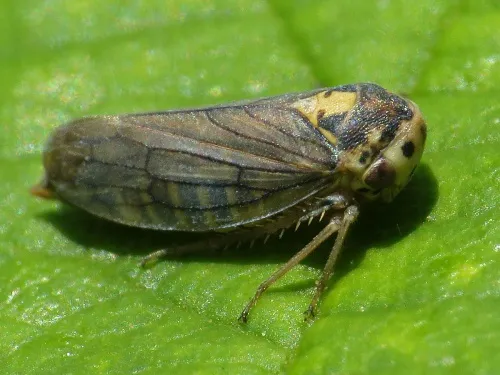
Macropsis scotti
Macropsis scotti
Length 5mm. Dark brown wing veins and a dark inner margin to the clavus. The facial markings are sparse with the central mark (if present at all) being made up of two close lines rather than a large spot. Detailed photographs of top, side and front.
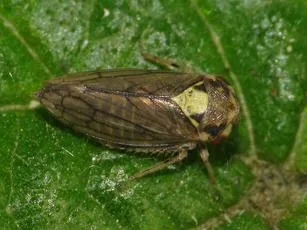
Macropsis scutellata
Macropsis scutellata
Length 5mm. Pale yellow with dark brown wing veins and a very dark inner margin to the clavus. The facial markings variable but the two lower dark marks often resemble arrowheads. Markings on the pronotum are also variable. Good quality photographs t
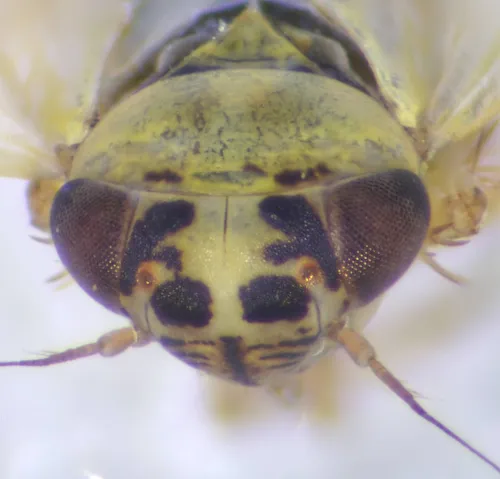
Macrosteles laevis
Macrosteles laevis
Length 3-4mm. Macrosteles is an extremely difficult and diverse genus. The vertex has several dark spots or bars and the frons has dark markings; both features are variable. The forewings are greyish or green-yellow, often with brown longitudinal str
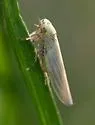
Aster Leafhopper
Macrosteles quadrilineatus
Identification: Narrow-winged, with 6 spots on the head, and a black mustache. Major polyphagous agricultural pest and plant disease vector, reported to cause serious losses of some crops. It is a vector of the so called aster yellows , a bacterial
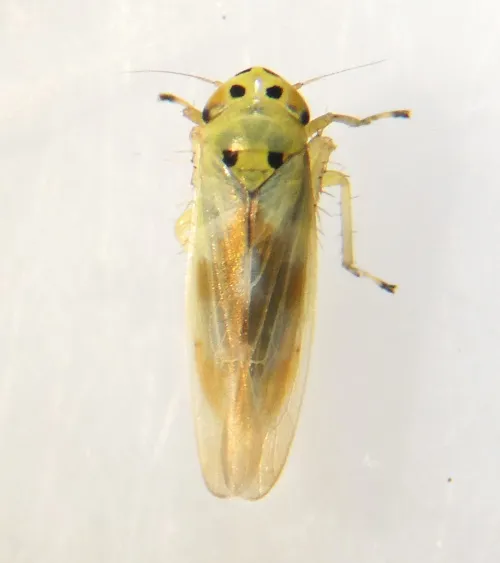
Macrosteles sardus
Macrosteles sardus
Length 3-4mm. Macrosteles is an extremely difficult and diverse genus. The vertex has several dark spots or bars and the frons has dark markings; both features are variable. The forewings are greyish or green-yellow, often with brown longitudinal str
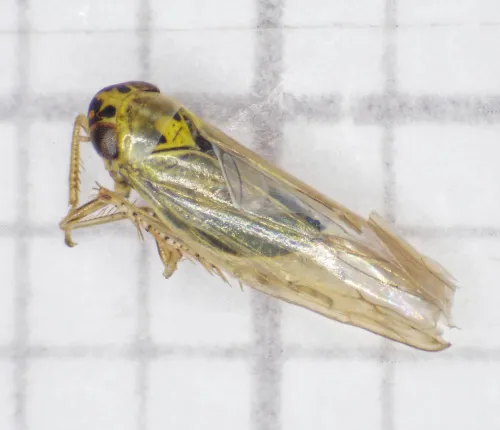
Macrosteles sexnotatus
Macrosteles sexnotatus
Length 3-4mm. Macrosteles is an extremely difficult and diverse genus. The vertex has several dark spots or bars and the frons has dark markings; both features are variable. The forewings are greyish or green-yellow, often with brown longitudinal str
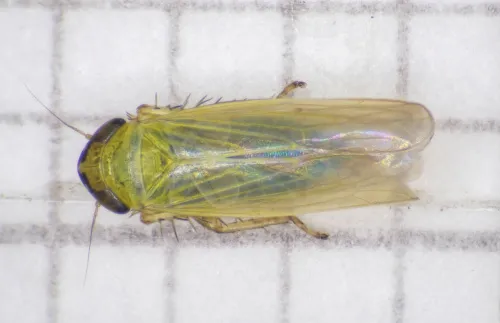
Macrosteles viridigriseus
Macrosteles viridigriseus
Length 2.9-3.8mm. Macrosteles is an extremely difficult and diverse genus. The vertex has several dark spots or bars and the frons has dark markings; both features are variable. The forewings are greyish or green-yellow, often with brown longitudinal
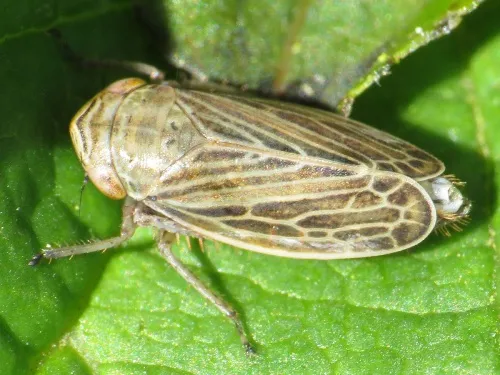
Macustus grisescens
Macustus grisescens
Length 5 to 6 mm. A brown leafhopper with pale veins on the forewings, and two curved dark lines on the tip of the vertex. There is a dark mark behind the eye, seen in side view. good photographs, preferably from a specimen - from top, side and front
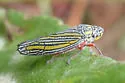
Manzutus mexicanus
Manzutus mexicanus
Identification: This species is much larger than huachucanus and has a more slender appearance with bolder markings. Note the presence of a bold line in the middle of the pronotum, which huachucanus lacks (based on images of museum specimens).
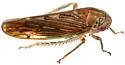
Marganana suilla
Marganana suilla
Identification: "A broad, robust, brown species with black spots on pronotum. Vertex short and broadly rounded, decidedly more than twice as wide between eyes at base as median length. Brown tinged with orange, a round black spot on each side of pron
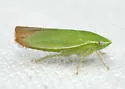
Memnonia flavida
Memnonia flavida
Identification: Resembles Hecalus , but the head is less strongly flattened, and the wing tips each have 2 small black dots. Females lack the brown wing tips of the male. --K.G.A. Hamilton