
Idiocerus couleanus
This record describes Idiocerus couleanus (species). Recorded family: Cicadellidae. Recorded order: Hemiptera.
Identification and Appearance
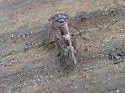
Size and form of femoratus Ball, nearly. The male face broader and definitely transversely convex with dark markings on the median line. Color dull, smoky brown, not as dark as in femoratus , large spots on vertex, irregular markings on the anterior part of pronotum and widely spaced scutellar triangles black. Nervures dark brown with about five white interruptions on the cubitus and long light areas margining the anteapicals. Male face with a crescent of spots below the ocelli, a broader crescent below this on the clypeus joining with the lateral arcs and a spot on the base of the clypellus. (Ball & Parker, 1946) Related to Viridicerus ustulatus per Hamilton (1980) so may belong to that genus. This species is unusual among our Idiocerini.
Classification
- Kingdom
- Animalia
- Phylum
- Arthropoda
- Class
- Insecta
- Order
- Hemiptera (True Bugs, Cicadas, Hoppers, Aphids and Allies)
- Suborder
- Auchenorrhyncha
- Superfamily
- Membracoidea
- Family
- Cicadellidae (Typical Leafhoppers)
- Subfamily
- Eurymelinae
- Tribe
- Idiocerini
- Genus
- Idiocerus
Imported taxonomy record. Source availability varies; see the source references and editorial policy below.
Habitat and Range
Geographic Range
Pacific Northwest Type locality: Wellington, British Columbia
Additional species information
Species notes from the sources
Etymology: Idiocerus couleanus Ball & Parker, 1946
About True Bugs, Cicadas, Hoppers, Aphids and Allies: the wider group
Order-level background for Hemiptera, the group containing Idiocerus couleanus. Species-specific details appear above.
Group overview
Hemiptera (true bugs) includes over 80,000 described species across cicadas, aphids, leafhoppers, shield bugs, and bed bugs. Aphids alone cost global agriculture an estimated $2.5 billion annually in crop losses.
Ecological role of the group
Many Hemiptera are essential food sources for birds and predatory insects. Cicadas provide massive nutrient pulses during emergence events - a single Brood X emergence can involve trillions of individuals across 15 states.
Economic and practical significance of the group
The brown marmorated stink bug (Halyomorpha halys) caused $37 million in apple crop losses in a single year in the U.S. Mid-Atlantic region. Bed bug infestations in the U.S. increased by 500% between 2001-2010, costing the hotel industry hundreds of millions annually.
Recorded sources for this group: USDA, EPA, University research. Imported estimates may describe particular regions or reporting periods.
Photos of Idiocerus couleanus (5)
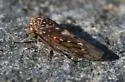
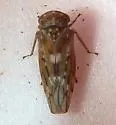
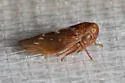
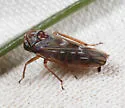
Photo credits: Contributed by Eric R. Eaton; Additional contributions by antarctica
Frequently Asked Questions About Idiocerus couleanus
What is Idiocerus couleanus?
Idiocerus couleanus is a species in the family Cicadellidae, within the order Hemiptera.
How big is Idiocerus couleanus?
6mm
How do you identify Idiocerus couleanus?
Size and form of femoratus Ball, nearly. The male face broader and definitely transversely convex with dark markings on the median line. Color dull, smoky brown, not as dark as in femoratus , large spots on vertex, irregular markings on the anterior part of pronotum and widely spaced scutellar triangles black. Nervures dark brown with about five white interruptions on the cubitus and long light areas margining the anteapicals. Male face with a crescent of spots below the ocelli, a broader crescent below this on the clypeus joining with the lateral arcs and a spot on the base of the clypellus. (Ball & Parker, 1946)
Where is Idiocerus couleanus found?
Range: Pacific Northwest Type locality: Wellington, British Columbia