
Idiocerus apache
This record describes Idiocerus apache (species). Recorded family: Cicadellidae. Recorded order: Hemiptera.
Identification and Appearance
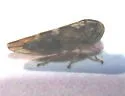
| Feature | Description |
|---|---|
| Additional details | Resembling alternatus Fh. but much more definitely marked and ornamented. |
| Head | Head, three large spots on pronotum, most of scutellum, and elytral saddle ivory. Form of alternatus nearly, more robust with a longer vertex. Size of morosus Ball nearly, broader. Male ultimate segment extending in the plane of abdomen for one-half its basal width, the lateral margins roundingly narrowing, the whole disc rectangularly cut out almost to the base, the narrow lateral extensions acutely pointed and slightly curving inward. Male pygofers extremely long, nearly two and one-half times their combined width at apex of plates, rounding and narrowed almost to a point. Male face sloping, the disc of the antenna moderately large, obovate, on a filament about four times the length of disc. Color, strikingly alternated with cream and ivory, brown and black. Vertex creamy with small spots. |
| Pronotum | Pronotum brown and olive washed withblack markings in front and with three ivory spots on disc, the median one elongate. Scutellum rich cream with widely separated basal triangles. |
| Elytra | Elytra with an ivory saddle and a band of ivory interruptions at the apex of clavus, the nervures pale brown at base, dark at apex, with heavy brown areas on the cross nervure and adjoining veins. Female face with brown mottling above, a transverse light band across above the ocelli and traces of brown stripes below. Male face pale above, the outer pair of stripes broad and black, the median pair narrow and brown and the inner pair on the clypeus faint. |
| Legs | Legs pale. (Ball & Parker, 1946) According to Andy Hamilton: A common western species with a contrastingly yellow scutellum (thorax between the wing bases). |
Classification
- Kingdom
- Animalia
- Phylum
- Arthropoda
- Class
- Insecta
- Order
- Hemiptera (True Bugs, Cicadas, Hoppers, Aphids and Allies)
- Suborder
- Auchenorrhyncha
- Superfamily
- Membracoidea
- Family
- Cicadellidae (Typical Leafhoppers)
- Subfamily
- Eurymelinae
- Tribe
- Idiocerini
- Genus
- Idiocerus
Imported taxonomy record. Source availability varies; see the source references and editorial policy below.
Habitat and Range
Geographic Range
Arizona (type locality: Huachuca Mts), California, Utah "taken from the juniper in most of the mountain ranges of Arizona from the Huachucas to the Gilas near Yuma and north to Prescott and Williams" (Ball & Parker, 1946)
Diet and Behavior
Diet: Juniperus pachyphloea (alligator juniper)
Additional species information
Species notes from the sources
Etymology: Idiocerus apache Ball & Parker, 1946
About True Bugs, Cicadas, Hoppers, Aphids and Allies: the wider group
Order-level background for Hemiptera, the group containing Idiocerus apache. Species-specific details appear above.
Group overview
Hemiptera (true bugs) includes over 80,000 described species across cicadas, aphids, leafhoppers, shield bugs, and bed bugs. Aphids alone cost global agriculture an estimated $2.5 billion annually in crop losses.
Ecological role of the group
Many Hemiptera are essential food sources for birds and predatory insects. Cicadas provide massive nutrient pulses during emergence events - a single Brood X emergence can involve trillions of individuals across 15 states.
Economic and practical significance of the group
The brown marmorated stink bug (Halyomorpha halys) caused $37 million in apple crop losses in a single year in the U.S. Mid-Atlantic region. Bed bug infestations in the U.S. increased by 500% between 2001-2010, costing the hotel industry hundreds of millions annually.
Recorded sources for this group: USDA, EPA, University research. Imported estimates may describe particular regions or reporting periods.
Photos of Idiocerus apache (5)
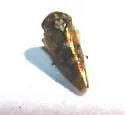
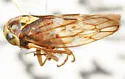
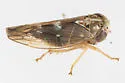
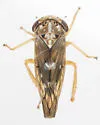
Photo credits: Contributed by Ken Wolgemuth; Additional contributions by antarctica
Frequently Asked Questions About Idiocerus apache
What is Idiocerus apache?
Idiocerus apache is a species in the family Cicadellidae, within the order Hemiptera.
How big is Idiocerus apache?
4.6-5.2mm
How do you identify Idiocerus apache?
| Feature | Description |
|---|---|
| Additional details | Resembling alternatus Fh. but much more definitely marked and ornamented. |
| Head | Head, three large spots on pronotum, most of scutellum, and elytral saddle ivory. Form of alternatus nearly, more robust with a longer vertex. Size of morosus Ball nearly, broader. Male ultimate segment extending in the plane of abdomen for one-half its basal width, the lateral margins roundingly narrowing, the whole disc rectangularly cut out almost to the base, the narrow lateral extensions acutely pointed and slightly curving inward. Male pygofers extremely long, nearly two and one-half times their combined width at apex of plates, rounding and narrowed almost to a point. Male face sloping, the disc of the antenna moderately large, obovate, on a filament about four times the length of disc. Color, strikingly alternated with cream and ivory, brown and black. Vertex creamy with small spots. |
| Pronotum | Pronotum brown and olive washed withblack markings in front and with three ivory spots on disc, the median one elongate. Scutellum rich cream with widely separated basal triangles. |
| Elytra | Elytra with an ivory saddle and a band of ivory interruptions at the apex of clavus, the nervures pale brown at base, dark at apex, with heavy brown areas on the cross nervure and adjoining veins. Female face with brown mottling above, a transverse light band across above the ocelli and traces of brown stripes below. Male face pale above, the outer pair of stripes broad and black, the median pair narrow and brown and the inner pair on the clypeus faint. |
| Legs | Legs pale. (Ball & Parker, 1946) |
Where is Idiocerus apache found?
Range: Arizona (type locality: Huachuca Mts), California, Utah taken from the juniper in most of the mountain ranges of Arizona from the Huachucas to the Gilas near Yuma and north to Prescott and Williams (Ball & Parker, 1946)
What does Idiocerus apache eat?
The diet of the Idiocerus apache includes Juniperus pachyphloea (alligator juniper).