
Family Typical Leafhoppers (Cicadellidae)
Cicadellidae is a family in the order Hemiptera. Browse 1,971 named species recorded in this family, or open an individual profile for its available identification and natural-history information.
Species in Cicadellidae (1,971)
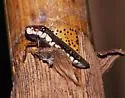
Egidemia inflata
Egidemia inflata
Holotype male, with label "Interception/Mex. or Cuba" in USNM. An additional specimen from British Honduras and one from Chiapas, Mexico (IZP); one male, Vera Cruz, Mexico, December (CAS); two females, Yucatan, Mexico, July (UCAL); and one male, Brit
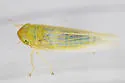
Elymana inornata
Elymana inornata
Identification: This species looks nearly identical to the introduced E. sulphurella . It is imperative to obtain clear underside photos for females which have a more pronounced median lobe of the pregenital sternite (much more subtle in sulphurella)
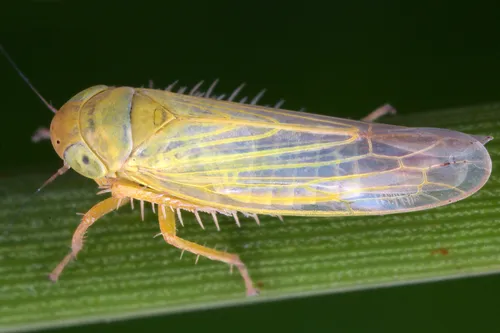
Elymana sulphurella
Elymana sulphurella
Identification: nearly identical to the native E. inornata which has overlapping range. it is imperative to obtain underside shots of females showing the pregenital sternite which has a less-pronounced median lobe. this species also has a rounder ver
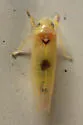
Empoa albicans
Empoa albicans
The only species in this genus on birch that has the head narrower than the thorax. [comment by Andy Hamilton]
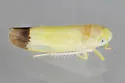
Empoa n. sp.
Empoa n-species
Identification: short head, wings generally unmarked except for fuscous wingtips. anterior dorsum dark. currently undescribed species from New England
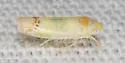
Empoa querci
Empoa querci
Identification: note lack of transverse band, dark dorsum of abdomen, and distinctive placement of dark markings in the apical cells of the forewings.
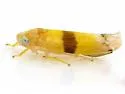
E. rubricola sensu Hamilton
Empoa rubricola
Identification: "The dark band tapered towards both edges of each wing is characteristic." - KGA Hamilton Note the sparse markings at the apex of the forewings and the medial tapering of the band on the forewings. The identity of this species is uncl
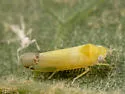
Empoa saffrana
Empoa saffrana
Identification: Yellow/green wings with a chain of dark spots at the ends of the wings.
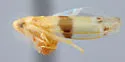
Empoa unifasciata
Empoa unifasciata
Identification: "The unmarked yellow scutellum resembles that of saffrana, casta, and teneral individuals of gillettei and scripta, from which unifasciata may be immediately distinguished by the broad tegminal band. The yellow scutellum and small mar
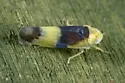
Empoa venusta
Empoa venusta
Identification: has a wider yellow band between the dark ends of the wings than E. bella and wider black band and darker wing tips than E. gillettei these brightly colored individuals, all from the se US, are all south of the published distribution
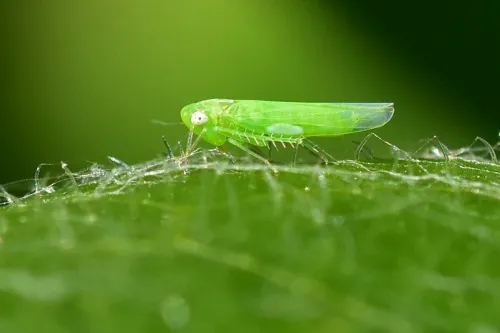
Empoasca decipiens
Empoasca decipiens
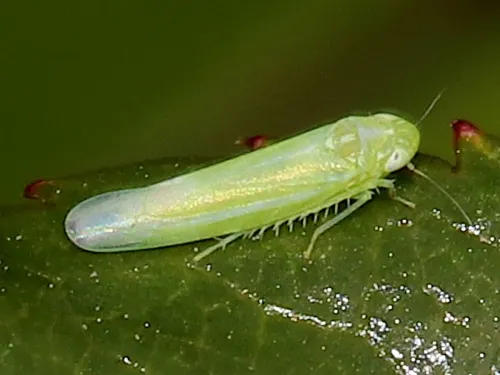
Length 3.5 to 4 mm. A small, slender green leafhopper, without hyaline stripes in forewing. There are whitish marks on the vertex and pronotum. Empoasca vitis has hyaline (clear) stripes on forewings. There are several other related genera which can
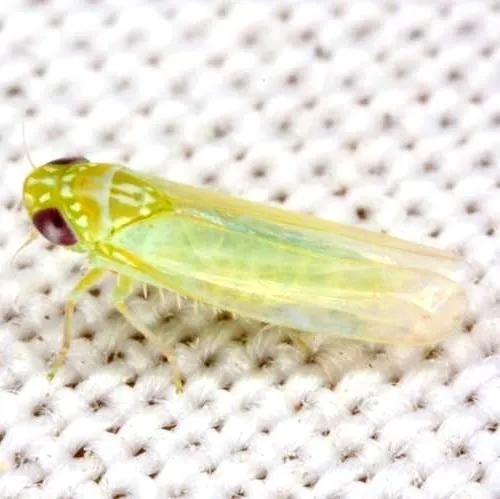
Potato Leafhopper
Empoasca fabae
Identification: Pale green with a row of six white spots behind the head seen only with help of a lens Pest of alfalfa, fruits, and vegetables; most damaging to alfalfa and clover ( 6 ) ; major pest of potato ( 7 ) Can't survive cold winter and migra
Empoasca vitis
Empoasca vitis
Length 3.0 to 4 mm. A small, slender green leafhopper, with hyaline (clear and transparent) stripes in forewing. There are whitish marks on the vertex and pronotum. Empoasca decipens lacks the hyaline stripes on forewings. There are several other rel
Painted Leafhopper
Endria inimicus
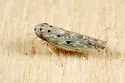
Identification: Easily recognized by having a pair of black spots on the head; a pair on the pronotum; and a pair on the base of the scutellum. Has an even more recognizable nymph, which has brown stripes down the sides. --K.G.A. Hamilton common gras
Erasmoneura bipentagona
Erasmoneura bipentagona
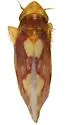
Apparently very similar to Erasmoneura tricuspidata Dmitriev & Zahniser, 2017; known only from Tennessee.
Erasmoneura tricuspidata
Erasmoneura tricuspidata
No images of this species exist and the type specimen (which is the only known specimen) is faded due to alcohol.
Eratoneura accola
Eratoneura accola
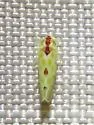
Identification: coloration distinctive: median red stripe from crown to scutellum; clavus with red spot near apex
Eratoneura affinis
Eratoneura affinis
Identification: Similar to E. basilaris . Basal shading averages lighter and more orangey. There is a large, squarish white patch in the center of the brown area, near the scutellum. The distal margin of the brown zone is also interrupted at the cos
Eratoneura ardens
Eratoneura ardens
Identification: Coloration usual for genus, but usually with dark brown mesonotum. Det. Kyle Kittelberger, 2014 Type locality: Male, Maryland, Montgomery Co., Plummers Island, 28 III 1915
Eratoneura basilaris
Eratoneura basilaris
Identification: Similar to E. affinis . Basal shading averages darker and browner. Any white patch in the center of the brown area, near the scutellum, is small and tends to shade gradually into the brown. The distal margin of the brown zone is rela
Eratoneura carmini
Eratoneura carmini
Identification: Det. D. S. Chandler, 2020 (from spmn) Type locality: Male, Kansas, Anderson Co., 9 IX 1927
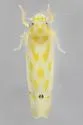
Eratoneura certa
Eratoneura certa
Type locality: Holotype, Male, Illinois, Gallatin Co., 31 III 1929.
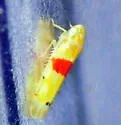
Eratoneura era
Eratoneura era
Identification: Head: narrower than pronotum. Crown fore margin strongly produced and angulate medially. Ocelli absent or vestigial. Face depressed in profile, less than 45° from horizontal. Face without black spots. Vertex with orange parallel subme
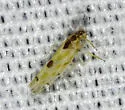
Eratoneura externa
Eratoneura externa
Identification: Coloration usual for genus, maculae small, often with red longitudinal stripe along vertex, pro-, and mesonotum, and spot near apex of clavus. Det. Solomon V. Hendrix, 2020 Type locality: Male, Anderson Co., Kansas, 6 X 1929
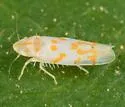
Eratoneura gillettei
Eratoneura gillettei
collection records spotty, suggesting that this is an uncommon to rare species. host information is very minimal.
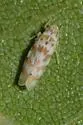
Eratoneura hymettana
Eratoneura hymettana
Identification: Hoppers of North Carolina - HNC A species with a distinctive color pattern. The wings and body are mostly a pale, almost white color, but there are four bold, black marks (almost rectangle in shape) on the middle of the wings, forming
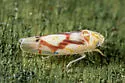
Eratoneura ligata
Eratoneura ligata
Type locality: Male, District of Columbia, Washington D.C., 8 VI 1907
Eratoneura lunata
Eratoneura lunata
Identification: Dorsum whitish with brown color pattern; mesonotum pale, with dark lateral triangles and apex; forewings with brown continuous zigzag pattern. Det. Solomon V. Hendrix, 2020 Holotype: Urbana, Ill., Nov. 11, 1915; and allotvpe, White He
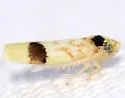
Eratoneura morgani
Eratoneura morgani
Identification: Pronotum with dark brown posterior margin, mesonotum with dark brown lateral triangles; forewing with dark brown crossband in distal half and reddish maculae. Det. Kyle Kittelberger, 2015 Type locality: Male, Tennessee, Montgomery Co.
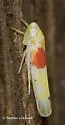
Eratoneura osborni
Eratoneura osborni
Identification: Forewing with broad red or reddish crossband in basal third. Type locality: Male, Tennessee, Montgomery Co., Clarksville, 22 VII 1915
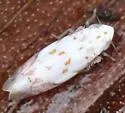
Eratoneura stephensoni
Eratoneura stephensoni
Identification: Dorsum pale, whitish; orange maculae small. Det. Kyle Kittelberger, 2015 Type locality: Male, Texas, Bowie Co., 16 VII 1929
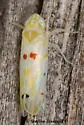
Eratoneura stoveri
Eratoneura stoveri
Identification: forewing often with red spot in distal part of clavus
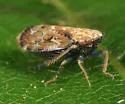
Errastunus ocellaris
Errastunus ocellaris
Identification: This species resembles members of the genus Latalus , but is unique in having reticulate venation in the claval region of the wings.
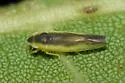
Erythridula divisa
Erythridula divisa
Identification: rather variable in color, but the red markings are always more extensive than in E. dorsalis or E. stolata , which also have pale edges on the head and thorax.
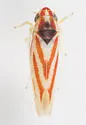
Erythridula noeva
Erythridula noeva
Identification: 'The dorsal of the abdomen appears white' -- Kyle Kittelberger " E. noeva it seems lacks those black spots near the apex of the wings whereas penenoeva can show them." -- Kyle Kittelberger
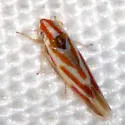
Erythridula penenoeva
Erythridula penenoeva
Identification: " E. noeva it seems lacks those black spots near the apex of the wings whereas penenoeva can show them." -- Kyle Kittelberger " E. noeva has a pale abdomen, and you can see the abdomen here is black (through the wings)." -- Kyle Kitte
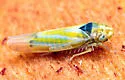
Erythridula pfrimmeri
Erythridula pfrimmeri
Identification: According to Andy Hamilton, "This rare species ... has the blackest mesonotum of any species in the genus. The only other one like it, E. penenoeva, has a chestnut-brown mesonotum that doesn't show through the pronotum to the same deg
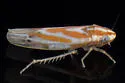
Erythridula plena
Erythridula plena
Identification: The dark scutellum (the triangular bit between the wing bases) combined with pale wing tips identifies this Prunus-feeding leafhopper. There is a similar one on birch, but that has dark wing tips.
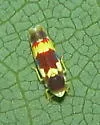
Erythroneura bistrata
Erythroneura bistrata
Identification: has a number of color forms; in all cases the red is very extensive but does not include the head. --Andy Hamilton
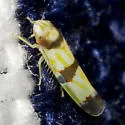
Erythroneura calycula
Erythroneura calycula
Identification: The U-shaped black mark on the thorax is distinctive. - Dr. Hamilton's comment
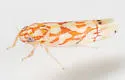
Eastern Grape Leafhopper
Erythroneura comes
Identification: many oak-feeding species look similar, so use host plant to confirm ID One of the few eastern species of this genus imported into BC by grape cultivation. --Dr Hamilton's comment
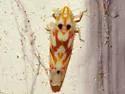
Western Grape Leafhopper
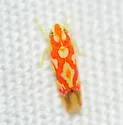
Erythroneura elegantula
When a share parasitoid, Anagrus epos is introduced as a control, the invading leafhopper species, Erythroneura variabilis replaces the native E. elegantula .
Erythroneura fraxa
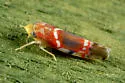
Erythroneura fraxa
Identification: Similar to E. acuticephala , but with the red lines bolder and more even width. --Andy Hamilton
Grapevine Leafhopper
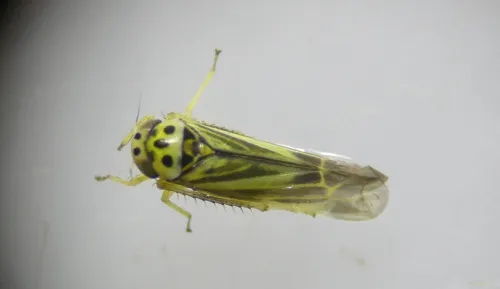
Erythroneura vitis
E. vitis pierce leaf cells to extract the contents, causing odd shapes and discoloured areas. The sticky feces produced by leafhoppers (honeydew) can stain the berries and may cause the development of sooty mold.
Eupterycyba jucunda
Eupterycyba jucunda
Length 4 mm. A well-marked species with 3 large spots on the pronotum and usually black streaks along the forewing, over a greenish background - these can sometimes be faint. The nymph is also distinctive, with yellow and black banding, Good quality
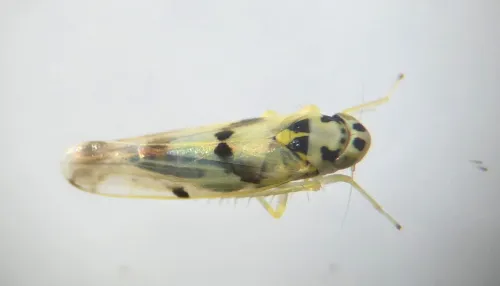
Eupteryx atropunctata
Eupteryx atropunctata
Length 3.5 mm. Identification of Eupteryx species can be difficult and requires careful examination of markings on vertex, pronotum and forewings. Greenish-yellow ground colour with dark spots or streaks on the forewings, including a spot on the cost
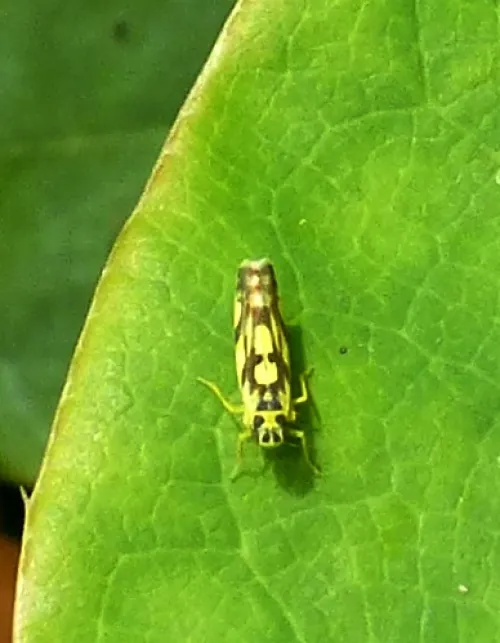
Potato Leafhopper
Eupteryx aurata
Length 3.5-4.5 mm. Identification of some Eupteryx species can be difficult and requires careful examination of markings on vertex, pronotum and forewings. Yellow ground colour, sometimes tinted orange, with dark spots or streaks on the forewings. Of
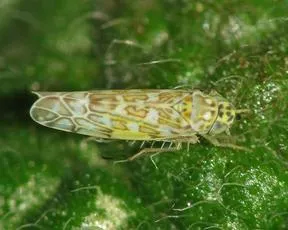
Eupteryx decemnotata
Eupteryx decemnotata
Length 2 to 3 mm, associated with Sage. Identification of Eupteryx species can be difficult and requires careful examination of markings on vertex, pronotum and forewings. A small pale yellowish-green leafhopper with brown-ringed cells in the forewin
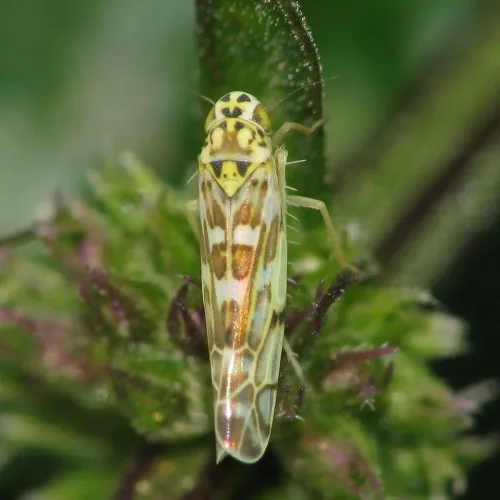
Eupteryx florida
Eupteryx florida
Length 3 to 3.5 mm, associated wih various labiates, including Mint. Identification of some Eupteryx species can be difficult and requires careful examination of markings on vertex, pronotum and forewings. A small pale yellowish-green leafhopper with
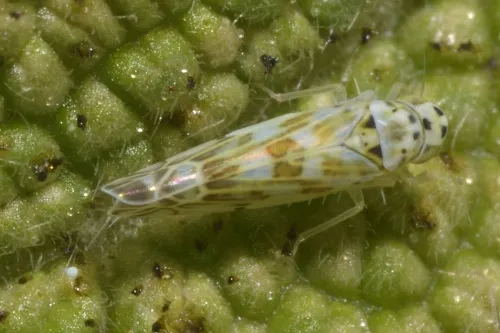
Eupteryx melissae
Eupteryx melissae
Length 3 mm, associated with Sage and other labiates. Identification of Eupteryx species can be difficult and requires careful examination of markings on vertex, pronotum and forewings. A small pale yellowish-green leafhopper with brown-ringed cells
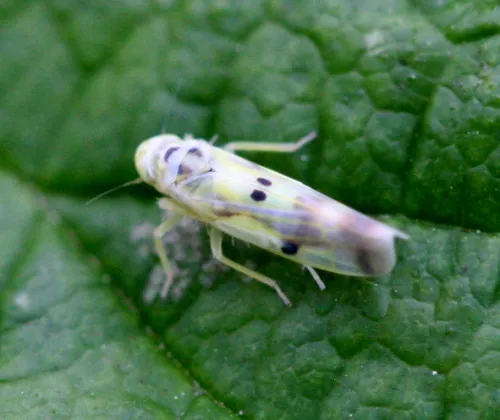
Eupteryx signatipennis
Eupteryx signatipennis
Length 3 to 4 mm, associated with Meadowsweet. Identification of Eupteryx species can be difficult and requires careful examination of markings on vertex, pronotum and forewings. A pale leafhopper, with variably dark marking on forewings. The vertex
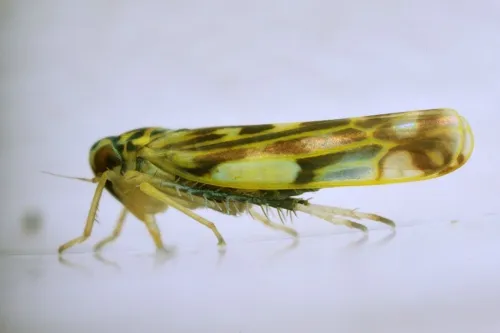
Eupteryx urticae
Eupteryx urticae
Length 3 mm, associated with nettles. Identification of some Eupteryx species can be difficult and requires careful examination of markings on vertex, pronotum and forewings. Variably marked in black or brown over yellowish green ground colour. Hind
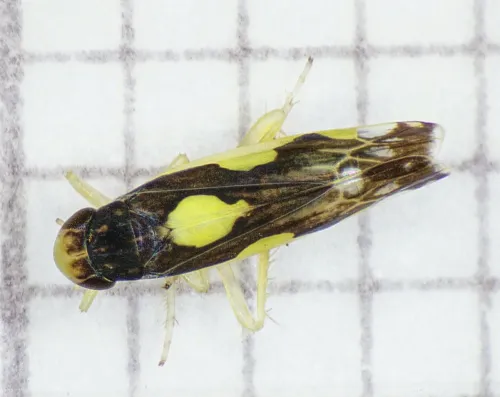
Eupteryx vittata
Eupteryx vittata
Length 3 to 3.5 mm. One of two Eupteryx with a completely (or nearly so) dark pronotum; the posterior margin is always black. Dark forewings with pale yellowish sides and central spot. The male anal tube has one long apical spine on each side. Eupter

Eurhadina concinna
Eurhadina concinna
Length 4 mm. A pale leafhopper associated with oak. It has a fatter, flattened appearance compared to other Typhlocybinae. There is a short dark line on the outer apical vein. Nymphs are flattened and pale. with distinctive dark markings, but cannot
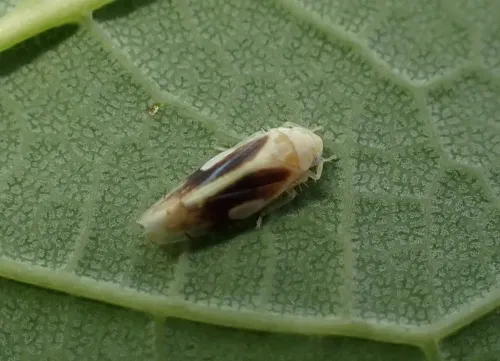
Eurhadina loewii
Eurhadina loewii
Length 4 to 4.7 mm. E. loewii is variable in colour, but often shows a striking dark arc on the forewing. If the pattern of dark markings on the wing veins is absent, the species can closely resemble Eurhadina concinna and E. ribauti . Photograph sho
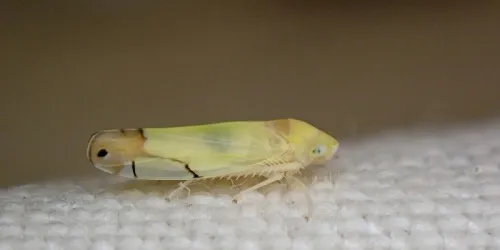
Eurhadina pulchella
Eurhadina pulchella
Length 4 mm; associated with oak. It has a fatter, flattened appearance compared to other Typhlocybinae. Ground colour is variable - from whitish to pale yellow, bright yellow, pinkish-orange; sometimes heavily marked with dark brown. There is a blac
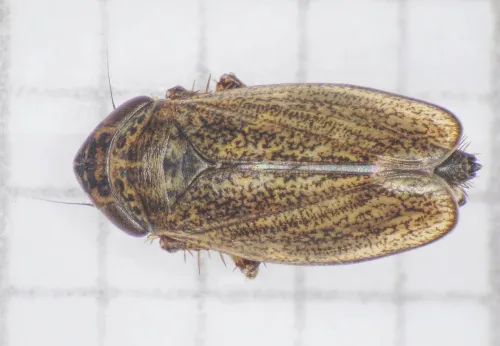
Euscelis incisus
Euscelis incisus
Length 4 to 5 mm. A very variable species with the cells of the forewings covered in dark dots or mottling, with a base colour rangindg from pale to dark brown; the extent of mottling varies. Identification should be confirmed by examination of inter
Eutettix discolor
Eutettix discolor
Identification: Paratype Holotype male, allotype female, and 17 pairs of paratypes, Ruidosa, N. Mex., Oct. 10, 1940, John Medler.
Eutettix luridus
Eutettix luridus
Identification: Elytra usually dark in color, with paler spot near apex of clavus ● scutellum creamy yellow, with dark basal angles (empasis added) ● face light brown, sutures darker Det. Ken Allen, 2012
Eutettix pictus
Eutettix pictus
Identification: "I would not label anything positively as E. pictus unless it has a black bar across the front of the pronotum" – K.G.A. Hamilton
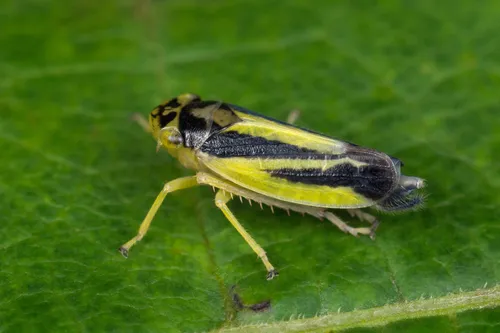
Evacanthus interruptus
Evacanthus interruptus
Identification: habitus characteristic earliest NA record: NF 1965
Excultanus excultus
Excultanus excultus
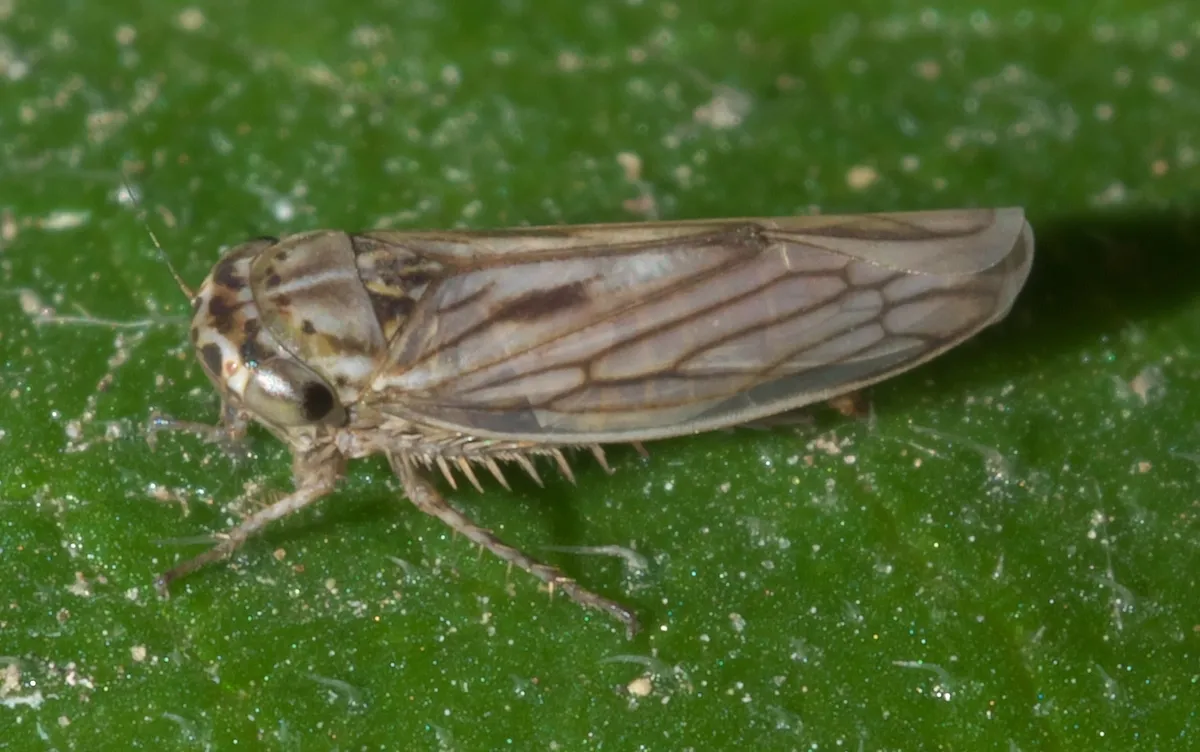
Identification: row of pale spots down the wings where they meet across the back differentiate this genus from Paraphlepsius . - comment per Andy Hamilton, 2008 most common cicadellid at lights in winter in central TX (MAQ, pers. obs. 2021)
Gray Lawn Leafhopper
Exitianus exitiosus
Identification: Dirty yellow to brown body. Two black spots on top front of head, front of pronotum, and front and rear scutellum. Wings are clear to white with brown veins and usually extend slightly past the abdomen. Det. Ken Childs, 2018
Privet Leafhopper
Fieberiella florii
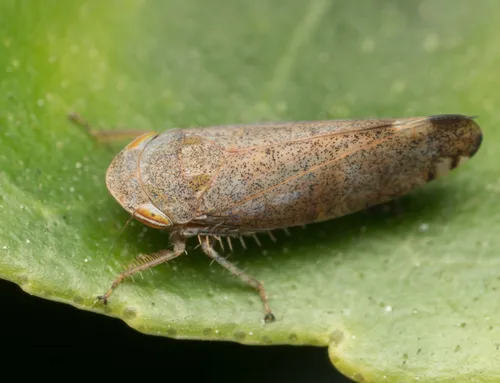
Identification: Adult cherry leafhoppers are dark brown and their shape and color mimic the buds of their hosts. Important pest known to spread plant diseases, incl. phytoplasmas, some of which cause serious diseases in Rosaceae fruit trees
Fitchana vitellina
Fitchana vitellina
Identification: head yellow, moderately pointed, with greenish eyes in live individuals; scutellum yellow centrally, brown laterally; forewing light brown with numerous clear spots; dark oblique band at base, and another near middle of wing (each ban
Flexamia areolata
Flexamia areolata
Identification: The habitus is unique frequently sits in a head-down position (BG data)
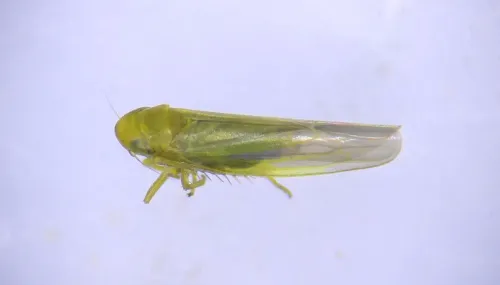
Forcipata forcipata
Forcipata forcipata
A greenish-yellow hopper associated with damp grasslands and sedges, usually in woodlands - especially along rides. The external male genitalia are distinctive, with a pair of genital plates each terminating in two blunt teeth. Females are harder to
Black-faced Leafhopper
Graminella nigrifrons
Identification: The pattern of black spots along the head edge and the dark-marked face are characteristic of this species. agricultural pest, vector of plant viruses Diseases Transmitted ( 3 ) Maize chlorotic dwarf virus Waikavirus Maize bushy stunt
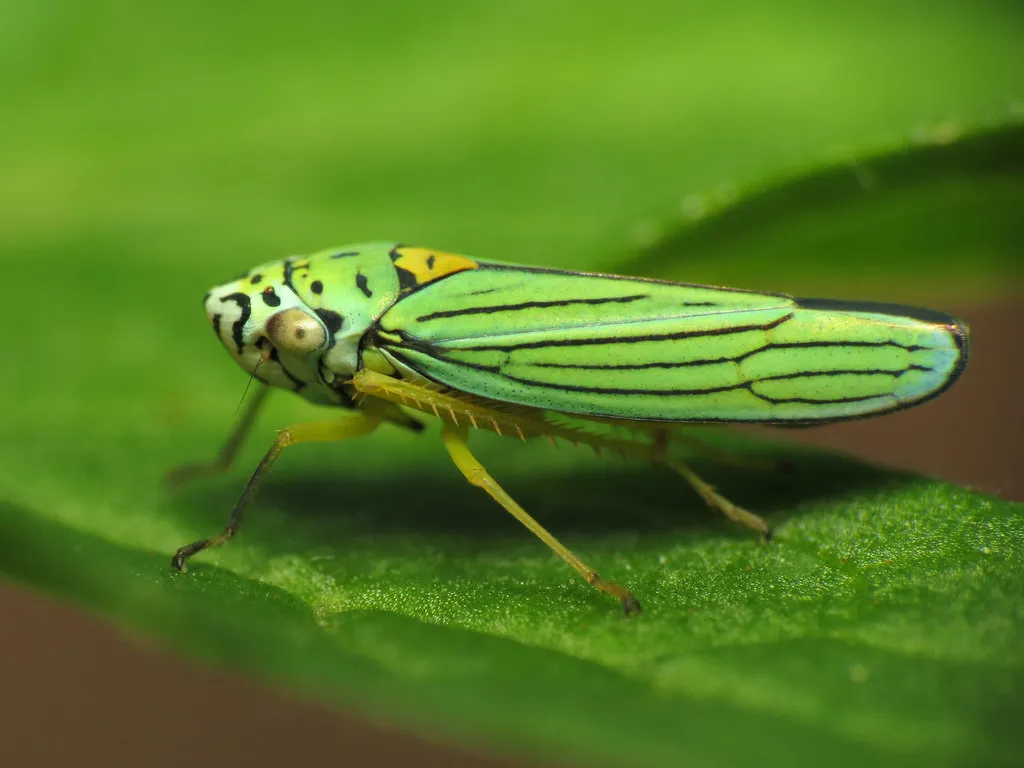
Blue-green Sharpshooter
Graphocephala atropunctata
Identification: A rather variable species ranging across a number of blue and green forms, usually based on population (due to genetic isolation). Populations in Northern California are often a dark green with fainter markings, while populations in S
Graphocephala aurora
Graphocephala aurora
Identification: An aptly named and distinctively marked species, it's one of the most colourful members of the genus north of Mexico. The wings are mostly a white when young, with faint gradients of colour varying from violet to green. These colours
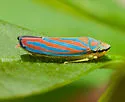
Graphocephala constricta
Graphocephala constricta
Identification: nearly identical to G. coccinea but smaller and more restricted in range. It's crucial to note size and sex of specimens of this gestalt ‒details here "I suspect constricta is probably a synonym [of coccinea ] based on what has been p
Graphocephala cythura
Graphocephala cythura
Oman redescribed the species, on the basis of the male genitalia.
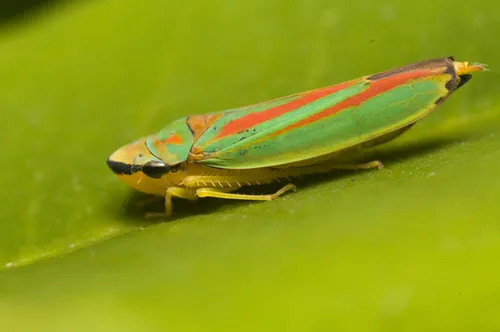
Rhododendron Leafhopper
Graphocephala fennahi
A large (8-10mm) and very distinctive leafhopper associated with Rhododendron. The forewings are green with red streaks and dark apical margins, the head and undersides are mainly yellow and there is a black band between the eyes around the edge of t
Graphocephala hieroglyphica
Graphocephala hieroglyphica
Identification: Color deeper in males Dark blue to blackish individuals represent "var. dolobrata" which is sometimes considered a separate species by some authors.
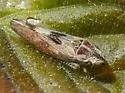
Graphocephala ignava
Graphocephala ignava
Identification: female photo This species has been treated as being within the genus/subgenus Hordnia but is completely unrelated to Graphocephala atropunctata . Its affinities seem to lie with a number of neotropical species with similar head markin
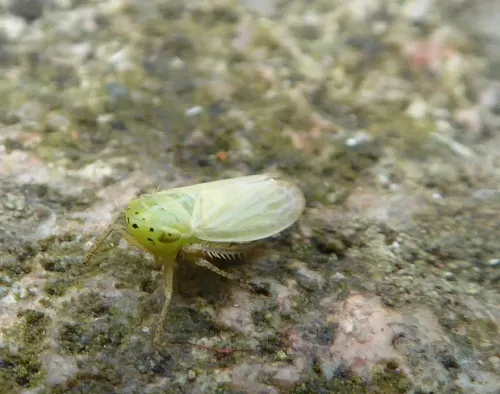
Graphocraerus ventralis
Graphocraerus ventralis
Length 4.5 to 6 mm. A greenish yellow leafhopper with four small black spots in a line running running across the vertex, two small spots on the pronotum, and some markings on the face. Good quality field photos or photos of a specimen, showing black
Graphogonalia evagorata
Graphogonalia evagorata
Identification: Det. Solomon Hendrix, 2020 First US record (Hidalgo Co., TX, July, 2012) Det. Chris Mallory, 2019
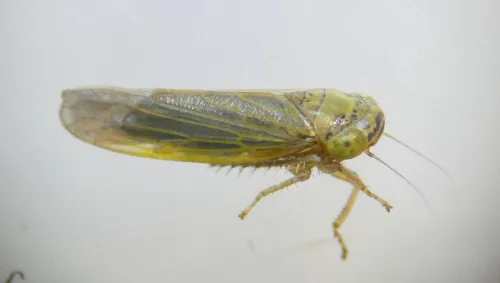
Grypotes puncticollis
Grypotes puncticollis
Length 4 to 5 mm. A brownish or greenish leafhopper associated with pine trees. Coloration is quite variable, and a form with a blue suffusion may be found. The dark wavy line on the vertex and the scutellar markings are diagnostic. Good quality fiel
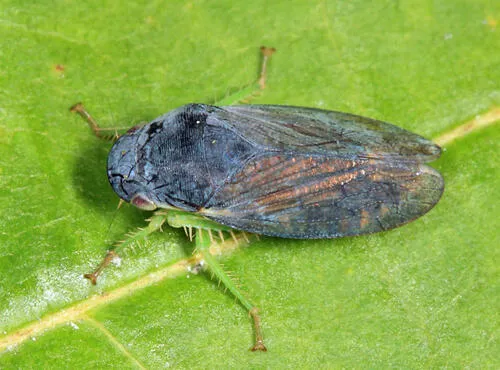
Gypona melanota
Gypona melanota
Identification: "A species with a broadly rounded vertex and dimorphic coloration in the male and female . Vertex broadly rounded, twice as broad between eyes as median length. Pronotum much wider than vertex and more than twice as long. Female yello
Gypona verticalis
Gypona verticalis
Identification: "A yellowish brown to green species, males often smoky to shining black. Vertex produced, apex rounded about half as long at middle as basal width between the eyes, more than half as long as the pronoturn. Female yellowish tinged with
Gypona vexana
Gypona vexana
Identification: "Related to melanota but with more produced vertex and with different genitalia. Vertex produced, apex rounded, more than half as long at middle as basal width between the eyes, and more than half as long as pronotum. Male shining bla
Gyponana angulata
Gyponana angulata
Identification: "A greenish species with an angularly produced vertex. Vertex narrow, bluntly angularly produced, apex rounded, two-thirds as long at middle as basal width between the eyes. Pronotum one-third wider than head. Pale greenish yellow, un
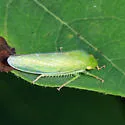
Gyponana cacumina
Gyponana cacumina
"Resembling octolineata in form and general appearance but with distinct male genitalia. Vertex roundedly produced, a little more than half as long on middle as width between the eyes at base. Yellowish tinged with orange which is in the form of long
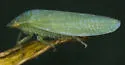
Gyponana cf-salsa
Gyponana cf-salsa
Identification: Adult: the only Gyponana species with reticulate wings in Ontario; further south there are others [comment by Andy Hamilton on this page ] - this is presumably why Andy's identification of specimens from Illinois ( 1 , 2 ) are preface
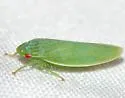
Gyponana cf-serpenta
Gyponana cf-serpenta
Identification: "Length 9-11 mm. Similar to octoliiicnta in form and appearance but each style with a slightly curved apical portion. Vertex strongly produced, broadly rounded, a little more than half as long at middle as basal width between eyes. Pa
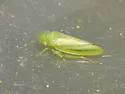
Gyponana elongata
Gyponana elongata
Identification: A distinctive species in the genus in having dark markings on the wings. Head is as wide as the pronotum; uncommon for the genus. "A yellow species with orange markings and brown stripes. Length of male 7 mm, female 7.5 mm. Crown blun
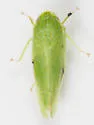
Laminate Leafhopper
Gyponana expanda
Identification: "Resembling octolineata in form and appearance but with head more produced and distinct male genitalia. Vertex produced and rather broadly rounded, almost two-thirds as long at middle as basal width between the eyes. Margin thin and s
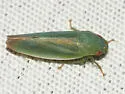
Gyponana geminata
Gyponana geminata
Identification: The wing venation is more diffuse, with larger cells than in similar-looking Gyponana species.
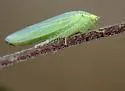
Gyponana germari
Gyponana germari
Photographs of this species were erroneously identified as Gyponana tenella , a native species with non-reticulate wing venation, until late 2024.
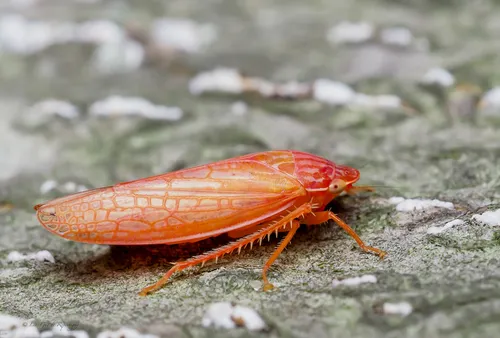
Gyponana gladia (+ cf. gladia)
Gyponana gladia
Identification: "On average, wings more coarsely reticulate than in G. octolineata , color lighter and wings narrower." [comment by Andy Hamilton] G. gladia is typically more uniformly red-orange (emphasis added) than in G. octolineata , which has th
Gyponana hasta
Gyponana hasta
Identification: "Superficially resembling angulata in form and general appearance but distinguished from it by the form of the aedeagus and styles of the male genitalia. Vertex rather strongly produced, about two-thirds as long at middle as basal wid
Gyponana octolineata (+ cf. octolineata)
Gyponana octolineata
Identification: Male tends to have the red marks confined to the body and the wing bases, whereas females are generally orange-red all over [per comment from Andy Hamilton]. G. gladia is typically more uniformly red-orange than in G. octolineata , wh
Gyponana omani
Gyponana omani
Identification: Note elongate head and shape of female pregenital sternite. PARATYPE previously placed in its own subgenus, Clovana which was later sunk. pregenital sternite of female is distinctive.
Gyponana ortha
Gyponana ortha
Identification: "Resembling octolineata in form and appearance but with distinct male genitalia. Vertex strongly produced and appearing narrow, about one-half wider between eyes than median length. Yellowish, longitudinal lines on vertex and pronotum
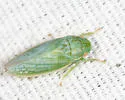
Gyponana parallela
Gyponana parallela
Identification: "A species with produced vertex, resembling octolineata in form and general appearance. Vertex strongly produced, rounded at apex, more than half as long at middle as basal width between eyes. Pale yellow faintly marked with orange on
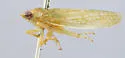
Gyponana pollex
Gyponana pollex
Type Locality: NH: Strafford Co., 5 km SE Dover, Toftree Lane, VII 13-2016, D.S. Chandler, sweep sugar maple
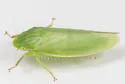
Gyponana praelonga
Gyponana praelonga
Identification: "A large species resembling flavilineata in form and general appearance but with more produced head and distinct male genitalia. Vertex strongly produced and rounded, two-thirds as long at middle as basal width between the eyes. Yello
Gyponana procera
Gyponana procera
Identification: "Superficially resembling Rugosa lora but with structural characters of the Gyponana genus and without the black spots on pronotum. Vertex strongly produced, apex rounded, more than half as long as basal width between eyes. The conspi
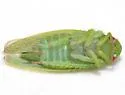
Gyponana protenta
Gyponana protenta
Identification: "In general appearance resembling acia but with vertex more strongly produced and with style long and narrow. Vertex roundedly produced, more than half as long at n1iddle as basal width between eyes. Pronotum a little longer than vert
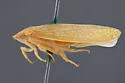
Gyponana pruinosa
Gyponana pruinosa
Identification: Distinctive pregenital sternite of female