
Idiocerus concinnus
This record describes Idiocerus concinnus (species). Recorded family: Cicadellidae. Recorded order: Hemiptera.
Identification and Appearance
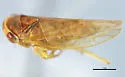
Size and general appearance of brunneus , more highly coloured, resembling rufus , but larger, broader, and with antennal discs. Vertex and face moderately broad, much less inflated than in brunneus , margins of genae but slightly rounding; elytra nearly opaque, the venation indistinct; nervures with setigerous punctures ; outer anteapical cell present, rather long. Female segment almost twice the length of the penultimate; posterior margin slightly rounded, often slightly sinuate; pygofers stout, moderately long, twice longer than in brunneus , nearly half longer than in amabilis , the ovipositor exceeding them by its own width. Male valve with a blunt median tooth, distinctly exceeded by the strong lateral angles ; antennal plates large, oval. Colour: Female pale cinnamon brown, the pronotum darker; face and all below yellow. Male darker, especially along the dorsum of elytra, where the dark tergum shows through. Face and below pale yellow, with faint stripes beneath the eyes. This has been received as rufus G. and B., but it is quite distinct. The discs of the male antennae alone would readily distinguish them. It more closely resembles brunneus from which the third anteapical cell and the distinct genitalia, as well as the absence of spots on vertex, will readily separate it. (Ball, 1902) Bliven's (1966) rebuttal to Freytag's (1965) synonymy with Idiocerus amabilis Ball, 1902: Freytag has listed this well-known species as a synonym of concinnus , but his figures do not agree with those published by Beirne. It is significant that the latter author did not mention concinnus in his work. Bliven's (1966) interesting comments when synonymizing Idiocerus concinnus with I. brunneus Osborn & Ball, 1898: Although most authors up to the present time have treated concinnus Ball as a doubtful name, Freytag has seen fit to designate a male lectotype and states that the genitalia have been removed and are in a vial attached to the pin. The chief objection to this currently accepted practice is this: there is no way of proving that the genitalia in the vial actually came from the specimen on the pin. Hamilton (1980) treats Idiocerus amabilis , I. brunneus and I. concinnus as three distinct taxa.
Classification
- Kingdom
- Animalia
- Phylum
- Arthropoda
- Class
- Insecta
- Order
- Hemiptera (True Bugs, Cicadas, Hoppers, Aphids and Allies)
- Suborder
- Auchenorrhyncha
- Superfamily
- Membracoidea
- Family
- Cicadellidae (Typical Leafhoppers)
- Subfamily
- Eurymelinae
- Tribe
- Idiocerini
- Genus
- Idiocerus
Imported taxonomy record. Source availability varies; see the source references and editorial policy below.
Habitat and Range
Geographic Range
British Columbia (type locality: Vancouver)
Additional species information
Species notes from the sources
Etymology: Idiocerus concinnus Ball, 1902
About True Bugs, Cicadas, Hoppers, Aphids and Allies: the wider group
Order-level background for Hemiptera, the group containing Idiocerus concinnus. Species-specific details appear above.
Group overview
Hemiptera (true bugs) includes over 80,000 described species across cicadas, aphids, leafhoppers, shield bugs, and bed bugs. Aphids alone cost global agriculture an estimated $2.5 billion annually in crop losses.
Ecological role of the group
Many Hemiptera are essential food sources for birds and predatory insects. Cicadas provide massive nutrient pulses during emergence events - a single Brood X emergence can involve trillions of individuals across 15 states.
Economic and practical significance of the group
The brown marmorated stink bug (Halyomorpha halys) caused $37 million in apple crop losses in a single year in the U.S. Mid-Atlantic region. Bed bug infestations in the U.S. increased by 500% between 2001-2010, costing the hotel industry hundreds of millions annually.
Recorded sources for this group: USDA, EPA, University research. Imported estimates may describe particular regions or reporting periods.
Photos of Idiocerus concinnus (2)
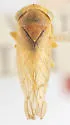
Photo credits: Contributed by Solomon V. Hendrix
Frequently Asked Questions About Idiocerus concinnus
What is Idiocerus concinnus?
Idiocerus concinnus is a species in the family Cicadellidae, within the order Hemiptera.
How big is Idiocerus concinnus?
5.5mm
How do you identify Idiocerus concinnus?
Size and general appearance of brunneus , more highly coloured, resembling rufus , but larger, broader, and with antennal discs. Vertex and face moderately broad, much less inflated than in brunneus , margins of genae but slightly rounding; elytra nearly opaque, the venation indistinct; nervures with setigerous punctures ; outer anteapical cell present, rather long. Female segment almost twice the length of the penultimate; posterior margin slightly rounded, often slightly sinuate; pygofers stout, moderately long, twice longer than in brunneus , nearly half longer than in amabilis , the ovipositor exceeding them by its own width. Male valve with a blunt median tooth, distinctly exceeded by the strong lateral angles ; antennal plates large, oval. Colour: Female pale cinnamon brown, the pronotum darker; face and all below yellow. Male darker, especially along the dorsum of elytra, where the dark tergum shows through. Face and below pale yellow, with faint stripes beneath the eyes. This has been received as rufus G. and B., but it is quite distinct. The discs of the male antennae alone would readily distinguish them. It more closely resembles brunneus from which the third anteapical cell and the distinct genitalia, as well as the absence of spots on vertex, will readily separate it. (Ball, 1902)
Where is Idiocerus concinnus found?
Range: British Columbia (type locality: Vancouver)