
Black-tailed Red Sheetweaver
Florinda coccinea
This record describes Florinda coccinea (species). Recorded family: Linyphiidae. Recorded order: Araneae.
Identification and Appearance
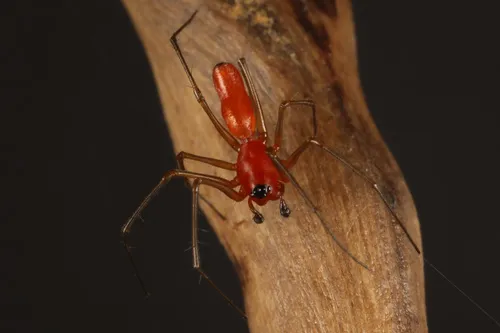
The black-tailed red sheetweaver, scientific name Florinda coccinea, is a species of web-building spider belonging to the family Linyphiidae. It is the only species in the genus Florinda. It is sometimes known as the red grass spider. Found in the United States, Mexico and the West Indies, this species is common in the southeastern United States], inhabiting grasslands, lawns, and agricultural fields.
Identification notes
Body red except for palps, eye region and conspicuous caudal tubercle which are black. From Marc Milne: The black caudal tubercle is the key. Once you see a bright orange spider in a horizontal web with this feature it is almost always Florinda coccinea . Ceraticelus or other orange Erigonids don't have this black caudal tubercle. Palp
Wikipedia reference for Florinda coccinea: https://en.wikipedia.org/wiki/Florinda coccinea.
Classification
- Kingdom
- Animalia
- Phylum
- Arthropoda
- Class
- Arachnida
- Order
- Araneae (Spiders)
- Family
- Linyphiidae (Sheetweb and Dwarf Spiders)
- Subfamily
- Linyphiinae
- Genus
- Florinda
Imported taxonomy record. Source availability varies; see the source references and editorial policy below.
Habitat and Range
Geographic Range
Maryland west to Illinois and south to Florida and Texas.
About Spiders: the wider group
Order-level background for Araneae, the group containing Florinda coccinea. Species-specific details appear above.
Group overview
As of 2023, 51,673 spider species in 136 families have been recorded, though an estimated 150,000 species exist. Spiders rank 7th in total species diversity among all organism orders. Only 0.5% of spider species pose any risk to human health.
Ecological role of the group
Spider venom contains complex peptides with diverse pharmacological activities, making them valuable for drug development research. Spiders produce up to 7 types of silk from specialized glands. Spider silk genes have been inserted into mammals and plants for biotech applications.
Economic and practical significance of the group
The global spider community kills an estimated 400-800 million tons of prey annually (2017 study). Spiders provide billions of dollars in natural pest control for agriculture. Spider silk is 5× stronger than steel of the same diameter, driving a biomaterials research industry.
Recorded sources for this group: World Spider Catalog, PNAS, Nature, ScienceDirect. Imported estimates may describe particular regions or reporting periods.
Photos of Black-tailed Red Sheetweaver (9)
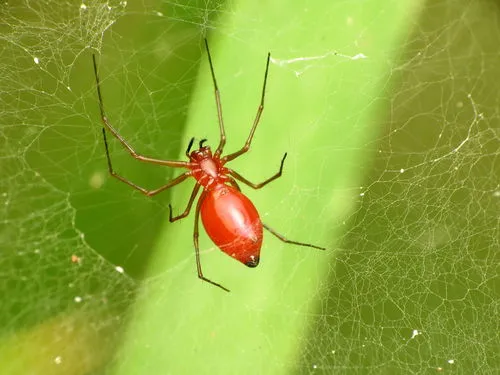
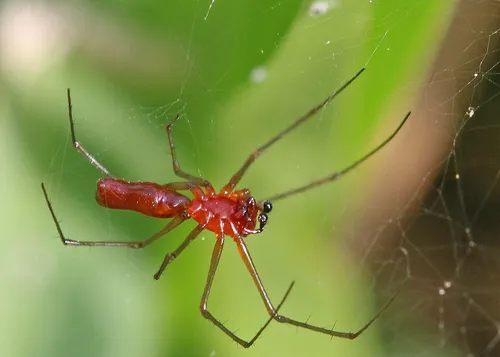
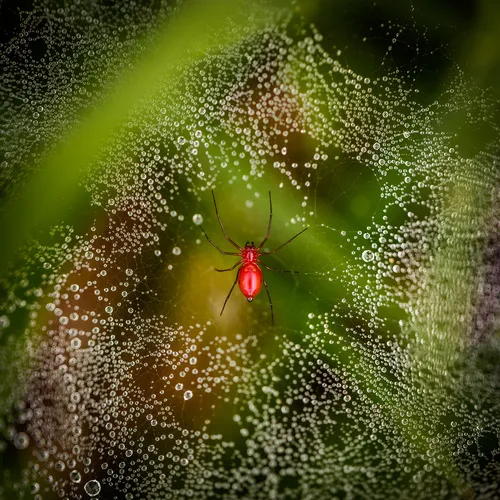
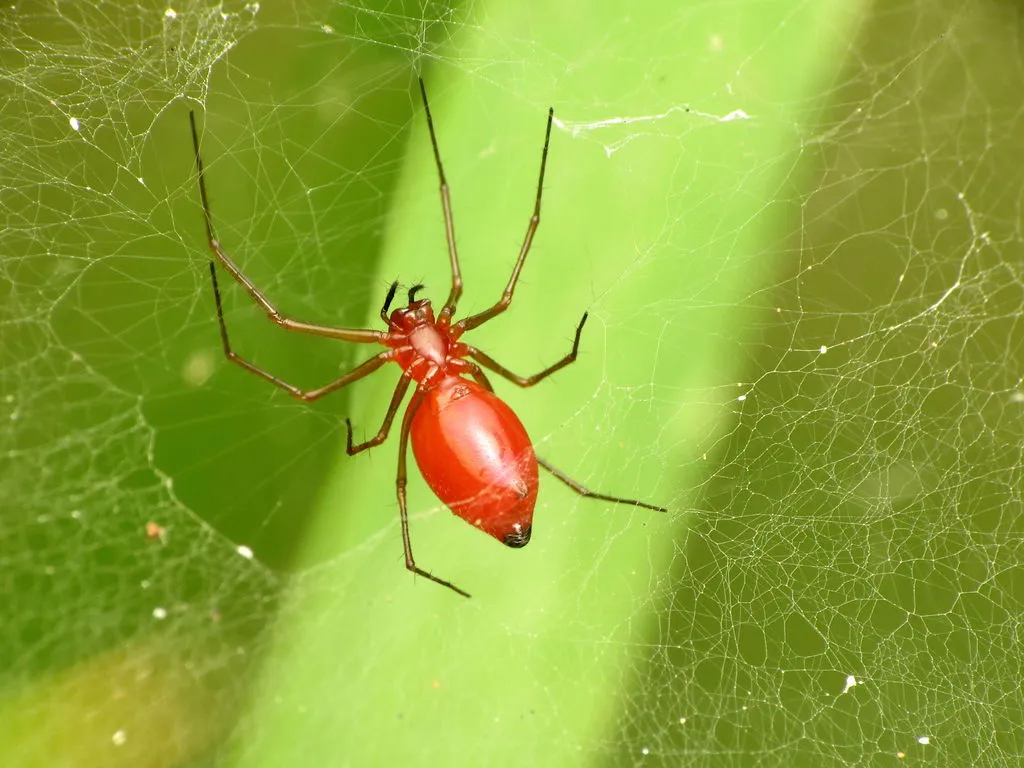
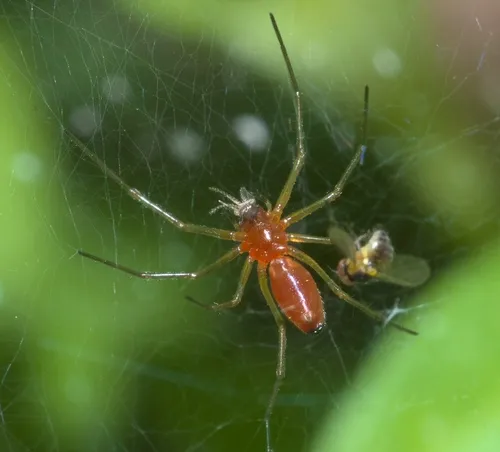
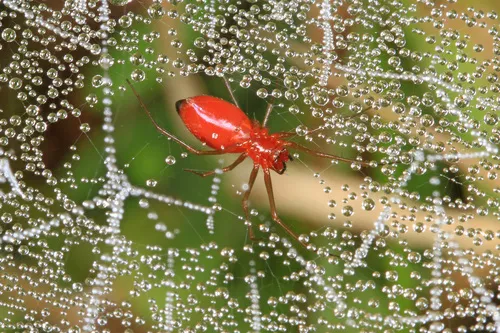
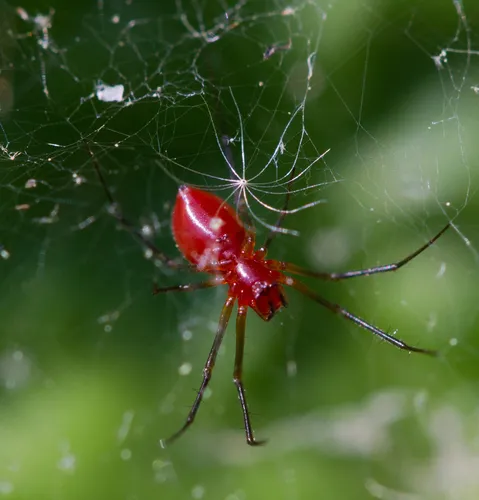
Photo credits: (c) Katja Schulz, some rights reserved (CC BY), uploaded by Katja Schulz | (c) R Snyder, some rights reserved (CC BY-NC-SA), uploaded by R Snyder | (c) Judy Gallagher, some rights reserved (CC BY) | (c) xpda, some rights reserved (CC BY-SA) | (c) Elizabeth Barron, some rights reserved (CC BY-NC), uploaded by Elizabeth Barron | (c) Buddy, some rights reserved (CC BY-NC), uploaded by Buddy | (c) ildikorab, some rights reserved (CC BY-NC) | (c) cfabian, all rights reserved, uploaded by cfabian | Contributed by Jeff Hollenbeck; Additional contributions by cheins , kschnei , Mandy Howe
Frequently Asked Questions About Black-tailed Red Sheetweaver
What is Black-tailed Red Sheetweaver?
Black-tailed Red Sheetweaver (Florinda coccinea) is a species in the family Linyphiidae, within the order Araneae.
How big is Black-tailed Red Sheetweaver?
| Feature | Details |
|---|---|
| Male | 3mm. |
| Female | 3.5mm |
How do you identify Black-tailed Red Sheetweaver?
Body red except for palps, eye region and conspicuous caudal tubercle which are black. From Marc Milne: The black caudal tubercle is the key. Once you see a bright orange spider in a horizontal web with this feature it is almost always Florinda coccinea . Ceraticelus or other orange Erigonids don't have this black caudal tubercle. Palp
Where is Black-tailed Red Sheetweaver found?
Range: Maryland west to Illinois and south to Florida and Texas.