
Cellar Spider
Pholcus phalangioides
This record describes Pholcus phalangioides (species). Recorded family: Pholcidae. Recorded order: Araneae.
Identification and Appearance
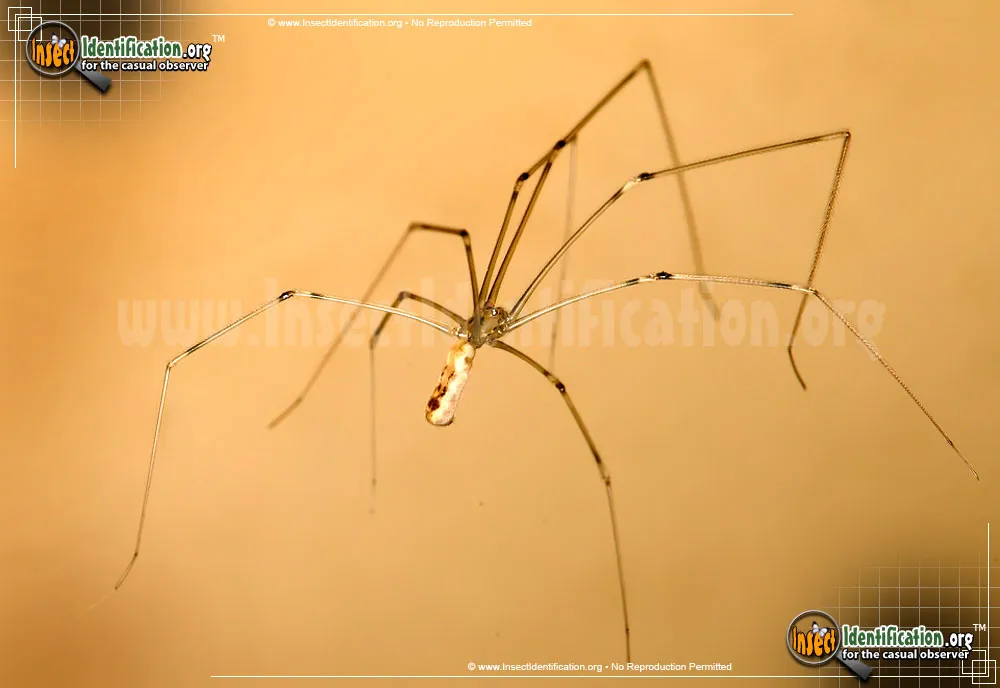
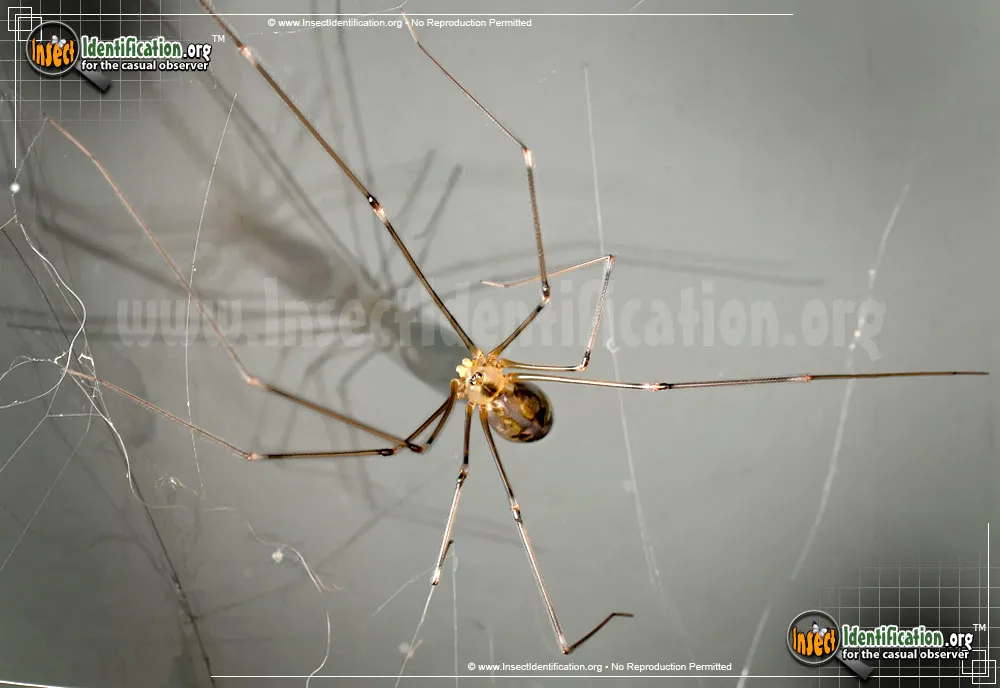
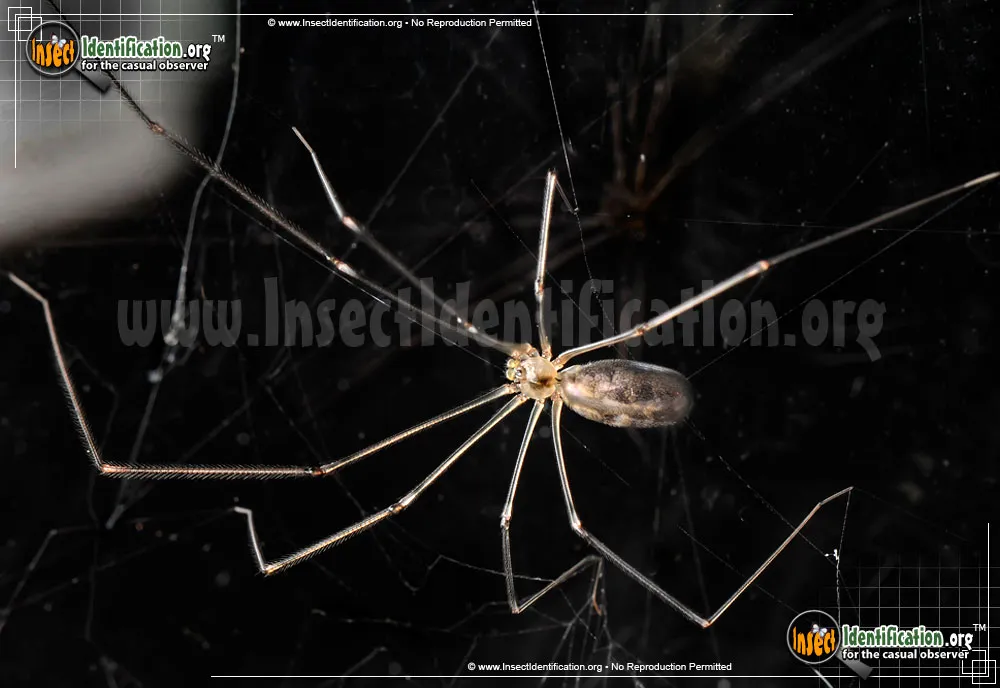
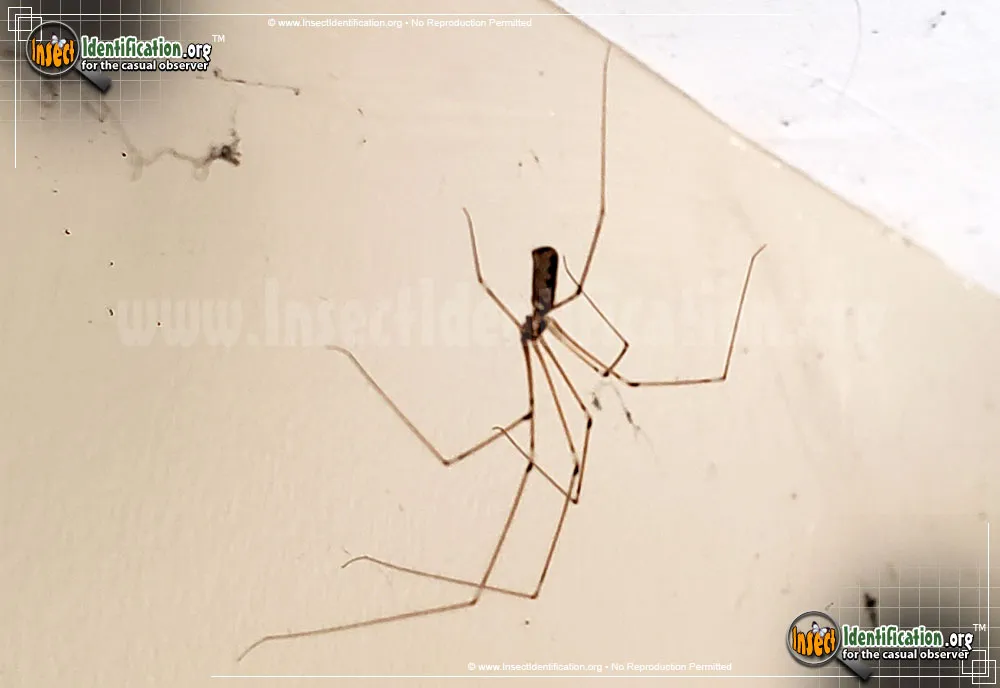
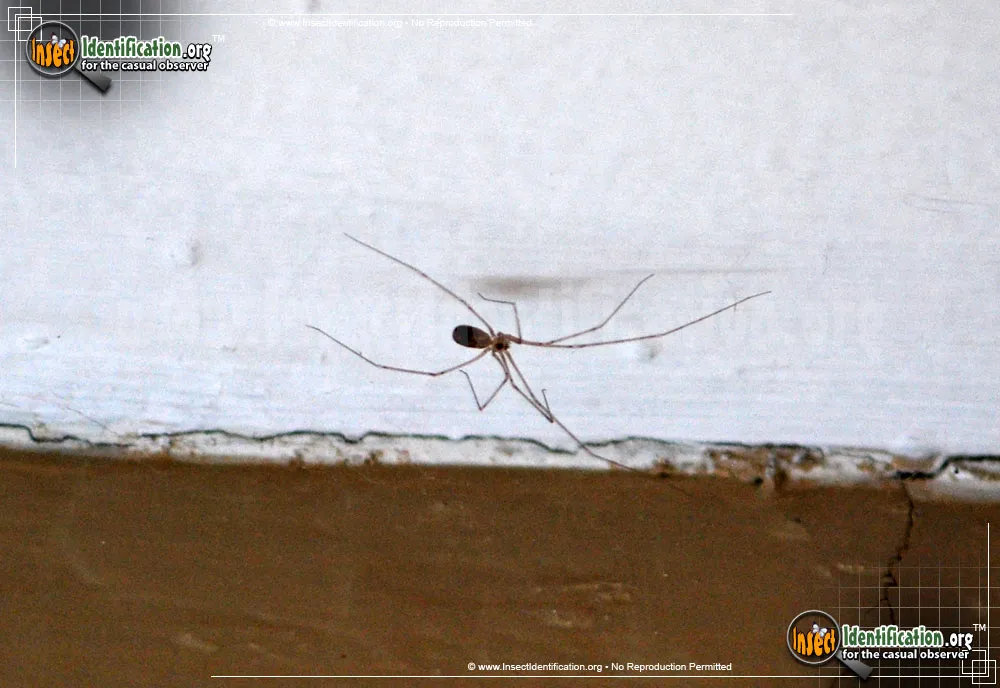
Sometimes called the 'Daddy Long-legs Spider' it is relatively easy to identify due to the very long legs and cylindrical body. Pholcus phalangioides is an eight-eyed spider, which is a pale yellow-brown except for a gray patch in the center of the cephalothorax. The body and legs are almost translucent. The females are about 8 mm in length and males 6 mm. Particularly fond of houses and out-buildings where it is usually found. Their horizontal webs are large, loose and flat, but they can make them any shape to fit into surrounding objects. They hang upside down on the web and if disturbed will shake violently. These spiders are effective predators of household pests including other spiders. They are also cannibalistic - eating each other if food is scarce. On the other hand the females are excellent mothers. They carry their eggs in their mouths and have been seen feeding their young. The Pholcus family of spiders normally prefer warmer climes but this species is now widespread and common in Britain.
| Other recorded terms |
|
|---|
Terms from the source record, grouped for readability. Broad terms such as size or location are not measurements or a confirmed range.
Classification
Habitat and Range
Habitat
Particularly fond of houses and out-buildings where it is usually found.
Seasonal Activity
All year round.
Diet and Behavior
Life History
Their horizontal webs are large, loose and flat, but they can make them any shape to fit into surrounding objects. They hang upside down on the web and if disturbed will shake violently. These spiders are effective predators of household pests including other spiders. They are also cannibalistic - eating each other if food is scarce. On the other hand the females are excellent mothers. They carry their eggs in their mouths and have been seen feeding their young.
Additional species information
Recorded status
The
About Spiders: the wider group
Order-level background for Araneae, the group containing Pholcus phalangioides. Species-specific details appear above.
Group overview
As of 2023, 51,673 spider species in 136 families have been recorded, though an estimated 150,000 species exist. Spiders rank 7th in total species diversity among all organism orders. Only 0.5% of spider species pose any risk to human health.
Ecological role of the group
Spider venom contains complex peptides with diverse pharmacological activities, making them valuable for drug development research. Spiders produce up to 7 types of silk from specialized glands. Spider silk genes have been inserted into mammals and plants for biotech applications.
Economic and practical significance of the group
The global spider community kills an estimated 400-800 million tons of prey annually (2017 study). Spiders provide billions of dollars in natural pest control for agriculture. Spider silk is 5× stronger than steel of the same diameter, driving a biomaterials research industry.
Recorded sources for this group: World Spider Catalog, PNAS, Nature, ScienceDirect. Imported estimates may describe particular regions or reporting periods.
Photos of Cellar Spider (9)
Frequently Asked Questions About Cellar Spider
What is Cellar Spider?
Cellar Spider (Pholcus phalangioides) is a species in the family Pholcidae, within the order Araneae.
How big is Cellar Spider?
and males 6 mm.
Where is Cellar Spider found?
Habitat: Particularly fond of houses and out-buildings where it is usually found.
When is Cellar Spider active?
Cellar Spider: seasonal activity - All year round..
What is the life cycle of a Cellar Spider?
Their horizontal webs are large, loose and flat, but they can make them any shape to fit into surrounding objects. They hang upside down on the web and if disturbed will shake violently. These spiders are effective predators of household pests including other spiders. They are also cannibalistic - eating each other if food is scarce. On the other hand the females are excellent mothers. They carry their eggs in their mouths and have been seen feeding their young.