
Alebra coryli
This record describes Alebra coryli (species). Recorded family: Cicadellidae. Recorded order: Hemiptera.
Identification and Appearance
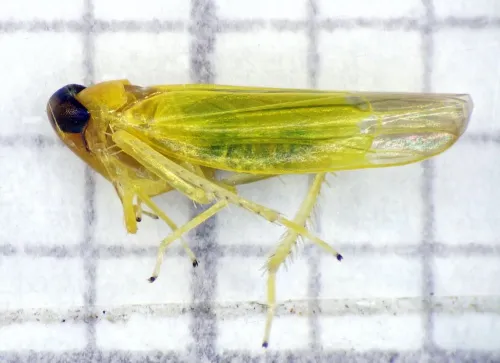
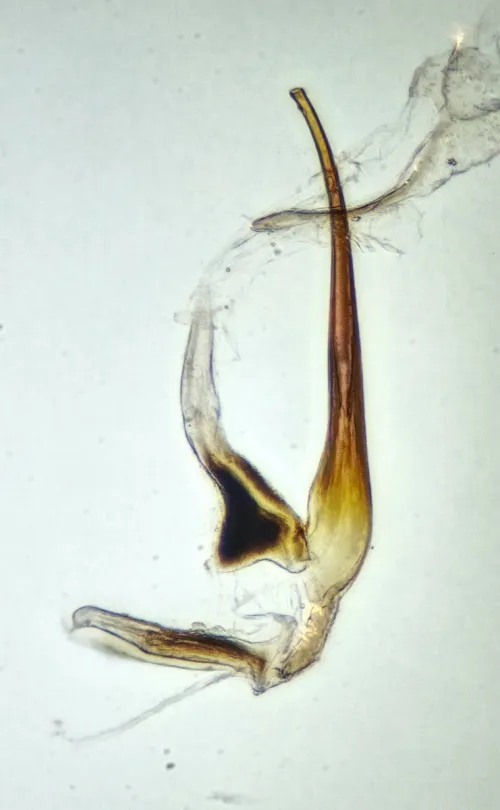
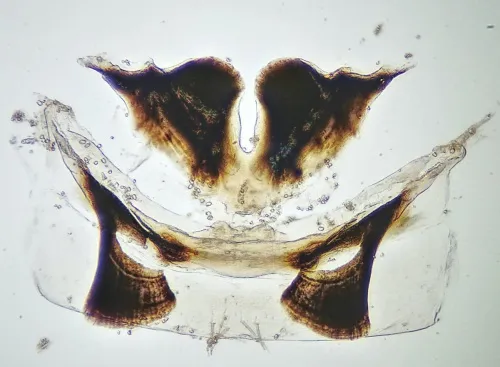
Length 3.5 to 4.0 mm, associated with hazel. The Alebra genus is distinguished from all other Typholocybinae by the forewing appendix - a narrow zone at the forewing apex which is not crossed by any veins. Individuals vary in colour and intensity of markings, and males and females differ. The hind tibia have light to slightly dark spots. Females have 2 well-defined orange or yellow longitudinal stripes over a pale forewing. Males have vertex, head, forewing and pronotum yellow or orange. There are several similar Alebra , and identification is difficult. If in doubt, the male sternal apodemes should be examined - these are internal abdominal structures assocated wth the song apparatus. Detailed examination of the specimen is needed to identify this species. Photograph underside as well as dorsal side, and ensure photographs show hind tibia clearly. Ensure you have identified the host plant. It is helpful to confirm whether male or female. See Biedermann & Niedringhaus for illustrations of sternal apodemes, and Le Quesne for guidance on how to examine them. Local (ref: UK Auchenorrhyncha checklist 2021 ) see detailed description and key in Le Quesne and illustrations in Biedermann & Niedringhaus No additional images available for this species.
Classification
- Kingdom
- Animalia
- Phylum
- Arthropoda
- Class
- Insecta
- Order
- Hemiptera (True Bugs, Cicadas, Hoppers, Aphids and Allies)
- Suborder
- Auchenorrhyncha
- Superfamily
- Membracoidea
- Family
- Cicadellidae (Typical Leafhoppers)
- Subfamily
- Typhlocybinae
- Tribe
- Alebrini
- Genus
- Alebra
Imported taxonomy record. Source availability varies; see the source references and editorial policy below.
Habitat and Range
Habitat
Feeds mostly on Hazel.
Seasonal Activity
Summer-Autumn.
Additional species information
Recorded status
Local (ref:
About True Bugs, Cicadas, Hoppers, Aphids and Allies: the wider group
Order-level background for Hemiptera, the group containing Alebra coryli. Species-specific details appear above.
Group overview
Hemiptera (true bugs) includes over 80,000 described species across cicadas, aphids, leafhoppers, shield bugs, and bed bugs. Aphids alone cost global agriculture an estimated $2.5 billion annually in crop losses.
Ecological role of the group
Many Hemiptera are essential food sources for birds and predatory insects. Cicadas provide massive nutrient pulses during emergence events - a single Brood X emergence can involve trillions of individuals across 15 states.
Economic and practical significance of the group
The brown marmorated stink bug (Halyomorpha halys) caused $37 million in apple crop losses in a single year in the U.S. Mid-Atlantic region. Bed bug infestations in the U.S. increased by 500% between 2001-2010, costing the hotel industry hundreds of millions annually.
Recorded sources for this group: USDA, EPA, University research. Imported estimates may describe particular regions or reporting periods.
Photos of Alebra coryli (3)
Frequently Asked Questions About Alebra coryli
What is Alebra coryli?
Alebra coryli is a species in the family Cicadellidae, within the order Hemiptera.
How big is Alebra coryli?
3.5 to 4.0 mm, associated with hazel. The
How do you identify Alebra coryli?
is difficult. If in doubt, the male sternal apodemes should be examined - these are internal abdominal structures assocated wth the song apparatus.
Where is Alebra coryli found?
Habitat: Feeds mostly on Hazel.
When is Alebra coryli active?
Alebra coryli: seasonal activity - Summer-Autumn..