
Family Underwing, Tiger, Tussock, and Allied Moths (Noctuidae)
Noctuidae is a family in the order Lepidoptera. Browse 2,425 named species recorded in this family, or open an individual profile for its available identification and natural-history information.
Species in Noctuidae (2,425)
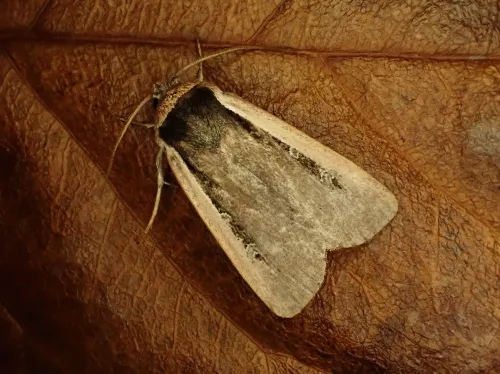
Radford's Flame Shoulder
Ochropleura leucogaster
Wingspan 34-37 mm. Rather similar to the Flame Shoulder (Ochropleura plecta ) but has longer forewings with smaller stigmata. However these features can be subjective and variable. The whiter hindwings, white dorsal hairs at top of abdomen and tegula
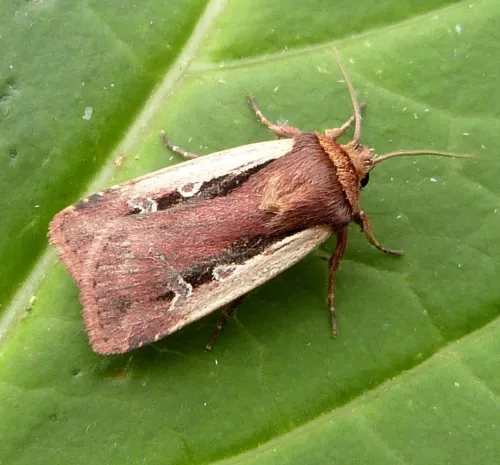
Flame Shoulder
Ochropleura plecta
Wingspan 25-30 mm. Resembles no other British species. The English name refers to a bright straw coloured band running along the leading edge of the forewing, which is further emphasised by the black streak behind it. Woodland fringes, gardens and me
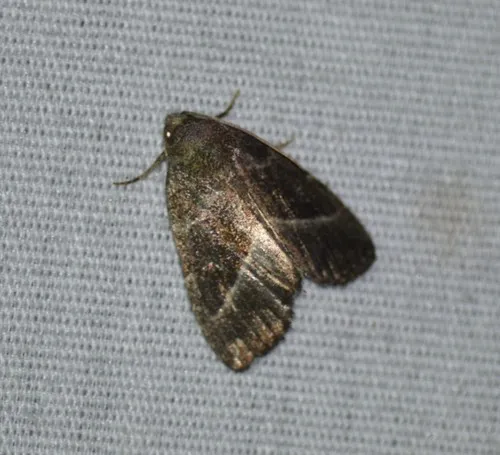
Ogdoconta altura - Hodges#9723
Ogdoconta altura
Ogdoconta altura - Hodges#9723 (Ogdoconta altura) is a species in the family Noctuidae, commonly known as owlet moths, belonging to the order Lepidoptera (Butterflies and Moths). It is classified within the subfamily Condicinae, tribe Condicini, supe
Common Pinkband - Hodges#9720
Ogdoconta cinereola
Identification: Adult: forewing dark brownish or grayish liberally sprinkled with pale gray flecks, as though dusted with ashes; broad pinkish band in subterminal area; subterminal line wavy; basal two-thirds of wing laced with thin pale meandering l
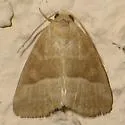
Ogdoconta moreno - Hodges#9721
Ogdoconta moreno
Identification: Adult: forewing light grayish-brown with paler shading in subterminal and antemedial areas, which makes the median area appear darker by comparison; reniform and orbicular spots diffuse, indistinct, barely paler than ground color; AM
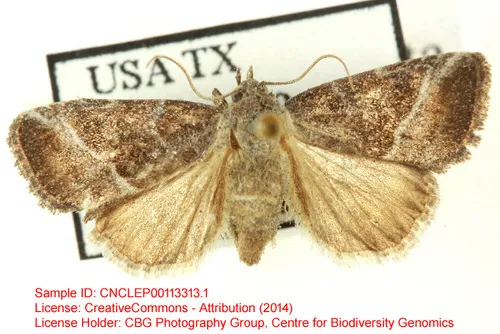
Ogdoconta sexta - Hodges#9722
Ogdoconta sexta
Identification: The pm. line of O. sexta diverges toward the apex. "The main thing I notice, without dissecting the specimens, is the postmedial line in altura is basically parallel to the outer edge of the wing (ignoring the convexity of the outer m
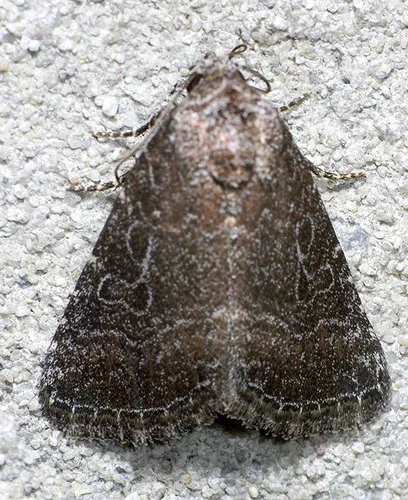
Ogdoconta tacna - Hodges#9724
Ogdoconta tacna
Identification: The original description as Caradrina tacna (Barnes) is available in the print references below.
Bridgham's Brocade - Hodges#9415
Oligia bridghamii
Secure globally (G4) but rare (S1) in some regions such as Indiana ( PDF doc ); listed "S1?" in Ontario .
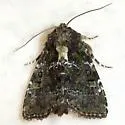
Oligia chlorostigma - Hodges#9402
Oligia chlorostigma
Identification: Distinctive white spot on antemedian line at the inner margin.
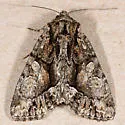
Oligia divesta - Hodges#9559
Oligia divesta
Identification: Adult: forewing dark brownish-gray with black-rimmed reniform and orbicular spots filled with ground color; black basal dash; thick black bar runs from AM to PM line near inner margin; AM line scalloped; PM line toothed; several black
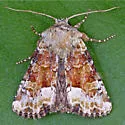
Neumoegen's Quaker - Hodges#9417
Oligia egens
Identification: The forewings are a rather complex and attractive rust-red on the basal two-thirds with some dark and light scales. The orbicular and reniform are outlined with lighter scales and partially filled with rusty orange. The distal third i
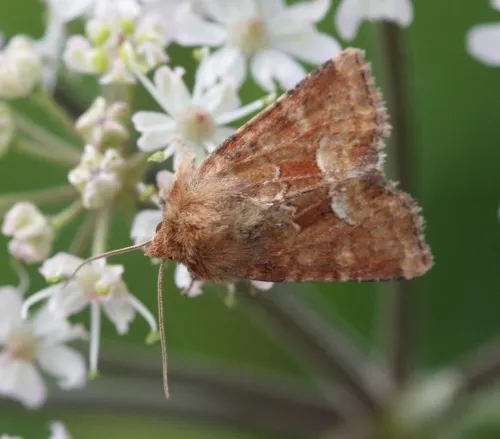
Middle-barred Minor
Oligia fasciuncula
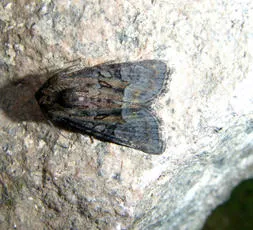
Wingspan 22-26 mm. Quite variable in ground colour but usually generally more rufous or sandy-coloured than the other 'Minors', with a white mark on the rear edge of the forewing where the postmedian line ends. Occupying marshes, river banks, damp fl
Tawny Marbled Minor
Oligia latruncula
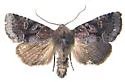
Wingspan 24 to 27 mm. The Minors, or Oligia species are notoriously hard to separate from one another, and it is preferable to examine the genital structure to be certain. However, this species does often show a tawny or bronzy coloration. Like relat
Small Brocade - Hodges#9416
Oligia minuscula
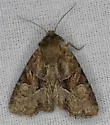
Identification: Adult: forewing grayish-brown with pale gray terminal band and another pale band outside AM line; typical form has black bar from claviform spot to PM line (absent in form "grahami"); reniform and orbicular spots dark with pale outlin
Oligia obtusa - Hodges#9418
Oligia obtusa
Identification: Original description as Helotropha obtusa Smith. , Adult: The darker median area is trapezoid shaped. Reniform and orbicular spots lined with light scales. Hindwing is brownish gray with a diffused darker discal spot.
Oligia rampartensis - Hodges#9414.1
Oligia rampartensis
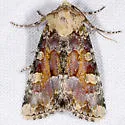
Identification: Forewings are a mix of purple, maroon, orange, and cream colors. The orbital spot is round and the reniform spot is oblong and are pale yellowish. The head and thorax are a pale creamy or pinkish buff color. Hind wings are white, wi
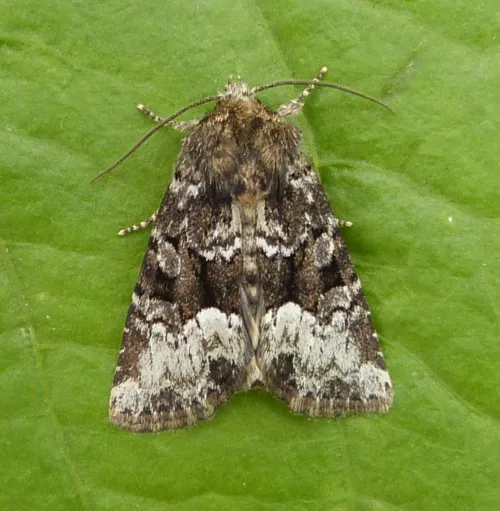
Marbled Minor
Oligia strigilis
Wingspan 22-25 mm. One of a complex of three species, which can only be reliably separated by dissection of the genitalia. The other two species are Tawny Marbled Minor ( O. latruncula ) and Rufous Minor ( O. versicolor ). The identification of this
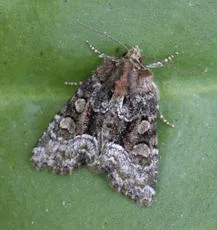
Marbled Minor agg.
Oligia strigilis agg.
Wingspan 22-25 mm. One of a complex of three species, which can only be reliably separated by dissection of the genitalia. The other two species are Tawny Marbled Minor ( O. latruncula ) and Rufous Minor ( O. versicolor ). The identification of this
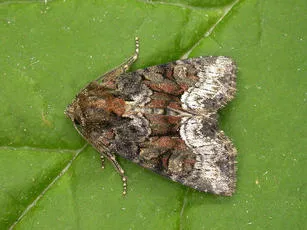
Rufous Minor
Oligia versicolor
Wingspan 22 to 28mm. This is one three moths which look very similar and its identity should only be confirmed by dissection. The wings of this species can have a reddish tinge. Woodland, heathland, other grassy areas. It is found flying in mid June
Lunar Underwing - Hodges#9956.1
Omphaloscelis lunosa
Apparently this well-known European species has recently been recorded in the eastern USA. See the Maryland Biodiverity Project website here . Now recognized within the North American fauna, ZooKeys, 788: 249.
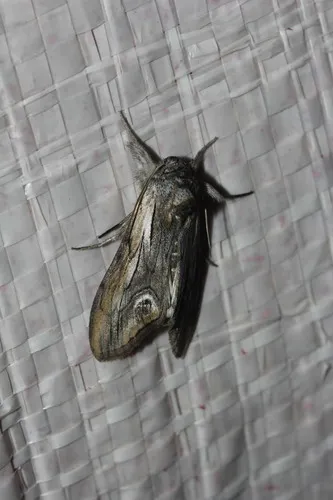
Opsigalea Moth - Hodges#10216
Opsigalea blanchardi
Identification: Adult - forewing light yellowish-brown on upper (costal) half, gray on lower half, with thin black streaks separating the halves; large blackish blotch near anal angle, bordered basally by black semicircle (which constitutes the lower
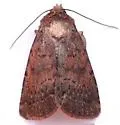
Orthodes adiastola - Hodges#10588
Orthodes adiastola
Identification: Adult : Dull brown ground color, with some black scaling ● FW dark brown, with area between AM and PM lighter than basal 1/3 and terminal 1/3 ● AM somewhat irregular, crenulate, dentate inwardly ● Median shade vague ● PM outwardly cur
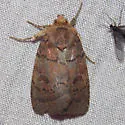
Cynical Quaker - Hodges#10587
Orthodes cynica
Identification: forewing lines are darker (black) than ground color, which is dark red; PM line wavy [Rustic Quaker lacks all of these characters]
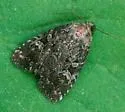
Disparaged Arches - Hodges#10288
Orthodes detracta
Identification: Adult : FW mottled gray-brown, with rust-colored patches • Basal dash, weak black • AM doubled, irregular in shape • Orbicular & reniform, light outlined black • Claviform is thick black, apically pointed, nearly reaching PM • PM doub
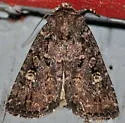
Goodell's Arches Moth - Hodges#10289
Orthodes goodelli
Identification: Adult : Similar to O. detracta , except goodelli has a smaller claviform spot, less distinct lines/spots, lacks a basal dash, and the male antenna is bead-like rather than bipectinate.
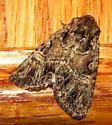
Orthodes noverca - Hodges#10282
Orthodes noverca
Identification: The orbicular spot is only half lined with black, and this is a key to distinguish Orthodes noverca from the two other similar species.
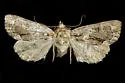
Orthomoia bloomfieldi - Hodges#9433.1
Orthomoia bloomfieldi
Identification: Mustelin original description is in PDF. Specimen determined by DNA analysis (BOLD).
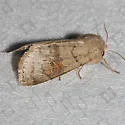
Gray Quaker - Hodges#10491
Orthosia alurina
Identification: Adult: forewing light to medium gray with reddish tinting, especially between spots and on basal side of ST line; lines very inconspicuous; terminal line composed of several black dots; hindwing shiny, pale grayish-brown with faint di
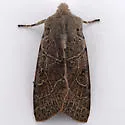
Orthosia behrensiana - Hodges#10485
Orthosia behrensiana
Identification: Specimens identified by DNA analysis:
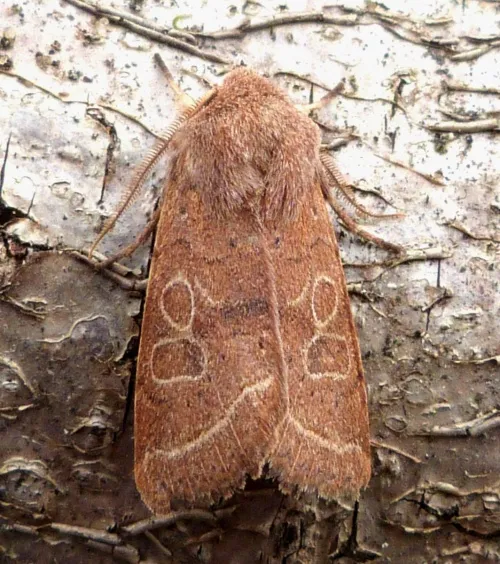
Common Quaker
Orthosia cerasi
Wingspan 34-40 mm. Quite variable, there are forms with a plain ground colour and others with a darker band across the forewing, but all have large, rounded stigmata outlined paler. Has a wide range of lowland habitats, including woodland and gardens
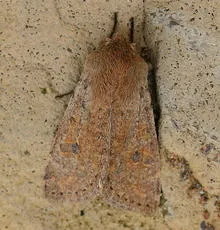
Small Quaker
Orthosia cruda
Wingspan 25-30 mm. Distinguished from other early Noctuids by its small size, usually light colour and plain appearance of forewing which has a rough appearance caused by a dusting of black scales. Deciduous woodland and areas with scattered trees. T
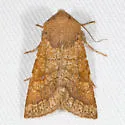
Orthosia ferrigera - Hodges#10482
Orthosia ferrigera
Orthosia ferrigera - Hodges#10482 (Orthosia ferrigera) is a species in the family Noctuidae, commonly known as owlet moths, belonging to the order Lepidoptera (Butterflies and Moths). It is classified within the subfamily Noctuinae, tribe Orthosiini,
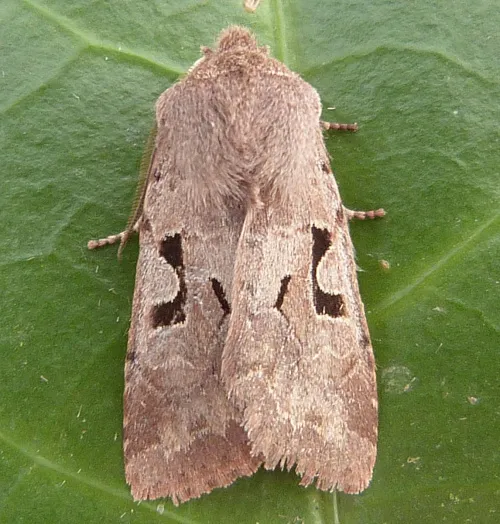
Hebrew Character
Orthosia gothica
Wingspan 30-35 mm. The typical forms have a distinct black mark on the forewing but some forms, especially in northern parts, have this mark the same as the ground colour or even paler. It flies in a single generation during March and April. It can b
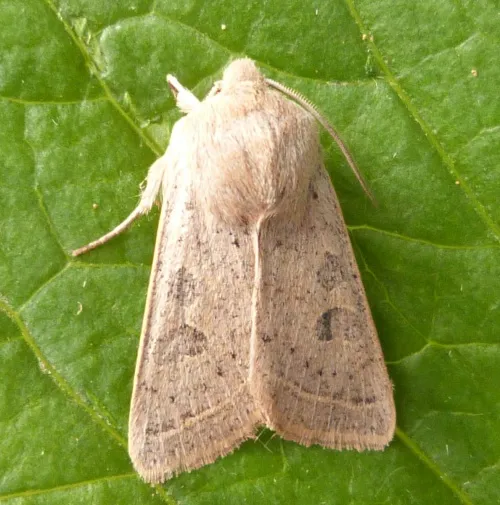
Powdered Quaker
Orthosia gracilis
Wingspan 35 to 40 mm. A quite variable species in colouration, but the row of dots between the kidney mark and the outer cross line helps with identification. The more widely varying individuals are usually those feeding on bog myrtle in Scotland and
Clouded Drab
Orthosia incerta
Wingspan 35-40 mm. Exceptionally variable throughout its range, this species varies from relatively plain dark forms to well-marked buff and orange individuals. In the darker forms especially, there is usually a distinctive paler fringe to the forewi
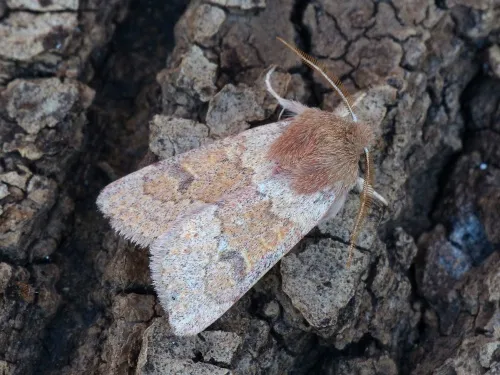
Blossom Underwing
Orthosia miniosa
Wingspan 31 to 36 mm. A rather variable species, usually with warm sandy or pinkish browns. The underwing is the distinctive feature, being pinkish white and showing up well in the light of a moth trap. This distinguishes it from the rest of the grou
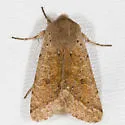
Orthosia pacifica - Hodges#10494
Orthosia pacifica
Identification: The original description as Taeniocampa pacifica Harvey, and a revised description as Monima pacifica by Hampson 1905 are both available online in the print references below. Specimen identified by DNA analysis (BOLD). ( 3 )
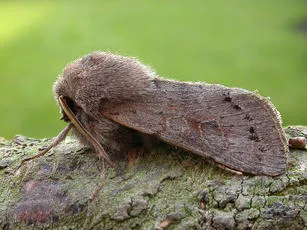
Lead-coloured Drab
Orthosia populeti
Wingspan 34 to 40 mm. Can be rather similar to the Clouded Drab, but usually smaller with a more rounded termen. There are also subtle differences in the hindwing. The antennae of male Lead-coloured Drabs are much more obviously feathered than the an
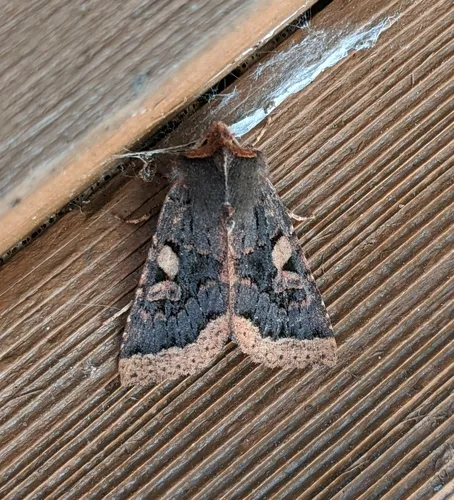
Orthosia praeses - Hodges#10480
Orthosia praeses
Identification: FW color is variable, most commonly dark reddish brown or blackish brown and less often mottled and speckled light red-brown. Most color forms have a lighter terminal area that is often ochres-tan or orange-brown, but the terminal are
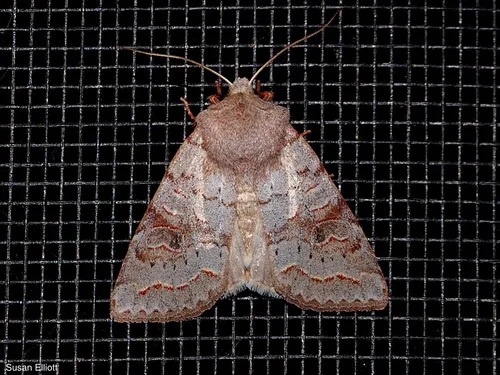
Subdued Quaker - Hodges#10490
Orthosia revicta
Identification: Adult : Ground color is blue-gray , lighter and stronger blue in the western part of range; duskier and plainer gray further east. The FW is variably covered by bright red-brown, occasionally complete but most often leaving some areas
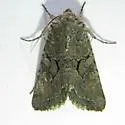
Orthosia segregata - Hodges#10493
Orthosia segregata
Identification: Gray forewing with large discal spots and a black median bar.
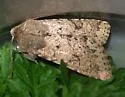
Orthosia terminata - Hodges#10484
Orthosia terminata
Identification: The original and revised description can be found online in the print references. rarely collected. ( 3 )
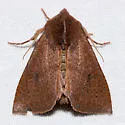
Orthosia transparens - Hodges#10479
Orthosia transparens
Identification: Adult: forewing uniformly light to dark reddish-brown, rectangular, with sharply-pointed apex; outer margin straight or slightly falcate; reniform spot dark grayish, barely darker than ground color; PM line a gently curving series of
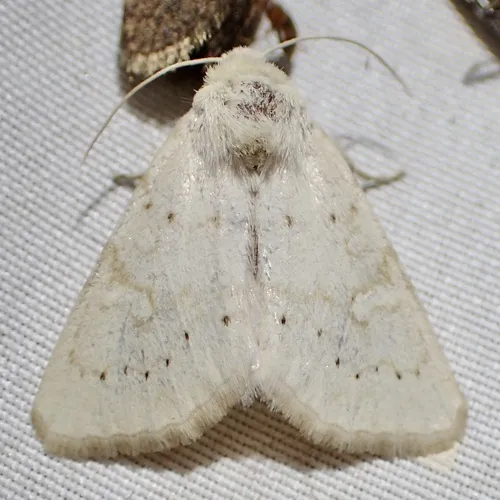
Oslaria pura - Hodges#9792
Oslaria pura
Identification: "The nocloine prothoracic tarsal segments, the triangular frontal process, the comb of enlarged spines on the prothoracic tarsal segments, and the off-white and obscure maculation of the forewing will identify this species. The forewi
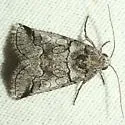
Oxycnemis advena - Hodges#10039
Oxycnemis advena
Oxycnemis advena - Hodges#10039 (Oxycnemis advena) is a species in the family Noctuidae, commonly known as owlet moths, belonging to the order Lepidoptera (Butterflies and Moths). It is classified within the subfamily Amphipyrinae, tribe Psaphidini,
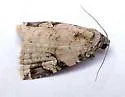
Aerial Brown - Hodges#9030
Ozarba aeria
Identification: Specimen identified by DNA analysis:
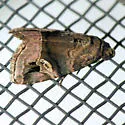
Ozarba nebula - Hodges#9033
Ozarba nebula
Identification: Specimen identified by DNA analysis:
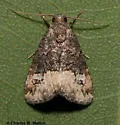
Ozarba propera - Hodges#9031
Ozarba propera
Identification: Specimen identified by DNA analysis (BOLD). ( 3 )
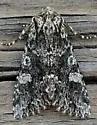
Pachypolia atricornis - Hodges#9992
Pachypolia atricornis
Identification: Grote and Hampson descriptions in the print references listed below. Uncommon to rare throughout the range. Greham & Parker collected adult females at bait. Westcott reported Pachypolia atricornis collected by "sugaring".
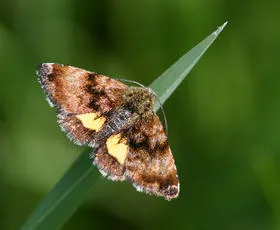
Small Yellow Underwing
Panemeria tenebrata
Wingspan 19-22 mm. It has a dark chestnut brown forewing dusted with grey and the typical yellow and dark banded hindwing Frequents meadows, grassy downland and other open areas. A day-flying species which prefers sunny weather. On the wing in May an
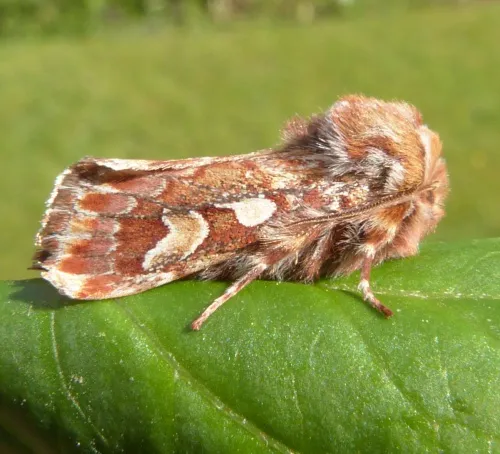
Pine Beauty
Panolis flammea
Wingspan 30-33 mm. Unmistakable with a large white kidney mark drawn out close to leading edge towards wing tip. Forewing rather narrow and pointed orange brown, reddish brown or brick red often yellowish along the outer edge and sometimes dusted whi
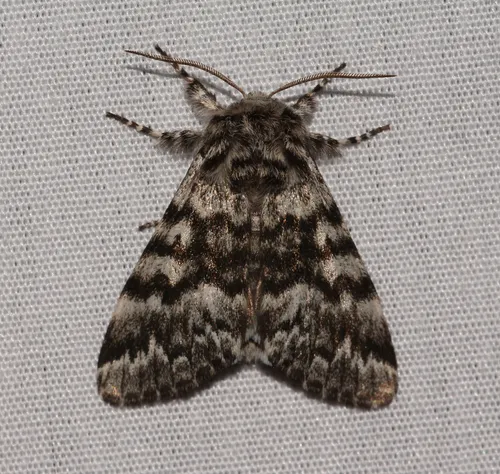
Black Zigzag - Hodges#9177
Panthea acronyctoides
Identification: Adult : forewing white with bold black zigzag lines; pattern usually visible on either white, black (melanic), or gray-shaded specimens; fringe checkered black-and-white; orbicular spot a large white disk bordered by black and with a
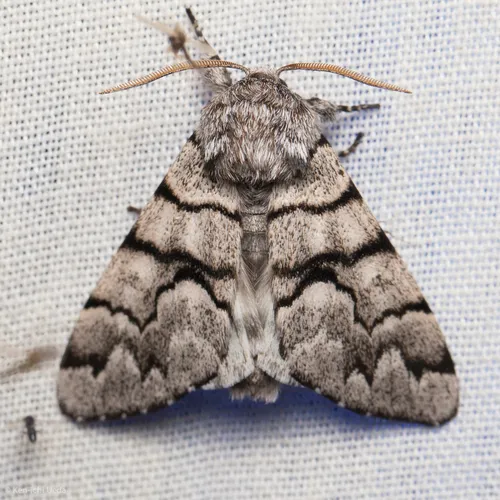
Eastern Panthea - Hodges#9182
Panthea furcilla
Identification: Adult : forewing variably whitish to medium gray with heavy black AM, median, and PM lines; AM and median lines almost straight; PM line curves inward to touch median line near inner margin, then separates again before reaching inner
Papaipema aerata - Hodges#9468
Papaipema aerata
No known records of this species for several decades. A specimen of Papaipema nelita online labeled as this species apparently created some confusion as to its status.
Flypoison Borer - Hodges#9493.1
Papaipema amianthii
This species is apparently abundant in the Poconos in some years and very rare in the same locations in other years.
Northern Burdock Borer - Hodges#9471
Papaipema arctivorens
Identification: Adult: forewing light orange with rusty red shading and speckling; area beyond PM line dark purplish-brown except for yellowish apical patch and sometimes a yellow subterminal line; orbicular and claviform spots large, white; clavifor
Yellow Stoneroot Borer Moth - Hodges#9477
Papaipema astuta
Identification: Reniform/orbicular spots typically yellow, PM line straight This species and P. duplicatus both use stoneroot as a host. P. astuta is more common than duplicatus in New Jersey, as well as in the Midwest.
Aweme Borer Moth - Hodges#9504
Papaipema aweme
Identification: Lyman (1908) original description as Gortyna aweme , and the Hampson (1910) revised description as Papaipema aweme are both online in the print references. COSEWIC Assessment and Status Report on the Aweme Borer Papaipema aweme in Can
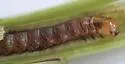
Blazing Star borer moth - Hodges#9508
Papaipema beeriana
Listed by United States Fish & Wildlife Region 9 listed the status as Sensitive , and stated, "The Nature Conservancy’s Heritage Program ranks this species as G3. This ranking means Papaipema beeriana is rare and uncommon globally (Illinois Natural H
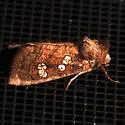
Seaside Goldenrod Borer - Hodges#9465
Papaipema duovata
Identification: A dusky brown Papaipema with white reniform, orbicular, and claviform spots and dull yellow basal spots. According to Dale Schweitzer, this species can be abundant in southern New Jersey salt marshes during its relatively short flight
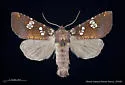
Rattlesnake-master borer moth - Hodges#9494
Papaipema eryngii
Identification: Image (MPG) FWS Listing Status: Listing Warranted But Precluded - August 2013 Considered by Oklahoma to be a "Species of Greatest Conservation Need" (SGCN) Listed as endangered in Illinois since 1991 - Illinois DNR
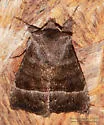
Joe-Pye-Weed Borer - Hodges#9501
Papaipema eupatorii
Identification: forewing dark grayish-brown with sparse dusting of tiny pale flecks; reniform, orbicular, and claviform spots represented by vague dark smudges; PM line straight, untoothed, showing sharp contrast between dark median area and paler su
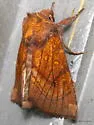
Sensitive Fern Borer - Hodges#9483
Papaipema inquaesita
Identification: Adult: forewing orange with dull orangish-brown shading beyond PM line except at apex, and sharply-angled median band (a distinctive feature); veins outlined with dark purplish-brown; spots inconspicuous, orange or whitish; PM line do
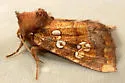
Ragwort Stem Borer Moth - Hodges#9488
Papaipema insulidens
Ragwort Stem Borer Moth - Hodges#9488 (Papaipema insulidens) is a species in the family Noctuidae, commonly known as owlet moths, belonging to the order Lepidoptera (Butterflies and Moths). It is classified within the subfamily Noctuinae, tribe Apame
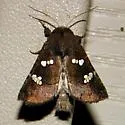
Vernonia Borer - Hodges#9507
Papaipema limpida
Identification: Adult: FW dark brownish-gray with a line of 3 white spots in AM area and a cluster of white spots representing the reniform spot (in each case, the central spot is usually pale yellowish); PM line fairly smooth, gently curving near co
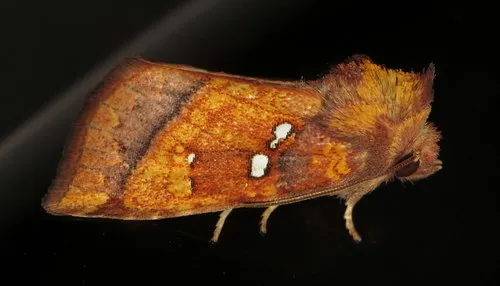
Loosestrife Borer - Hodges#9479
Papaipema lysimachiae
Identification: Adult: forewing yellowish-orange in median area with dark orangish-brown patches basally and between reniform and orbicular spots; orbicular and claviform spots large white rounded rectangles, sometimes joined (claviform spot may be d
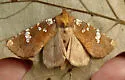
Brick-Red Borer Moth - Hodges#9492
Papaipema marginidens
Not known to migrate, so habitat fragmentation has left them scattered in local pockets of suitable habitat throughout their range, becoming more isolated all the time. As these pockets are lost or rendered uninhabitable to the moths, the species is
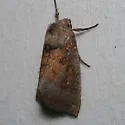
Coneflower Borer - Hodges#9502
Papaipema nelita
Identification: Adult: forewing orangish-brown to grayish-brown with reniform, orbicular, and claviform spots either white and conspicuous or dark brown and showing little contrast against ground color; subterminal area grayer than rest of wing; PM l
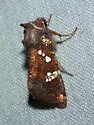
Turtle head borer moth - Hodges#9490
Papaipema nepheleptena
Identification: Dyar original description as Gortyna nepheleptena is online and linked in the print references. Beadle & Leckie reported the species to be uncommon.
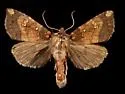
Papaipema polymniae - Hodges#9469
Papaipema polymniae
Identification: The original description is available online.
Silphius borer moth - Hodges#9498
Papaipema silphii
Identification: Bird (1915) original description is online and linked in the print references. Bird (1915) described the larvae pinkish with a large, brown head, and maturing to a length of 50 mm or more.
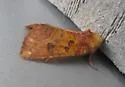
Sullivan’s Switch Cane Borer - Hodges#9464.1
Papaipema sullivani
Identification: This one comes in dark-spotted and white-spotted forms.
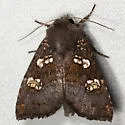
Meadow-Rue Borer - Hodges#9509
Papaipema unimoda
Identification: genitalia Beadle & Leckie (2012) reported the species is uncommon. ( 6 )
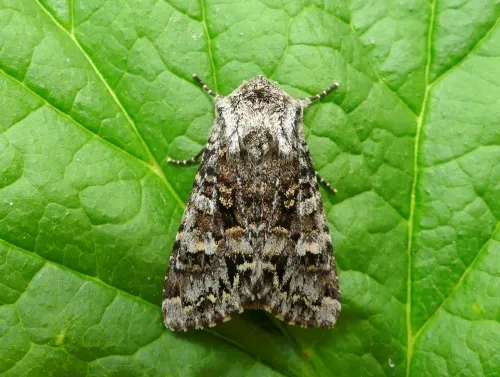
Glaucous Shears
Papestra biren
A moorland moth. The moths quite often rest in the open on fenceposts, tree trunks and rocks. The adults fly during May and June, and can be attracted by light. A wide range of moorland plants are used as food, including Heather (Calluna) and Bog-myr
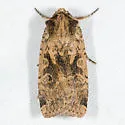
Parabagrotis cupidissima - Hodges#11047.3
Parabagrotis cupidissima
Identification: This species is thought to be rare or uncommon (based on numbers of collections). It somewhat resembles a faded P. formalis or P. insularis , but lacks the prominent black patch on the prothoracic collar. It often looks somewhat pale
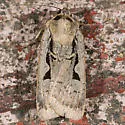
Parabagrotis formalis - Hodges#11047.1
Parabagrotis formalis
Identification: Although this is a variable species with several patterns and colors (pale buff, pale gray, reddish brown to blackish brown), it can usually be identified by the bicolored prothoracic collar (the basal half is black and the apical hal
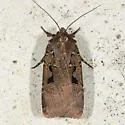
Parabagrotis insularis - Hodges#11048
Parabagrotis insularis
Identification: This is the smallest and darkest of the five species of Parabagrotis . There is a narrow black transverse line near the top of the prothoracic collar, with the rest of the prothoracic collar more or less the same color as the forewing
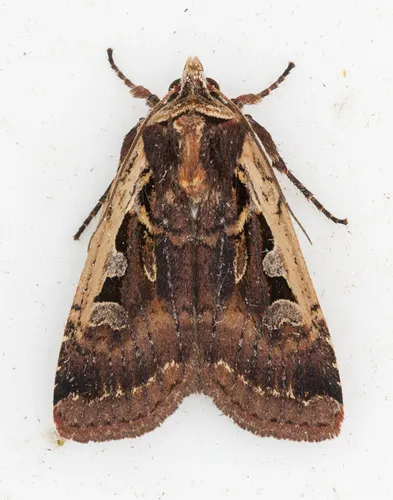
Parabagrotis sulinaris - Hodges#11047.2
Parabagrotis sulinaris
Identification: This is the largest and most boldly patterned of the five species of Parabagrotis. In areas mainly west of the Cascades the overall color is usually reddish brown with a yellow-buff shading on the prothoracic collar. The prothoracic c
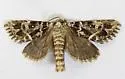
Paramiana canoa - Hodges#9806
Paramiana canoa
" Paramiana " canoa (Barnes, 1907) is found to belong in Noctuinae and be misplaced in the Psaphidini genus Paramiana in Keegan, et al. (2021)
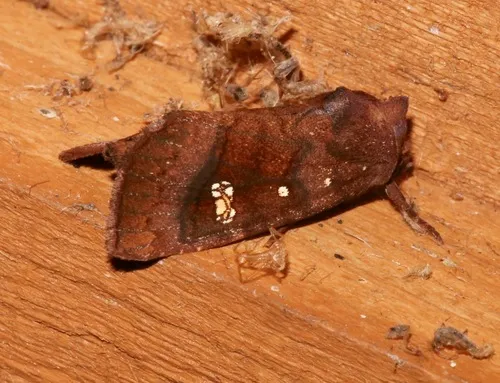
Buffalo Moth - Hodges#9463
Parapamea buffaloensis
Identification: Adult: forewing dark reddish-brown; basal and subterminal areas shaded with violet; AM and PM lines double, purple; basal, median, and ST lines single, brownish; orbicular and reniform spots filled with either ground color or white; h
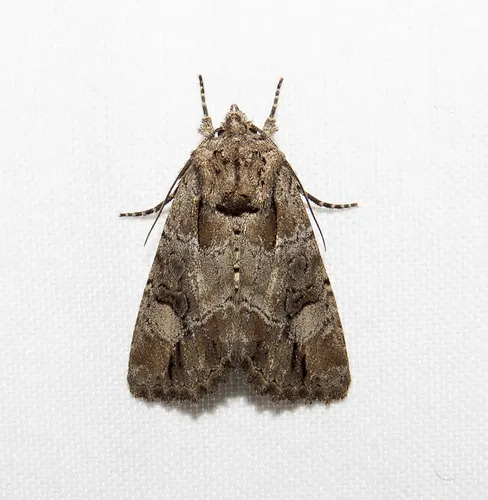
Paraseptis adnixa - Hodges#9533
Paraseptis adnixa
Identification: Three forms/subspecies; Pacific Northwest, coastal CA, and east-central CA. See Mustelin & Crabo for updated descriptions. Adult: forewing mottled medium and pale brown with blackish basal and anal dashes surrounded by dark shading; c
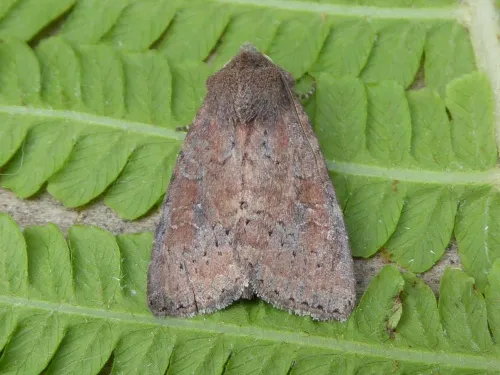
The Suspected
Parastichtis suspecta
Wingspan 29 to 34 mm. Quite variable, there are a number of forms ranging from quite plain to more variegated examples. The moths are on the wing in July and August. The larval foodplants are Birch and Willow. Generally distributed throughout mainlan
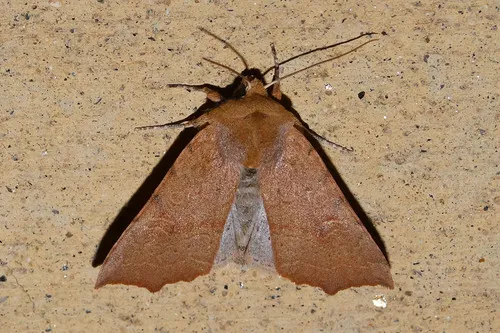
Perigonica tertia - Hodges#10464
Perigonica tertia
Identification: Adult: forewing light brownish-yellow to dull orangish with irregular basal, AM, PM, and subterminal lines; reniform and orbicular spots outlined with pale scales; dark dots along veins in subterminal area; outer margin falcate, with
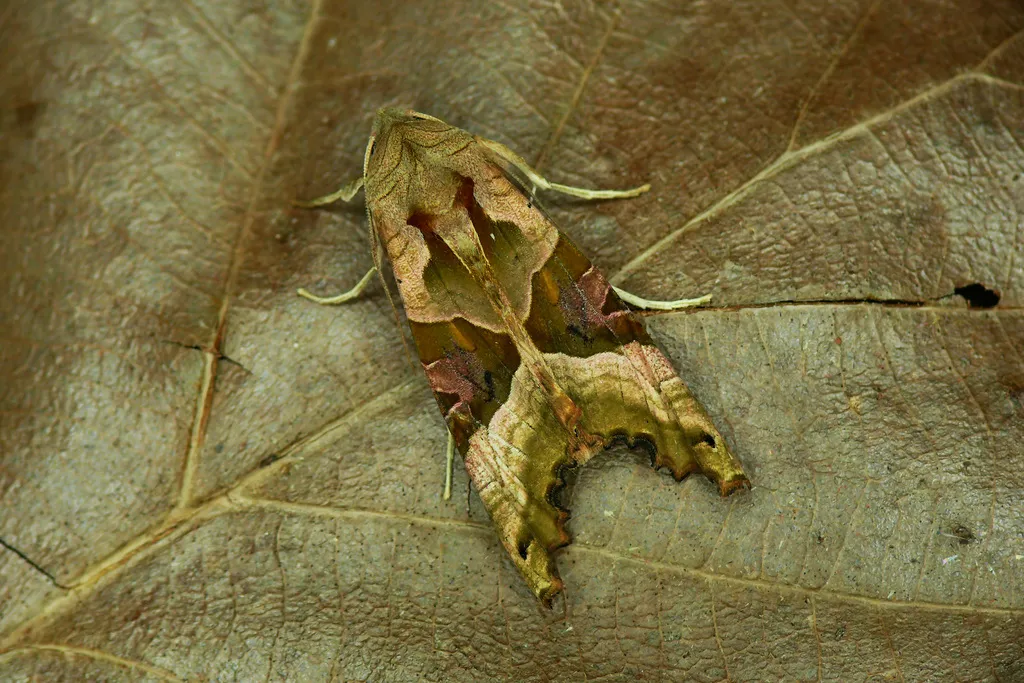
Angle Shades
Phlogophora meticulosa
Wingspan 45-50 mm. A highly distinctive and unusual moth, which rests with the wings folded longitudinally, looking very much like a withered autumn leaf. Usually at least two generations in Britain. The species is also a common migrant and can occur
Narrow-winged Borer - Hodges#9443
Photedes defecta
Identification: See the E.H. Strickland Entomological Museum for details.
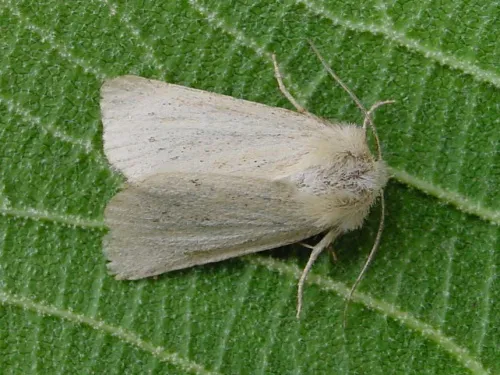
The Concolorous
Photedes extrema
Wingspan 26 to 28 mm. A pale buff coloured species - on some specimens a row of blackish dots on the forewing is conspicuous, on others almost absent. Areas where the larval foodplants are found. The adults fly in June and July and are attracted to l
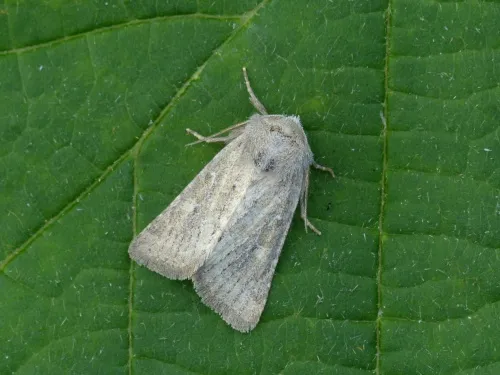
Mere Wainscot
Photedes fluxa
Wingspan 26 to 30 mm. A small 'Wainscot', with a variable ground colour, but usually displaying distinctively darker veins on the forewing. The larvae feed in the stems of Wood Small-reed (Calamagrostis epigejos). Found in scattered localities throug
Included Cordgrass Borer - Hodges#9434
Photedes includens
Identification: Adult: forewing orangish-brown with paler straight subterminal band; reniform spot white, conspicuous, C-shaped, with short white bar in middle; hindwing light brownish-gray, paler toward base, with dark veins, thin dark terminal line
Spartina Borer - Hodges#9435
Photedes inops
Spartina Borer - Hodges#9435 (Photedes inops) is a species in the family Noctuidae, commonly known as owlet moths, belonging to the order Lepidoptera (Butterflies and Moths). It is classified within the subfamily Noctuinae, tribe Apameini, superfamil
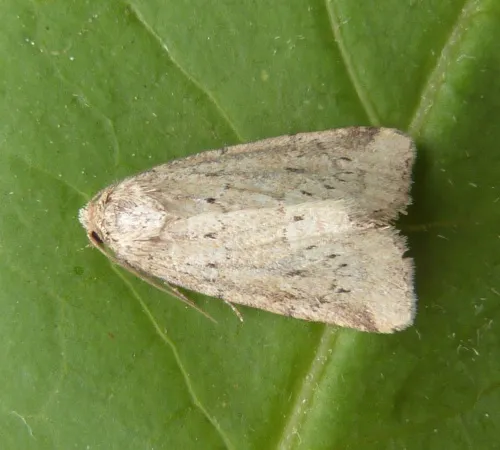
Small Dotted Buff
Photedes minima
Wingspan 20-23 mm. The females are smaller than the males and are more well-marked; the males are plain buffish with darker dots along the veins and often show a slight glossy sheen. Occupying marshy localities, damp woodland and similar habitats. Th
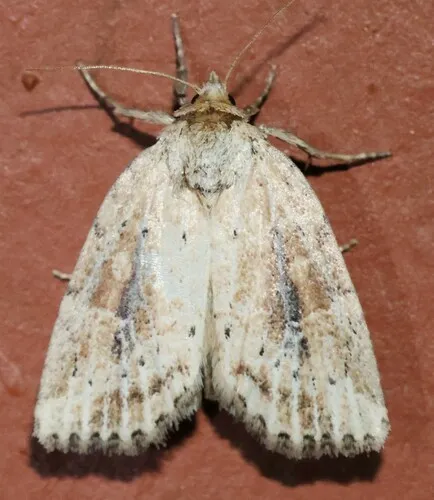
Northern Cordgrass Borer - Hodges#9436
Photedes panatela
Identification: Adult: forewing pale tan or yellowish-gray with some light brown shading; AM and PM lines composed of several dark dots; prominent dark gray streak runs through middle of median area from AM to PM line; orbicular and reniform spots in
Phuphena tura - Hodges#9634
Phuphena tura
Identification: The original description as Dianthoecia tura Druce, is available online in the print references below.
Plagiomimicus caesium - Hodges#9748.1
Plagiomimicus caesium
Blanchard & Knudson stated it was uncertain if this species is a stray from northern Mexico or a resident of the sand dunes of Padre Island.
Plagiomimicus dimidiata - Hodges#9745
Plagiomimicus dimidiata
The adults are often seen on flower blooms during the day and are attracted to lights at night.
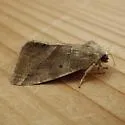
Plagiomimicus expallidus - Hodges#9752
Plagiomimicus expallidus
Identification: The original description of Plagiomimicus expallidus Grote, and the revised Hampson (1910) description are both available in the print references.
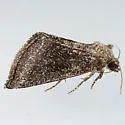
Plagiomimicus heitzmani - Hodges#9741.1
Plagiomimicus heitzmani
Identification: Specimen identified by DNA analysis:
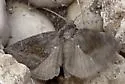
Plagiomimicus manti - Hodges#9744
Plagiomimicus manti
Identification: Forewing is dark brown with fine flecks of white. Weak transverse lines with the postmedian line most prominent. AM line is inwardly oblique and slighly wavy. PM line takes a sharp turn basally before reaching the costa. PM line has l
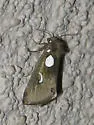
Plagiomimicus olvello - Hodges#9742
Plagiomimicus olvello
Identification: Barnes (1907) original description as Stibadium olvello is available in the print references.
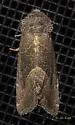
Frothy Moth - Hodges#9748
Plagiomimicus spumosum
Identification: Adult: forewing grayish-brown with dense pale speckling ("froth"); PM line conspicuous, edged with whitish scales, abruptly bent near costa but otherwise almost straight (i.e. bulge in line confined to upper half of wing); slightly da
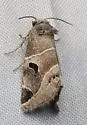
Plagiomimicus triplagiatus - Hodges#9753
Plagiomimicus triplagiatus
Identification: Description is available in the print references. Forewing has L shaped orbicular mark. Forewing white terminal line has contrasting dark brown along lower half. Contrasting dark brown subterminal line inner half of forewing. Update: