
Subdued Quaker - Hodges#10490
Orthosia revicta
This record describes Orthosia revicta (species). Recorded family: Noctuidae. Recorded order: Lepidoptera.
Identification and Appearance
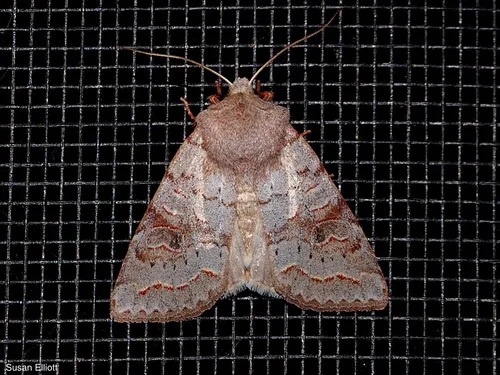
Adult : Ground color is blue-gray , lighter and stronger blue in the western part of range; duskier and plainer gray further east. The FW is variably covered by bright red-brown, occasionally complete but most often leaving some areas on the medial half, the terminal area, and usually the subterminal area with the ground color. The basal, AM and PM are doubled, red-brown and filled with the ground color. The AM is irregular and PM mildly to moderately toothed, sometimes followed by dots on the veins. A red-brown to gray median line is present in most specimens and is even in darkness across the wing. The ST is pale yellow and is followed laterally by dark red-brown except near the costa. The margin is moderately scalloped with a series of gray to red-brown dots between the veins. The orbicular and reniform spots are similar with outer red-brown and inner light yellow lines and variable filling of the ground color, gray, or red-brown. The claviform spot is red-brown with darker anterior and fainter posterior portions. The HW is light to medium gray with a faint pink tint. It is darker toward the margin and has a dark discal spot and faintly darker veins. Fringe is whitish gray with a slight rosy tint. Head and thorax are blue-gray, darker gray with a red cast in heavily red-brown specimens and in eastern populations, without strong ridges or tufts. The eye is covered with fine hairs. The male antennae are biserrate. b
Classification
- Kingdom
- Animalia
- Phylum
- Arthropoda
- Class
- Insecta
- Order
- Lepidoptera (Butterflies and Moths)
- Superfamily
- Noctuoidea
- Family
- Noctuidae (Owlet Moths)
- Subfamily
- Noctuinae
- Tribe
- Orthosiini
- Genus
- Orthosia
Imported taxonomy record. Source availability varies; see the source references and editorial policy below.
Habitat and Range
Geographic Range
This species occurs across northern North America to the East Coast. It occurs from the island of Newfoundland to Kentucky and North Carolina near the Atlantic. The range extends south to Colorado in the Rocky Mountains. The southern extent of the range along the Pacific might be in northern California. b
Seasonal Activity
This species flies in the early spring like most other Orthosia species and has been collected in April and May in our region. It is nocturnal and comes to lights. b
Diet and Behavior
Diet: This species is a generalist feeding on many kinds of hardwoods including alders (Alnus spp.) and birches ( Betula spp. ) in the Betulaceae, cherries ( Prunus spp. ) in the Rosaceae, and willows ( Salix spp. ) and cottonwoods ( Populus spp. ) in the Salicaceae. b
About Butterflies and Moths: the wider group
Order-level background for Lepidoptera, the group containing Orthosia revicta. Species-specific details appear above.
Group overview
Lepidoptera includes approximately 180,000 described species of butterflies and moths. Moths outnumber butterflies roughly 10:1. The monarch butterfly's eastern population has declined by more than 80% since the mid-1990s, and the western population by over 95% since the 1980s. The IUCN lists the migratory monarch as Vulnerable.
Ecological role of the group
Butterflies and moths are essential indicators of ecosystem health. As caterpillars, they are a primary food source for birds - a single nest of blue tit chicks requires ~10,000 caterpillars. Adult moths pollinate many night-blooming plants.
Economic and practical significance of the group
Lepidoptera are critical pollinators. In Europe, grassland butterfly species have declined by almost 50% since the early 1990s. In the UK, three-quarters of butterflies are in decline. In the U.S., five butterfly species have gone extinct since 1950, with 29 listed as endangered.
Recorded sources for this group: IUCN Red List, Xerces Society, USFWS, PNAS, WWF. Imported estimates may describe particular regions or reporting periods.
Photos of Subdued Quaker - Hodges#10490 (2)
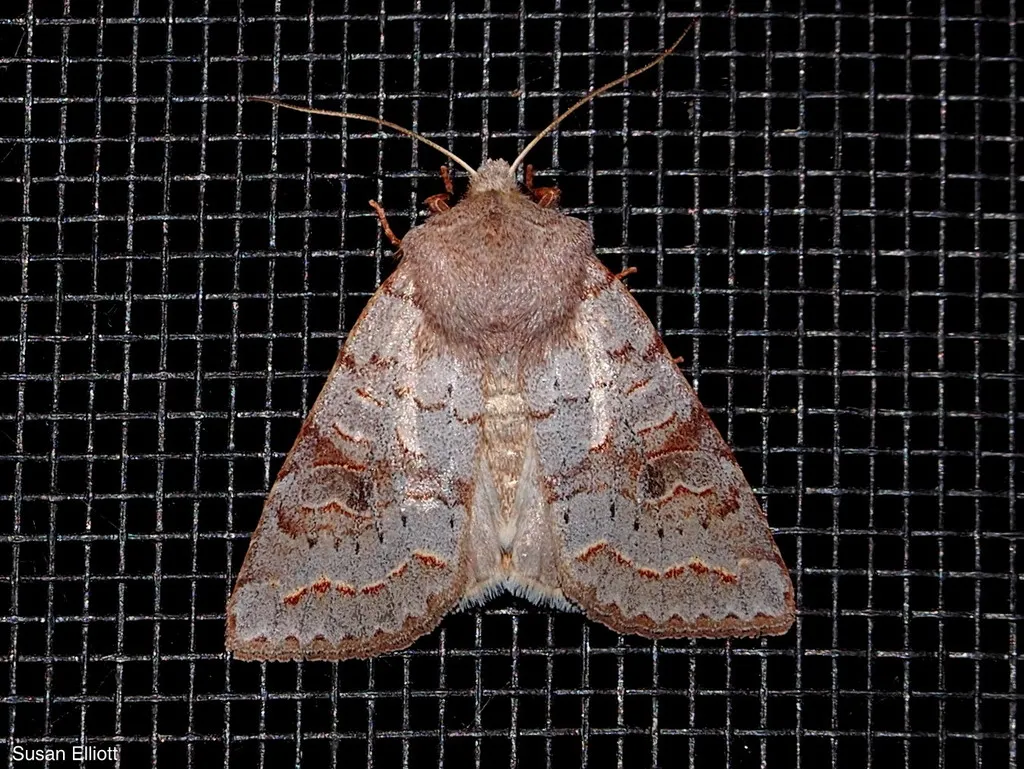
Photo credits: Contributed by Tony; Additional contributions by john and jane balaban , Robert Lord Zimlich
Frequently Asked Questions About Subdued Quaker - Hodges#10490
What is Subdued Quaker - Hodges#10490?
Subdued Quaker - Hodges#10490 (Orthosia revicta) is a species in the family Noctuidae, within the order Lepidoptera.
How big is Subdued Quaker - Hodges#10490?
FW length 16 - 19 mm
How do you identify Subdued Quaker - Hodges#10490?
Adult : Ground color is blue-gray , lighter and stronger blue in the western part of range; duskier and plainer gray further east. The FW is variably covered by bright red-brown, occasionally complete but most often leaving some areas on the medial half, the terminal area, and usually the subterminal area with the ground color. The basal, AM and PM are doubled, red-brown and filled with the ground color. The AM is irregular and PM mildly to moderately toothed, sometimes followed by dots on the veins. A red-brown to gray median line is present in most specimens and is even in darkness across the wing. The ST is pale yellow and is followed laterally by dark red-brown except near the costa. The margin is moderately scalloped with a series of gray to red-brown dots between the veins. The orbicular and reniform spots are similar with outer red-brown and inner light yellow lines and variable filling of the ground color, gray, or red-brown. The claviform spot is red-brown with darker anterior and fainter posterior portions. The HW is light to medium gray with a faint pink tint. It is darker toward the margin and has a dark discal spot and faintly darker veins. Fringe is whitish gray with a slight rosy tint. Head and thorax are blue-gray, darker gray with a red cast in heavily red-brown specimens and in eastern populations, without strong ridges or tufts. The eye is covered with fine hairs. The male antennae are biserrate. b
Where is Subdued Quaker - Hodges#10490 found?
Range: This species occurs across northern North America to the East Coast. It occurs from the island of Newfoundland to Kentucky and North Carolina near the Atlantic. The range extends south to Colorado in the Rocky Mountains. The southern extent of the range along the Pacific might be in northern California. b
What does Subdued Quaker - Hodges#10490 eat?
The diet of the Subdued Quaker - Hodges#10490 includes This species is a generalist feeding on many kinds of hardwoods including alders (Alnus spp.) and birches ( Betula spp. ) in the Betulaceae, cherries ( Prunus spp. ) in the Rosaceae, and willows ( Salix spp. ) and cottonwoods ( Populus spp. ) in the Salicaceae. b.
When is Subdued Quaker - Hodges#10490 active?
Subdued Quaker - Hodges#10490: seasonal activity - This species flies in the early spring like most other Orthosia species and has been collected in April and May in our region. It is nocturnal and comes to lights. b.