
Family Underwing, Tiger, Tussock, and Allied Moths (Noctuidae)
Noctuidae is a family in the order Lepidoptera. Browse 2,425 named species recorded in this family, or open an individual profile for its available identification and natural-history information.
Species in Noctuidae (2,425)
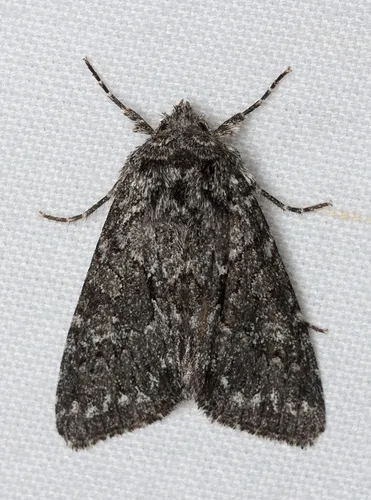
Platypolia contadina - Hodges#9977
Platypolia contadina
Identification: Adult: two forms - light and dark (perhaps corresponding to the two subspecies?) - forewing of light form mostly whitish with contrasting black markings; forewing of dark form mostly brownish-gray with slightly darker median area; in
Platypolia loda - Hodges#9978
Platypolia loda
Identification: Hindwing is white. Specimens identified by DNA analysis:
Adorable Brocade - Hodges#9419
Platypolia mactata
Identification: forewing medium to dark brownish-gray with diffuse blackish streak in lower median area but not touching inner margin; AM and PM lines double, pale, outlined in black; PM line sinuous, composed of connected series of small arcs; renif
Ashy Pleromelloida - Hodges#10031
Pleromelloida cinerea
Identification: Adult: forewing pale gray with contrasting black lines and conspicuous black streaks in subterminal area, especially near apex; paler spot near middle of wing at end of main vein; hindwing dirty whitish basally, shading to gray distal
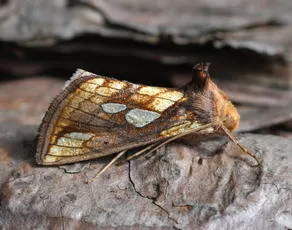
Gold Spot
Plusia festucae
Wingspan 34-46 mm. A distinctive and colourful species. Marshes, fens, woodland rides and upland grassland and, on heathland, moorland and river-banks It has two generations in the south, sometimes only one in the north, flying between June and Septe
Podagra crassipes - Hodges#9845
Podagra crassipes
Identification: See original description in print references below .
Polenta tepperi - Hodges#9755
Polenta tepperi
Identification: Original description online: as Schinia tepperi Morrison. (68)
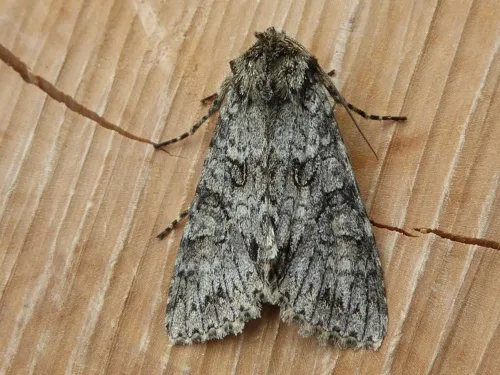
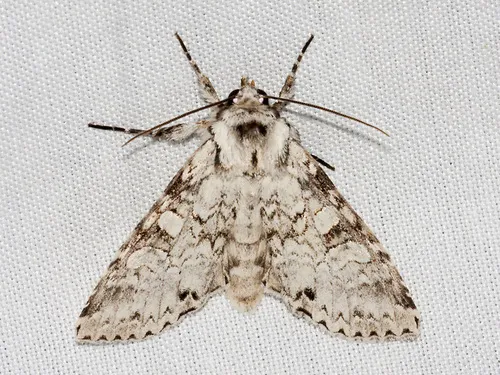
Grey Arches
Polia nebulosa
Wingspan 45 to 55 mm. This species ranges in ground colour from creamy-white to dark brown or blackish. The palest forms tend to occur more north and west. The adults emerge in June and July and can be attracted to light and to sugar. The larvae feed
Stormy Arches - Hodges#10275
Polia nimbosa
Identification: Adult: tegulae ("shoulder pads" on thorax) pale with black margins; forewing pale gray, mottled with gray and black; orbicular, claviform, and reniform spots with sharp black outlines; reniform spot strongly curved; AM and PM lines do
Polia nugatis - Hodges#10281
Polia nugatis
Identification: Smith (1898) original description as Mamestra nugatis is available online in the print references.
Purple Arches - Hodges#10280
Polia purpurissata
Identification: forewing purplish-gray with brown shading, especially around narrow, strongly-curved reniform spot; lines blackish, double, variably distinct; blackish shading on inside of ST line, heaviest toward anal angle hindwing grayish-brown, d
Policocnemis ungulatus - Hodges#9846
Policocnemis ungulatus
Identification: Distinctive forewing pattern. Males have white hindwings. Females have fuscous hindwings and are slightly larger.
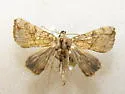
Polychrysia esmeralda - Hodges#8901
Polychrysia esmeralda
Adults are easily caught by hand when visiting flowers (E.H. Strickland Museum).
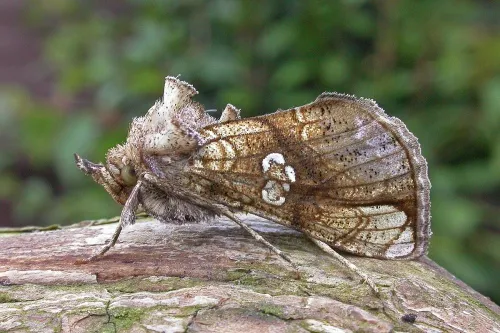
Golden Plusia
Polychrysia moneta
Wingspan 32 to 37 mm. Fine pattern on broad, golden yellow forewing, large kidney mark outlined in silver white and large fan like scale tufts on the thorax are diagnostic. Generally a garden species, especially where Delphinium are grown. It is on t
Cadbury's Lichen Moth - Hodges#8104
Polygrammate cadburyi
Identification: Franclemont (1939) original description is available online in the print references. This species was long mistaken for a lichen moth (Arctiinae: Lithosiini), but discovery of the larva revealed its acronictine affinity. Schmidt and A
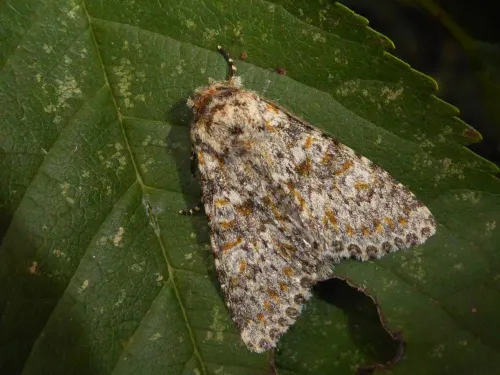
Large Ranunculus
Polymixis flavicincta
Wingspan 40 to 50 mm. A variable species, with the brightest individuals occurring in the south-east. It is to be found in suburban habitats, waste ground and coastal cliffs. It flies in September and October, when it visits light. A range of herbace
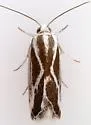
Ponometia alata - Hodges#9099
Ponometia alata
Identification: Smith (1905) original description as Acontia alata is online in the print references.
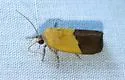
Ponometia bicolorata - Hodges#9084
Ponometia bicolorata
Identification: The adult can be separated from the similar P. semiflava by the ochreous brown scales of the pronotum and head, which contrast with the yellow on the wing ( Jan Metlevski via iNaturalist.com ) and by the outer area of forewing not so
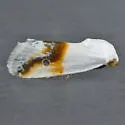
Prairie Bird-dropping Moth - Hodges#9089
Ponometia binocula
Identification: forewing is bright white with the outer half crossed by a wide, dark brown and gray band. The costa is white for the basal two-thirds then divided by an orange patch. A dark round spot ringed with paler scales is at the end of the dis
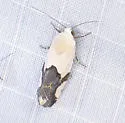
Ponometia cuta - Hodges#9094
Ponometia cuta
Identification: Smith original description as Acontia cuta is available online to read or PDF.
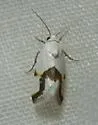
Ponometia dorneri - Hodges#9091
Ponometia dorneri
Identification: Adapted from nearctica.com : The basal half of the forewing is pure white. A dark brown, roughly s-shaped mark occupies the outer half of the wing. This zig-zag brown patch leaves a large white triangle extending basally from the oute
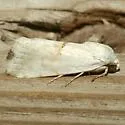
Arizona Bird Dropping Moth - Hodges#9109
Ponometia elegantula
Identification: Harvey (1876) original description as Thalpochares elegantula is online in the print references. ( 3 )
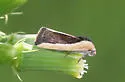
Ponometia exigua - Hodges#9115
Ponometia exigua
Identification: Sexually dimorphic: The Catalogue of the Lepidoptera of the French Antilles - species page
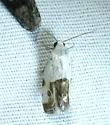
Ponometia huita - Hodges#9092
Ponometia huita
Identification: Adapted from nearctica.com : The basal half of the forewing is pure white with an angular distal margin. There is a small olive-brown spot on the costa and a large, triangular, olive-brown patch arising from the inner margin. The lat
Ponometia hutsoni - Hodges#9103
Ponometia hutsoni
Identification: The original description as Thalpochares hutsoni Smith, is available online in the print references below.
Ponometia libedis - Hodges#9096
Ponometia libedis
Identification: Specimens identified by DNA analysis (BOLD). ( 4 )
Ponometia nannodes - Hodges#9097
Ponometia nannodes
Identification: Specimens identified by DNA analysis (BOLD).
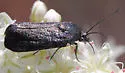
Ponometia nigra - Hodges#9101.1
Ponometia nigra
Identification: "The dorsal forewing is very dark gray with a slight greenish sheen, and lacks any pattern. The hindwing is dark brown, including the fringe. The head and body match the forewing" .
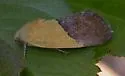
The Half-Yellow - Hodges#9085
Ponometia semiflava
Identification: Can be separated from the similar P. bicolorata by the yellow scales of the pronotum and head, which match with the yellow on the wing. Jan Metlevski via iNaturalist.com
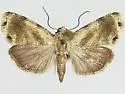
Ponometia septuosa - Hodges#9085.1
Ponometia septuosa
Identification: Forewing is a olive-green color. Fresh specimens have a greenish cast that fades soon after collecting. Specimen identified by DNA analysis (BOLD).
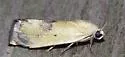
Ponometia tortricina - Hodges#9101
Ponometia tortricina
Identification: Lighter specimens of P. tortricina can be readily identified by the even color and black orbicular spot. Dark specimens are closely similar to Ponometia fumata and cannot be reliably sorted by superficial appearance" ( 4 ) . "Specimen
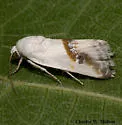
Ponometia virginalis - Hodges#9088
Ponometia virginalis
Identification: Distinguished by the white basal area of the forewing which is tinted yellow. Specimen identified by DNA analysis (BOLD). ( 3 )
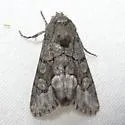
Oxycnemis grandimacula - Hodges#10048
Poolea grandimacula
Identification: See info by Robert Poole in See also and Internet References below. Lafontaine & Schmidt (2011) ( 3 ) formerly synonymized Oxycnemis erratica with C. grandimacula , "... following Robert Poole ( Noctuidae of North America ) – http://w
Poolea psaphidoides - Hodges#10048.1
Poolea psaphidoides
Identification: Description can be found at link in citations below.
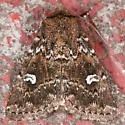
White-spotted Properigea - Hodges#9588
Properigea albimacula
Identification: Adult: forewing dark grayish-brown except for conspicuous white patch in lower half of reniform spot; AM and PM lines toothed, black with pale edging; ST line jagged, indistinct; hindwing gray, paler toward base
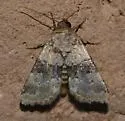
Properigea continens - Hodges#9590
Properigea continens
Edwards' original description indicates the ground color of the FWs is "pale fawn". Most Arizona examples are typically darker on the FWs than *most* from Texas, although there is considerable variation in both regions. Left: Arizona; Right: Texas.
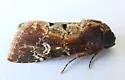
Barrens Moth - Hodges#9589
Properigea costa
Moths of North Carolina and other sources suggest that the fairly common western entity of this species may be a distinct species from the disjunct rare eastern population.
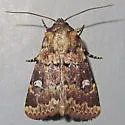
Properigea tapeta - Hodges#9592
Properigea tapeta
Identification: The original description as Hadena tapeta is in PDF format or view online in the print references .
Pale Glyph - Hodges#9048
Protodeltote albidula
Identification: Specimens identified by DNA analysis: common and widespread species is easily flushed during daylight and is also attracted to lights
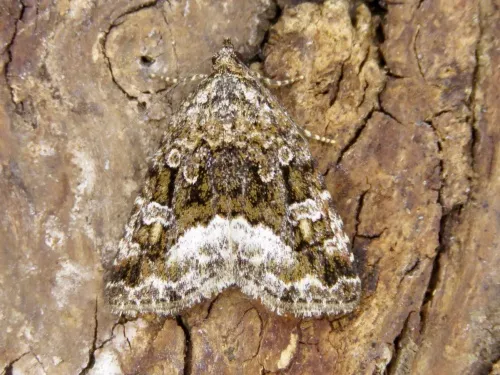
Marbled White Spot
Protodeltote pygarga
The adults are on the wing in a single generation from May to July. The caterpillars feed during the autumn on a number of grasses, including Purple Moor-grass Distributed mainly in the southern half of England and parts of North Wales. In a recent s
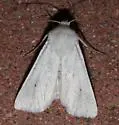
Protogygia album - Hodges#10692
Protogygia album
Identification: White forewing with scattered fuscous or dark scales, with the dark scales sometimes concentrated to form dark spot at the location of the reniform. There is also a slightly yellowing patch on forehead between the antennae.
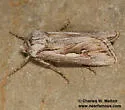
Protogygia biclavis - Hodges#10899
Protogygia biclavis
Identification: Grote (1879) original description as Agrotis biclavis is available online in print references.
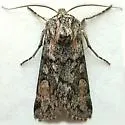
Protogygia milleri - Hodges#10898
Protogygia milleri
Identification: The original description as Agrotis milleri Grote, is available online in the print references below. Adult: ( 4 ) , ( 5 ) The only Protogygia species with transverse lines across the forewing. Forewing median area is slightly darker.
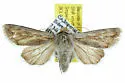
Protogygia polingi - Hodges#10896
Protogygia polingi
Identification: Specimen determined by DNA analysis (BOLD). ( 3 )
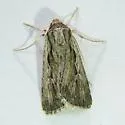
Protogygia postera - Hodges#10892.1
Protogygia postera
Identification: Detailed description. , Adults: Forewings appear streaky with the dark veins and lighter color near them. Thin back basal dash. Orbicular spot is of the forewing ground color and a long diamond shape. Reniform spots are also of the gr
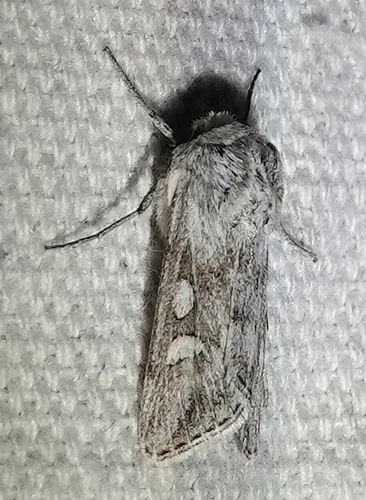
Protogygia pryorensis - Hodges#10898.1
Protogygia pryorensis
The adult male has been dissected and described. The adult female is unknown, but is likely to resemble the male based on the females of other species in the genus. (Crabo & Kirst, 2023)
Protogygia rufescens - Hodges#10892.2
Protogygia rufescens
Identification: Detailed description can be found in MONA Fascicle 27-1 at link in citations below.
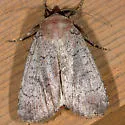
Protolampra rufipectus - Hodges#11004
Protolampra rufipectus
Identification: Forewing is light gray with a pale purplish or brownish tinge. The head and prothoracic collar are dark brownish-red and contrast with the much paler thorax and wings. The tips of the scales of the prothoracic collar are white and cre
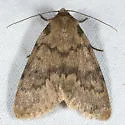
Protoperigea anotha - Hodges#9642
Protoperigea anotha
Identification: A fairly small, brownish/grayish moth with a somewhat silky shine. There is a wavy antemedian line and a toothed postmedian line which curves. There are poorly defined blackish markings where the lines meet the costa and sometimes a
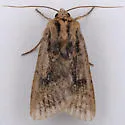
Protoperigea umbricata - Hodges#9643.1
Protoperigea umbricata
Identification: Mustelin original description in PDF.
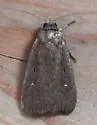
Proxenus mendosa - Hodges#9649
Proxenus mendosa
Proxenus mendosa - Hodges#9649 (Proxenus mendosa) is a species in the family Noctuidae, commonly known as owlet moths, belonging to the order Lepidoptera (Butterflies and Moths). It is classified within the subfamily Noctuinae, tribe Caradrinini, sup
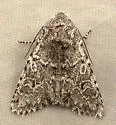
Psammopolia arietis - Hodges#10364
Psammopolia arietis
Identification: Adult: forewing light gray with thick white scalloped AM and PM lines bordered in black; reniform and orbicular spots large, pale; fringe checkered; hindwing pale yelllowish-gray with whitish median band; top of head and thorax same c
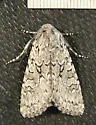
Psammopolia wyatti - Hodges#10365
Psammopolia wyatti
Identification: Forewing whitish with large discal spots sometimes with a small black basal dash. Hind wings are tinged with gray.
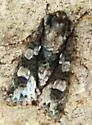
Figure-Eight Sallow - Hodges#10019
Psaphida resumens
Identification: Adult: forewing mottled pale and dark gray; orbicular, reniform, and claviform spots large, pale gray; orbicular and claviform spots usually touch each other, forming a figure-8; black anal dash crosses broad white ST line; hindwing g
Fawn Sallow - Hodges#10016
Psaphida styracis
Identification: Wagner et al. (2011) ( 4 ) and Wagner (2010) ( 5 ) includes description and photos of larvae. (preview page) Beadle & Leckie (2012) reported the species as uncommon. ( 10 )
Psaphida thaxterianus - Hodges#10020
Psaphida thaxterianus
Psaphida thaxterianus is listed as a species of concern in several eastern states
Psectraglaea carnosa - Hodges#9951
Psectraglaea carnosa
Identification: Larva - see Crumb in Print References. Species account and larval photo in Wagner, et al.. , Adult - see Grote in Print References. "An uncommon moth that is very rarely seen because of its habits. It is mainly restricted to scrub oak
Armyworm Moth
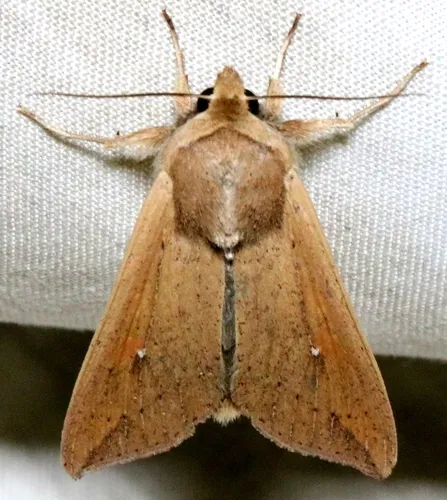
Pseudaletia unipuncta
Mythimna unipuncta, the true armyworm moth, white-speck moth, common armyworm, or rice armyworm, is a species of moth in the family Noctuidae. The species was first described by Adrian Hardy Haworth in 1809. Mythimna unipuncta occurs in most of North
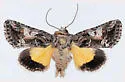
Pseudanarta crocea - Hodges#9605
Pseudanarta crocea
Identification: May be distinguished from other species of Pseudanarta by the somewhat lighter patch shaped like lower case Greek letter nu on the upper middle left forewing (and its mirror image on the right). See Smith's description
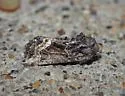
Pseudanarta flava - Hodges#9606
Pseudanarta flava
Identification: The original description as Hadena flava Grote is available online in the print references below.
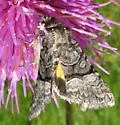
Pseudanarta flavidens - Hodges#9601
Pseudanarta flavidens
Identification: This Grote (1879) original description as Hadena (Pseudanarta) flavidens is online in the print references. "Allied to flava , but larger. Fore wings blackish fuscous with the median lines approximate, pale, narrow, even. T.p. line in
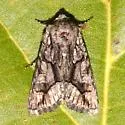
Pseudanarta singula - Hodges#9607
Pseudanarta singula
Identification: Detailed description at Pacific Northwest Moths Hampson (1906) description is available in the print references .
Pseudanthoecia tumida - Hodges#9617
Pseudanthoecia tumida
Identification: The original description as Lygranthmcia tumida Grote) is available in the print references listed below. Photo Identified by Chuck Harp.
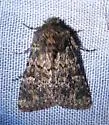
Pseudobryomima fallax - Hodges#9600
Pseudobryomima fallax
Identification: Hampson (1906) original description as Bryomima fallax is online in the print references.
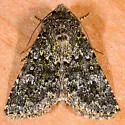
Mossy Pseudobryomima - Hodges#9599
Pseudobryomima muscosa
Identification: Adult: forewing dark gray mixed with greenish shading and white spots and speckling, giving an overall dark mottled appearance; three or four small white spots around reniform spot; AM and PM lines jagged, inconspicuous against ground
Pseudohadena vulnerea - Hodges#9577
Pseudohadena vulnerea
Identification: Grote (1883), Smith (1890), and Hampson (1909) descriptions available in the print references. Genus misspelled as Pseudohadana on the California species checklist. ( 4 )
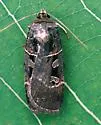
Morrison's Sooty Dart - Hodges#10951
Pseudohermonassa tenuicula
Identification: Adult: forewing dark gray with black shading before and between orbicular and reniform spots; orbicular spot open at upper (costal) end only; usually lacks pale patches along costa at base of wing and at PM line, and lacks obvious pal
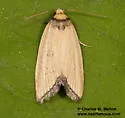
Pseudomarimatha flava - Hodges#9297.5
Pseudomarimatha flava
Identification: "Recognized by elongate, acutely-angled, yellow forewing with no trace of maculation except for gray and blackish-gray shading on forewing margin and fringe" .
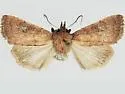
Pseudorthodes iole - Hodges#10605.1
Pseudorthodes iole
Identification: The original description by Schaus (1894) is available online in the print references below.
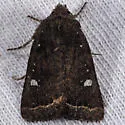
Pseudorthodes puerilis - Hodges#10583
Pseudorthodes puerilis
Identification: Original description as Mamestra puerilis . (64) *Forewing is orange brown with variable amount of white filling in the reniform spot. *Transverse lines are double *No orbicular and claviform spots visible. *Subterminal line is a pale
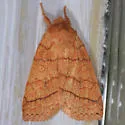
Mustard Sallow - Hodges#9929
Pyreferra hesperidago
Identification: Adult: forewing yellow with variable orange shading; lines darker orange to reddish-brown; AM line and broad median line slightly jagged; PM line solid, nearly straight, turns inward just below costa. Hindwing pale orange with slightl
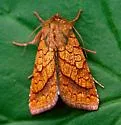
Bordered Sallow - Hodges#11063
Pyrrhia cilisca
Identification: Orange forewing with red/brown lines, veins, and spot outlines. Variable shading on subterminal line and reniform spot. Yellow hindwing with purple/red shading.
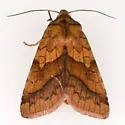
Purple-Lined Sallow - Hodges#11064
Pyrrhia exprimens
Identification: Adult: forewing has sharply bent median line, dark purple pm. line. Forewing brown/orange on basal side of median line, purple shading on terminal side of the median line. Hindwing has purple/black border. Larva: fourth instar body gr
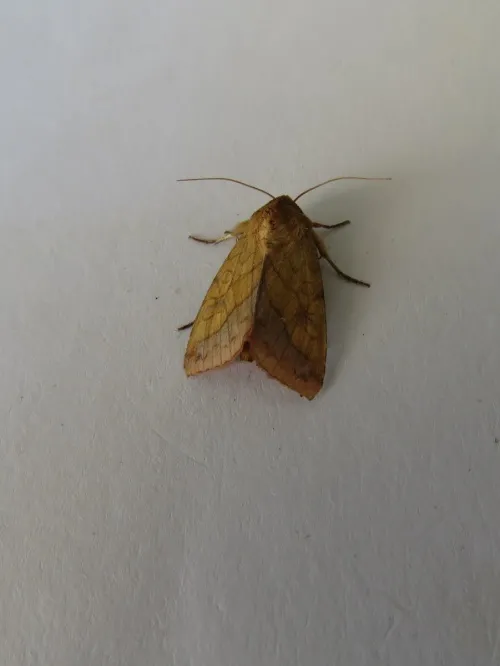
Bordered Sallow
Pyrrhia umbra
Wingspan 27 to 35 mm. A well-marked and fairly distinctive species. Generally coastal, occurring on calcareous soils where found inland. The single generation flies in June and July and visits sugar as well as light. The larvae feed mainly on the flo
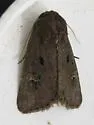
Dock Rustic - Hodges#9391
Resapamea passer
Identification: Adult: forewing pale to dark brown, sometimes reddish-brown; spots black; top of claviform spot thick and conspicuous; orbicular spot outline thin; reniform spot heavier but broken; lines inconspicuous, though PM and terminal lines pa
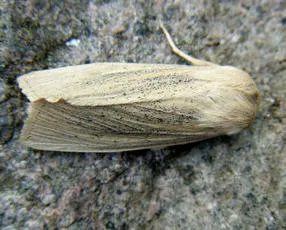
Large Wainscot
Rhizedra lutosa
Wingspan 42 to 50 mm. This is a larger moth than the similar Common Wainscot and often has a more sooty appearance with numerous tiny black dust like spots. Ranges in ground colour from pale beige to a more pinky shade. The adults are readily attract
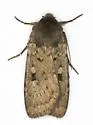
Rhyacia quadrangula - Hodges#10925
Rhyacia quadrangula
Identification: Specimen determined by DNA analysis (BOLD).
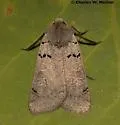
Richia chortalis - Hodges#10881
Richia chortalis
Identification: The first segment of the middle tarsus is greatly swollen so the last four segments look like little aborted appendage dangling on the end. (Don Lafontaine)
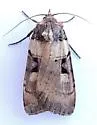
Richia herculeana - Hodges#10879.1
Richia herculeana
Identification: See original description in print references below.
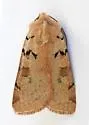
Richia parentalis - Hodges#10882
Richia parentalis
Identification: Grote original description as Agrotis parentalis is available in the print references. ,
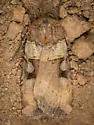
Richia serano - Hodges#10879
Richia serano
Identification: See original description in print references below.
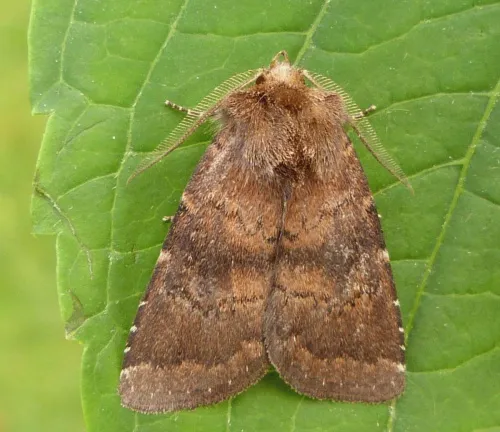
Brown Rustic
Rusina ferruginea
Wingspan 32-40 mm. This moth is sexually dimorphic, the males having broader and squarer forewings than the female, and more feathery antennae. It frequents woodland and a range of more open habitats. The larvae feed on a number of herbaceous plants,
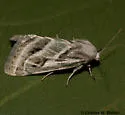
Schinia accessa - Hodges#11150
Schinia accessa
Identification: The original description of Schinia accessa Smith, is available online in the print references.
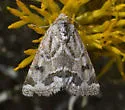
Acute-lined Flower Moth - Hodges#11150.1
Schinia acutilinea
Identification: Adult: dimorphic - common form is pinkish-brown or greenish-brown and white; forewing has large dark diamond-shaped basal patch, a similarly-colored triangular patch along costa near apex, and oblong patch below that between PM and ST
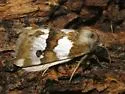
Schinia alencis - Hodges#11198
Schinia alencis
Identification: The reniform spot is separated from the median band in Schinia alencis and is not in S. chryselloides or S. chrysellus Schinia alencis has a wider median band with irregular edges as compared to the smoother edges in S. chrysellus . -
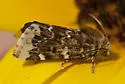
Gold-edged Gem - Hodges#11100
Schinia avemensis
Identification: Dyar (1904) original description as Pseudotamila avemensis is available in the print references. Adults are (diurnal) . Reported as endangered in Canada (2006). ( 3 )
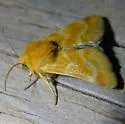
Schinia biforma - Hodges#11125
Schinia biforma
Identification: Smith (1906) original description is in print references.
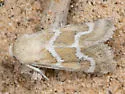
Schinia biundulata - Hodges#11157
Schinia biundulata
Identification: Adult : FW is nearly even in tan color, slightly grayer along the costa and in the terminal area. The basal line is a pale dot at the base of the costa. The AM and PM are smooth, broad, and white. AM is bent, apex lateral, in the cell
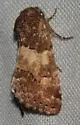
Schinia brunnea - Hodges#11182
Schinia brunnea
Identification: See Barnes & McDunnough original description here on page 104.
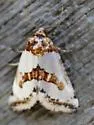
Schinia chryselloides - Hodges#11199.1
Schinia chryselloides
Identification: The black scaling at the apex of the forewing distinguishes this species from Schinia chrysellus which has nearly identical forewing maculation. There are differences in genitalia.
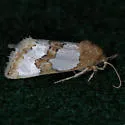
Schinia chrysellus - Hodges#11199
Schinia chrysellus
females can be found at dusk aound the blooming hostplant Amphiachyris dracunculoides
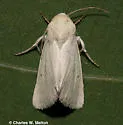
Schinia citrinellus - Hodges#11204
Schinia citrinellus
Identification: Grote & Robinson original description as Heliothis citrinellus is available in the print references. Most diagnostic examples have a pale yellow forewing with a dark discal dot, and a broad black terminal band on the hindwing. The ban
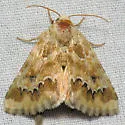
Schinia crenilinea - Hodges#11185
Schinia crenilinea
Identification: Original description is online at link under print peferences. (Smith) - Adult: forewing tan with brown basal and subterminal areas, and diffuse brown medial line; AM line pale, scalloped; reniform spot represented by diffuse blackish
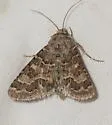
Schinia crotchii - Hodges#11134.1
Schinia crotchii
Identification: Description by Pogue & Harp can be found at link in citations below.
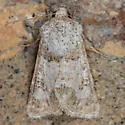
Schinia deserticola - Hodges#11134.2
Schinia deserticola
Identification: Pogue description of the adults, including genitalia, is in the PDF. Specimen determined by DNA analysis (BOLD).
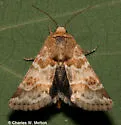
Schinia errans - Hodges#11124
Schinia errans
Identification: Specimens identified by DNA analysis:
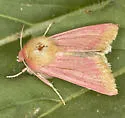
Schinia felicitata - Hodges#11163
Schinia felicitata
Identification: Upper side of forewing pastel pink, with tawny-yellow band along terminal edge; head pink; thorax and abdomen tawny-yellow above; upper side of hindwing dark (smoky grey-black). The pink wings of S. felicitata are thought to provide c
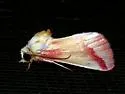
Clouded Crimson - Hodges#11168
Schinia gaurae
Identification: Adult: forewing has diagonal crimson streak running from costa near apex toward center of wing; remainder of wing pale yellow or cream-colored, with pink shading mostly in basal and terminal areas; hindwing white with pink shading at
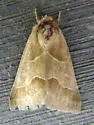
Slender Flower Moth - Hodges#11147
Schinia gracilenta
page creation based on Chuck Harp's identification of this image
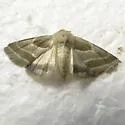
Boneset Flower Moth - Hodges#11148.1
Schinia grandimedia
Identification: Hardwick description. Specimen identified by DNA analysis: