
Family Geometrid Moths (Geometridae)
Geometridae is a family in the order Lepidoptera. Browse 1,358 named species recorded in this family, or open an individual profile for its available identification and natural-history information.
Species in Geometridae (1,358)
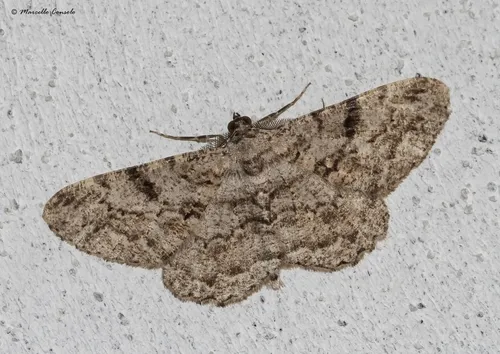
Willow Beauty
Peribatodes rhomboidaria
Wingspan 30-38 mm. Typical forms are brownish with darker streaks and markings, but there is also a greyish form, perfumaria , as well as an almost black melanic variant. Quite similar to Mottled Beauty. Guidance on separating these two species can b
Perizoma actuata - Hodges#7319
Perizoma actuata
Identification: Adult : Distinguished by basal area washed with pale roseate brown, a very irregular outline of the median area with white border line, a brownish square patch in the subterminal area, near the costa, and inwardly, two short jet-black
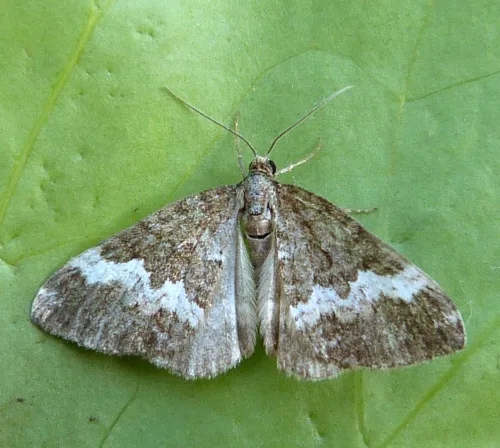
The Rivulet
Perizoma affinitata
Wingspan 24 to 30 mm. Similar to the Small Rivulet (Perizoma alchemillata) but noticeably larger. Occupying woodland margins, hedgerows and grassy embankments. The main flight period is between May and July, when it is often attracted to light. Red C
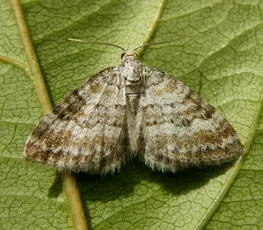
Grass Rivulet
Perizoma albulata
Wingspan 20 to 26 mm. A small species with wing barred with pale gold-green. The preferred habitats of this moth are open, dry grassy areas, limestone hills and sandy or shingle beaches. The flight period is from May to July, when the moths are on th
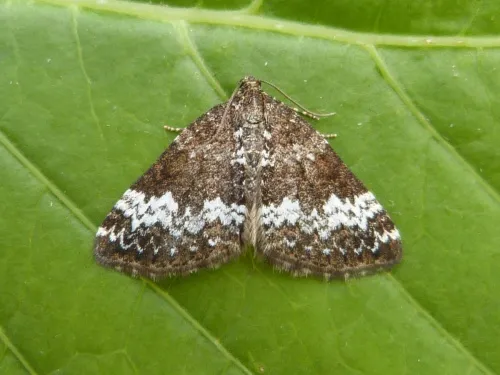
Small Rivulet
Perizoma alchemillata
Wingspan 14-18 mm. Rather similar in appearance to The Rivulet ( P. affiniata ), it can usually be distinguished by the double indentation on the white band of the forewing which is normally single in affiniata . It is also generally slightly smaller
Square-patched Carpet - Hodges#7316
Perizoma basaliata
Identification: Adult: forewing variably boldly patterned (with large orangish bands bordering gray median band) to more uniformly colored grayish-brown with less distinct markings; subterminal area often has centrally-located pale whitish patch bord
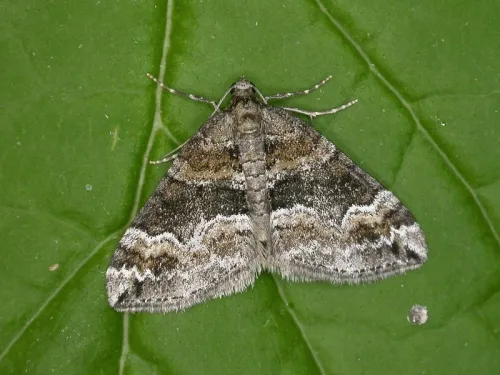
Barred Rivulet
Perizoma bifaciata
It flies in July and August, and is attracted to light. The larvae feed mainly on the seeds of Red Bartsia. It spends the winter as a pupa, and unusually for the family, may overwinter more than once in this stage before emerging. Widely distributed
Perizoma costiguttata - Hodges#7325
Perizoma costiguttata
Identification: Adult: forewing pale gray, speckled, and with darker shading beyond subterminal line; basal, AM, median, and PM lines double, dark, fine; 3 large black patches along costa represent upper end of basal, median, and PM lines; subtermina
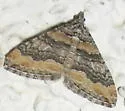
Perizoma custodiata - Hodges#7328
Perizoma custodiata
Identification: Adult: forewing with alternating light and dark brown vertical bands (number and color/intensity of bands varies considerably among individuals); PM line bulges slightly near middle and again near costa; subterminal line, white, disti
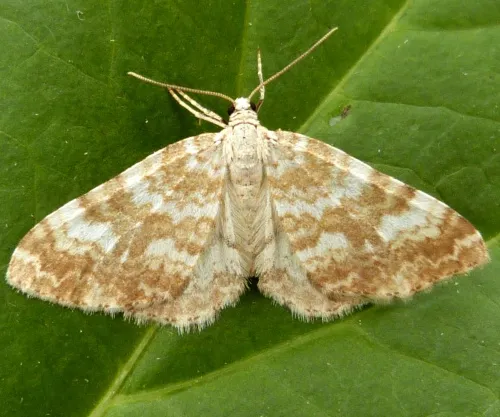
Sandy Carpet
Perizoma flavofasciata
Easily distinguished from its allies by the pale sandy-brown markings on a whitish ground colour. Inhabits woodland, commons, chalky ground and other dry areas. It flies from dusk onwards in June and July. The larvae feed on the seed-pods of various
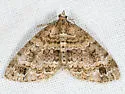
Perizoma grandis - Hodges#7317
Perizoma grandis
Identification: Specimens identified by DNA analysis:
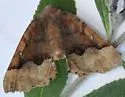
Hubner's Pero - Hodges#6748
Pero ancetaria
Identification: Inner third of forewing (FW) medium brown, middle third darker reddish-brown with variable purplish tint, outer third pale yellowish-brown; postmedian (PM) line with deep sinus midway across wing; small patches of brown speckling or s
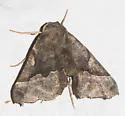
Pero astapa - Hodges#6747.1
Pero astapa
Identification: distinguished by the inward-angled black slash where the median line joins the costa, and the whitish slash outboard from black slash. - comment per M. Rickard, 2009
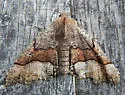
Pero behrensaria - Hodges#6760
Pero behrensaria
Identification: "The males of this species have dentate antennae, which set them apart from all the other species that are known to occur in this country.", Rindge. 1955 Bruce Walsh lists Pero behrensaria sperryi in the White Mountains, Arizona
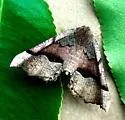
Honest Pero - Hodges#6753
Pero honestaria
Identification: Adult - forewing (FW) area between antemedian and postmedian (PM) lines dark purplish-gray, forming a broad wavy band across the wing; remainder of FW medium gray, the subterminal area being lighter than the basal area; outer edges of
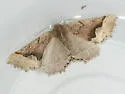
Pero modesta - Hodges#6759
Pero modestus
Identification: Forewing: No shading along the well defined antemedial line. There are 1-6 small white dots along the terminal line in the costal half. Small white discal spot varies from round to angular shaped and is often lined with a narrow broke
Morrison's Pero - Hodges#6755
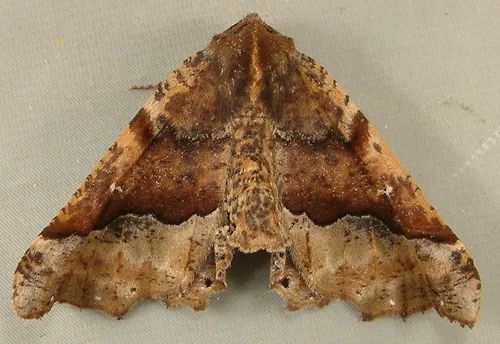
Pero morrisonaria
Identification: Adult: forewing heavily mottled with black and brown; discal spot white or pale yellow; PM line with shallow sinus near midwing; outer margin scalloped. Hindwing light gray with pale-bordered dark median line, row of small black termi
Pero radiosaria - Hodges#6749
Pero radiosaria
Identification: Several color forms from light yellow brown, brown, gray-brown, and orange-brown. Poole description.
Brown Silver-line
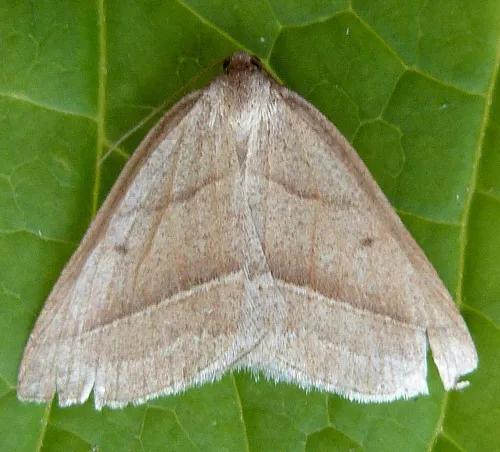
Petrophora chlorosata
Woodland and upland areas where its foodplant Bracken ( Pterideum aquilinum) grows in profusion. It flies in a single generation during May and June. The species flies at dusk and into the night. It is strongly attracted to light and can often be dis
Northern Petrophora - Hodges#6804
Petrophora subaequaria
Identification: Brown, postmedian (pm) line double. Compare Common Petrophora, P. divisata .
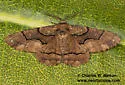
Phaeoura kirkwoodi - Hodges#6765
Phaeoura kirkwoodi
Identification: Cross lines of forewing are thicker and closer together than other Phaeoura species. Sexually dimorphic with females showing considerably more contrast. Prominent subterminal band on hindwings.
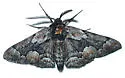
Phaeoura mexicanaria - Hodges#6766
Phaeoura mexicanaria
Identification: Very large species with large, orange-brown patch above the forewing tornus and with a very deep bend into the cell by the AM line.
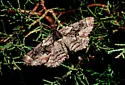
Phaeoura perfidaria - Hodges#6768
Phaeoura perfidaria
Identification: Detailed description can be found in Rindge at link in citations below.
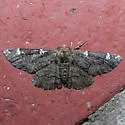
Oak Beauty - Hodges#6763
Phaeoura quernaria
Identification: Adult: wings powdery light to dark olive brown, with variable white patch at forewing apex, and white edging along black AM and PM lines, at least to costa; female with much broader white areas; blackish melanics common. [adapted from
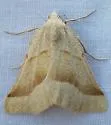
Pherne sperryi - Hodges#6951
Pherne sperryi
Identification: Per McDunnough (1935) - " Male . Head, thorax and primaries pale creamy, the latter lightly suffused with olive-ochreous; median area broader than in allied species and shaded, next to the t.a. and t.p. lines, with deeper olive-ochreo
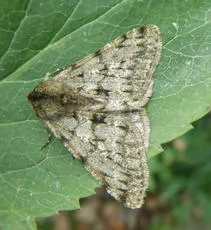
Pale Brindled Beauty
Phigalia pilosaria
Wingspan 35 to 40 mm. The females of this species are completely wingless (apterous), a feature which is often found in moths which emerge in the winter months. The species shows marked melanism, the black form f. monacharia being commoner than the t
Walnut Spanworm Moth - Hodges#6661
Phigalia plumogeraria
Identification: Adult: female wingless, cannot fly; male antennae bipectinate; forewing gray with fine speckling and three inconspicuous dark gray lines; hindwing light brownish-gray with faint discal spot and two indistinct lines Larva: gray twig mi
Philedia punctomacularia - Hodges#6802
Philedia punctomacularia
Identification: Upper wings light gray to grayish brown with a series of dashes along the postmedian line and the basal line. Hindwings lighter in color with faint small dashes along the postmedian line.
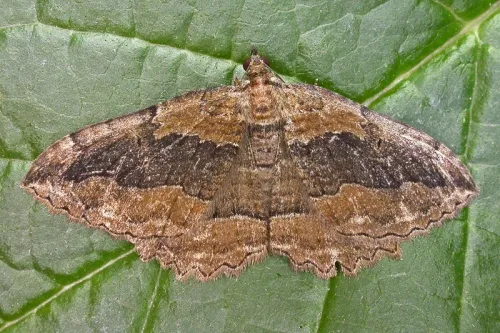
Dark Umber
Philereme transversata
Wingspan 29 to 37 mm. Although varying in degrees of contrast, this is normally a dark brown species, as the English name suggests. The trailing edges of the wings are distinctly scalloped. Usually associated with calcareous soils. The caterpillar ha
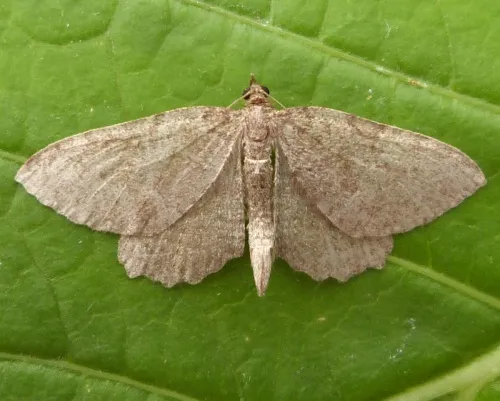
Brown Scallop
Philereme vetulata
Wingspan 24 to 30 mm. A relatively indistinctly-marked species, which has scalloped edges to both fore and hindwings, but more noticeably on the hindwings. The moths fly during July, and occasionally come to light. The caterpillar is dark grey with p
Philtraea monillata - Hodges#6851
Philtraea monillata
Identification: Adult: forewing white with broad yellow AM and PM lines, bordered by dark spots on both sides; O-shaped marking along costa similar color to AM and PM lines, and equidistant between them; terminal line composed of dark dots; fringe wh
Phrudocentra centrifugaria - Hodges#7051
Phrudocentra centrifugaria
Identification: Sexually dimorphic species. Forewing and hindwing of females usually have large brown circles from 3 mm or more in diameter that are filled with white or a white and brown mixture. Often there are multiple circles that are joined toge
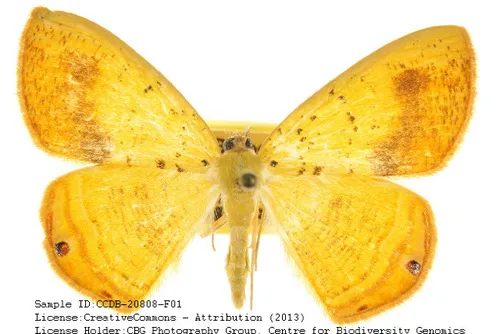
Golden-winged Palyas Moth - Hodges#6670
Phrygionis auriferaria
Identification: Adult : Palpi, head,and antennae brownish yellow. Wings golden yellow, with five lines of small purple spots on inner two thirds of FW. The first line close to the base, the second and third extra basal, parallel near each other, wave
Silvery Phrygionis - Hodges#6671
Phrygionis paradoxata
Florida records (including all BugGuide posts) belong to the species P. paradoxata , not P. argentata. P. argentata is currently considered to be restricted to Jamaica, Puerto Rico, and St. Thomas (USVI). (Brou, 2010)
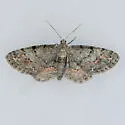
Pimaphera percata - Hodges#6441
Pimaphera percata
Identification: First abdominal segment of the adult is light and second segment is darker than the rest. All wings are uniform pale gray with dark brown to nearly black maculation. Discal dot on male is small and indistinct, females more defined. Pi
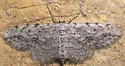
Pimaphera sparsaria - Hodges#6442
Pimaphera sparsaria
Identification: Larvae are twig mimics with numerous annulations per segment, more reminiscent of Sterrhinae species. The prothorax features a pair of dorsal thorn-like projections that bring to mind Geometrinae species. Noticeable dorsal warts on A1
Pionenta ochreata - Hodges#6992
Pionenta ochreata
Identification: Both males and females have simple antennae.
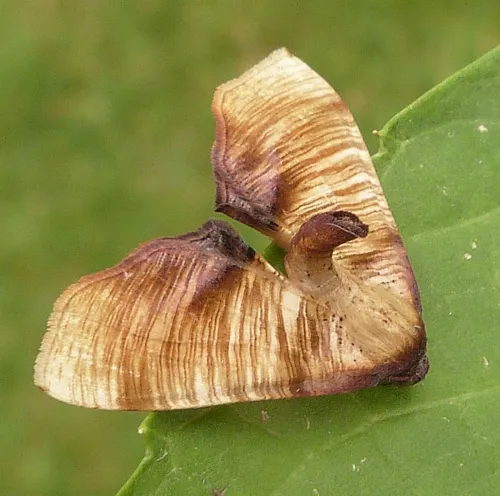
Scorched Wing
Plagodis dolabraria
Wingspan 28-32 mm. The English name of this species is derived from the moth's fanciful resemblance to burnt paper or similar substance. The main flight period is May and June. The adults are attracted to sugar, but only usually the males to light. T
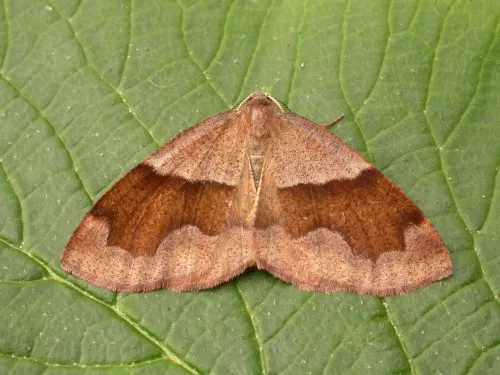
Barred Umber
Plagodis pulveraria
Wingspan 28 to 33 mm. This is a very distinctively marked species although the brown may vary in shade from red brown to a more chocolate colour. There is one generation, with the adults flying in May and June. The larvae feed on a variety of deciduo
Lemon Plagodis - Hodges#6840
Plagodis serinaria
Identification: Largest Plagodis . Pale lemon-yellow forewing with shades of pink.
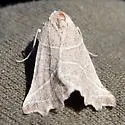
Plataea calcaria - Hodges#6921
Plataea calcaria
Identification: The sexes are dimorphic in color and pattern. Rindge revised description in PDF.
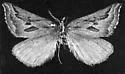
Plataea californiaria - Hodges#6924
Plataea californiaria
Identification: Description in PDF: Specimen determined by DNA analysis (BOLD).
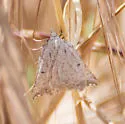
Plataea diva - Hodges#6925
Plataea diva
Identification: Specimen determined by DNA analysis (BOLD). Similar to P. californiaria but occurring inland, and often lacking a subterminal line.
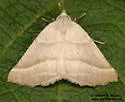
Plataea polychroma - Hodges#6921.2
Plataea polychroma
Identification: Ferris & McFarland original description in PDF.
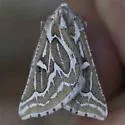
Sagebrush Girdle - Hodges#6926
Plataea trilinearia
Identification: Adult: forewings white, with gray or grayish brown scaling; basal area gray or grayish brown, extending outwardly along inner margin to middle of wing; maculation similar to that of personaria but with posterior, elliptical lobe of me
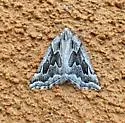
Plataea ursaria - Hodges#6923
Plataea ursaria
Identification: Rindge description in PDF. Most similar to P. personaria, but occurring more inland, often "montane", with "thorax above with longitudinal median crest; length of forewings 18 to 24 mm." Distinguished from the often much paler P. cali
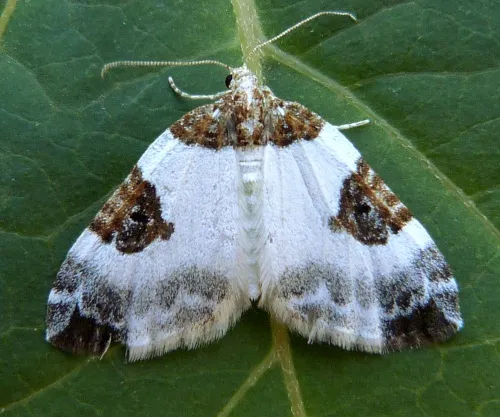
Blue-bordered Carpet
Plemyria rubiginata
Wingspan 22-28 mm. Markings are fairly consistent in southern specimens, with the 'blue border' along the trailing edge of the wings giving rise to the name. There is a northern UK sub-species, plumbata , that does not have the distinctive white mark
Alien Probole - Hodges#6837
Probole alienaria
DO NOT ADD IMAGES TO THIS TAXON. For now, all Probole images should be placed under Probole amicaria . See info below and comments in the Moth Forum here . After revision and DNA work (among numerous other approaches) on the genus by Tim Tomon, it wa
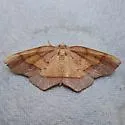
Probole nepiasaria - Hodges#6839
Probole nepiasaria
I created this page for the moths below that probably would have been considered this species in the past. However, I since read this notice from Steve Nanz and later comments by Chris Schmidt under 'Remarks' here , and I have decided to placed thos
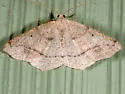
Prochoerodes forficaria - Hodges#6981
Prochoerodes forficaria
Identification: forewing falcate, light tan to orangish-brown with or without blackish speckling and shading; AM line wavy, PM line slightly concave for most of length, with sharply-pointed concave bend near costa (similar to but not as pronounced as
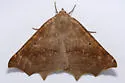
Prochoerodes truxaliata - Hodges#6977
Prochoerodes truxaliata
Identification: Identification confirmed by Cliff Ferris
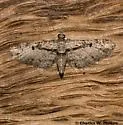
Prorella desperata - Hodges#7619
Prorella desperata
Identification: Original description is online as Gymnocelis desperata (Hulst).
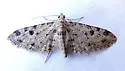
Prorella discoidalis - Hodges#7612
Prorella discoidalis
Identification: "Easily recognizable by the extremely large discal spot of primaries on a whitish background" .
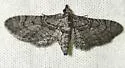
Prorella protoptata - Hodges#7624
Prorella protoptata
Original description . McDunnough's 1949 revision of the group does not include a description of this species, but it includes descriptions of several similar species.
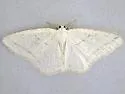
Protitame subalbaria - Hodges#6266
Protitame subalbaria
Protitame subalbaria - Hodges#6266 (Protitame subalbaria) is a species in the family Geometridae, commonly known as geometrid moths, belonging to the order Lepidoptera (Butterflies and Moths). It is classified within the subfamily Ennominae, tribe Ca
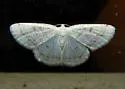
Virgin Moth - Hodges#6270
Protitame virginalis
Identification: Specimen identified by DNA analysis: Genitalia:
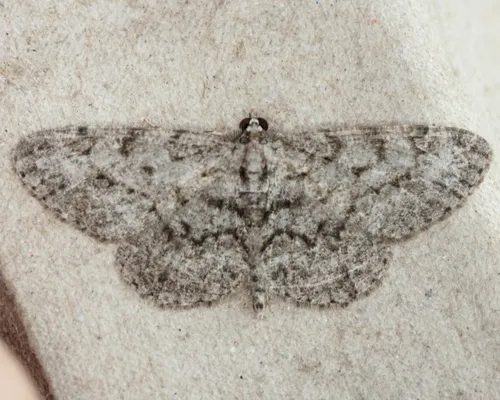
Porcelain Gray
Protoboarmia porcelaria
The Porcelain gray (Protoboarmia porcelaria), also known as the Dash-lined looper, is a Geometrid found throughout North America, except in the far north.
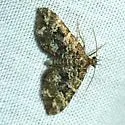
Psaliodes fervescens - Hodges#7315
Psaliodes fervescens
Identification: Dyar original description online in PDF.
Dot-lined Angle - Hodges#6332
Psamatodes abydata
Identification: Adult - forewing speckled light yellowish- or grayish-brown with darker shading in subterminal area; PM line slightly scalloped, with dark dots at tips of scallops; AM and median lines brown, slightly irregular/wavy; discal spot a sho
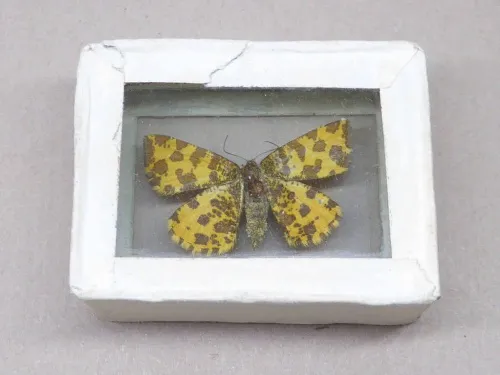
Speckled Yellow
Pseudopanthera macularia
Wingspan 23 to 28 mm. A highly distinctive, day-flying species. but must be supported by photographic evidence Please provide good photographs to support your record as this species is rare (thought extinct) in our area. Records cannot at present be
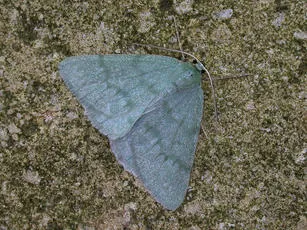
Grass Emerald
Pseudoterpna pruinata
Wingspan 30 to 35 mm. Although bright bluish-green when freshly emerged, this species fades quickly and becomes rather greyish. It occurs in open country such as heathland, moorland and commons. Fairly frequent from southern Scotland southwards. In a
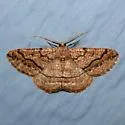
Pterospoda nigrescens - Hodges#6706
Pterospoda nigrescens
Identification: The original description as Selidosema nigrescens is available online in the print references below.
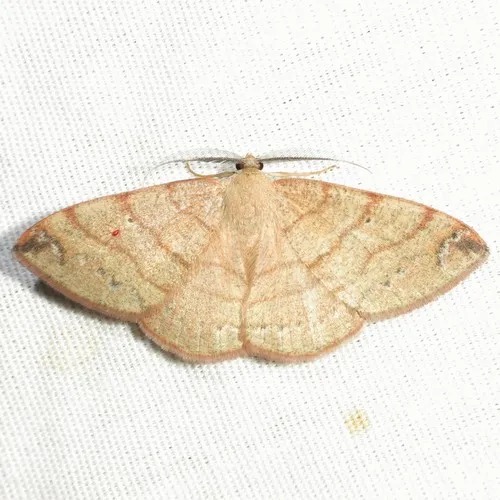
Pterospoda opuscularia - Hodges#6707
Pterospoda opuscularia
Identification: Adult - color highly variable, from tan to dark red.
Pterotaea lamiaria - Hodges#6553
Pterotaea lamiaria
Identification: The species can usually be recognized by the brownish wings with a brown shaded band along the postmedial and antemedial lines. The AM line is absent from the costa to the middle of the wing. The Rindge revised description is availabl
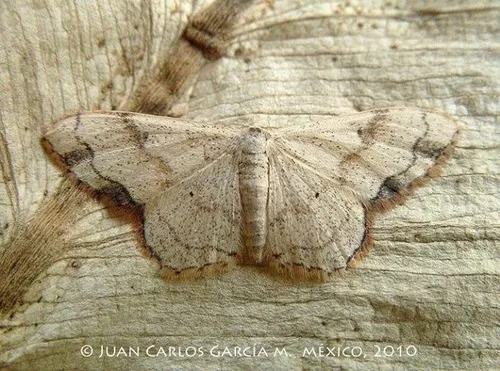
Ptychamalia dorneraria - Hodges#7131
Ptychamalia dorneraria
Identification: See original description in print references below.
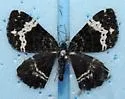
Spear-marked Black Moth - Hodges#7293
Rheumaptera hastata
Identification: The variation in pattern among individuals of R. hastata and R. subhastata is much greater than the variation between the two species. Genitalia: ♂ ♀
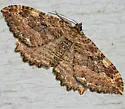
Barberry Geometer - Hodges#7290
Rheumaptera meadii
Identification: Adult has two forms: typical form is all dark brown like Tissue Moth ( Triphosa haesitata ); form "badiaria" has orangish-brown AM and ST bands; both forms have a sharper forewing apex than Tissue Moth, and a more jagged PM line with
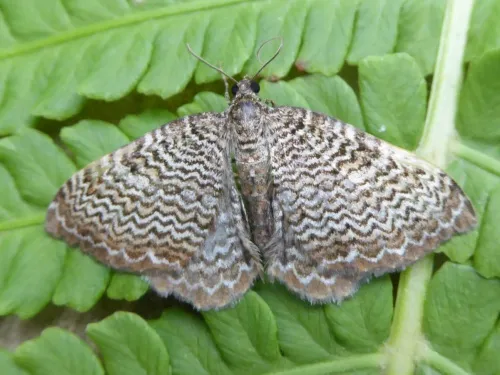
Scallop Shell
Rheumaptera undulata
Wingspan 25 to 30 mm. A highly distinctive moth, unlikely to be confused with any other British species. It prefers open woodland with an undergrowth of bilberry, and marshy areas. Flies in a single generation from June to July. The larvae spin toget
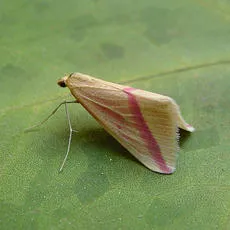
The Vestal
Rhodometra sacraria
Size 12 to 14 mm. It is a creamy winged species with pink bars forming an inverted 'V' and also pink edges to the wings. However the amount and intensity of the pink pigmentation is somewhat variable. Typically it rests with its wings in a tent-shape
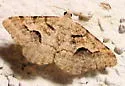
Rindgea ballandrata - Hodges#6416
Rindgea ballandrata
Identification: Rindgea ballandrata usually has a small black bar which rests on top of the antemedial and the postmedial line as they approach the inner margin. This bar is absent in R. cyda . Ferguson stated ballandrata does not always have the thi
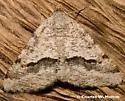
Mesquite Looper Moth - Hodges#6415
Rindgea cyda
Identification: Adult: forewing ground color white but largely obscured by extensive dark transverse streaks; PM line thick, black, sinuous, interrupted by yellowish-orange blob near costa; AM and median lines blackish, diffuse, almost straight; band
Hodges#6406.1
Rindgea disparcata
Identification: Cryptic. By dissection only. Douglas C. Ferguson named it as a new species in his Geometroidae fascicle 17.2. "This cryptic species, which is rare in collections, is known only from central and southern Texas. It is the sister spec
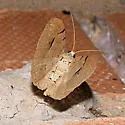
Rindgea flaviterminata - Hodges#6412
Rindgea flaviterminata
Identification: Barnes & McDunnough original description as Macaria flaviterminata . p. 125. Both forewing and hindwing have contrasting brown outer borders beyond the postmedial line.
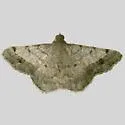
Rindgea nigricomma - Hodges#6407
Rindgea nigricomma
Identification: Adult - forewing is light gray with three brownish transverse lines crossing the wing. The medial (M) and postmedial (PM) line are fairly straight and have a dark spot where they meet the costa. The antemedial (AM) line is slightly co
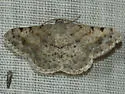
Rindgea parcata - Hodges#6406
Rindgea parcata
Identification: "This featureless, mottled gray, finely dark speckled southwestern species can be distinguished reliably from other members of its immediate complex only be examination of the genitalia." Ferguson (2008)
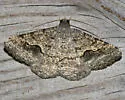
Signate Looper Moth - Hodges#6414
Rindgea s-signata
Identification: Adult: forewing off-white to pale yellowish or buff with strongly curved S-shaped black PM line; discal spot small or absent; AM line faint or sometimes absent; median line faint or absent; PM line interrupted by short space near cost
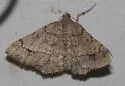
Rindgea stipularia - Hodges#6409
Rindgea stipularia
Identification: Forewing is a mottled brownish color and lacks the black marks along the costa where the transverse lines begin. The very similar Rindgea nigricomma has the bold black marks along the costa and is a more gray color.
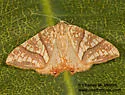
Rindgeria ornata - Hodges#6984
Rindgeria ornata
Identification: See original description in print references below .
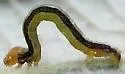
Sabulodes aegrotata - Hodges#6995
Sabulodes aegrotata
Identification: Forewing variable in color, ranging from cream or pale yellow to ochraceous, brown or blackish brown (melanic form); maculation absent in some specimens; it is the only Sabulodes known to have a melanic form.
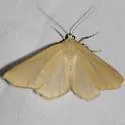
Sabulodes dissimilis - Hodges#6996
Sabulodes dissimilis
Identification: Description can be found in Rindge 1978 at link in citations below.
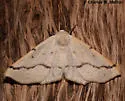
Sabulodes huachuca - Hodges#6998
Sabulodes huachuca
Sabulodes huachuca - Hodges#6998 (Sabulodes huachuca) is a species in the family Geometridae, commonly known as geometrid moths, belonging to the order Lepidoptera (Butterflies and Moths). It is classified within the subfamily Ennominae, tribe Ourapt
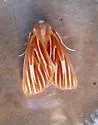
Sabulodes niveostriata - Hodges#7000
Sabulodes niveostriata
Identification: Adult - see Rindge (1978) in Print References.
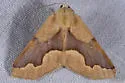
Sabulodes spoliata - Hodges#7003
Sabulodes spoliata
Identification: Grossbeck original description as Phengommataea spoliata . "Head, thorax, abdomen and fore wings of male dark buff, the head somewhat lighter than the rest; hind wings much paler outwardly, shaded with pale buff. Head and body of fema
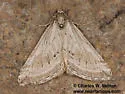
Scelidacantha fuscata - Hodges#7629
Scelidacantha fuscata
Identification: Grossbeck (1906) description in print references.
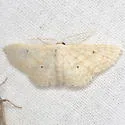
Scopula benitaria - Hodges#7155
Scopula benitaria
Identification: Specimens identified by DNA analysis:
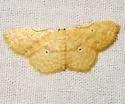
Scopula compensata - Hodges#7152
Scopula compensata
Identification: This species may or may not have the dark patches beyond the PM line. Specimen identified by DNA at BOLD:
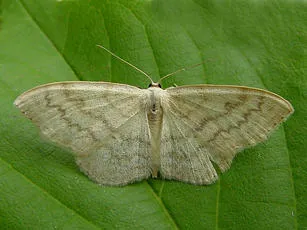
Cream Wave
Scopula floslactata
Wingspan 29-33 mm. A fairly plain moth. Its creamy white wings have a scattering of dark scales and three or four distinct light or dark brown wavy cross lines. In Scotland there is a smaller, darker variety scotica . A good photograph is generally r
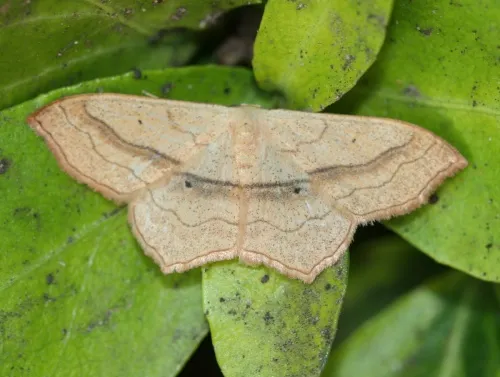
Small Blood-vein
Scopula imitaria
Wingspan 26-29 mm. Like the rather similar Blood-vein ( Timandra griseata ), this species has a cross-line which extends across all four wings when at rest, though the colour is generally less pink. Waste ground, hedgerows and coastal sand-dunes. The
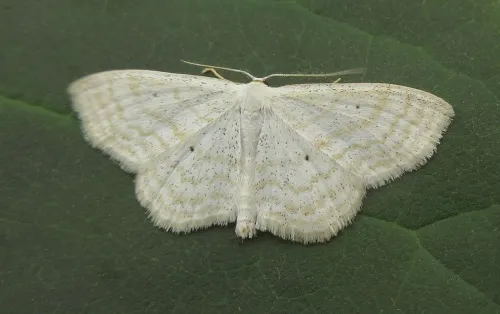
Lesser Cream Wave
Scopula immutata
Wingspan 24 to 27 mm. A relatively small member of the Geometridae. A good photograph is generally required to support your record. A note of size would also be useful. Inhabits damp areas such as fens, bogs and damp meadows. Flies from dusk into the
Soft-lined Wave - Hodges#7169
Scopula inductata
Identification: wings light yellowish-gray, crossed by several gray wavy lines; outer edges of wings rounded; a black dot is present near the middle of each wing
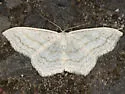
Simple Wave - Hodges#7164
Scopula junctaria
Identification: wings variable in color and shape, from white with faint lines and rounded margins, to pale yellowish with bold lines and angular margins ( compare images of both forms); AM, PM, and median lines present; forewings and hindwings simil
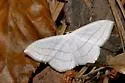
Scopula ordinata - Hodges#7161
Scopula ordinata
Identification: wings pure white with three brownish or greenish-yellow lines: AM line slightly wavy and curved, PM and ST lines straight except for sharp bend near costa; lines continue onto hindwing; small black discal dot on all wings; outer margi
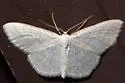
Four-lined Wave - Hodges#7165
Scopula quadrilineata
Identification: Adult: forewing white with 3 or 4 faint yellowish transverse lines and pale gray speckling; PM line almost straight, touching costa near apex; hindwing similar in pattern and color
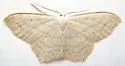
Scopula quinquelinearia - Hodges#7164.1
Scopula quinquelinearia
Identification: Specimen identified by DNA analysis: In some references, this species may be listed as a subspecies of Scopula junctaria .
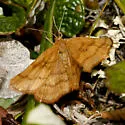
Scopula sentinaria - Hodges#7172
Scopula sentinaria
Identification: Adults are dull red-brown to bright rusty-orange. The basal half of the fore-wings is usually suffused with darker scales. There is only one sub-species in North America. (nominate)
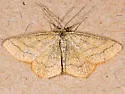
Scopula sideraria - Hodges#7171
Scopula sideraria
Identification: Specimen identified by DNA analysis (BOLD). diurnal
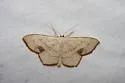
Scopula timandrata - Hodges#7160
Scopula timandrata
Identification: Determined by Bob Patterson. It may turn out that this species is conspecific with S. limboundata . Covell mentions that the two have identical genitalia and suggests that timandrata may be just a form of limboundata . ( 4 ) As of 201
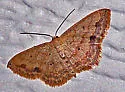
Swag-lined Wave - Hodges#7156
Scopula umbilicata
Identification: Adult: wings white with sparse speckling, and light gray shading beyond PM line; AM, median, and PM lines brown, wavy; black discal dot on all wings, and black spot at apex of forewing (a distinctive feature).
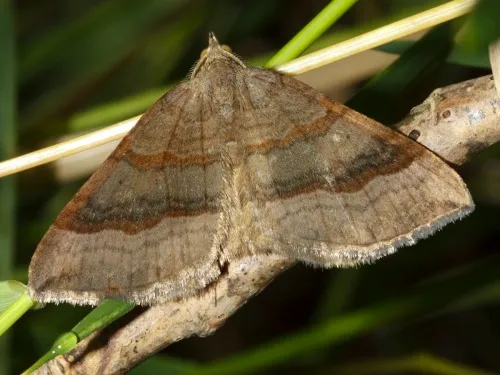
Shaded Broad-bar
Scotopteryx chenopodiata
Wingspan 25-30 mm. Variable in colour but fairly easily identified. Grassland, acid heathland, woodland rides, roadside verges, sand-dunes and gardens. The species has one generation, the adults flying in July and August. Widespread and fairly common
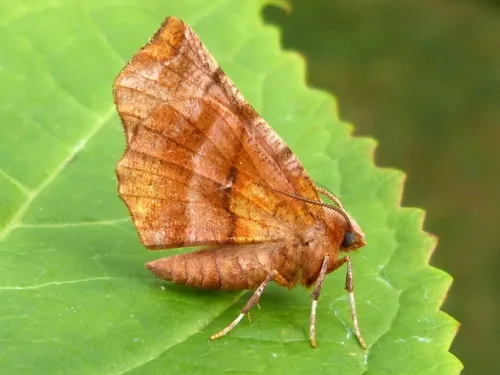
Early Thorn
Selenia dentaria
Wingspan 28-40 mm. The moths in the summer brood are normally paler. Melanic forms occur fairly regularly in parts of northern England. Resting position also distinguishes Early Thorn from all other British Thorns. It holds its wings up over its back