
Morrison's Pero - Hodges#6755
Pero morrisonaria
This record describes Pero morrisonaria (species). Recorded family: Geometridae. Recorded order: Lepidoptera.
Identification and Appearance
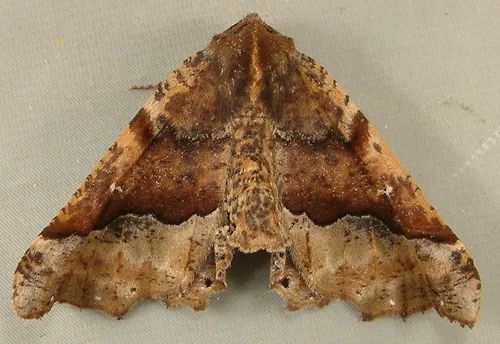
Adult: forewing heavily mottled with black and brown; discal spot white or pale yellow; PM line with shallow sinus near midwing; outer margin scalloped. Hindwing light gray with pale-bordered dark median line, row of small black terminal dots, and scalloped outer margin. Larva: an excellent twig mimic; body variably yellowish and brownish with dark middorsal stripe and scattered dark warts; head angular, dark brown, with light brown swollen lobes and light brown streak across front; inconspicuous pair of narrow meandering dark brown subdorsal stripes; spiracles dark brown; third abdominal segment with prominent spiracular swelling and large dark tubercle below [adapted from description at forestpests.org]. Genitalia: 8th sternite - scales brushed off
Classification
- Kingdom
- Animalia
- Phylum
- Arthropoda
- Class
- Insecta
- Order
- Lepidoptera (Butterflies and Moths)
- Superfamily
- Geometroidea
- Family
- Geometridae (Geometrid Moths)
- Subfamily
- Ennominae
- Tribe
- Azelinini
- Genus
- Pero
Imported taxonomy record. Source availability varies; see the source references and editorial policy below.
Habitat and Range
Habitat
Coniferous and mixedwood forests; adults are nocturnal and attracted to light.
Geographic Range
Newfoundland to British Columbia, and coast to coast in northern United States, south in the east to South Carolina, south in the west to California. Type locality: Washington Territory (H.K. Morrison).
Seasonal Activity
Adults fly from May to July. Larvae from July to September; pupation occurs in September.
Diet and Behavior
Diet: Larvae feed on conifers [Balsam Fir ( Abies balsamea ) and other firs in the west, Douglas-fir ( Pseudotsuga menziesii ), hemlock, pine, spruce, tamarack] but have also been reported on broad-leaved trees and shrubs [alder, birch, buffaloberry, meadowsweet, poplar, willow].
Life History
One generation per year; overwinters as a pupa in soil or debris.
Additional species information
Species notes from the sources
Etymology: Named in honor of Herbert Knowles Morrison (1854-1885), who collected the first specimens. Morrison was a professional collector and sold specimens to Henry Edwards, Grote, Walsingham and others. Early on he collected lepidoptera in Georgia and later made trips to Colorado (1874-1877), Utah and Nevada, Washington Territory, Arizona and southern California, Oregon (1880-1881), New Mexico and Nevada and Florida, where he contracted the dysentery that killed him. He normally only recorded the state with his specimens and those labeled "North Carolina" are suspect.
About Butterflies and Moths: the wider group
Order-level background for Lepidoptera, the group containing Pero morrisonaria. Species-specific details appear above.
Group overview
Lepidoptera includes approximately 180,000 described species of butterflies and moths. Moths outnumber butterflies roughly 10:1. The monarch butterfly's eastern population has declined by more than 80% since the mid-1990s, and the western population by over 95% since the 1980s. The IUCN lists the migratory monarch as Vulnerable.
Ecological role of the group
Butterflies and moths are essential indicators of ecosystem health. As caterpillars, they are a primary food source for birds - a single nest of blue tit chicks requires ~10,000 caterpillars. Adult moths pollinate many night-blooming plants.
Economic and practical significance of the group
Lepidoptera are critical pollinators. In Europe, grassland butterfly species have declined by almost 50% since the early 1990s. In the UK, three-quarters of butterflies are in decline. In the U.S., five butterfly species have gone extinct since 1950, with 29 listed as endangered.
Recorded sources for this group: IUCN Red List, Xerces Society, USFWS, PNAS, WWF. Imported estimates may describe particular regions or reporting periods.
Photos of Morrison's Pero - Hodges#6755 (2)
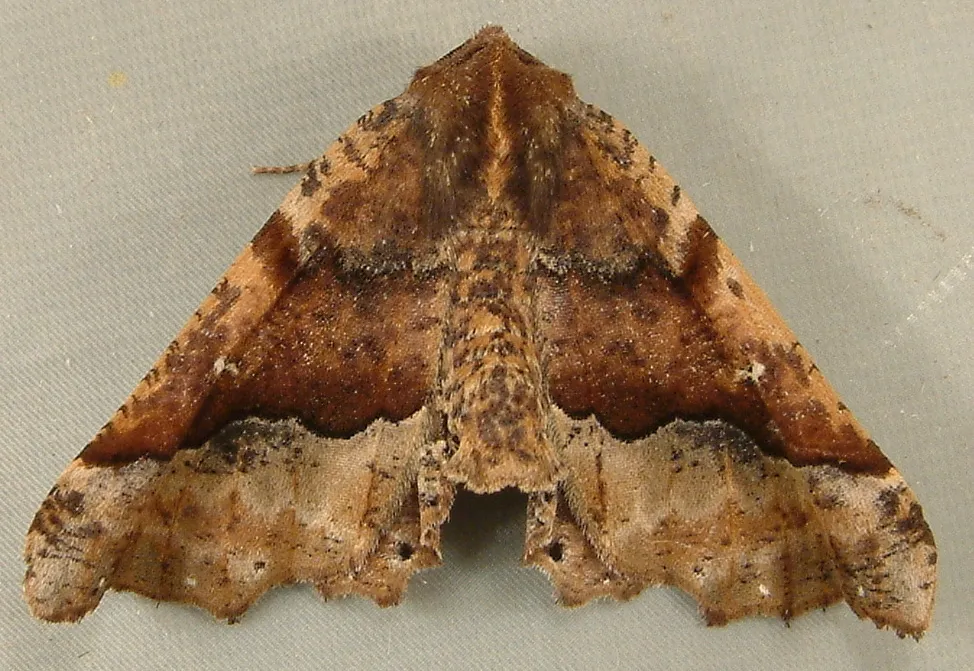
Photo credits: Contributed by Robin McLeod; Additional contributions by Tony-2 , Randy Hardy , JoAnneRusso , Robert H. Biagi
Frequently Asked Questions About Morrison's Pero - Hodges#6755
What is Morrison's Pero - Hodges#6755?
Morrison's Pero - Hodges#6755 (Pero morrisonaria) is a species in the family Geometridae, within the order Lepidoptera.
How big is Morrison's Pero - Hodges#6755?
Wingspan 34-40 mm. Larvae to 35 mm.
How do you identify Morrison's Pero - Hodges#6755?
Adult: forewing heavily mottled with black and brown; discal spot white or pale yellow; PM line with shallow sinus near midwing; outer margin scalloped. Hindwing light gray with pale-bordered dark median line, row of small black terminal dots, and scalloped outer margin. Larva: an excellent twig mimic; body variably yellowish and brownish with dark middorsal stripe and scattered dark warts; head angular, dark brown, with light brown swollen lobes and light brown streak across front; inconspicuous pair of narrow meandering dark brown subdorsal stripes; spiracles dark brown; third abdominal segment with prominent spiracular swelling and large dark tubercle below [adapted from description at forestpests.org]. Genitalia: 8th sternite - scales brushed off
Where is Morrison's Pero - Hodges#6755 found?
| Feature | Details |
|---|---|
| Habitat | Coniferous and mixedwood forests; adults are nocturnal and attracted to light. |
| Range | Newfoundland to British Columbia, and coast to coast in northern United States, south in the east to South Carolina, south in the west to California. Type locality: Washington Territory (H.K. Morrison). |
What does Morrison's Pero - Hodges#6755 eat?
The diet of the Morrison's Pero - Hodges#6755 includes Larvae feed on conifers [Balsam Fir ( Abies balsamea ) and other firs in the west, Douglas-fir ( Pseudotsuga menziesii ), hemlock, pine, spruce, tamarack] but have also been reported on broad-leaved trees and shrubs [alder, birch, buffaloberry, meadowsweet, poplar, willow]..
When is Morrison's Pero - Hodges#6755 active?
Morrison's Pero - Hodges#6755: seasonal activity - Adults fly from May to July. Larvae from July to September; pupation occurs in September..
What is the life cycle of a Morrison's Pero - Hodges#6755?
One generation per year; overwinters as a pupa in soil or debris.