
Family Geometrid Moths (Geometridae)
Geometridae is a family in the order Lepidoptera. Browse 1,358 named species recorded in this family, or open an individual profile for its available identification and natural-history information.
Species in Geometridae (1,358)
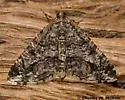
Macaria deceptrix - Hodges#6312
Macaria deceptrix
Identification: Hindwing is gray or grayish brown compared to the yellowish color of Macaria graphidaria . Genitalia:
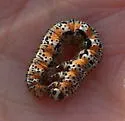
Drab Angle Moth - Hodges#6278
Macaria evagaria
Identification: Hulst (1900) original description: 106
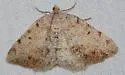
Macaria exauspicata - Hodges#6292
Macaria exauspicata
Identification: Key forewing features: Four evenly spaced brown to rust shaded wedges along the costa. Well defined dark discal spot. Often has brown shaded area below the postmedian line. Brown spot or patch is usually present in the subterminal are
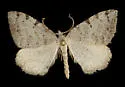
Macaria extemporata - Hodges#6298
Macaria extemporata
Identification: Specimen determined by DNA analysis (BOLD).
Macaria flavicaria - Hodges#6276
Macaria flavicaria
Identification: Males are light yellowish brown with a dark forewing discal spot.
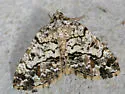
Macaria graphidaria - Hodges#6311
Macaria graphidaria
Identification: Adult: forewing white with black discal dot, complete AM and PM lines, and partial median line; PM line turns abruptly basad before reaching costa; blackish patch near middle of subterminal area; amount of reddish-brown shading in sub
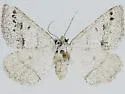
Macaria grossbecki - Hodges#6315
Macaria grossbecki
Identification: See this observation on iNaturalist for a living example. Ground color very pale gray to whitish. PM line slightly wavy and widely shaded on the inner 2/3, often emphasized in two thicker blotches. Row of 2 to 4 subapical black spot
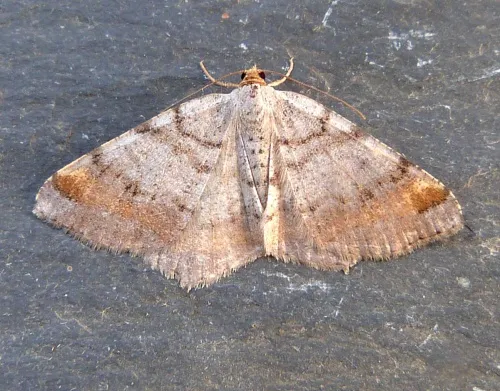
Tawny-barred Angle
Macaria liturata
Wingspan 22-27 mm. A dark melanic form nigrofulvata is quite common, especially in the north. A species of coniferous woodland and gardens. It flies usually in June and July, but in the south there is a second brood in August. Coniferous trees form t
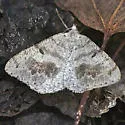
Speranza loricaria - Hodges#6290
Macaria loricaria
Identification: A pale grey geometrid with indistinct markings. AM, PM and median dark lines usually present, the PM widest and slighltly darker. Patchy brown band distal to the PM band variably developed. Discal spot usually well-defined. Hindwings
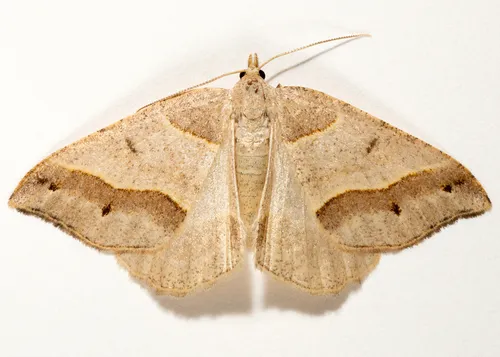
Lorquin's Angle - Hodges#6324
Macaria lorquinaria
Identification: Adult: forewing variably light gray to light brownish-yellow with 3 dark spots in subterminal area -- two together near costa and one about mid-way across wing; PM line gently wavy, and AM line straight, both lines dark with pale edge
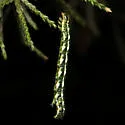
Many-lined Angle - Hodges#6353
Macaria multilineata
Identification: Adult: forewing light gray with brownish tint beyond PM line; AM, median, and PM lines straight, dark, usually conspicuous and with sharp bend near costa; subterminal line a shallow whitish arc extending from apex to anal angle; termi
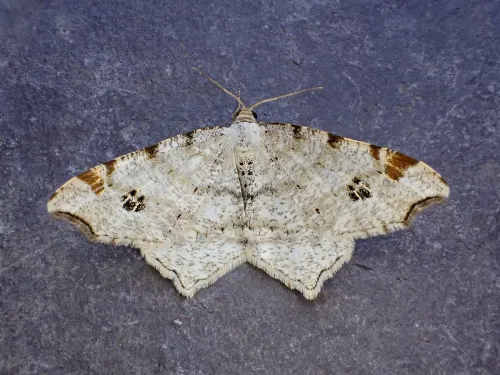
Peacock Moth
Macaria notata
Wingspan 28 to 32 mm. Rather similar to the Sharp-angled Peacock, although usually slightly paler with less grey suffusion. Typically the dark notch near the forewing tip is less concave, and the broken blotch in the centre is more distinct. Peacock
Macaria occiduaria - Hodges#6279
Macaria occiduaria
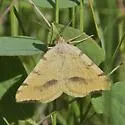
Identification: Forewing has brown PM band extending from the anal margin about midway to the costa and the fringe is brown from the apex to the midway point. Females have reduced forewings and seldom fly. Detailed description of occiduaria and the r
Owen's Larch Granite - Hodges#6351
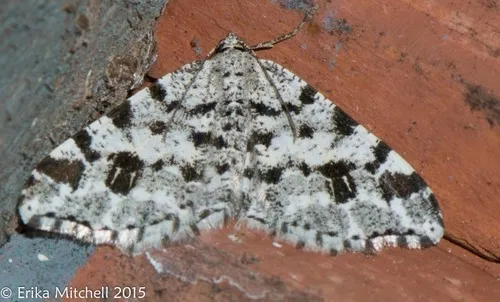
Macaria oweni
Identification: Adult: forewing white, heavily speckled with grey; four heavy black blotches along costa. AM and PM lines bold, black, jagged; median line usually broken into several dark spots. The white ground colour gives this species a very contr
Macaria pallipennata - Hodges#6317
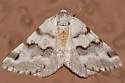
Macaria pallipennata
Macaria pallipennata is the most common of this species group in the Texas to Arizona area.
White Pine Angle - Hodges#6347
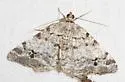
Macaria pinistrobata
Identification: Adults ( 3 ) Similar to Macaria signaria but the ground color is more whitish with a black and white appearance. Space between medial and postmedial bands is usually the palest. Transverse lines are weaker as they approach the inner m
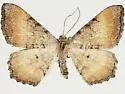
Macaria ponderosae - Hodges#6338.1
Macaria ponderosae
Identification: There is no variations in the forewing maculation.
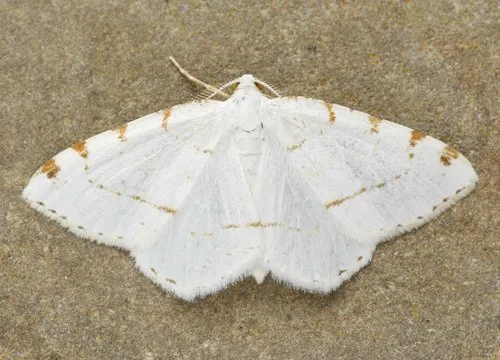
Lesser Maple Spanworm Moth
Macaria pustularia
Speranza pustularia, the lesser maple spanworm, is a moth of the family Geometridae. It is found from Nova Scotia to Florida, west to Mississippi, north to North Dakota and Saskatchewan.
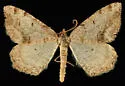
Macaria semivolata - Hodges#6291
Macaria semivolata
Identification: Specimen determined by DNA analysis (BOLD).
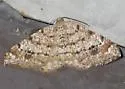
Six-spotted Angle - Hodges#6343
Macaria sexmaculata
Identification: Adult: amount of spotting varies: well-marked individuals have 3 lines running completely across the forewing, and the beginning of a 4th (subterminal) line at the costa; large dark blotch present in subterminal area halfway across wi
Pale-marked Angle - Hodges#6344
Macaria signaria
Identification: Adult: head pale with thin dark collar; forewing pale brownish-gray with large dark blotch (composed of 4 separate pieces in well-marked individuals) near middle of PM line; AM, median, and PM lines scalloped or wavy, dark, and usuall
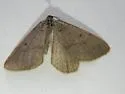
Macaria simplex - Hodges#6281
Macaria simplex
Identification: The original description as Pygmaena simplex Dyar, is available online at the link in the print references below. - Forewing is plain gray-brown with evenly rounded outer margin. There is usually a thin dark postmedial line but it can
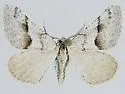
Macaria simpliciata - Hodges#6316
Macaria simpliciata
Identification: Macaria simpliciata resembles Macaria pallipennata , but has no discal spot, is much less boldly marked, and has no checkered fringe. Macaria simpliciata is rare in collections.
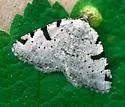
Barred Speranza - Hodges#6303
Macaria subcessaria
Identification: forewing dirty grayish-white or pale brown; four dark bars are equally spaced along the costa, and extend at right angles onto the wing; the second bar is more than twice as long as any of the other bars (this is a distinguishing feat
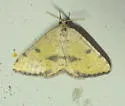
Macaria sulphurea - Hodges#6283
Macaria sulphurea
Identification: Rich cream-yellow with maroon brown markings, consisting of two to three wedge shaped spots along the forewing costa, prominent discal spots, and variable PM and submarginal lines. The forewing PM band is usually light and spotty, but
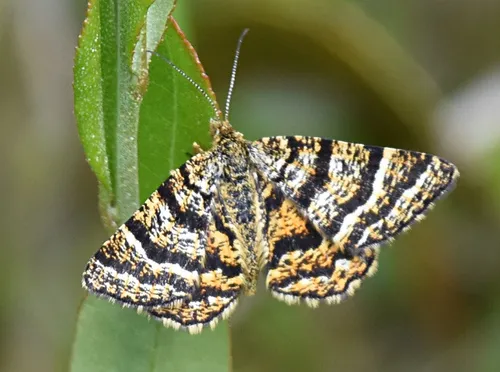
Black-banded Orange - Hodges#6321
Macaria truncataria
Identification: The bold black and orange bands across the forewing and hindwing are unique. The original description as Fidonia truncataria Walker, is available online in the print references below. Dark form: Adults fly during the day and are not k
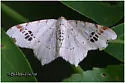
Birch Angle - Hodges#6330
Macaria ulsterata
Identification: Adult: forewing bright white with three usually distinct transverse lines crossing wing; heavy brown or blackish patch mid-way along PM line, and another dark patch where PM line meets costa; outer margin falcate (having sickle-shaped
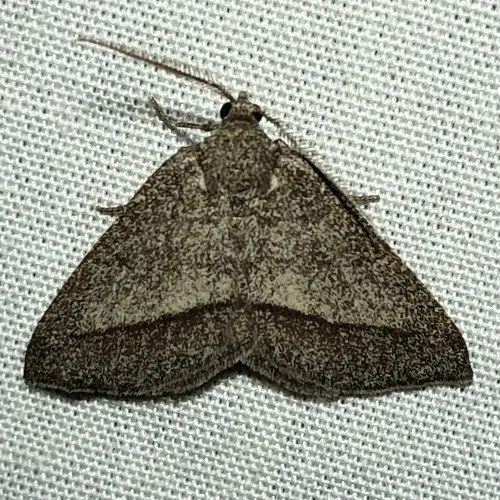
Speranza varadaria - Hodges#6314
Macaria varadaria
Identification: forewing with the apex being slightly pointed and are yellow-brown to gray-brown; the bold postmedial band is nearly straight or slightly concave and has strong dark shading below that fades away to a lighter reddish-brown color towar
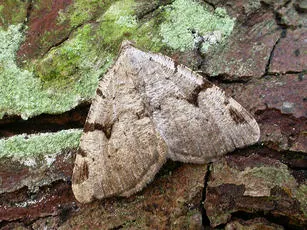
V-Moth
Macaria wauaria
It favours gardens, allotments and other cultivated areas where fruit bushes are grown. The adults, which come to light, are on the wing in July and August. The caterpillars feed on a number of Ribes species, including red and black currant and goose
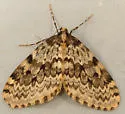
Whitelined Looper - Hodges#7435
Malacodea pulchraria
Identification: Adult: forewing light brown with white-edged dark brown lines; subterminal line with three prominent pointed teeth near costa and short horizontal dash at costa; a total of five distinct lines cross the wing (as opposed to eight lines
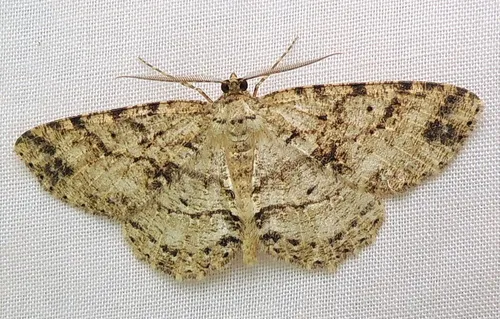
Canadian Melanolophia Moth
Melanolophia canadaria
Melanolophia canadaria, the Canadian melanolophia, is a moth of the family Geometridae. It is found from Florida to Nova Scotia, west to Saskatchewan and south to Texas.
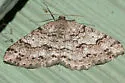
Western Carpet - Hodges#6618
Melanolophia imitata
Identification: Adult: forewing light to medium brown with dark brown speckling; PM line scalloped, prominent; median and AM lines usually fainter; ST line composed of several black spots; discal spot small, round, black hindwing similar but slightly
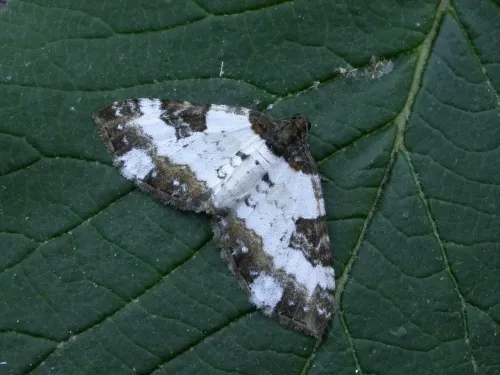
Pretty Chalk Carpet
Melanthia procellata
Wingspan 27-32 mm. This species has chalky wings with the dark brown central cross band stopping abruptly before the middle and a white blotch in the dark brown outer border. It occupies hedgerows and scrubland, particularly in chalky localities, and
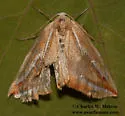
Melemaea virgata - Hodges#6856
Melemaea virgata
Identification: Larva - see Powell and Opler plate 62.
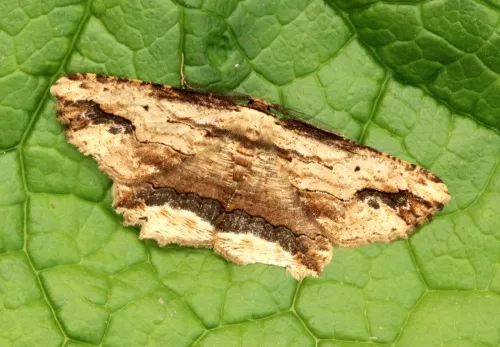
Waved Umber
Menophra abruptaria
Wingspan 36-42 mm. A distinctive species that is not likely to be confused with anything else. Broad-leaved woodland, scrub, hedgerows, parks and gardens. Flies in a single generation from April into June. The larvae feed on Garden Privet and Lilac.
Mericisca scobina - Hodges#6607
Mericisca scobina
Identification: Rindge (1972) described the adults including genitalia. ( 4 )
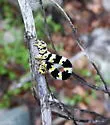
Meris paradoxa - Hodges#6877
Meris paradoxa
Identification: Adult - thinly scaled, slightly transparent, pale buff with scattered brown and grayish scaling; maculation weakly represented, cross lines grayish brown, tending to be broad, incomplete. Larva - brightly colored and boldy patterned,
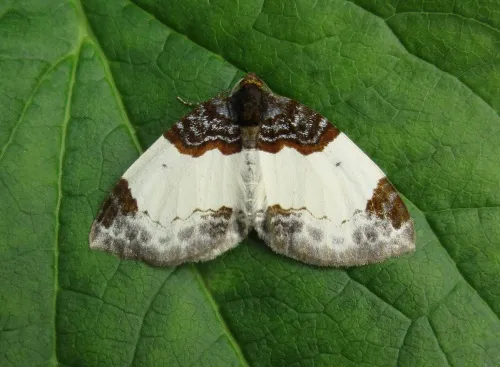
Beautiful Carpet
Mesoleuca albicillata
Wingspan 34-38 mm. It has very broad and rounded white or creamy white forewing, with a broad white central cross band. The wing has a dark basal area and blotch near the tip consisting of brown and purplish blue. The adults fly during June and July
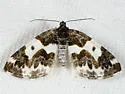
Western White-Ribboned Carpet - Hodges#7308
Mesoleuca gratulata
Identification: forewing with broad white medial band and broad black curving postmedial band; prominent black discal spot; basal area black Genitalia:
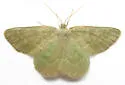
Day Emerald - Hodges#7085
Mesothea incertata
Identification: Adult: wings uniformly yellowish-green to dusky green; PM line slightly wavy, indistinct (sometimes absent), often the only visible marking. The area between the antennae base is green compared to white in Hethemia pistasciaria . Larv
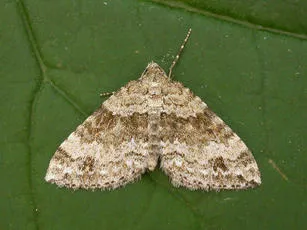
Twin-spot Carpet
Mesotype didymata
Wingspan 24 to 29 mm. This species exhibits some variation, with darker forms occurring in the north, and a reddish brown subspecies hethlandica in the Shetland Isles. Areas where the larval foodplants are plentiful. The moths fly from June through t
Metanema brunneilinearia - Hodges#6962
Metanema brunneilinearia
Ferris mentions with respect to possibly lumping brunneilinearia and inatomaria , "I don’t feel it appropriate to make the synonomy. DNA analysis (barcoding) could resolve this issue, but that is beyond the intent and scope of this article, which is
Dark Metanema - Hodges#6820
Metanema determinata
Identification: Similar to pale metanema, but darker gray. Black discal spots are smaller or none.
Pale Metanema - Hodges#6819
Metanema inatomaria
Identification: The sexes are very similar in size. Male have bipectinate antennae. Specimen identified by DNA analysis:
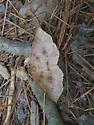
Ruddy Metarranthis - Hodges#6822
Metarranthis duaria
Identification: Adult: forewing angular, pointed, variably reddish to yellowish-gray with black speckling; AM and PM lines diffuse, blackish, and broken where they cross veins; PM line sinuate or bent, resembling a series of half-circles, often borde
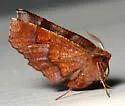
Purplish Metarranthis - Hodges#6828
Metarranthis homuraria
Identification: Forewing dark reddish or purplish, and hindwing outer margin more or less scalloped Genitalia: ♀ ♂
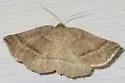
Warner's Metarranthis - Hodges#6821
Metarranthis warneri
Identification: Adult: forewing brownish-gray with dark AM and PM lines and scattered dark speckling; PM line almost straight, bordered proximally by dark brown shading; prominent black apical dash; hindwing similar but with no AM line and fainter PM
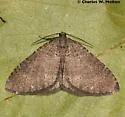
Monostoecha semipectinata - Hodges#7289
Monostoecha semipectinata
Identification: Specimen identified by DNA analysis:
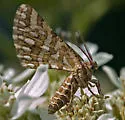
Green Broomweed Looper - Hodges#6420
Narraga fimetaria
Identification: Grote & Robinson (1870) original description as Fidonia fimetaria is available online. ( 3 ) Adults are often mistaken for butterflies because they visit flowers during the day and hold their wings vertically over their back, displayi
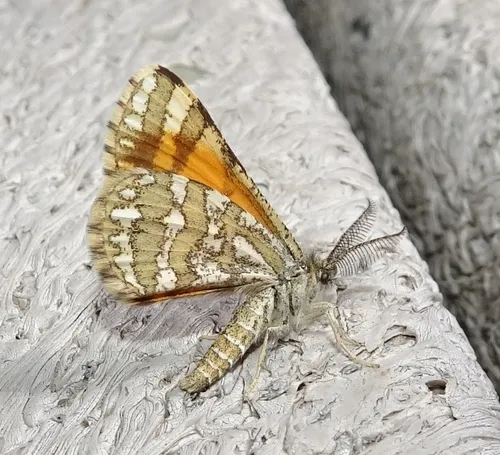
Fernadella stalachtaria - Hodges#6421
Narraga stalachtaria
Identification: Distinction from F. fimetaria is difficult as underside patterns in both vary, and upper sides are rarely photographed; genitalia are apparently similar. Images posted on internet web sites (when just underside is shown) may sometime
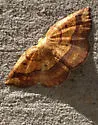
Baggett's Spanworm Moth - Hodges#7010.1
Nematocampa baggettaria
Identification: Nematocampa baggettaria does not have the swollen, clavate, hindtibial spur present in the two other species. The females have purplish-brown shading in most of the outer third of the forewing. Wagner describes the larva and provides
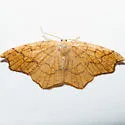
Nematocampa brehmeata - Hodges#7011
Nematocampa brehmeata
Identification: Nematocampa brehmeata resembles N. resistaria but is larger and both sexes are yellow. Ferguson revised description of the adult including genitalia is available in PDF or view online.
Nemeris percne - Hodges#6876.1
Nemeris percne
There is relatively little individual variation within this species. The females are only slightly paler than the males; in some cases there is practically no difference between the two sexes
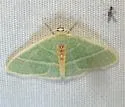
Nemoria arizonaria - Hodges#7021
Nemoria arizonaria
Identification: There are two forms described. Winter-early spring form has a dark costa Late spring-summer form females have the first five dorsal abdominal segments shaded reddish. The pale yellowish costa is as wide as the fringe of the same color
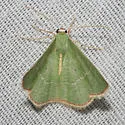
White-barred Emerald Moth - Hodges#7045
Nemoria bifilata
Identification: Original description as Anisodes bifilata Walker 1585 . Description as Racheospila abdominaria (Barnes & McDunnough) 218 . Eastern specimens often have a wide white dorsal stripe. Instead of the spotted form found in Texas, Oklahoma.
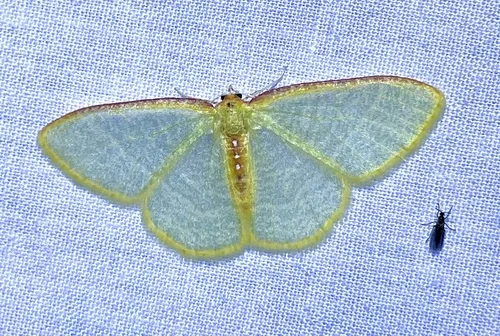
Nemoria daedalea - Hodges#7022
Nemoria daedalea
Identification: Ferguson original description is available online in the print references. Ferguson stated the antemedial lines are not present and the postmedial lines are often missing.
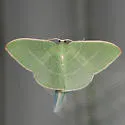
Columbian Emerald - Hodges#7035
Nemoria darwiniata
Identification: Adult: forwing green with straight white PM line and fainter oblique AM line; veins faint, whitish; costa and fringe white; orange dot at apex; thorax green; abdomen light green or brown with white dorsal spots surrounded by reddish-b
Cypress Emerald Moth - Hodges#7029
Nemoria elfa
Identification: Ferguson first reports the brown forms with red terminal line.
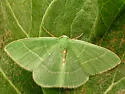
Nemoria glaucomarginaria - Hodges#7049
Nemoria glaucomarginaria
Identification: The adults have a cream colored dorsal abdominal spots surrounded by faded brick-red. Specimen identified by DNA analysis: Larvae - a greenleaf manzanita inflorescence mimic (see photo link below) Insects and Related Arthropods Associ
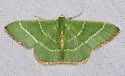
Nemoria obliqua - Hodges#7037
Nemoria obliqua
Identification: The original description as Aplodes obliqua Hulst, is available online using the link in the print preferences below. Revised description by Ferguson, 1985. Brief description of larva is included by Ferguson, 1969.
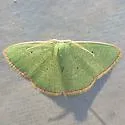
Nemoria outina - Hodges#7032
Nemoria outina
Identification: Description can be found in MONA Fascicle 18.1 at link in citations below. " Outina is the only southeastern species of Nemoria with the combination of uninterrupted red terminal line, plain, yellow fringes, and dorsally green, unmark
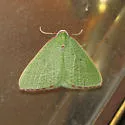
Nemoria pulcherrima - Hodges#7016
Nemoria pulcherrima
Swett published his description of Chlorosea naidaria only 18 days after Barnes & McDunnough published pulcherrima !
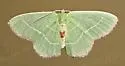
Nemoria saturiba - Hodges#7034
Nemoria saturiba
Identification: Original description online: (70) Note dark red spot on abdomen--not white, as in most other members of the genus (comments here , Friends Central)
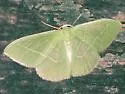
Single-lined Emerald - Hodges#7018
Nemoria unitaria
Identification: Adult: the largest emerald, its distinguishing feature is on the hindwing, where the AM and PM lines join to form a single U-shaped loop; however, in many northern specimens, the line may be so weak that a loop is not distinguishable,
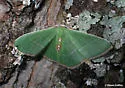
Nemoria zelotes - Hodges#7036
Nemoria zelotes
Identification: The original description of Nemoria zelotes Ferguson, is available online in the print references below. Adult: , Intense green color with whitish fringe. Forewing terminal line is deep-red and strong. Reddish discal spots. Forewing p
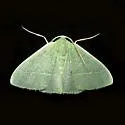
Nemoria zygotaria - Hodges#7040
Nemoria zygotaria
Identification: Forewing: Outer margin is white. Thin white antemedial and postmedial lines with no terminal line. The antennae are white and the dorsal surface of the body is solid green with no spots or markings. The only all green species of Nemor
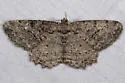
Brownlined Looper - Hodges#6435
Neoalcis californiaria
Identification: Specimens identified by DNA analysis:
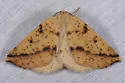
Neoterpes edwardsata - Hodges#6861
Neoterpes edwardsata
Identification: Larva - vary from light green with faint longitudinal lines to yellow tan with light brown, light tan, and grey brown stripes and bands. Spiracles are black with narrow yellow lines, and legs are almost white basally. Last instars ext
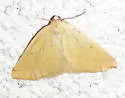
Neoterpes ephelidaria - Hodges#6859
Neoterpes ephelidaria
Identification: Specimens identified by DNA analysis:
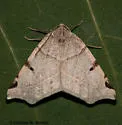
Neoterpes graefiaria - Hodges#6862
Neoterpes graefiaria
Identification: The original description as Chlorosea graefiaria Hulst, and the Ferguson (1969) revised description as Merochlora graefiaria , are both available online in the print references below.
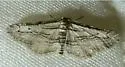
Nepterotaea diagonalis - Hodges#6522
Nepterotaea diagonalis
Identification: Females are less strongly marked than males and the antennae are weakly serrated in the middle.
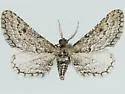
Nepterotaea furva - Hodges#6526
Nepterotaea furva
Identification: Forewing is gray with with bold, black, smoothly bisinuate postmedian line.
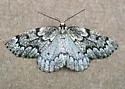
False Hemlock Looper - Hodges#6906
Nepytia canosaria
Identification: Adult: top of head small yellowish spot; forewing ground color usually whitish but sometimes dark grayish-brown; wings speckled with gray or brown; forewing AM and PM lines black, scalloped, and with pointed teeth in PM line; discal s
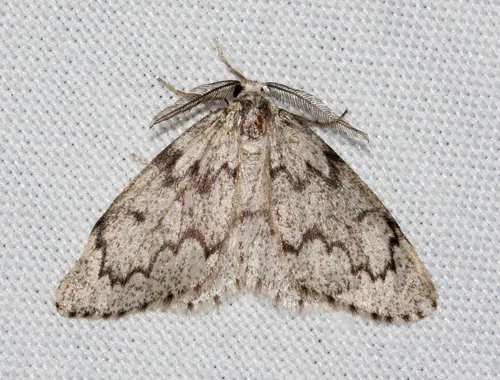
Western False Hemlock Looper - Hodges#6910
Nepytia freemani
Western False Hemlock Looper - Hodges#6910 (Nepytia freemani) is a species in the family Geometridae, commonly known as geometrid moths, belonging to the order Lepidoptera (Butterflies and Moths). It is classified within the subfamily Ennominae, trib
Nepytia janetae - Hodges#6902
Nepytia janetae
Identification: See original description in print references below . The type series was collected at elevations of 8000' or higher .
Boreal Pine Looper - Hodges#6909
Nepytia pellucidaria
Identification: Genitalia: Perhaps not as rare in at least Atlantic Canada as previously thought:
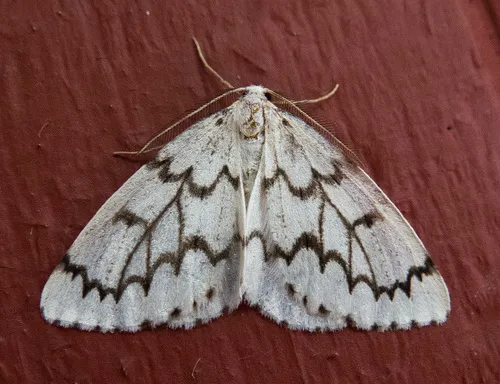
Phantom Hemlock Looper - Hodges#6907
Nepytia phantasmaria
Identification: Adult: forewing white with thick black or dark gray lines and one or more dark-scaled veins; AM and PM lines scalloped; discal spot dark, usually surrounded by dark lines; terminal line a series of dark spots; hindwing similar but dis
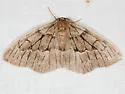
Nepytia umbrosaria - Hodges#6899
Nepytia umbrosaria
Identification: Specimen identified by DNA analysis:
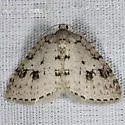
Nomenia duodecemlineata - Hodges#7426
Nomenia duodecemlineata
Identification: Specimens identified by DNA analysis:
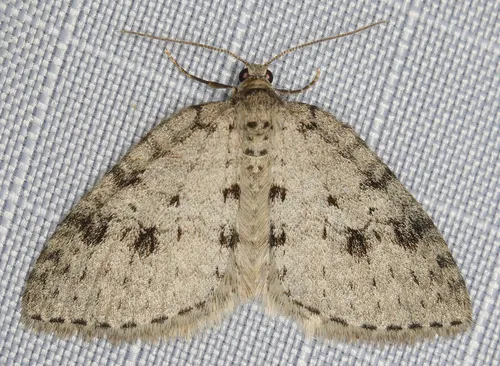
Nomenia obsoleta - Hodges#7427
Nomenia obsoleta
Identification: See Swett (1916) and illustration of type specimen in Rep. Prov. Mus. Nat. Hist. 1916. -- This species has historically been confused in collections and at BOLD with Venusia pearsalli and/or a cryptic species near pearsalli . However
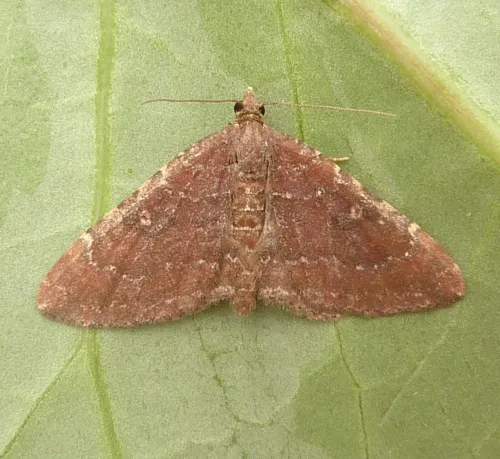
The Gem
Nycterosea obstipata
Wingspan 18 to 21 mm. The species is sexually dimorphic, the male being light brown with a darker central band, and the female slightly larger and darker, with a white spot on each forewing. A migrant that is most often seen at light. It usually appe
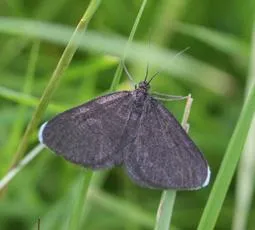
Chimney Sweeper
Odezia atrata
Wingspan 23-27 mm. It is completely black except for the white fringes at the tips of the forewings. It inhabits grassy meadows, dry chalky and limestone districts. This unusual species flies in the daytime and prefers bright sunshine. The single gen
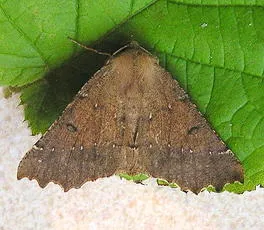
Scalloped Hazel
Odontopera bidentata
Quite a variable species, with individuals ranging from pale brown to almost black, the darker varieties having less obvious markings. It frequents woodland, heaths and suburban habitats. There is just one brood, flying in May and June. Larva feeds o
Bruce Spanworm - Hodges#7437
Operophtera bruceata
Identification: Adult: female has underdeveloped wings and does not fly; male forewing ground color grayish-brownish, generally darker than the similar (but larger and whiter) Autumnal Moth; terminal line a series of dark SINGLE dots -- a distinctive
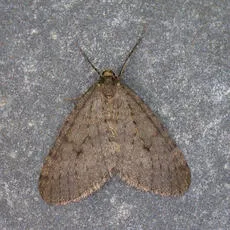
Winter Moth
Operophtera brumata
Wingspan 22-28 mm. The males are drab light to dark brown with a darker central forewing band (although this is sometimes indistinct) and a brownish hindwing. The females are virtually wingless. Often seen near car headlights, especially if close to
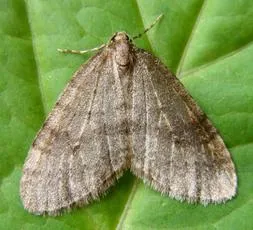
Northern Winter Moth
Operophtera fagata
Wingspan 32 to 40 mm. Male is rather similar to the Winter Moth ( O. brumata ) but paler and silky looking with whitish hindwings. The females have only vestigial wings. Woodland, scrub, heathland, gardens and orchards. Flies from October to December
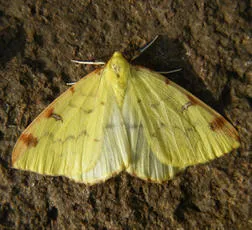
Brimstone Moth
Opisthograptis luteolata
Wingspan 32-37 mm. A handsome yellow moth with red markings on the wing margins. Occurring in three overlapping generations in the south, graduating to just one brood in the far north. Adults can be expected on the wing at any time from April to Octo
Orthofidonia exornata - Hodges#6429
Orthofidonia exornata
Identification: Genitalia: ♀ ♂ Rare in collections.
Yellow-veined Geometer Moth - Hodges#6430
Orthofidonia flavivenata
Identification: The unique feature of this species is the yellow wing veins, … Tony Thomas, 30 April, 2008
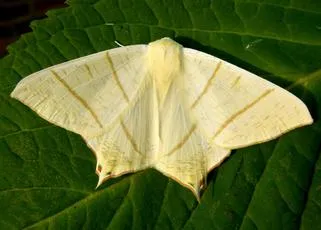
Swallow-tailed Moth
Ourapteryx sambucaria
Wingspan 40 to 50 mm. A spectacular species and one of our largest Geometrids . The wings are pale yellow marked with darker lines. Woodland, scrub, hedgerows, parks and gardens. Being strictly nocturnal and having quite a short emergence period from
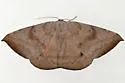
Spurge Spanworm Moth - Hodges#6967
Oxydia vesulia
Identification: forewing shape and markings reminiscent of Eutrapela species (e.g. Curve-toothed Geometer); sharply defined black spot near leading edge of hindwing is distinctive (in North America) This species can be distinguished from the other me
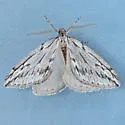
Paleacrita longiciliata - Hodges#6664
Paleacrita longiciliata
Paleacrita longiciliata - Hodges#6664 (Paleacrita longiciliata) is a species in the family Geometridae, commonly known as geometrid moths, belonging to the order Lepidoptera (Butterflies and Moths). It is classified within the subfamily Ennominae, tr
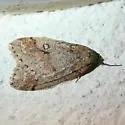
White-spotted Cankerworm Moth - Hodges#6663
Paleacrita merriccata
Within this species the forewings vary from having obsolescent to prominent cross lines, and with some specimens possessing a broad dark band distad of the t. p. line. Examples from the south tend to be larger, darker, and to have more suffused macul
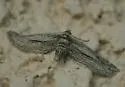
Paraglaucina hulstinoides - Hodges#6521
Paraglaucina hulstinoides
Identification: females have shortly pectinate antennae
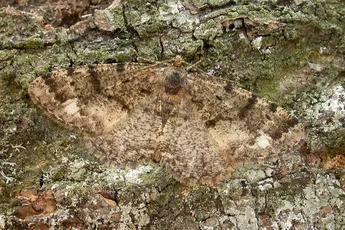
Brindled White-spot
Parectropis similaria
Wingspan 33 to 39 mm. There is some variation in the intensity of the markings of the adults. Woodland habitats and around Oak and Birch. Adults are to be found on the wing in May and June. The caterpillars live during the autumn, eating the foliage
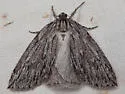
Parexcelsa ultraria - Hodges#6777
Parexcelsa ultraria
Identification: Pearsall original description is available in print references. Sperry included the first description of the female. ♂
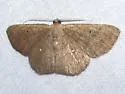
Parilexia proditata - Hodges#6712
Parilexia proditata
Identification: See Ferguson. 2009. Tropical Lepidoptera Research 19:42
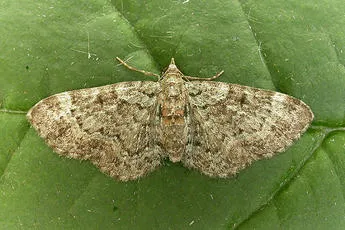
Sloe Pug
Pasiphila chloerata
Wingspan 17 to 19 mm. Very similar to the Green Pug but only faintly green and with a salmon pink belt near the base of the abdomen. Various habitats especially around hedges and copses containing Blackthorn. The distinctive caterpillar is pale green
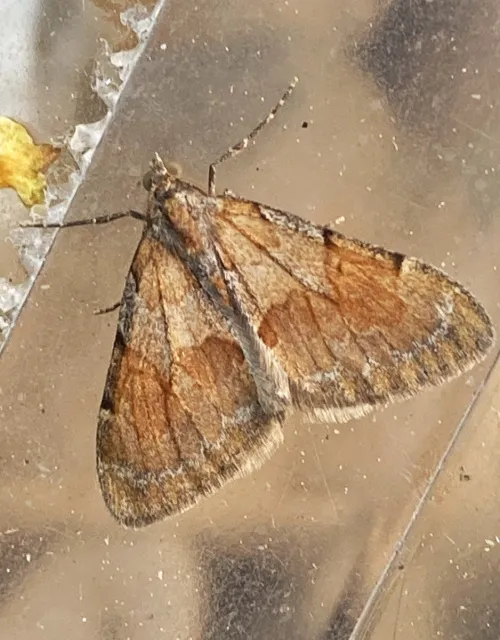
Pine Carpet
Pennithera firmata
Wingspan 30 to 34 mm. Although variable in appearance, it is often reddish brown in colour. It may bear a resemblance to the closely related Grey Pine Carpet (Thera obeliscata), but has a more indented dark band on the forewing. Determination by gen
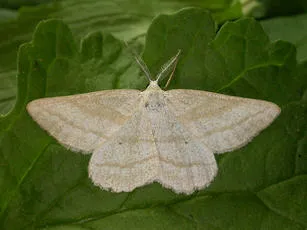
Grass Wave
Perconia strigillaria
A species which occupies moors and heaths, as well as open woodland. There is just one brood, flying in June and July, when the moths are on the wing from dusk into the night. The caterpillars overwinter and feed predominantly on heather and heath as