
Family Geometrid Moths (Geometridae)
Geometridae is a family in the order Lepidoptera. Browse 1,358 named species recorded in this family, or open an individual profile for its available identification and natural-history information.
Species in Geometridae (1,358)
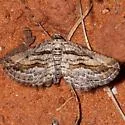
Hulstina formosata - Hodges#6540
Hulstina formosata
Identification: Detailed description and range map provided in Rindge at link in citations below. From the key to species in Rindge, the PM line does not reach the costal margin and forewing median area usually gray or grayish brown.
Hulstina grossbecki - Hodges#6545
Hulstina grossbecki
Identification: Rindge original description in PDF.
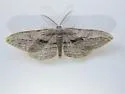
Hulstina imitatrix - Hodges#6541
Hulstina imitatrix
Identification: Detailed description can be found in Rindge at link in the citations below. From the key to species in Rindge, the PM line does not reach the costal margin, the forewing median area pale brown, and found from eastern California and Ne
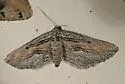
Hulstina tanycraeros - Hodges#6542
Hulstina tanycraeros
Identification: Detailed description can be found in Rindge at the link in citations below. From the key to species in Rindge, the PM line does not reach the costal margin, forewing median area pale brown, and found from southern California and south
Wright's Hulstina - Hodges#6547
Hulstina wrightiaria
Wright's Hulstina - Hodges#6547 (Hulstina wrightiaria) is a species in the family Geometridae, commonly known as geometrid moths, belonging to the order Lepidoptera (Butterflies and Moths). It is classified within the subfamily Ennominae, tribe Boarm
Hulstina xera - Hodges#6544
Hulstina xera
Identification: Detailed description is available in Rindge in link under citations below. From the key to species in Rindge, PM line represented by venular dots as it approaches the costal margin.
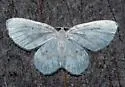
Fragile White Carpet - Hodges#7423
Hydrelia albifera
Identification: forewing white with thick wavy yellow PM line, and thinner broken AM and ST lines; black discal dot on all wings; yellow bar on upper half of frons (the forehead) hindwing color and pattern similar to forewing
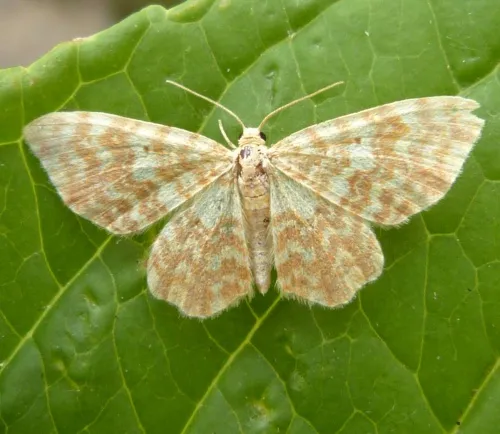
Small Yellow Wave
Hydrelia flammeolaria
Wingspan 14-20 mm. A diminutive but rather attractive moth with an orangey-yellow patterned wings The single brood flies in June and July and is often attracted to light. The larvae feed on Field Maple but in the north more commonly on Alder. This sp
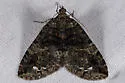
Hydriomena albifasciata - Hodges#7261
Hydriomena albifasciata
Identification: Highly variable. - Specimens identified by DNA analysis (BOLD).
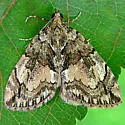
Black-Dashed Hydriomena - Hodges#7235
Hydriomena divisaria
Identification: Beadle & Leckie states "grayish-brown FW has variable pattern of scalloped blackish lines. Basal line is usually thick and strongly kinked. Grayish band in AM area usually reaches costa. Terminal line is usually blurred pair dots."
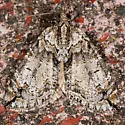
Hydriomena edenata - Hodges#7232
Hydriomena edenata
Identification: H. edenata is one of the commonest species of early spring, varying not only in size but also in maculation and coloration. Genitalia: ♂ A main characteristics is found in the forks of the uncus; these are separated by a deep, but rat
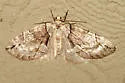
Hydriomena exculpata - Hodges#7223
Hydriomena exculpata
Identification: Hindwing is brownish with a dark discal spot and angled postmedial line. Photo from Libby & Rick Avis of a specimen identified by DNA
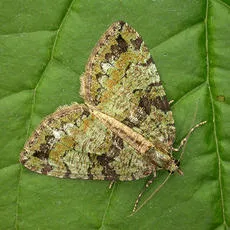
July Highflyer
Hydriomena furcata
Wingspan 23-30 mm. A very variable species both in markings as well as colour with some showing a distinct green colour, others reddish-brown. The larvae feed on Willow and Bilberry among others. It is fairly common over most of Britain. In a recent
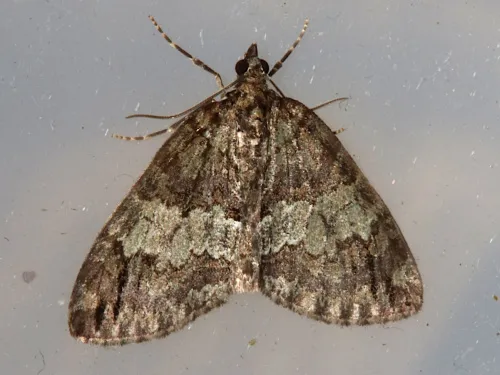
May Highflyer
Hydriomena impluviata
Wingspan 30 to 34 mm. Quite variable across its range, the northern populations often include a number of dark grey, melanic specimens. Alder ( Alnus glutinosa ) is the larval foodplant, the caterpillars spinning together the leaves during the autumn
Hydriomena macdunnoughi - Hodges#7255
Hydriomena macdunnoughi
Identification: Swett (1918) original description is available online in the print references. ID confirmed by Chuck Harp.
Hydriomena marinata - Hodges#7231
Hydriomena marinata
Identification: Specimens identified by DNA analysis:
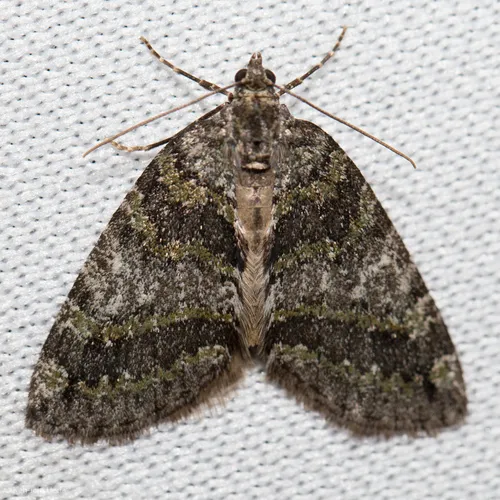
Oak Winter Highflier - Hodges#7276
Hydriomena nubilofasciata
Identification: Adult: FW extremely variable in color and pattern; "typical" specimens have four gray bands alternating with four light gold or greenish bands; PM line forms a smooth concave arc for most of its length, then angles inward near costa (
Hydriomena peratica - Hodges#7274
Hydriomena peratica
Identification: Confirmed by dissection, Jim Vargo 2022
Sharp Green Hydriomena Moth - Hodges#7239
Hydriomena pluviata
Identification: Specimens identified by DNA analysis:
Renounced Hydriomena - Hodges#7236
Hydriomena renunciata
Identification: Specimen identified by DNA analysis: Some of the BOLD specimens here are said to not match this species 100%, which seems confusing. However, this may be due to the fact that this species is very similar to some others in this genus a
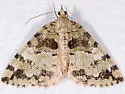
Hydriomena speciosata - Hodges#7263
Hydriomena speciosata
Identification: Specimens identified by DNA analysis:
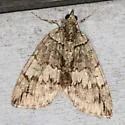
Transfigured Hydriomena - Hodges#7237
Hydriomena transfigurata
Identification: Specimen identified by DNA analysis: Genitalia: ♀ ♂
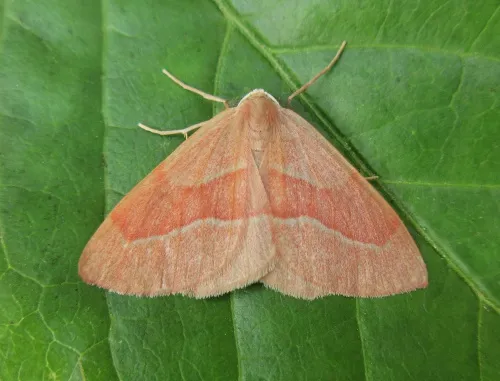
Barred Red
Hylaea fasciaria
Wingspan 27-40 mm. This species has a green form ( prasinaria ) in addition to the typical reddish form. An inhabitant of coniferous woodland, but also venturing into gardens and parks. The caterpillars feed on a variety of coniferous trees, includin
Hymenodria mediodentata - Hodges#7278
Hymenodria mediodentata
Identification: See references below. "Very few specimens of this species are known" .
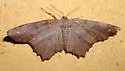
Esther Moth - Hodges#6655
Hypagyrtis esther
Identification: Similar to H. unipunctata ( One-spotted Variant ), but wings evenly violet-gray, not mottled. Beyond postmedian line they are reddish brown. Melanic individuals are a chocolate brown.
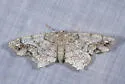
Pine Measuringworm - Hodges#6656
Hypagyrtis piniata
Identification: Adult: wings grayish-brown, evenly peppered with black; no orangish-brown shading; subterminal spot on forewing white, irregular, inconspicuous; lines blackish; PM line sinuous, toothed; black discal spots on all wings; hindwing margi
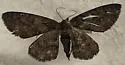
Hypomecis buchholzaria - Hodges#6438
Hypomecis buchholzaria
Uncommon throughout the range. Listed as endangered by the Massachusetts Division of Fisheries & Wildlife. PDF
Hypomecis gnopharia - Hodges#6440
Hypomecis gnopharia
Identification: Hypomecis gnopharia is difficult to distinguish from H. umbrosaria by photos. The antennae of the male Hypomecis gnopharia have 41-47 segments. H. umbrosaria males have 42-49 segments.
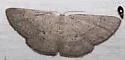
Hypomecis luridula - Hodges#6437
Hypomecis luridula
Identification: Hulst original description is online in PDF. Rindge PDF describes the adults including genitalia. Fresh specimens have are a violaceous gray color which will distinguish from other members of the genus. Specimen confirmed by James Ada
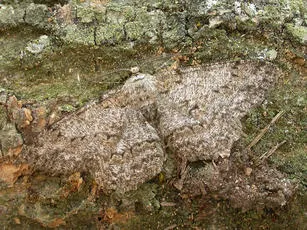
Pale Oak Beauty
Hypomecis punctinalis
Wingspan 46 to 55 mm. Although rather variable in ground colour, this species can be confused with Great Oak Beauty. One of the separating features is that the latter species has a pale spot on a dark background on the tip of the forewing underside.
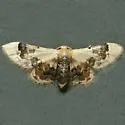
Idaea asceta - Hodges#7117.1
Idaea asceta
Identification: Determined by Charles V. Covell Jr. Charles V. Covell Jr. discovered this to be new to the North American fauna after a visit to the Natural History Museum of London in 1987. He recognized the unknown Texas specimens in the United Sta
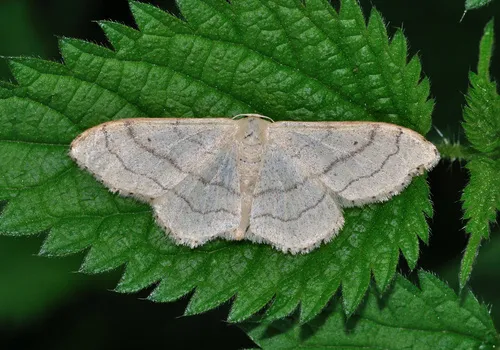
Riband Wave
Idaea aversata
Wingspan 23-30 mm. Two distinct forms occur of this species, roughly equal in numbers. The typical form has a dark band across all four wings, whereas the plain form, known as ab. remutata , only has narrow cross-lines. Wide range of habitats, includ
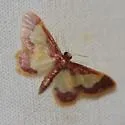
Red-and-white Wave - Hodges#7110
Idaea basinta
Identification: Adult: forewing white with broad reddish bands in basal and terminal areas; fringe yellowish; hindwing white with broad reddish terminal band.
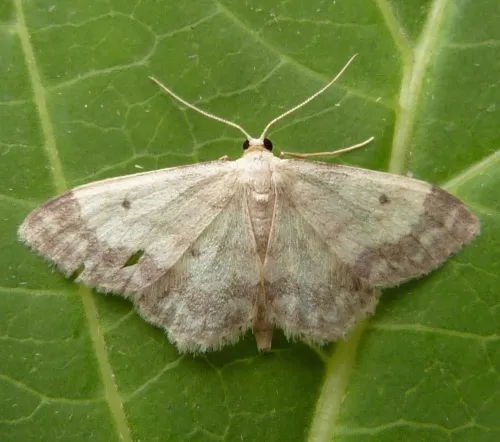
Small Fan-footed Wave
Idaea biselata
Wingspan 15-20 mm. The intensity of the markings varies and one regular dark form has been named fimbriolata . Woodland, plantations, heaths and gardens. Flies from evening onwards between June and August. The larvae feed from August through the wint
Fortunate Idaea - Hodges#7102
Idaea bonifata
Identification: Specimens identified by DNA analysis: Larvae - see Riley's description of synonym Carphoxera ptelearia ( 108-113 ). One of the smallest geometrids found in North America.
Red-Bordered Wave Moth - Hodges#7114
Idaea demissaria
Identification: Adult : Straw-colored wings have reddish shading in basal area and beyond PM. Slightly scalloped lines are reddish brown. All wings are marked in tiny black discal dots. ( 3 )
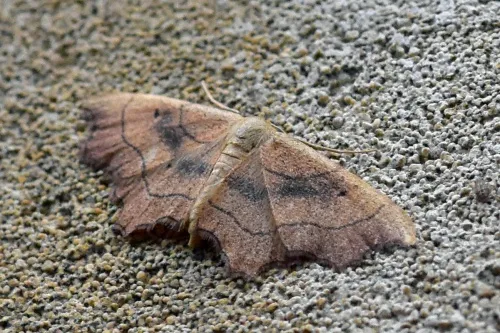
Small Scallop
Idaea emarginata
Wingspan 22 to 25 mm. This is a fairly distinctive moth. A good photograph is generally required to support your record. Occupying damp deciduous woodland, meadows and marshes. It flies between June and August after dark, when it can be attracted to
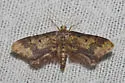
Notch-winged Wave Moth - Hodges#7108
Idaea furciferata
Identification: Distinct difference in male/female hindwing shape and pattern. On the male, the forewings have a lobe near the base of the inner margin and the hindwings have sinuous indentations on the inner margins, making them look malformed. Com
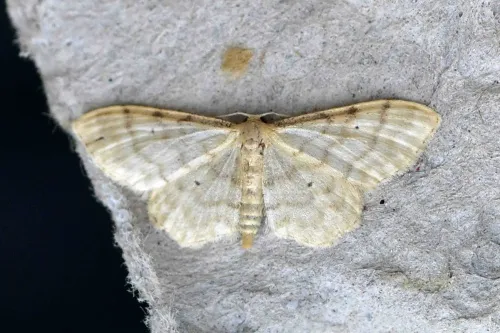
Dwarf Cream Wave
Idaea fuscovenosa
Wingspan 19 to 22 mm. A very delicate looking pale cream moth it is fairly distinctive with a narrow, dark costal streak. The dark spots on the wings are also usually fairly prominent in this species. It inhabits open areas of woodland, parks and gar
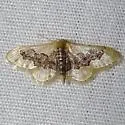
Idaea gemmata - Hodges#7116
Idaea gemmata
Identification: Forewing off-white to cream-colored except for brownish to dark gray median area; discal spot dull orangish; PM line wavy; diffuse dark smudges in subterminal area; terminal line composed of dark dots at ends of veins; fringe pale; hi
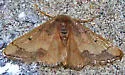
Idaea kendallaria - Hodges#7111.2
Idaea kendallaria
Identification: "This species is very similar to reddish-shaded specimens of the common and widespread Idaea demissaria in color, pattern, and genital features. It can be separated from most I. demissaria by being slightly smaller on average, with br
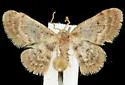
Idaea microphysa - Hodges#7104
Idaea microphysa
Identification: Specimen determined by DNA analysis (BOLD).
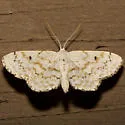
Rippled Wave - Hodges#7123
Idaea obfusaria
Identification: Forewing crossed by 3 yellowish-brown wavy bands on a white background; the outermost band is thinner, darker, more jagged, and contains regularly-spaced small black dots. Each forewing and hindwing has a central large black spot.
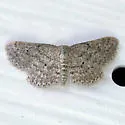
Showy Wave - Hodges#7121
Idaea ostentaria
Identification: Adult: wings white with dense dark speckling, prominent black discal spot, and toothed PM line; AM and median lines variably distinct to indistinct; terminal line a series of black dashes; fringe scales of variable length and somewhat
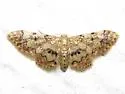
Idaea pervertipennis - Hodges#7107
Idaea pervertipennis
Identification: Hulst original description as Cysteophora pervertipennis is available online in the print references below.
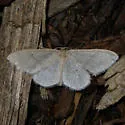
Idaea productata - Hodges#7112
Idaea productata
Identification: Original description is online as Eois subochreata Hulst. (187)
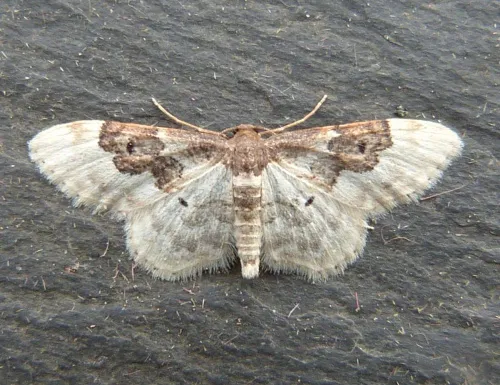
Least Carpet
Idaea rusticata
Wingspan 19 to 21 mm. This is a small but delicately-marked moth. May be found in various habitats especially in areas where the larval food plants are found. Normally on the wing in July and August, it flies at night and can be attracted to light. T
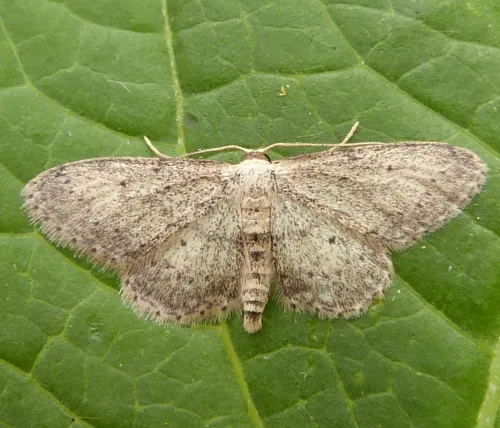
Small Dusty Wave
Idaea seriata
Wingspan 19-21 mm. A rather dull looking nondescript moth Found in woodland, gardens and wasteland. Commonly attracted to lit walls, windows, etc. In the south there are two generations: flying in June and July and again in August and September. Furt
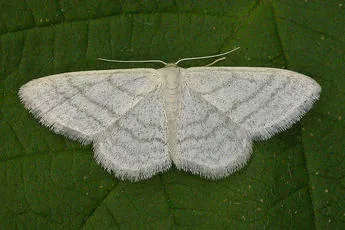
Satin Wave
Idaea subsericeata
Wingspan 22 to 25 mm. A fairly plain-looking whitish moth, which has a glossy sheen to the upper wing surfaces. A good photograph is generally required to support your record. The caterpillar, which hibernates during the winter, feeds on low plants i
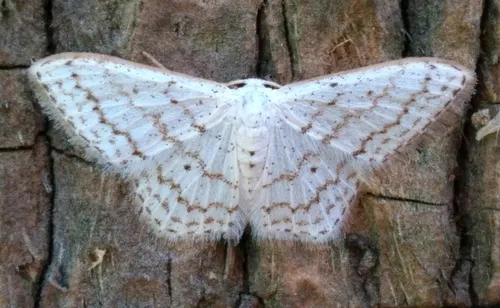
Dot-lined Wave - Hodges#7122
Idaea tacturata
Identification: wings pearly white, almost translucent, with sparse or no speckling; forewing has four variably conspicuous thin brownish, dotted or zigzag lines that continue onto hindwing; PM line usually thickest; ST line usually overlaid with fin
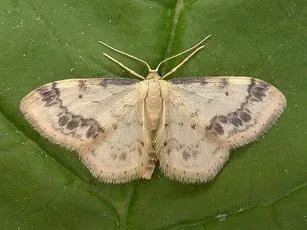
Treble Brown Spot
Idaea trigeminata
Wingspan 23 to 25 mm. Usually unmistakable. The main diagnostic feature is a dark brown outer cross band pinched in two places on an otherwise rather plain whitish forewing. Found around woodland edges and hedgerows. The adults are on the wing from l
Mountain Mahogany Looper - Hodges#6575
Iridopsis clivinaria
Identification: Adult: forewing triangular, pale gray in strip along costa, and medium brownish-gray in lower and outer portions; PM line fine, black, slightly wavy, bordered distally by brown line; AM line fine, black, double, reaches only halfway t
Iridopsis emasculatum - Hodges#6589
Iridopsis emasculatum
Identification: Adult - resembles Bent-line Gray ( Iridopsis larvaria ) but waviness of forewing PM line is more regular and has smaller amplitude, and hindwing PM line is not as sharply bent. Larva - green, yellow, or orange with irregular red bands
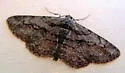
Small Purplish Gray - Hodges#6584
Iridopsis humaria
Identification: Adult : Resembles Large Purplish Gray except smaller, with a more rounded FW. Indistinct median line merges with PM near inner margin.
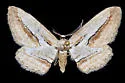
Iridopsis jacumbaria - Hodges#6572
Iridopsis jacumbaria
Identification: Rindge described the adults including genitalia and stated "This small species can be recognized by the prominent and straight t. a. [antemedial] and t. p. [postmedial] lines, and by the reddish brown color of the basal and subtermina
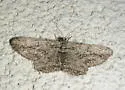
Oblique Looper Moth - Hodges#6577
Iridopsis obliquaria
Identification: Specimens identified by DNA analysis:
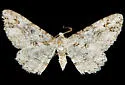
Iridopsis perfectaria - Hodges#6581
Iridopsis perfectaria
Identification: The revised description by Rindge as Anacamptodes defectaria McDunnough, is available online and in PDF.
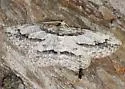
Cypress Looper - Hodges#6580
Iridopsis pergracilis
Identification: Adult: wings whitish or pale tan with black AM and PM lines, often bordered by dark gray shading; dark-outlined oval discal spot on all wings; subterminal line scalloped, whitish or pale tan; terminal line a series of dark dots; femal
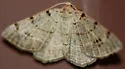
Pale-veined Isturgia Moth - Hodges#6419
Isturgia dislocaria
Identification: forewing light brown with 3 dark brown squarish spots evenly spaced along the costa; wing veins pale yellowish or white, providing contrast even against the wing's light ground color; brown speckling concentrated mostly along the cost
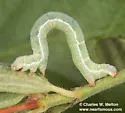
Ixala desperaria - Hodges#6695
Ixala desperaria
Identification: one round white spot near middle of hindwing
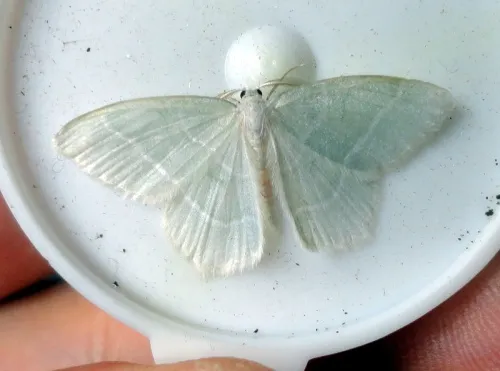
Little Emerald
Jodis lactearia
Wingspan 23 to 26 mm. A paler green than most other 'emeralds', the colour fades very quickly after the moth's emergence from the pupa. Feeding on a range of trees and bushes, including Birch, Hawthorn and Oak, the larva pupates before overwintering.
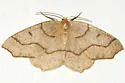
Hemlock Looper - Hodges#6888
Lambdina fiscellaria
There are many online sources with information on the pest status of the species.
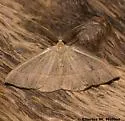
Lambdina laeta - Hodges#6891
Lambdina laeta
Identification: Specimen identified by DNA (BOLD) ( 3 )
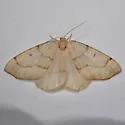
Lambdina phantoma - Hodges#6896
Lambdina phantoma
Identification: "Expanse 27-29 mm" (Barnes & McDunnough, 1916).
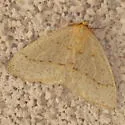
Lambdina punctata - Hodges#6895.1
Lambdina punctata
Identification: Wingspan: 42mm; "Near T. vitrifia , Grt., but much larger, wings more extended, much more thickly scaled, and outer line much more sinuous." (Hulst, 1898).
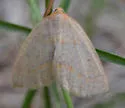
Lambdina vitraria - Hodges#6895
Lambdina vitraria
Identification: Wingspan ( vitraria ): 31 mm (Grote, 1883). Wingspan ( jacularia ): 35-38 mm (Barnes & McDunnough, 1917).
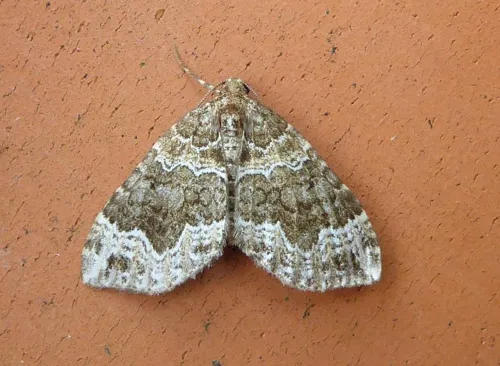
Devon Carpet
Lampropteryx otregiata
Damp and marshy areas where the larval foodplants occur. There are two generations, with adults on the wing in May and June, then again in August and September. The caterpillars are brown with paler buff markings, and feed on Marsh Bedstraw ( Galium
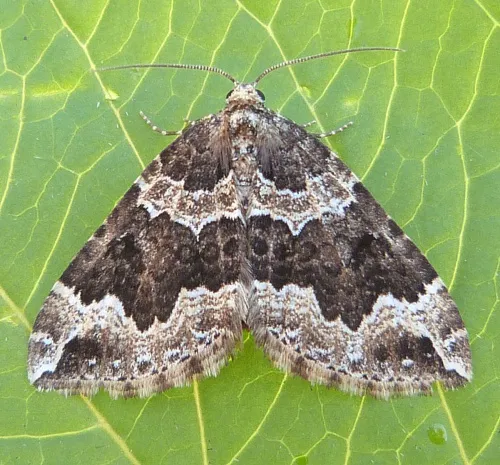
Water Carpet
Lampropteryx suffumata
Wingspan 25 to 32 mm. Quite a handsome brown marked species. A number of variations or aberrations occur. It can be found in woodland, grassy areas, chalk downland and scrubland. A spring flying species, the adults of this moth are on the wing in Apr
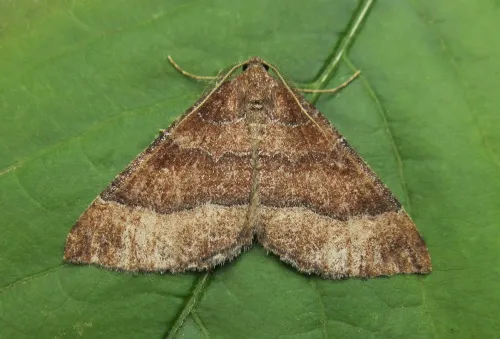
The Mallow
Larentia clavaria
Occupying a range of suburban habitats, waste ground and ditches or riverbanks. Adults are on the wing during September and October. As the English name suggests, the main larval foodplant is Mallow (Malva sylvestris), but the caterpillars will also
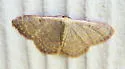
Cross's Wave Moth - Hodges#7174
Leptostales crossii
Identification: Adult: forewing variably orangish-brown to purplish, with yellow strip along costa; 3 wavy yellow lines, sometimes broken or indistinct, in AM, median, and PM areas; note that lines are paler than ground color of wing; terminal line a
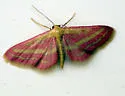
Raspberry Wave Moth - Hodges#7177
Leptostales laevitaria
Identification: Adult: forewing pink with pale yellow PM line, subterminal line, and basal strip extending halfway along costa; PM line broad; subterminal line thin, double; both lines smooth, almost straight; hindwing similar color and pattern as fo
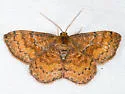
Dark-ribboned Wave - Hodges#7179
Leptostales rubromarginaria
Identification: Adults of L. rubromarginaria and ferruminaria are both variable in color and markings, and resemble each other very closely. Charles Covell's Guide gives a distribution of "southern Quebec to Florida, west across Canada..." but CBIF d
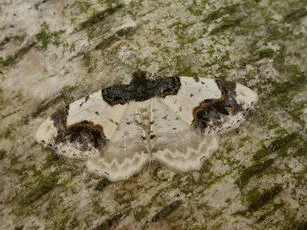
Scorched Carpet
Ligdia adustata
Wingspan 20 to 25 mm. Both the English and Latin names refer to the 'scorched' appearance of this species, though this is more obvious on the underside, which is suffused with reddish-brown. Often in woodland and round its larval foodplant. It is mai
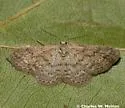
Lobocleta granitaria - Hodges#7095
Lobocleta granitaria
Identification: The original description as Acidalia granitaria Packard, is available online in the print references below.
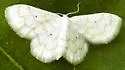
Lobocleta peralbata - Hodges#7100
Lobocleta peralbata
Identification: Adult: forewing white with extensive brown speckling; AM, median, and PM lines dark yellow, wavy; dark discal dot between AM and median lines; hindwing similar but lacks AM line; dark dashed terminal line and white fringe on both wing
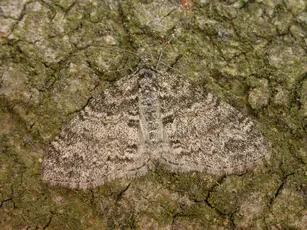
The Seraphim
Lobophora halterata
Wingspan 20 to 25 mm. Exhibits a reasonable range of variations. The adults fly in May and June, and are attracted to light. This species has a scattered distribution, occurring most commonly in southern Britain and parts of Scotland. In a recent sur
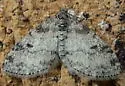
Powdered Bigwing - Hodges#7640
Lobophora nivigerata
Identification: Adult: forewing powdery gray marked with four darker gray bands, heaviest at costa; discal spot diffuse, blackish; forewing in melanic specimens almost unmarked, dark gray; hindwing white with tiny black discal dot and faint median li
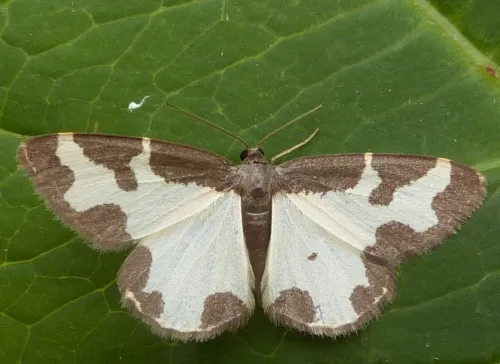
Clouded Border
Lomaspilis marginata
Wingspan 30-38 mm. A delicate little moth. The black and white markings show considerable variation. Flies between May and July. It can be disturbed from undergrowth during the day, but its natural flight time is at night. The larvae feed on Willows
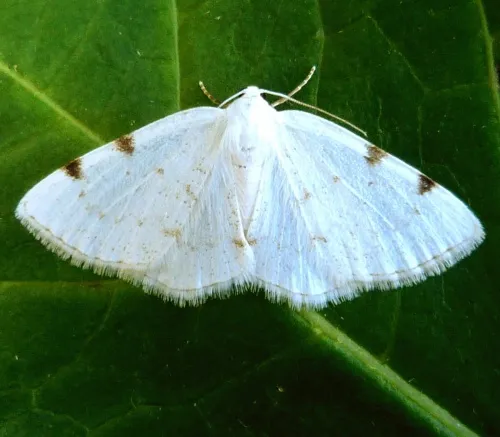
White-pinion Spotted
Lomographa bimaculata
Wingspan 22 to 26 mm. Unmistakable white moth with two dark spots on the leading edge of each forewing. There is one generation, flying in May and June, when it can be attracted to light. The larvae feed on Hawthorn and Blackthorn. Distributed fairly
Lomographa elsinora - Hodges#6669
Lomographa elsinora
Identification: See Rindge, 1979 Hulst original description as Orthofidonia elsinora is available in PDF or read online in the print references below. The Rindge revised description is available in PDF. Forewing is pale gray with scattered black scal
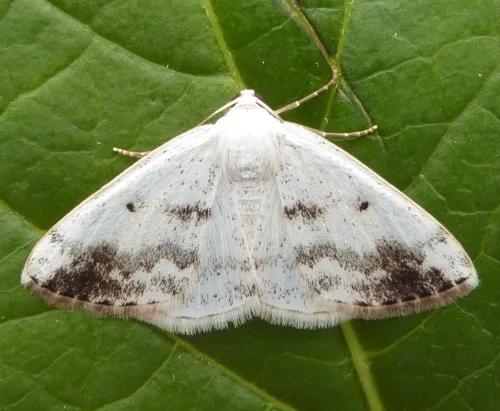
Clouded Silver
Lomographa temerata
Wingspan 22-26 mm. Largely white with smudgy black markings. It frequents woodland, suburban habitats and other bushy areas. The single brood flies in May and June, with some adults on the wing in autumn, usually in the south, considered to be migran
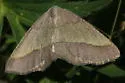
Lychnosea helveolaria - Hodges#6857
Lychnosea helveolaria
Identification: Forewing median area is a bright yellowish orange in the females; males are a dull light yellow brown color. The species page at Moth Photographers Group has a side by side comparison of pinned a male and female.
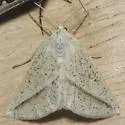
Lychnosea intermicata - Hodges#6858
Lychnosea intermicata
Identification: Variable amount of speckling on the forewing.
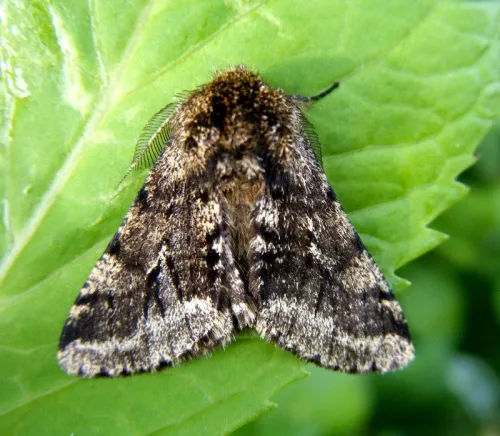
Brindled Beauty
Lycia hirtaria
Wingspan 35 to 45 mm. Distinguished by prominent black cross lines on the wings. It prefers woodland and suburban habitats, and feeds on a range of deciduous trees. Larva feeds on various broad-leaved trees and shrubs, including Birch, Hawthorn, Alde
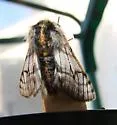
Twilight Moth - Hodges#6653
Lycia rachelae
Identification: Adult: wings reduced or absent in female, which cannot fly; male wings translucent gray with prominent black veins and dull orangish strip along costa; forewing with 3 dark lines crossing wing, middle line heaviest; hindwing with dark
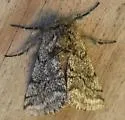
Stout Spanworm Moth - Hodges#6651
Lycia ursaria
Identification: Adult: thorax and abdomen bulky, very hairy; male forewing broad, evenly gray, heavily speckled with black; three black wavy lines (sometimes broken) cross the wing; subterminal line white; hindwing similar but color more muted; femal
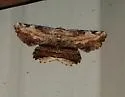
Lytrosis heitzmanorum - Hodges#6722
Lytrosis heitzmanorum
Identification: Similar to sinuosa but the basal and outer areas of the forewings are much darker in color, often dark grayish brown or blackish brown, and the median area being a pale ochraceous gray instead of yellow. Female: Similar to male, but h
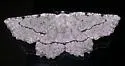
Lytrosis permagnaria - Hodges#6723
Lytrosis permagnaria
males come to lights from 11:30 pm to 1 am, females also come to lights but less so
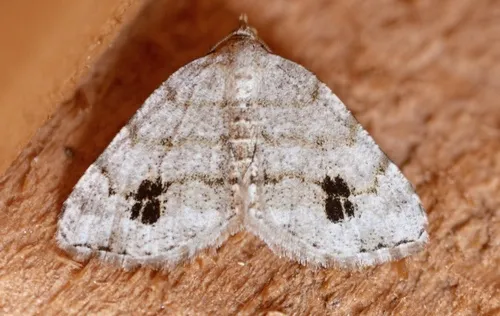
Macaria abruptata - Hodges#6294
Macaria abruptata
Identification: Adult: forewing light yellowish-brown with blurry coalesced speckling; basal, AM, and PM lines diffuse brown; fragmented black patch midway along PM line is the only dark marking, and contrasts sharply against ground color; sharp-angl
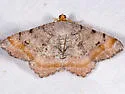
Macaria adonis - Hodges#6338
Macaria adonis
Identification: Specimens identified by DNA analysis:
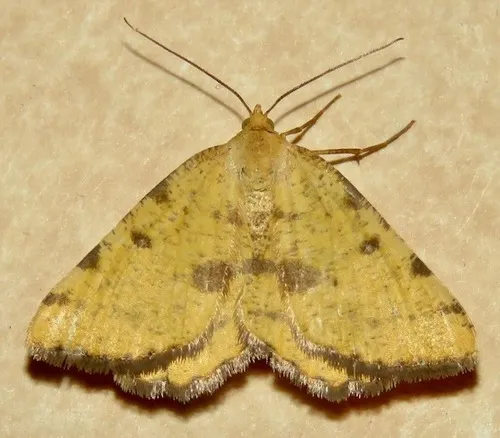
Macaria amboflava - Hodges#6284
Macaria amboflava
Regarding sulphurea and amboflava , Ferguson states: " Speranza sulphurea is a sexually dimorphic, eastern, bog-dwelling species, of which the male is nearly the color of Speranza argillacearia ["more nearly immaculate mouse gray"] . (MONA Fascicle 1
Macaria anataria - Hodges#6287
Macaria anataria
Identification: Detailed description available in MONA Fascicle 17-2 at link in citations below.
Mousy Angle Moth - Hodges#6282
Macaria argillacearia
Identification: light mouse gray forewings with little or no markings
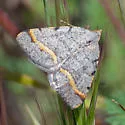
Macaria austrinata - Hodges#6301.1
Macaria austrinata
Identification: Yellow postmedial band is slightly irregular, often interrupted and not of uniform width. There is usually some dark gray shading on both sides of yellow band often being a dark wedge shaped spot on the outer side of the band. -
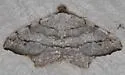
Bicolored Angle Moth - Hodges#6341
Macaria bicolorata
Identification: Covell states : "wings powdery, yellowish tan to postmedian line, evenly darker beyond pm. line on all wings."
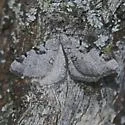
Split-Lined Speranza - Hodges#6304
Macaria bitactata
Identification: Adult : Gray with bold, black transverse lines on FW. The four dark costal wedges typical of the genus, continue as AM, PM and median lines. The median line broadest and incorporating the discal spot. AM and PM line sometimes broken.
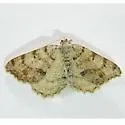
Macaria boreata - Hodges#6287.1
Macaria boreata
Identification: Ferguson reported the specimens from British Columbia have more reddish-brown on the forewing.
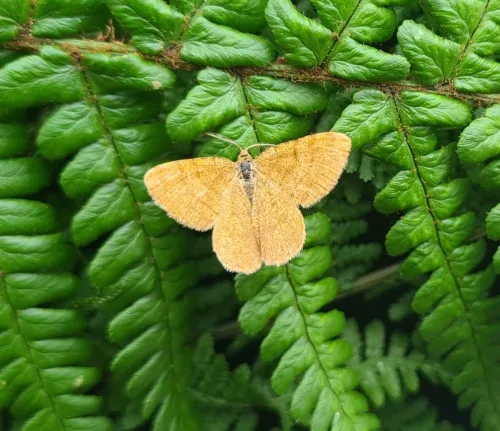
Rannoch Looper
Macaria brunneata
Wingspan 25 to 30 mm. A brown moth - both sexes have darker brownish crosslines on the wings, although the female is usually more strongly marked than the male. Please provide photograph to support your record. Favouring areas where the larval foodpl
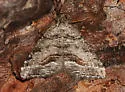
Speranza colata - Hodges#6308
Macaria colata
Identification: Grote (1881) description as Phasiane colata is online in the print references.
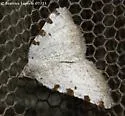
Four-spotted Macaria - Hodges#6299
Macaria coortaria
Identification: Adult: Forewing light cream to light gray-brown with four dark spots evenly spaced along costa; all spots similar size except distal one usually smaller and fainter. Hindwing white to pale yellow with a few dark scales along inner mar