
Family Twirler Moths (Gelechiidae)
Gelechiidae is a family in the order Lepidoptera. Browse 529 named species recorded in this family, or open an individual profile for its available identification and natural-history information.
Species in Gelechiidae (529)
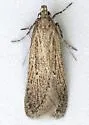
Chionodes whitmanella - Hodges#2124
Chionodes whitmanella
Identification: Forewings with pale yellowish scales along veins and darker scales between the veins, often with fuscous coloration in the distal portion of the forewings. Some specimens with three dark spots around the cell.
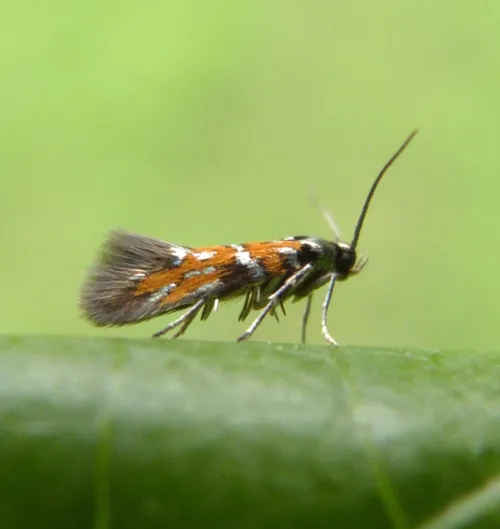
Chrysoesthia drurella
Chrysoesthia drurella
Wingspan 8 to 9 mm. A small but brightly coloured species. The larva mines the leaves of Goosefoot ( Chenopodium ) and Orache ( Atriplex ) and others in this family, forming a contorted gallery, usually with intestine-like loops. Several species of f
Chrysoesthia lingulacella - Hodges#1718
Chrysoesthia lingulacella
Nearly indistinguishable from Chrysoesthia drurella by appearance, but Chrysoesthia lingulacella is a native species in the western US, while C. drurella is known only as an introduced species in the eastern US (particularly NE). C. drurella is not b
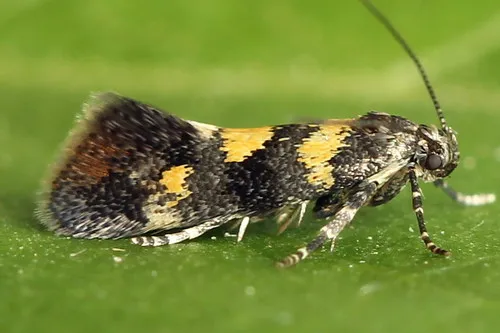
Chrysoesthia sexguttella
Chrysoesthia sexguttella
Wingspan 8 to 10 mm. The larva mines the leaves of Goosefoot ( Chenopodium ) and Orache ( Atriplex ) and other plants in this family, creating a clear blotch mine with black frass in large lumps Some species of fly also mine Chenopodiaceae, and mines
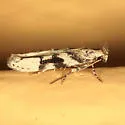
Coleotechnites atrupictella - Hodges#1792
Coleotechnites atrupictella
Identification: Adult: forewing whitish with black trapezoidal patch halfway along costa, partially filled with ground color; AM line black, diffuse, angles backward (distally) from costa to inner margin; legs dark with several white bands Genitalia:
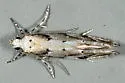
Conifer Coleotechnites Moth - Hodges#1803
Coleotechnites coniferella
Identification: Adult - see original description in Print References.
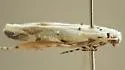
Coleotechnites eryngiella - Hodges#1808
Coleotechnites eryngiella
Identification: See original description for all life stages.
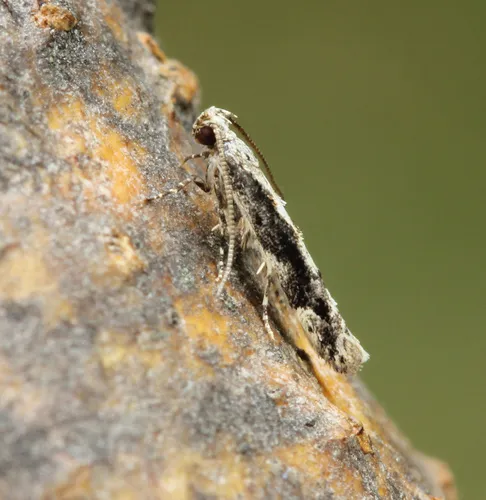
Coleotechnites Flower Moth
Coleotechnites florae
Coleotechnites florae, the coleotechnites flower moth, is a moth of the Gelechiidae family. It is found in North America, where it has been recorded from Alabama, Alberta, Arkansas, British Columbia, Florida, Georgia, Indiana, Louisiana, Maryland, Ma
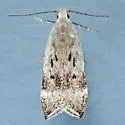
Coleotechnites invictella - Hodges#1814
Coleotechnites invictella
Identification: The original description as Recurvaria invictella Busck, is available in PDF or online at the link in the print references below.
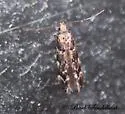
Orange Larch Tubemaker Moth - Hodges#1816
Coleotechnites laricis
Identification: Description and photo of larva in PDF.
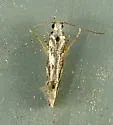
Brown Hemlock Needleminer Moth - Hodges#1819
Coleotechnites macleodi
Identification: Specimen identified by DNA analysis (BOLD) ( 4 )
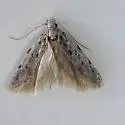
Lodgepole Needleminer - Hodges#1821
Coleotechnites milleri
Identification: The original description as Recurvaria milleri Busck is available online in the print references below. Forewing is pale gray with fine short black streaks. Considered a very destructive pest of lodgepole pine and has been a major pro
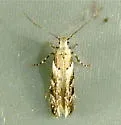
Orange Spruce Needleminer Moth - Hodges#1826
Coleotechnites piceaella
Identification: Original description is online as Recurvaria piceaella Kearfott. Specimen identified by DNA analysis (BOLD). Considered a pest of blue spruce.
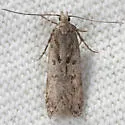
Coleotechnites starki - Hodges#1831
Coleotechnites starki
Identification: Specimen identified by DNA analysis (BOLD). There are many publications available online that discuss the status as a forest pest.
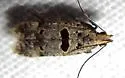
Deltophora glandiferella - Hodges#1927
Deltophora glandiferella
Identification: Species page created based on this image determined by Ed Knudson, Texas Lepidoptera Survey, Houston:
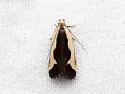
Buffy Dichomeris Moth - Hodges#2291.1
Dichomeris aleatrix
Identification: D. aleatrix has the posterior margin of the yellow area pointing to the anal angle and a gray edging along the middle of the costa unlike inserrata - Steve Nanz 6/25/20
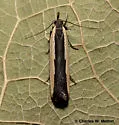
Dichomeris barnesiella - Hodges#2290
Dichomeris barnesiella
Identification: Busck description is available online in the print references below.
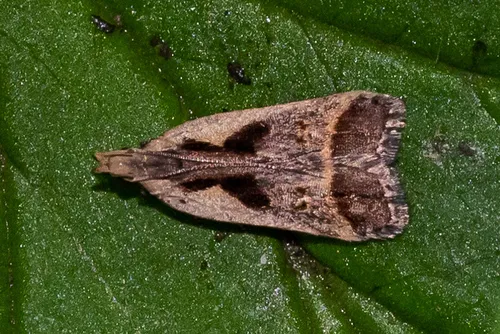
Bilobed Dichomeris - Hodges#2291
Dichomeris bilobella
Identification: Adult - forewing dark gray to blackish with large pale brownish-yellow patch extending from base along costa, then crossing wing to inner margin in PM area; dark basal coloring along inner margin is constricted in AM area, then expand
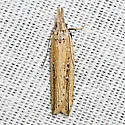
Dichomeris bipunctellus - Hodges#2274
Dichomeris bipunctellus
Identification: Determined by Sangmi Lee and Bob Patterson.
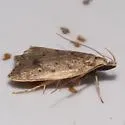
Orange webworm moth - Hodges#2292
Dichomeris citrifoliella
Identification: Per ventral photograph. The ventral side of the palps is black. Ann Hendrickson. Also can be noticed in a lateral view.
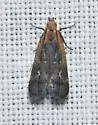
Dichomeris copa - Hodges#2291.2
Dichomeris copa
Identification: Adult - forewing dark gray with yellowish-brown basal patch that extends about halfway along costa as a tapering streak; median area with two small pale spots and a larger irregular-shaped spot arranged in a triangle; hindwing whitish
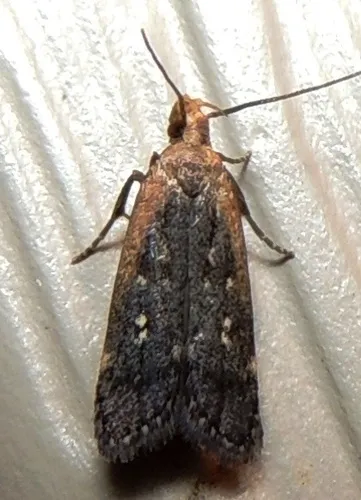
Dichomeris costarufoella - Hodges#2293
Dichomeris costarufoella
Identification: Adult: forewing dark gray to black with yellowish-brown basal patch that extends about halfway along costa as a tapering streak; median area with several small pale spots and a larger irregular-shaped spot in postmedial area; subtermi
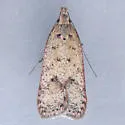
Dichomeris georgiella - Hodges#2277
Dichomeris georgiella
Identification: Detailed description can be found in MONA Fascicle 7-1 at link in citations below.
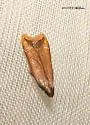
Black-edged Dichomeris - Hodges#2309
Dichomeris heriguronis
Identification: Adult - forewing narrow, light orangish-brown with 4 or 5 black spots or short streaks in median area, and outer margin bordered by broad black band; fringe orange or yellowish; labial palps dark gray or black, long and sickle-shaped,
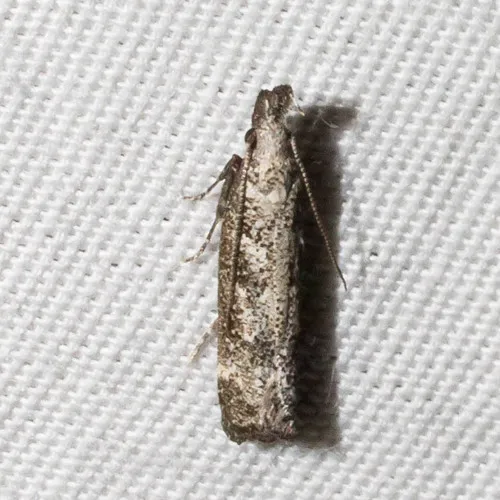
Inverse Dichomeris Moth
Dichomeris inversella
Dichomeris inversella is a moth of the family Gelechiidae. It was described by Zeller in 1873. It is found in North America, where it has been recorded from Wisconsin and southern Ontario, east to New Jersey, south to Florida and west to central Texa
Dichomeris isa - Hodges#2301.2
Dichomeris isa
Identification: Adult - forewing dark gray or blackish with broad white stripe along costa, stopping short of apex; inner edge of stripe has 2 small oblique "teeth" pointing toward outer margin; fringe scales dark. Hindwing medium gray with wide frin
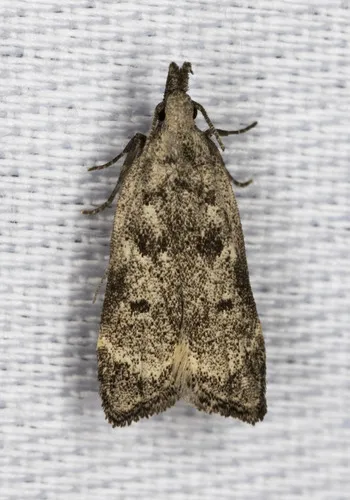
Dichomeris kimballi - Hodges#2310.1
Dichomeris kimballi
Identification: Dichomeris kimballi has a dark mid-costal mark. The DNA tested specimen below by Mark Dreiling is in a BIN group, BOLD:AAE7515 , with specimens from OK, TX, LA and FL identified as both species, but all have the costal mark and the BI
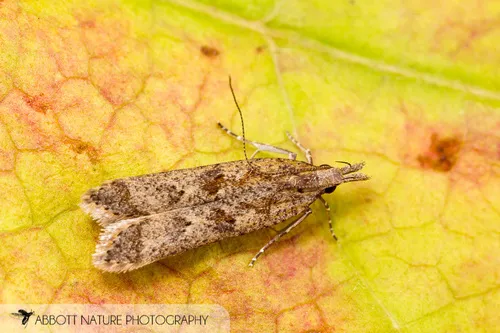
Palmerworm Moth
Dichomeris ligulella
The palmerworm (Dichomeris ligulella) is a moth of the family Gelechiidae. It is found in eastern North America.
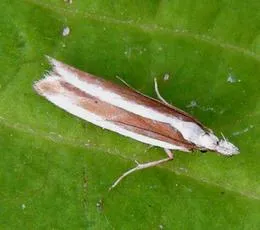
Juniper Webber
Dichomeris marginella
Wingspan 13-17 mm. Superficially like one of the Crambinae or grass moths, this species is rather neater and more compact. Occurs in chalk and limestone districts, as well as in gardens and parks. Larvae feed on both wild and cultivated Juniper formi
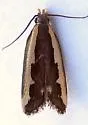
Dichomeris mimesis - Hodges#2297.5
Dichomeris mimesis
Identification: Original description can be found in MONA Fascicle 7.1 at link in citations below.
Shining Dichomeris - Hodges#2289
Dichomeris ochripalpella
Identification: Adult - easily recognized by its light orange labial palps.
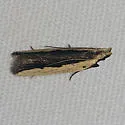
Dichomeris pelta - Hodges#2297.1
Dichomeris pelta
Identification: Described in The Moths of America North of Mexico : Fascicle 7.1. -
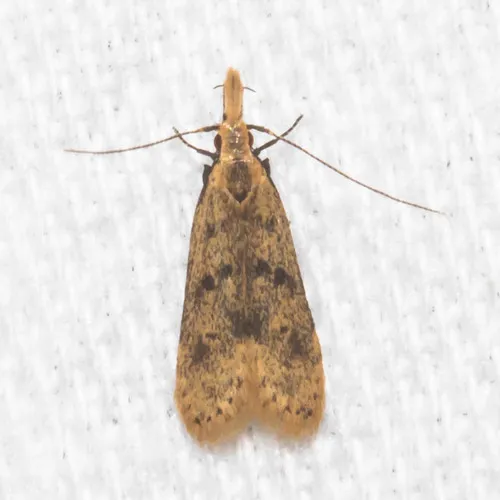
Many-spotted Dichomeris Moth
Dichomeris punctipennella
The many-spotted dichomeris moth (Dichomeris punctipennella) is a moth of the family Gelechiidae. It is found in the United States, including Alabama, Maine, Maryland, Massachusetts, New Hampshire, Tennessee, Texas and Virginia.
Dichomeris purpureofusca - Hodges#2308
Dichomeris purpureofusca
Identification: Adult : Labial and maxillary palpi are all bright orange. Head and FW deep purplish fuscous, with a brownish or more ochreous tinge when worn. The head and fringes in some lights have a bronzy-grey metallic sheen. . HW brownish fuscou
Dichomeris scrutaria - Hodges#2291.3
Dichomeris scrutaria
Identification: Description can be found in MONA Fascicle 7-1 at link in citations below. Key to species in MONA Fascicle 7-1 notes "Terminal, dark-gray part of forewing separated from pale area by black line..". It should be noted that scrutaria is
Dichomeris serrativittella - Hodges#2301
Dichomeris serrativittella
Identification: Specimens identified by DNA analysis (BOLD). ( 3 )
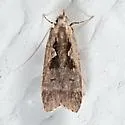
Dichomeris setosella - Hodges#2302
Dichomeris setosella
Identification: Mark Dreiling’s specimen DNA supported to species Dichomeris setosella Larva - Greenish white. See Chambers (1972) under Ypsolophus eupatoriella in Print References.
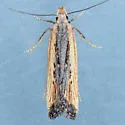
Dichomeris simpliciella - Hodges#2303
Dichomeris simpliciella
Identification: The original description as Trichotaphe simpliciella Busck, is available online in the print references below or PDF.
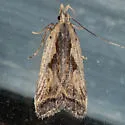
Dichomeris stipendiaria - Hodges#2304
Dichomeris stipendiaria
Identification: Larva - pale whitish tinted green or grey. Head and first thoratic segment shiny black, second thoratic segment velvety black, anterior half of third segment white with five black longitudinal dashes (Braun, 1925).
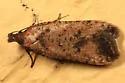
Dichomeris vacciniella - Hodges#2286
Dichomeris vacciniella
Identification: Detailed description can be found in MONA Fascicle 7-1 at link in citations below. ( 3 ) According to MONA Fascicle 7-1, adults do not come to light readily. This species can be quite variable with some specimens an even dark reddish
Exoteleia anomala - Hodges#1840.1
Exoteleia anomala
Exoteleia anomala - Hodges#1840.1 (Exoteleia anomala) is a species in the family Gelechiidae, commonly known as twirler moths, belonging to the order Lepidoptera (Butterflies and Moths). It is classified within the subfamily Gelechiinae, tribe Litini
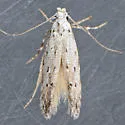
Exoteleia californica - Hodges#1836
Exoteleia californica
Identification: Busck original description as Paralechia californica is online and linked in the print references.
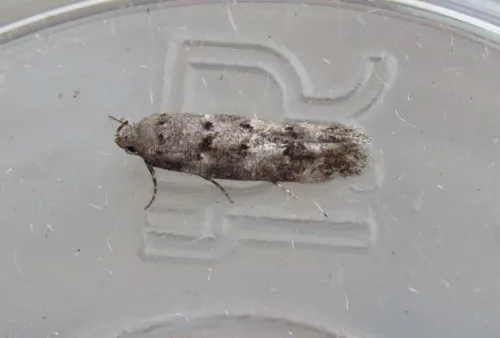
Exoteleia dodecella
Exoteleia dodecella
Wingspan 12 to 15 mm. The larva mines pine needles, entering from a small hole below the leaf tip, which is then sealed with silk. It feeds towards the needle tip, eventally causing a large mine in leaf-tip. The larva is brown with a dark head. sevea
Faculta triangulella - Hodges#2207
Faculta triangulella
Faculta triangulella - Hodges#2207 (Faculta triangulella) is a species in the family Gelechiidae, commonly known as twirler moths, belonging to the order Lepidoptera (Butterflies and Moths). It is classified within the subfamily Gelechiinae, tribe Ge
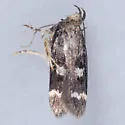
Fascista bimaculella - Hodges#2203
Fascista bimaculella
Identification: Dr. Mark A. Metz pointed out a long standing confusion with the similarly named Filatima biminimaculella , a fairly plain brown moth which looks nothing like Fascista bimaculella . (See syntype of biminimaculella now posted on the spe
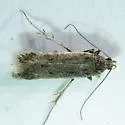
Filatima albicostella - Hodges#2128
Filatima albicostella
Identification: The original description is online. Determined by Sangmi Lee
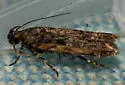
Filatima biminimaculella - Hodges#2136
Filatima biminimaculella
Identification: A brown moth similar to Filatima pseudoacaciella (Chambers, 1872) with "small ochreous spot on each side of the apex of the thorax" as noted above.
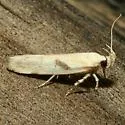
Filatima depuratella - Hodges#2142
Filatima depuratella
Identification: Original description is online as Gelechia depuratella Busck, in PDF.
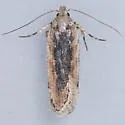
Filatima epulatrix - Hodges#2143
Filatima epulatrix
Identification: Specimen identified by DNA analysis (BOLD).
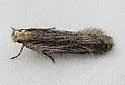
Filatima hemicrossa - Hodges#2149
Filatima hemicrossa
Identification: The original description as Gelechia hemicrossa Meyrick is available online in the print references below.
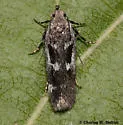
Filatima obidenna - Hodges#2158
Filatima obidenna
Identification: The original description of Filatima obidenna Clarke, is available online in the print references below.
Filatima serotinella - Hodges#2172
Filatima serotinella
Identification: The original description as Gelechia serotinella Busck, is available in PDF and online in the print references below. Genitalia: ♀ ♂
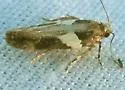
Friseria acaciella - Hodges#1914
Friseria acaciella
Type Locality: Brownsville, Cameron Co., TX; June 1904; H.S. Barber
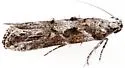
Friseria caieta - Hodges#1915
Friseria caieta
Identification: " F. caieta can be quickly separated from the other species of Friseria by the presence of white scales over most of the forewings and head" .
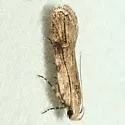
Mesquite Web Worm - Hodges#1916
Friseria cockerelli
Mesquite Web Worm - Hodges#1916 (Friseria cockerelli) is a species in the family Gelechiidae, commonly known as twirler moths, belonging to the order Lepidoptera (Butterflies and Moths). It is classified within the subfamily Gelechiinae, tribe Gelech
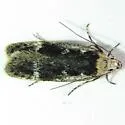
Gelechia dromicella - Hodges#1940
Gelechia dromicella
There are 4 BINs at BOLD for G. dromicella and G. ribesella . All four might represent good species. On the other hand, three group closely together and may together represent G. ribesella with a 4th more distantly speparated by DNA barcode: • G. rib
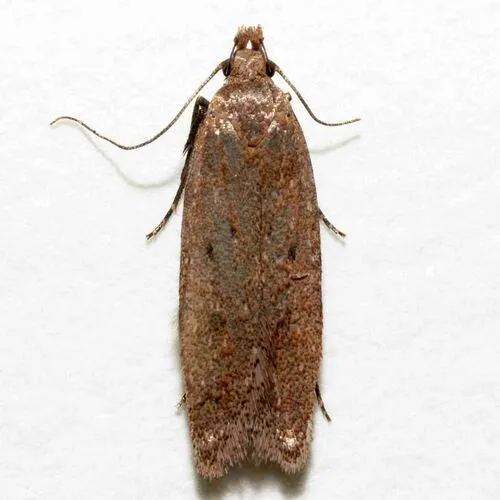
Gelechia panella - Hodges#1958
Gelechia panella
Identification: Adult - Uniform brick or rust red forewing with grey hindwing. Genitalia: ♀ ♂ The ground color of this moth perfectly matches its larval hosts, madrone and manzanita.
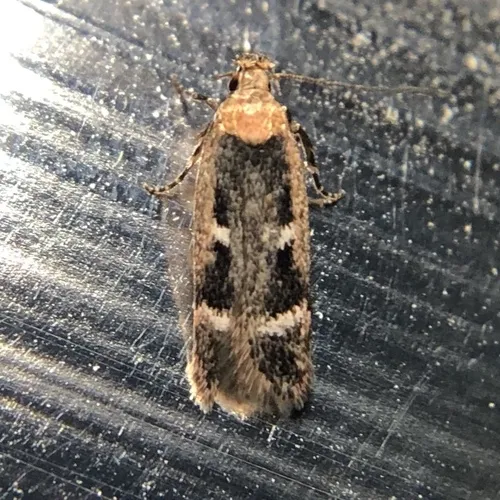
Gelechia ribesella - Hodges#1960
Gelechia ribesella
There are 4 BINs at BOLD for G. dromicella and G. ribesella . All four might represent good species. On the other hand, three group closely together and may together represent G. ribesella with a 4th more distantly speparated by DNA barcode: • G. rib
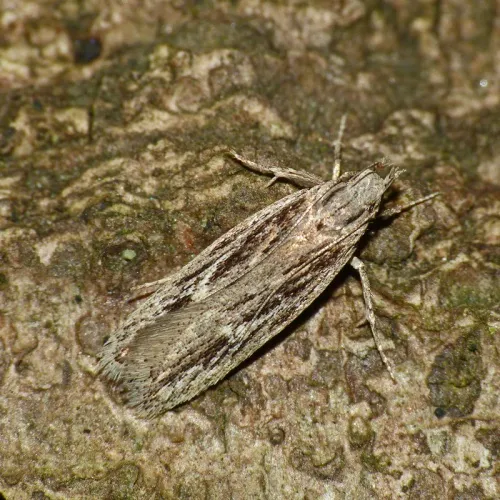
Gelechia senticetella
Gelechia senticetella
In common with a number other species using the same foodplants, is expanding its range due to their use in gardens. The adults fly in July and August and are most often found in garden light-traps. A species which appears to be on the increase. It i
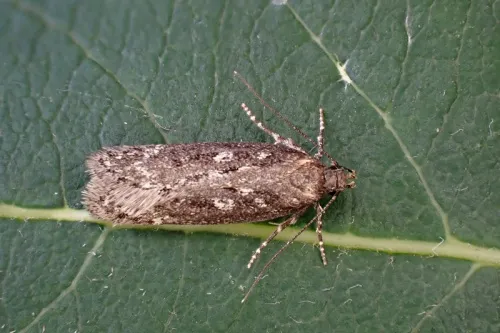
Gelechia sororculella
Gelechia sororculella
Wingspan 13 to 15 mm. A brown or blackish moth which is distinguished from its congeners by the distinctive white ringed discal spot splitting a black streak along the fold, and a pale angulate postmedian fascia. Unless identified by a recognised exp
Gelechia versutella - Hodges#1966
Gelechia versutella
Gelechia versutella - Hodges#1966 (Gelechia versutella) is a species in the family Gelechiidae, commonly known as twirler moths, belonging to the order Lepidoptera (Butterflies and Moths). It is classified within the subfamily Gelechiinae, tribe Gele
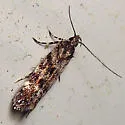
Glauce pectenalaeella - Hodges#1766
Glauce pectenalaeella
Monotypic genus with several undescribed species: BOLD:AAE7137 , BOLD:AAF9984 , BOLD:AAL8307 , BOLD:ABX4312 , BOLD:ABZ8575 (Costa Rica), BOLD:ACN2833 (Argentina), BOLD:ABC0187 (Costa Rica)
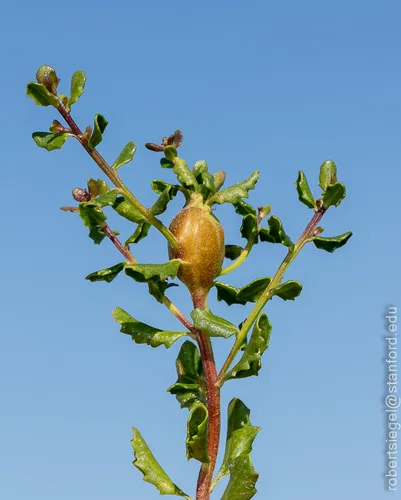
Coyote Brush Stem Gall Moth
Gnorimoschema baccharisella
Gnorimoschema baccharisella is a moth in the family Gelechiidae. It was described by August Busck in 1903. It is found in North America, where it has been recorded from California.
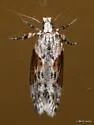
Gnorimoschema gallaeasterella - Hodges#1985
Gnorimoschema gallaeasterella
Identification: The original description as Gelechia gallaeasterella Kellicott is available in the print references below. Specimen identified by DNA analysis (BOLD). ( 3 ) Genitalia: Gnorimoschema gallaeasterella is the host for at least two Copidos
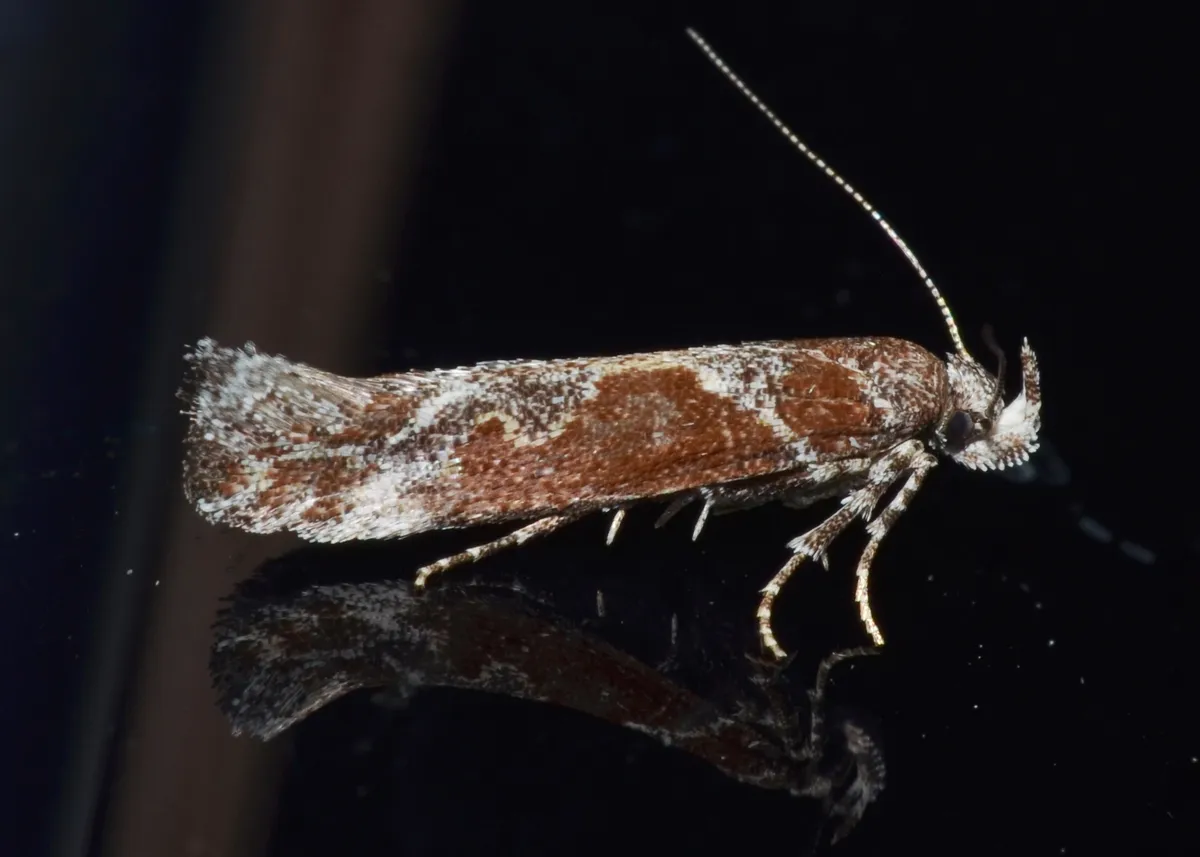
Goldenrod Elliptical-Gall Moth
Gnorimoschema gallaesolidaginis
Gnorimoschema gallaesolidaginis, the solidago gall moth, goldenrod gall moth or goldenrod gallmaker, is a moth in the Gelechiidae family. It was described by Riley in 1869. It is found in North America, where it has been recorded from Alberta, Britis
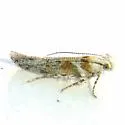
Gnorimoschema octomaculella - Hodges#1995
Gnorimoschema octomaculella
Identification: Forewing is pale gray, and peppered with small black dots. Three rust colored transverse bands or pairs of spots. Basal band often faint. Busck mentions the specific name chosen by Chambers is not accurate because the holotype was act
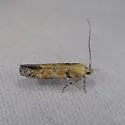
Gnorimoschema paternale - Hodges#1995.2
Gnorimoschema paternale
According to Vazrick Nazari, this is a complex of at least three species, two of which are still undescribed.
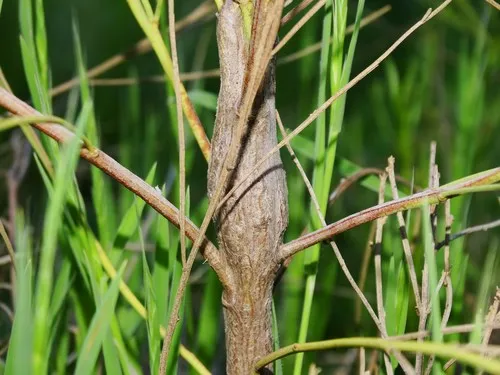
Gnorimoschema powelli - Hodges#1996.5
Gnorimoschema powelli
Gnorimoschema powelli - Hodges#1996.5 (Gnorimoschema powelli) is a species in the family Gelechiidae, commonly known as twirler moths, belonging to the order Lepidoptera (Butterflies and Moths). It is classified within the subfamily Gelechiinae, trib
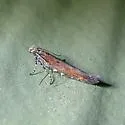
Gnorimoschema saphirinella - Hodges#1998
Gnorimoschema saphirinella
Identification: The original description as Gelechia saphirinella Chambers is available online in the print references below. Specimen identified by DNA analysis (BOLD). ( 5 )
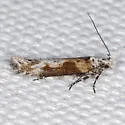
Gnorimoschema septentrionella - Hodges#2000
Gnorimoschema septentrionella
Identification: Vazrick Nazari identified Nolie Schneider's moth as Gnorimoschema septentrionella Fyles, 1911. "It is a gall-maker on Aster and is part of a complex of species that includes gallaesolidaginis, gallaesterella, gibsonella, salinaris etc
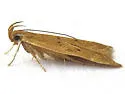
Helcystogramma badia - Hodges#2263
Helcystogramma badia
Identification: The original description as Brachmia badia Braun, is available in the print references below. Powell & Opler (2009) refer to the species as Helcystogramma badium . ( 4 )
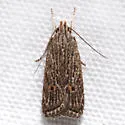
Helcystogramma chambersella - Hodges#2265
Helcystogramma chambersella
Identification: Specimen determined by DNA analysis (BOLD).
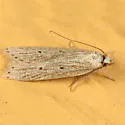
Fernald's Helcystogramma - Hodges#2267
Helcystogramma fernaldella
Identification: Adult - forewing slender with pointed apex; ground color whitish or pale yellowish with several faint and indistinct stripes running length of wing; two dark spots in medial area. Hindwing pale grayish, slightly darker near outermargi
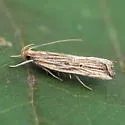
Lanceolate Helcystogramma - Hodges#2268
Helcystogramma hystricella
Identification: Adult - forewing slender with pointed apex; ground color whitish or pale gray with several dark stripes running length of wing; three dark spots arranged in a triangle in median area; top of thorax and inner margin of forewing near ba
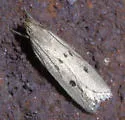
Helcystogramma melanocarpa - Hodges#2269
Helcystogramma melanocarpa
Identification: Specimen identified by DNA analysis (BOLD).
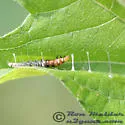
Helcystogramma melantherella - Hodges#2270
Helcystogramma melantherella
Identification: Specimen identified by DNA analysis (BOLD).
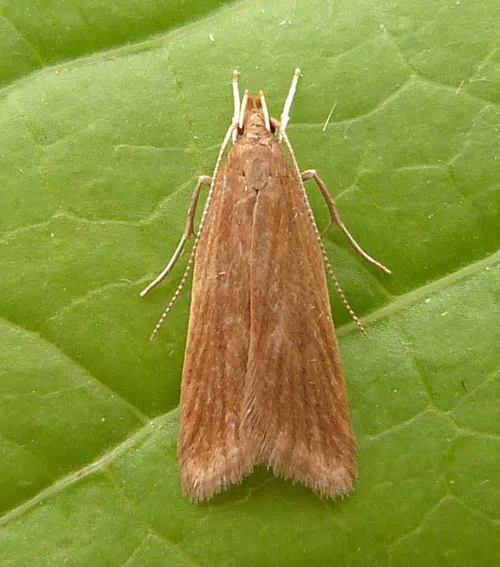
Helcystogramma rufescens
Helcystogramma rufescens
Wingspan 14-18 mm. This reddish-brown species inhabits a range of habitats. Rough pastures, unimproved grassland, downland and woodland rides. The nocturnal adults fly between June and August. The larvae overwinter on a number of grasses, especially
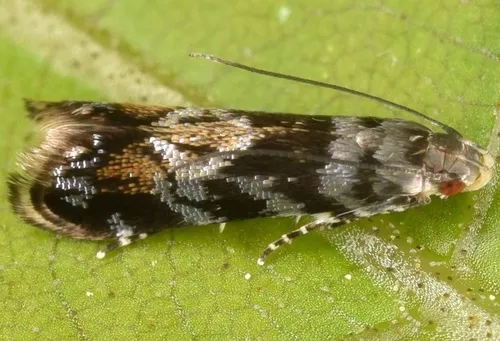
Holophysis emblemella - Hodges#2255
Holophysis emblemella
Identification: Adult - forewing brown-black, with steel-blue markings: a basal band, and antemedial band from costa across cell, a very irregular, narrower medial band, partly fused with the discal dot and forked toward inner margin, a costal spot f
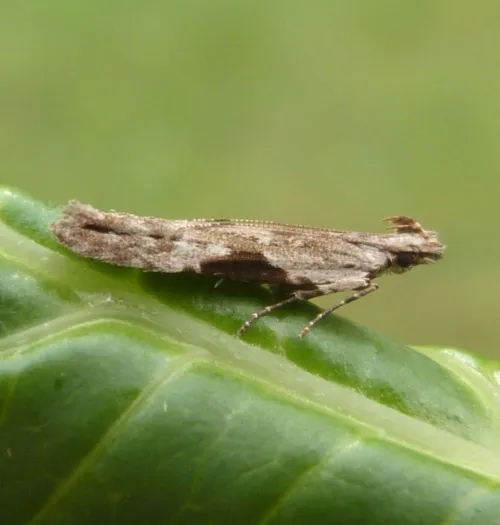
Hypatima rhomboidella
Hypatima rhomboidella
Wingspan 18 mm. The scientific name of this distinctive moth is derived from the rhomboid-shaped brownish blotch on the forewing. At rest, the wings are closely folded at the tip, giving a tapered appearance. Well wooded areas containing the larval f
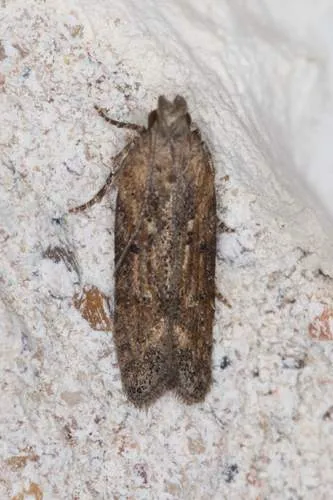
Hypatima zesticopa - Hodges#2258
Hypatima zesticopa
Identification: 12/30/2020 Comments by Ann Hendrickson: The TRUE Hypatima zesticopa is represented by the barcoded and is quite dark in color and has no light spots. It's caterpillar is also quite dark. Only one specimen has been verified from Texa
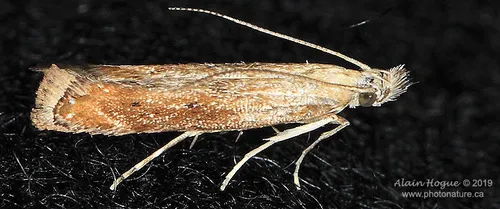
Isophrictis anteliella - Hodges#1690
Isophrictis anteliella
Images of this species were previously misplaced to I. magnella on BugGuide and on MPG. Additionally, both images shown for this species here (and both pinned specimens on MPG) were actually I. magnella . However, magnella and anteliella are not espe
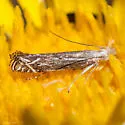
Isophrictis magnella - Hodges#1694
Isophrictis magnella
This species was previously confused with I. anteliella here and on MPG. Images of both species were placed to magnella , and the two images placed here and the two shown for this species on MPG were all magnella . The species appears to be represent
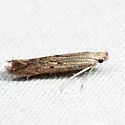
Isophrictis rudbeckiella - Hodges#1700
Isophrictis rudbeckiella
Identification: "Both species have the harpe of the male genitalia divided, but in the new species [ rudbeckiella ] it is nearly twice as long as in similiella ." - Bottimer (1926)
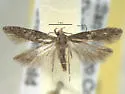
Keiferia elmorei - Hodges#2047.1
Keiferia elmorei
Identification: Specimen determined by DNA analysis (BOLD).
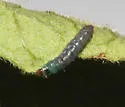
Keiferia georgei - Hodges#2048.1
Keiferia georgei
Identification: Examination of genital morphology is necessary for accurate determination, because of the substantial number of other gnorimoschemine spp. that are externally indistinguishable from K. georgei . Genitalia: One of a bewildering array o
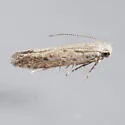
Keiferia glochinella - Hodges#2049
Keiferia glochinella
Identification: Keiferia glochinella is not distinguishable from Keiferia inconspicuella or Keiferia georgei by wing maculation. ( 3 ) Dissection or DNA to determine. - Specimen identified by DNA analysis (BOLD). ( 4 ) Listed as a pest species in Cal
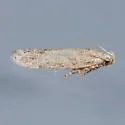
Keiferia inconspicuella - Hodges#2050
Keiferia inconspicuella
Identification: Keiferia inconspicuella is not distinguishable from Keiferia glochinella or Keiferia georgei by wing maculation. ( 3 ) Dissection or DNA to determine. - Specimen identified by DNA analysis (BOLD)
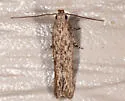
Tomato pinworm - Hodges#2047
Keiferia lycopersicella
Identification: This group is not distinguishable by wing maculation and is best determined by DNA or dissection. ( 3 ) - Specimen identified by DNA analysis (BOLD). ( 4 ) Introduced species (1920 or earlier) and considered an economic pest of tomato
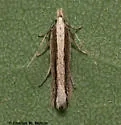
Megacraspedus plutella - Hodges#1687
Megacraspedus plutella
Identification: "Third joint of palpi and upper surface of the second one creamy white, the second otherwise dark gray brown; head, thorax and the dorsal margin of the primaries to a point beyond the beginning of the ciliae, creamy white, the primari
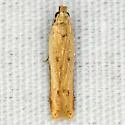
Soybean Webworm Moth - Hodges#2272
Mesophleps adustipennis
Identification: From Wikipedia: "The forewings are greyish white to yellowish brown, the distal three-fifths of the costa lined with a dark brown stripe, interrupted by an oblique pale line running from the distal fifth towards the termen."
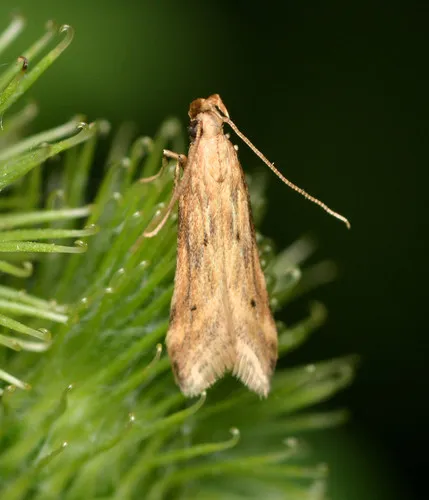
Metzneria lappella
Metzneria lappella
Wingspan 16 to 20 mm. Quite similar to other members of the group, but the light colouration and a dark line in the cilia are distinctive is this species. Various habitats, especially areas where the larval foodplant is present. The larvae feed on th
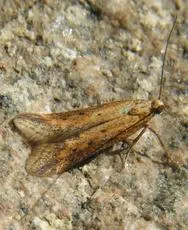
Metzneria metzneriella
Metzneria metzneriella
Wingspan 14 to19 mm. Orangey-brown wing has a row of dark dots and a pale fringe. The moths are on the wing between June and August. The larvae feed on the seeds of Common Knapweed or Saw-wort overwintering in the seedhead before pupating in late spr
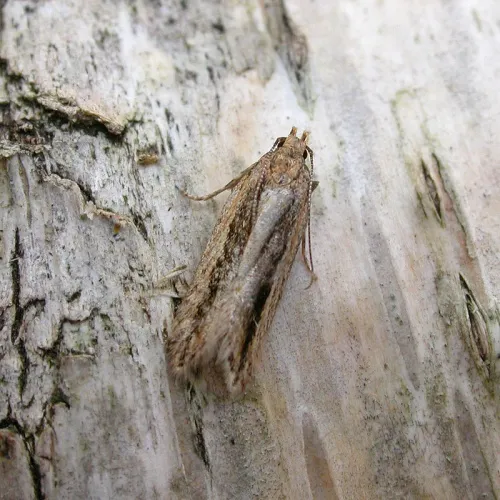
Mirificarma mulinella
Mirificarma mulinella
Wingspan 11 to 15 mm. This moth may frequently be identified by a pair of dark stripes running longitudinally down each forewing. However in some individuals these stripes may merge. In others, they may be absent altogether making identification diff
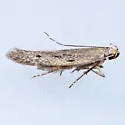
Monochroa absconditella - Hodges#1706
Monochroa absconditella
Monochroa absconditella is the host of the Chalcidoid wasp Eupelmus cyaniceps .
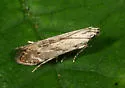
Monochroa angustipennella - Hodges#1707
Monochroa angustipennella
Identification: See Clemens, 1863: 119 & Busck, 1903: 803
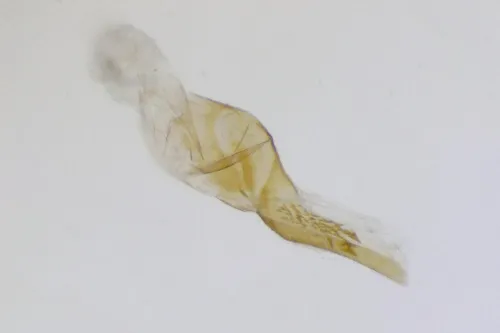
Monochroa arundinetella
Monochroa arundinetella
Wingspan 9 - 10mm, one of the smaller Monochroa species. Elongate and ochreous brown with four pale spots along the costal cilia. Similar to Monochroa moyses, and a dark form of Monochroa suffusella is known from Wicken Fen. Dissection is required fo
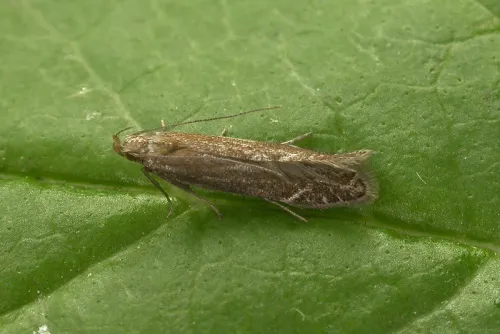
Monochroa cytisella
Monochroa cytisella
Where bracken is present and perhaps preferring sheltered sunny sites. A single-brooded species, flying in July, and sometimes coming to light. The colourful larva feeds May - June in a slight gall in the main stem of bracken, often withering an adja
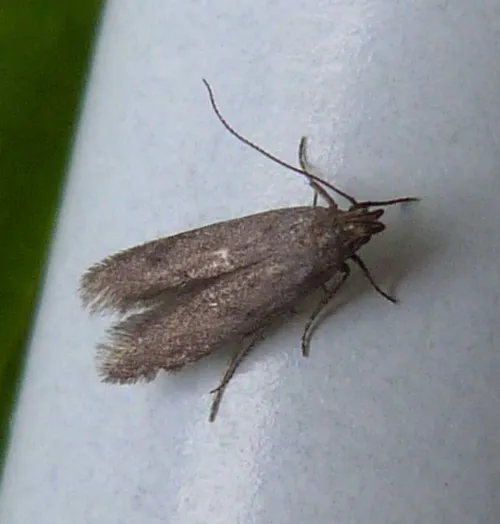
Monochroa hornigi
Monochroa hornigi
Wingspan 9 to 12 mm. A rather uniformly dark grey-brown species (though sometimes a lighter ochreous brown). Larval foodplants are Pale Persicaria (Persicaria lapathifolia) and possibly other Persicaria. This scarce and rather local species occurs ma
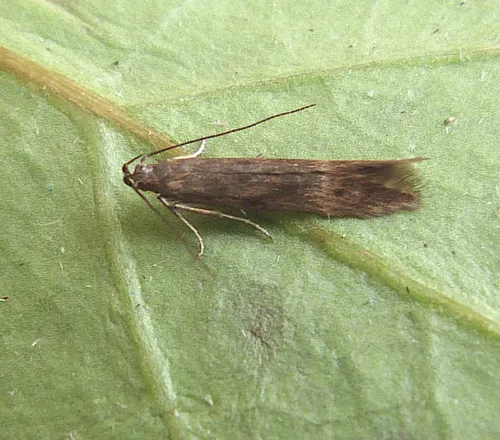
Monochroa lucidella
Monochroa lucidella
Found in damp habitats, especially around Common spike-rush, the larval foodplant. The adult moths emerge in June and July and may be seen flying in late afternoon around the foodplants. The eggs of this species are laid on Common spike-rush, with th
Monochroa robusta - Hodges#1760
Monochroa robusta
Identification: "Palpus blackish, apical half of third segment, and sometimes extreme apex of second, white, extreme apex of third sometimes black. Base of antennae fuscous, annulate with white, apex blackish, with apical segment, and fifth and tenth