
Family Twirler Moths (Gelechiidae)
Gelechiidae is a family in the order Lepidoptera. Browse 529 named species recorded in this family, or open an individual profile for its available identification and natural-history information.
Species in Gelechiidae (529)
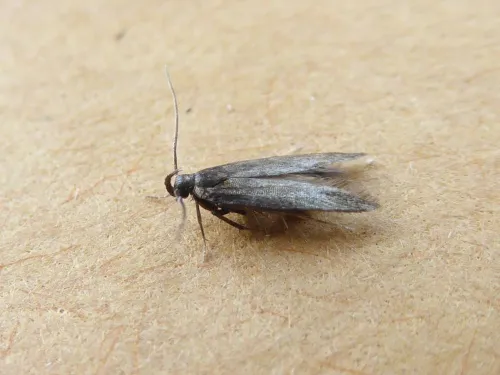
Monochroa tenebrella
Monochroa tenebrella
Wingspan about 11 mm. A uniformly brown species. The female has white tipped antennae. Determination by genitalia examination (gen. det.) required. It frequents open grassy areas and heathland. Adult moths can be found in June and July, when they fly
Naera nr. fuscocristatella - Hodges#1767.01
Naera nr-fuscocristatella
The type locality of Naera fuscocristatella is "Waco and Basque Co.” BOLD BIN group BOLD:AAI3303 contains one MEM specimen from MS, identified as fuscocristatella presumably by Sangmi Lee, and one CNC specimen from FL, identified only to genus. The n
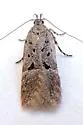
Neodactylota snellenella - Hodges#1909
Neodactylota snellenella
Identification: Original and revised descriptions are online in the print references.
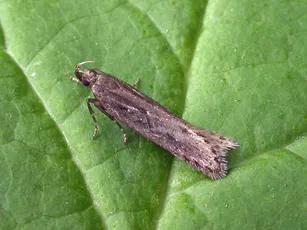
Neofaculta ericetella
Neofaculta ericetella
The adults fly in a single generation from late April to June. These are attracted to light at night but can also be disturbed from the foodplant during the day. This species lays its eggs on Heather. The larvae emerge to feed on the flowers, later f
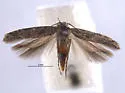
Neopalpa neonata - Hodges#2030.1
Neopalpa neonata
Identification: Specimen determined by DNA analysis (BOLD).
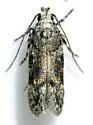
Neotelphusa on-myricaceae - Hodges#1865.1
Neotelphusa on-myricaceae
Identification: Genitalia: Leaftier of bayberry, probably undescribed
Neotelphusa querciella - Hodges#1866
Neotelphusa querciella
Based on the maculation of the holotype, I (ASH) believe this species is not a Neotelphusa ; it may be a Pseudotelphusa or Xenolechia .
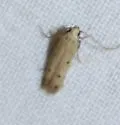
Numata bipunctella - Hodges#1765
Numata bipunctella
Identification: "Antennae yellowish fuscous. Labial palpi straw yellow, second joint blackish on the exterior side. Face, head, and thorax light straw-yellow. Forewings whitish straw-yellow, slightly darker toward apex, sparsely sprinkled with dark b
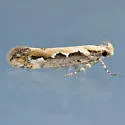
Ornativalva erubescens - Hodges#1928.1
Ornativalva erubescens
Identification: Forewing pattern distinct in our area. Can be extremely abundant at times. A single bucket trap in Willcox, Arizona yielded an estimated 10,000+ specimens of this species (Kyhl Austin).
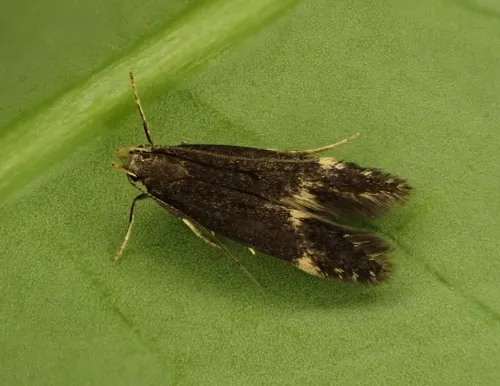
Oxypteryx atrella
Oxypteryx atrella
This species inhabits woodland and dry grassy areas. The nocturnal adults fly in July and August. The larvae feed internally in the stems and shoots of St. John's-wort (Hypericum spp.) and pupate in a case usually made from part of a leaf. Distribute
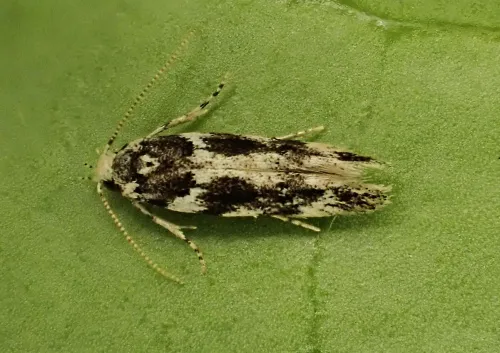
Parachronistis albiceps
Parachronistis albiceps
Wingspan 10 mm. Although this small moth is marked only in black and white it is quite a distinctive species. Where the larval foodplant Hazel is present. The adult moths fly in June and July, and are sometimes attracted to light. The larvae have not
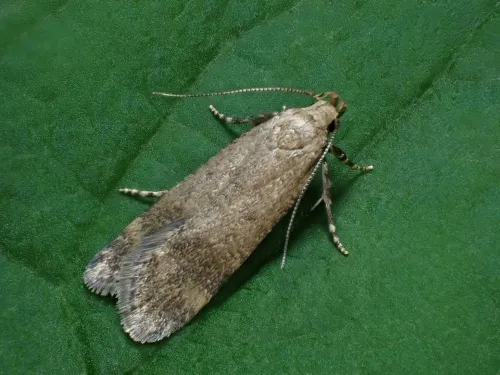
Hollyhock Seed Moth
Pexicopia malvella
A rare species. The specimen should be retained and the County Recorder informed. The moth is on the wing from early June to mid-August. The larvae feed inside the seeds of Marsh Mallow ( Althaea officinalis ) and Hollyhock ( Althaea rosea ) overwint
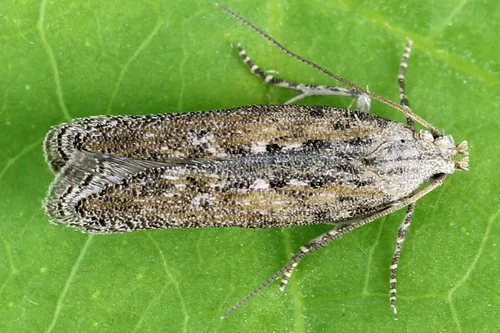
Potato Moth - Hodges#2011
Phthorimaea operculella
Identification: Adult: forewing slender, brownish-gray with scattered dark markings, especially along inner margin near base and along outer margin; hindwing slender, gray with long hairlike scales along inner and outer margins Larva: body pale pinki
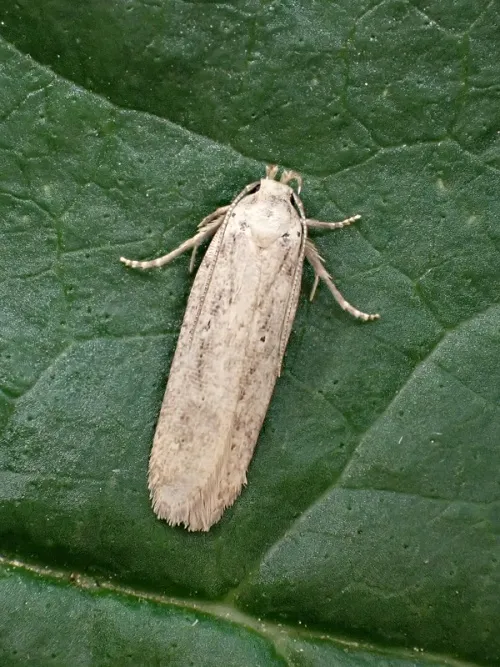
Platyedra subcinerea
Platyedra subcinerea
Wingspan 16 to18 mm. Although a rather plain looking pale brown species, this moth can be recognised by the blackish spot at the very base of the forewing, and the small black dot close to the centre of the wing, ringed paler. Please provide good pho
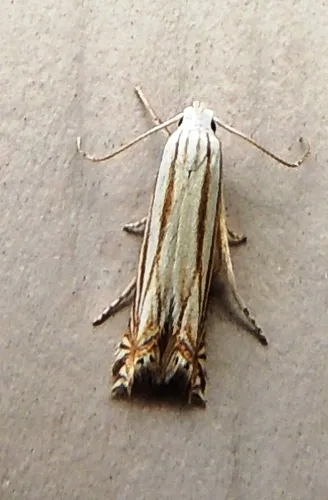
Polyhymno Moth
Polyhymno luteostrigella
Polyhymno luteostrigella, the polyhymno moth, is a moth of the Gelechiidae family. It is found in the United States, where it has been recorded from Texas to Florida, north to Connecticut and Kentucky. It is also found in Cuba and Puerto Rico.
Prolita princeps - Hodges#1894
Prolita princeps
Identification: Adult : The scales on the costal half at the base and the costal margin on the forewings are buff white with brown tips, while the scales on the area costad and distad of the medial brown streak are white to buff white with pale brown
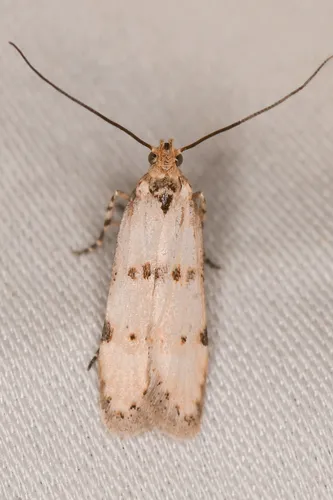
Prolita puertella - Hodges#1895
Prolita puertella
Identification: The original description is available online as Gelechia puertella Busck.
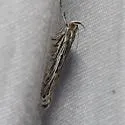
Prolita recens - Hodges#1896
Prolita recens
Identification: Specimen determined by DNA analysis (BOLD). ( 4 )
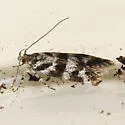
Prolita sexpunctella - Hodges#1898
Prolita sexpunctella
Identification: Photo by Libby & Rick Avis of a specimen identified by DNA. A day flying species.
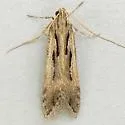
Prolita variabilis - Hodges#1902
Prolita variabilis
Identification: Forewing has variable color and markings.
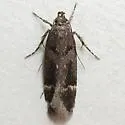
Pseudochelaria manzanitae - Hodges#1861
Pseudochelaria manzanitae
Identification: Specimen determined by DNA analysis (BOLD).
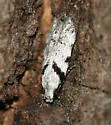
Pseudotelphusa basifasciella - Hodges#1868
Pseudotelphusa basifasciella
Identification: Adult: forewing slender, white with two black spots along costa and several smaller spots and speckling near outer margin; thick black oblique band in basal area angles backward from costa almost to inner margin; hindwing whitish basa
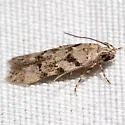
Pseudotelphusa quercinigracella - Hodges#1874
Pseudotelphusa quercinigracella
Identification: Specimen identified by DNA analysis (BOLD).
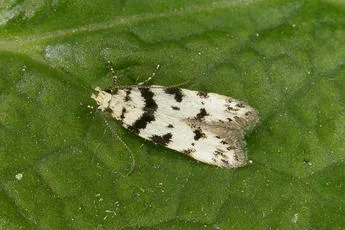
Pseudotelphusa scalella
Pseudotelphusa scalella
Wingspan 11 to 13 mm. A distinctive 'pied' appearance makes this moth one of the less difficult to identify. The moths fly in May and June and are attracted to light. The larval stages are yet to be fully described in this country although on the Con
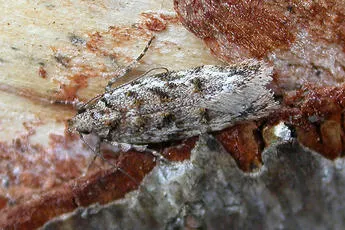
Psoricoptera gibbosella
Psoricoptera gibbosella
Wingspan 15 to17 mm. A shaggy looking moth with raised tufts and various colours of russet, brown and grey. The adult moths are on the wing from July to October, when they can be found resting on tree trunks. They are also attracted to light. The lar
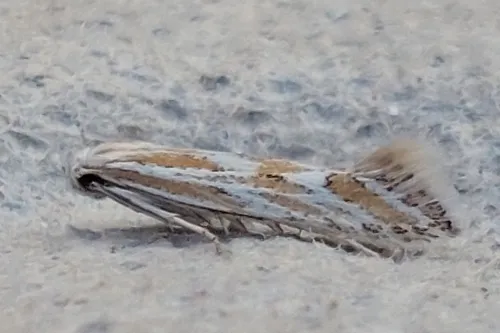
Ptocheuusa paupella
Ptocheuusa paupella
The wingspan is 10 to 12 mm. A small but rather attractive species, having a buff ground colour streaked whitish and with darker speckling. This is a very uncommon moth in VC55 and all records must be supported by a clear photograph or a specimen. It
Ptycerata busckella - Hodges#2044
Ptycerata busckella
Identification: From the original description of Ptycerata , of which P. busckella is the type species: "Palpi with second joint with Yposolophus-like brush, rough above." Genitalia:
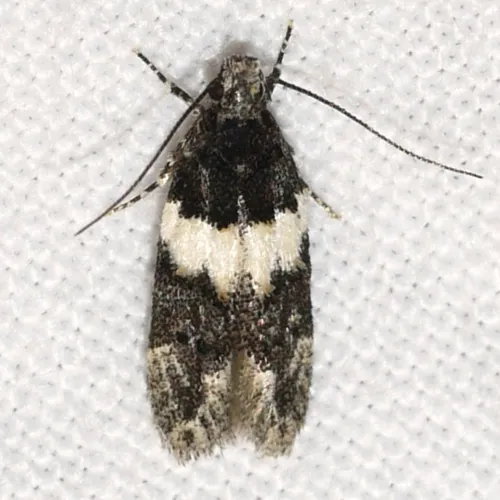
White-banded Pubitelphusa Moth
Pubitelphusa latifasciella
Pubitelphusa latifasciella, the white-banded telphusa moth, is a moth of the family Gelechiidae. It is found in North America, where it has been recorded from Alabama, Arkansas, Florida, Georgia, Illinois, Indiana, Kansas, Kentucky, Louisiana, Maryla
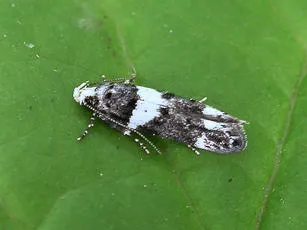
Recurvaria leucatella
Recurvaria leucatella
Wingspan 14 to 15 mm. A distinctive pied species. Areas where the larval foodplants are plentiful. Flying in June and July, the adults can be attracted to light, and can also be obtained by beating the foodplant in suitable localities. The larva feed
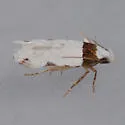
Rifseria fuscotaeniaella - Hodges#1918
Rifseria fuscotaeniaella
Identification: Adult: forewing white with broad brown basal band in some individuals; three dark patches along costa, increasing in size from first to third patch; top of head and anterior thorax white; top of posterior thorax brown; markings are va
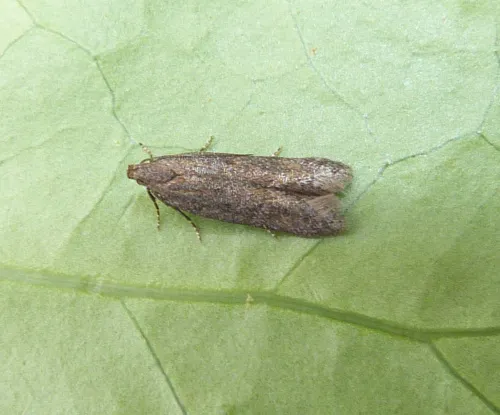
Scrobipalpa acuminatella
Scrobipalpa acuminatella
A variable moth with an overall brown appearance but this colour is flecked with chestnut and darker specks. This species occupies rough and open ground where thistles abound. Generally there are two generations, with adults on the wing in April to J
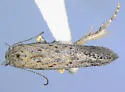
Scrobipalpa artemisiella - Hodges#2025.1
Scrobipalpa artemisiella
Identification: Genitalia: According to Vazrick Nazari, " Scrobipalpa artemisiella " is actually a complex of species that has yet to be worked out taxonomically.
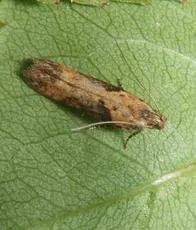
Scrobipalpa costella
Scrobipalpa costella
The colouration of this species varies a great deal but there is often a darker (sometimes triangular) mark midway along each wing. The larva mines the leaves of Bittersweet, starting in the midrib and then causing dark blotches in the leaf blade bes
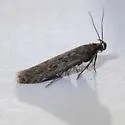
Scrobipalpa obsoletella - Hodges#2029
Scrobipalpa obsoletella
Scrobipalpa obsoletella is a European species that was first reported in Washington in 1932 and has spread throughout the western states.
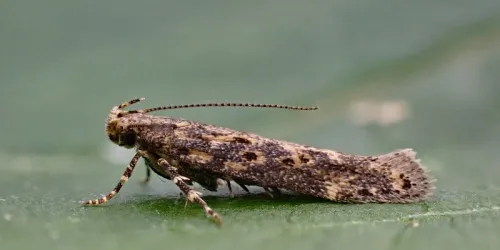
Beet Moth
Scrobipalpa ocellatella
There are similar Scrobipalpa spp. that may occur in VC55, therefore confirmation by dissection will be necessary for worn individuals and isolated records. Should there be evidence of either colonisation or a repeat dispersal event, then records may
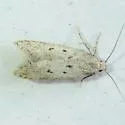
Scrobipalpopsis petrella - Hodges#2045
Scrobipalpopsis petrella
Identification: Busck (1915) original description as Gnorimoschema petrella is available in the print references.
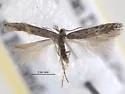
Scrobipalpula lycii - Hodges#2017.1
Scrobipalpula lycii
Identification: "A small, uniformly gray species lacking any distinctive forewing pattern" . For full description, see Powell & Povolný .
Scrobipalpula sacculicola - Hodges#2022
Scrobipalpula sacculicola
Identification: Specimen identified by DNA analysis (BOLD).
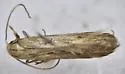
Angoumois Grain Moth - Hodges#2260
Sitotroga cerealella
Larvae drill mines in grain, causing as much as 50% of weight loss. They break the skin of seed creating the opportunity for other infestations.
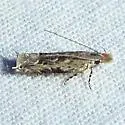
Sophronia roseicrinella - Hodges#2214
Sophronia roseicrinella
Identification: The white face, second joint of palpi rosy white, well developed dusky brush of the labial palpi, forewings with the rosy-white ground color strongly overlaid with brown and fuscous scales, especially on dorsal half and towards apex,
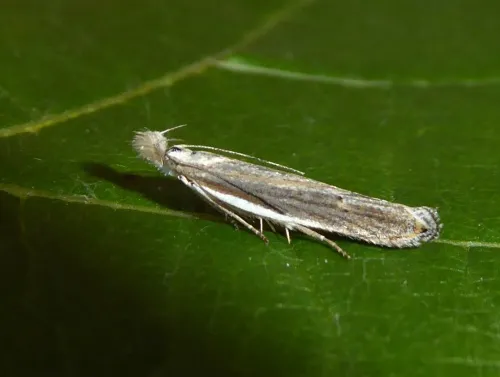
Sophronia semicostella
Sophronia semicostella
Wingspan about 18 mm. A rather attractive and distinctive-looking Gelechiid, having a strong white costal streak, tufted labial palps and noticeably banded cilia in fresh specimens. The adult moths fly in June and July in the afternoon, but are also
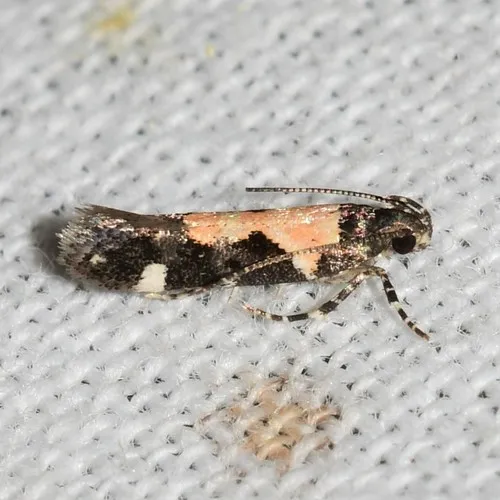
Red-necked Peanutworm Moth
Stegasta bosqueella
Stegasta bosqueella (red-necked peanutworm moth) is a species of moth of the family Gelechiidae. It is found in North America, including Alabama, Florida, Georgia, Illinois, Iowa, North Carolina, Oklahoma, South Carolina, Texas and Virginia.
Teaweed Moth - Hodges#2209.1
Stegasta capitella
Identification: The head and thorax of the adult is white. The very similar Stegasta bosquella has only the front of the head white with the rest of the head and thorax dark brown/blackish.
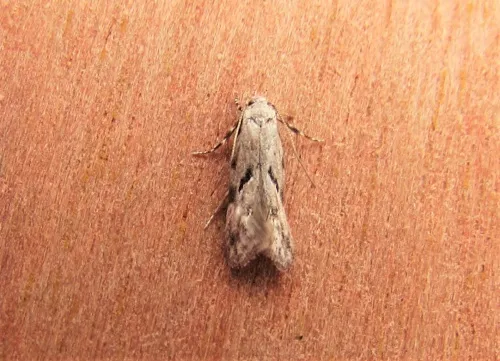
Stenolechia gemmella
Stenolechia gemmella
Wingspan 10 to 11 mm. A fairly distinctive Gelechiid moth. Unless identified by a recognised expert, a photo is required. If the photo doesn't show the key ID features then in the comments box describe the size and identifying characters you have obs
Stereomita andropogonis - Hodges#1725
Stereomita andropogonis
Identification: The original description of Stereomita andropogonis Braun, is available online in the print references below. Specimen identified by DNA analysis (BOLD). ( 3 ) Genitalia: Adults fly at dawn and dusk. ( 4 )
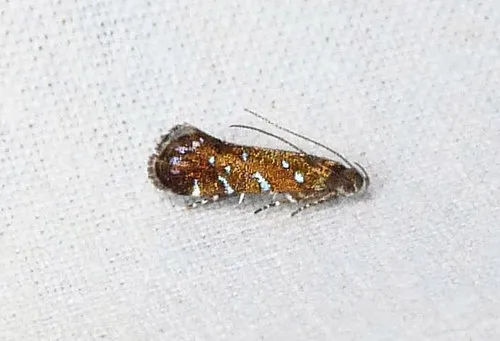
Strobisia iridipennella - Hodges#2253
Strobisia iridipennella
Identification: Adult: forewing slender, dark brown to blackish with three iridescent blue streaks evenly-spaced along costa (and projecting at right-angles toward middle of wing); another blue steak in basal area, and three blue spots in median area
Strobisia proserpinella - Hodges#2254
Strobisia proserpinella
The BIN at Barcode of Life Data Systems (BOLD) for this species may be BOLD:AAJ4626 . The examples in that BIN are shown on the Strobisia iridipennella species page.
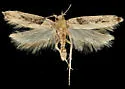
Symmetrischema costaricanum - Hodges#2038
Symmetrischema costaricanum
Identification: Specimen determined by DNA analysis (BOLD).
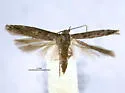
Symmetrischema fercularia - Hodges#2033
Symmetrischema fercularia
Identification: Meyrick original description is online in the print references. Specimen determined by DNA analysis (BOLD).
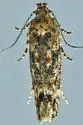
Symmetrischema pallidochrella - Hodges#2037
Symmetrischema pallidochrella
Identification: Specimen identified by DNA analysis (BOLD). ( 3 ) Genitalia:
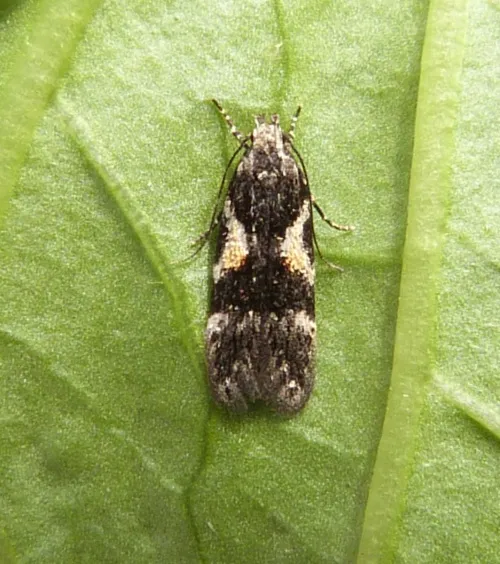
Teleiodes luculella
Teleiodes luculella
Wingspan about 11mm. A rather distinctive speis. It is dark grey or almost black with a large, semi circular pale costal blotch, often with an orangey tinge, and a pale bar across the wing at about two thirds. Oak woods and areas where oak is present
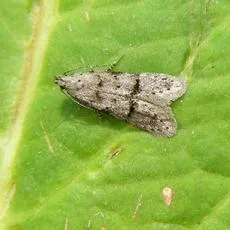
Teleiodes vulgella
Teleiodes vulgella
A fairly distinctive moth in the adult stage, this species has small blackish patches bordered by raised whitish scale-tufts, giving it a noticeably 'rough' appearance. Various habitats including gardens and well wooded areas. The adults fly at night
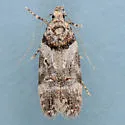
Teleiopsis baldiana - Hodges#1882
Teleiopsis baldiana
Rare in collections even though the species has a vary large range in California.
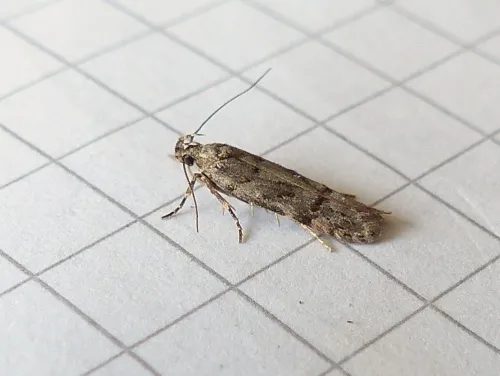
Teleiopsis diffinis
Teleiopsis diffinis
The species has two or more probable overlapping broods and can be found on the wing any time between May and October. Sheep's Sorrel (Rumex acetosa) is the larval foodplant, the larvae feeding amongst the roots or at the base of the stems in a silke
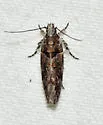
Telphusa perspicua - Hodges#1858.2
Telphusa perspicua
Identification: (Adapted loosely from Walsingham’s original 1897 description .) Long upturned palpi dark with some pale banding; top of head typically pale gray; fresh specimens have four to five dorsal scale tufts on the thorax and forewings, these
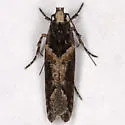
Telphusa sedulitella - Hodges#1859
Telphusa sedulitella
Identification: Slender moths that wrap their wings around the body with rows of upraised scales giving a roughened appearance. Forewing blackish with some rust tones. There are variations the have more whitish coloration on parts of the wings.
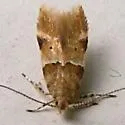
Theisoa constrictella - Hodges#1722
Theisoa constrictella
Identification: Adult: forewing slender, lance-shaped; basal third brown, edged in black distally; remainder of wing paler brown with yellowish AM line and blackish triangle half-way along costa, bordered distally by a yellowish wedge; black discal d
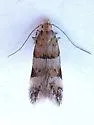
Theisoa multifasciella - Hodges#1723
Theisoa multifasciella
Identification: Head : Brownish yellow, becoming paler on the face around the mouth. Palpi externally brown, internal surface white. Antennae alternately brown and silvery white. Thorax : Upper surface brownish red. Wings : Basal area brownish red. T
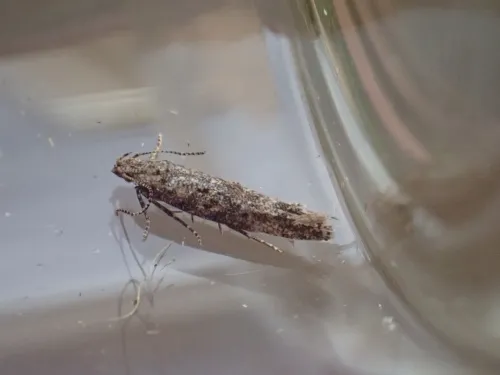
Tuta absoluta
Tuta absoluta
This small moth is generally brown with scattered black and orange patches. Native to South America where it is a pest of tomato cultivation. In the UK it is currently rare but is expanding. Tomato cultivation, particularly in greenhouses.
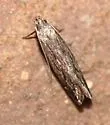
Untomia albistrigella - Hodges#2223
Untomia albistrigella
Identification: Specimen determined by DNA analysis (BOLD). ( 3 )
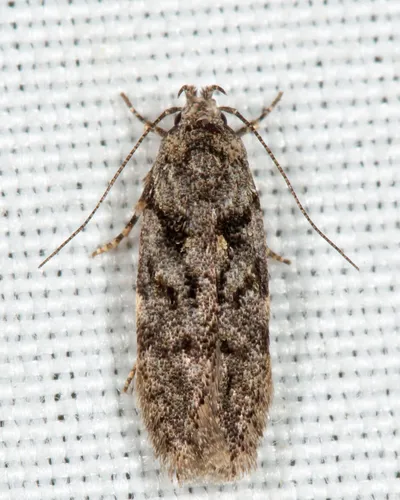
Xenolechia ontariensis - Hodges#1878
Xenolechia ontariensis
Identification: Identification from photos is difficult for this group. Specimen identified by DNA analysis (BOLD) Genitalia: ♀ ♂
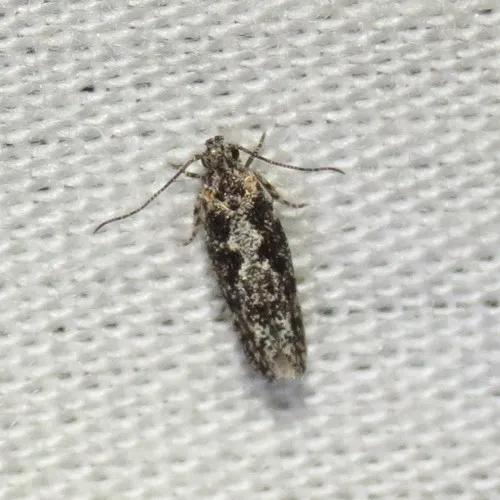
Agnippe abdita - Hodges#1768
Agnippe abdita
Agnippe biscolorella - Hodges#1772
Agnippe biscolorella
Agnippe leuconota - Hodges#1770
Agnippe leuconota
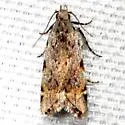
Anacampsis argyrothamniella - Hodges#2231
Anacampsis argyrothamniella
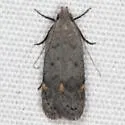
Anacampsis comparanda - Hodges#2232
Anacampsis comparanda
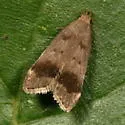
Anacampsis fragariella - Hodges#2235
Anacampsis fragariella
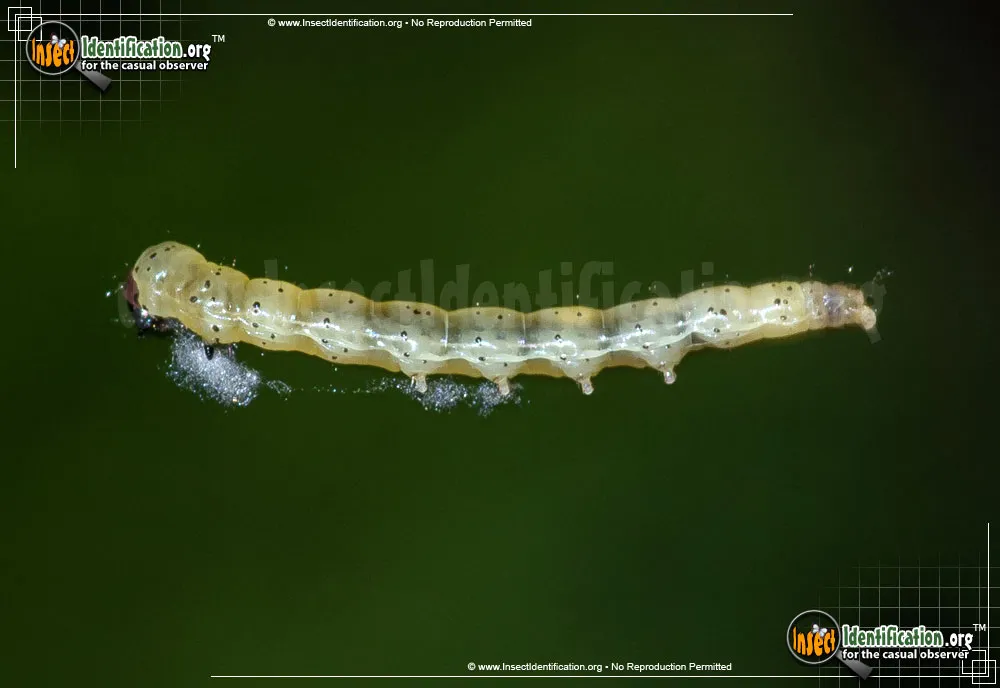
Dark-headed Aspen Leafroller Moth
Anacampsis innocuella
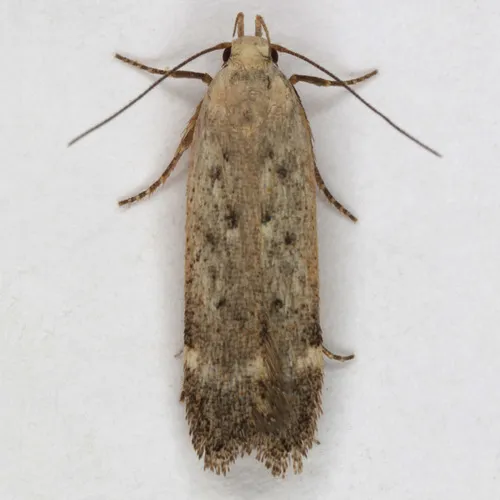
Anacampsis lacteusochrella - Hodges#2239
Anacampsis lacteusochrella
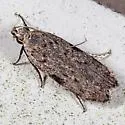
Anacampsis lagunculariella - Hodges#2240
Anacampsis lagunculariella
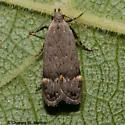
Anacampsis nr. comparanda - Hodges#2232.1
Anacampsis nr-comparanda
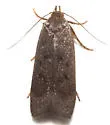
Anacampsis psoraliella - Hodges#2247
Anacampsis psoraliella
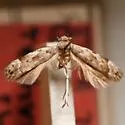
Anacampsis tephriasella - Hodges#2250
Anacampsis tephriasella
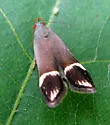
Anacampsis tristrigella - Hodges#2251
Anacampsis tristrigella
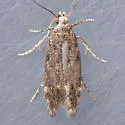
Aproaerema palpilineella - Hodges#2222
Aproaerema palpilineella
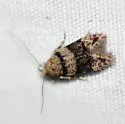
Arcutelphusa talladega - Hodges#1874.1
Arcutelphusa talladega
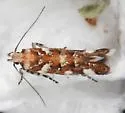
Aristotelia arenella - Hodges#1729.1
Aristotelia arenella
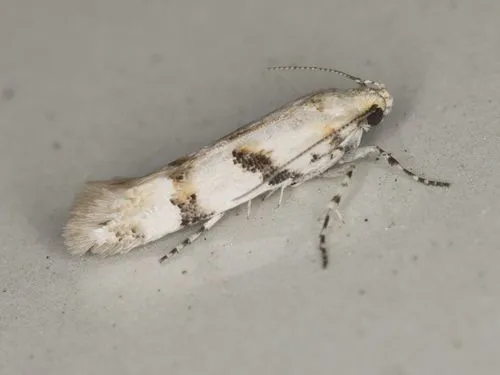
Aristotelia bifasciella - Hodges#1731
Aristotelia bifasciella
Aristotelia callens - Hodges#1732
Aristotelia calens
Aristotelia devexella - Hodges#1734
Aristotelia devexella
Aristotelia hexacopa - Hodges#1739
Aristotelia hexacopa
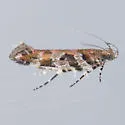
Aristotelia intermediella-group
Aristotelia intermediella-group
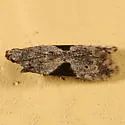
Aristotelia isopelta - Hodges#1742
Aristotelia isopelta
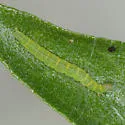
Aristotelia ivae - Hodges#1743
Aristotelia ivae
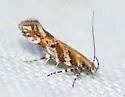
Aristotelia lespedezae - Hodges#1744
Aristotelia lespedezae
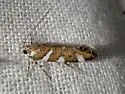
Aristotelia monilella - Hodges#1748
Aristotelia monilella
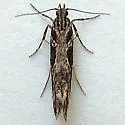
Aristotelia planitia - Hodges#1753
Aristotelia planitia
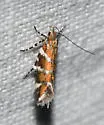
Aristotelia primipilana - Hodges#1754
Aristotelia primipilana
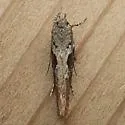
Aristotelia salicifungiella - Hodges#1763
Aristotelia salicifungiella
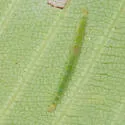
Aristotelia n. sp.
Aristotelia undescribed
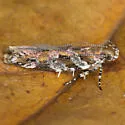
Aristotelia ex Quercus
Aristotelia undescribed-ex-quercus
Aristotelia urbaurea - Hodges#1764
Aristotelia urbaurea
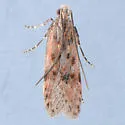
Arla diversella - Hodges#1904
Arla diversella
Arla tenuicornis - Hodges#1905
Arla tenuicornis
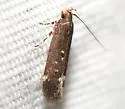
Aroga argutiola - Hodges#2184
Aroga argutiola
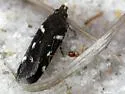
Six-spotted Aroga - Hodges#2187
Aroga compositella
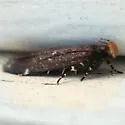
Aroga epigaeella - Hodges#2189
Aroga epigaeella
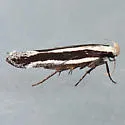
Aroga morenella - Hodges#2192
Aroga morenella
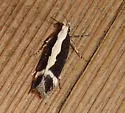
Aroga unifasciella - Hodges#2200
Aroga unifasciella
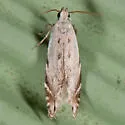
Battaristis nigratomella - Hodges#2227
Battaristis nigratomella