
Monochroa arundinetella
This record describes Monochroa arundinetella (species). Recorded family: Gelechiidae. Recorded order: Lepidoptera.
Identification and Appearance
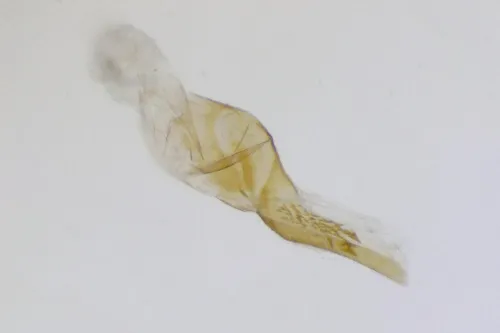
Wingspan 9 - 10mm, one of the smaller Monochroa species. Elongate and ochreous brown with four pale spots along the costal cilia. Similar to Monochroa moyses, and a dark form of Monochroa suffusella is known from Wicken Fen. Dissection is required for all new-site records, and otherwise for all but the most pristine specimens. Ensure good photographs obtained and retain the specimen pending advice from the CMR. Reed-swamps, riverbanks, edges of pools and lakes, fens, marshes and small, wet ditches. Single-brooded, with adults on the wing during June and July. The larvae mine the leaves of Carex riparia (Greater Pond-sedge), and to a lesser extent Carex acutiformis (Lesser Pond-sedge). Scarce, although possibly under-recorded. Generally in the south and south-east England. In Butterfly Conservation's Microlepidoptera Report S12-02 (Jan 2012) this species was classified as pRBD1. Monochroa arundinetella | Gelechiid Recording Scheme
Classification
- Kingdom
- Animalia
- Phylum
- Arthropoda
- Class
- Insecta
- Order
- Lepidoptera
- Family
- Gelechiidae
- Genus
- Monochroa
Imported taxonomy record. Source availability varies; see the source references and editorial policy below.
Habitat and Range
Habitat
Reed-swamps, riverbanks, edges of pools and lakes, fens, marshes and small, wet ditches.
Seasonal Activity
Single-brooded, with adults on the wing during June and July.
Diet and Behavior
Life History
The larvae mine the leaves of Carex riparia (Greater Pond-sedge), and to a lesser extent Carex acutiformis (Lesser Pond-sedge).
Additional species information
Recorded status
Scarce, although possibly under-recorded. Generally in the south and south-east England. In Butterfly Conservation's Microlepidoptera Report S12-02 (Jan 2012) this species was classified as pRBD1.
About Butterflies and Moths: the wider group
Order-level background for Lepidoptera, the group containing Monochroa arundinetella. Species-specific details appear above.
Group overview
Lepidoptera includes approximately 180,000 described species of butterflies and moths. Moths outnumber butterflies roughly 10:1. The monarch butterfly's eastern population has declined by more than 80% since the mid-1990s, and the western population by over 95% since the 1980s. The IUCN lists the migratory monarch as Vulnerable.
Ecological role of the group
Butterflies and moths are essential indicators of ecosystem health. As caterpillars, they are a primary food source for birds - a single nest of blue tit chicks requires ~10,000 caterpillars. Adult moths pollinate many night-blooming plants.
Economic and practical significance of the group
Lepidoptera are critical pollinators. In Europe, grassland butterfly species have declined by almost 50% since the early 1990s. In the UK, three-quarters of butterflies are in decline. In the U.S., five butterfly species have gone extinct since 1950, with 29 listed as endangered.
Recorded sources for this group: IUCN Red List, Xerces Society, USFWS, PNAS, WWF. Imported estimates may describe particular regions or reporting periods.
Frequently Asked Questions About Monochroa arundinetella
What is Monochroa arundinetella?
Monochroa arundinetella is a species in the family Gelechiidae, within the order Lepidoptera.
Where is Monochroa arundinetella found?
Habitat: Reed-swamps, riverbanks, edges of pools and lakes, fens, marshes and small, wet ditches.
When is Monochroa arundinetella active?
Monochroa arundinetella: seasonal activity - Single-brooded, with adults on the wing during June and July..
What is the life cycle of a Monochroa arundinetella?
The larvae mine the leaves of Carex riparia (Greater Pond-sedge), and to a lesser extent Carex acutiformis (Lesser Pond-sedge).