
Family Leaf Beetles (Chrysomelidae)
Chrysomelidae is a family in the order Coleoptera. Browse 1,349 named species recorded in this family, or open an individual profile for its available identification and natural-history information.
Species in Chrysomelidae (1,349)
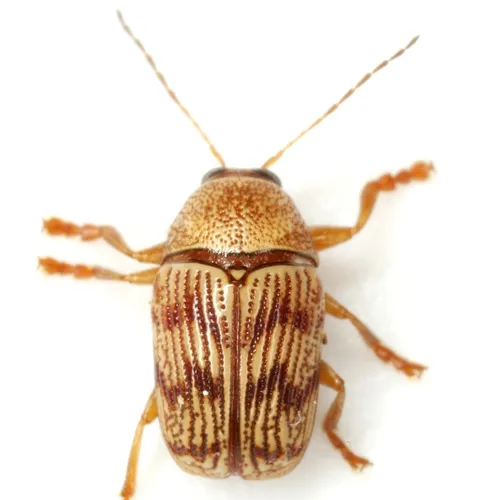
Cryptocephalus implacidus
Cryptocephalus implacidus
Identification: variable elytral band width, but note coarse pronotal punctation Type Locality: Mansura, Avoyelles Parish, Louisiana, on March 26, 1910.
Cryptocephalus insertus
Cryptocephalus insertus
Identification: Outer elytral vitta interrupted once, twice, or nearly absent, sometimes confluent with inner vitta ; pronotum orange, red, or brown with lateral and apical [pale] margins and usually a pair of oblique basal maculae, vaguely yellowish
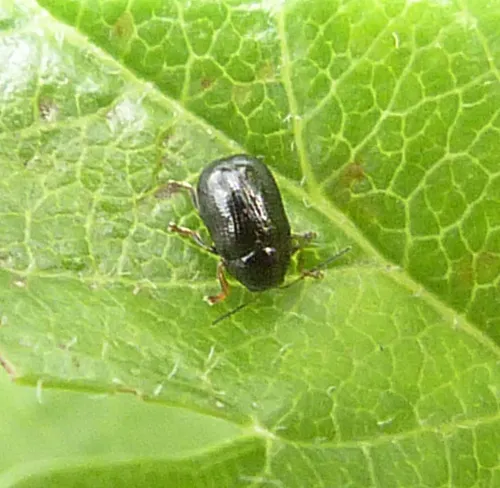
Cryptocephalus labiatus
Cryptocephalus labiatus
A small (2 to 3 mm) shiny black leaf beetle with punctate elytra. Legs are yellowish, but with femora, tibiae and tarsi at least partly dark brown or black. Unless identified by a recognised expert, a photo is required. If the photo doesn't show the
Cryptocephalus lateritius 0
Cryptocephalus lateritius
Identification: elytral striae largely confused or double
Cryptocephalus leucomelas
Cryptocephalus leucomelas
Identification: Combined pronotal and elytral patterns are unique... The color is too pale for C. castaneus and the basal elytral dark markings are less extensive than typical castaneus although you can find material with more extensive yellow/orange
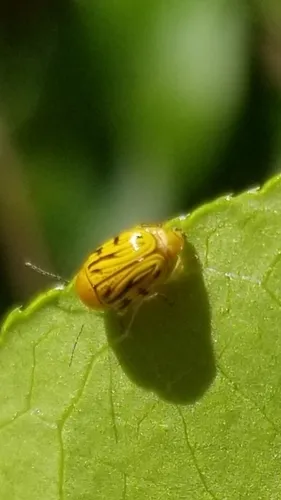
Cryptocephalus luteolus
Cryptocephalus luteolus
Identification: Pronotum light red, elytra cream yellow with brown markings on second, fourth, and sixth intervals (fig, 66) Cryptocephalus luteolus Newman Det. E. G. Riley, 1990 Sanford, Seminole County, Florida 7-21-1927 spmn in the TAMUIC Type Loc
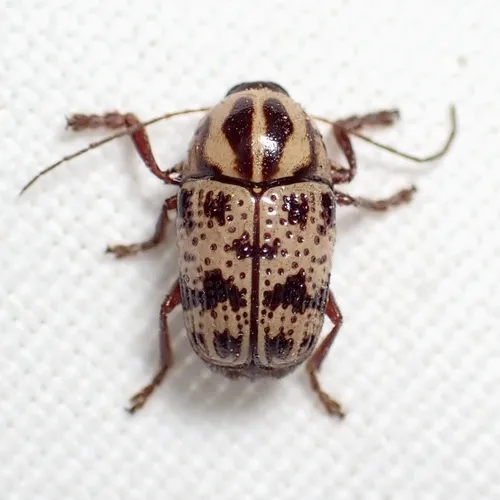
Cryptocephalus maccus
Cryptocephalus maccus
Identification: Det. E. G. Riley, 1987 Type data. - This species is described from four males, all taken in Arizona. The data are as follows (all types in USNM): holotype (type number 69241), "5 mi. s. Rock Springs, Arizona, VI-24-57 R. S. Beal"; par
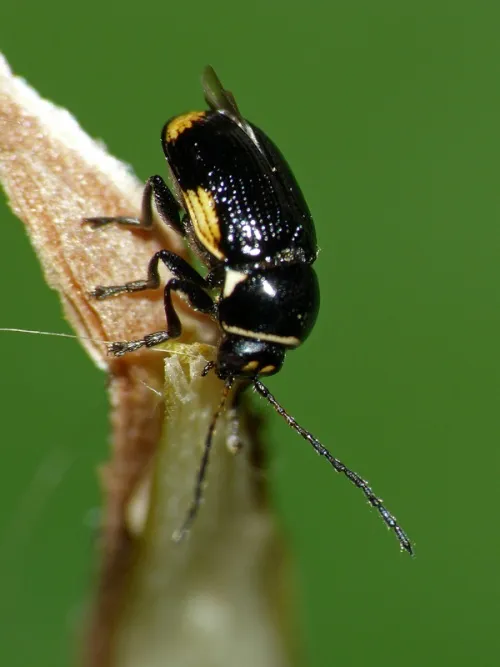
Cryptocephalus moraei
Cryptocephalus moraei
A distinctively marked black beetle with four patches on the elytra which vary in colour from yellow to deep orange. There is one patch on the side and one at the rear of each elytron. Fairly widespread south of The Wash but scarcer further north. No
Cryptocephalus mucoreus
Cryptocephalus mucoreus
Identification: Pronotum: With fine, silvery pubescence; black throughout; punctation dual, larger punctures moderate, dense. Elytra: With fine, silvery pubescence.
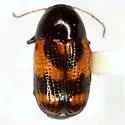
Cryptocephalus multisignatus
Cryptocephalus multisignatus
The male holotype (the only type specimen) is in the U.S. National Museum; it was taken in Arizona. It is the only example of this species that was seen by White, so the extent of variation of the characters referred to in the description and key was
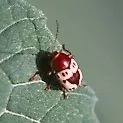
Cryptocephalus mutabilis
Cryptocephalus mutabilis
Identification: Dets. M. A. Quinn, 2010 marked sexual dimorphism: ♂♂ 4.3-5.3 mm, with dark markings usually black; ♀♀ 5.3-6.5 mm, markings usually reddish - spmns from Randolph Co., MO Dets. E. G. Riley 1975
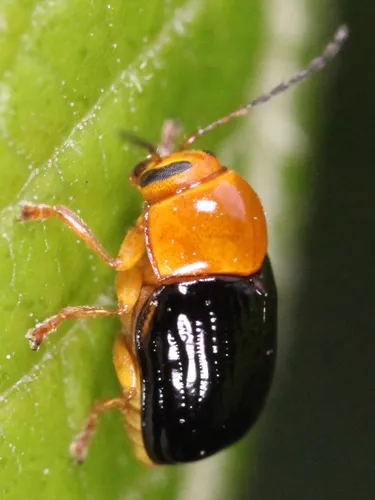
Lustrous Cryptocephalus
Cryptocephalus nanus
Cryptocephalus nanus is a species of case-bearing leaf beetle in the family Chrysomelidae. It is found in North America.
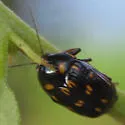
Cryptocephalus nigrocinctus
Cryptocephalus nigrocinctus
Identification: coloration distinctive among Florida congeners: metallic blue, sometimes with a purplish undertone, often with yellowish-orange dorsal markings (Thomas et al. 2001) earliest record in our area: FL 1999
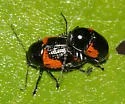
Cryptocephalus notatus
Cryptocephalus notatus
Identification: One broad red shoulder spot, plus two rounded spots at the rear of the elytra. Elytra with 10 rows of punctures. Base of antennae pale. One of the first two species of Cryptocephalus described from N. Amer.
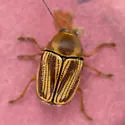
Cryptocephalus obsoletus
Cryptocephalus obsoletus
Identification: Elytra creamy yellow to dull orange (punctures often dark), usually with two vittae, orange to dark reddish, sometimes black in part, vague to rather distinct but not sharply delimited "Note prosternal spine in lateral view" (Ed Riley
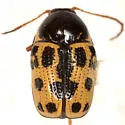
Cryptocephalus optimus
Cryptocephalus optimus
Cryptocephalus optimus (Cryptocephalus optimus) is a species in the family Chrysomelidae, commonly known as leaf beetles, belonging to the order Coleoptera (Beetles). It is classified within the subfamily Cryptocephalinae, tribe Cryptocephalini, subo

Cryptocephalus pallidicinctus
Cryptocephalus pallidicinctus
Identification: Prothorax orange red, the extreme apical edge pale yellow, the basal edge very narrowly blackish; surface sparsely feebly and very finely punctate. Elytra black, with narrow whitish yellow basal and lateral margin which at apex does n
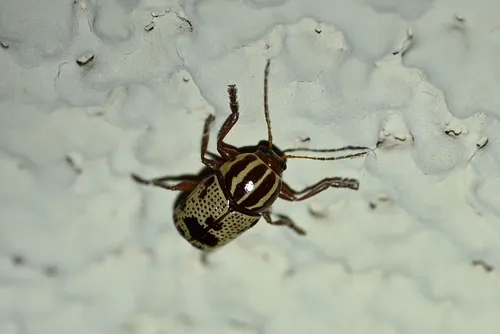
Cryptocephalus pseudomaccus
Cryptocephalus pseudomaccus
Type Locality: three individuals taken in 1934 at Globe, Arizona, by Parker. The holotype (male, in California Academy of Sciences) was taken on April 16, 1934 on Acacia greggii, the allotype (also in California Academy of Sciences) bears the followi
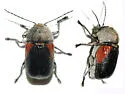
Cryptocephalus pubicollis
Cryptocephalus pubicollis
Cryptocephalus pubicollis (Cryptocephalus pubicollis) is a species in the family Chrysomelidae, commonly known as leaf beetles, belonging to the order Coleoptera (Beetles). It is classified within the subfamily Cryptocephalinae, tribe Cryptocephalini
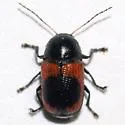
Cryptocephalus pubiventris
Cryptocephalus pubiventris
Identification: Highly variable Dets. E. G. Riley Type Locality: Huachuca Mountains, Cochise, Arizona. Ten specimens examined by White
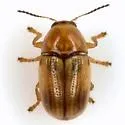
Cryptocephalus pumilus
Cryptocephalus pumilus
Identification: Pronotum: Dull yellowish to (usually) dull orange, disk usually more or less clouded with light to dark brown. Elytra: Dull yellowish to (usually) dull orange, humerus more or less dark, often with vague to distinct brown markings at
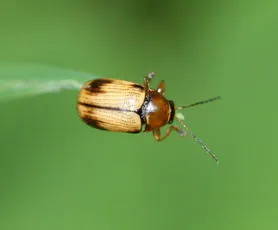
Cryptocephalus pusillus
Cryptocephalus pusillus
A small leaf beetle of around 3mm. The males often have more or less extensive dark markings on the creamy yellow elytra, unlike the females. Summer and autumn, persisting later than many similar species. Grazes on the live leaves of various trees. W
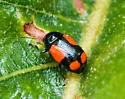
Cryptocephalus quadruplex
Cryptocephalus quadruplex
Identification: Det. M. A. Quinn, 2013 Apical orange marks occasionally absent: Det. E. G. Riley, 2012
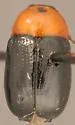
Cryptocephalus sanguinicollis
Cryptocephalus sanguinicollis
Identification: Pronotum red/orange (black in C. s. nigerrimus )
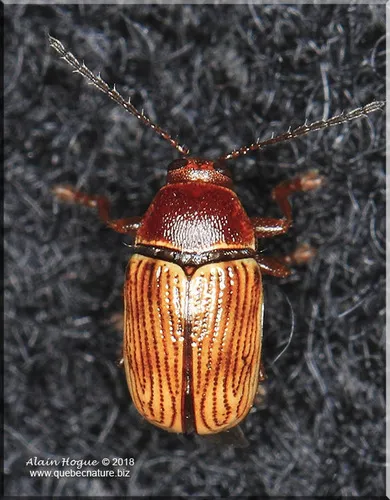
Furrow-necked Cryptocephalus
Cryptocephalus schreibersii
Cryptocephalus schreibersii is a species of case-bearing leaf beetle in the family Chrysomelidae. It is found in North America.
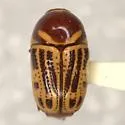
Cryptocephalus snowi
Cryptocephalus snowi
White reports 6 specimens in the USNM from Texas, New Mexico, and Arizona
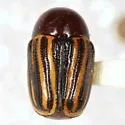
Cryptocephalus spurcus
Cryptocephalus spurcus
Identification: vague and indistinct vittae are characteristic. ‒J.R. Watts, 8.vii.2008
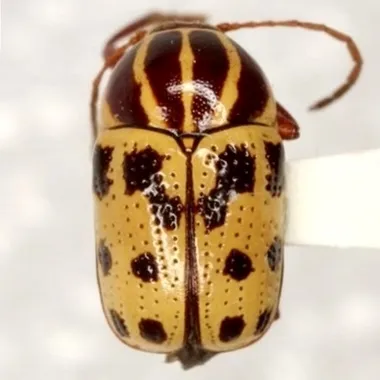
Cryptocephalus texanus
Cryptocephalus texanus
Identification: Det. E. G. Riley 1982 Type Locality: New Braunfels, Comal Co., Texas apparently formerly more common, most records prior to 2002 ( 3 )
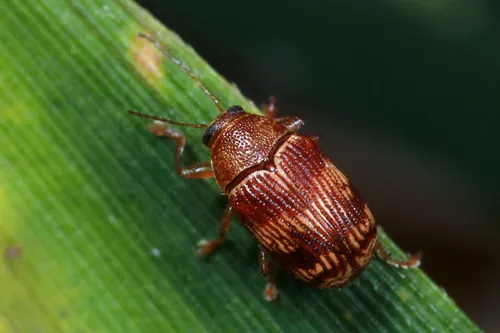
Cryptocephalus tinctus
Cryptocephalus tinctus
Identification: elytral striae (rows of dots) mostly entire, rather then largely confused or double See discussion at
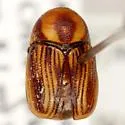
Cryptocephalus trivittatus
Cryptocephalus trivittatus
Identification: elytral vittae are brown instead of black, the lateral ones more or less disrupted - Fig. 50, C. trivitlatus Olivier; 51, C. cuneatus Fall Det. E. G. Riley 1983 one of the first Cryptocephalus species to be described for North America
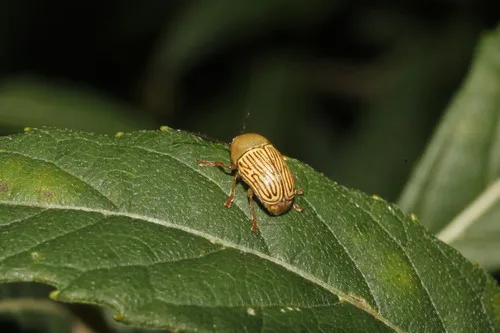
Cryptocephalus umbonatus
Cryptocephalus umbonatus
Identification: White describes the elytra as "...striae red to black, with no markings." In the types and in many of the other specimens on hand in the USNM, the elytra are waxy yellow, and the striae black and strongly contrasting with the backgrou
Cryptocephalus vapidus
Cryptocephalus vapidus
Identification: Det. E. G. Riley, 1984 species represented by 57 individuals (in the USNM), all taken by D. J. and J. N. Knull in the Chihuahua Mountains of Arizona, except for one from the Patagonia Mountains of Arizona. Holotype collected August 7,
Cryptocephalus venustus
Cryptocephalus venustus
Identification: Color highly variable. The pronotum is not swollen as in C. gibbosus and the anterior margin of prosternum is produced into a spine-like lobe in the male and into a somewhat less pointed lobe in the female outer vitta much reduced, re
Cyclotrypema furcata
Cyclotrypema furcata
Once could be collected in the millions at the Sabal Palm Sanctuary, Brownsville, Cameron Co., TX but not seen during the intensive 2008-2010 survey period. (E.G. Riley, pers. comm. to MAQ, 2010)
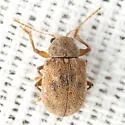
Demotina modesta
Demotina modesta
Identification: Note serrate margins of the pronotum: earliest US record is a spmn coll'ed in 1970 from n.Georgia Leaf curl and distortion caused by these beetles seems to be unique among the leaf beetles that feed on oaks. (Baker, 2023)
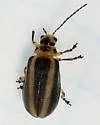
Derospidea brevicollis
Derospidea brevicollis
Identification: Note non-tapering elytral stripes Det. M. A. Quinn, 2015
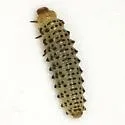
Derospidea ornata
Derospidea ornata
Type Locality: Brownsville, (Esperanza Ranch) Texas (Schaeffer 1905)
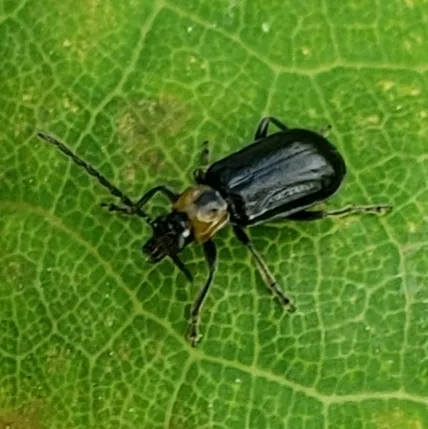
Diabrotica cristata
Diabrotica cristata
Identification: Pronotum black to orange , or less frequently: can be locally abundant:
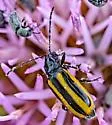
Diabrotica lemniscata
Diabrotica lemniscata
Identification: colors of the elytra, which are yellow, with a broad common sutural black vitta, and a broad dorsal vitta extending from the base nearly to the tip; or they may be described as black with a narrow dorsal vitta, the lateral and apical
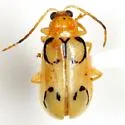
Diabrotica litterata
Diabrotica litterata
Identification: Det. M. A. Quinn, 2013 First US record, 2008 in Santa Ana NWR, Alamo, Hidalgo Co., TX (BG data) [Not listed in Riley et al. (2003)] ( 3 )
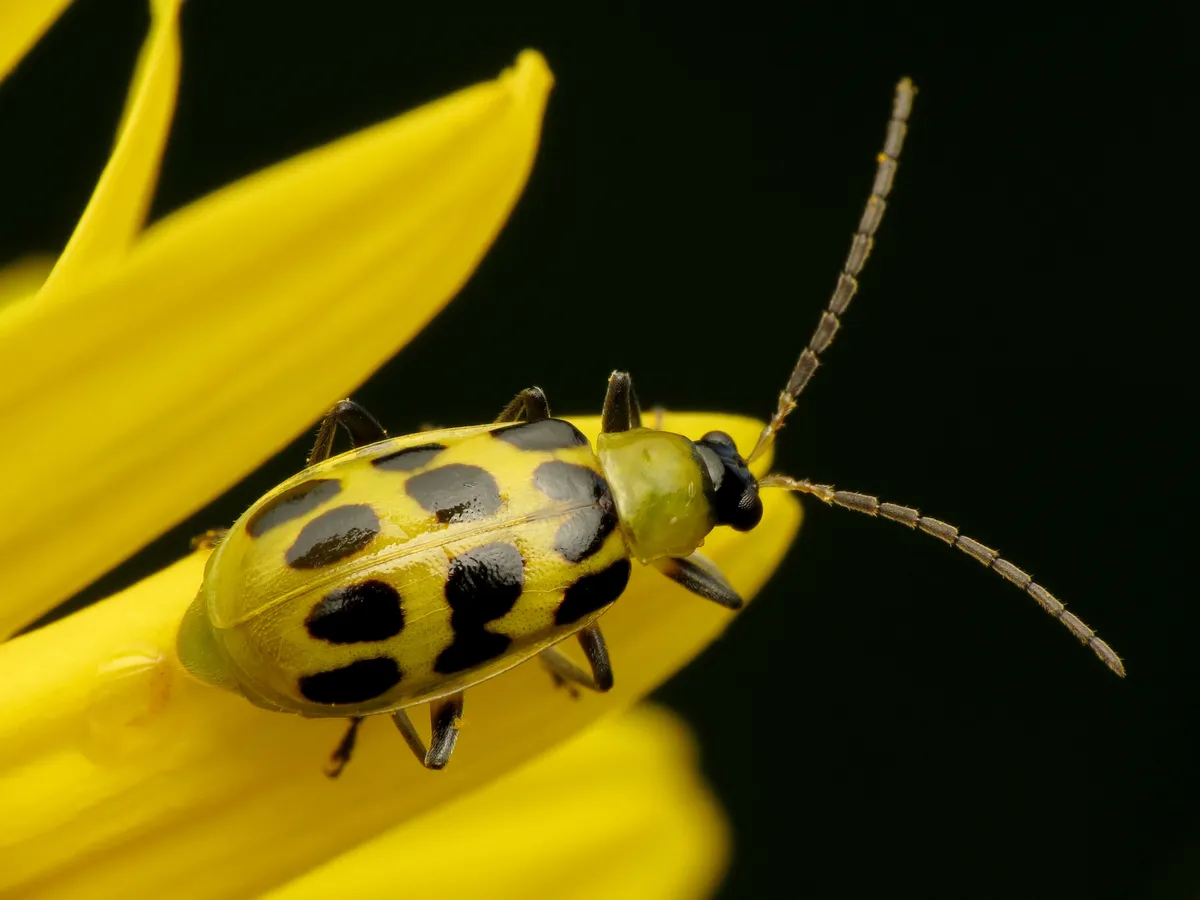
Spotted Cucumber Beetle
Diabrotica undecimpunctata
Identification: Subspecies, per : In D. u. undecimpunctata , the abdomen is greenish-yellow, elytra with 11 spots; in D. u. howardi , it is yellow to yellowish-red with 12 large black spots. The head, antennae and legs are all-black ( howardi ) or wi
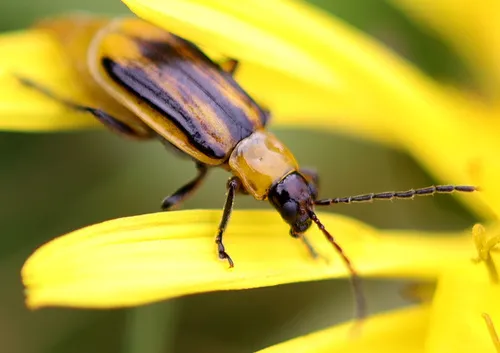
Western Corn Rootworm
Diabrotica virgifera
The Western corn rootworm, Diabrotica virgifera virgifera, is one of the most devastating corn rootworm species in North America, especially in the midwestern corn-growing areas such as Iowa. A related species, the Northern corn rootworm, D. barberi
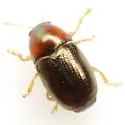
Bronze Leaf Beetle
Diachus auratus
Identification: See LeConte for key to most spp. the most widely dist. Diachus in NA
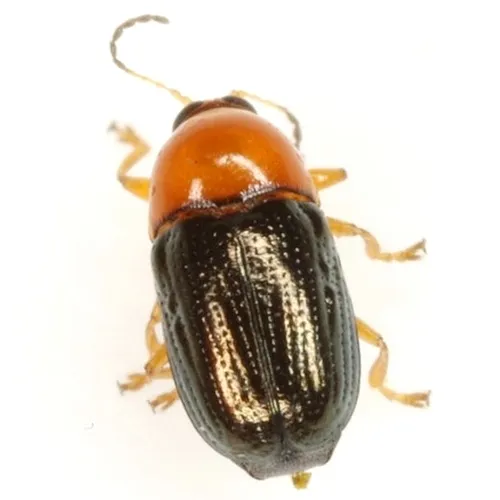
Diachus chlorizans
Diachus chlorizans
Identification: Pronotum impunctate, shining, yellow-orange, strongly convex.
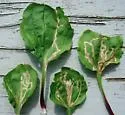
Dibolia borealis
Dibolia borealis
Identification: key couplets: Apices of elytra rounded, (not sinuous at apex). Antennae red-testaceous or red-brown. Pronotum not reddish. Form more oblong; elytra with spaces between striae with very few punctures ( 3 ) Description: Oblong oval, con
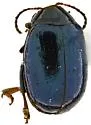
Dibolia catherinia
Dibolia catherinia
Identification: "This species is distinct from all other North American species, except reyheria , championi , and kansana , in having an orange or reddish-brown pronotum and a light-colored head and ventral surface." Distribution in Arizona combined
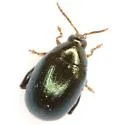
Dibolia championi 0
Dibolia championi
Identification: certainly very closely allied to [ Dibolia borealis ], but differs in the colour of the antenne, head, and thorax, and also in having the interstices of the elytra impunctate. It is quite possible that the fulvous colour of the thorax
Dibolia sinuata 0
Dibolia sinuata
Identification: Apices of elytra very deeply sinuous at apex even more broadly oval than D. ovata [Range: CA-NV / Mex.], resembling at first sight Phaedon viridis . Type Locality: Dallas, Tex.
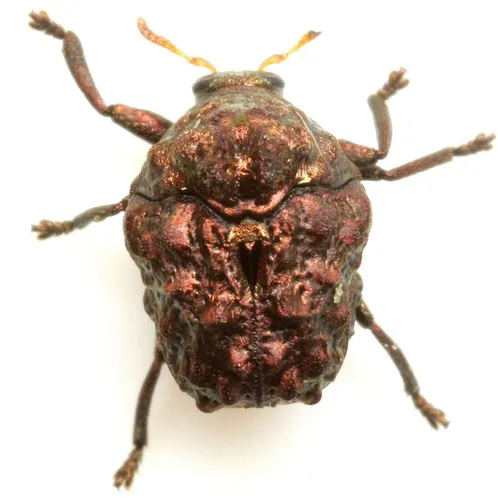
Diplacaspis prosternalis
Diplacaspis prosternalis
Type Locality: Brownsville, Texas, (Yucca Ridges and Esperanza Ranch) July. (Schaeffer 1906)
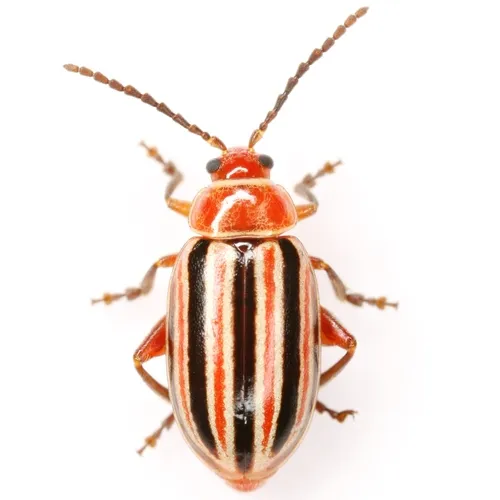
Disonycha admirabila
Disonycha admirabila
Identification: Quite small, more oval than most other species. Pronotum usually unspotted, or with two spots. Head with darker labrum, sometimes dark frontal tubercles, but pale on vertex. Most similar to D. caroliniana , but the latter with pale la
Striped Willow Leaf Beetle
Disonycha alternata
D. alternata is closely related to, and resembles two more species, D. latiovittata and D. pluriligata . Both also feed on willow; photo discrimination is problematic. D. latiovittata is exclusively western (BC - CA), while D. pluriligata has two for
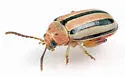
Disonycha arizonae
Disonycha arizonae
Identification: pronotal spots, plus lateral red stripes much paler than dorsal red stripes Det. E. G. Riley, 2013 Disonycha species can eventually be found on their breeding host, but for arizonae , I have never found it in series or with larvae, de
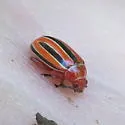
Disonycha balsbaughi
Disonycha balsbaughi
Identification: abbreviated discal vitta (E.G. Riley, pers. comm. to MAQ, 2014), =center stripe doesn't reach the apex of the elytra
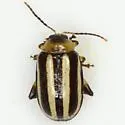
Disonycha barberi
Disonycha barberi
Identification: Det. M. A. Quinn, 2013 Differs from the similar D. glabrata in: - larger eyes (frontal width between eyes less than half of heads' width); - dark streak running down front between eyes - last antennal segment pale. Mostly coll'ed via
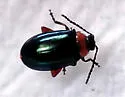
Disonycha collata
Disonycha collata
Identification: shining metallic green or blue elytra; prothorax and femora pale . (emphasis added) "Oval. Head with vertex and frons shining metallic green or blue; clypeus yellow; labrum brown. Prothorax and femora yellow. Elytra shining metallic b
Passionflower Flea Beetle
Disonycha discoidea
Identification: Fairly large, elytra orange-red with large, common black spot , or with suture and discal black stripe (var. abbreviata ) Larvae and adults freq. found on Passionflower ( Passiflora ). , , discoidea abbreviata Second similar, probably
Disonycha figurata 0
Disonycha figurata
Identification: Syntype • Head, pronotum and elytra pale, underside pale except for central area of metasternum and abdomen. Pronotum with two (4) dark spots in front; elytral pattern: 3 narrow vittae, median vitta not touching others at apex, vittae
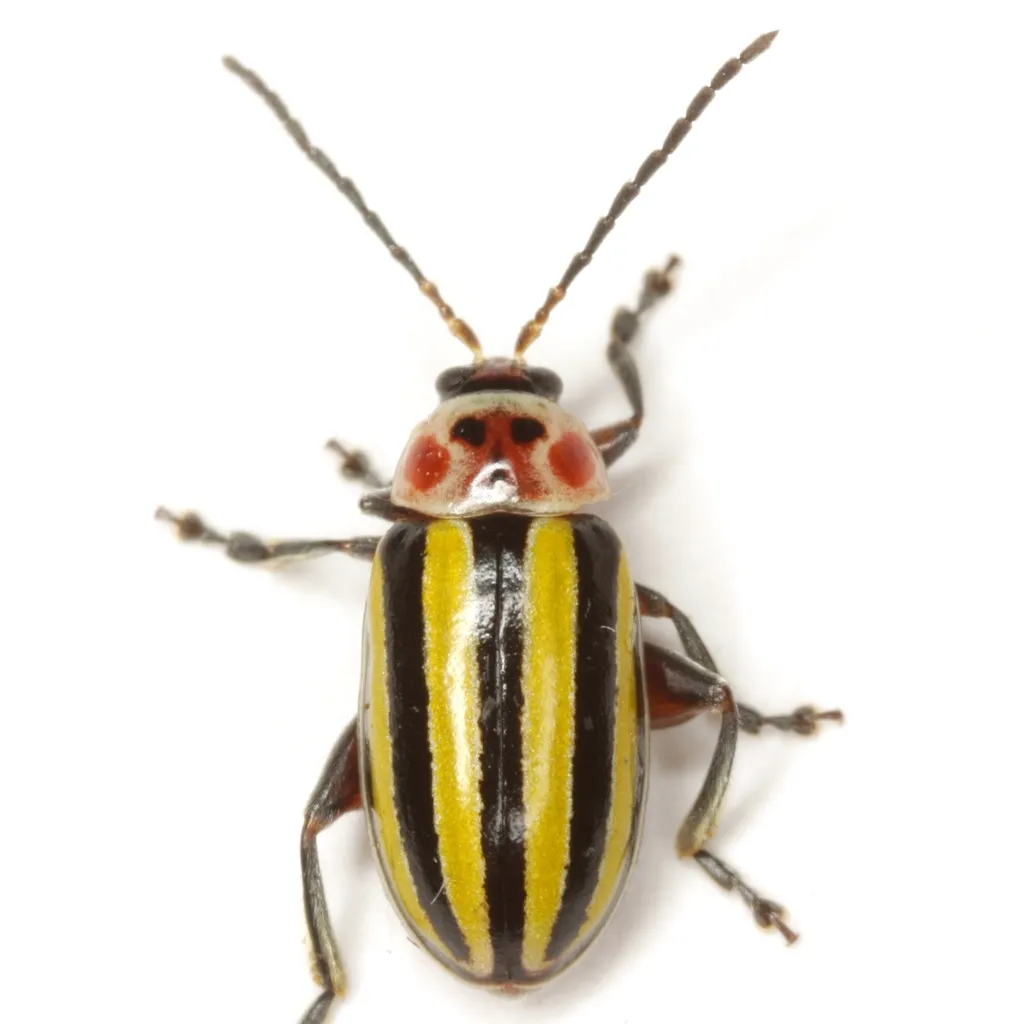
Disonycha fumata
Disonycha fumata
Identification: Very similar to D. alternata , but antennae unusually long, reaching to middle of elytra in male, or slightly beyond; 4th joint nearly twice as long as third (ratio here measured as 1.5-1.75, vs. 1.3-1.4 in alternata ) and elytra only
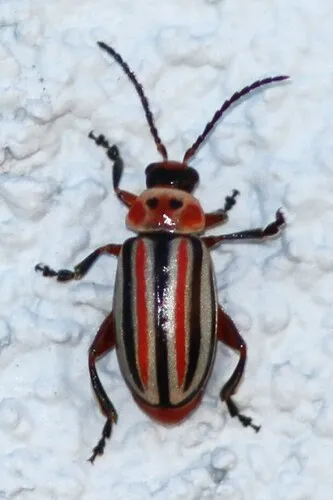
Disonycha latifrons
Disonycha latifrons
Identification: D. latifrons is a pretty variable species with large pronotum, ornate with 2-5 dark spots; head dark on occiput only, or black inbetween eyes also (but not continously so). Tibiae are described as usually completely dark. Underside al
Disonycha latiovittata
Disonycha latiovittata
Identification: Basically very similar to D. alternata ; pronotum and elytra more densely and strongly punctate, thus only feebly shining. Pronotum with 4, or 5 dark spots. Elytral bands often wider than in alternata , but variable; in CA specimens,
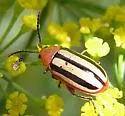
Disonycha leptolineata
Disonycha leptolineata
Identification: can be mistaken for D. discoidea abbreviata only - but quite easily. elytral punctation is distinct in D. discoidea vs. faint, partially indistinct in D.leptolineata D. discoidea abbreviata D.leptolineata A series with dark occiput (n
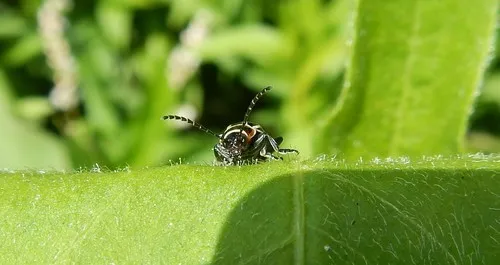
Disonycha limbicollis 0
Disonycha limbicollis
Identification: iNaturalist • see No type imaged in the MCZ
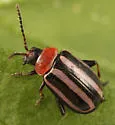
Disonycha maritima
Disonycha maritima
Identification: Elytral margin black, legs (largely) also; pronotum distinctly and rather densely punctate (except, sometimes, for a blank midline)
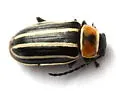
Disonycha pensylvanica
Disonycha pensylvanica
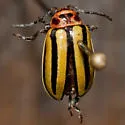
Identification: The three species of the D. pensylvanica -group are hard to tell apart; in some cases examining male genitalia is the only way. Common features: Head completely, or for the most part, black; pronotum reddish, usually with central dark
Disonycha pluriligata
Disonycha pluriligata
closely related to D. alternata , and basically similar. D. pluriligata has two forms / subspecies, the southwestern (sonoran?) pura LeConte, 1858 [NM - CA, probably extending into Mexico], and the nominate form of more eastern range [west to IL -
Disonycha politula
Disonycha politula
Identification: lustrous and closely punctate green or blue elytra; prothorax pale, undersurface mostly dark, the abdominal margin, anterior femora, and basal half of posterior femora pale. elytra more or less blue this may be known by the very disti
Disonycha procera
Disonycha procera
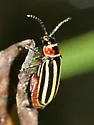
Identification: See info page for Disonycha pensylvanica Disonycha procera : - head usually red anteriour of antennal base; - legs usually with red femora, also tibiae can be partly red; (dark varieties with legs all dark occur) - abdomen usually com
Disonycha punctigera
Disonycha punctigera
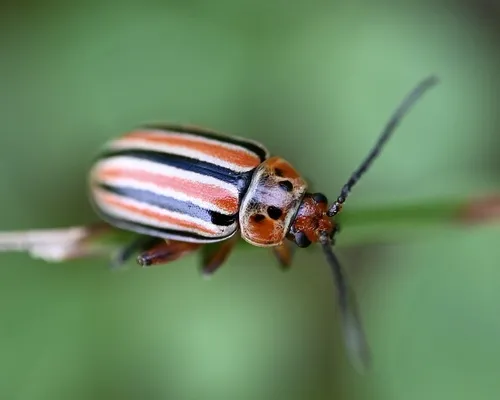
Identification: Elytra with narrow black stripes, the submarginal usually not extending beyond median at apex. Pronotum with (usually) 4 spots, head with dark base (difference vs. D. caroliniana ); Elytra distinctly, and quite densely punctured (name
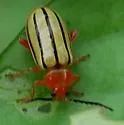
Disonycha quinquelineata
Disonycha quinquelineata
Identification: Yellow elytra with five narrow, free-ending black vittae; legs completely red , though tarsi may be deeper in colour .
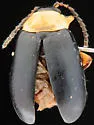
Disonycha semicarbonata
Disonycha semicarbonata
Identification: Essentially, same characteristics as D. collata ; differs in: - abdomen dark, except for terminal segment - head yellow in front - dorsum distinctly punctured - elytra rather black, and less shiny.
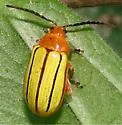
Disonycha stenosticha
Disonycha stenosticha
Identification: Det. E. G. Riley, 2009 Texas considers this sp. a SGCN ( 6 ) Type Locality: "Brownsville," Cameron Co., Texas on January 17, 1923. (Schaeffer 1931)
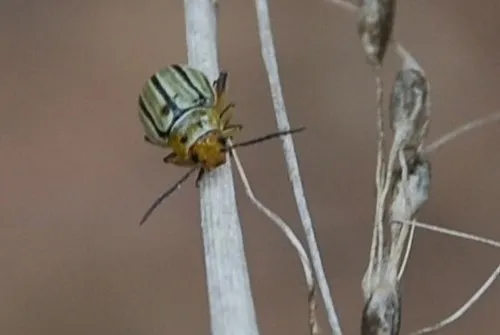
Disonycha tenuicornis
Disonycha tenuicornis
Identification: true tenuicornis . Note: that when alive, tenuicornis is yellowish, not the blood reddish color of some other vittate Disonycha . Det. E. G. Riley, 2022 All the current Bugguide images of D. tenuicornis are not tenuicornis . I am not
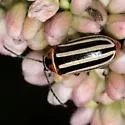
Disonycha uniguttata
Disonycha uniguttata
Identification: See info page for Disonycha pensylvanica
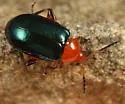
Disonycha varicornis
Disonycha varicornis
Identification: lustrous blue or purple, rarely green elytra [emphasis added], and pale head, prothorax, and undersurface, except for darkened tibiae and tarsi and apex of hind femora. ( 3 ) Four basal antennomeres are pale as well as one or two term
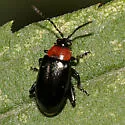
Spinach Flea Beetle
Disonycha xanthomelas
Identification: head, elytra, and legs, except at base, black note black at base of pronotum
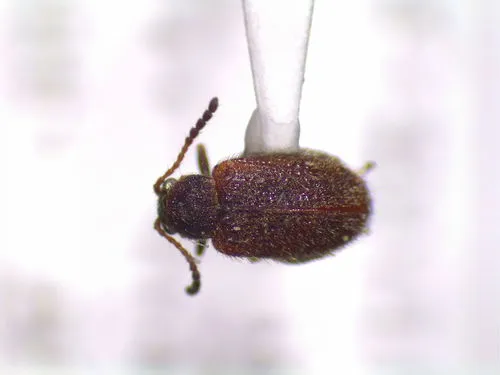
Distigmoptera borealis
Distigmoptera borealis
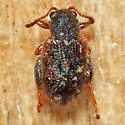
Distigmoptera borealis is a species of flea beetle in the family Chrysomelidae. It is found in North America.
Distigmoptera impennata
Distigmoptera impennata
Identification: Varying from yellow to dark brown, densely punctate, pubescent; the striate punctures of elytra well separated by distinct intervals; Males either wingless or with wings reduced. (Blake 1943) Type locality: Isle au Haut, Maine, collec
Donacia assimilis
Donacia assimilis
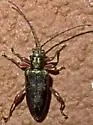
Identification: metallic green, antennae mostly black legs reddish, femora metallic at apex elytra shiny, subtruncate at base; punctures moderately coarse near base, finer near apex hind femur without tooth, markedly clavate
Girdle-horned Pond Lily Leaf Beetle
Donacia cincticornis
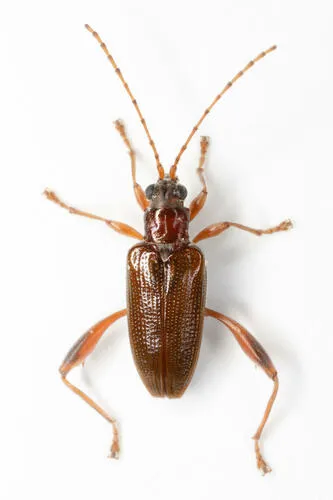
Identification: Pair of hind femora spines in male, but note that paired metafemoral spines (or teeth) are found in quite a number of species, so this is not diagnostic. This species is incredibly variable. Typically, pronotum and elytra are smooth a
Donacia cinerea
Donacia cinerea
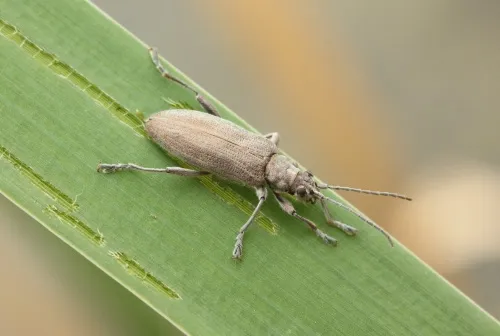
7.5 to 11 mm. Most easily identified among the UK Donaciinae by the finely and densely pubescent dorsal surface which gives the species a silky or grey appearance in the field. Elongate with sub-parallel elytra, entirely dull bronze or, occasionally,
Donacia clavipes
Donacia clavipes
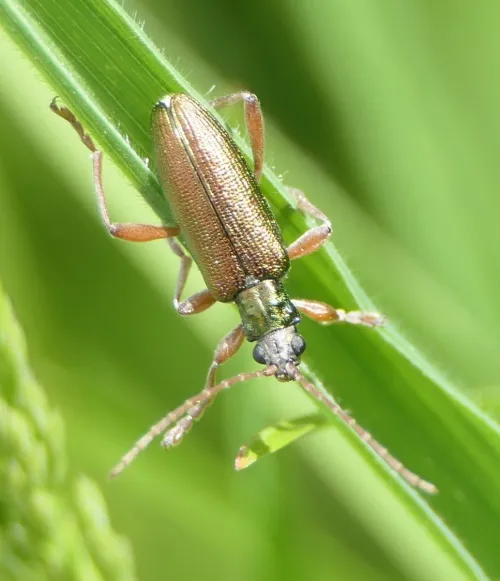
Size: 8.3 to 10.5 mm. A shiny metallic brassy-green to coppery beetle with red-brown legs. Unless identified by a recognised expert, a photo is required. If the photo doesn't show the key ID features then in the comments box describe the size and ide
Donacia cuprea
Donacia cuprea
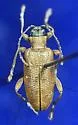
Identification: Diagnostic character: epipleuron of elytra is convex and wide, often distinctly wider than the elytral interval next it. Pronotum quadrate or wider than long, with super dense punctures; elytra quite rugose; legs generally entirely pa
Donacia edentata
Donacia edentata
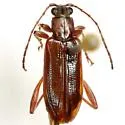
Identification: This species is very distinct from any other known so far. By description and superficially it resembles parvidens somewhat, but the form is more elongate, the prothorax always dull, the antennal joints longer and narrower, the poster
Donacia fulgens
Donacia fulgens
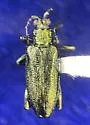
Identification: habitus photos Among species of the D subtilis group, D fulgens is recognizeable most easily by its brilliant green color, produced by dense fine rugosity of the elytra. Median line of pronotum mostly obscured by dense punctuation, th
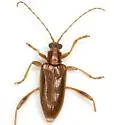
Donacia hypoleuca
Donacia hypoleuca
Identification: Uniform very fine microsculpture of pronotal surface, hind pronotal margin wider than anterior and with hind setiferous tubercle quite prominent; slender but distinctly clavate metafemora, sometimes toothless metafemora; basal protar
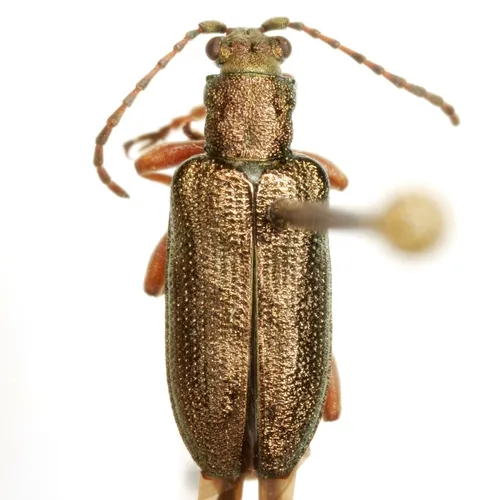
Donacia liebecki
Donacia liebecki
Identification: It resembles megacornis more than any other of our species but differs from that by more depressed form less, stouter antennal joints, posterior femora moderately clavate with a small acute tooth in both sexes and mesosternal process
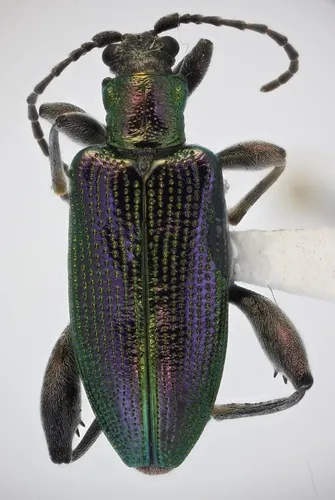
Donacia (Mergodonacia) magnifica
Donacia magnifica
Identification: Recognized by completely dark green color, dense punctures of pronotum, and striking multicolor of elytra and pronotum, metafemora of male bidentate, legs entirely dark • Holotype Not commonly seen or collected because the host plant
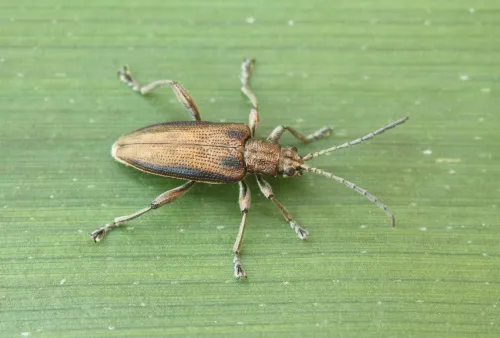
Donacia marginata
Donacia marginata
Size: 8 to 10mm. Elytra usually golden bronze, with variable reddish-purple patches and sides. Unless identified by a recognised expert, a photo is required and the specimen should be examined with a microscope. In the comments box, state the key or
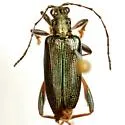
Donacia palmata
Donacia palmata
Identification: first tarsomere of male is “palmate”, very much widened, but not so in female. Pronotum is alutaceous, with well developed sulci.
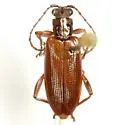
Donacia parvidens
Donacia parvidens
Identification: This distinct species [...] is apt to be confused with cincticornis . However, the antennae are heavier , the prothorax has a different shape and sculpture, the posterior femora are much shorter and have only a single feeble tooth (em
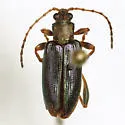
Donacia piscatrix
Donacia piscatrix
Identification: Variable in coloration and external features; males have a noticeable tooth on the mesotibia adjacent to the spur
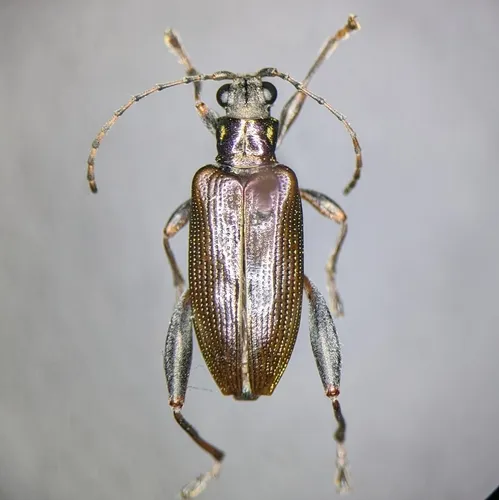
Donacia proxima
Donacia proxima
Donacia proxima is a species of aquatic leaf beetle in the family Chrysomelidae. It is found in North America.
Donacia rugosa
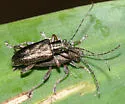
Donacia rugosa
Identification: Coarsely and densely punctate pronotum, forming rugae laterally; strongly rugose elytra; legs entirely reddish pale, though can have darkened subapical areas of femora.
Donacia semicuprea
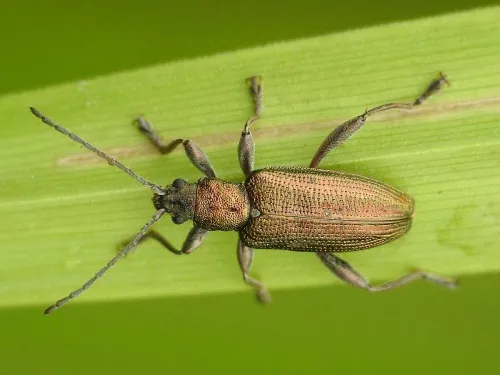
Donacia semicuprea
Length 6 to 9mm. Upper surface is metallic bronze. The pronotum has a central longitudinal groove and is shining between the punctures. The underside has a covering of short white hairs giving it a grey appearance. Wet areas where Reed Sweet-grass is
Donacia simplex
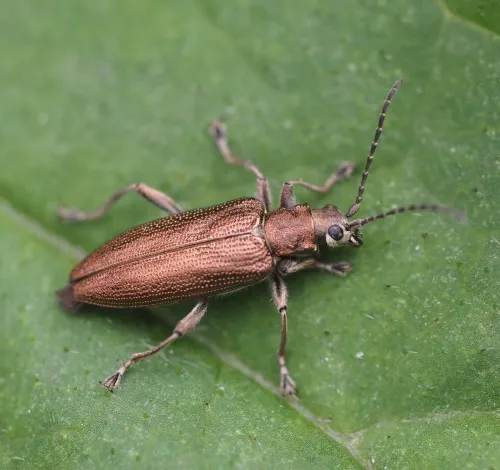
Donacia simplex
A medium sized (7 or 8 mm) metallic brown beetle. Elytral apices are truncate, c.f. slightly sinuate or wavy in D. vulgaris . On the edges of pools and canals where it can be found on emergent and marginal vegetation. It is particularly associated wi
Donacia thalassina
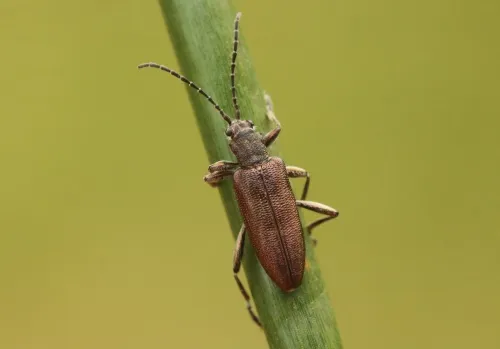
Donacia thalassina
Size 6.5 to 8.5 mm. Shiny bronze, usually with a coppery tinge, sometimes greyish or greenish on the pronotum and elytra. Unless identified by a recognised expert, a photo is required and the specimen should be examined with a microscope. In the comm
Donacia tuberculata
Donacia tuberculata
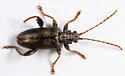
Identification: Unusual for the subgenus in lacking strongly confluent punctuation of the pronotum, and elytral apex indistinctly truncate. Pronotum much wider across the anterior calli than across the base. Pronotum with indistinct median sulcus, i
Donacia tuberculifrons
Donacia tuberculifrons
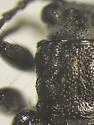
Identification: Pronotum with anterolateral calli and posterolateral calli distinct, not exceeded by the setiferous tubercles so the side appears bisinuate; median pronotal line fairly distinct, disc with smooth rugae laterally; elytra curving relati
Donacia versicolorea
Donacia versicolorea
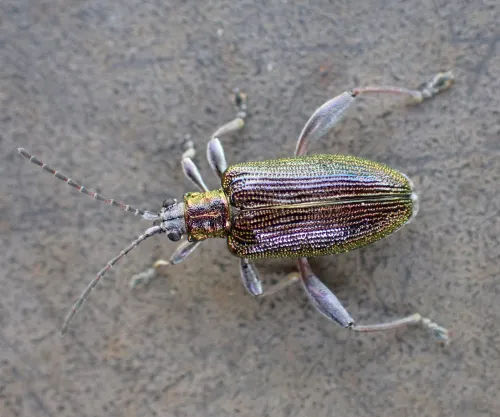
Size: 6.2 to 8.9 mm. The elytra can give a dark purplish or bronzy appearance depending on light conditions. Unless identified by a recognised expert, a photo is required and the specimen should be examined with a microscope. In the comments box, sta
Donacia vulgaris
Donacia vulgaris
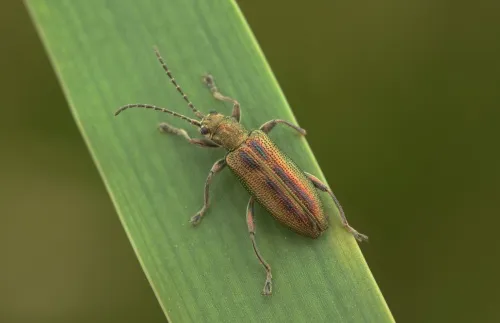
Length up to 12mm with females being larger than males. This Reed Beetle has coppery elytra, with a metallic reddish or bluish central area, though the female is less colourful. Donacia semicuprea is similar but the pronotum has a central longitudina