
Family Leaf Beetles (Chrysomelidae)
Chrysomelidae is a family in the order Coleoptera. Browse 1,349 named species recorded in this family, or open an individual profile for its available identification and natural-history information.
Species in Chrysomelidae (1,349)
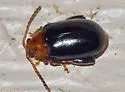
Capraita quercata
Capraita quercata
Identification: Head and pronotum reddish, unspotted; elytra distinctly punctured, blackish (margin may be narrowly lighter, but not as pale as pronotum) The species has for long been misinterpreted: Oedionychis quercata sensu Horn et auct., non Fabr
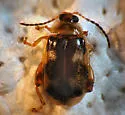
Capraita scalaris
Capraita scalaris
Identification: pale, with the thorax having acute anterior angles and broadly reflexed sides; elytra pitch-black and finely punctate, broader at the base towards the scutellum, with a trilobed lateral margin and two pale spots on the disc of each, a
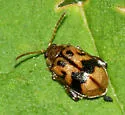
Capraita sexmaculata
Capraita sexmaculata
Identification: typical form: Det. E. G. Riley, 2009 at high-moderate risk of endangerment due to the EAB ( 4 )
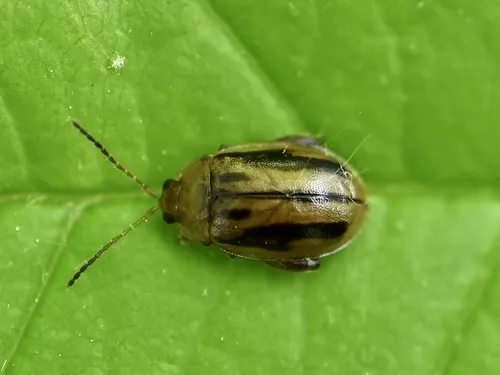
Capraita subvittata
Capraita subvittata
Identification: Elytra coarsely punctate (but less so as in C. sexmaculata ), general pattern consists of a humeral spot, +/- elongated to about half of elytron, a median vitta, not reaching base or apex, and a short basal streak near scutellum, reac
Capraita suturalis
Capraita suturalis
Capraita suturalis (Capraita suturalis) is a species in the family Chrysomelidae, commonly known as leaf beetles, belonging to the order Coleoptera (Beetles). It is classified within the subfamily Galerucinae, tribe Alticini, suborder Polyphaga, supe
Groundnut Bruchid
Caryedon serratus
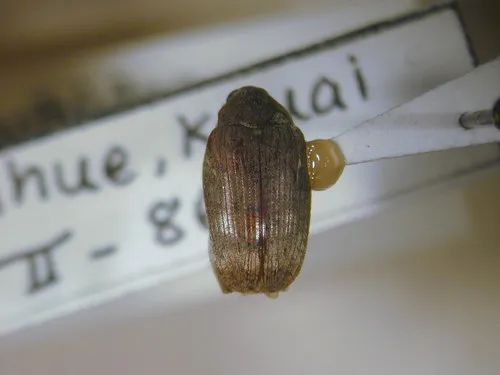
Caryedon serratus, known generally as the groundnut bruchid or groundnut borer, is a species of leaf beetle in the family Chrysomelidae. It is found in Africa, the Caribbean, Europe and Northern Asia (excluding China), Central America, North America,
Azurea Tortoise Beetle
Cassida azurea
introduced during 1970s to combat the invasive bladder campion ( Silene vulgaris ) ; in Canada, released during 1989–1994
Pale Tortoise Beetle
Cassida flaveola
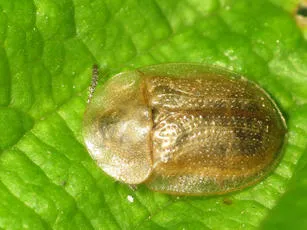
At 4-6mm, this pale-golden coloured Tortoise Beetle is generally the smallest in the genus. It has a translucent yellowish rim. Areas of long grass, flowers and coarse vegetation. Best months are May and June, however it overwinters in grass tussocks
Cassida relicta
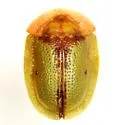
Cassida relicta
described from three specimens with the data "Illinois Belfrage." Riley regarded this species as "perhaps the rarest of the United States cassidines."
Tortoise Beetle
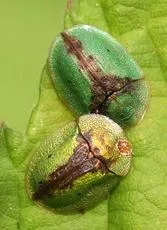
Cassida vibex
One of several similar beetles with flat, rounded bodies. It is pale golden green with a darker central band on its back. Amongst vegetation on roadsides and field margins etc. It is often found on Thistles and Yarrow in summer. Found mainly south of
Cassida viridis
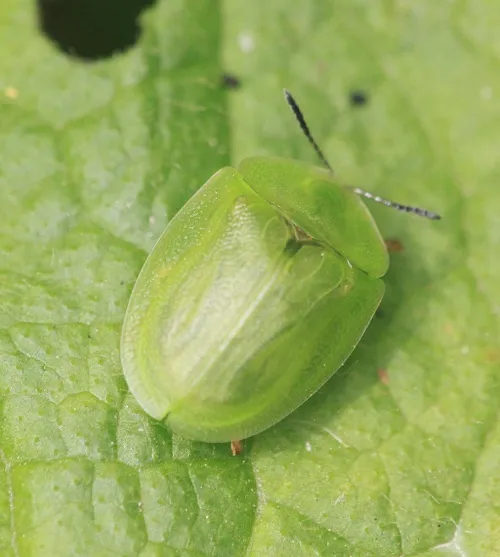
Cassida viridis
Length 7.5 to 10 mm. This is an all green Tortoise Beetle that lacks the markings of other Cassida species. Cassida viridis is similar to C. rubiginosa but can be distinguished by the rounded rear corners of the pronotum (sharp in C. rubiginosa). It
Cerataltica insolita
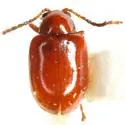
Cerataltica insolita
Identification: description Rare in IN, AL, FL ; exceedingly rare in MD
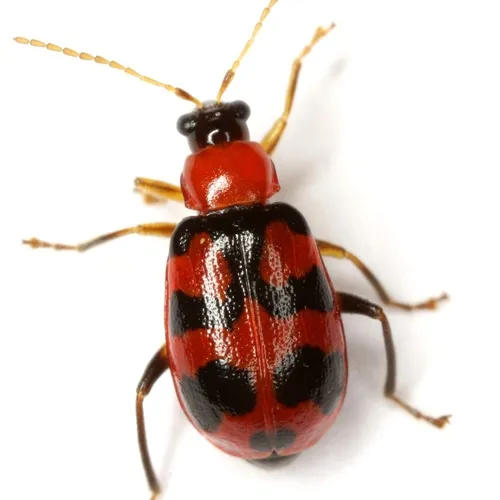
Cerotoma atrofasciata
Cerotoma atrofasciata
Identification: elytra pale testaceous, a narrow transverse band at the base, dilated at the suture, and two small spots near the apex, black. (Jacoby, 1879) Type Locality: Guatemala
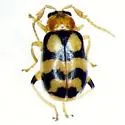
Cerotoma ruficornis
Cerotoma ruficornis
males have neat modified antennae (E. G. Riley, pers. comm. to MAQ, 2013)
Chaetocnema borealis
Chaetocnema borealis
Identification: Type specimen is in CNC, image here: https://www.cnc.agr.gc.ca/images/specimen/s3722_696891.jpg Confused with C. hortensis , in which the basal antennomeres are yellow and dorsal surface has a bronze or green lustre. In C. borealis ,
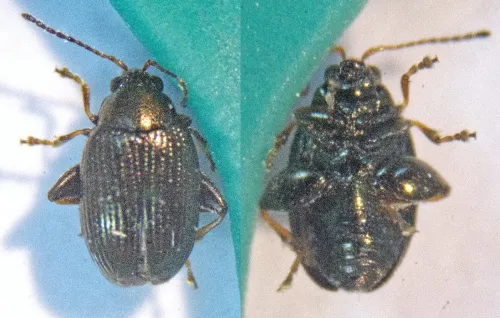
Mangold Flea Beetle
Chaetocnema concinna
1.5-2.3 mm. A dark, shiny flea beetle. Bronze, coppery or dark green with elytral punctures in straight rows. The genus has small teeth on each of the mid and hind tibia. See ID checklist below. C. picipes is the only other species in the genus with
Toothed Flea Beetle
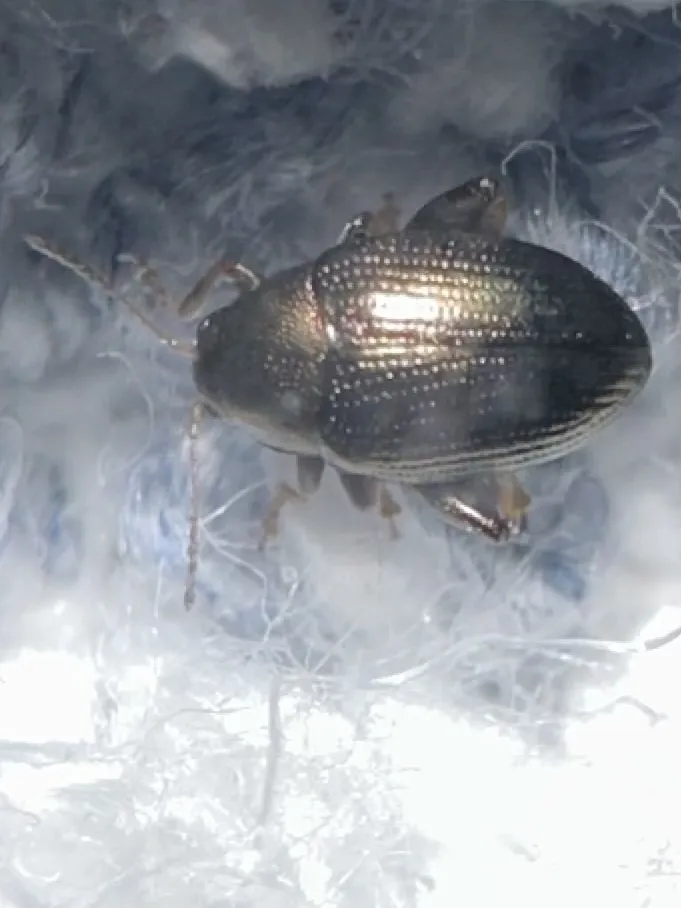
Chaetocnema denticulata
Chaetocnema denticulata, the toothed flea beetle, is a species of flea beetle in the family Chrysomelidae. It is found in North America.
Corn Flea Beetle
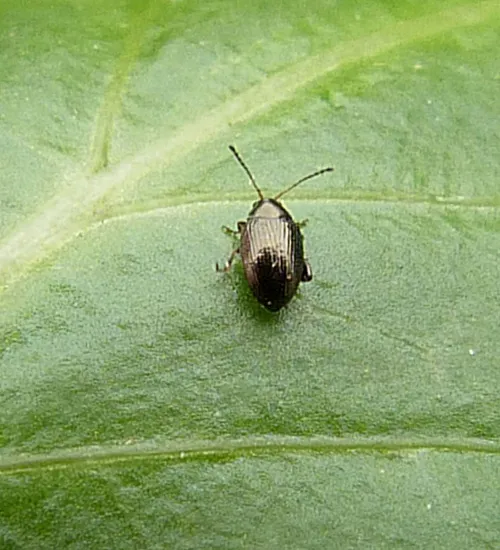
Chaetocnema hortensis
1.6-2.3mm. The genus can be recognised by the external tooth on both the mid and hind tibia. Bronze uppers (can be coppery or metallic green). Antennal segments 1-5 are pale then black after this. Legs are pale brown but with darker femora. The punct
Chaetocnema minuta
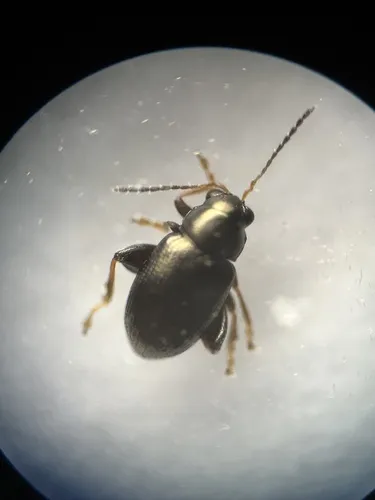
Chaetocnema minuta
Identification: Black bronze, head punctate (small, indistinctly), elytral punctures distinct to apex, pronotum with distinct row of basal punctures, legs dark red/brown (paler in some), first 4-5 antennomeres yellow/brown
Corn Flea Beetle
Chaetocnema pulicaria
May damage corn crops; important in parts of the Midwest where it may transmit the bacterial agent of Stewart's wilt of corn ( 4 ) . It is also called the clover leaf beetle for feeding on this crop
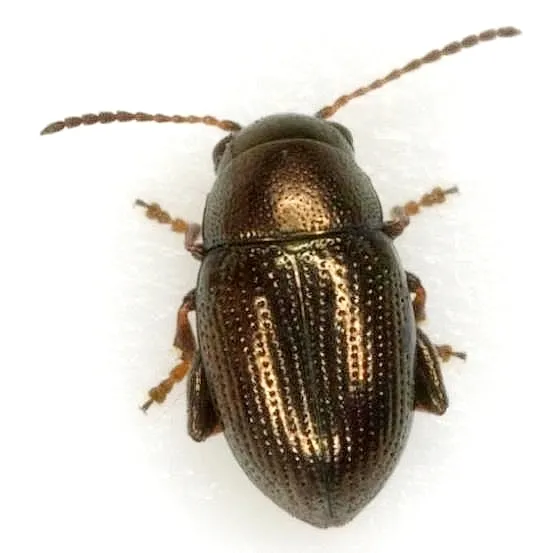
Boca Chica flea beetle
Chaetocnema rileyi
Identification: distinguished based on a combination of the vertex of head with a few punctures above each eye, the pronotal punctures distinct and evenly distributed, the pronotal margin posterior to the anterior pronotal angle lacking an irregulari
Chalepus bicolor
Chalepus bicolor
Identification: Elytra entirely dark, pronotum mostly red , southern populations may have dark pronotum , , femora red at base , red scutelum Det. M. A. Quinn, 2017
Argus Tortoise Beetle
Chelymorpha cassidea
Identification: dorsum glabrous above -- hairy in Ch. phytophagica , a swUS species: vs
Chelymorpha cribraria
Chelymorpha cribraria
Identification: highly variable (at least globally), but in FL often with multiple dark spots of almost uniform size and spacing on the elytra that make it appear to be perforated like a metal colander. showed up in so. FL following hurricane Andrew
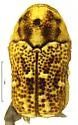
Chlamisus arizonensis
Chlamisus arizonensis
per one spmn's label data: asso. w/ silverleaf oak ( Quercus hypoleucoides , Fagaceae). ( 3 )
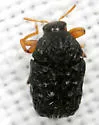
Chlamisus foveolatus
Chlamisus foveolatus
Identification: Elytra and pronotum black, legs, antennae, clypeus , and frons orange.
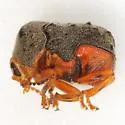
Chlamisus maculipes
Chlamisus maculipes
Identification: This species is the most distinctive of the Chlamisini found in America north of Mexico. The head, antennae, and most of the ventral surfaces and legs are bright orange. This species exhibits pronounced sexual dimorphism of a type whi
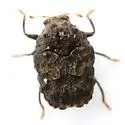
Chlamisus quadrilobatus
Chlamisus quadrilobatus
Identification: "...color dark cupreous, antennae, labrum, tarsi and tibiae in about apical half reddish." "...readily known from the other cupreous North American Boloschesis by the coloration of the tibiae and tarsi and the different sculpture of p
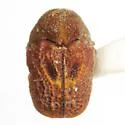
Chlamisus texanus
Chlamisus texanus
Identification: The color, sculpture and form of thorax and the almost entire absence of tubercles on the elytra makes this an easily recognizable species. (Schaeffer 1906) Type: "Brownsville, Texas, one specimen collected by the late Ottomar Dietz,
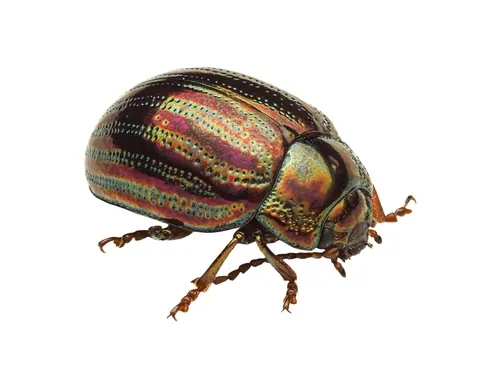
Rosemary Beetle
Chrysolina americana
Attractive, 8mm long, metallic green beetle with purple stripes. To be found on Rosemary, Lavender, Thyme, Sage and some other related plants. The soft-bodied grubs are greyish white with five darker longitudinal lines; fully grown larvae are 5 to 8m
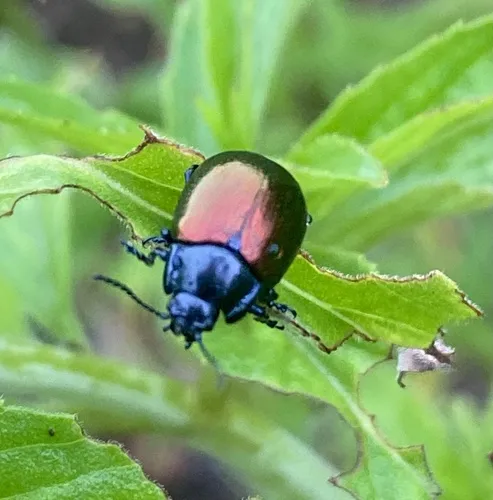
Gold-winged Leaf Beetle
Chrysolina auripennis
Identification: variable iridescence, black form least common elytra variable, bright green, cupreous, bronze black, or deep blue or violet.
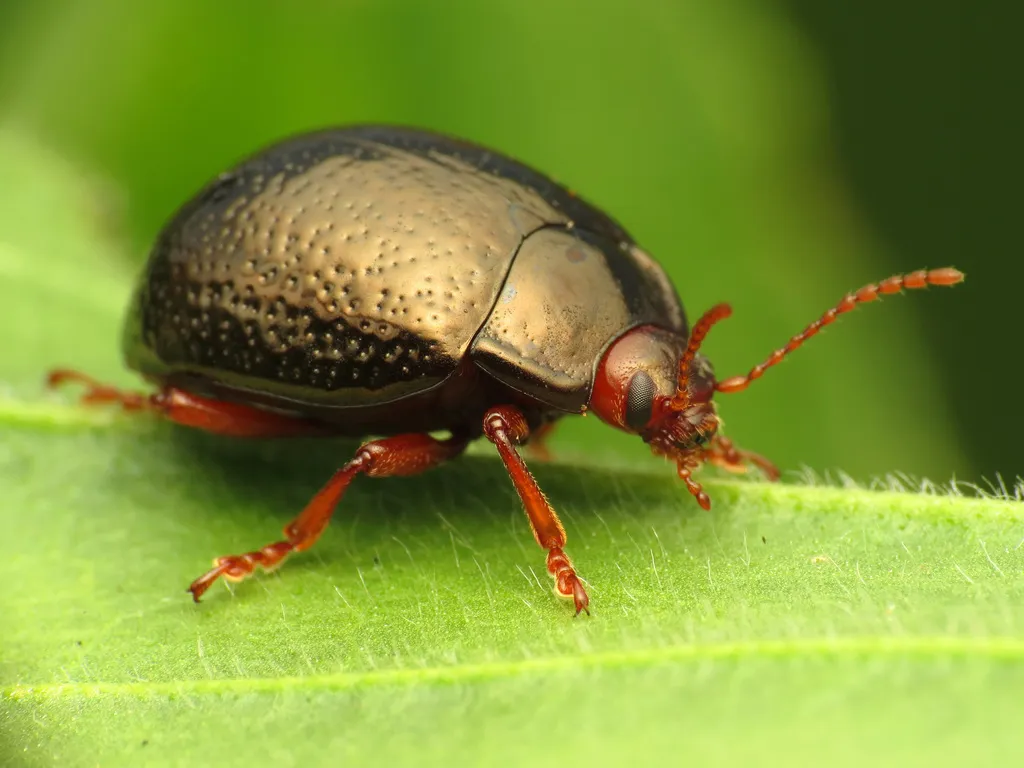
Chrysolina bankii
Chrysolina bankii
Identification: Chrysolina bankii is a dark-bronze beetle, 7–11 mm in length with reddish legs and antennae.
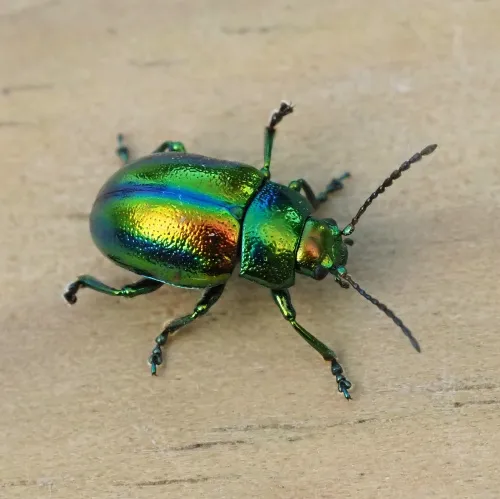
Dead-nettle Leaf Beetle
Chrysolina fastuosa
Body length 5 to 6 mm. A stunning beetle which is usually metallic green with blue, red and gold banding.
Chrysolina flavomarginata
Chrysolina flavomarginata
Identification: sides of the elytra flavous Det. V. Belov, 2024
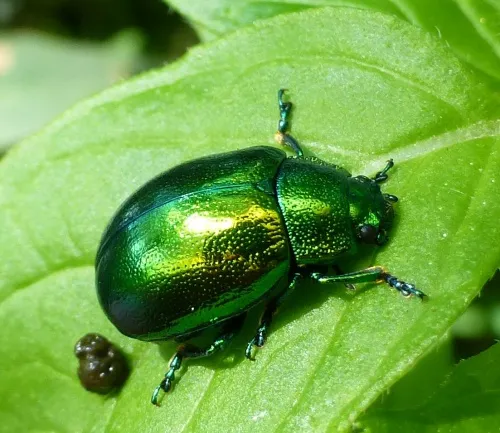
Mint Leaf Beetle
Chrysolina herbacea
Up to 10 mm long. The whole body is an iridescent green colour and peppered with tiny indentations. Peak time seems to be August and September. Both the larvae and the adult beetles feed on mint. Found mainly in the south and up to the Midlands of En
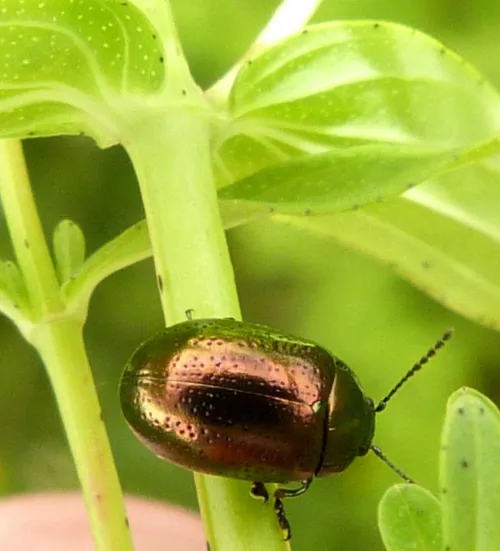
Chrysolina hyperici
Chrysolina hyperici
Around 5mm in length. The elytra have a maroon/purple iridescent sheen and a domed appearance, studded by tiny dimples. Associated with Perforate St John's Wort ( Hypericum perforatum ). The larvae feed during the night on shoot tips and basal and de
Chrysolina oricalcia
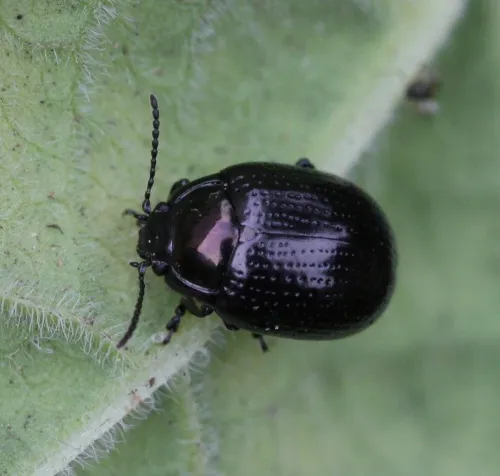
Chrysolina oricalcia
The elytra are black and have a generally domed appearance, studded by tiny dimples. Found in hedgerows, roadside verges and woodland rides, favouring umbellifer flowers such as Cow Parsley and Hogweed. Around mid summer is the peak period of adult a
Chrysolina polita
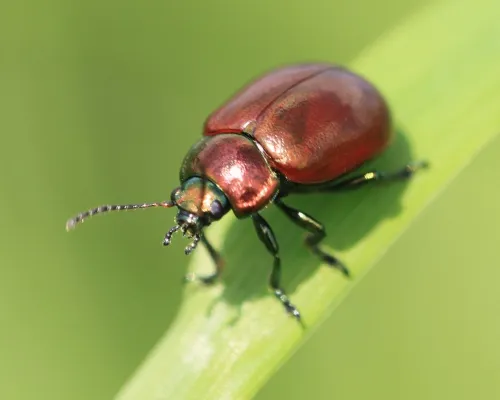
Chrysolina polita
Length 6.5 to 8.5 mm. Conspicuous with its shiny red-chestnut elytra and dark metallic green pronotum. Amongst the foliage of trees and bushes. Fairly common and widespread in England and Wales, fewer records from Scotland.

Klamath Weed Beetle
Chrysolina quadrigemina
Introduced from Australia in 1944 to combat Klamath weed (it could not be obtained from Europe because of war).
Chrysolina staphylaea
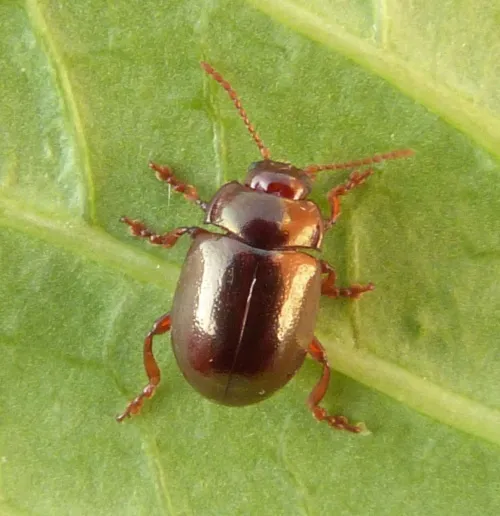
Chrysolina staphylaea
Length about 9.5 mm. This is a mid brown coloured beetle. Well vegetated areas, even deciduous woodland. In common with other members of the family it is a leaf feeding species. Widespread but sometimes local in Britain.
Chrysolina sturmi
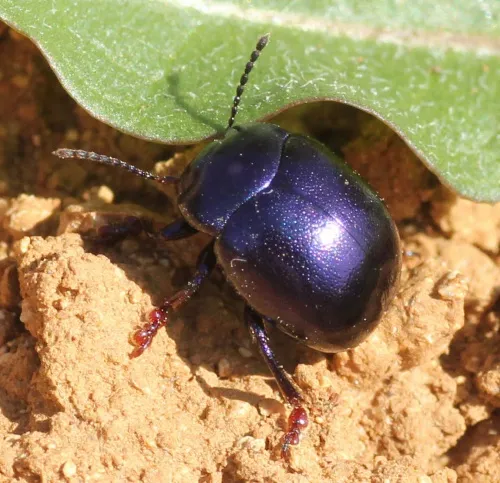
Chrysolina sturmi
This is a beautiful species, the head, pronotum and elytra are metallic purple. It superficially resembles Timarcha goettingensis, but whilst the femora and tibiae of Chrysolina sturmi are metallic purple, the tarsi are orange-brown. The adults are f
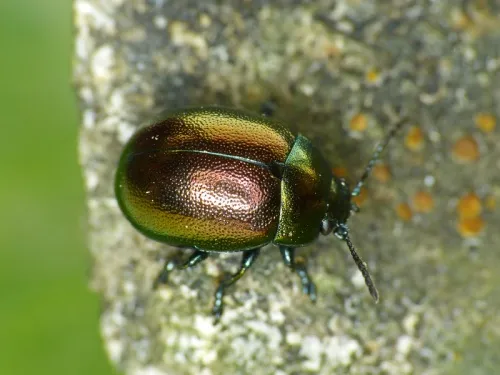
Chrysolina varians
Chrysolina varians
Size 4 to 6 mm. A variable leaf beetle, usually reddish or greenish bronze in colour with finely punctate elytra. Widespread and fairly frequent in Britain. No additional images available for this species.
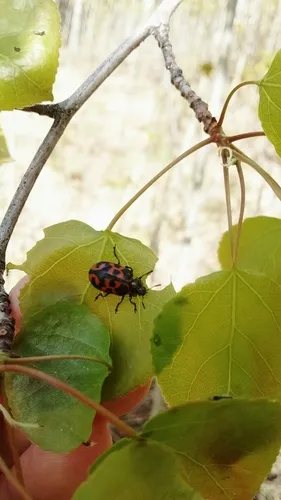
Chrysomela falsa
Chrysomela falsa
Chrysomela falsa is a species of leaf beetle in the family Chrysomelidae. It is found in North America.
Alder Leaf Beetle
Chrysomela interrupta
Perhaps in a mimicry complex with Coleomegilla maculata - Spotted Pink Lady Beetle --
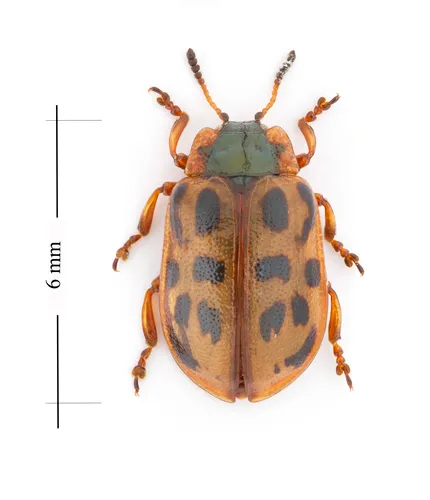
Chrysomela mainensis
Chrysomela mainensis
Chrysomela mainensis is a species of leaf beetle in the family Chrysomelidae. It is found in North America.
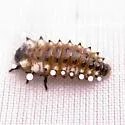
Chrysomela texana
Chrysomela texana
Identification: Head, pronotum, and legs entirely reddish-yellow or virtually so The head and prothorax is generally reddish with metallic tint and the elytra are usually as heavy or heavier marked than in typical scripta . Det. E. G. Riley, 2009 Typ
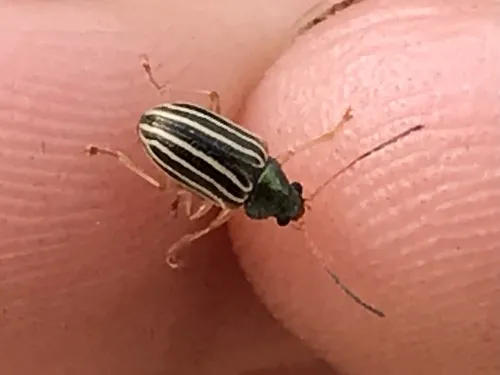
Colaspis costipennis
Colaspis costipennis
Colaspis costipennis is a species of leaf beetle from North America. It is mostly found in coastal states; in the United States, its range extends from Louisiana and Georgia north to New Hampshire and Pennsylvania, and in Canada, it is reported from
Colaspis crinicornis
Colaspis crinicornis
Identification: Det. E. G. Riley, 2024 Type Locality: Brownsville, Cameron Co., Texas
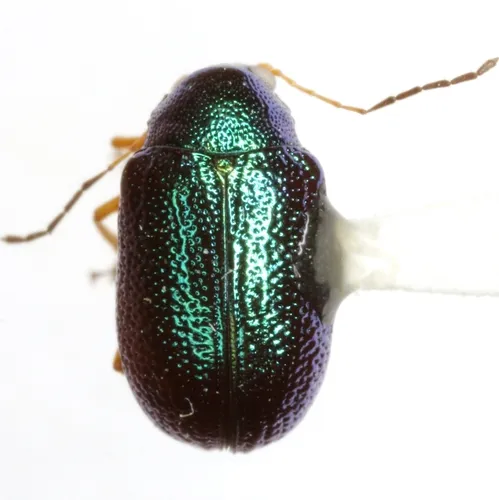
Colaspis cruriflava
Colaspis cruriflava
Identification: Per Blake: "This species is somewhat paler green than the rest and the only one of the group with yellow legs . It is the smallest one of the favosa group. There is a peculiar depression on each side of the prothorax not found in the
Colaspis flavocostata
Colaspis flavocostata
Identification: Has a dark metallic lustre, and pronotal margin has a clear greenish lustre. [ Rob Westerduijn ] Type Locality: Chipola Lake, Florida
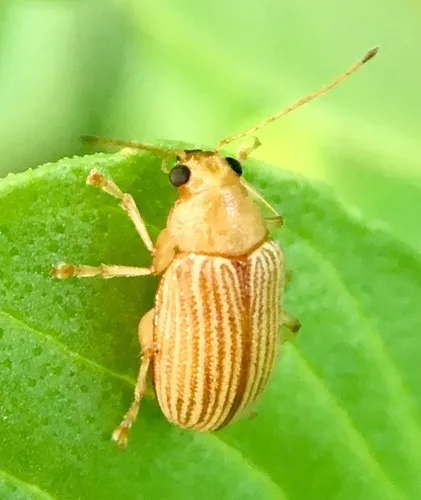
Western Brown Colaspis Leaf Beetle
Colaspis hesperia
Identification: A close relative of C. brunnea (e.NA), but differs in being generally a little larger with longer elytra and more coarsely punctate pronotum. It is yellow brown without dark margins or all dark undersurface, only the sides of the abdo
Colaspis pini
Colaspis pini
Identification: Adults are oval, convex, tannish to brown, with metallic greenish specks on their backs. Det. E. G. Riley, 2024 Mature larvae are yellowish-white, about 6 mm long, with a sparse covering of short hairs and clusters of longer hairs at
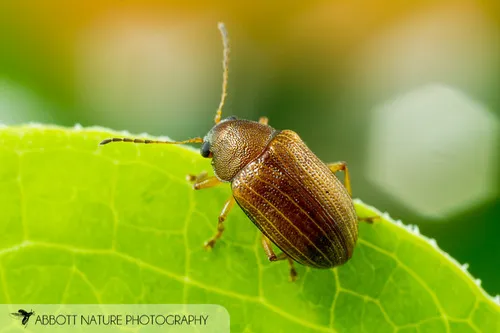
Colaspis recurva
Colaspis recurva
good species that belongs to the flavocostata complex. There is little question about its identification, but it is “officially” known only from peninsular Florida, but in reality ranges (along the coast) north to central New York State, where it is
Coleorozena fulvilabris
Coleorozena fulvilabris
Identification: scutellum is pubescent and the red humeral spot is nearly square (Jacoby, 1888) Det. E. G. Riley, 2010 fairly common in c. TX ( 5 )
Coleorozena lecontii 0
Coleorozena lecontii
Identification: pronotal punctation deep and coarse (Moldenke 1970) Type Locality: Texas boundary (Webb Co.?)
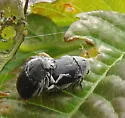
Coleothorpa dominicana
Coleothorpa dominicana
Identification: Pronotum and under surfaces with conspicuous white pubescence. Mandibles of males notably enlarged. The more western populations have the elytra conspicuously hairy, whereas in the more eastern populations the elytra are largely glabr
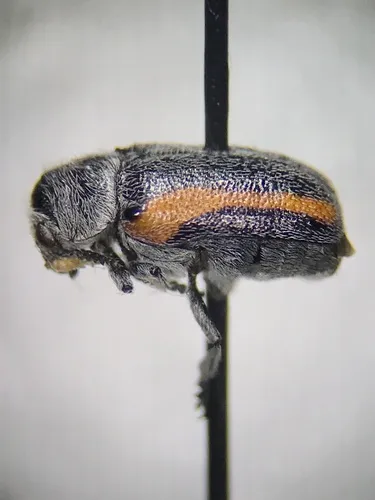
Coleothorpa vittigera
Coleothorpa vittigera
Coleothorpa vittigera is a species of case-bearing leaf beetles in the family Chrysomelidae. It is found in North America.
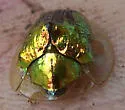
Anacua Tortoise Beetle
Coptocycla texana
Fairly common in southmost Texas, the damage they leave behind (leaf holes) can be ubiquitous (MAQ, pers. obs.)
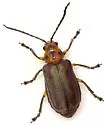
Coraia subcyanescens
Coraia subcyanescens
Type Locality: Brownsville, Cameron Co., Texas (Schaeffer 1906)
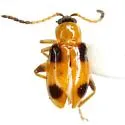
Cornulactica varicornis
Cornulactica varicornis
Apparently introduced into s. Louisiana ca. 2019 and recently spread to the Upper Coast of Texas and to s. Mississippi. (BG data)
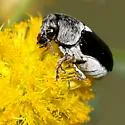
Coscinoptera aeneipennis
Coscinoptera aeneipennis
Identification: easily recognized by its brassy appearance , with the head, thorax, scutellum, and under side pubescent. Elytra with coarse punctures arranged in rather regular striae (emphasis added), but confused near the scutellum. Det. M. A. Quin
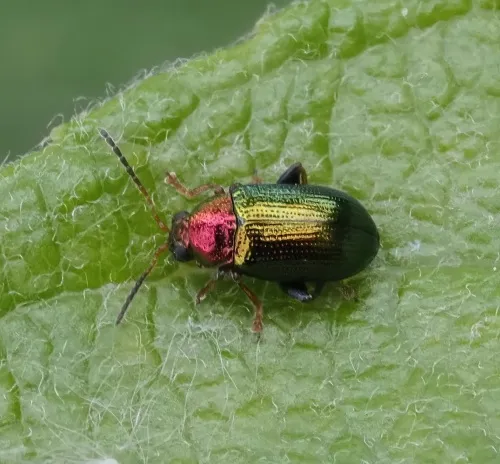
Willow Flea Beetle
Crepidodera aurata
Size about 3 mm. This leaf flea beetle has an overall shiny metallic appearance and is bicoloured; the head and pronotum being a reddish or coppery bronze edged by green or blue, whilst the elytra are uniformly green or blue-green and are studded by
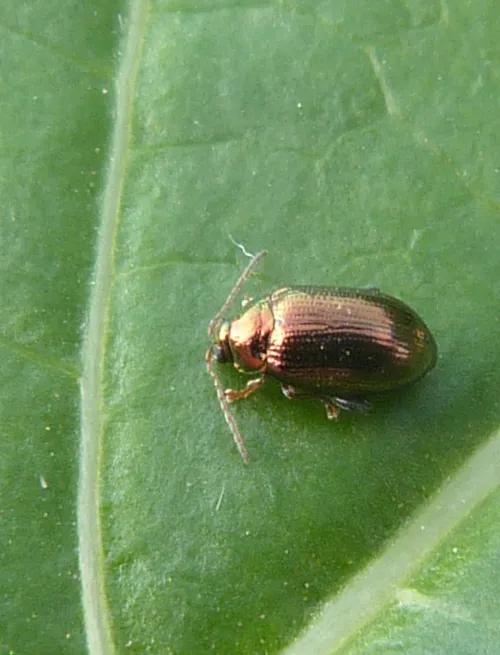
Crepidodera aurea
Crepidodera aurea
A tiny leaf beetle with very punctate elytra which can appear metallic green or maroon depending on the light. It will jump readily when disturbed. There are several similar species which makes potential identification difficult. Fairly frequent in s

Crepidodera browni
Crepidodera browni
Identification: last key couplet: Elytron at declivity bulging laterally, overhanging and hiding part of lateral margin (Fig. 8); dorsal surface metallic green, brassy-green, coppery-green, pure coppery, coppery-bronze or dark Greenish specimens rang
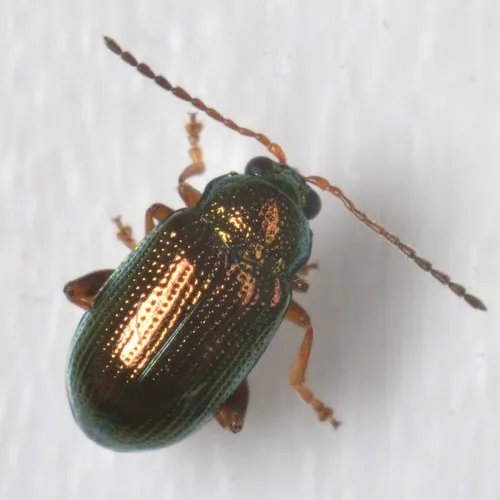
Crepidodera fulvicornis
Crepidodera fulvicornis
Length: 2.3-3.5mm. Upperside bright metallic green, with blue or coppery tones at the edges. As with other 'flea' beetles it has swollen hind legs which allow it to jump strongly when threatened. All Crepidodera have two short furrows on the pronotum
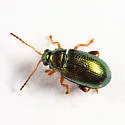
Crepidodera luminosa
Crepidodera luminosa
Identification: Very similar to C. nana, and only distinguishable by examination of the male or female genitalia.
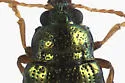
Crepidodera nana
Crepidodera nana
Identification: This species exhibits considerable variation. ( 3 ) Parry (1986) examined some 2000 nana spmns ( 3 )
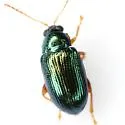
Crepidodera opulenta
Crepidodera opulenta
Identification: elytral margins narrow in dorsal view (as in Fig. 10) In the original description, LeConte described the colour of this species as "laete viridiaurea" or bright green-gold. The lectotype differs from this in having the dorsal surface
Crepidodera plutus
Crepidodera plutus
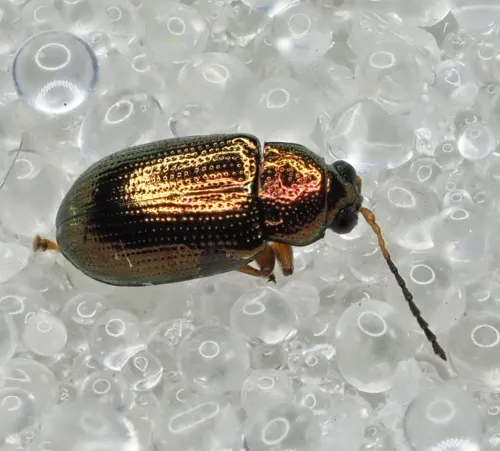
2.5 to 3.7 mm. Pronotum and elytra normally unicolourous although bicoloured specimens are not uncommon. Green, coppery sometimes blue, in the field often appearing purple.The antennae are distinctly bicoloured with segments 1-4 yellowish, the remain
Asparagus Beetle
Crioceris asparagi
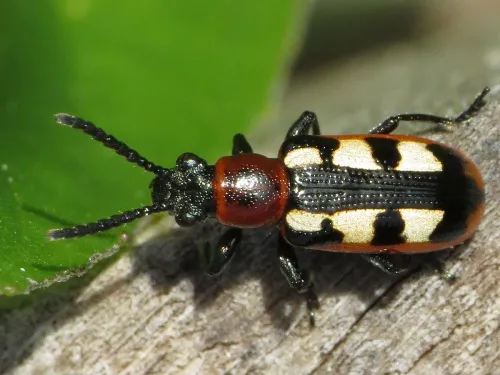
The beetle is just under a centimetre long, metallic blue-black in colour with cream or yellow spots on its red-bordered elytra. Found on plants that are members of the Asparagus family. Life cycle revolves around plants of the Asparagus family. Wide
Cryptocephalus albicans
Cryptocephalus albicans
Identification: Elytra: Light orange or creamy yellow and with dark reddish to black markings. The six Florida specimens examined by White have the elytral intervals finely, transversely rugose; this significantly reduces the shininess of the elytra.
Cryptocephalus alternans
Cryptocephalus alternans
Identification: Dark markings of pronotum black, distinct, margins sometimes narrowly reddish Elytra: Background color light orange, dark markings black, sharply delimited. The external differences exhibited by this subspecies and two specimens of C.
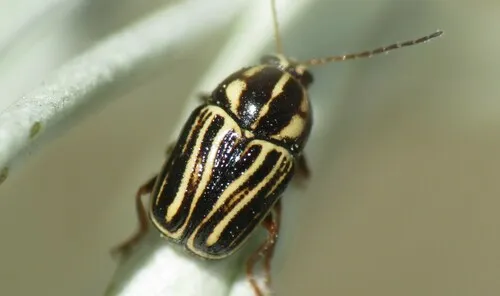
Cryptocephalus amatus
Cryptocephalus amatus
Cryptocephalus amatus is a species of case-bearing leaf beetle in the family Chrysomelidae. It is found in North America.
Cryptocephalus andrewsi
Cryptocephalus andrewsi
Identification: PARATYPE Type Locality: Del Mar, San Diego Co., CA
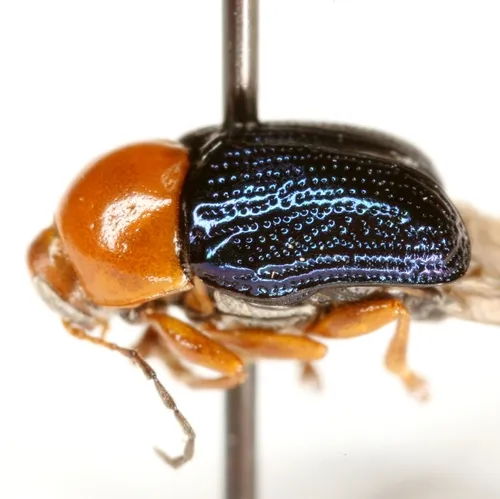
Cryptocephalus arizonensis
Cryptocephalus arizonensis
Identification: Elytra dark, shining metallic green or blue, epipleuron yellow to (more often) dark reddish [cite:212163] Type Locality: Pinal Mts., Cochise Co., AZ
Cryptocephalus atrofasciatus
Cryptocephalus atrofasciatus
Identification: one of the most variable in the genus in coloration Pronotum: Light orange to red, usually with basal oblique spots and margins yellow or lighter than remainder, not sharply delimited. Elytra: Usually yellow or orange with three trans
Cryptocephalus aulicus
Cryptocephalus aulicus
Identification: Pronotum: Red to orange with two basal oblique spots. Elytra: Creamy yellow to orange with dark spots. Forty specimens examined by White, all collected in Florida. Previous papers have included Georgia as part of the distribution of t
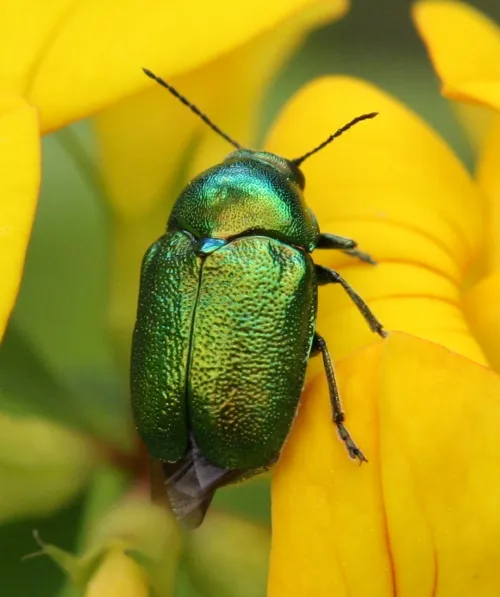
Cryptocephalus aureolus
Cryptocephalus aureolus
Length 6 to 8 mm. One of several similar species of metallic green beetles which have a short, cylindrical robust body and head hidden under the front edge of pronotum. Cryptocephalus hypochaeridis looks very similar but has is more blue-green in col
Cryptocephalus australobispinus
Cryptocephalus australobispinus
Identification: The pale ground color together with the pattern on the pronotum and elytra will distinguish this species from other Cryptocephalus found in America north of Mexico. It will run to C. bispinus Suffrian, couplet 81, in White's key and b
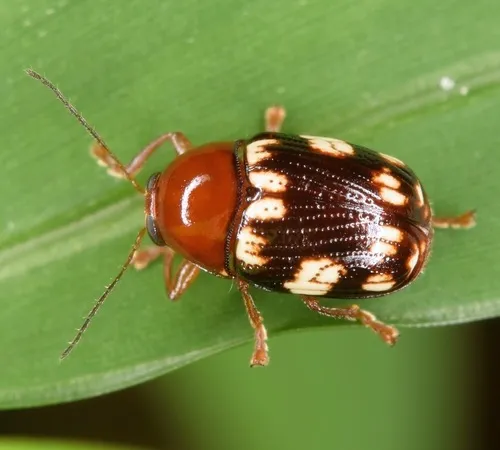
Bay-necked Cryptocephalus
Cryptocephalus badius
Identification: Det. J. R. Watts, 2008 The 69 specimens examined by White in the USNM were collected in Pennsylvania, Maryland, Delaware, Virginia, West Virginia, Kentucky, Tennessee, Florida, Mississippi, Kansas, and Oklahoma.
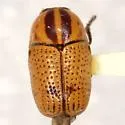
Cryptocephalus binotatus
Cryptocephalus binotatus
The species is described from ten specimens. The holotype (female, USNM type number 69248) was taken at Yuma, Arizona, in June, 1909 by A. McLachlan.
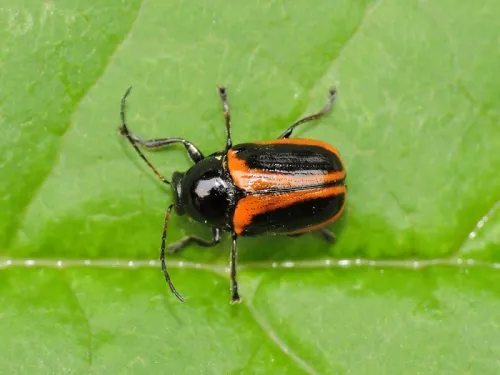
Cryptocephalus bipunctatus
Cryptocephalus bipunctatus
Size: 4 to 6 mm. Cryptocephalus bipunctatus is a black and orange red beetle, but markings can be rather variable. It may have one black longitudinal band on each elytron, or the band may be broken to form two spots, usually one on 'shoulder' and one
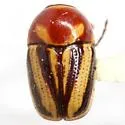
Cryptocephalus bispinus
Cryptocephalus bispinus
Identification: Outer elytral vitta complete Occurring in Texas [mostly]; males (fig. 72) bispinus Suffrian Occurring in eastern U.S.; males and females (fig. 73). calidus Suffrian - Figs. 72-73
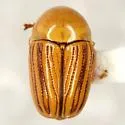
Cryptocephalus brunneovittatus
Cryptocephalus brunneovittatus
Lectotype Locality: "Esprza Rch., Brownsville, Tex."
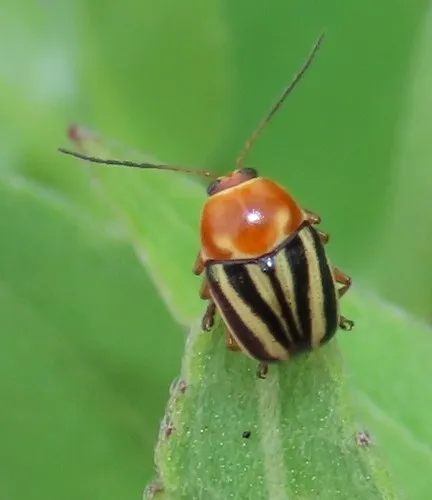
Cryptocephalus calidus
Cryptocephalus calidus
Identification: Outer elytral vitta complete Occurring in Texas [mostly]; males (fig. 72) bispinus Suffrian Occurring in eastern U.S.; males and females (fig. 73). calidus Suffrian - Figs. 72-73
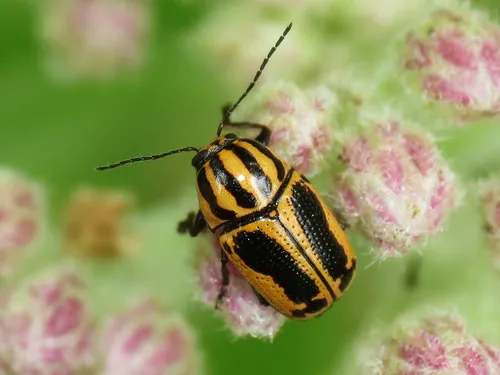
Cryptocephalus castaneus
Cryptocephalus castaneus
Identification: The alternately black and pale striped pronotum, elytral basal spots and medial spots of fused at suture key this one out. … John R. Watts, 8 July, 2008 At one extreme of development of the color pattern, each elytron bears two large
Cryptocephalus cerinus
Cryptocephalus cerinus
Identification: Pronotum: Almost uniformly light orange Elytra: Nearly uniformly light orange, punctures dark, intervals four and six sometimes vaguely darker, humerus more or less clouded.
Cryptocephalus confluentus
Cryptocephalus confluentus
Identification: Background color of elytra creamy yellow to light orange, vittae distinct, dark reddish to black; central states to California .... 75 Legs predominantly brownish or black (fig. 98). confluentus melanoscelus , new subspecies Legs pred
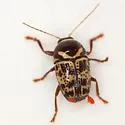
Cryptocephalus cribripennis
Cryptocephalus cribripennis
Identification: elytra yellow, with very large distant black punctures. The elytral punctures are largest and sparsest in cribripennis LeConte; in most species, the punctures are distinctly smaller and denser. Det. E. G. Riley, 2010
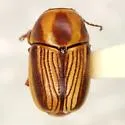
Cryptocephalus cuneatus
Cryptocephalus cuneatus
Identification: elytral vittae black, the lateral ones always intact - Det. Boris Büche, 2023 Fig. 50, C. trivitlatus Olivier; 51, C. cuneatus Fall Fall's single male type specimen was from Tybee Island, Georgia.
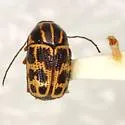
Cryptocephalus cupressi
Cryptocephalus cupressi
Identification: Det. E. G. Riley, 1985 Type Locality: New Orleans, LA
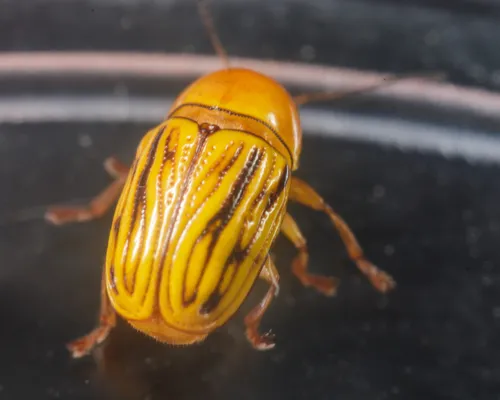
Texas Yellow Cryptocephalus
Cryptocephalus defectus
Cryptocephalus defectus is a species of case-bearing leaf beetle in the family Chrysomelidae. It is found in North America.
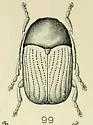
Cryptocephalus dorsatus
Cryptocephalus dorsatus
Identification: Ventral surface, legs, head, and pronotum unicolorous, very dull reddish orange, elytra creamy yellow (fig. 99); elytron behind humerus with one or two punctures in addition to regular rows - Fig. 99 Type Locality: one male and one fe
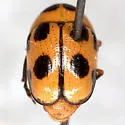
Cryptocephalus downiei
Cryptocephalus downiei
Identification: The stout body form, highly polished and weakly punctate dorsal surface as well as the unique color pattern will readily separate this species from all other Cryptocephalus found north of Mexico. (Riley & Gilbert 1999) PARATYPE Texas
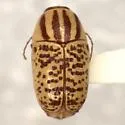
Cryptocephalus duryi
Cryptocephalus duryi
Identification: Det. M. A. Quinn, 2011 Type Locality: Brownsville, [Cameron Co.] Texas, May 5, 1903. (Schaeffer 1906), The seven specimens examined by White in the USNM are all from southern Texas.
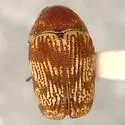
Cryptocephalus falli
Cryptocephalus falli
Identification: Elytra: Dull creamy yellow but with striae, humerus, and irregular lateral spots reddish. Type Locality: Dunedin, Pinellas Co., Florida
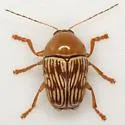
Cryptocephalus fulguratus
Cryptocephalus fulguratus
Identification: variable, but lacks the basal oblique pronotum spots of C. atrofasciatus , also note the thin pale pronotal margin White examined 130 spmns from TX, AR, KS , Riley et al. added OK, MO, and MS Type Locality: Texas
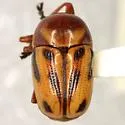
Cryptocephalus gibbicollis
Cryptocephalus gibbicollis
Identification: Elytral epipleuron all or mostly black, lateral raised margin dark or black; pronotum gibbous to strongly gibbous; Fig.
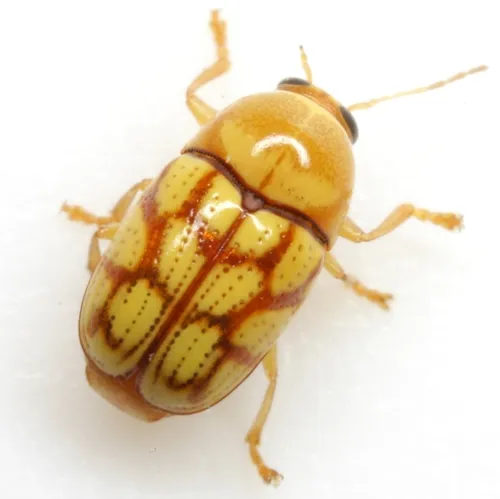
Spotted Tamaulipan Cryptocephalus
Cryptocephalus guttulatellus
Cryptocephalus guttulatellus is a species of case-bearing leaf beetle in the family Chrysomelidae. It is found in North America.
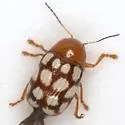
Fourteen-spotted Leaf Beetle
Cryptocephalus guttulatus
Identification: Small, brown elytra, 7 variable yellow spots on each. The combination of a pale orange pronotum and dark elytra with pale cream spots is distinctive. … John R. Watts, 8 July, 2008