
Cryptocephalus optimus
This record describes Cryptocephalus optimus (species). Recorded family: Chrysomelidae. Recorded order: Coleoptera.
Identification and Appearance
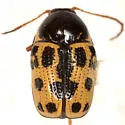
Cryptocephalus optimus (Cryptocephalus optimus) is a species in the family Chrysomelidae, commonly known as leaf beetles, belonging to the order Coleoptera (Beetles). It is classified within the subfamily Cryptocephalinae, tribe Cryptocephalini, suborder Polyphaga, superfamily Chrysomeloidea. This species belongs to the genus Cryptocephalus. As a member of class Insecta, phylum Arthropoda, it is part of the kingdom Animalia. Size: Length: 6.0-6.7 mm. Active during April (BG data).
Classification
- Kingdom
- Animalia
- Phylum
- Arthropoda
- Class
- Insecta
- Order
- Coleoptera (Beetles)
- Suborder
- Polyphaga
- Superfamily
- Chrysomeloidea
- Family
- Chrysomelidae (Leaf Beetles)
- Subfamily
- Cryptocephalinae
- Tribe
- Cryptocephalini
- Genus
- Cryptocephalus
Imported taxonomy record. Source availability varies; see the source references and editorial policy below.
Habitat and Range
Geographic Range
se US (e.TX-GA-AR-OK), plus NJ? - Map , rare bug Only five individuals were seen by White, they are from Texas (Calvert, Robertson Co.), Arkansas, Louisiana, Georgia (Fort Valley, Peach Co.), and New Jersey. Karl Stephan added the Oklahoma (Latimer Co.) record
Seasonal Activity
April (BG data) ( 4 )
Diet and Behavior
Diet: No records listed in Clark et al. (2004) ( 7 )
Additional species information
Species notes from the sources
Etymology: Cryptocephalus optimus Schöller, 2002
About Primitive Winged Insects: the wider group
Order-level background for Coleoptera, the group containing Cryptocephalus optimus. Species-specific details appear above.
Group overview
Coleoptera is the largest order of insects with over 400,000 described species, representing ~25% of all known animal species and ~40% of all insects. In the U.S. alone, nearly 30,000 beetle species have been identified.
Ecological role of the group
Beetles are prominent decomposers, especially in forests, breaking down dead wood and recycling nutrients. As predators, they reduce populations of pest insects. Many species are also important pollinators of flowering plants.
Economic and practical significance of the group
Beetles have major economic significance: leaf beetles (Chrysomelidae) and weevils (Curculionoidea) are among the most destructive agricultural pests globally, costing billions annually, while predatory species like ladybugs provide natural pest control.
Recorded sources for this group: Britannica, Smithsonian, NCSU Entomology. Imported estimates may describe particular regions or reporting periods.
Photos of Cryptocephalus optimus (5)
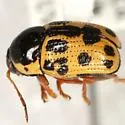
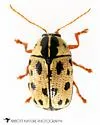
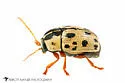
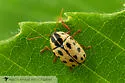
Photo credits: Contributed by Mike Quinn; Additional contributions by Edward Ruden
Frequently Asked Questions About Cryptocephalus optimus
What is Cryptocephalus optimus?
Cryptocephalus optimus is a species in the family Chrysomelidae, within the order Coleoptera.
How big is Cryptocephalus optimus?
Length: 6.0-6.7 mm
Where is Cryptocephalus optimus found?
Range: se US (e.TX-GA-AR-OK), plus NJ? - Map , rare bug Only five individuals were seen by White, they are from Texas (Calvert, Robertson Co.), Arkansas, Louisiana, Georgia (Fort Valley, Peach Co.), and New Jersey. Karl Stephan added the Oklahoma (Latimer Co.) record
What does Cryptocephalus optimus eat?
The diet of the Cryptocephalus optimus includes No records listed in Clark et al. (2004) ( 7 ).
When is Cryptocephalus optimus active?
Cryptocephalus optimus: seasonal activity - April (BG data) ( 4 ).