
Donacia parvidens
This record describes Donacia parvidens (species). Recorded family: Chrysomelidae. Recorded order: Coleoptera.
Identification and Appearance
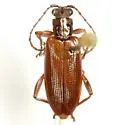
This distinct species [...] is apt to be confused with cincticornis . However, the antennae are heavier , the prothorax has a different shape and sculpture, the posterior femora are much shorter and have only a single feeble tooth (emphasis added), in both sexes the last dorsal segment of the female is less elongate and sub truncate or broadly rounded at apex and the mesosternal process is narrower than in cincticornis . (Schaeffer [1920]) Det. E. G. Riley, 1981 I found this species in numbers in Florida, on Nymphaea alba, in the company of D edentata. In large series, all the characters by which these species have been distinguished: metafemoral tooth missing to strong; pronotal disc with or without pair of indentations; pronotal disc with or without longitudinal shiny area either side of midline. Marx (1956) had mentioned that these species can be found together and that they seemed to intergrade. Based on my field work and examination of big series of simultaneously collected specimens, I’m inclined to consider them one variable species. Endophallus study will provide clarification.
Classification
- Kingdom
- Animalia
- Phylum
- Arthropoda
- Class
- Insecta
- Order
- Coleoptera (Beetles)
- Suborder
- Polyphaga
- Superfamily
- Chrysomeloidea
- Family
- Chrysomelidae (Leaf Beetles)
- Subfamily
- Donaciinae
- Tribe
- Plateumarini
- Genus
- Donacia
Imported taxonomy record. Source availability varies; see the source references and editorial policy below.
Habitat and Range
Habitat
On pond lilies, Nymphaea and possibly Nuphar.
Geographic Range
e. US (TX-FL-NY-MN) / Ont.
Seasonal Activity
Seems to be an early spring species.
Additional species information
Species notes from the sources
Etymology: Donacia parvidens Schaeffer [1920]
About Primitive Winged Insects: the wider group
Order-level background for Coleoptera, the group containing Donacia parvidens. Species-specific details appear above.
Group overview
Coleoptera is the largest order of insects with over 400,000 described species, representing ~25% of all known animal species and ~40% of all insects. In the U.S. alone, nearly 30,000 beetle species have been identified.
Ecological role of the group
Beetles are prominent decomposers, especially in forests, breaking down dead wood and recycling nutrients. As predators, they reduce populations of pest insects. Many species are also important pollinators of flowering plants.
Economic and practical significance of the group
Beetles have major economic significance: leaf beetles (Chrysomelidae) and weevils (Curculionoidea) are among the most destructive agricultural pests globally, costing billions annually, while predatory species like ladybugs provide natural pest control.
Recorded sources for this group: Britannica, Smithsonian, NCSU Entomology. Imported estimates may describe particular regions or reporting periods.
Photos of Donacia parvidens (5)
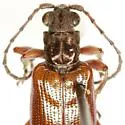
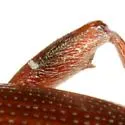
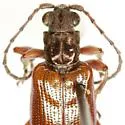
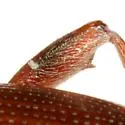
Photo credits: Contributed by Mike Quinn; Additional contributions by Ingolf
Frequently Asked Questions About Donacia parvidens
What is Donacia parvidens?
Donacia parvidens is a species in the family Chrysomelidae, within the order Coleoptera.
How do you identify Donacia parvidens?
This distinct species [...] is apt to be confused with cincticornis . However, the antennae are heavier , the prothorax has a different shape and sculpture, the posterior femora are much shorter and have only a single feeble tooth (emphasis added), in both sexes the last dorsal segment of the female is less elongate and sub truncate or broadly rounded at apex and the mesosternal process is narrower than in cincticornis . (Schaeffer [1920]) Det. E. G. Riley, 1981
Where is Donacia parvidens found?
| Feature | Details |
|---|---|
| Habitat | On pond lilies, Nymphaea and possibly Nuphar. |
| Range | e. US (TX-FL-NY-MN) / Ont. |
When is Donacia parvidens active?
Donacia parvidens: seasonal activity - Seems to be an early spring species..